Tag Archives: Philadelphia History

City Parks Association of Philadelphia

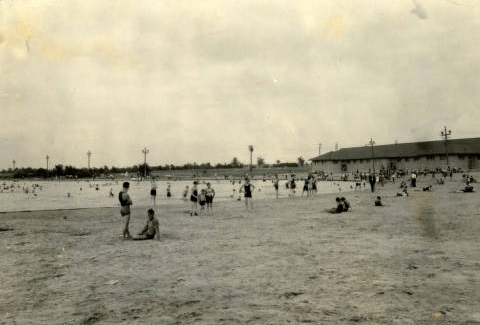
The City Parks Association of Philadelphia was chartered on May 23, 1888, to create and maintain open spaces as park areas for the citizens of Philadelphia. Since that time, the association has worked with city government to establish parks such as Franklin Delano Roosevelt (FDR) Park (originally named League Island Park) and Pennypack Park. The association advocated for the city government to pass zoning laws and continues today to work for the improvement and preservation of parks, squares, playgrounds, and waterways in Philadelphia and surrounding areas.

Swimmers at League Island Park, July 1925. City Parks Association of Philadelphia Records, SCRC 86, Special Collections Research Center
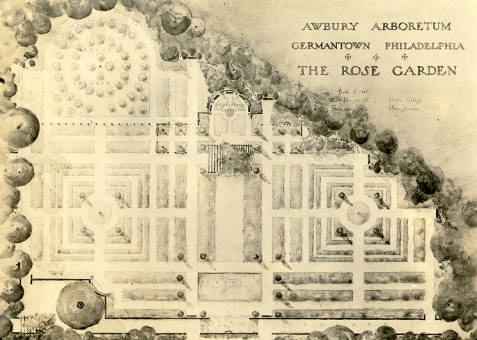
The Special Collections Research Center holds the records of the City Parks Association. The collection contains meeting minutes and agendas, annual reports, financial records, correspondence, news clippings, and photographs. There is also information related to various specific parks and the Fairmount Park Commission, as well as correspondence, financial, and property records related to Awbury Arboretum and its historic Francis Cope House in the Germantown section of Philadelphia.
Rose Garden plan for Awbury Arboretum, undated. City Parks Association of Philadelphia Records, SCRC 86, Special Collections Research Center

Also included in the collection are captured websites, a new initiative by the SCRC and the Digital Library Initiatives department. Using the Archive-It service, periodic “captures” of the website are taken, and are available to the public. Captures of the City Parks Association are available from between 2002 to 2015, and will continue to be harvested, preserved, and made available.

The collection’s photographs, with the exception of slides, have been digitized and are available online on the Temple University Digital Collections website.

We celebrate with our Temple Press colleagues the publication of Jim McClelland and Lynn Miller’s  City in a Park:  A History of Philadelphia’s Fairmount Park System.

–Katy Rawdon, Coordinator of Technical Services, SCRC


National History Day

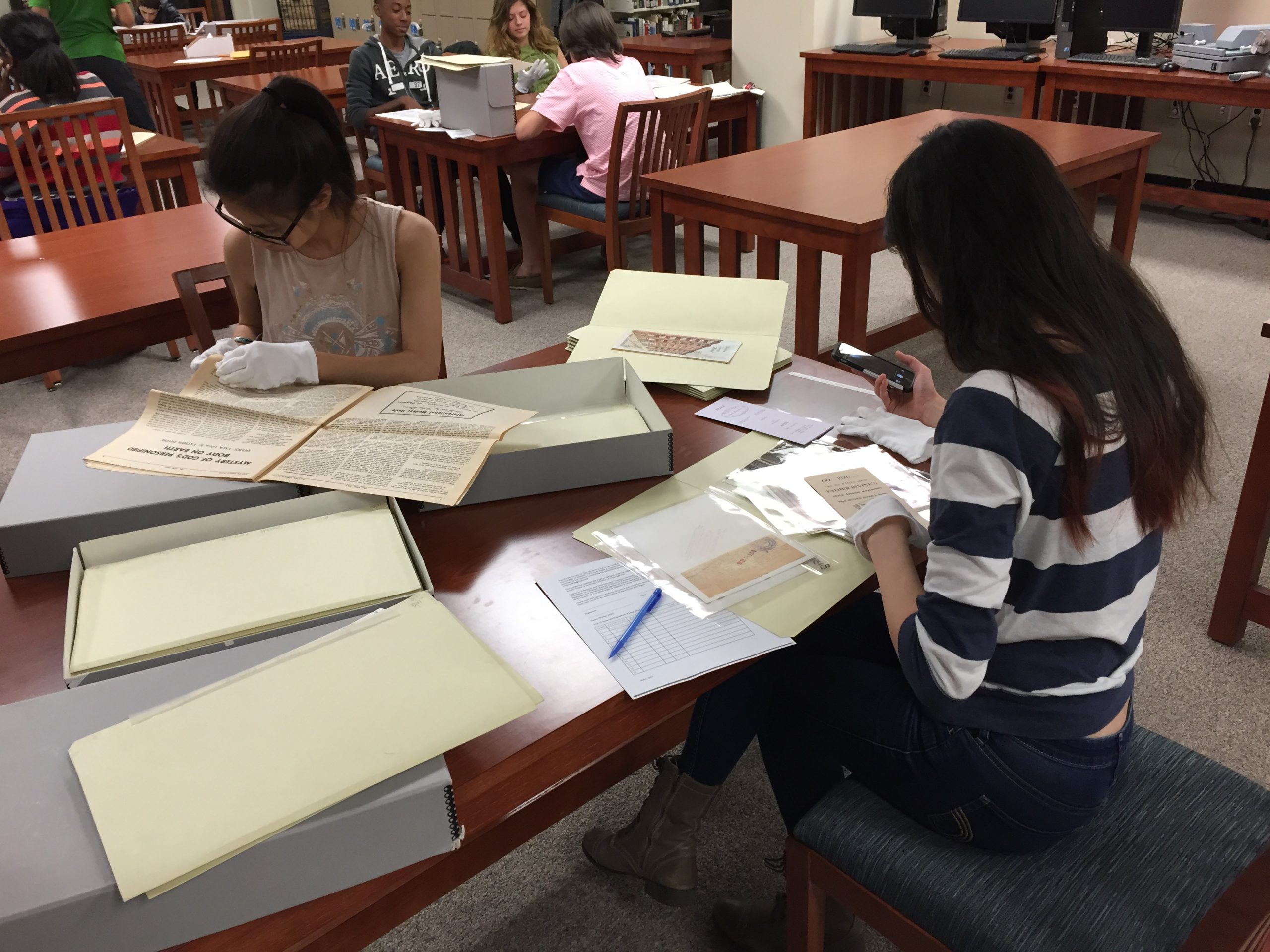
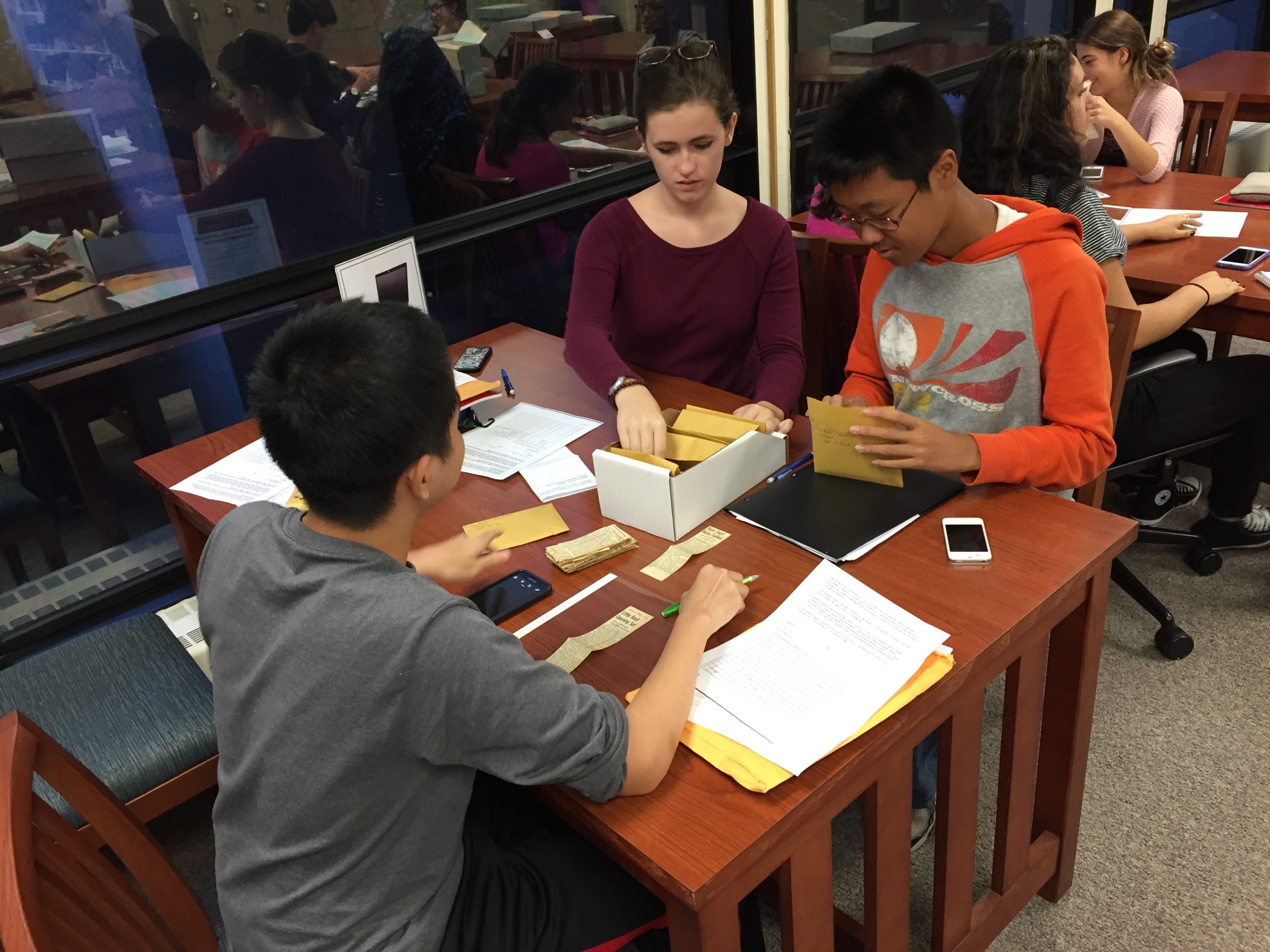
Masterman High School Students doing research at the SCRC

National History Day is a year-long educational program that attracts thousands of middle and high school students, and educators nationwide. Students compete at the local and state levels, which award participants the opportunity to present their work in a national contest held every June at the University of Maryland, College Park.

Masterman High School Students

The competition was established in 1974 by Professor David Van Tassell who was on faculty in the History Department at Case Western Reserve University in Cleveland, Ohio. Its purpose is to provide invaluable experiences and opportunities for students to conduct historical research and develop critical thinking, writing, and communication skills. Student participants may submit individual or group projects in the form of a documentary, exhibit, paper, performance, or website. The program also offers professional development opportunities for educators through training, and access to varied historical resources that help them to create more robust teaching curricula.

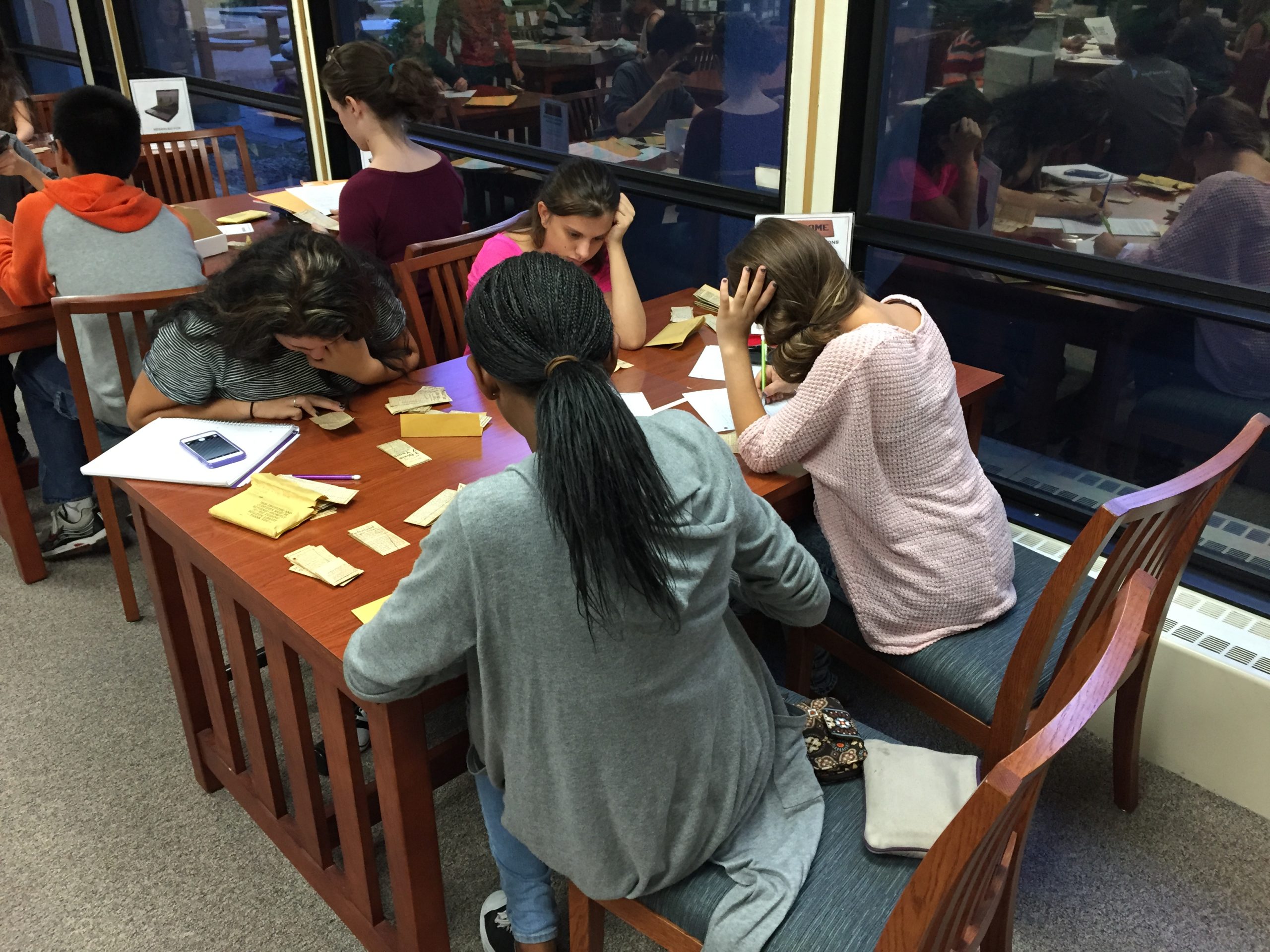
Since 2006, the Special Collection Research Center has participated in NHD programs and has hosted class visits to the archives from Philadelphia area schools including Masterman and Constitution high schools, and LaSalle High School for Boys. Visiting students spend hours combing through the original news clippings and photographs files of Philadelphia Evening Bulletin and Philadelphia Inquirer newspapers for research projects covering a myriad of events such as the integration of Girard College, the 1967 school board riots, the MOVE bombing, and prominent Philadelphia individuals including Father Divine, Frank Rizzo, and Father Paul Washington.

Masterman High School Students, October 2015

In 2015, students from Masterman placed in local and state competitions: Jenny Chan qualified for the national competition for her documentary entitled “Robert Smalls: Not so Small After All.” This Fall a new group of Masterman 10th graders has been visiting the SCRC to research topics for the 2016 NHD competition theme, “Exploration, Encounter, Exchange in History.”

For more information about NHD activities and programs in the Philadelphia area visit the NHD Philly website.

–Brenda Galloway-Wright, Associate Archivist

Einstein Medical Center History

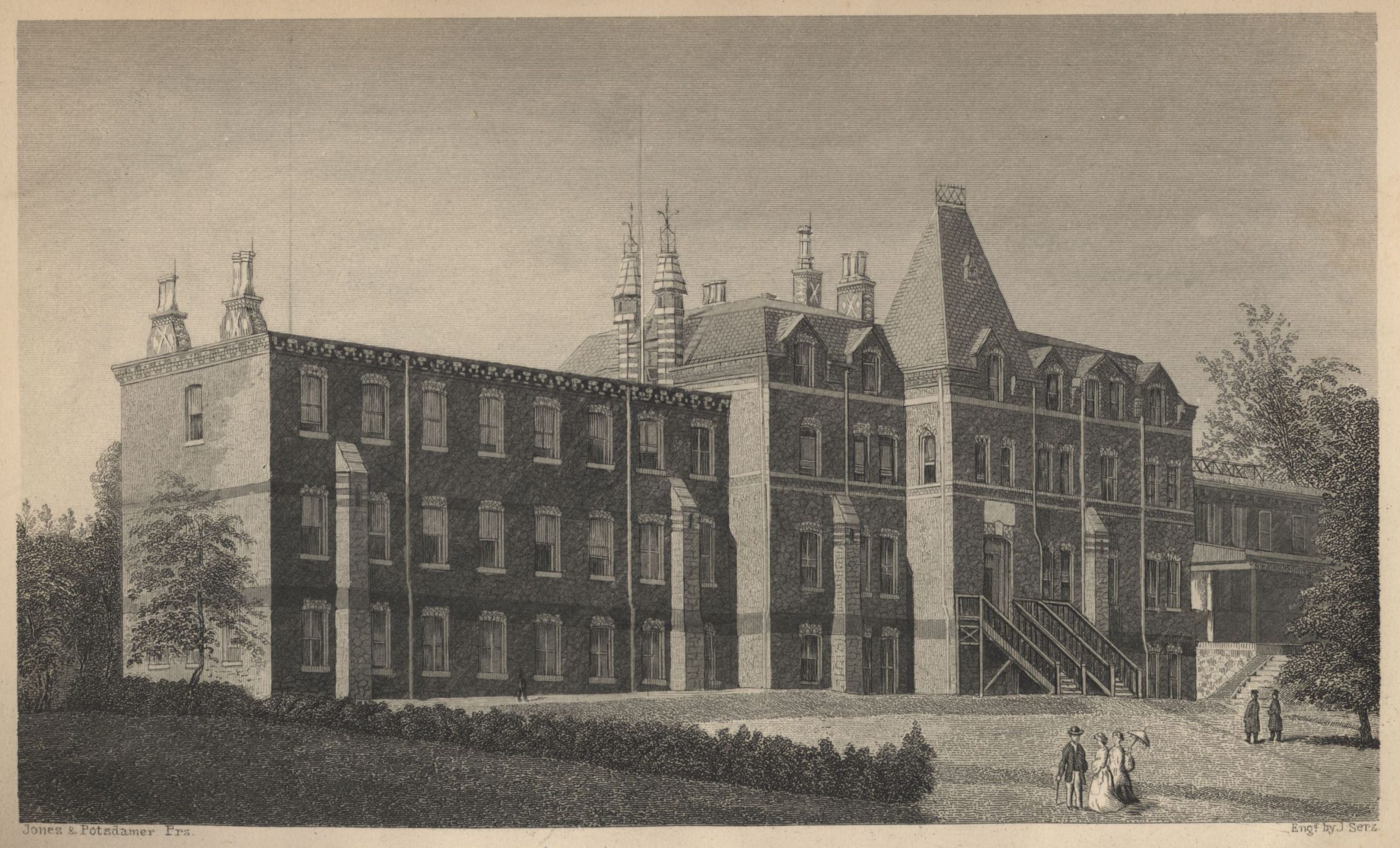
Illustration of Jewish Hospital and Home designed by Frank Furness and George W. Hewitt, Fourteenth Annual Report of the Jewish Hospital, 1879

On September 23, 1865, Jewish leaders in Philadelphia incorporated the Jewish Hospital Association of Philadelphia, now known as Einstein Medical Center. In the aftermath of the Civil War, the association’s officers, led by Alfred T. Jones, Isadore Binswanger, Samuel Weil, and Mayer Sulzberger, sought to erect a hospital under Jewish auspices in response to the lack medical care afforded to members of the Jewish community and the employment discrimination Jews were subject to at other area hospitals. The preamble to the constitution of the Jewish Hospital Association states “It is the duty of Israelites to take care of the suffering and needy ones among them, and as the sick are especially objects of charity and public solicitude, and since there is no institution now in existence within the State of Pennsylvania under the control of Israelites wherein they can place their sick, and where these can enjoy during their illness all the benefits and consolations of our religion.”

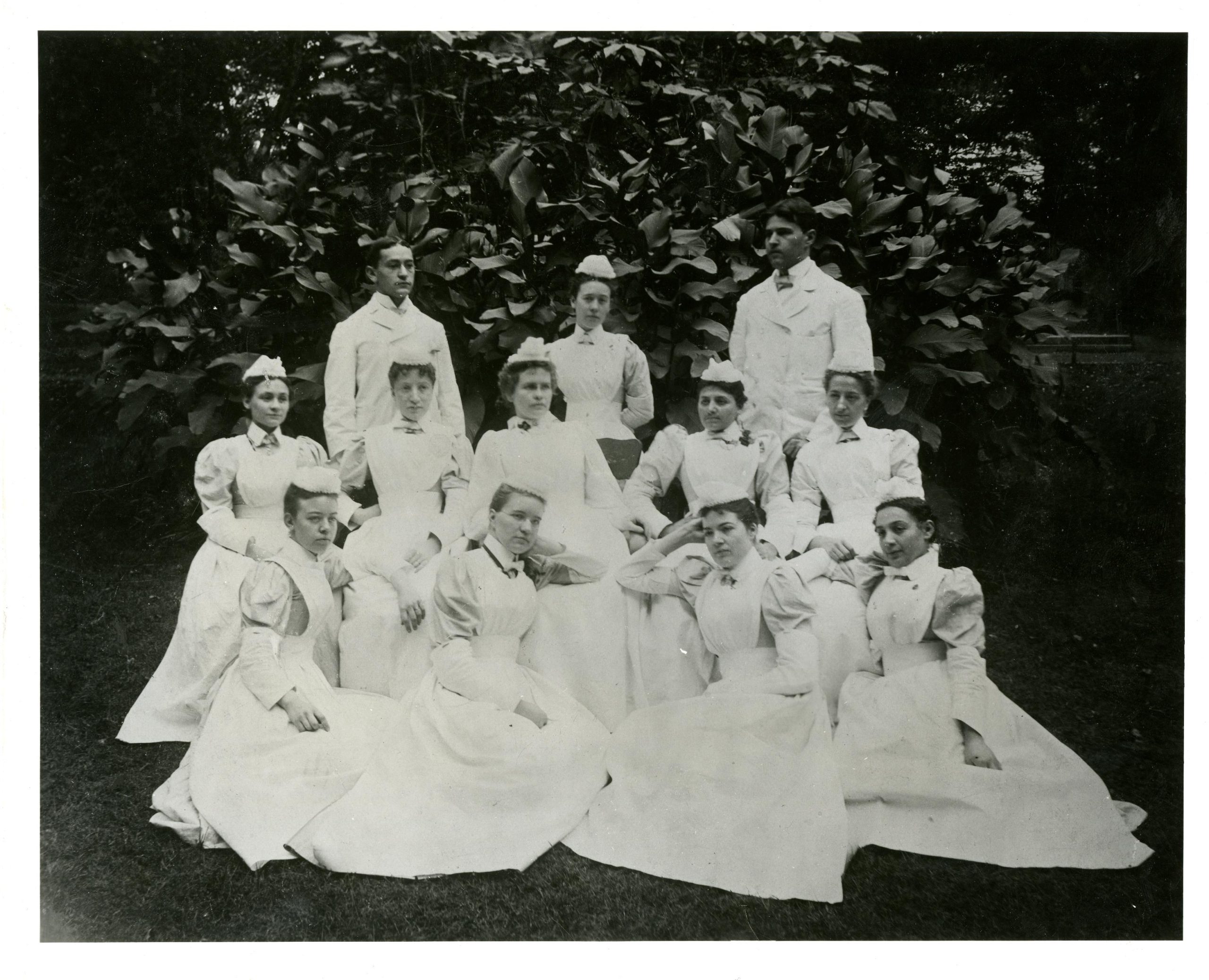
On August 6, 1866, the Jewish Hospital opened for the reception of patients. The original building was located at Haverford Road and 56th Street in West Philadelphia with room for twenty patients–ten for the sick and ten for inmates of the Asylum for the Aged, Infirm, and Destitute. Philadelphia’s Jewish Hospital was the third such hospital to be established in the United States after the Cincinnati Jewish Hospital (1849) and the Jews’ Hospital of New York (1852). In its first five months of operation, the hospital treated twenty-eight patients including three “non-Israelites.” Nonsectarian from its inception, the Jewish Hospital was committed to “reducing or eliminating the attitudes and prejudices that mixed medical practice with religious and moral views.” Unlike other hospitals in Philadelphia at the time, the Jewish Hospital was “was free of charge to all poor and worthy applicants without regard to nationality or creed.”

Nurses, resident physician Dr. Edwin Jarecki, and Dr. Knipe, Jewish Hospital, York and Tabor Roads, 1896

To learn more about the history of the Albert Einstein Medical Center and its predecessor, the Jewish Hospital, use the hospital archives and these resources in the Special Collections Research Center:   Mankind and Medicine: A History of Philadelphia’s Albert Einstein Medical Center by Maxwell Whiteman; Edwin A. Jarecki, M.D. Resident Physician Jewish Hospital of Philadelphia, 1892-1934 by William I. Heine; and History of the Jewish Hospital Association of Philadelphia by Henry N. Wessel.

-Jessica M. Lydon, Associate Archivist SCRC

Cigar Making in Philadelphia

T&O Offices, 1900

National Hispanic Heritage Month is observed each year from September 15th to October 15th. During this month, the cultures and contribution of Americans whose ancestors come from Spain, Mexico, the Caribbean, and Central and South America are celebrated. It’s a good opportunity to highlight some materials from the Special Collections Research Center (SCRC) that relate to one of the many Hispanic groups that make up the fabric of this country: Puerto Ricans in Philadelphia.

Like many immigrant groups, Puerto Ricans came to the area in search of employment opportunities. Starting slowly in the late 19th century, and accelerating through the 20th century, they immigrated to Philadelphia, a thriving industrial city.

T&O Cigar Making Floor, 1900

Among the many industries where they found employment was cigar manufacturing. For many years Philadelphia was one of the leading manufacturers of cigars in the United States. Consequently, some of Philadelphia’s Latino communities can trace their origins to enclaves that grew up around cigar factories in North Philadelphia neighborhoods.

T & O Cigar Banding Department, 1900

One such factory, located in the Northern Liberties neighborhood, was owned by the Theobald & Oppenheimer Cigar Company. Founded in 1860, the T & O Cigar Company was one of the largest cigar manufacturers in the city. In 1900, the company opened a new factory at 1147 North 4th Street. To memorialize this opening the company created an album, with over two dozen sepia-toned photographs of the offices, warehouse, factory floor, and workers, who hand-rolled the cigars. (The album was donated to the SCRC in 2012.)

T&O Cigar Factory Building, 1900

As Puerto Rican immigration to Philadelphia increased throughout the post-war years, organizations such as the Nationalities Service Center (established in 1921) began to respond to the needs of this group, as it had to previous waves of immigrants, by providing information, guidance, and services on such issues as housing, education, and employment. The programs and activities provided by the center were aimed at helping to ease the transition of living and working in a new place. A parallel goal of the center was to promote and conserve the cultural values of immigrant communities for the enrichment of American life. These efforts to aid the Puerto Rican immigrant community, as well as many other ethnic communities, are documented in the Records of the Nationalities Service Center, one of the collection in the SCRC’s Urban Archives.

-Josué Hurtado, Coordinator of Public Services & Outreach

From the Archives: World War II Love Letters

Jesse Lare letter, September 27, 1944

“No, I am not crazy for writing you twice in one day, just head over heels in love with you!”  Thus, the ever romantic, Master Sergeant Jesse Lare began his letter to Mildred Patterson of Fishtown, Philadelphia, on September 27, 1944. Jesse and Mildred had not known each other for very long. They met at a mutual friend’s house several months earlier, and their correspondence had begun in June, when Jesse first wrote to Mildred. They maintained a correspondence that lasted almost two years and led to their marriage.

Jesse, who was also from Philadelphia, was stationed in Memphis at Second Army Headquarters, and later, at Camp Shelby in Mississippi. He was serving in the Second Army, a training outfit that readied troops for combat and other army jobs. Mildred lived in Philadelphia, and worked at the Kensington National Bank.
From the start, they were dedicated pen pals, and they wrote with increased frequency as time went on. Through their letter writing, Mildred and Jesse shared in each other’s lives, including their relationship, their work, their friends and families, and their leisure. In his free time, Jesse liked to bowl, play golf, and go to the movies. Mildred liked to go to Wildwood and other towns along the Jersey Shore, and she frequently turned to the Ouija board for her fortune. They
told each other about the daily goings on of life, from progress in the war to activities in Philadelphia and at the army base, the weather, and their feelings. It is clear they were well-suited friends, and the romance that quickly developed was a natural next step.

Mildred accepts Jesse’s proposal, January 13, 1945

Having met in person only a few times, they married in January 1945. As a married couple, they maintained a candid correspondence in which they regularly discussed the ups and downs of their relationship and future together.

The Jesse and Mildred Lare Correspondence, 1944-1945, was donated to the Special Collections Research Center by Jesse and Mildred Lare’s daughter, in early 2015. This great World War II era collection has been processed and is available for research use! To learn more, check out the online finding aid.
– Courtney Smerz, Collection Management Archivist, SCRC

From the Philadelphia Jewish Archives: Hollywood Mysteries

Scholars have long been interested in the cultural and socioeconomic conditions that led Jews to success in the early film industry. Jewish immigrants, and particularly those from Eastern Europe, were adept at developing film technology and skilled at writing, directing, and marketing movies. Even the moguls who created Hollywood’s studio system–William Fox, Samuel Goldwyn, Louis B. Mayer, and Adolph Zukor, among others–were Jewish immigrants who rose from unprepossessing circumstances to become some of the most powerful men in the country. In books, articles, and documentaries, historians and film buffs have attempted to explain this unique aspect of film history.

What’s been less well-studied, however, is the relationship between Hollywood and Philadelphia’s own rich Jewish history. And I must admit that I’ve never given it much thought either, despite being a Philadelphia Jewish Archives collections project archivist in the Special Collections Research Center and classic film enthusiast. That changed, however, after I discovered an intriguing letter in the Robert B. Wolf and Morris Wolf Papers.

Robert and his father, Morris, were prominent members of the Philadelphia Jewish community. Morris served with the American Red Cross during World War I and was stationed in Paris. It was among his letters from France that I came across a curious passage:

Letter to Edwin Wolf, December 1918.

Dated December 26, 1918, the letter is addressed to Morris’ father, Edwin. “Dear Father:” Morris wrote, “I made my first visit to a moving picture house last evening….There was a picture of Gaby Deslys’s, which I thought was very good. It seems to me that Goldwyn would make a tremendous hit by trying to get say five pictures a year with this star for the United States.” He later reminded, “I suggest that you speak to Goldwyn about it.”

Call me crazy, but was Morris Wolf referring to THE Sam Goldwyn? The famous producer of dozens of classic American films? If he was, then what was the connection between the Wolf family and the Hollywood film industry?

A search of the collection produced more hints, but frustratingly few answers. I found an employment contract for First National Pictures, a film company that merged with Warner Bros. in 1928. The collection also includes a 1959 Philadelphia Inquirer article that mentions that the family starred in and produced Westerns at a Montgomery County motion picture studio (Betzwood, anyone?)

Hoping to find more information, I turned to secondary sources. To my surprise, I found that little has been written about Philadelphia Jews and their role in the national film industry. To be sure, Siegmund Lubin’s career has been well documented, but there are significant gaps in the literature on this subject.

So, if anyone out there decides to tackle this topic, Morris Wolf and I will be eagerly awaiting your findings. Until then, feel free to use the Robert B. Wolf and Morris Wolf Papers and take a stab at unravelling the mystery yourself….

— Jenna Marrone, SCRC Project Archivist

Photograph of Morris Wolf in uniform, 1918

Walter Massey Phillips, Philadelphia Renaissance Man

Page from a notebook kept by Walter Massey Phillips recording tugboats seen on the Delaware River, 1920s. Walter Massey Phillips Papers, SCRC 136, Special Collections Research Center.

Walter M. Phillips, Sr. (1912-1985) was active in Philadelphia civic affairs for more than thirty years, particularly during the period of the 1940s-1960s, which was known as the “Philadelphia Renaissance.” During this time, political organizers worked for reform of what was seen as an immensely corrupt city government. While Phillips was an enormous political presence behind the scenes, he never held a political office, and by all accounts his reticent personality kept his significant role in the Philadelphia reform movement from wider renown. However, noted architect and city planner Edmund Bacon once called Phillips “the greatest single figure in the renaissance.”

A graduate of Episcopal Academy, Princeton, and Harvard Law School, Phillips was a chief organizer of the City Policy Committee, President of the Citizens’ Council on City Planning, Board Member of the Greater Philadelphia Movement, President of the Philadelphia Housing Association, Executive Secretary with the Delaware River Basin Advisory Committee, Trustee of Lincoln University, Director of the Honey Hollow Watershed Association, and Board Member of the Committee of Seventy. He managed Joseph Clark’s successful race for Mayor of Philadelphia in 1951, served in Clark’s cabinet as City Representative and Director of Commerce through 1955, and was the (unsuccessful) reform candidate against Mayor James Tate in the 1963 Democratic primary election.

Walter Massey Phillips during the 1963 mayoral race, May 1963. Walter Massey Phillips Papers, SCRC 136, Special Collections Research Center

After retiring, Phillips initiated an oral history project, and, between 1974 and 1980, interviewed approximately 160 of the local civic and government leaders with whom he had worked. The interviews generally discuss Philadelphia city government and history between the late 1930s and the 1970s.

The Special Collections Research Center holds  Phillips’ personal papers as well as cassette tapes, transcripts (many of which are now available online), and background information from his oral history project. His papers document his life, career, and the nature of civic decision making at the policy level in mid-twentieth century Philadelphia. In addition to records from and related to the many Philadelphia organizations and networks in which Phillips was involved, there are also personal items, such as family photos and a diary of Phillips’ 1936 trip to the Yukon.

–Katy Rawdon, Coordinator of Technical Services, SCRC

Franklin H. Littell Papers open for research

The Special Collections Research Center (SCRC) at Temple University Libraries is pleased to announce that the Franklin H. Littell collection is open and available for research.

View the finding aid on the Libraries’ website, along with portions of the papers which have been digitized.  Dr. Littell’s extensive library is cataloged and is available for use along with the papers in the SCRC reading room on the Ground Floor of Paley Library.

Franklin Littell (1917-2009), emeritus professor of religion at Temple University, led a distinguished career that spanned more than seventy years. He was a pacifist and activist, proponent of the Christian Laity and an advocate for new religious movements, an historian, political commentator and supporter of the State of Israel. He devoted ten years to work with the Protestant Churches and Laity in US-occupied Germany and more than fifty years to the study and remembrance of the Holocaust and German Church Struggle. He career is marked by strong beliefs in interfaith understanding and religious liberty.

The Littell and Sachs families donated Dr. Littell’s papers and library to Temple in 2010, where they were the focus of a three-year cataloging and processing project. Processing of the collection was funded through a grant from the Conference on Jewish Material Claims Against Germany, Inc., and generous support from Norman Braman.

From the Philadelphia Jewish Archives: Pinchos J. Chazin Papers

Rabbi Pinchos J. Chazin (1914-2006) was a well-known and much admired spiritual leader in Philadelphia’s Jewish community.  For forty-three years, he inspired and engaged the congregation of Temple Sholom with sermons and weekly lectures that connected scripture with contemporary culture in a way that was both meaningful and motivational.  Rabbi Chazin’s sermons were invariably positive, encouraging congregants to explore their spirituality and delve deeper into Jewish tradition.  He also displayed compassion for the foibles of human nature, an ability that impressed many people who heard Rabbi Chazin speak. 

“Your work as the spiritual guide of Temple Sholom must be a taxing one,” wrote one correspondent in 1950, “but one can’t help feeling your sincerity of purpose….It did a lot to create and instill the desire to delve deeper into the beauties of Judaism, and what it stands for.”  In 1970, another correspondent noted, “You are unquestionably the finest rabbi in terms of learning and expression and humanity that I have ever known, and one of the finest human beings I have ever known, as well.”  And in 1979, a congregant succinctly wrote, “For the many years that you have acted as Rabbi in Temple Sholom you have opened the doors to ourselves and our children to the true meaning of Judaism and warm friendship.”

Chazin’s personal papers including his weekly sermons, book review lectures, eulogies, cantatas and related materials are now open for research in the Special Collections Research Center. To learn more about this collection, review the online finding aid http://library.temple.edu/scrc/pinchos-j-chazin-papers

Jenna Marrone, Project Archivist

From the Philadelphia Jewish Archives: Shana Tova, Happy Jewish New Year

Scott Ellencrig, four years old, demonstrates traditional blowing of the ram’s horn, September 21, 1960
Philadelphia Evening Bulletin Photograph Collection

The ritual blasts of the shofar marks the beginning of the Jewish New Year on Rosh Hashanah, a time of personal reflection and examination of the events of the previous year. A shofar is an instrument made from the naturally hollow horn of a ram or other kosher animal such as an antelope, gazelle, or goat. These horns are not solid bone, but contain cartilage which can be removed. The ram’s horn is traditionally used because it acts as a reminder of the Binding of Isaac in the Book of Genesis in which Abraham sacrifices a ram in place of his son. The shofar is sounded up to 100 times during synagogue services on Rosh Hashanah. The ten days of Rosh Hashanah culminate in the celebration of Yom Kippur, a day of fasting, prayer, and repentance. To mark the end of the fast on Yom Kippur, the shofar is sounded once more.
The sounding of the shofar is not limited to Jewish religious services. Secular, humanist observance of the Jewish High Holidays often time includes the blowing of the shofar to signify bringing the community together and a reaffirmation of Jewish cultural values.

Sholom Aleichem Club News & Comment, September 1988
Sholom Aleichem Club Records


The First Jewish Catalog, a do-it yourself guide to Jewish life first published by the Jewish Publication Society in 1973, offers step-by-step instructions for making your own shofar:
Step 1: Boil the shofar in water for 2-5 hours. The cartilage can be pulled out with the aid of a pick. If the horn is small, this should only take half an hour.
Step 2: After the horn is completely dry, measure the length of the hollow of the shofar, cutting 1 inch further with a coping saw or hacksaw
Step 3: Drill a 1/8” hole with an electric drill from the sawed-off end until it reaches the hollow of the horn.
Step 4: With an electric modeling tool, carve a bell shaped mouthpiece similar to that of a standard trumpet. The modeling tool may also be used to carve designs on the outer edge or the body of the shofar.

Illustration by Stu Copans in The First Jewish Catalog: a Do-It-Yourself Kit
Jewish Publication Society Records

Jessica Lydon
Associate Archivist