Guest Post: Will Dean, Research Data Services Librarian
The ice and snow of February are fading (and for the most part, happily), but our fond memories of Love Data Week remain. This year, we explored some central questions around where data is–and isn’t–and learned new techniques to make data visualizations and analyze our research data.
Adobe stock image featuring someone looking through a study with the help of a computer-generated robot.
Finding Data in Many Ways
Laws and policies are constantly evolving, but keeping track of those changes across 50 states and countless local jurisdictions can be challenging. We welcomed experts from the Center for Public Health Law Research Center (CPHLRC) to present on how to find data on laws and policies from across the US, how to identify good quality legal data, and how to transform and use it to understand the rapidly changing legal world.Watch Finding Law Data!
For more ways to find and use data, we also hosted workshops on how to extract data for creating a systematic review, using our text mining tools to find data within textual sources, creating maps of Philly neighborhoods with open street mapping software, and how to make your data visualizations accessible.
Data Rescue Project Logo
Where does Data Live?
Data is everywhere, but where exactly it lives is an important question with many implications in our political and social lives. This year we delved into those questions with presentations on theData Rescue Project, and what data centers are and the issues around where they are located. Missed the event? Data Rescue Project recording.
Dr. Lynda Kellam, from the Data Rescue Project, presented on the group’s efforts to organize and preserve data from the federal government that was under threat of removal from publicly accessible sources. Their work has helped preserve swaths of important public data and has expanded to areas outside of US governmental data.
Dana McDonald, who both works in data centers and studies them, presented on what data centers are, and some of the socio-economic and environmental issues with their location and operation. Missed the event? Data Centers recording.
Thanks to all our presenters and everyone who came out to celebrate and learn about the world of data around us, and the work of our researchers to understand it!
Guest post by Karen Kohn, Collections Analysis Librarian
For almost ten years, Temple University Libraries has been helping save students money by buying copies of textbooks as ebooks. In the last three years, estimated savings to students from library-licensed etextbooks average $753,000 per year.
History
Temple University Libraries began purchasing etextbooks in 2017. Initially we only purchased books that had been assigned more than once, and only if we were able to get unlimited user licenses. When the COVID pandemic hit in 2020, we loosened these restrictions out of a desire to provide as much electronic access as possible. In fall 2020 we purchased 148 textbooks, including some that only allowed a single user at a time. While we know the single-user licenses can be frustrating, we only purchase them in cases where a multiuser license is either unavailable or unaffordable. We believe that offering these books is better than the alternative.
What makes it possible for the Libraries to provide etextbooks is our long-time partnership with the campus bookstore. For many years the staff at Barnes and Noble sent us a list each semester of books that faculty had adopted as course texts. When Follett took ownership of the store in 2024, we appreciated that their staff were willing to continue this partnership.
Challenges
While we try to provide access to as many textbooks as possible, we are typically only able to offer about a third of the books assigned in any given semester. We provided electronic access to 32.86% of assigned texts in fall 2025 and 31.1% in spring 2026. Quite often there is no ebook available for libraries to buy, as publishers only sell to individuals. In some cases textbooks are bundled with online homework systems, which are not sold to libraries. Other times, the books are prohibitively expensive. This semester, for instance, we declined to purchase a book that would’ve cost over $1000 for a single-user license, which is twenty times what a print copy would cost!
Ways to Find Your Textbook
A library ebook is only useful if students know that it is available. The Libraries promote our etextbooks in several ways. Our Etextbooks Available Through the Libraries page is updated at the start of each semester. We also email faculty announcing that we have a copy of their textbook as a library ebook and recommend that they link to it in Canvas or their syllabus. Students can also check the library catalog.
If We Don’t Have Your Book
While we cannot always provide access to textbooks as ebooks, we always want to help students reduce textbook costs! If a textbook is not available as an ebook, your professor can put a print copy on reserve in the library. This allows students to borrow it for short-term load period so that the class can share. Reserve requests need to be made by a faculty member in Canvas. Instructions for placing a request are on our website. Also, we recommend you tell your professor you are having trouble paying for the homework and see if they have any suggestions.
Unfortunately, we cannot help with access to online homework systems. For financial assistance with homework systems or books that the Libraries can’t provide, students can apply for the Dr. Theresa Powell Student Emergency Aid Fund through the Dean of Students’ office.
This image was created using Adobe Firefly and is in the public domain.
Guest post by Kristina De Voe, English and communication librarian
Temple University Libraries is celebratingNational News Literacy Week from February 2 to February 6, 2026. National News Literacy Week is an annual initiative that underscores the vital role of news literacy in a democracy.
What is News Literacy?
News literacy, according to News Literacy Project, a nonpartisan education nonprofit, is “the ability to determine the credibility of news and other information and to recognize the standards of fact-based journalism to know what to trust, share and act on.”
In a world where algorithms drive the news content that appears in social media feeds, news literacy is essential. It teaches you how to evaluate daily news and information—not what to think about specific sources. Developing healthy skepticism about information quality doesn’t mean becoming cynical; it means becoming informed.
Access Digital Newspapers and Magazines
The Libraries offer free access to major newspapers and magazines, including The Philadelphia Inquirer, The New York Times, The Wall Street Journal, The Economist, and The Washington Post. These are available to the Temple community via our library databases. Stay current on news and events from any device. Explore options in ourFind Newspapers guide.
Pro Tip: Wonder if we have a specific magazine or newspaper online? Search Library Search by title. If we have it, you’ll see which databases carry it and a direct link.
National News Literacy Week Events at Temple
To mark National News Literacy Week, the Libraries will offer the following online workshops:
Tired of hitting paywalls when you go to read a news article? Looking to separate news from ‘newsy’? Join us as we highlight how to access local, national, and international news sources using Temple Libraries’ news databases. You’ll see what information you’re able to gather while strengthening your understanding of bias
Beyond the Headlines: Newspapers as Historical Evidence
Newspapers are like “the first rough draft of history” and are an invaluable resource when researching events, individuals, and issues in the context of their time. Because newspaper articles are sometimes the only record of historical events, scholars from a variety of disciplines can benefit from them. Join us to gain strategies for conducting historical newspaper research with a discerning eye, using the Libraries’ vast historical newspaper database collections.
Read Between the Lines: Decoding Charts and Graphs in the News
News stories are packed with charts, graphs, and statistics, but are they telling the whole truth? Gain the skills to read charts critically, question what you’re seeing, and make informed judgments about the data that drives today’s headlines.
We hope you will join us for our National News Literacy Week events!
Guest post by: Michelle Macinsky, Katy Rawdon, Jackie Sipes, Joi Waller, Josh Roberts
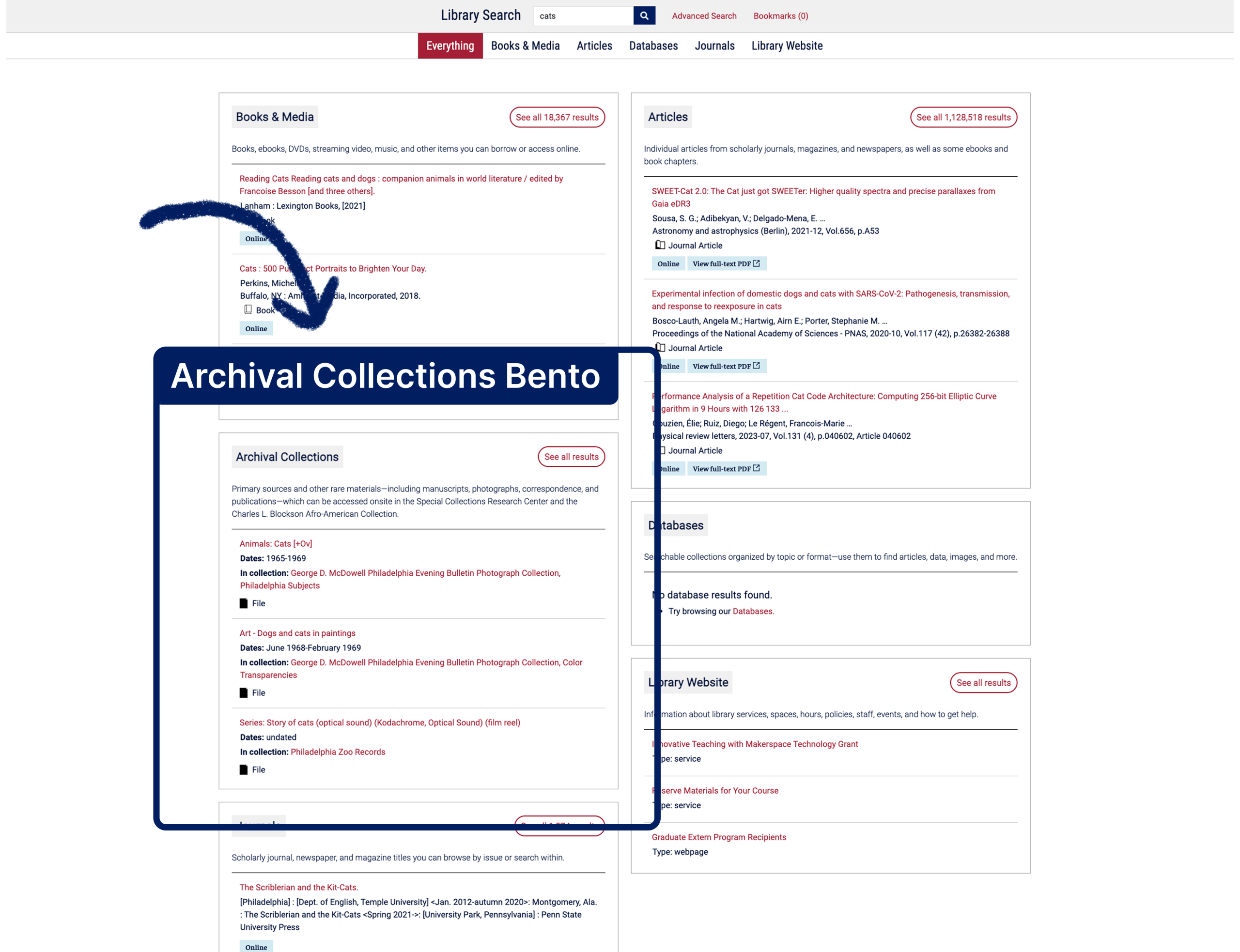
Library Search now includes better access to Temple’s archival collections! With these new features you will be able to find primary sources right alongside our books, articles, and media via our new, streamlined bento-style “Everything” results page!
You might be wondering, “What is a bento?”
When you use the search bar on the library’s website, you land on search results for “Everything”. This page brings together results from our catalog, articles, databases, research guides, and more.
We call each of these boxes a “bento”. The bento-style layout groups your search results into clear sections by resource type. Each bento shows the 3 top results for that resource type.
The NEW bento
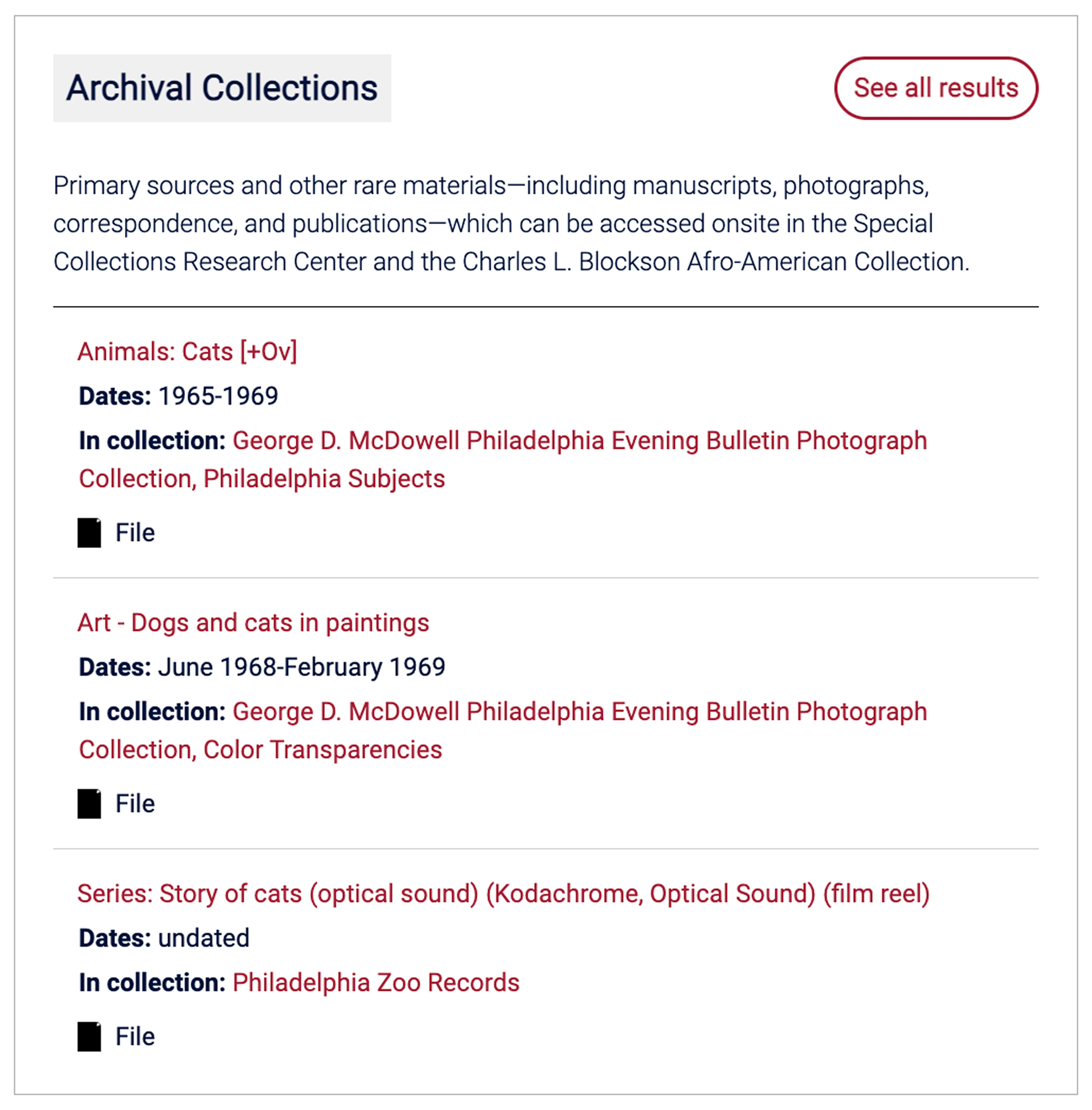
Whether you’re working on a paper, project, or exploring a new idea, the new Archival Collections bento helps you find primary sources and other rare materials from Temple’s unique collections. The results match what you’d find in our Finding Aids Database.
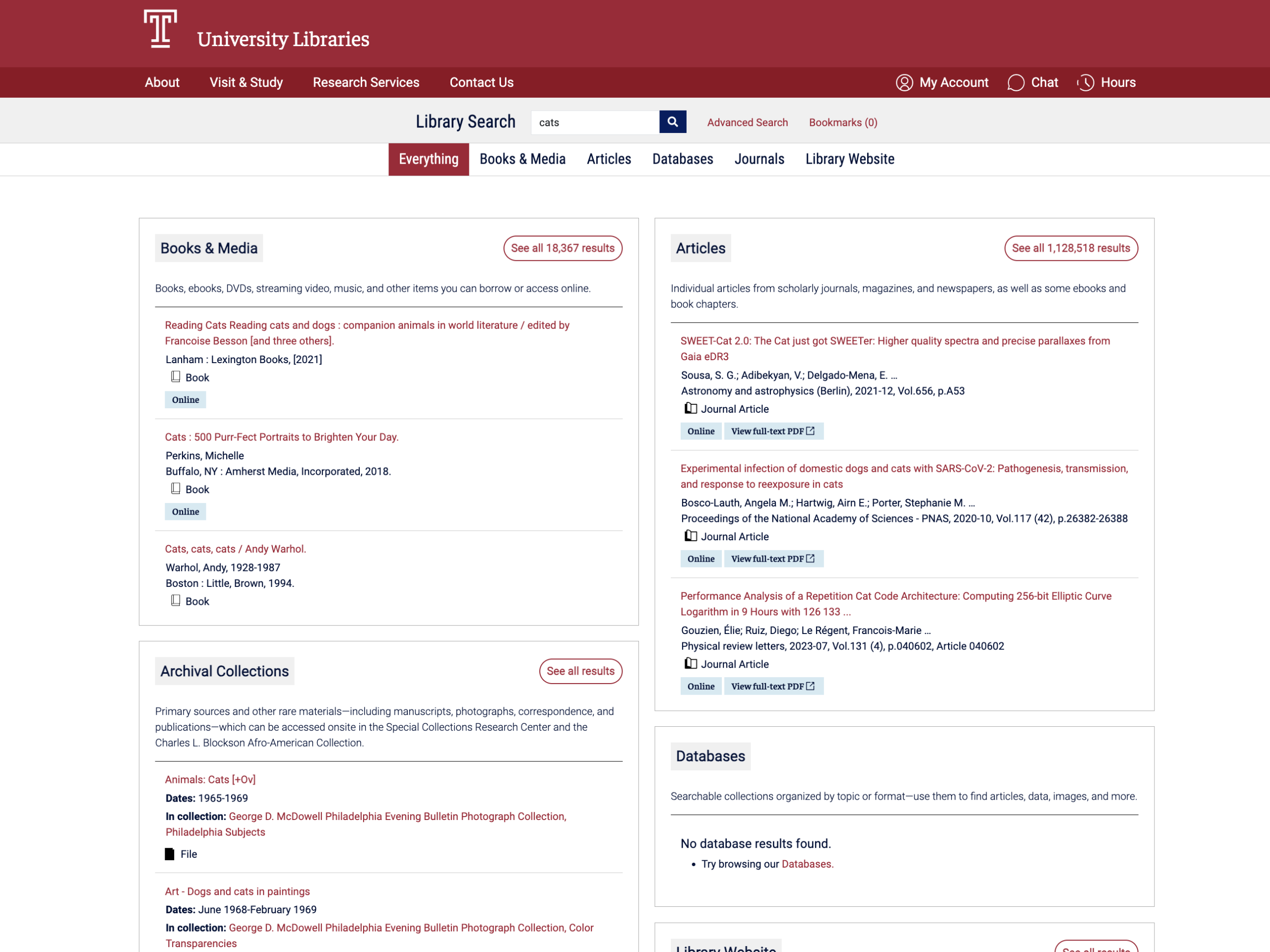
Let’s look atan example of the Archival Collections bento in use:
Example search: “Cats”
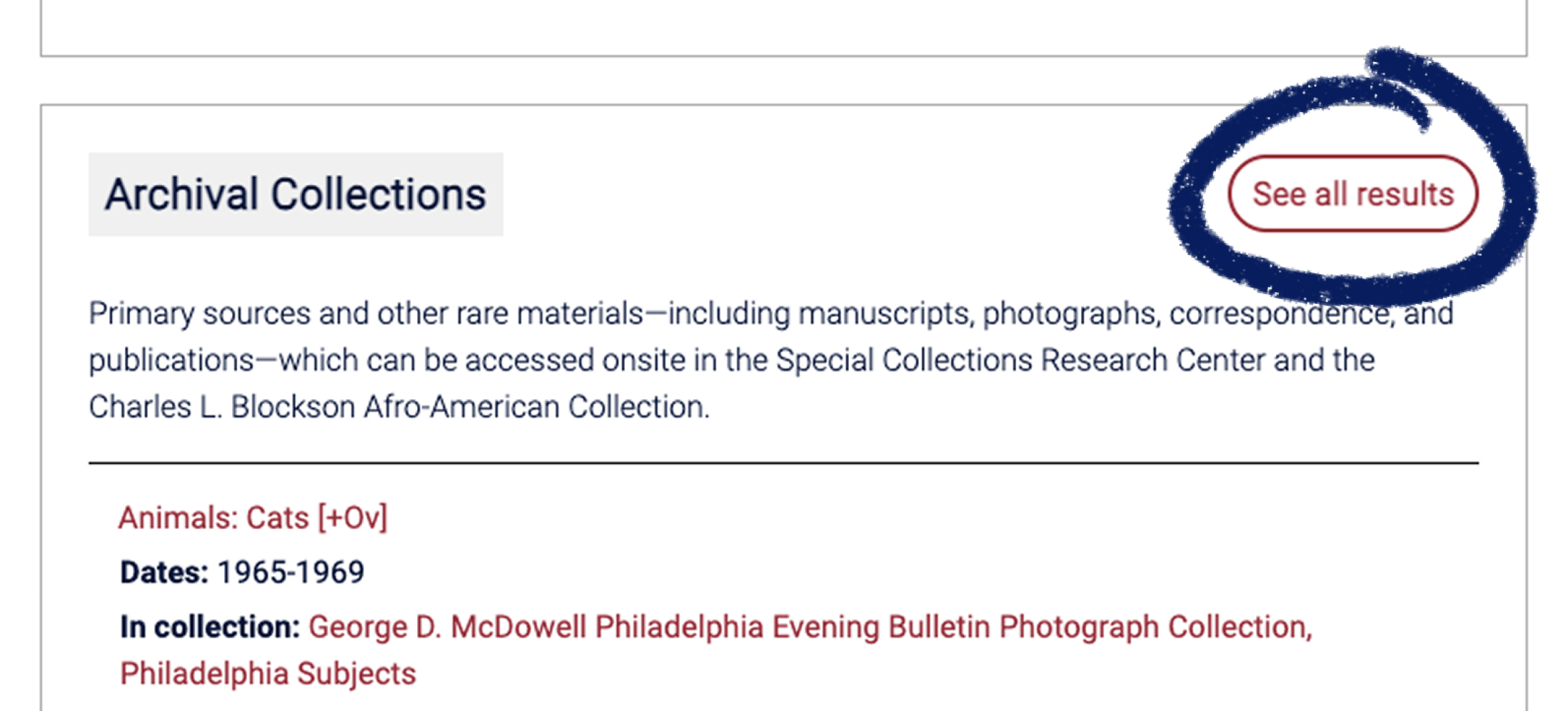
The screenshot above shows how results appear in the Archival Collections bento for the term “Cats”. Clicking on a title, such as “Art – Dogs and cats in paintings”, takes you directly to that record in our Finding Aids Database, where you can learn more and request onsite access.
Not finding what you need? Click “See all results” at the top right of the bento to see more matches from our archival collections.
A refreshed design
With archival collections now added, we took the opportunity to simplify and improve the layout and make the bento page easier to navigate. Highlights include:
A cleaner layout with two wider columns instead of three to help you focus on your search results
Short descriptions for each resource type to clarify what you’ll find in each bento
“See all results” links for each resource type moved to the top right of each bento to increase their visibility
Other styling improvements to make it easier to skim the page
How did we decide on these changes?
We looked at other libraries and gathered feedback from library users and staff. This input helped us decide on a design that felt intuitive and organized.
As a result, we’ve introduced updates that streamline access to resources and improve how you discover materials so that you can quickly find what you need for research or class in a single spot.
Guest post by Alicia Pucci, Travis Nace, and Rebecca Lloyd
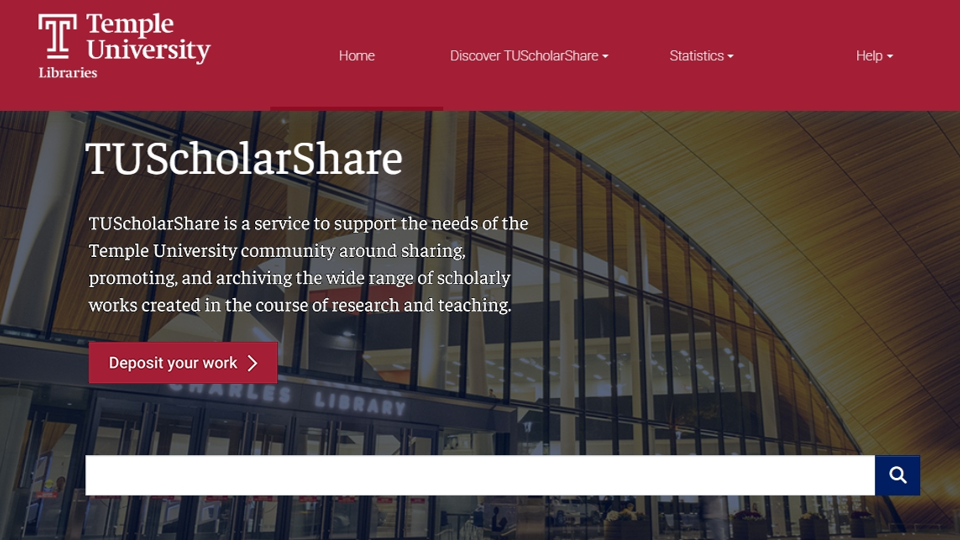
Five years ago, Temple University took the first step toward increasing the global visibility and public value of Temple scholarship with the launch of our institutional repository, TUScholarShare. The platform allows Temple scholars to share, promote, and archive a range of research and teaching outputs. As part of this year’s International Open Access Week (October 20-26th), the Libraries’ Scholarly Communications Strategic Steering Team (SCSST) hosted an event in Charles Library on October 21st to proudly celebrate TUScholarShare’s anniversary and all those across our Temple community who have contributed to its success.
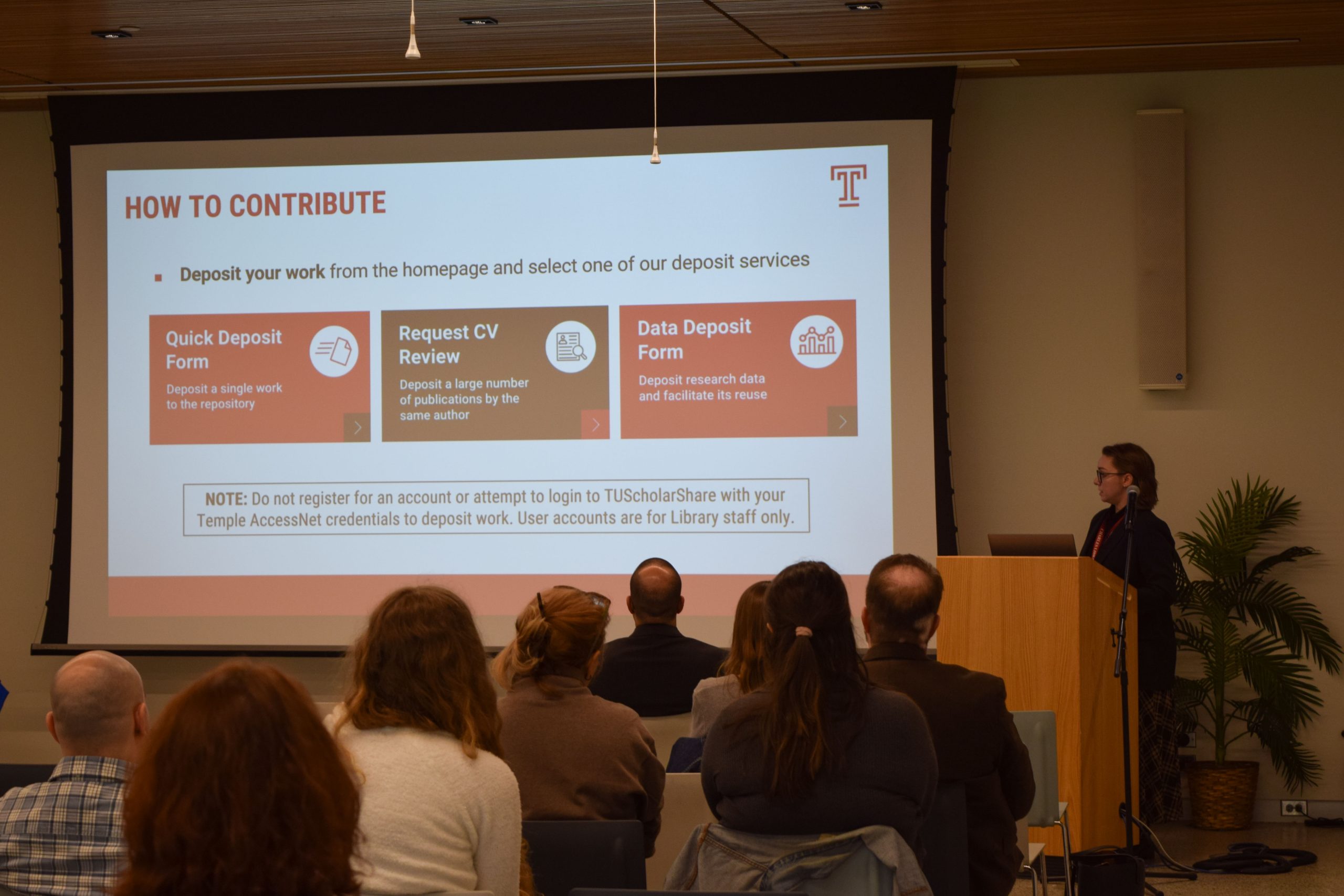
The hour-and-a-half catered event kicked off with opening remarks from Joe Lucia, Dean of Libraries, who reflected on the pivotal role institutional repositories play in helping the communities they serve reassert control over the knowledge they produce. Alicia Pucci, Assistant Director for Scholarly Communications and TUScholarShare’s Administrator, followed with a presentation that showcased the initiative’s milestones and global impact and demonstrated its upgraded platform.
Library staff member Alicia Pucci presents ways to contribute to TUScholarShare, photo by Ella Lathan
The highlight of the event was the series of engaging lightning talks from repository contributors across the campus community who have used or considered using TUScholarShare to meet their strategic goals and share their work with audiences well beyond Temple. Presenters and their topics included:
Dr. Adrienne Shaw, Associate Professor of Media Studies and Production, Klein College of Media and Communication, shared her experiences using TUScholarShare’s quick deposit form to submit teaching and learning materials and the CV review service to deposit her own scholarship.
Aaron Javsicas, Editor-in-Chief of Temple University Press, discussed how Temple University Press established a workflow and collection to archive supplemental materials for their books, demonstrating the ways the repository can help support traditionally published scholarship.
Caroline Burkholder, Senior Sustainability Manager, Office of Sustainability, showcased their office’s interdisciplinary Climate Change, Sustainability, and Environmental Justice collection and explained how TUScholarShare has been built into their Sustainability Action Plan to serve Temple’s sustainability mission.
Will Dean, Research and Data Services Librarian, Ginsburg Health Sciences Library, and Travis Nace, Research and Instruction Librarian, Ginsburg Health Sciences Library, highlighted the repository’s Research Data collection, statistics, and workflow for depositing datasets, with a specific focus on evidence synthesis search data deposits.
Dr. Marisa Rose, Professor of Clinical Obstetrics, Gynecology and Reproductive Services, Assistant Dean for Phase 3, Director of the FMSE program, Lewis Katz School of Medicine, discussed how her program is considering TUScholarShare to support the research outputs of their Faculty Mentored Scholarly Experience (FMSE) and provide graduate students with an alternative publishing option.
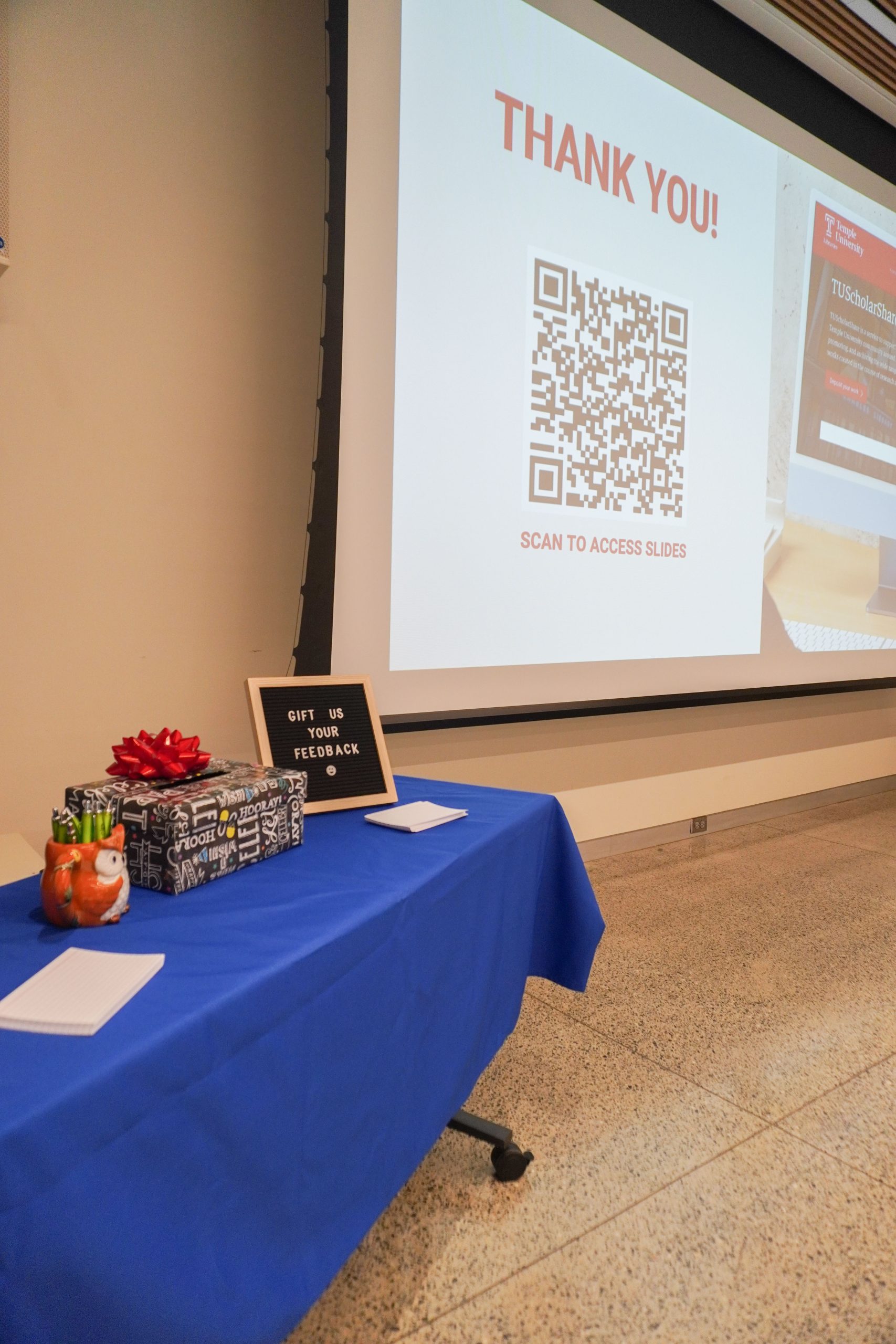
The suggestion gift box for attendees to share feedback after the event, photo by Ella Lathan
Attendees, who spanned Temple’s schools and offices, were given the opportunity to ask presenters questions and connect with Library staff members of the TUScholarShare team in the social half-hour that followed. Those in attendance also enjoyed celebratory cherry and white birthday cupcakes and were encouraged to share their feedback on the repository via a suggestion gift box.
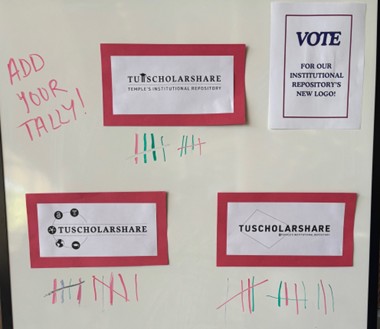
During the event, a table in the atrium promoted TUScholarShare and asked visitors at Charles Library to vote on three design options for the repository’s new logo, which were created by Joi Waller, the Libraries’ Senior Web/Graphic Designer. The engaging activity drew a predominantly student audience and prompted questions about what an institutional repository is and how they might benefit from using it. The logos received mixed feedback, with many comments connecting the graphics to the ideas of scholarship, inclusivity, or a repository (i.e., a sort of box).
The three TUScholarShare logo designs with visitors’ tallied votes displayed on a whiteboard in the Charles atrium, photo by Ryan Mulligan
If you were unable to attend the event, you can visit the Temple University Libraries collection in TUScholarShare to access slides from all the presentations. Consider exploring the repository to see the scholarly work of our Temple community and check out the suite of deposit services to contribute your own. Here’s to continuing to make our knowledge more open and accessible together through TUScholarShare!
Guest Post by the Open Education Group at Temple University Libraries.
Why the Libraries Provide Textbooks
The Libraries are dedicated to helping students save on educational costs by promoting textbook affordability. One key initiative is our commitment to purchasing ebook copies of required and recommended course texts whenever possible, ensuring these resources are freely available to Temple students.
In the 2024-25 academic year, library-licensed etextbooks saved students an estimated $659,000.
Use ourEtextbooks Available Through the Libraries page to find your course and see if your textbook is on the list! We also recommend looking for the Course Reserves tab in Canvas to see if your instructor has made other course materials available to you via the library.
Challenges in Providing Electronic Textbooks
The number of ebooks that the Libraries acquire each semester varies, as not all textbooks are available in electronic format. Textbook publishers such as Pearson or Cengage usually do not license ebooks to libraries. In 2024-25, the Libraries were able to offer access to 31% of course texts.
When an ebook is available to the Libraries for purchase, we try to get licenses that allow multiple simultaneous users. However, in some cases, we need to acquire single-user licenses, which means the book can only be read by one person at a time. When an ebook has a single-user license, we encourage students to be mindful of closing out of the book when they are not actively reading it, so that it can be available for other users. It is also often possible to save a small portion of the book using the Chapter Download or Print to PDF options. This will create a personal copy that you can use without affecting the user limit.
Get Connected
Students: Have questions about whether a textbook for your Temple class is available via the Libraries?Contact us!
Faculty: When selecting materials for the spring semester, you may want to contact your subject librarian or specialist to find out if the Libraries will be able to get your texts as ebooks. We also recommend letting the bookstore know what books you are using, even if you will be recommending that students use a library copy. The Libraries rely on information from the bookstore to find out what is assigned. You can submit your textbook adoptions to Follett in TU Portal (under faculty tools).
For many of these, we are featuring ATLAS.ti, a qualitative data analysis (QDA) software that can help save time and support many stages of qualitative research. All workshops will be offered as online sessions via Zoom.
Staff members from the Libraries offer help with qualitative data, analysis, and QDA software and tools. Visit the Libraries’ website to learn more about our support for qualitative research.
Sharing Data Using the Qualitative Data Repository
The Qualitative Data Repository (QDR) is a dedicated archive for storing and sharing qualitative and mixed-method research data. QDR staff specialize in qualitative research data and can assist Temple researchers throughout the research process.
Temple Libraries is a QDR member institution and is eligible for a limited number of no-cost data deposits per year. Researchers should register for a QDR account using their Temple email address to download or deposit data. Learn more on our guide to the Qualitative Data Repository.
Connect with other Philadelphia area Qualitative Researchers!
Penn Libraries, in conjunction with the Philadelphia Qualitative Consortium, is hosting a listserv (libqualdata@lists.upenn.edu) to support the inter-institutional collaboration and communication of Philadelphia-area qualitative researchers. The goal of the listserv is to share information about workshops, events, job ads, networking opportunities, and more related to qualitative research. Interested in connecting? Subscribe online.
This summer, the Makerspace at Temple University Libraries’ Loretta C. Duckworth Scholars Studio (LCDSS) welcomed 30 high school students for a hands-on course in 3D design, Computer-Aided Design (CAD) modeling, and 3D printing. The program was a collaboration between three educational organizations and two technology companies working together to open doors to technology and design: Launchpad Philly, CreateAccess, the Scholars Studio, Comcast, and Bentley Systems.
Launchpad Philly prepares Philadelphia students from underrepresented communities for the tech careers of the future, from software development to AI. Over two and a half years, participants gain 2,000+ hours of training, industry-recognized certifications, and paid work experience. CreateAccess engages beginners in 3D creation to ignite curiosity, build confidence, and help them see that careers in 3D are within reach. CreateAccess augments Launchpad’s core programs by introducing students to 3D creation through project-based micro courses.
Ruth, Jennica, and Loceny in the Makerspace creating their 3D project.
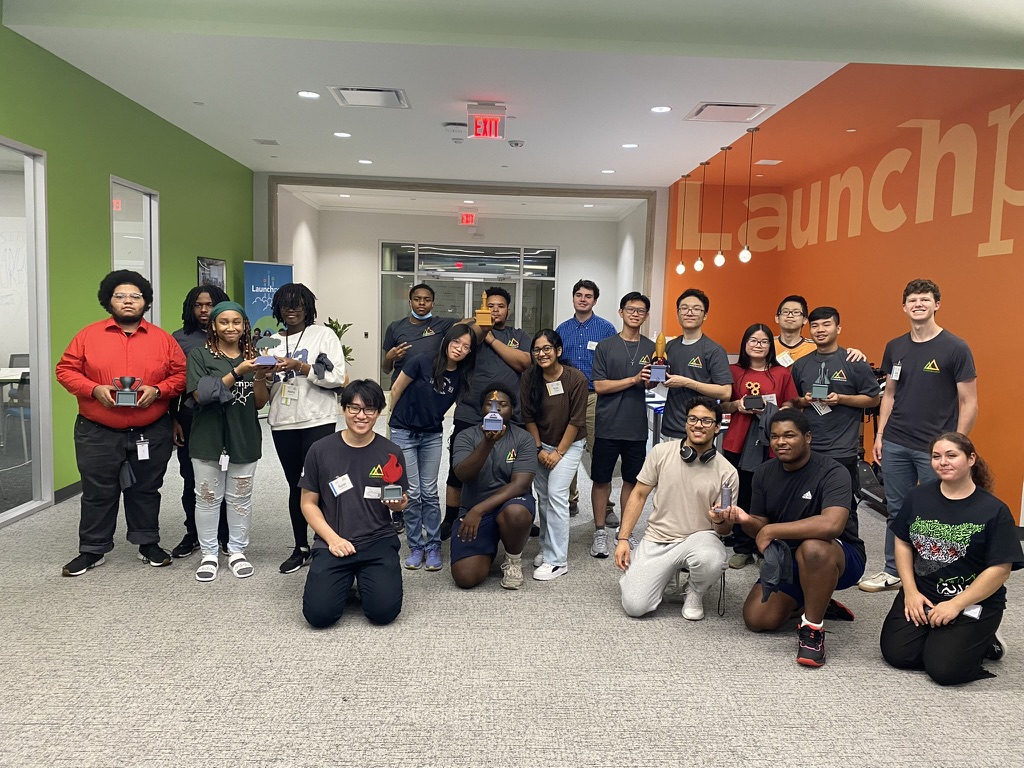
As part of this program, CreateAccess supported Launchpad students in learning foundational CAD modeling skills that enabled them to design custom trophies to be awarded at Ignite, Launchpad’s annual pitch competition.
Ignite is a highlight of the Launchpad journey, where students practice design thinking, entrepreneurship, and public speaking while pitching app ideas that solve real problems in their communities. To inspire their designs, students also visited the Comcast Technology Center, where they toured the fabrication lab, were introduced to industrial design, and had the opportunity to work with industrial design professionals to create their initial trophy design concepts. They later had the opportunity to get feedback about their in-progress designs from colleagues from Bentley Systems.
When asked about the partnership, Nick Imparato, Launchpad’s Program Director, remarked, “Having physical trophies to provide to Ignite’s winners took the event to the next level and provided a fantastic opportunity to showcase our students’ technical skill and creativity. None of this would have been possible without the incredible work of the CreateAccess team and the technical support and space the Makerspace provided.”
At the Scholars Studio, students brought their concepts to life. With access to the Makerspace’s state-of-the-art equipment and the support of staff, they produced the final 3D-printed trophies that debuted at Ignite. Combining Launchpad’s mission, CreateAccess’s expertise, insights from industry professionals, and the Scholars Studio’s resources gave students a powerful experience in design, problem-solving, 3D technical skills development, and innovation, preparing them for the rapidly evolving tech world ahead.
“Exposing high school students to software like this increases their digital literacy within every CAD/CAM-applicable industry and prepares them to engage with it in college at a high level,” Hannah Tardie, Makerspace Manager, said. “It’s important to increase inclusivity and accessibility around these programs, not just because these students don’t typically have access to curriculum on advanced software and equipment, but also because they will push the field in new and dynamic ways.”
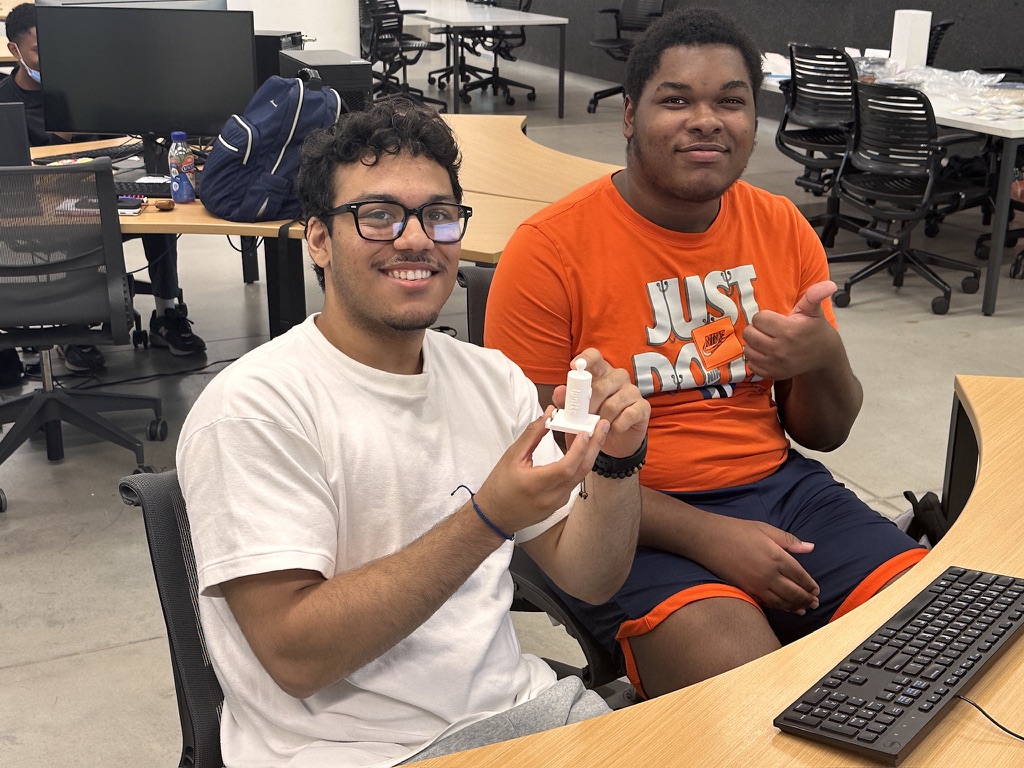
Umbar and Jamir in the Makerspace showing off their 3D print.
Learning CAD/CAM software can be profoundly empowering. Tardie underscores, the process of designing objects and bringing them to life through 3D printing represents a form of worldbuilding that echoes what digital media scholar Ruha Benjamin describes as Radical Imaging. Engaging in 3D modeling encourages students to think abstractly about the possibilities they envision, transform those ideas into concrete designs, and then realize them through printing.
This practice demonstrates to students that they have the ability to shape and influence their world. It also emphasizes that they are not limited to relying on preexisting objects or systems—they can create the tools, artifacts, and possibilities they want to see.
Students’ feedback about the program highlighted the benefits of seeing how their ideas “came to real life” and their appreciation for an environment to “grow and develop.” Several highlighted their specific interest in 3D printing, which was made possible through the resources of the Makerspace.
The Ignite winners for Best Pitch – GravitasQuest – standing with CreateAccess Co-Founder and Executive Director Liz Dailey and Ignite Judge and Comcast UX Designer Willem Schreiks.
None of which would have been possible without the resources as well as the passionate, knowledgeable staff that work at the LCDSS at Temple University Libraries.
“I was excited when Launchpad approached me with this program because it is exactly the type of work we want to grow and support in the Makerspace,” Tardie said. “I aim for the Makerspace within Temple Libraries to increase digital literacy and expand upon the definition of digital literacy and what that can mean for library patrons. I love that the collaboration between Launchpad and CreateAccess focused on training students to complete fun and interesting assignments on sophisticated, industry-standard digital software. CAD (computer aided design) software can be intimidating, and the projects I saw come out of this summer program were impressive and unique. It’s evident that the curriculum Launchpad X CreateAccess produced was intentionally planned and well executed.”
Ignite Trophies created by Launchpad Students at the Makerspace.
Beyond the Makerspace, Launchpad and CreateAccess were able to use one of Temple’s state of the art computer labs at a different facility on campus to support a video game design track.
Joe Lucia, Dean of Libraries, remarked, “Our aspiration for the Charles Library has always been for it to function as an educational resource for our community and through its skilled staff and unique resources such as the Makerspace to bring it to life as an on-ramp for engaging curious students with new tools and technologies. It’s great to see those aspirations becoming reality and including young people from our neighborhood. It’s a wonderful realization of our vision.”
Programs like this are vital to Temple University Libraries and to the University as a whole. They embody our commitment to forward thinking and to investing in the next generation. As a library—and as an institution rooted in North Philadelphia—we carry a responsibility to foster education and opportunity. This program demonstrates how cultivating an inclusive environment, teaching real-world skills, and encouraging creativity can spark innovation, perseverance, and tenacity—qualities our world needs now more than ever.
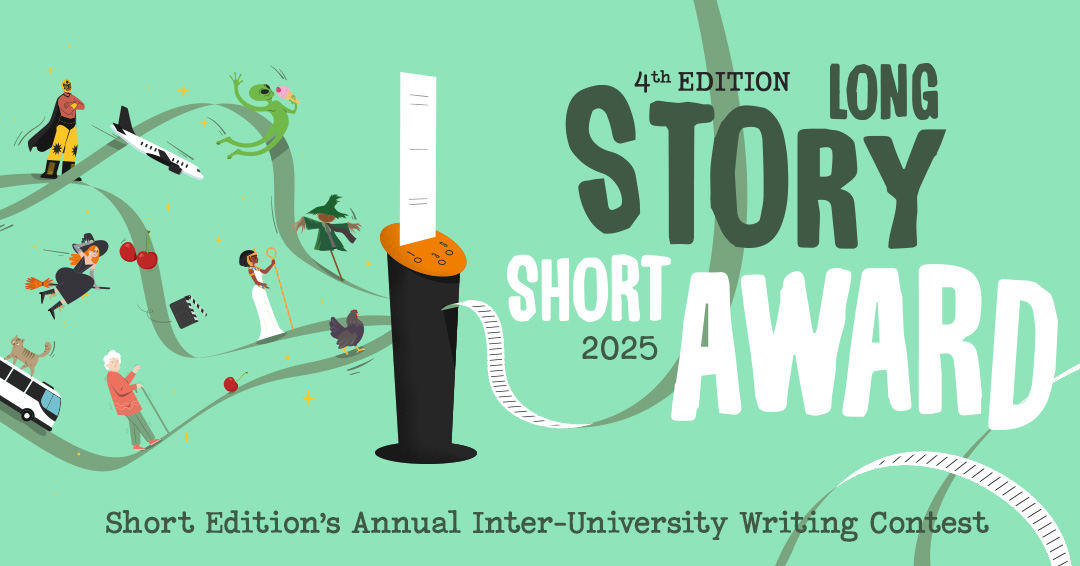
Imagine if you were the next writer published in over 500 Short Story Dispensers worldwide. Starting on September 29th you could be!
What is it?
The Long Story Short Award is an annual writing competition organized by Short Édition, featuring participation from over 20 universities globally this year. Temple University Libraries is proud to join in, and we eagerly await your submissions. Read on to discover more about the contest, application process, submission guidelines, and the selection criteria for winners.
Stay Tuned for Updates!
Mark your calendars for September 29th when we will unveil the theme on our website!
Contest Duration
The Contest opens on September 29th at 09:00 a.m. EST and close on November 2nd at 11:59 p.m. EST.
All submitted works will be published on the contest webpage on November 3rd. The public will be invited to participate in the selection of the public winner by voting for their favorite story from November 3rd through November 23rd. During this time, the editorial team will select one jury’s winner and one jury’s coup de cœur (jury’s favorite). The winners will be announced on December 3rd!
General Submission Conditions
No purchase is required to submit or to win the Contest. All the Submissions will be reviewed by the Organizer’s editorial team to ensure they comply with the Contest Official Rules. Each submission can be disqualified if it does not comply with the Contest Official Rules. Each submission must be new, unpublished, original and written by the submitting Author and shall be written in English.
The submission process is entirely electronic via the contest website. No paper manuscripts will be accepted. The submission form is copy/paste format.
Specific Submission Conditions
Submissions must not exceed 7,500 characters (including spaces).
Submissions must be only short stories. We do not accept poetry.
Authors shall choose their own username while creating their author account — this username will therefore be associated with their Submission when published on the Contest website — and shall also provide their full name and contact information to the Organizer via their online account profile. The Organizer must be able to easily get in touch with each Author for any reason.
After Submission, each Author will be emailed a confirmation of receipt. Authors will receive an email if there is a change in status of their Submission.
Publication
All submitted works will be published on the contest webpage on November 3, 2025.
Winners
Once the works are published on the Contest website, the Online Community will have two weeks to vote for their favorite story. Members of the Online Community can vote for as many stories as they wish, but only vote once for each story. Members of the Online Community can comment on as many stories as they wish.
The Organizer’s editorial team will select amongst the submissions one winner and one Coup de cœur. There will also be an Online Community winner (hereinafter referred to as “Public Winner”), which will be the story who receives the most Online Community votes.
The Prizes
For the Jury’s Winner: a monetary prize of $550 USD
For the Jury’s Coup de cœur: a monetary prize $400 USD
For the Public Winner: a monetary prize of $550 USD
Monetary prizes will be paid to the recipients via Paypal or a wire-transfer by the Organizer. Jury Winner, Public Winner and Coup de cœur are each solely responsible for any applicable taxes on their prize money.
The universities of the public and jury-chosen winners will be awarded free Short Story Discs and eco-friendly paper rolls.
Voting Conditions
The offering of incentives or any other counterpart in exchange for votes or comments is strictly prohibited. The use of bots and/or robotic submissions is prohibited. The Organizer has the right to delete any vote, at any time, where it suspects that such vote violated at least one of the previously mentioned Contest Official Rules, without any liability towards the member of the Online Community or the Author.
Members of the Online Community can vote for as many Qualifying Submissions as they wish, but only vote once for each Qualifying Submission. Members of the Online Community may comment on as many Qualifying Submissions as they wish.
Check back in with us in late September
The theme will be posted on our website on September 29th, be sure to check back in with us then to find out how you can become the next writer published in over 500 Short Story Dispensers worldwide.
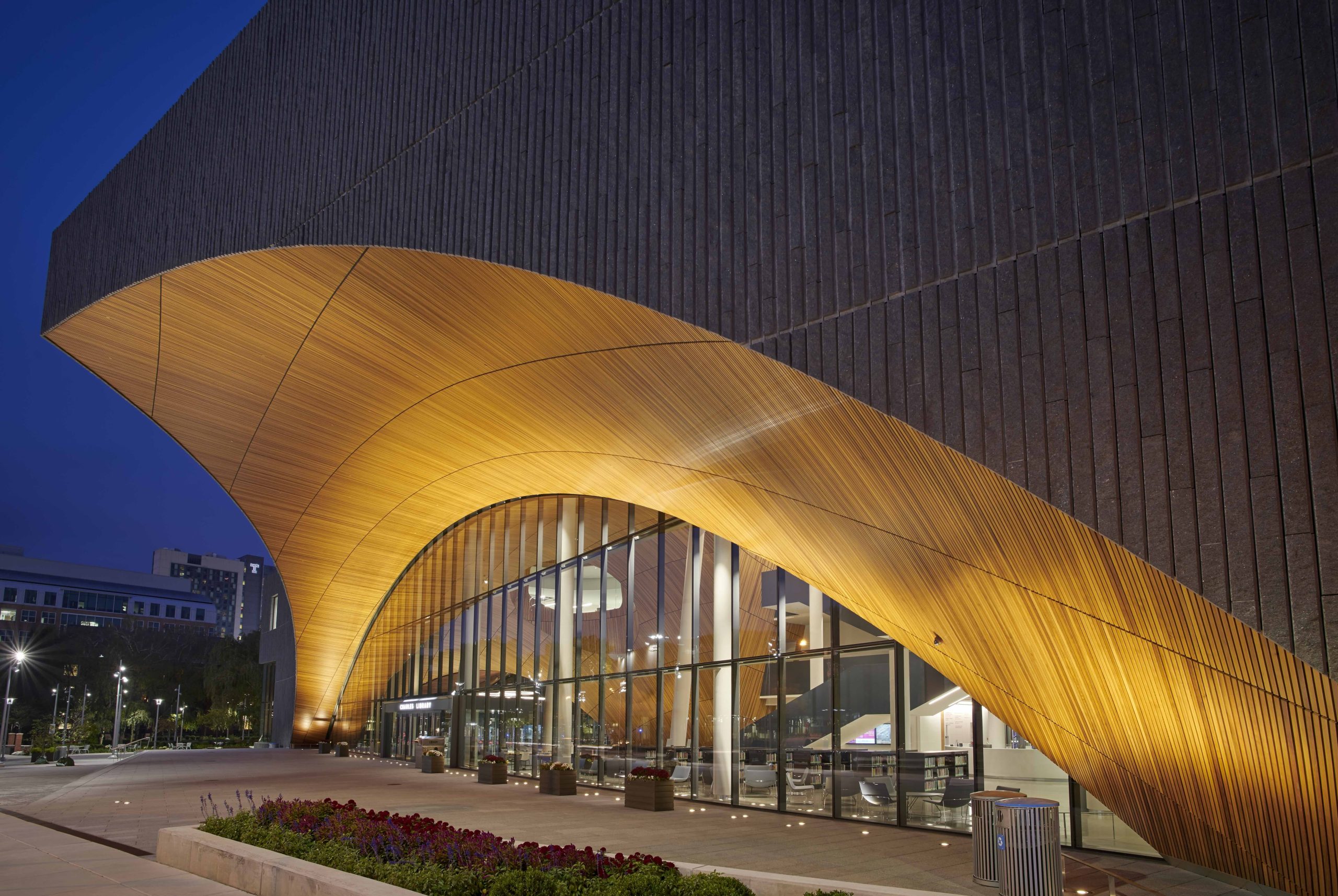
13th Street entrance to Charles Library, photo by Nathan Cox.
Dive into the fall 2025 semester at Temple University with Temple Libraries by your side! Our extensive resources, knowledgeable staff, and tailored services are here to propel your academic success. Let us be your partner in unlocking new possibilities and achieving your goals.
In this post you’ll learn ways to use the Libraries to your advantage this academic year. Be sure to check out our website for more resources, and ways to connect with us!
Find What You Need to succeed
The Libraries provide access to a broad range of physical and online materials—including books, journals, articles, music, and movies—all discoverable through Library Search.
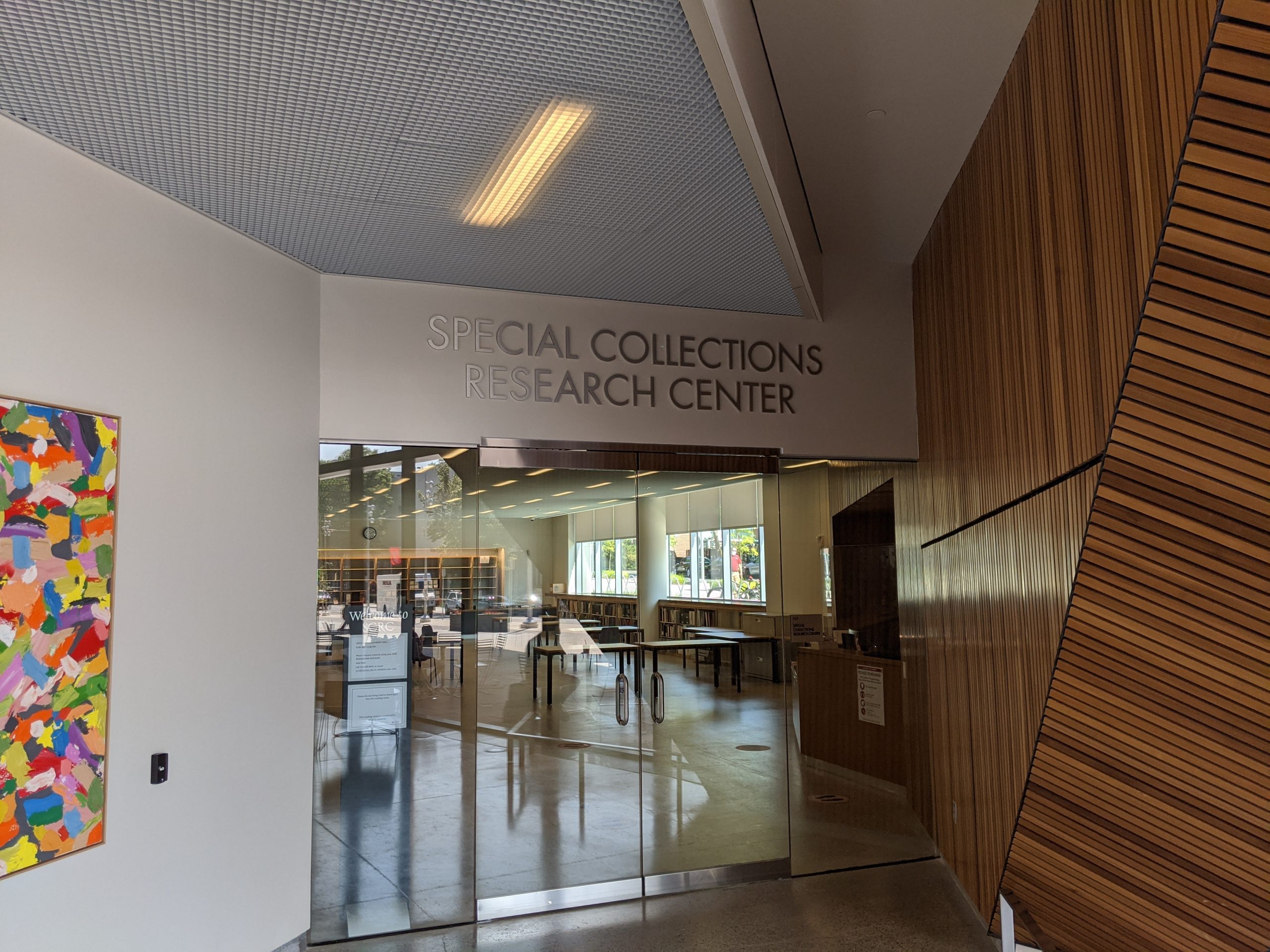
Special Collections Research Center entrance located on the 1st Floor of Charles Library, photo by Josue L Hurtado.
Personalized Research Support at Your Fingertips
Embarking on a research project or paper? Our dedicated team of subject librarians and specialists are here to guide you every step of the way. No matter your field of study or academic pursuit, we have an expert librarian or specialist well-versed in your discipline, ready to provide tailored assistance.
Connecting with your personal research guru is a breeze. Simply choose the mode that suits you best:
Chat: Our 24/7 chat service ensures you’ll always have a knowledgeable librarian or specialist at your disposal, no matter when inspiration strikes.
Email: Prefer the written word? Fire off an email, and your librarian or specialist will respond promptly with insightful guidance.
Appointments: For in-depth consultations, schedule a virtual or in-person appointment at your convenience. Your librarian or specialist will be fully dedicated to your research needs.
With our comprehensive support services, you’ll quickly find your way to the best academic resources for your project.
Research at Your Own Pace
Once you’ve reviewed your syllabi, explore our curated Research Guides for subjects, courses, and research skill development expertly assembled by subject librarians and specialists.
Each semester the Libraries compile a list of digitally available textbooks that may substitute for required or recommended course textbooks. They are available to students at no cost.
Add LibKey Nomad to your browser to ease your browsing abilities! LibKey Nomad is a browser extension that facilitates access to the Libraries’ full text resources as you find research on the web. LibKey Nomad provides one-click access to full text from websites like PubMed, Wikipedia and publisher pages. Go to the Download Libkey Nomad website. Click on the icon for your browser of choice and follow the prompts to add the extension. Choose Temple University as your institution.
Laptop and Print-on-the-GO kiosk located on the 1st Floor of Charles Library, photo by Geneva Heffernan
We offer a variety of open seating options to satisfy student needs for individual and group study. Students can also book study rooms ahead of time at Charles Library and the Ginsburg Health Sciences Library.
3rd Floor study area that overlooks the Student Success Center, photo by Michael Grimm.
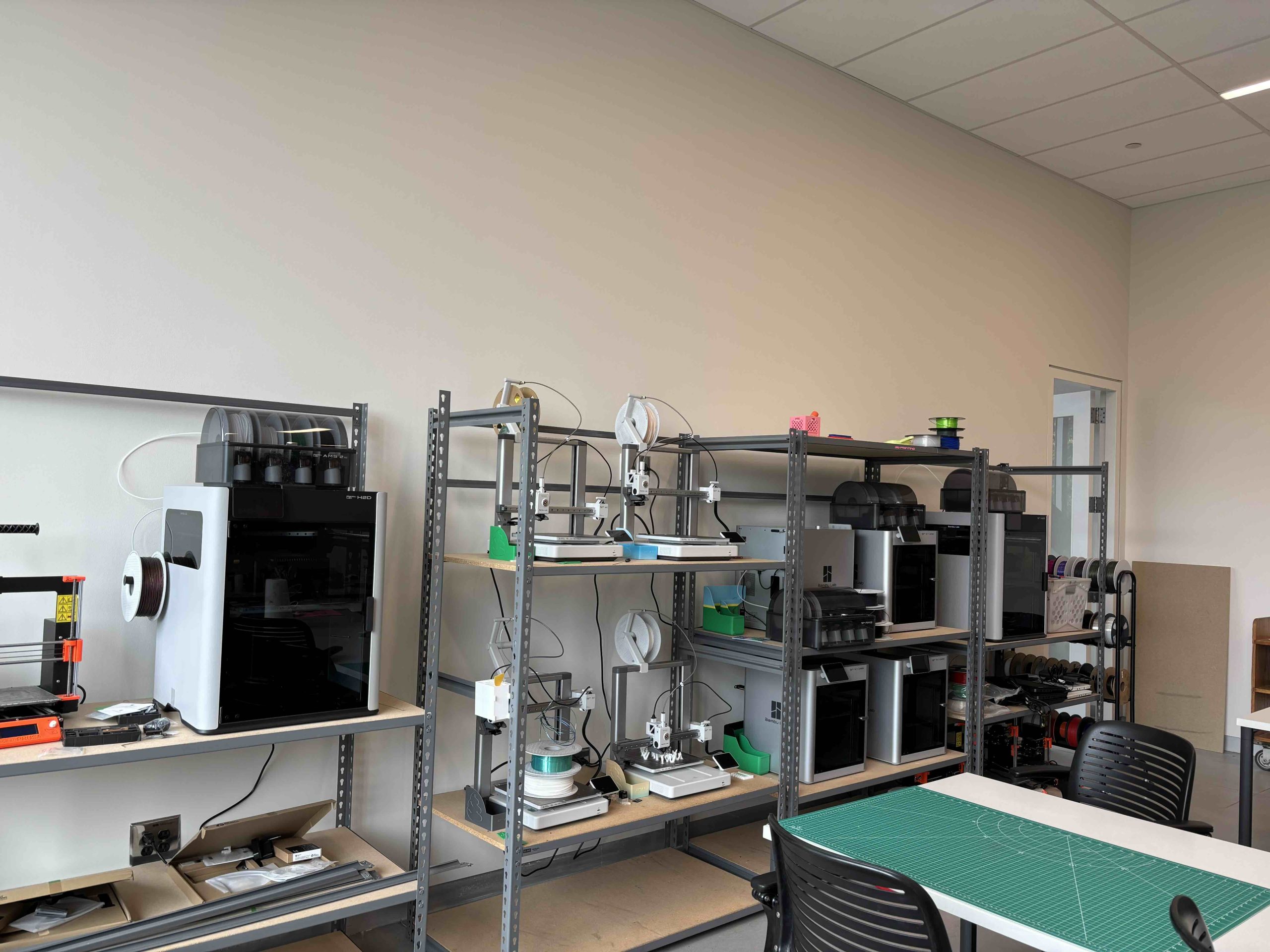
If you are interested in making use of the Libraries’ advanced equipment and technology, visit the Loretta C. Duckworth Scholars Studio in Charles Library and the Innovation Space at Ginsburg Health Sciences Library.
The Innovation Space at the Ginsburg Health Sciences Library, photo by Brae Howard Photography.The Makerspace at Charles Library, photo by Ella Lathan.
The Scholars Studio has many spaces to create in, such as the Tech Sandbox, the Makerspace, and the Media Production Studio. The media production studio is a room designed for individuals and groups to record and edit audio for podcasts, music, and more! It contains a PC and Mac setup as well as professional recording equipment, so no matter what you’re used to working with, we’ve got you covered. It can be reserved from Monday-Friday between the hours of 9AM and 5PM and is open to students, faculty, and staff of Temple University.
Attend Our Free Events and Workshops!
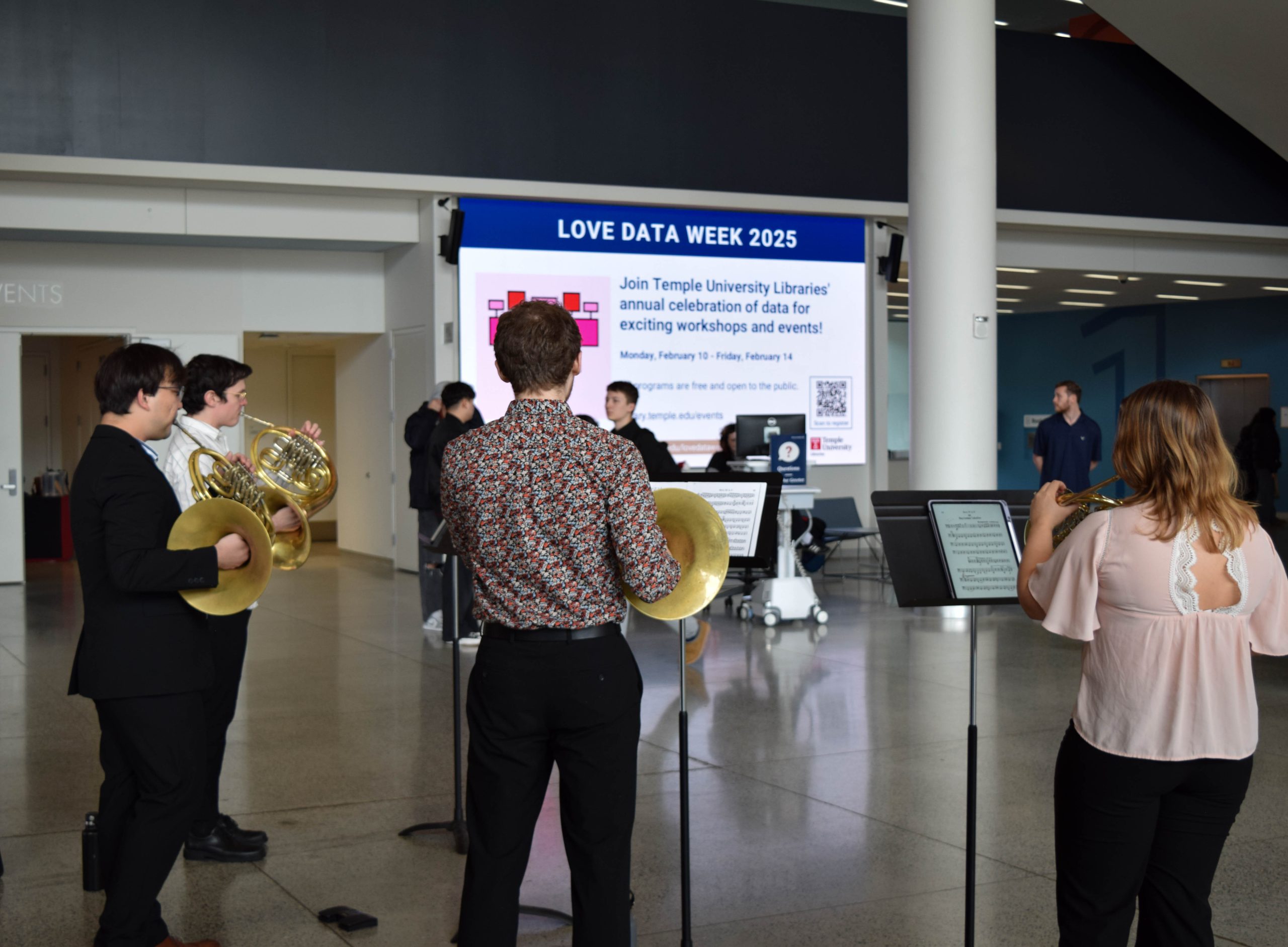
Last year’s Music in the Stacks Concert in the Charles Library Atrium, photo by Ella Lathan.
We host various events and workshops throughout the academic year. In addition, we’ll be offering a lineup of concerts, conversations, and specialized workshops, on everything from CV writing to 3D printing.
As always, our events and workshops are free and open to all.
Stay Up to Date!
Follow us on social media and sign up for our mailing list to get future updates from the Libraries, including upcoming events and exhibits, featured resources, and more.