Temple University Libraries Announce Library Prize Winners

Temple University Libraries have announced the winners of the fourth annual Library Prize for Undergraduate Research.

As this prestigious award entered its fourth year, 63 outstanding applications were received. Applications represented disciplines, schools and colleges across Temple’s campus.

Congratulations to our winners:

Peter LeibenspergerMusical Ambiguity as Poetic Reflection: Mahler’s Kindertotenlieder, No. 1, “Nunn will die Sonn’ so hell aufgeh’n!” – (Music Studies 4782) Faculty Sponsors: Dr. Edward Latham, Dr. Cynthia Folio

Natalia SmirnovBefore and After Photography: The Makeover Method of Discipline and Punish – (Film and Media Arts 4671) Faculty Sponsor: Dr. Paul Swann

Maureen WhitsettFenianism In Irish Catholic Philadelphia: The American Catholic Church’s Battle for Acceptance – (History 4997) Faculty Sponsors: Dr. Petra Goedde, Dr. Elizabeth Varon

And our honorable mentions:

Robyn Baylor“We the Kinda Cats Like to Turn Hegel Upside Down Just to See the Pennies Fall Out”: Yugen, The Floating Bear, and the Avant-Garde Poetry Community of the Lower East Side, 1958-1963 – (American Studies 4097) Faculty Sponsor: Dr. Lisa Rhodes

Brian ChambersConsolidating Dictatorship: The Pinochet Regime in Retrospect – (History H4997) Faculty Sponsors: Dr. Petra Goedde, Dr. Elizabeth Varon, Dr. Art Schmidt

Cynthia GingrichThe Schola Cantorum and Le Chat Noir Juxtaposed in Paris, 1880-1914 – (Music Studies 4782) Faculty Sponsor: Dr. David Cannata

Sarah Van AndenThe Collection of Charles I: A Symbol of Royal Power from Formation to Rejection – (History 4997) Faculty Sponsors: Dr. Petra Goedde, Dr. Travis Glasson

For interviews with the 2008 Library Prize for Undergraduate Research winners, and full text of their papers please visit the Library Prize site.

Thumbnail image for 050108_LibraryPrizeForUndergraduateResearch018.JPG

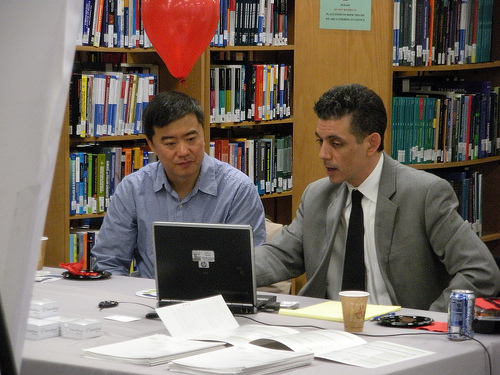
Winner Peter Leibensperger at the podium

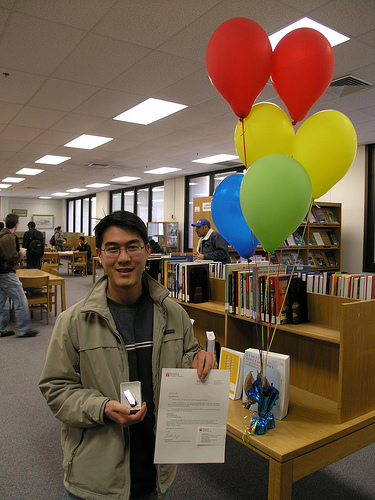
Thumbnail image for 050108_LibraryPrizeForUndergraduateResearch024.JPGBack, left to right: Professor Edward Latham, 2008 Winner Peter Leibensperger, Professor Travis Glasson, Professor Elizabeth Varon, Professor Petra Goedde, Professor Art Schmidt, 2008 Honorable Mention recipient Brian Chambers, 2008 Honorable Mention recipient Cynthia Gingrich

Front, left to right: Library Prize sponsor and SBM ‘49 alumnus Jack Livingstone, Professor Lisa Rhodes, Honorable Mention recipient Robyn Baylor, 2008 Winner Natalia Smirnov, Professor Paul Swann, 2008 Honorable Mention recipient Sarah Van Anden, 2008 Winner Maureen Whitsett, Vice Provost for Undergraduate Affairs Peter Jones, Dean of University Libraries Larry P. Alford, and Professor David Cannata

Thumbnail image for 050108_LibraryPrizeForUndergraduateResearch021.JPG

Deputy Provost and Dean of University College Richard M. Englert, Professor Elizabeth Varon, Professor Petra Goedde, 2008 Library Prize winner Maureen Whitsett, and Dean of University Libraries Larry P. Alford
Philadelphia’s Waterfront Wobblies

ourbigunion.jpgOn April 17, after visiting the Temple Book Club to discuss his new book Wobblies on the Waterfront: Interracial Unionism in Progressive Era Philadelphia (University of Illinois Press, 2007), author Peter Cole was interviewed by librarian Fred Rowland. In the interview, he provides a fascinating look at Progressive Era Philadelphia, an industrial dynamo of American capitalism whose busy port along the Delaware River gave rise to a successful interracial multiethnic union (IWW Local 8) that was able to overcome employer resistance to control work on the docks from about 1913 to the early 1920’s. While discussing Local 8 and its unique success in bringing together white Protestant, black, and immigrant Catholic and Jewish longshoremen, he talks about the radical Industrial Workers of the World (IWW)and their relationship to the rest of American labor, the nature of work on the docks, local labor and race relations, the effects of World War I and Bolshevik Revolution on the port of Philadelphia and the IWW, as well as lessons to be learned from Local 8’s rise and fall.  If you’re interested in Philadelphia history, you’ll like this interview.

[ensemblevideo contentid=c75xRq8Td0yEQGOogwLuqQ audio=true] (MP3, 20 minutes)

iTunes U link (for downloads)

Subscribe to this podcast series

For a brief overview of the Industrial Workers of the World, go here (Temple-only).

Researcher Rights, Obligations & the NIH

On April 7, 2008 a new reporting requirement goes into effect that affects researchers funded by the National Institutes of Health (NIH). Principal investigators must ensure that electronic versions of any peer-reviewed manuscripts arising from NIH funding and accepted for publication on or after April 7, 2008 are deposited in PubMed Central (PMC), NIH’s digital archive of biomedical and life sciences journal literature. Specifics:

  • The manuscript must be made publicly available no later than 12 months after the official date of publication.
  • Beginning May 25, 2008 researchers submitting an application, proposal, or progress report to NIH must include the PMC or NIH Manuscript Submission reference number when citing applicable articles that arise from their NIH funded research.

The policy applies to you if your peer-reviewed article meets the following criteria:

  • Directly funded by an NIH grant or cooperative agreement active in FY2008 (October 1, 2007-September 30, 2008)
  • Directly funded by a contract signed on or after April 7, 2008
  • Directly funded by the NIH Intramural Program
  • If NIH pays your salary

Important information on researcher rights:

  • Some publishers will deposit your manuscript for you: they are listed here.
  • Before you sign a publication agreement or similar copyright transfer agreement, make sure that the agreement allows the article to be submitted to NIH in accordance with the Public Access Policy.

The NIH estimates approximately 80,000 published articles arise yearly from NIH funds. Temple University researchers are one group of investigators who contribute to this scholarship, and as per the NIH, were awarded 119 research grants totalling $42,157,757 in 2006. Additional Information:

-Katherine Szigeti, Science Librarian

SEAL eResources Fair Raffle Winners Announced!

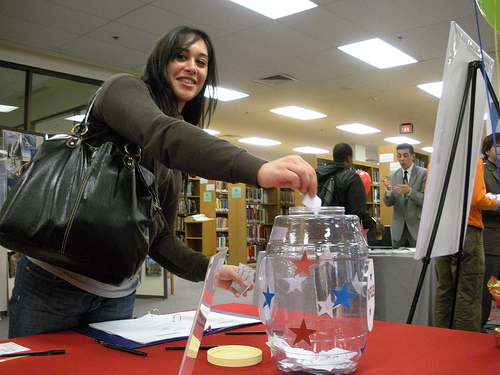
Students, faculty and staff visited the SEAL eResources Fair on Wednesday, March 19th, to learn about library resources and tools, enjoy cookies and coffee, and enter a Prize Raffle.

Raffle Winners:

  • $100 Best Buy gift card from CSA/Proquest Erik Lion, Electrical Engineering undergrad
  • iPod Shuffle from the Library Tanya Riddick, CST undergrad
  • $25 Circuit City gift card and tote bag from Thomson Walter Johnson, Mechanical Engineering undergrad
  • 1GB Flash Drive from IEEE Michael Chen, CST undergrad
  • 1GB flash drive from IEEE Ajo Maret, Electrical Engineering undergrad
  • 4-port USB Hub from IEEE Kyle Goldstein, Civil Engineering undergrad
  • 4-port USB Hub from IEEE Kaveh Laksari, Mechanical Engineering graduate
  • $25 iTunes card from Engineering Village Timothy Jennings, Mechanical Engineering undergrad
  • $25 iTunes card from Engineering Village Tejal Patel, Electrical Engineering undergrad

Thank you to all who attended our first eResources Fair at SEAL. It was quite a success. As a graduate Mechanical Engineering student said, “This was a great event and very helpful. I’ll definitely be here next time!”

An undergraduate student in the Biology Department noted, “I learned that Temple had many databases that can ease my workload and make searching for sources very easy.”

At Temple University Libraries we’re always happy to support your research needs. Thank you again for making the eResources Fair a success!

Vendor1.jpg

Raffle.jpg Winner1.jpg Raffle2.jpg

No Joke – We Now Offer Total Access To The Chronicle

While some of the Libraries’ online databases (e.g., LexisNexis) have long contained searchable content from the Chronicle of Higher Education, we are now pleased to offer free, campuswide access to the complete contents of the Chronicle. That includes every new weekly issue, the complete searchable archive back to 1989, and the full-text of the Almanac of Higher Education back to 1995.. Simply navigate to the Chronicle website and click on links to any article to gain access to the full text. When off campus, simply authenticate yourself using your Temple network account.

To get further value from the Libraries’ subscription to the full-text of the online Chronicle, sign up for free subscriptions to any of the Chronicle’s e-mail newsletters and RSS feeds. Daily reading of both Academe Today and Afternoon Update present an excellent strategy for keeping up with the latest developments in higher education. Just create your account and then sign up for your newsletters. For those who prefer to use a news aggregator, the Chronicle has plenty of RSS feeds from which to choose.

We hope that providing campuswide access to the complete text of the Chronicle of Higher Education will help every member of the Temple University Community to be better informed about the world of higher education.

New and Improved Self Check Machines in Paley Library

We are pleased to announce that Paley Library has two new state-of-the art self-check machines on the first floor of Paley underneath the portrait of Samuel Paley. The new machines now feature a two step procedure that allows all sizes of books to be checked out successfully. With the old check-out machines we found that many of our users were unable to use them for large books such as music scores and art history books. Size and barcode placement is no longer a problem. The graphics on the screen make them very user-friendly and we hope that many more of our users will be able to take advantage of their convenience.

selfcheck.jpg —Penelope Myers

Database Finder Debuts

While it’s great that the Temple University Libraries have added so many new electronic databases, journals and book collections, our list of databases was getting extremely long. Finding the right database for a research project was becoming a challenge, and scrolling our A-Z list a bit cumbersome. To improve student and faculty access to our rich collection of e-resources we introduce Database Finder. It’s a completely new way to find the right database. Instead of scrolling through the databases from A to Z, or examining subject groupings, Database Finder is a search engine that locates electronic databases, journal and book collections based on the words in the name of the database or by broad subject category. In time, Database Finder will feature a more robust keyword search capability. Here is a glimpse of the search interface:

dbfinder.jpg Note that if you do prefer the old A-Z list or subject browse of the databases, those approaches are still available. But we hope you’ll prefer the ability to quickly access your database of choice by searching its name or finding several to choose from based on your subject. If you have more questions about Database Finder, please contact your departmental library liaison. We look forward to your feedback and comments.

Daddy Grace and His House of Prayer

Daddy Grace was a flamboyant preacher of the 1930’s, 40’s, and 50’s who created a religious organization with churches situated mainly up and down the east coast of the United States, including Philadelphia. His church was pentecostal in orientation and known for extravagant rituals, parades, and festivals. Until now, Daddy Grace and his United House of Prayer for All People has been relatively neglected in the scholarship of religious studies. Temple’s Adjunct Associate Professor Marie Dallam has gone a long way in filling in the gaps in our understanding of this fascinating figure in American religious history with her new book, Daddy Grace: A Celebrity Preacher and His House of Prayer, published by New York University Press.

On March 10, Marie Dallam stopped by Paley Library to discuss her new book with librarian Fred Rowland. Below is a link to this audio interview.

[ensemblevideo contentid=E4c0dOhHEEiIIXC7gdeGMQ audio=true] (mp3)

iTunes U link (for downloads)

Subscribe to this podcast series

Don’t forget that if Daddy Grace: A Celebrity Preacher and His House of Prayer is checked out from Paley Library, you can request it through E-ZBorrow.

—Fred Rowland

Blockson Collection receives collection from Dr. Jack Lutz, College of Ed alumnus

Temple University Libraries, Charles L. Blockson Afro-American Collection recently received a generous gift of books on education, culture and the arts in Africa by Dr. Jack Lutz, a distinguished alumnus of the College of Education. The Blockson Collection is one of the nation’s foremost research centers on the study of the culture and people of Africa and its diaspora. The collection holds materials with a special emphasis on the experiences of African Americans in Philadelphia and the Delaware Valley region. It is located in Sullivan Hall on the main campus of Temple University, and was donated to the university in 1984 by renowned historian, Charles L. Blockson. Dr. Lutz has travelled the world through initiatives and programs that brought a quality education to all. Dr. Lutz spent most of his time in Africa, and from that experience he gained a passion for its culture. He also began collecting books and materials that help tell the history and story of those he met overseas. These books and materials have since been donated to the Charles L. Blockson Afro-American Collection at Temple University Libraries. Here are excerpts of a broad conversation between Dr. Lutz and Nicole Restaino of Temple University Libraries.

Nicole Restaino: How has your training at Temple’s College of Education impacted your life? You’ve traveled all over the world to bring education to those in need. How did your time at Temple prepare you for this?

Dr. Jack Lutz: Temple’s College of Education, along with the Boy Scouts and my time at Northeast High School, are some of the major influences in my life. My years at Temple imbued in me a sense of service, and I knew that is what I wanted to do for the rest of my life. I received so much sagely wisdom from so many of the professors at Temple over the years. The tutelage I received while earning my BA, MA and doctorate were truly inspirational.

NR: What struck you about your time in Africa? Do you have any stories or anecdotes about a favorite place or experience? JL: As much as I served Africa, Africa served me ten times over.

I was a professor at Glassboro College (now Rowan University) and was offered an opportunity to join UNESCO as an education advisor. I spent over 24 years in Africa in this position, developing teacher’s colleges. During my time in Africa, I am met my wife, Dr. Paz Lutz. A Fulbright Scholar and doctor of education herself, she served many years in Africa as well. While I was in the village of Abraka, Nigeria developing teacher training programs for UNESCO, I realized that only two universities in Nigeria offered master’s in education. Both universities were quite a way from Abraka, so I proposed the idea of starting a program at the University of Benin, which was much closer. I presented the idea to the government of Bendel State and the university. We all concurred that starting a graduate teaching program was a step in the right direction. And that is when I got Temple on board. I further proposed that Temple professors come teach in Abraka, and the new graduate program would be a joint venture between the University of Benin and Temple University. Shortly thereafter, the Dean of the College of Education at that time, Paul Eberman, along with late Temple University President Marvin Wachman, came to Abraka, Nigeria, to implement the cooperative program with financial help from UNESCO. This arrangement existed for six years, I am proud to say, and graduates were awarded a dual diploma from Temple and the University of Benin. Outstanding master’s candidates in the program were offered an opportunity to study for their doctorate at Temple’s campus in Philadelphia. I believe that many top educators in Nigeria have their doctorate from Temple, in fact. Another important part of my time overseas was my participation in communal life and the rites of passage of the diverse nations I lived in. I spent most of my time in Nigeria and Sierra Leone. I also lived in the Republic of Malawi, Uganda, Ethiopia and Swaziland. In Nigeria I was named Chief Dr. Jack Lutz, the Ehele of Abraka; Ehele being a Uhroba word for an “old warrior, not afraid to stand up and fight.” The cultural practices I was welcomed into have made such an impact in my life. In fact, my wife and I were wedded by a female Muslim magistrate (that’s quite unique!), a Catholic priest, and a justice of the peace while living in Sierra Leone. The warmth and diversity we experienced overseas was extraordinary. When we came back to Philadelphia after our wedding, we were also blessed in front of the Torah at a synagogue by a prominent Philadelphia Rabbi. (We touched all the bases!)

NR: What was your impetus to begin collecting books and objects while in Africa?

JL: I began to amass materials related to curriculum and education in the countries in which I worked. My doctoral area of specialization was curriculum development and I helped to rework curriculum strategies in Nigeria, and documented that process. My interests later expanded and I started exploring materials on art and culture of local communities.

NR: How did you find out about the Blockson Collection? Why did you see this as a fitting home for your outstanding collections?

JL: I knew collection founder Mr. Charles L. Blockson from Norristown, PA, years back, and that is how I first learned about the collection and its mission. My ultimate respect for Mr. Blockson and the collection’s goals to preserve African, African American and African Caribbean culture, led me to make my donation to the Charles L. Blockson Afro-American Collection at Temple University Libraries. I’m proud to know, as a Temple grad, that the university prioritizes this amazing collection, which is one of the best around on African and African American life. I’m also proud that I could contribute to its mission with my donation.

NR: How can the Temple community benefit from your gift? Are there any specific ways in which College of Education students might utilize the materials now housed at the Blockson Collection?

JL: The materials I donated to the Charles L. Blockson Afro-American Collection are good research tools for the Temple community as a whole. These materials will be of particular use to students in the College of Education, in the areas of comparative educational and cultural studies, in specific. Graduate students can use these primary sources for doctoral and masters level research, while undergraduate classes can have a directed experience with the materials; they can be closely tied to a course syllabus at the undergraduate level. Courses in many areas, such as Africana studies, American studies, International studies and regional/area disciplines will also benefit from the materials. Several of the books, which are on African arts and crafts, should be useful to students in the Tyler school of fine arts as well as students of art history and anthropology.

NR: Thank you so much, Dr. Lutz. Temple University Libraries and the Temple community are certainly thrilled by your contribution to the Charles L. Blockson Afro-American Collection. I can’t wait to see the materials myself, in the collection’s wonderful new home in Sullivan Hall. Thanks again. To finish off our conversation, what are you and Paz doing now?

JL: We continue to be deeply involved with service and education overseas. Most recently, our endeavors have taken us to Eastern Europe, where we served in the Peace Corps, which we joined in 1997, when I was 75 years old. We spent four years in Poland, working in a small town by the name of Nowy Sacz (about 100 miles SouthEast of Krakow), teaching English and instructional methods. Now we live in New Jersey, and ar
e still involved with Temple’s College of Education. I hope that Paz and I inspire others to teach and live a life of service.

Win an iPod (and other cool prizes) at the SEAL eResources Fair

The Science, Engineering and Architecture Library (SEAL) is hosting an eResources Fair to familiarize students and faculty in these disciplines with the wide range of library resources available for research.

A range of vendors will demonstrate helpful research tools; details below:

Come to the Science, Engineering and Architecture Library for– SEAL eResources Fair Wednesday, March 19, 11am-3pm.

March Library Madness!

Come meet the eExperts!

Win Prizes–$100 Best Buy gift card, $25 iTunes gift cards (2), 1GB flash drive (2), 4-Port USB Hub (2), iPod Shuffle, $25 Circuit City gift card!!

Find out about library resources that will help you keep up with the latest research. Representatives from the following companies will be here:

  • Elsevier – ScienceDirect, Compendex, INSPEC
  • EbscoHost – Academic Search Premier, GeoREF
  • CSA Proquest – Environmental Sciences & Pollution Management, Avery Index to Architectural Periodicals
  • Safari Tech Books Online
  • IEEE – IEEE Xplore
  • Thomson -Web of Science, JCR and Biological Abstracts.

A library table will feature Multisearch, RefWorks, TULink, Subject Guides, Blackboard course packages.

The sciences, engineering, and architecture are emphasized, but all are welcome.

Free food and drink, goodies and a raffle too, so stop by the SEAL eResources Fair.