Tag Archives: History News

From the Philadelphia Jewish Archives: Pinchos J. Chazin Papers

Rabbi Pinchos J. Chazin (1914-2006) was a well-known and much admired spiritual leader in Philadelphia’s Jewish community.  For forty-three years, he inspired and engaged the congregation of Temple Sholom with sermons and weekly lectures that connected scripture with contemporary culture in a way that was both meaningful and motivational.  Rabbi Chazin’s sermons were invariably positive, encouraging congregants to explore their spirituality and delve deeper into Jewish tradition.  He also displayed compassion for the foibles of human nature, an ability that impressed many people who heard Rabbi Chazin speak. 

“Your work as the spiritual guide of Temple Sholom must be a taxing one,” wrote one correspondent in 1950, “but one can’t help feeling your sincerity of purpose….It did a lot to create and instill the desire to delve deeper into the beauties of Judaism, and what it stands for.”  In 1970, another correspondent noted, “You are unquestionably the finest rabbi in terms of learning and expression and humanity that I have ever known, and one of the finest human beings I have ever known, as well.”  And in 1979, a congregant succinctly wrote, “For the many years that you have acted as Rabbi in Temple Sholom you have opened the doors to ourselves and our children to the true meaning of Judaism and warm friendship.”

Chazin’s personal papers including his weekly sermons, book review lectures, eulogies, cantatas and related materials are now open for research in the Special Collections Research Center. To learn more about this collection, review the online finding aid http://library.temple.edu/scrc/pinchos-j-chazin-papers

Jenna Marrone, Project Archivist

Notes from the Littell Project: Opponent of Political Extremism and Totalitarianism

In the 1960s, Franklin H. Littell took a public stand against political extremist groups in America. He created The Freedom Institute at Iowa Wesleyan College; developed an Early Warning System to prevent genocide; and exposed radical radio preachers and the John Birch Society with the support of the Institute for American Democracy.  All these activities supported Littell’s work to educate about and guard against the development of totalitarian regimes.

Ideological programs dominated segments of the American radio industry in the 1950s and 1960s. The Institute for American Democracy (IAD) and Littell worked against radical radio preachers such as Billy James Hargis and Carl McIntire. Along with the Anti-Defamation League and the National Council of Churches, the IAD utilized the FCC’s Fairness Doctrine as a means to expose and rally against extremist speech.     In an effort to comply with the FCC Fairness Doctrine, Hargis offered Littell equal airtime on his weekly radio broadcast to rebut statements Hargis made against him. Hargis cites his Christian principles “as a minister of God” as reason for extending the opportunity to Littell, but labeled Littell “one of the most dangerous men in United States.”

Courtney Smerz, Project Archivist

Please join us in celebrating the opening of the Littell Collection, April 9, 2:00 pm, Paley Library Lecture Hall. For more information visit http://library.temple.edu/scrc/conwellana-templana-collection/franklin-littell

Notes from the Littell Project: Holocaust Remembrance

Franklin H. Littell lays flowers at European Memorial

Among his many accomplishments as a scholar, educator, and Methodist preacher, Franklin H. Littell (1917-2009) spent the better part of fifty years dedicated to increasing public awareness about the lessons of the Holocaust and interfaith cooperation between Christians and Jews in its continued remembrance. Littell was a pioneer in establishing academic programs on Holocaust studies. He taught a graduate seminar on the Holocaust at Emory University in 1959, and established a doctoral program at Temple University in 1976. In the 1970s, Littell also established conferences such as the Annual Scholars Conference on the Holocaust and the Churches, an interdisciplinary, international, interfaith conference on Holocaust scholarship; and centers like the National Institute on the Holocaust at Temple University, an interfaith education resource center that encouraged study of the Holocaust in primary and secondary classrooms. In 1978, Littell was appointed by President Jimmy Carter to serve on the Presidential Commission on the Holocaust, later renamed the US Holocaust Memorial Council, which conceptualized the US Holocaust Memorial Museum in Washington, DC as a permanent living memorial.

With increased public discourse initiated by Holocaust scholars like Littell, observances and remembrance activities in commemoration of the victims of the Holocaust were established on both a national and international scale. In 2005, the United Nations General Assembly designated January 27 , International Holocaust Remembrance Day¬ as an annual international day of commemoration. The date, January 27, marks the anniversary of the 1945 liberation of the largest Nazi death camp at Auschwitz-Birkenau by Soviet troops.


2014 International Holocaust Remembrance Day events in Philadelphia:

American-Italy Society of Philadelphia:

http://tinyurl.com/nzjopuy

Congregation Mikveh Israel:

http://tinyurl.com/ncxztj7

Consulate General of Italy in Philadelphia:

http://tinyurl.com/q42yar6

On February 10, 2014, a new exhibition will open in Paley Library, featuring selections from Franklin Littell’s extensive collection of papers in Temple Libraries’ Special Collections Research Center. The exhibition will showcase Littell’s life and work including his Holocaust Remembrance activities.

Jessica Lydon, Associate Archivist, and Courtney Smerz, Project Archivist

Collecting the Puritans…and Their Contemporaries

Fans of the Special Collections Research Center likely know that letters, photographs, newspaper clippings, and other archival materials usually come to us in collections – large and small groups of materials either created or collected by a person or organization. Often, the histories behind the gathering together of these primary source materials, and the long road from creation to their final home in SCRC, is as interesting as the content of the materials themselves.

Less well known is that we also frequently receive our rare books in the form of a collection, as well. While books tend to be rather individual in nature, as collections they have personalities and histories as unique as any archival collection.

One of SCRC’s book collections is the Philip Gardiner Nordell Collection, which consists of over 250 books, primarily rare British imprints on religion from the 17th and 18th centuries. The collection documents the different predominant and often conflicting ideas during this period, particularly related to religion, religious liberty, and rationalism in England and the New England colonies. Included in the collection are many books on “fringe” groups such as Anabaptists, Ranters, and atheists, as well as many works on witchcraft. Authors represented include Francis Bacon, John Cotton, Thomas Hobbes, and Cotton Mather.

Frontispiece from a first edition of Leviathan; Or, The Matter, Forme, and Power of a Commonwealth, Ecclesiasticall and Civill, by Thomas Hobbes (London: Printed for Andrew Crooke, 1651).
Philip Gardiner Nordell (1894-1976) was a man of many talents and interests. He graduated from Dartmouth College in 1916, and was an All American in the running broad jump. He claimed to have invented the predecessor to boxed cake mixes in the 1920s, founding a business that combined the dry ingredients for muffins, allowing the baker to simply add water. Nordell’s primary research interest was early American lotteries, which he studied for over 30 years. His personal collection of early lottery tickets and related newspaper announcements, brochures, and broadsides, is now at Princeton University.

Philip Gardiner Nordell (1894-1976) was a man of many talents and interests. He graduated from Dartmouth College in 1916, and was an All American in the running broad jump. He claimed to have invented the predecessor to boxed cake mixes in the 1920s, founding a business that combined the dry ingredients for muffins, allowing the baker to simply add water. Nordell’s primary research interest was early American lotteries, which he studied for over 30 years. His personal collection of early lottery tickets and related newspaper announcements, brochures, and broadsides, is now at Princeton University.

Map from Tobias Swinden’s An Enquiry into the Nature and Place of Hell (London: Printed by W. Bowyer, for W. Taylor [etc.], 1714).


Nordell also assembled his extraordinary collection of books documenting religion in Britain and New England in the 17th and 18th centuries. In a 1965 letter, he said: “My central aim in gathering the collection has been to furnish important source material helpful in appraising the comparative mental patterns in old and New England.… In different words, the collection furnishes much of the basic source material to form a sound judgment as to the truth of an observation made in the 1640’s, that while New England was becoming old, old England was becoming new.”

Katy Rawdon, Coordinator of Technical Services, SCRC


From the Philadelphia Jewish Archives: Shana Tova, Happy Jewish New Year

Scott Ellencrig, four years old, demonstrates traditional blowing of the ram’s horn, September 21, 1960
Philadelphia Evening Bulletin Photograph Collection

The ritual blasts of the shofar marks the beginning of the Jewish New Year on Rosh Hashanah, a time of personal reflection and examination of the events of the previous year. A shofar is an instrument made from the naturally hollow horn of a ram or other kosher animal such as an antelope, gazelle, or goat. These horns are not solid bone, but contain cartilage which can be removed. The ram’s horn is traditionally used because it acts as a reminder of the Binding of Isaac in the Book of Genesis in which Abraham sacrifices a ram in place of his son. The shofar is sounded up to 100 times during synagogue services on Rosh Hashanah. The ten days of Rosh Hashanah culminate in the celebration of Yom Kippur, a day of fasting, prayer, and repentance. To mark the end of the fast on Yom Kippur, the shofar is sounded once more.
The sounding of the shofar is not limited to Jewish religious services. Secular, humanist observance of the Jewish High Holidays often time includes the blowing of the shofar to signify bringing the community together and a reaffirmation of Jewish cultural values.

Sholom Aleichem Club News & Comment, September 1988
Sholom Aleichem Club Records


The First Jewish Catalog, a do-it yourself guide to Jewish life first published by the Jewish Publication Society in 1973, offers step-by-step instructions for making your own shofar:
Step 1: Boil the shofar in water for 2-5 hours. The cartilage can be pulled out with the aid of a pick. If the horn is small, this should only take half an hour.
Step 2: After the horn is completely dry, measure the length of the hollow of the shofar, cutting 1 inch further with a coping saw or hacksaw
Step 3: Drill a 1/8” hole with an electric drill from the sawed-off end until it reaches the hollow of the horn.
Step 4: With an electric modeling tool, carve a bell shaped mouthpiece similar to that of a standard trumpet. The modeling tool may also be used to carve designs on the outer edge or the body of the shofar.

Illustration by Stu Copans in The First Jewish Catalog: a Do-It-Yourself Kit
Jewish Publication Society Records

Jessica Lydon
Associate Archivist

Notes from the Littell Project: A 1949 Sojourn in Soviet-occupied Germany

As a result of his growing knowledge of the harsh realities of the Holocaust and World War II, following the war, Franklin Littell went to work in the Religious Affairs branch of the Office of Military Government in U.S. occupied Germany. He served as a religious advisor to the U.S. Government, specializing in Germany’s protestant churches, and he was also a leader in the growing Christian lay movement there (more on those activities later). As a result of his work and position, from time to time he was afforded the opportunity to travel into Soviet-occupied Germany. The following are portions of a letter written home about his experience the first time he made this journey in 1949.


Courtney Smerz, Project Archivist

Franklin H. Littell was Temple faculty member and scholar of religious history, whose focus lay in the history of sects and of Christian/Jewish relations.  He also brought world-wide attention to the importance of studying the Holocaust and its causes, and a large percentage of the more than 400 linear feet of papers (think the equivalent of 50 four-drawer filing cabinets) document that work.  This is one of the occasional posts about what we’re finding as we preserve and organize the collection for research use.


Constable and Company Records: A Student Perspective

The Constable and Company Records in the Special Collections Research Center are overflowing with history.  Prior to working with this collection, I was not familiar with Constable and Company, but after some research on the publishing house, I was eager to see what treasures I would find hidden in this collection of business and personal correspondence, legal and financial records, and project files.

Constable and Company was founded in 1795 by a bookseller named Archibald Constable. After his death, the company endured financial difficulties until 1890, when his grandson, also Archibald, took it over. After opening an office in London, he retired in 1893, handing the company over to his nephew H. Arthur Doubleday. Over the years, Doubleday added three directors: Otto Kyllmann, William M. Meredith, and Michael Sadleir, making Constable and Company one of the leading publishing houses in England.

Sifting through letters from over four hundred authors and ranging from 1894 to 1966, I found some fascinating material that provides insights to the personal relationships and hardships that Constable and Company faced during their peak years. Some of these letters to the publishers were from prominent people of the time, whose names I recognized. Among them are Walter de la Mare, Havelock Ellis, E.M. Forster, Henry James, George Santayana, and Sir Arthur Conan Doyle.

Through reading the numerous letters and correspondence from the company, it is evident that the publishers of Constable and Company held close relationships with each of their authors. Although most of the correspondence is business related, occasionally writers included humorous drawings and anecdotes in their letters.

Additionally, in the series of drafts and project files are various inquiries regarding publications about Vincent van Gogh and the collected Letters of Sir Walter Scott. Included were a few letters from Vincent Van Gogh’s nephew, Vincent W. Van Gogh, who was just six months old when Van Gogh passed away.

This unique collection reveals the intimacy behind the world of publishing and sheds light on a piece of history from this once famous publishing house. The Constable and Company Records are available for research use in the Special Collections Research Center on the ground floor of Paley Library.

________

Sophomore Meredith DuVal Thomas joined the Special Collections Research Center as a student worker this semester. She has worked on a variety of projects, from digitizing hard-copy collection inventories, to shelf reading the stacks, to verifying the order and organization of the Constable and Company Records. The Constable collection, records of a notable London publishing firm, has been in the holdings of the SCRC for many years, but was only recently processed and cataloged by intern, Kathleen McCarty. A finding aid (archivist terminology for collection description and inventory) is now online  (library.temple.edu/collections/scrc/constable-and-company-records). In honor of the collection’s completion, which is thanks to the work of our students, we asked Meredith to look at the collection and provide her own perspective.

-Katy Rawdon, Coordinator of Technical Services

From the Philadelphia Jewish Archives: Chremslach for Passover

Chremslach are fried pancakes or fritters typically made from matzoh meal. Recipes for Chremslach can be seen in various cultures dating back to the Roman Empire, but it is the Ashkenazi Jews who have adopted this sweet pancake as a tradition during Passover. Versions of this fried pancake vary from those dressed with fruit preserves or dipped in honey to fritters stuffed with fruits and nuts and sprinkled with powdered or cinnamon sugar.

One of the earliest recorded recipes for Pesach Chremslach can be found in Esther Levy’s Jewish Cookery Book on Principles of Economy Adapted for Jewish Housekeepers with the Addition of Many Useful Medicinal Recipes and Other Valuable Information Relative to Housekeeping and Domestic Management, published in 1871. Considered to be the first Jewish cookbook published in America, Levy’s book is both a collection of recipes and a manual of instruction on the day-to-day management of a 19th-century Jewish household. The Jewish Cookery Book includes explanations for setting a table, menu planning, and recommendations for cooking with seasonal ingredients. Among Levy’s recipes, suitable for preparation during Passover is a recipe for Grimslechs that incorporates apples, currants, raisins, and almonds into the batter before frying or baking.

Check out Esther Levy’s recipe for Chremslach:


Chop up half a pound of stoned raisins and almonds, with half a dozen apples and half a pound of currants, half a pound of brown sugar, nutmeg, cinnamon, half a pound of fat, the rind of a lemon, two soaked matzas or unleavened bread; mix all the ingredients together with four well beaten eggs; do not stiffen too much with the matzo meal; make into oval shapes; either fry in fat, or bake in an oven a light brown.

Access the catalog record to Esther Levy’s Jewish Cookery Book in the online library catalog

–Jessica Lydon, Associate Archivist


Notes from the Littell Project: Adventures of a CO during WWII

Read a transcription of this letter.

Neither Franklin Littell nor his brother, Wallace, fought in World War II (though both would later participate in the rebuilding of Germany, during the American Occupation). Instead, Franklin completed his education at Yale, and Wallace registered as a conscientious objector.
As a CO, Wallace—“Pickle,” for short—considered many options for service. While awaiting acceptance into the Civilian Public Service, he explored working abroad with the American Friends Service Committee as well as programs at Haverford and Swarthmore Colleges. He spent time in Philadelphia working at the Friends Neighborhood Guild, while also looking for work as an ambulance driver. Leaving Philadelphia, he hitchhiked across the US, making many stops, including several National Parks and to work as a farm hand in Montana. He eventually made his way to a Civilian Public Service camp in South Dakota. Moving between CPS camps out west, he worked as a “smoke jumper,” parachuting out of airplanes to extinguish forest fires.
There are many letters from Wallace in the collection, chronicling his experiences as a CO as well as his later work in the Foreign Service. The letter pictured here was written in April 1943, before he was accepted to the Civilian Public Service. In it, he discusses some of his options for government sanctioned alternative service work during the war.

–Courtney Smerz, Project Archivist


From the Philadelphia Jewish Archives: Ascent to Mt. Katahdin

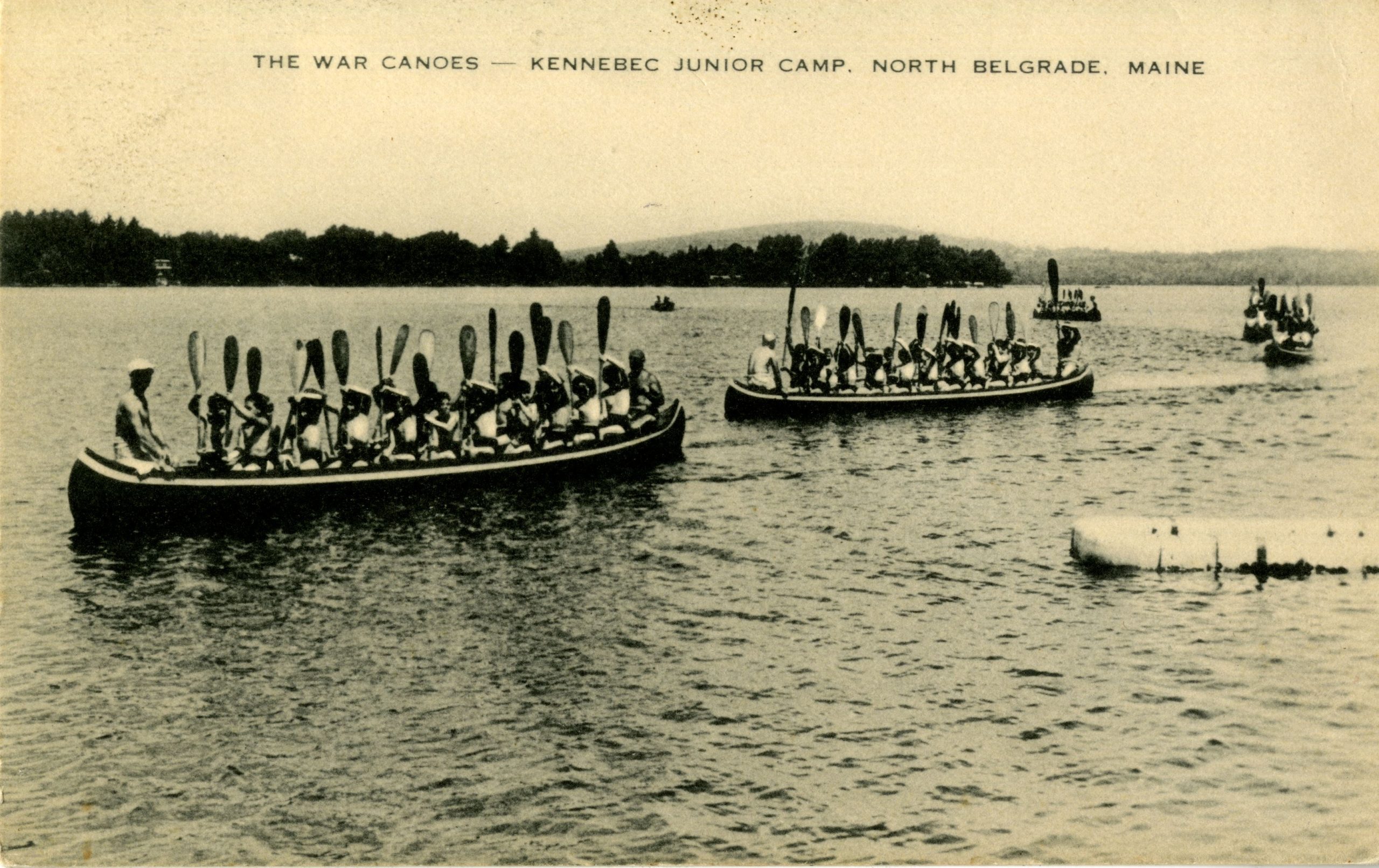
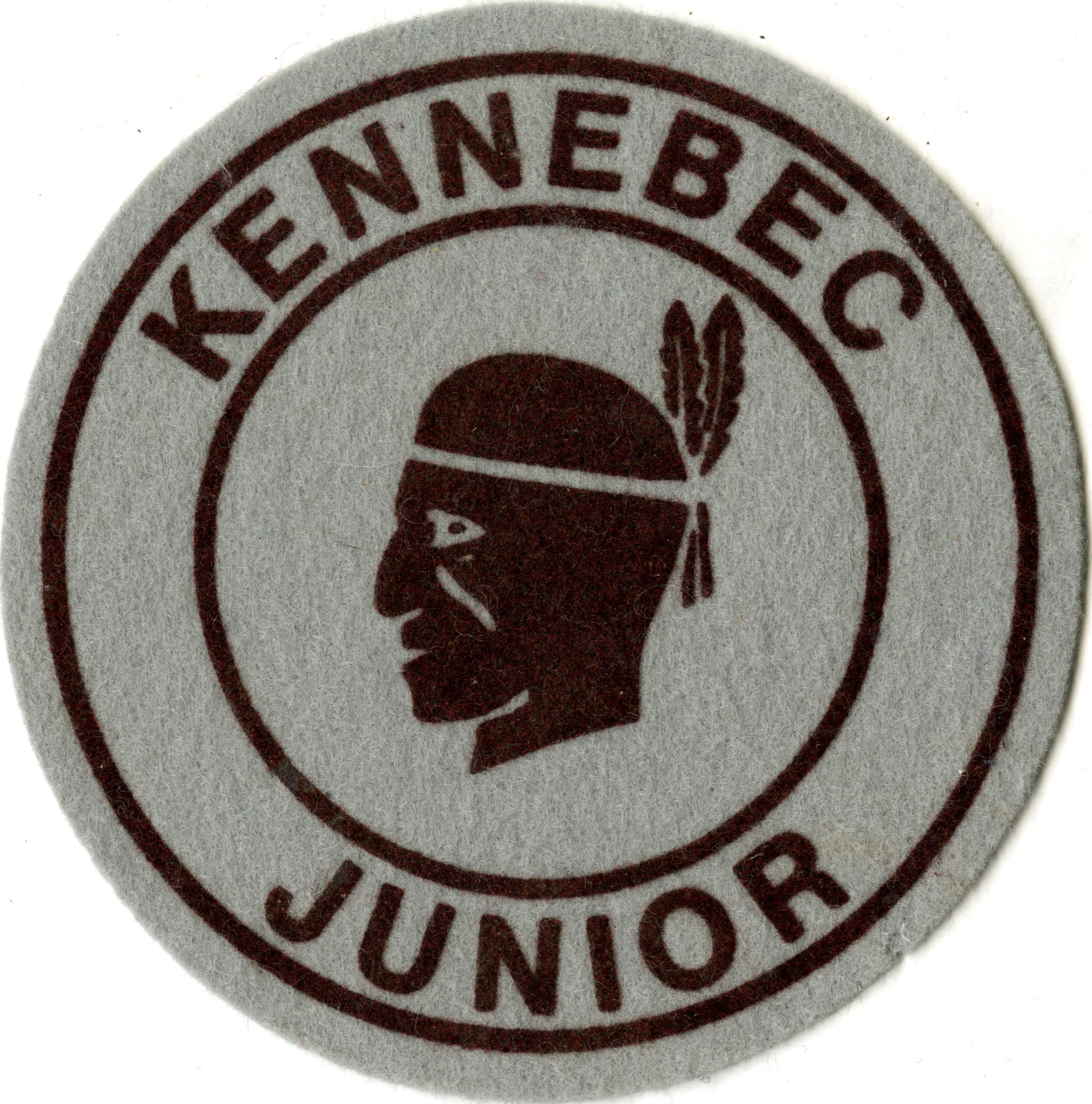
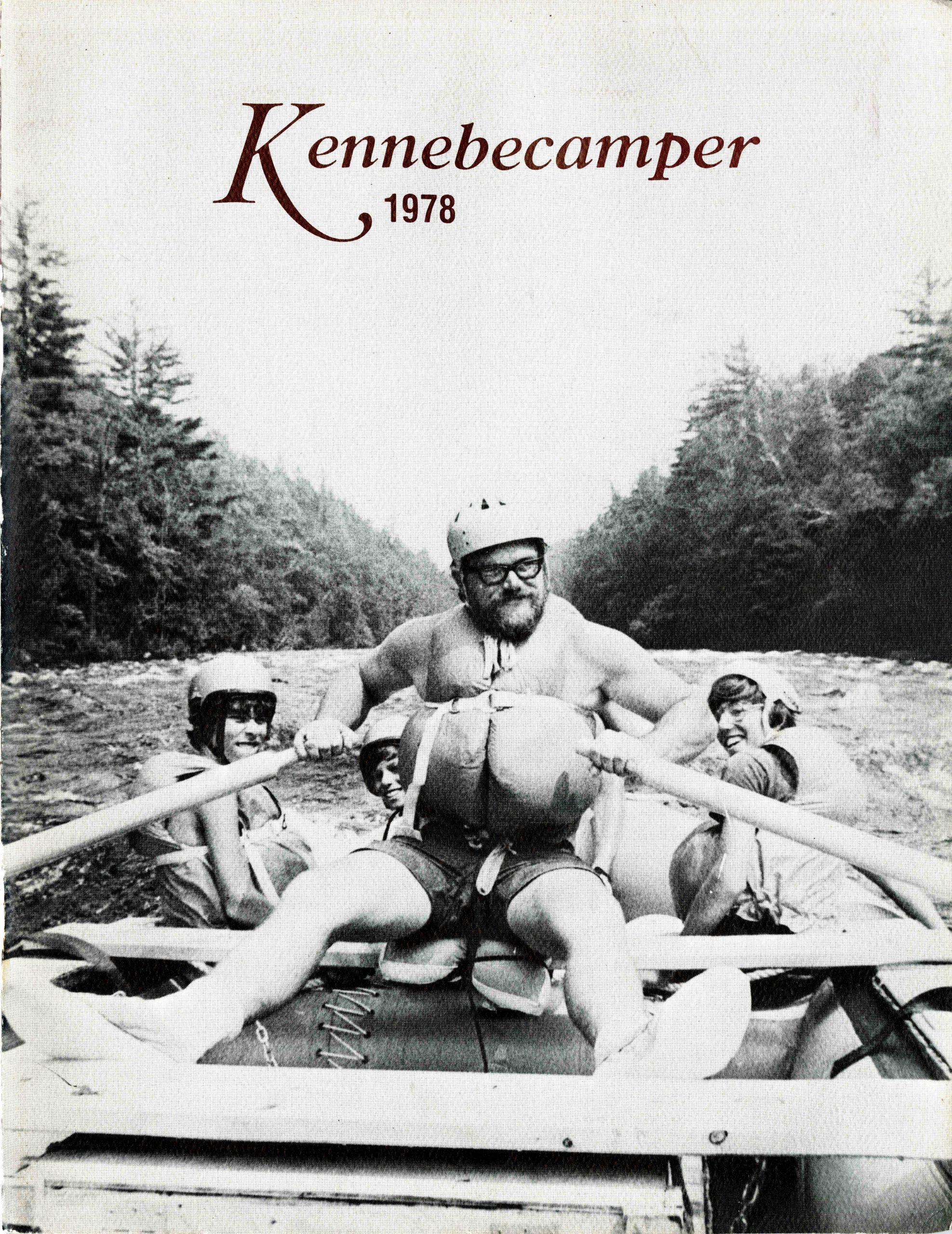
In 1907, three Philadelphia natives opened Camp Kennebec, a summer camp for boys that reflected the robust masculinity and rugged independence of the Teddy Roosevelt era. Situated on Salmon Lake in North Belgrade, Maine, Camp Kennebec provided a means of recreation in the natural environment juxtaposed with the campers’ urban life in Northeastern and Mid-Western cities. Kennebec, opened during the pioneer days of organized camping, was dedicated to keeping the camping experience as natural and primitive as possible and promoting healthy competition through athletics and wilderness activities.

By the 1930s, Camp Kennebec had instituted camping trips to various outposts throughout the Maine wilderness. A mainstay of the Kennebec experience, these expeditions gave campers the opportunity to explore the landscape and test their skills. Among the campers of the 1938 camp season was Edward Block, described camera fiend and resident photographer. While at Kennebec, Block used photography to document his experiences and record activities including the annual trip to Mt. Katahdin, the highest mountain in Maine and the northern terminus of the Appalachian Trail. Over the course of the nine day expedition, Edward Block recorded the progress of their ascent to the summit and captured the natural beauty of Maine’s pristine environment.

A collection documenting Philadelphia campers’ time at the camp is now available for research in the Philadelphia Jewish Archives collections of the Special Collections Research Center.  Start by reviewing the finding aid at http://library.temple.edu/collections/scrc/camp-kennebec-alumni.