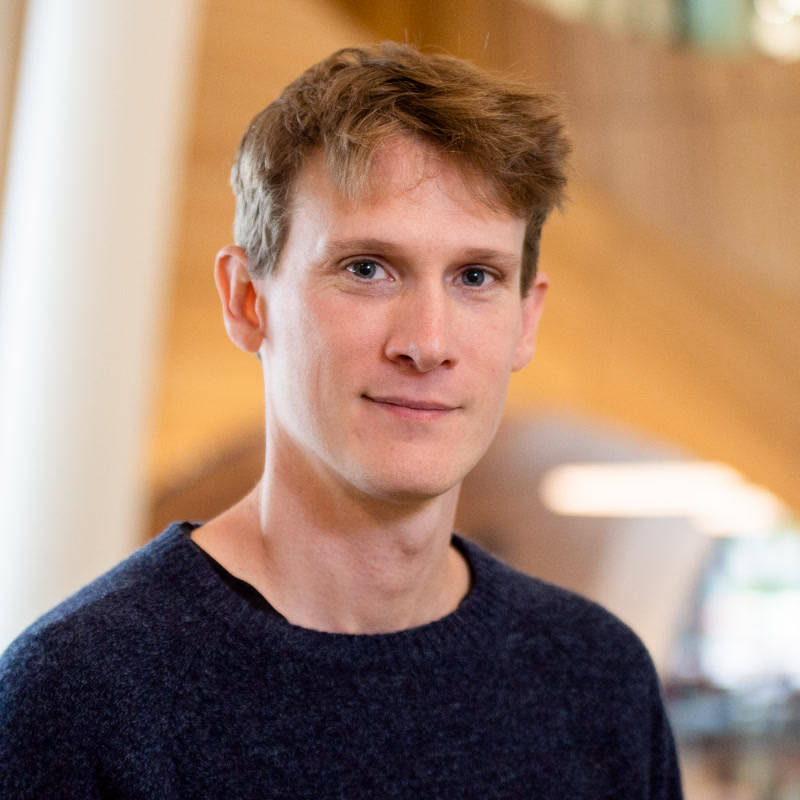
By Alex Wermer-Colan
Hello Alex! Tell us a little about yourself.
Since moving to Philadelphia nine years ago to start working at Temple Libraries, I’ve lived in the area north of Northern Liberties and west of Fishtown that gets called Olde Kensington or South Kensington. I came down to Philly from NYC to start a Council on Library and Information Resources Postdoctoral Fellowship at Temple Libraries, after getting my PhD in English at The Graduate Center, City University of New York.
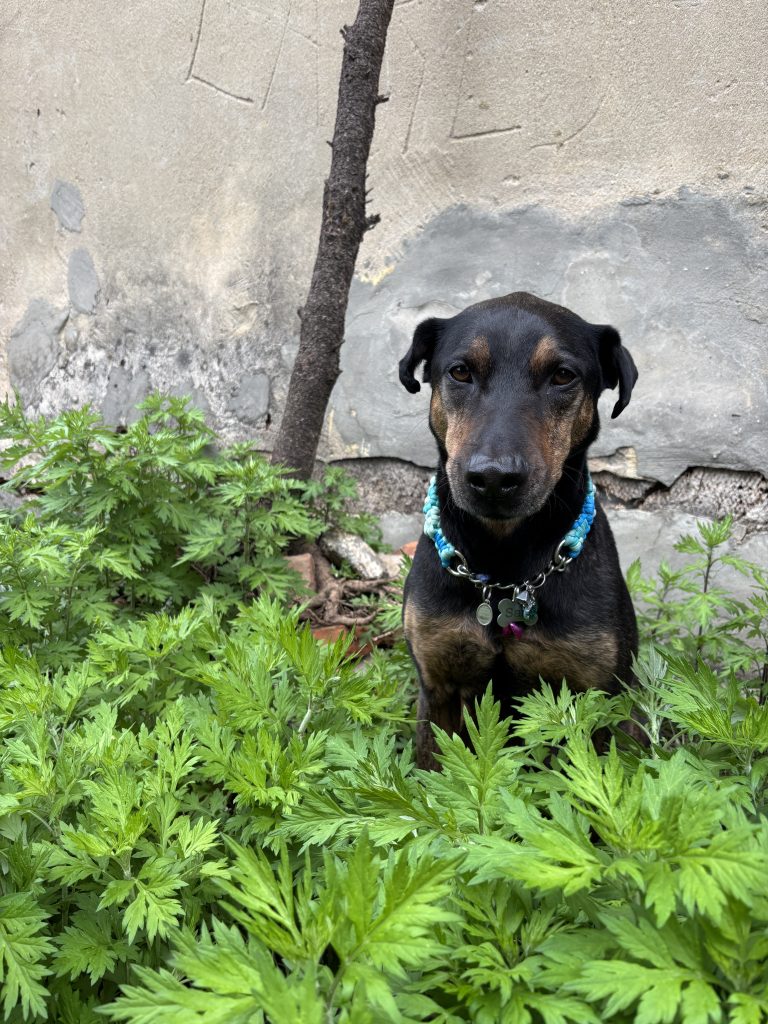
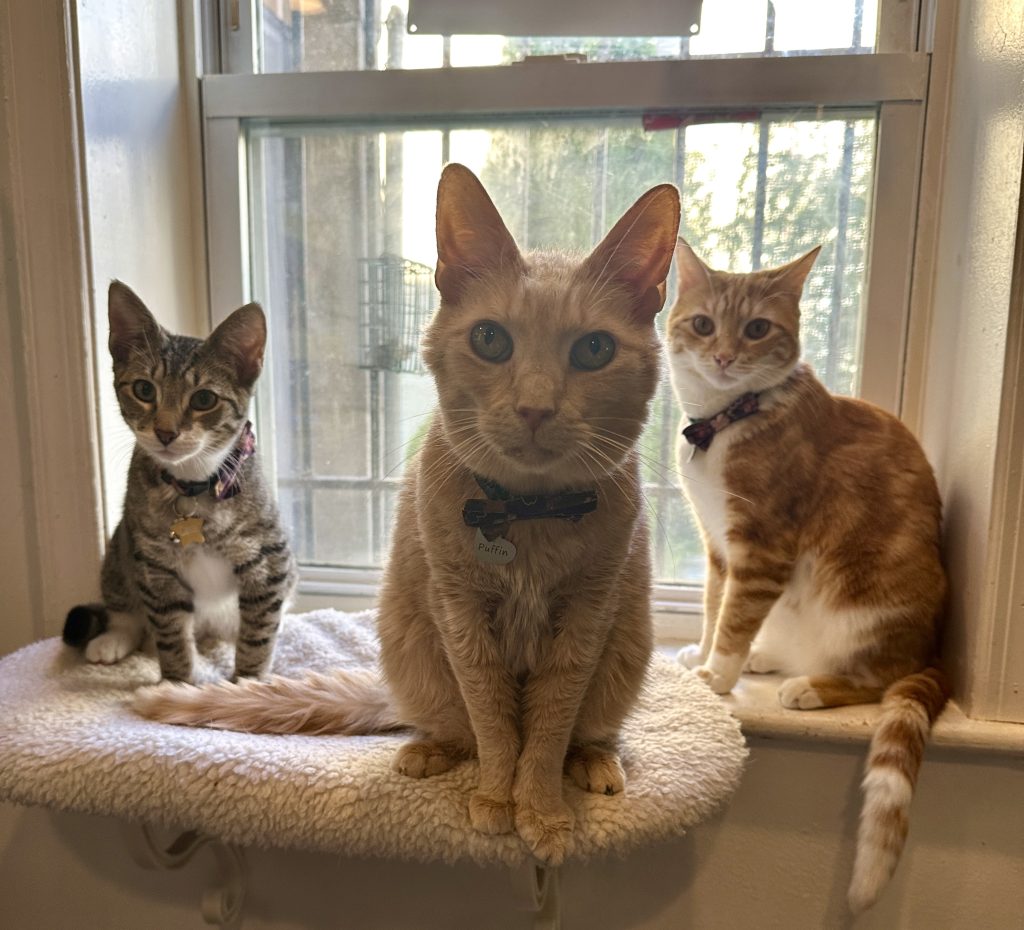
I’m a big fan of the SPCA here in North Philly, and that’s where we found our dog, Sammy, our first cat, Puffin, and our second cat, Pigeon. The third, named Canoe, we found as a stray in our backyard with a litter of 7 other kittens. I don’t have great photos of all 4 of them together, but they get along just fine!
What do you do at the LCDSS?
As Academic and Research Director, I advise and direct projects integrating emerging technologies into research and teaching. My background expertise is in natural language processing (using computers to analyze text), but I’ve also learned a bit of everything, from mapping and network analysis to projection mapping and physical computing.
What I love about working in this position and this department is I receive the opportunity to support students and faculty in all the disciplines, often encountering more methodologies, theories, and projects than I’d ever be able to think deeply about in most academic positions.
What kinds of projects/technologies do you work with the most?
I find I always come back to principles of data management and project design. If I meet with a patron to consult about their work, I end up focusing my feedback on how they can manage, analyze and share their data, whatever form it comes in, and how they can scope their digital work to complete a version or phase of their dream project.
My expertise lies in computational approaches to cultural analytics, especially text mining. I’ve taught R and Python to students and faculty, and I regularly support projects using web scraping. In the last few years I’ve increasingly taken on a support role for research involving artificial intelligence (AI), especially for AI-assisted coding, and the use of text mining and AI for accessing library databases.
What is your favorite type of technology to work with in the LCDSS?
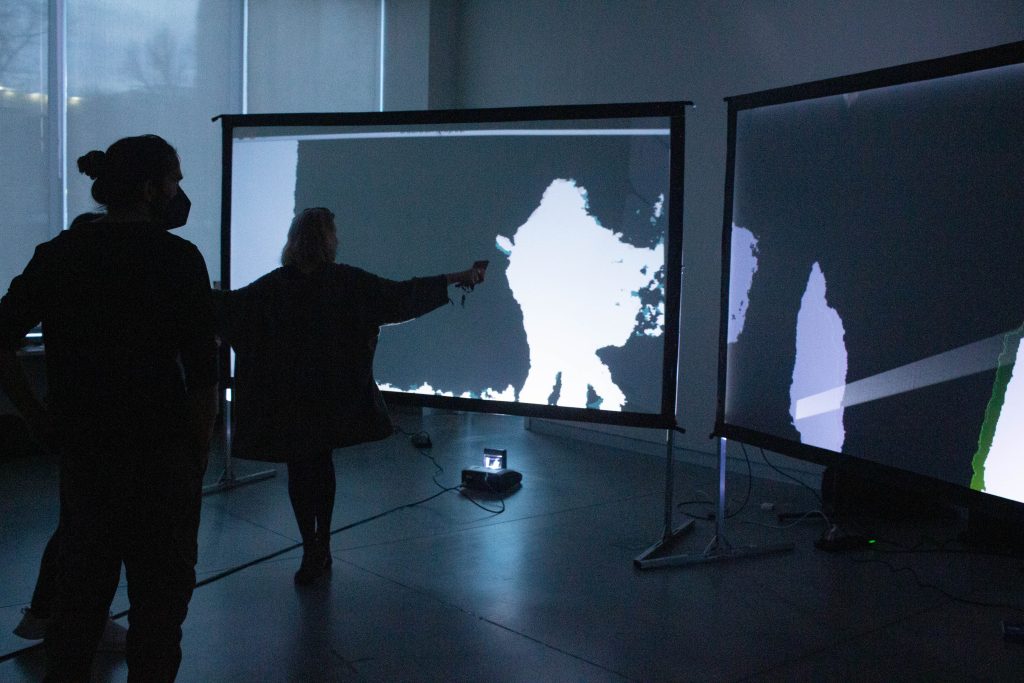
Projection mapping and related forms of interactive visualization have often caught my eye. There are few technologies that are easily accessible and affordable that enable a group of people to be in the same physical space and interact with immersive forms of spatialized media and visualizations. But over the last few years we’ve supported classes that taught students how to set up installations in library spaces using software like MadMapper.
In Fall 2022, students in Prof. Sarah Drury’s Interactive Exhibition Design course in Film and Media Arts filled the Scholars Studio with fourteen interactive installations for their showcase event, The Library as a Futurist Book. I supported the students’ projects alongside Jordan Hample, our Academic Information Technology and Support Technician. Classes like this one show how creatively Temple Libraries’ spaces can be engaged with and reflected upon with emerging technologies.
What project have you enjoyed working on the most?
From the first few months of my time at Temple Libraries, I’ve been working on a project digitizing science fiction from the Paskow Science Fiction Collection. It’s become a sort of organizing principle behind my approach to information science, data curation, and the vital work that makes cultural analytics of contemporary culture possible. Such a digitization effort takes a village, including staff from the Special Collections Research Center and the Metadata and Digitization Services departments. Temple Now covered the project in their article, “Byte-size Books” (June 2020).
I’ve been especially interested in the ways we can expand access for researchers and teachers looking to work with large datasets of contemporary culture, and the science fiction digitization project has offered a special opportunity for me to experiment within the limitations imposed by copyright law on sharing twentieth- and twenty-first-century books. With grants from the Mellon Foundation and the Institute of Museum and Library Services (IMLS), the project has grown into a broader program of literary data curation of copyrighted materials at the library, and into the set of resources available at sfnexus.org.
What kinds of support for student or faculty learning have felt particularly successful?
Each year I oversee our Fellowship program where Faculty Fellows and Graduate Externs spend the academic year developing digital research and creative projects. I work the most closely with the graduate students, overseeing their work in the Scholars Studio, and advising them on the development of their projects. Having taught college courses for many years in the CUNY system, I’ve found working with graduate students in the Fellowship program to be rewarding in a unique way. I also teach the Cultural Analytics Graduate Certificate Practicum course, where students develop their capstone projects in one semester, and I find that intensive work offers a similar opportunity to support students in their research and creative projects.
The Scholars Studio offers students resources and opportunities they wouldn’t otherwise receive through their departmental programs, so I end up being able to help students look at their work from new perspectives, and give them a sense of alternative career paths in academia they may want to pursue. I’ve been grateful for all the students I’ve had the chance to work with over the years, helping them advance their goals to graduation and meaningful careers, and I hope (and know) that they’re all out there doing incredible work.
What is your favorite thing to eat on campus?
I’d be remiss not to say a lox and cream cheese bagel from the Bagel Hut on the south side of Paley Hall. My go-to is pumpernickel bagels, but most places have gone out of stock since the pandemic.
What popular media are you enjoying these days?
Neon Genesis Evangelion, and the rest of the Evangelion series.
What technologies are you most excited to learn more about at the LCDSS?
Motion capture and interactive visualization with software like TouchDesigner that enables users to interact in the physical world with digital simulations and media. Unlike virtual reality, which isolates the user in a headset, other forms of interactive media can make it possible for people to be together in physical space while interacting with digital media.
Some version of this augmented reality experience has been doable for over a decade, but it’s now becoming easier for everyday people to use open-source software and affordable hardware to build their own installations and immersive experiences.