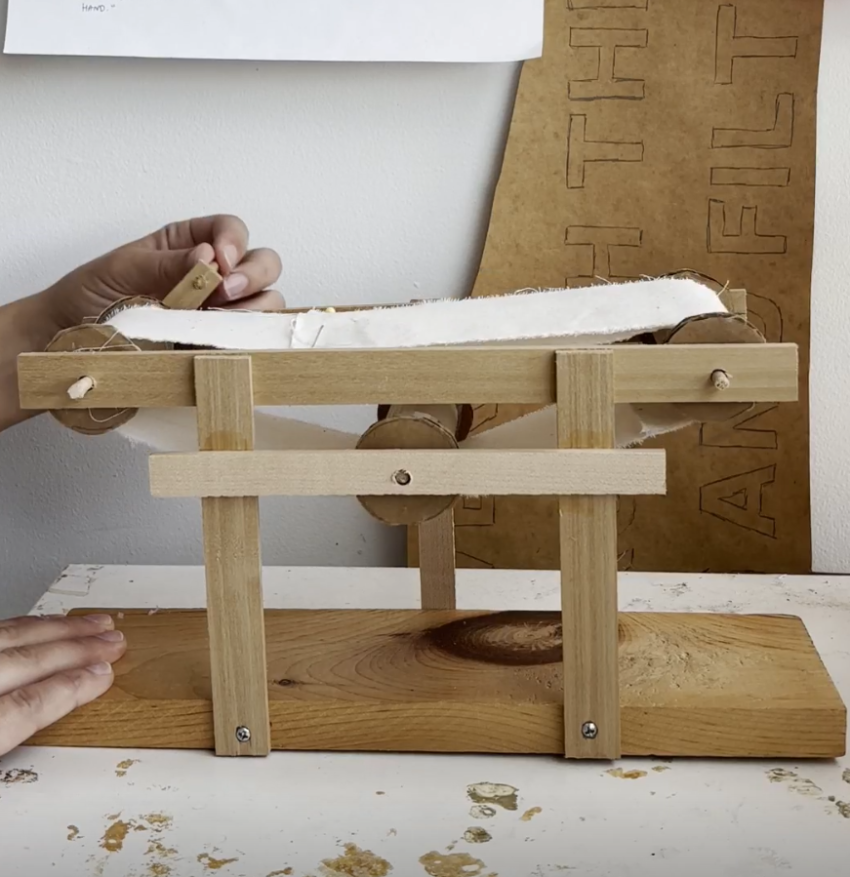
I approached my residency in the makerspace with the intention of exploring movement. Beginning with a body of work from the spring semester that consisted of draped and sewn fabric, I wanted to build mechanical prototypes that could potentially be scaled up and incorporated into these fabric works. Drawing on my background in theatre and costume design, I have been playing with the idea of curtains and drapery as mechanisms that can reveal or obscure. I used my time in the makerspace primarily to learn how to design and build simple mechanical systems out of laser cut and 3D printed components.
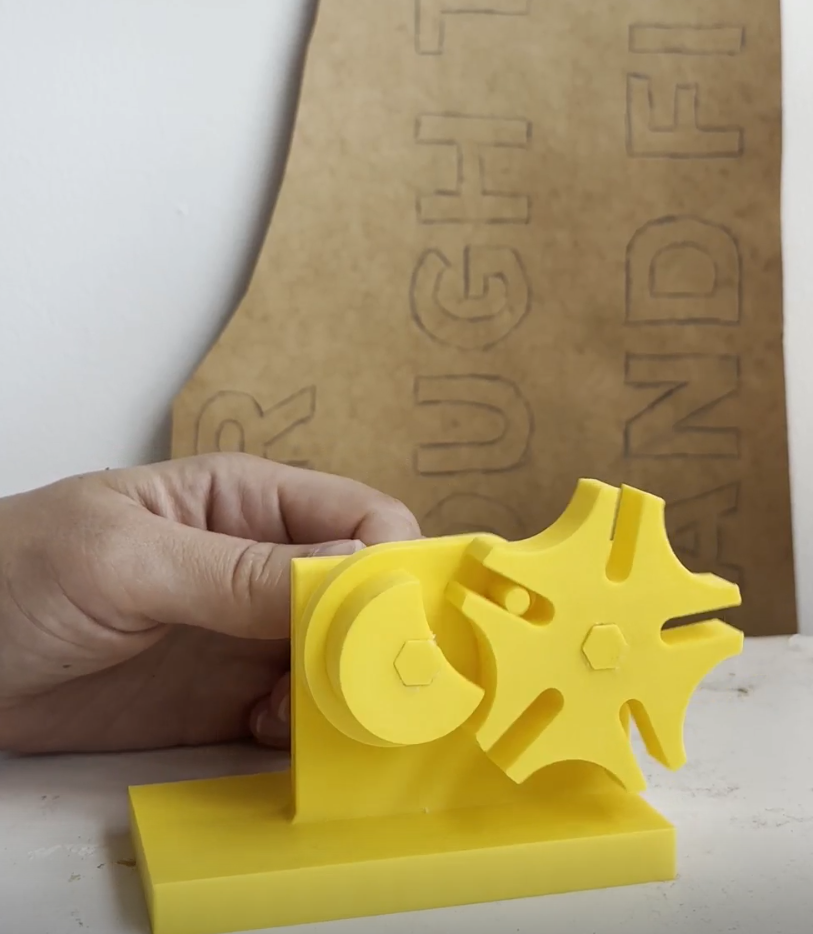
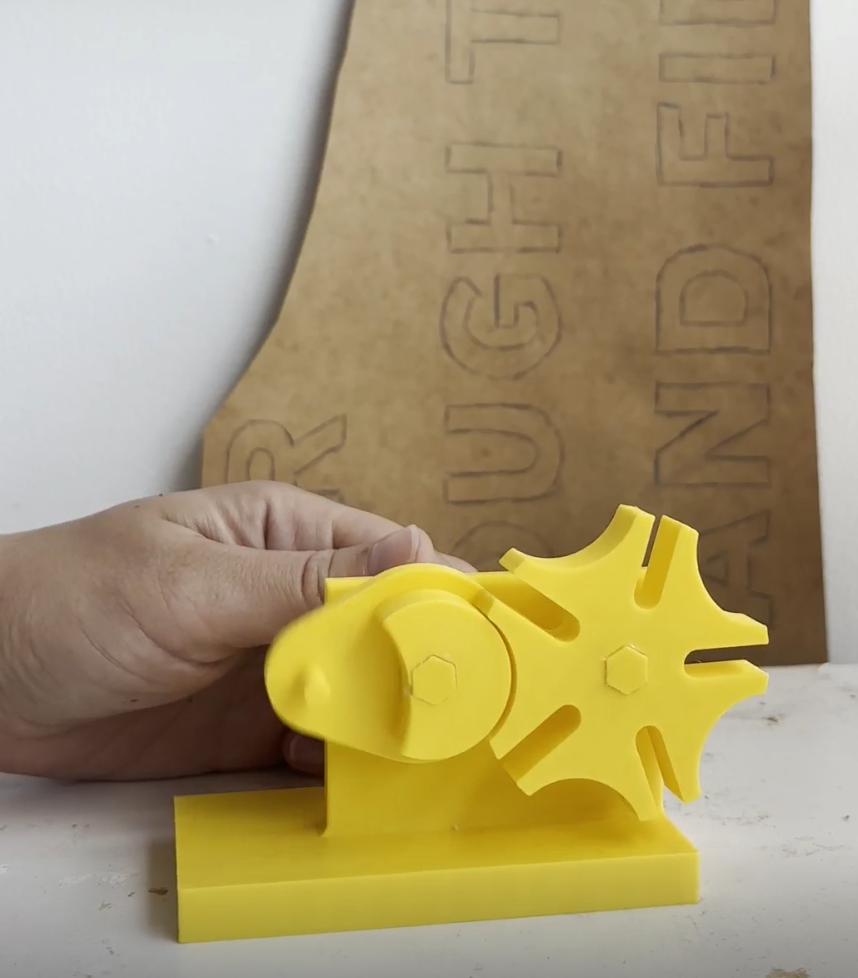
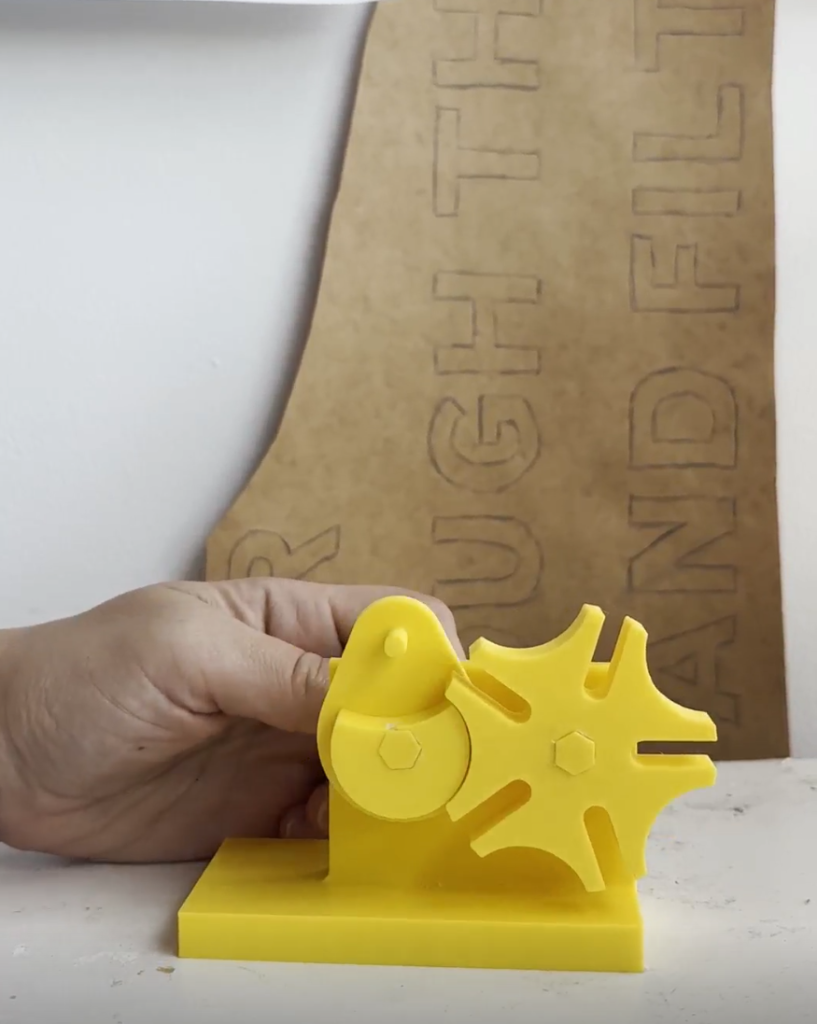
My first test was the Geneva mechanism. This mechanism is a system that turns a continuous turning motion into a motion that occurs at regular intermittent intervals. I started here because it felt like an approachable design that would be a good way to dip my toes into 3D printing and laser cutting with an achievable and satisfying result. I was wrong about the achievability of this! I spent my first week of the residency struggling with the design, realizing that the geometry and calculations required to draft a mechanism that functioned properly was a bit beyond my scope. Determined to have some sort of object from my efforts, I concluded this endeavor by finding a pre-modeled file of a functional Geneva mechanism online and printing it from there. Not all was fruitless, as I did gain significant confidence in using the laser cutter, 3D printers, and 3D modeling software through this process.
From here, I decided to explore movement through cam systems. Coming into the residency, I had been looking at automata as inspiration for the storytelling possibilities of mechanical movement. In automata construction, cams are often referenced as an accessible place to begin in exploring how a mechanism will translate into movement. After my attempts with the Geneva mechanism, I felt very comfortable on the laser cutter. I designed a box with finger joints to house two egg shaped cams secured on a dowel. Two additional dowels would come through the top of the box to rest on the cams, moving up and down as the cam dowel was rotated with a crank.
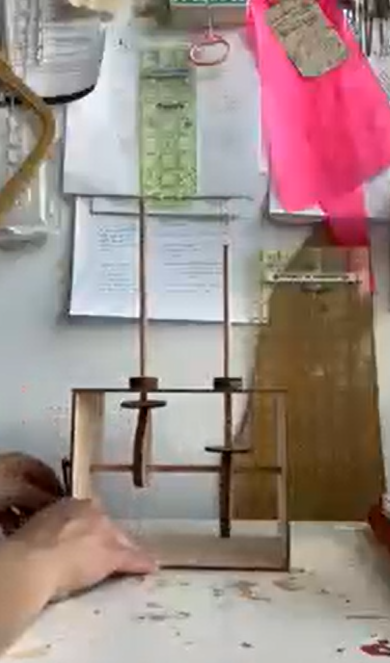
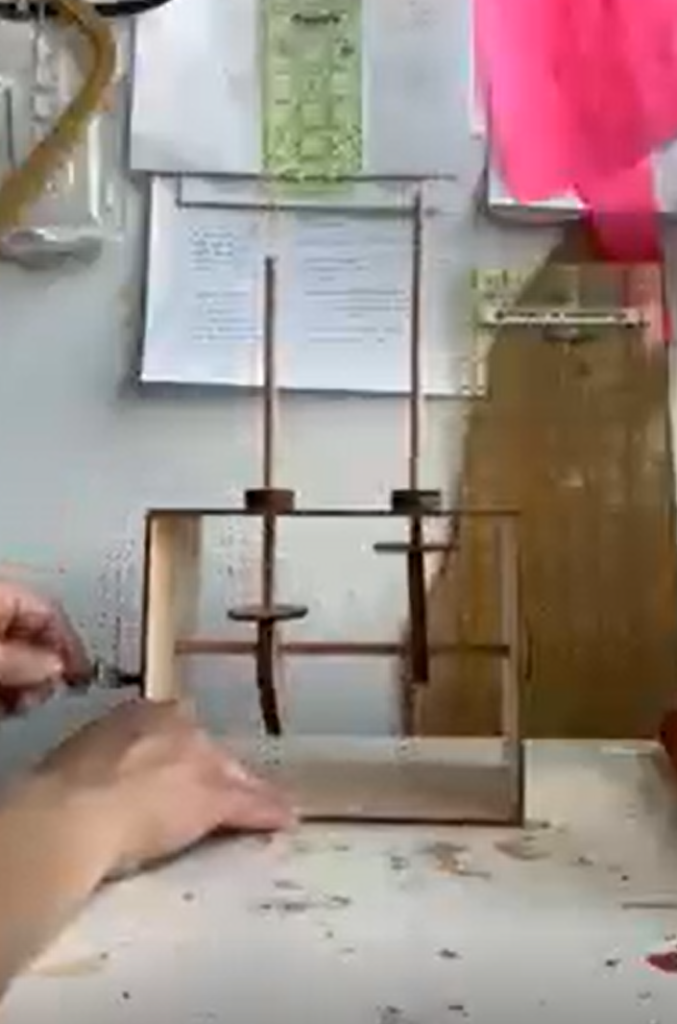
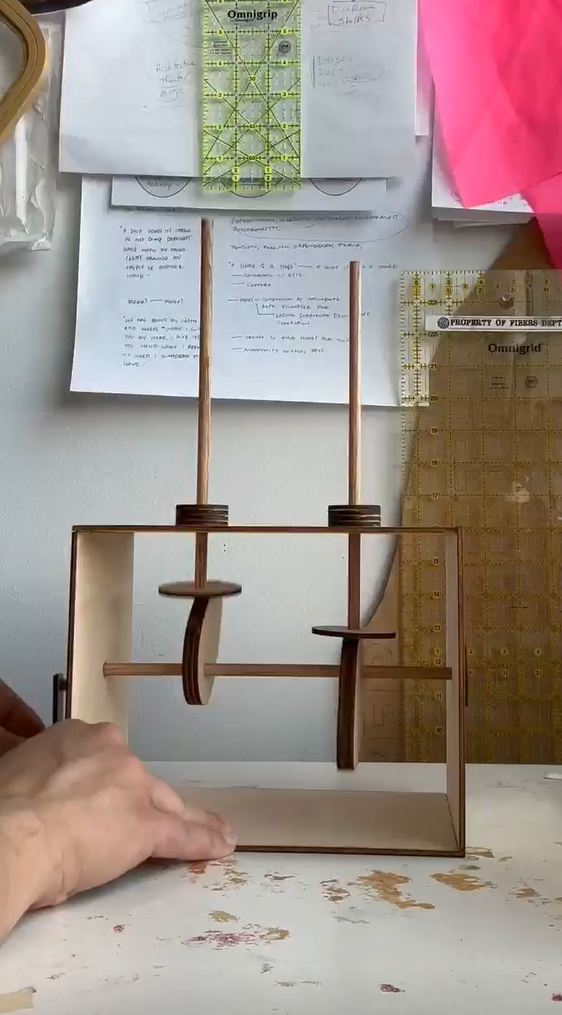
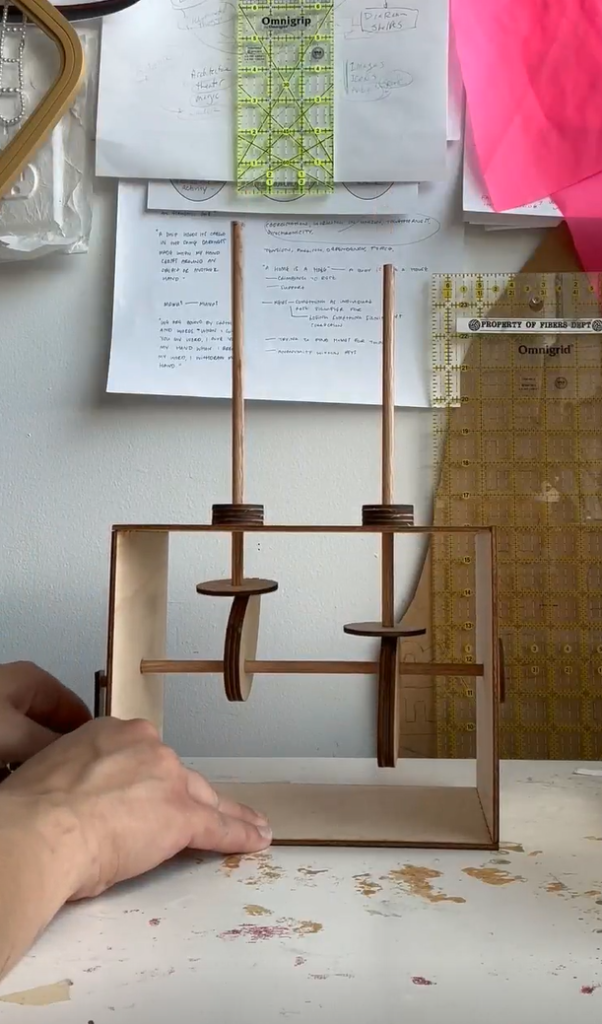
This prototype went according to plan for the most part. I ended up needing to add support to the dowels on the outside of the box to assist the dowels in staying perpendicular while in motion. I also encountered some issues with friction affecting smooth motion. The birch plywood of the cams and the base of the dowels rub against each other, frequently stopping the motion. I have yet finish my experimenting with this issue, but I think if I line the pieces that rub against each other with some kind of fabric, the friction will be reduced.
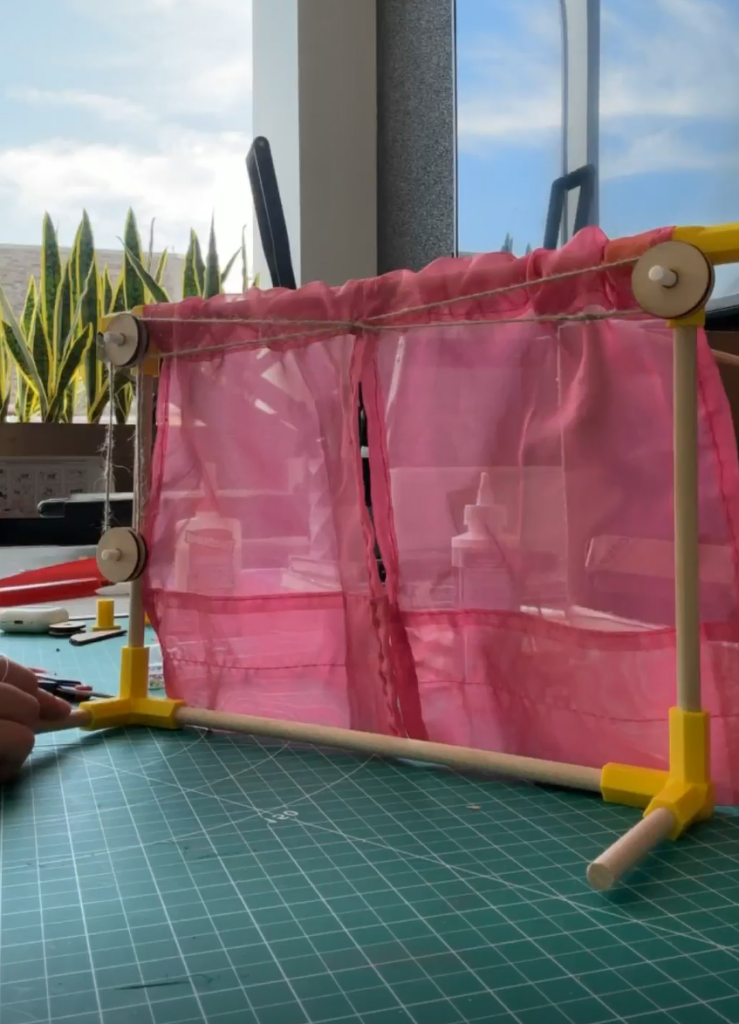
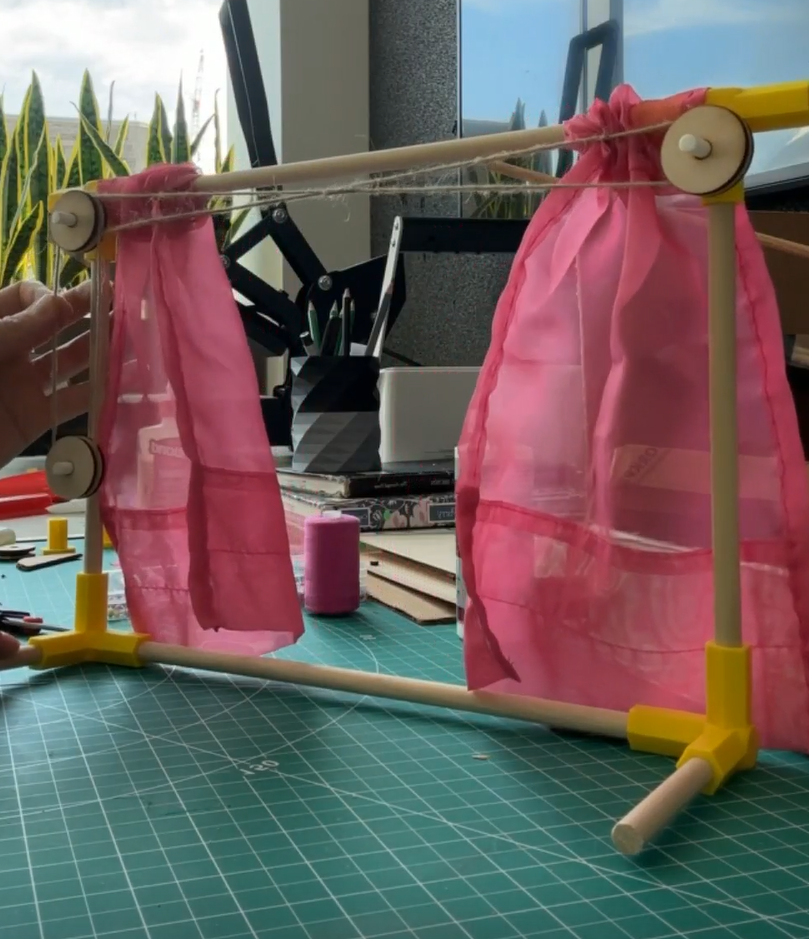
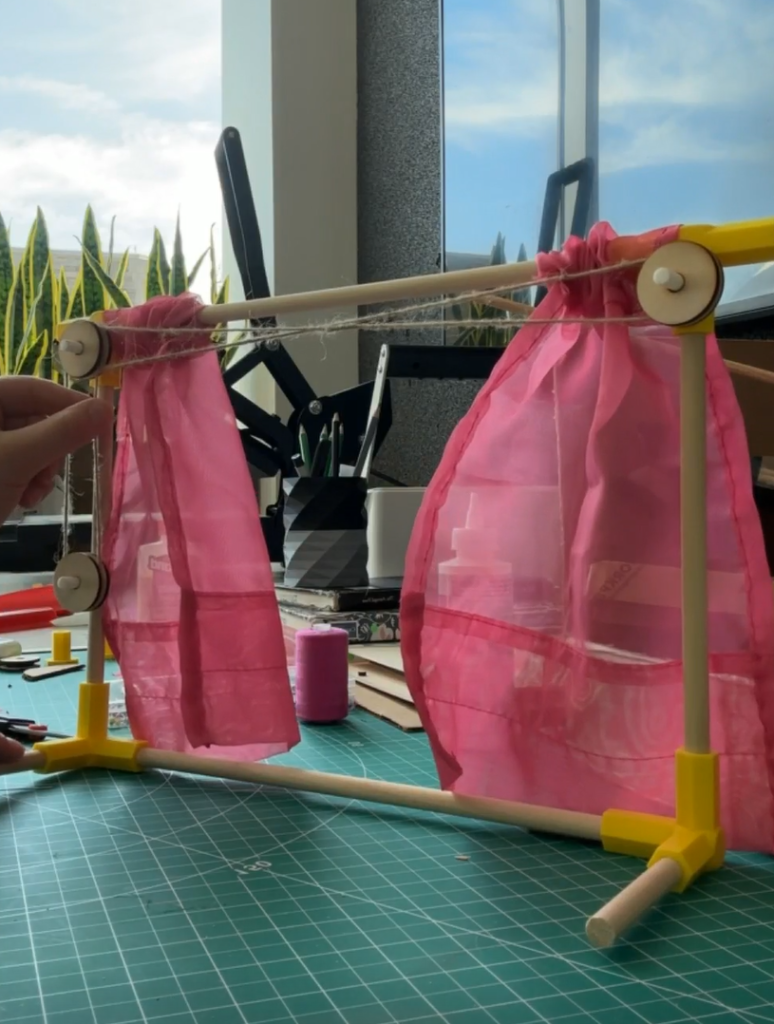
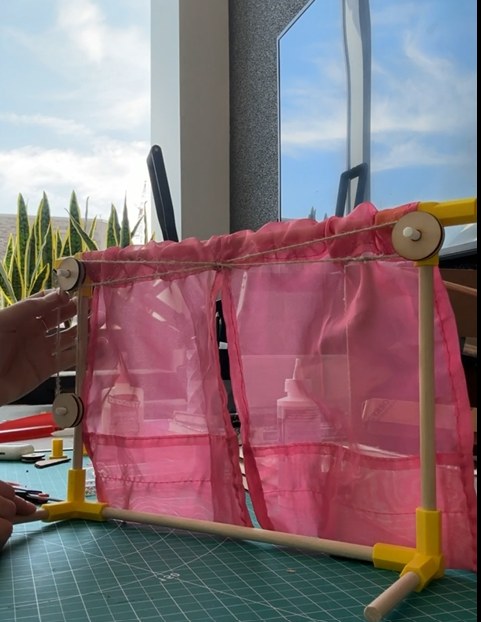
The cam prototype felt like a huge success following my Geneva mechanism struggles. After this, I felt confident that I could figure out how to build two additional mechanism prototypes, a curtain opening/closing mechanism, and a conveyer belt. For the curtain system, I built a small frame out of dowels and 3D printed dowel connectors and I found some scrap fabric in the makerspace that I sewed into miniature curtains. I researched several curtain opening systems and ultimately landed on a simple pulley arrangement. I tested out making pulleys using laser cut pieces and 3D printing them. I preferred to laser cut the pieces and glue them together, as I felt like I had more flexibility in adjusting the size and shape of the pulley pieces on illustrator given my rudimentary 3D modeling knowledge. I attached three pulleys to the curtain frame and wound a length of cord through them according to a diagram I found through my research. The curtains are attached to the cord at the center of the frame so when the cord is pulled, the curtains move with them. My curtains opened and closed with ease! I ended up laser cutting a few larger pulleys so that I can build something using this mechanism at a larger scale in the future.
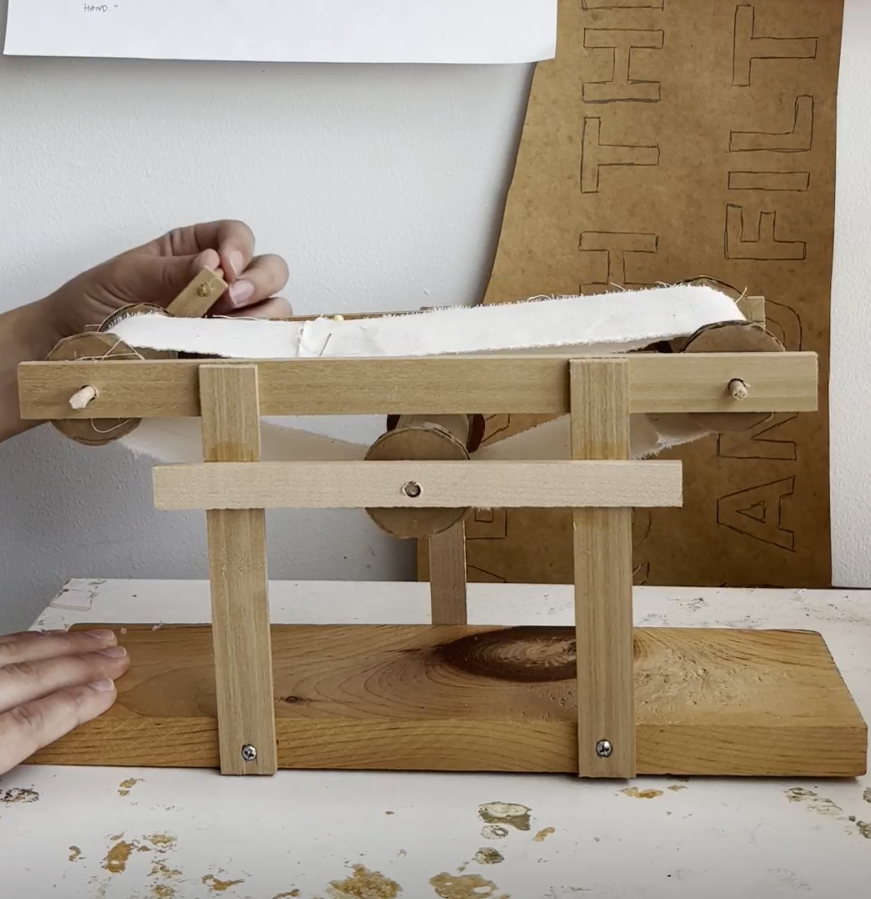
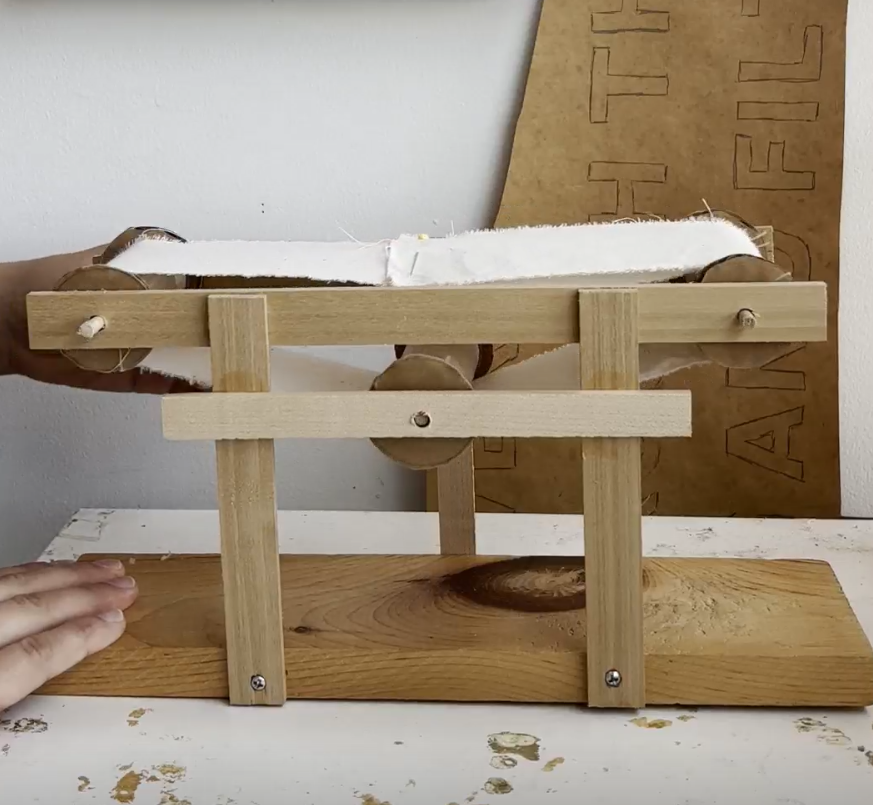
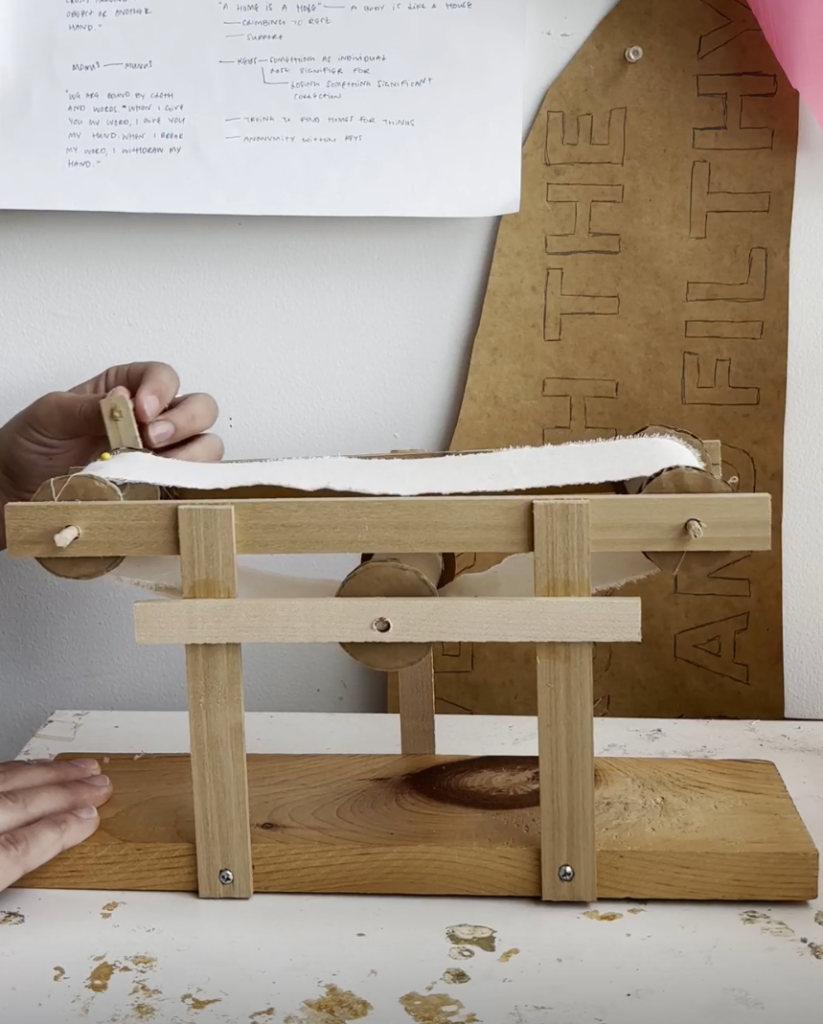
The final mechanism I prototyped during my residency at the makerspace was a conveyer belt system. I had the idea for a piece where components of a sculpture are attached to a conveyer so that objects are revealed as the user rotates a crank. Kind of like a crankie device, but rather than a scroll moving perpendicular to the ground showing two dimensional images, the belt moves parallel to the ground and can accommodate three dimensional objects. At this point I had warmed up to thinking through the construction of these mechanical shapes and it felt much easier to start tinkering more improvisationally. Using a mixture of scrap wood, cardboard tubes, laser cut birch, and wooden dowels, I was able to execute a prototype that matched my initial plan. Currently in the studio, I am building a frame out of 2x2s to incorporate these mechanics into a larger piece.
I initially applied to the residency because my interest in using simple mechanisms to make objects move felt way outside of my skillset. The projects I had in mind required a different kind of problem solving than how I usually work. With the help of the team at the makerspace, I was able to dedicate time to exploration and gain access to expert assistance. Most importantly, I was reminded that trial and error is a critical part of the process!
– Andrea Arts