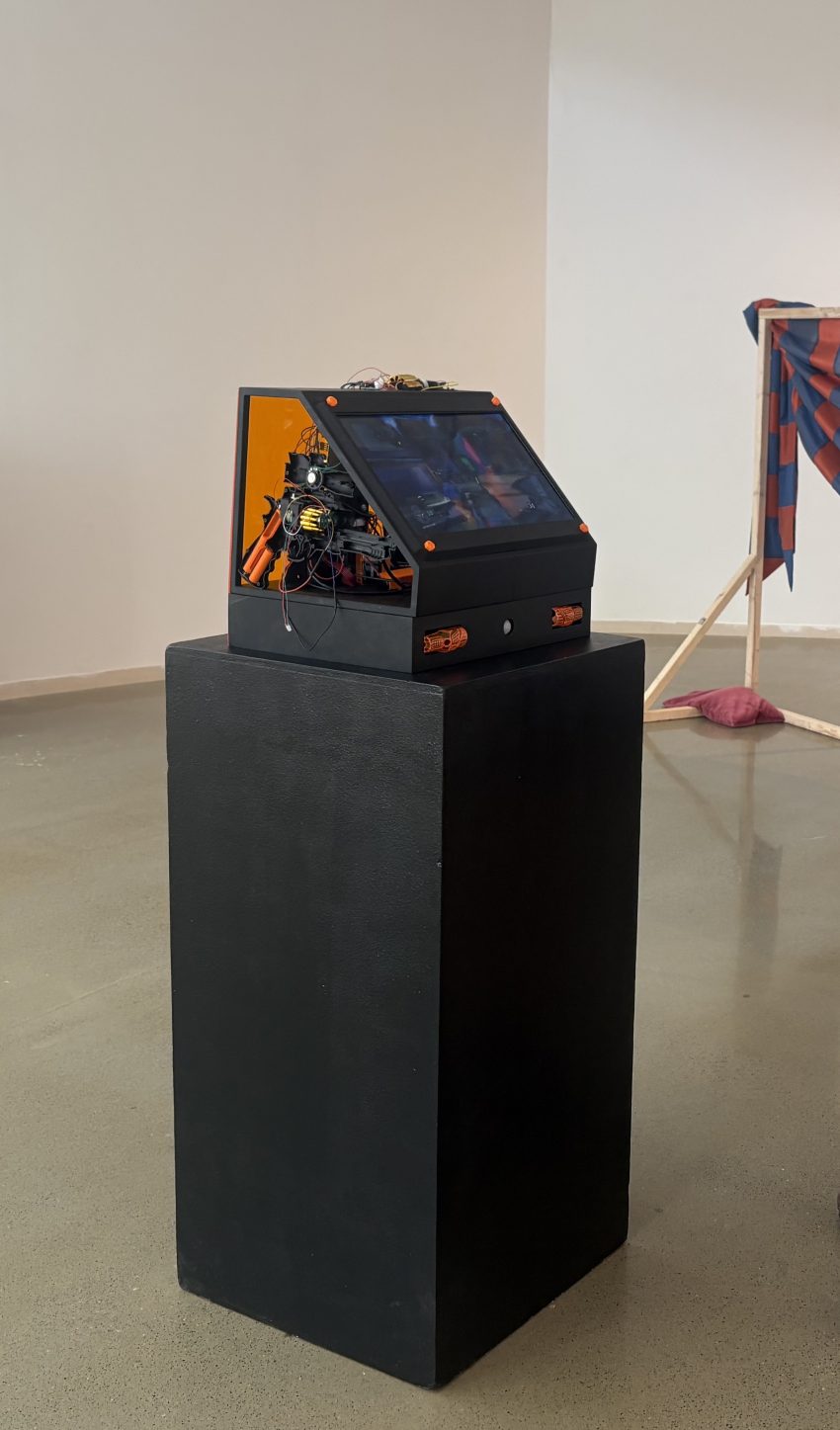
Legends Never Die started as a video collage: flashes of Call of Duty(COD) trickshots rapidly edited back-to-back overlayed with boys expressing their grief for the loss of a friend they never met IRL. The material used in this collage all came from in-memoriam videos uploaded to YouTube by COD players in the aftermath of SB Sway’s death. Jack Ruder, AKA Sway, died in 2017. He is my older brother and the founder of Space Bound(SB), a COD trick-shotting team turned YouTube channel with almost 2 million subscribers. I’ve been revisiting these videos sporadically over the past decade as a sort of location-less cemetery. Scrubbing the internet for the remnants of this para-social mourning brought me to this project. It is a way of solidifying and consolidating my relationship to these voices that have sat with me through every stage of grief and connected me to a part of my brother’s life I never felt apart of when he was alive.
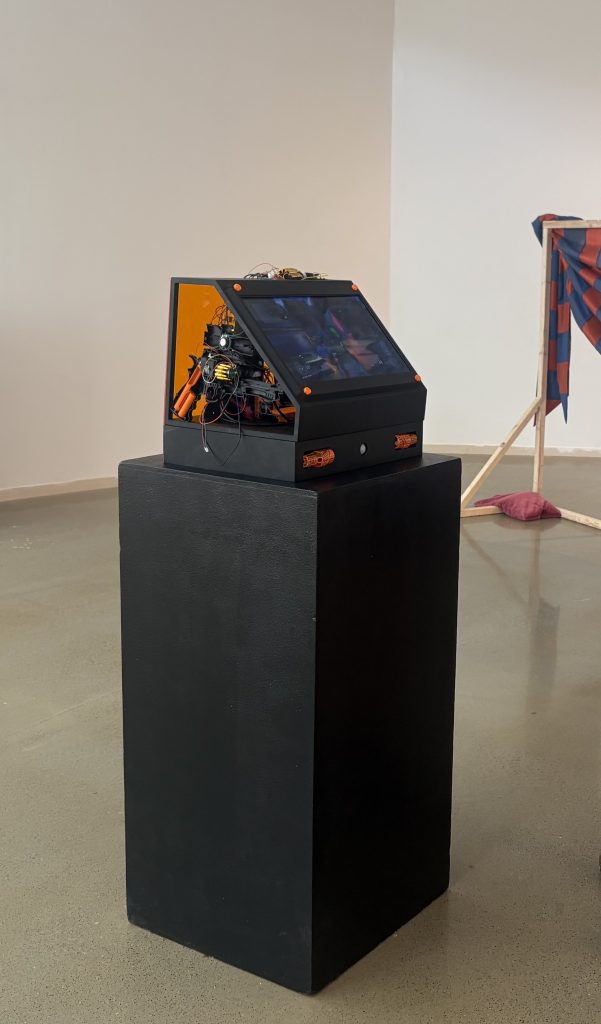
As heard in the cacophony of voices in the video-collage, these digitally-enabled relationships grew through playful imaginary violence. To take these ideas out of the virtual and into the physical, I started collecting electronic toy guns. Both first-person shooter games and toy guns require a suspension of reality. Pulling the trigger and ‘killing’ your opponent masks the vulnerability that comes with imaginary play. Taking these toys apart, I couldn’t help but think of the plastic facades as an extension of these masks and as a material rife for sculptural expansion of the original piece.
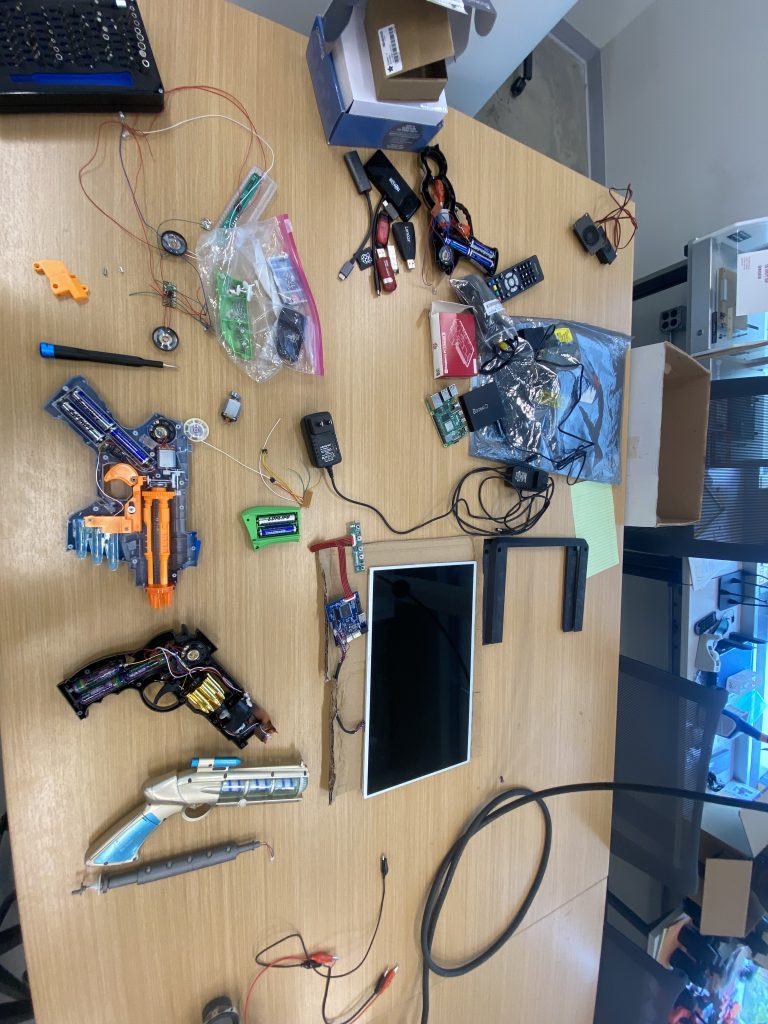
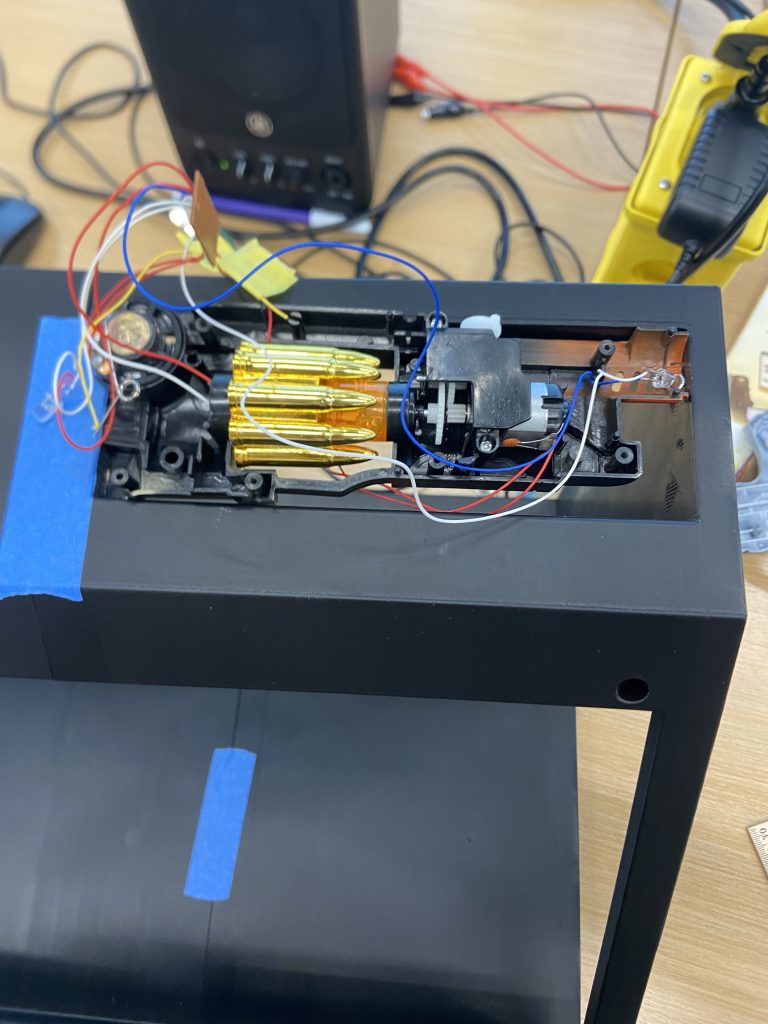
A bit more about my process:
I started with upcycling a laptop screen and connecting it to a unique motherboard that translated information sent from a raspberry pi. From there I had to make an armature that would hold the various components. The structure needed space and airflow for all the boards, motor-drivers, batteries, and power supplies. My first test print was bare bones, something I hoped to build around but wasn’t right. Instead, I recycled it as a stand so I could start programming more easily. In the end, the final box design had to be printed in 6 parts which happened simultaneously with the rest of the project. The second go around wouldn’t have worked out without the help of the techs in the makerspace (shout out to Dalana) who helped me resize things to ensure it was a perfect fit.
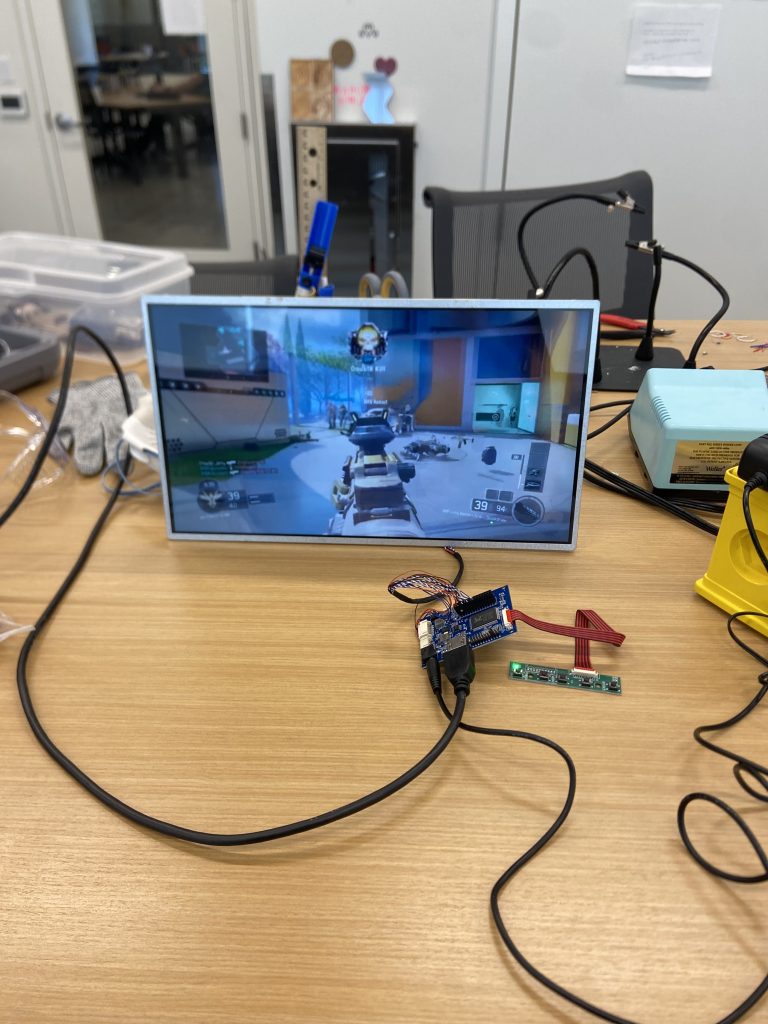
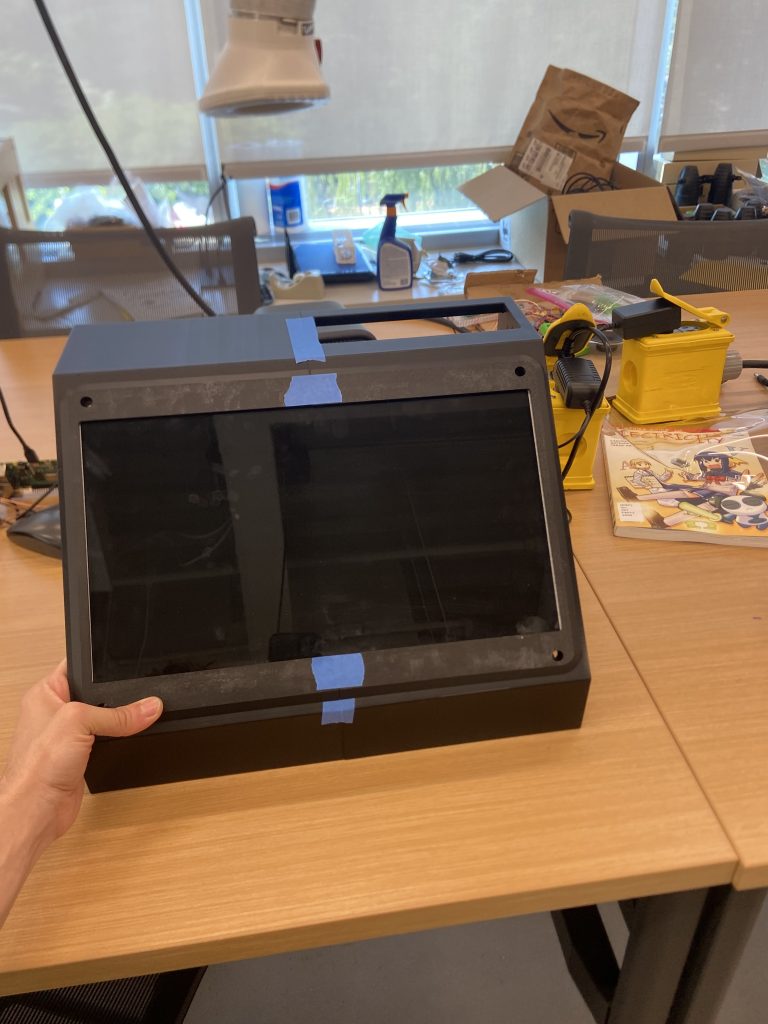
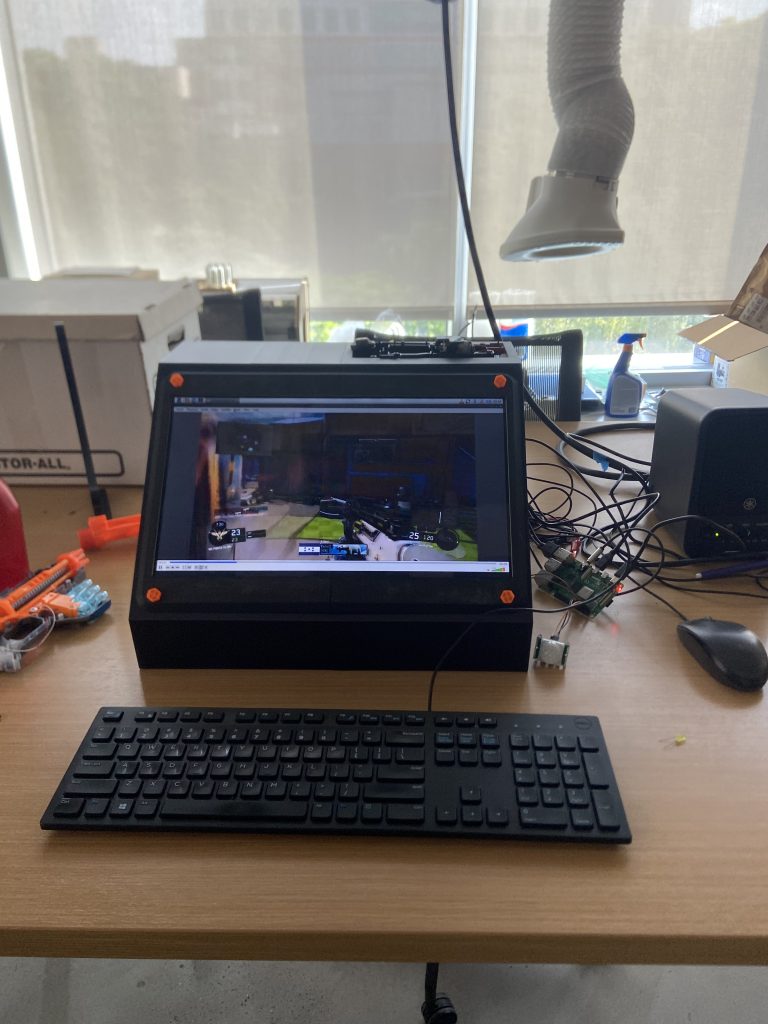
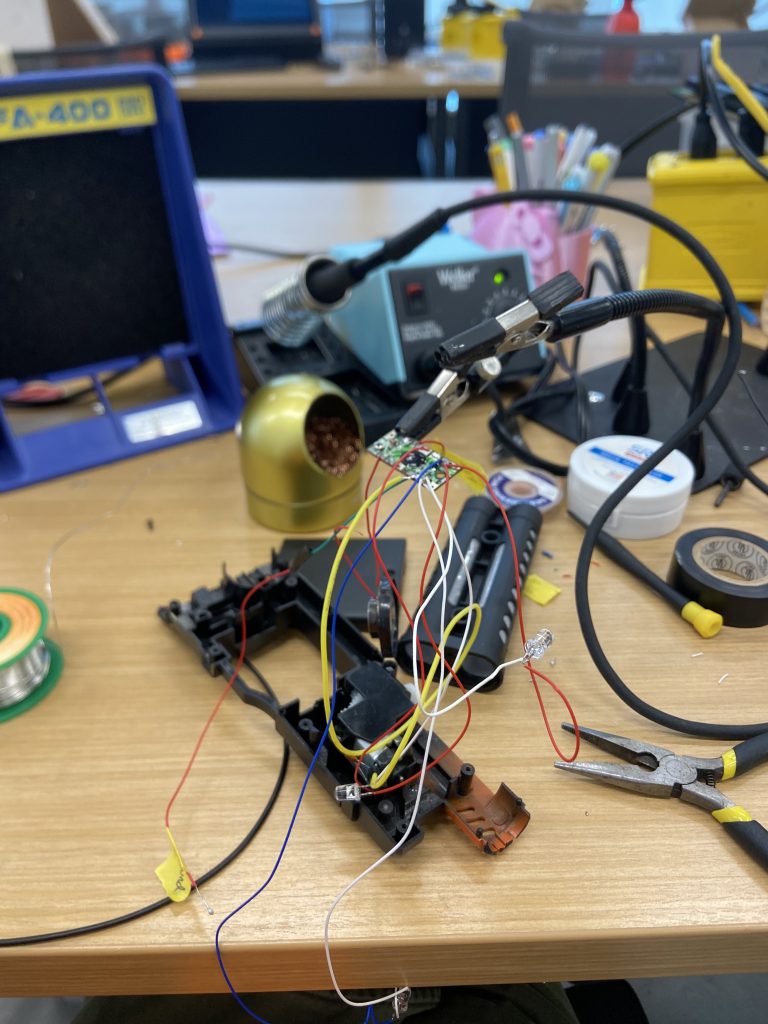
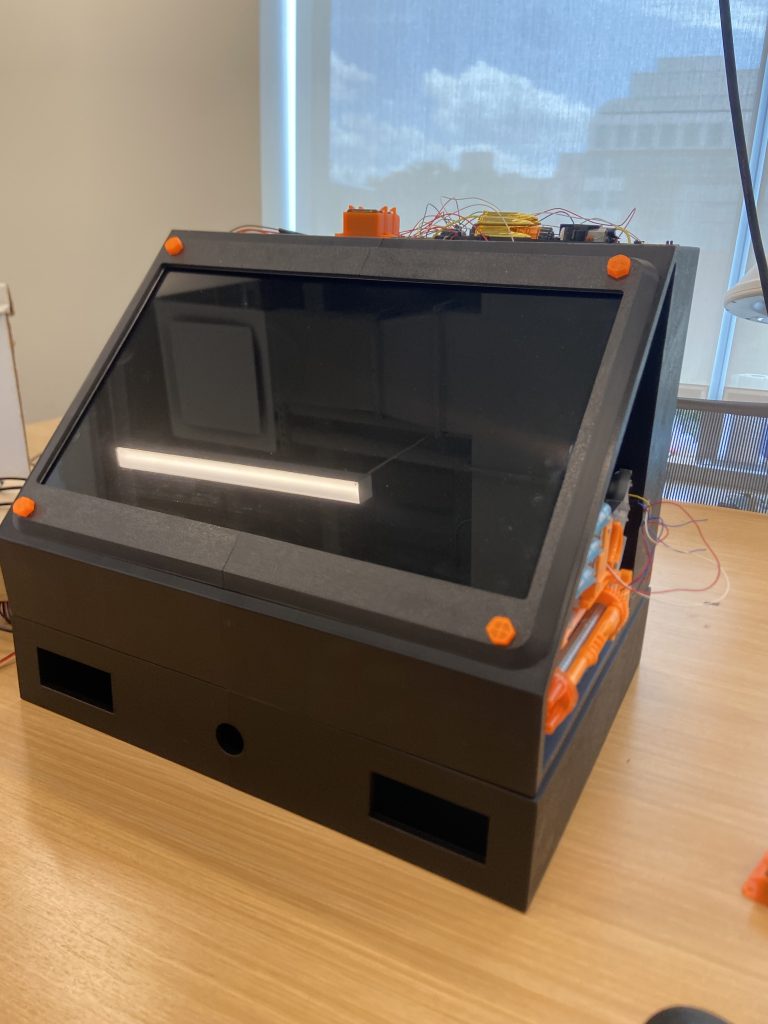
As I began integrating the toy guns, I had to figure out how each gun worked and the components in them. I took each apart examining their mother boards and fixing any soldering. I cut the original trigger system out of the gun, attached each one to a motor driver and battery pack. And connected the motor driver to the raspberry pi pins. After testing each gun, I cut them to size and outfitted the box. Each additional step and gun required thorough testing. Going back and forth between the electronics and programming the code, I continuously tweaked the system. The project has continued to grow after the two-week residency period concluded.
I was able to push the project into a sculptural form because of the makerspace residency. Going in, I had no prior experience working with electronics or 3D modelling and even less with coding. Through the support of Hannah Tardie and team in creating this project, I expanded the aperture of mediums and methods I pull from, and the overall approach to my art practice. It is my hope that Legends Never Die continues to develop.
It is on view at Stella Elkins Gallery from August 17th to September 12th.
– JohnClaud Ruder