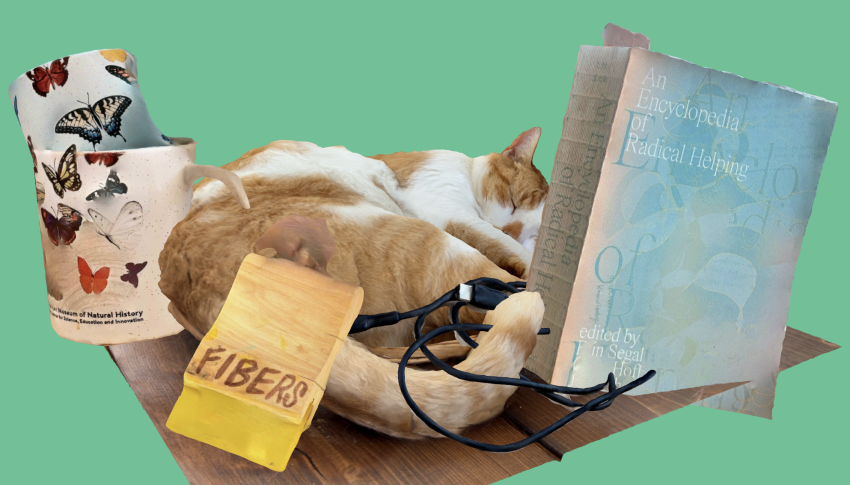
By Hanna-Mae Greenfield
As a teaching intern at a Philadelphia public school, I noticed that students arrive already fluent in digital tools. Many are distracted by their Chromebooks, and some can code and build games. I wanted to meet students at their interests by asking, what might they do with digital tools if they could see themselves in them, and how could that process connect back to tacit learning, creativity, and artmaking?
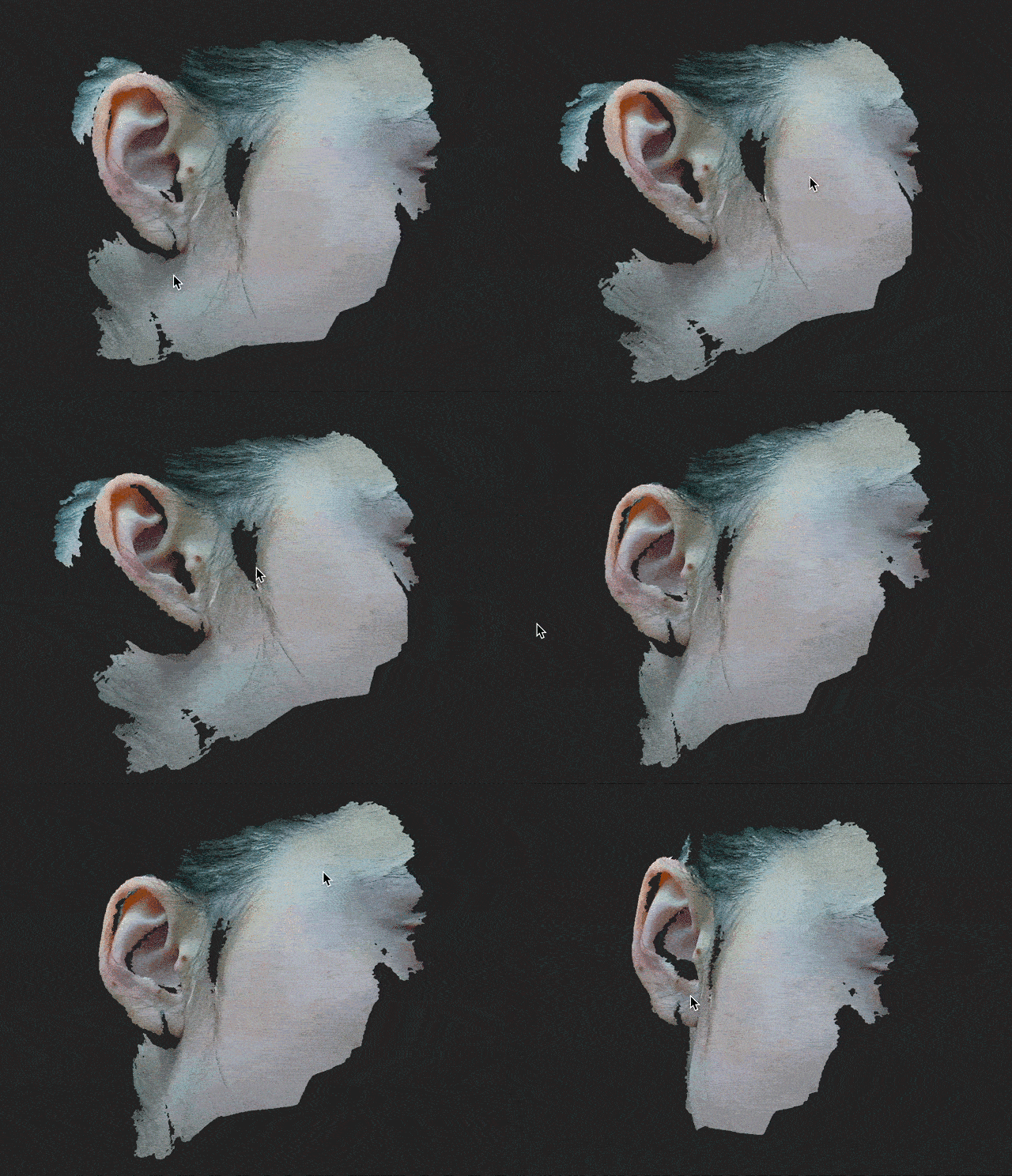
In my first DSS blog post, I outlined a framework for integrating 3D scanning into art education through critical making. My initial proposal for this externship was to learn to use makerspace tech through a project in which I would scan human forms (like a nose, ear, or hand), generate 3D-printed paper meshes from the models, and press recycled fibers into the meshes to create multiples of fragile paper sculptures. The paper itself is made from recycled scraps, and is fleeting and fragile, making it an interesting material for representing memories and bodies.
Through each step, I also facilitate community-based mini-projects to discover how I might teach with these tools. In practice, this has become two separate projects: one focused on the scanning process itself, and one on the 3D paper molds. In this post, I will focus on the outcomes of the scanning project.
The Object Scan & Survey
To get practice using 3D scanning tools and to pilot a digital museum archive exercise I’d proposed, I asked colleagues to bring in objects they wanted documented with no further instructions. Afterward, each participant completed an informal survey covering what the object meant to them, where it came from, how a scan might differ from a photograph, and what a museum label for it might say.
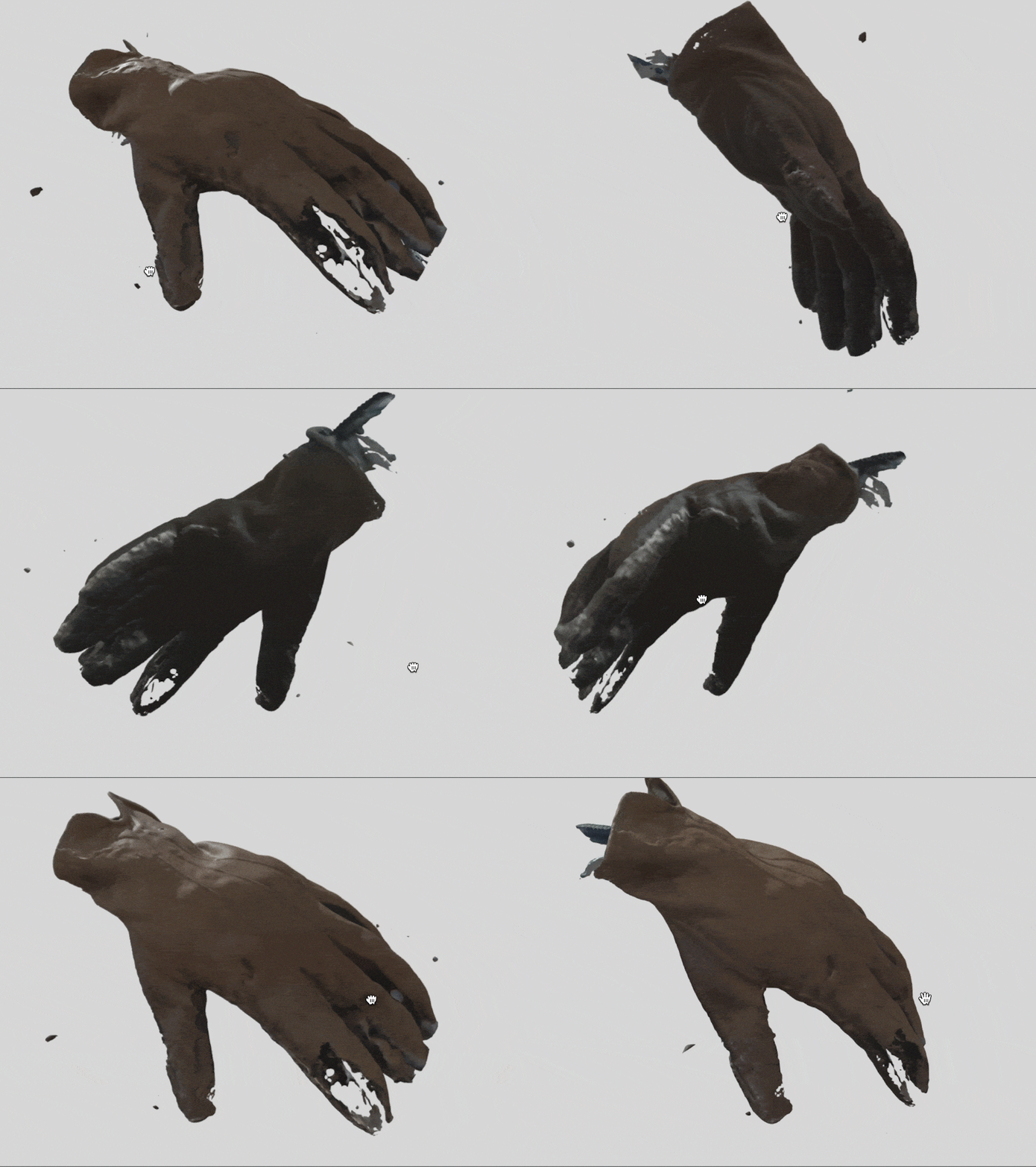
“I opened up a memory box and intuitively pulled these out… The gloves are my mom’s, and their meaning is that when I see them, I see her hands, and they fit me. When I look up to her, I think about how people talk about how she was a warm, welcoming person who was clear with her boundaries.” -Participant
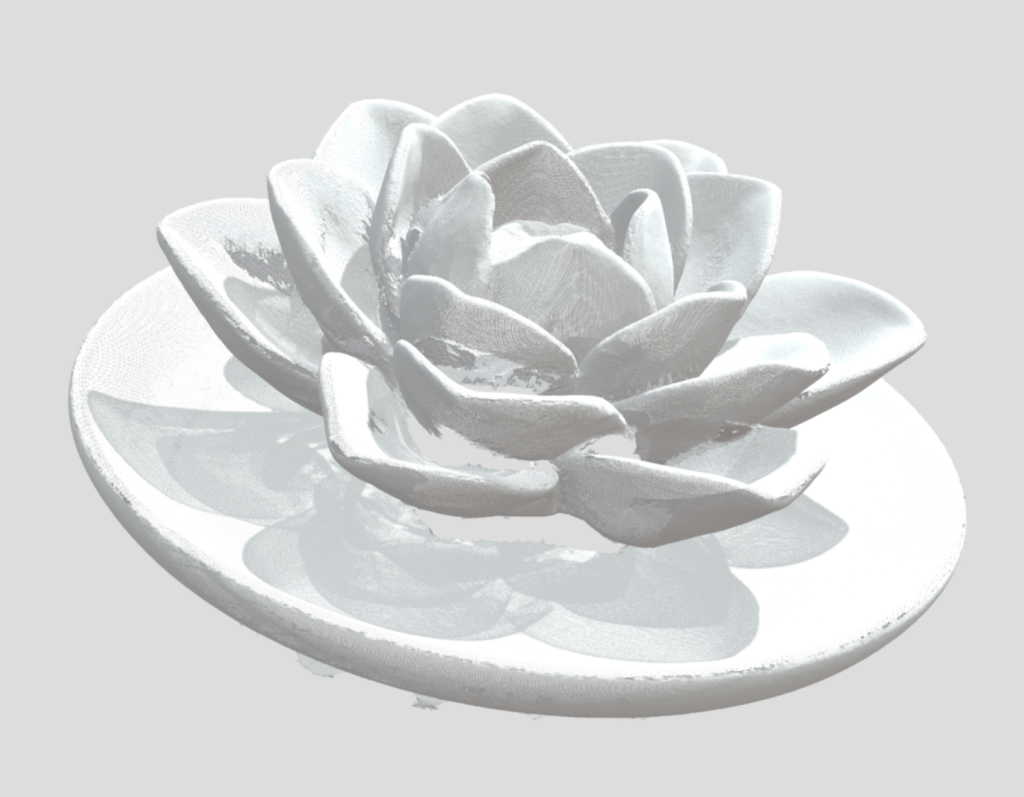
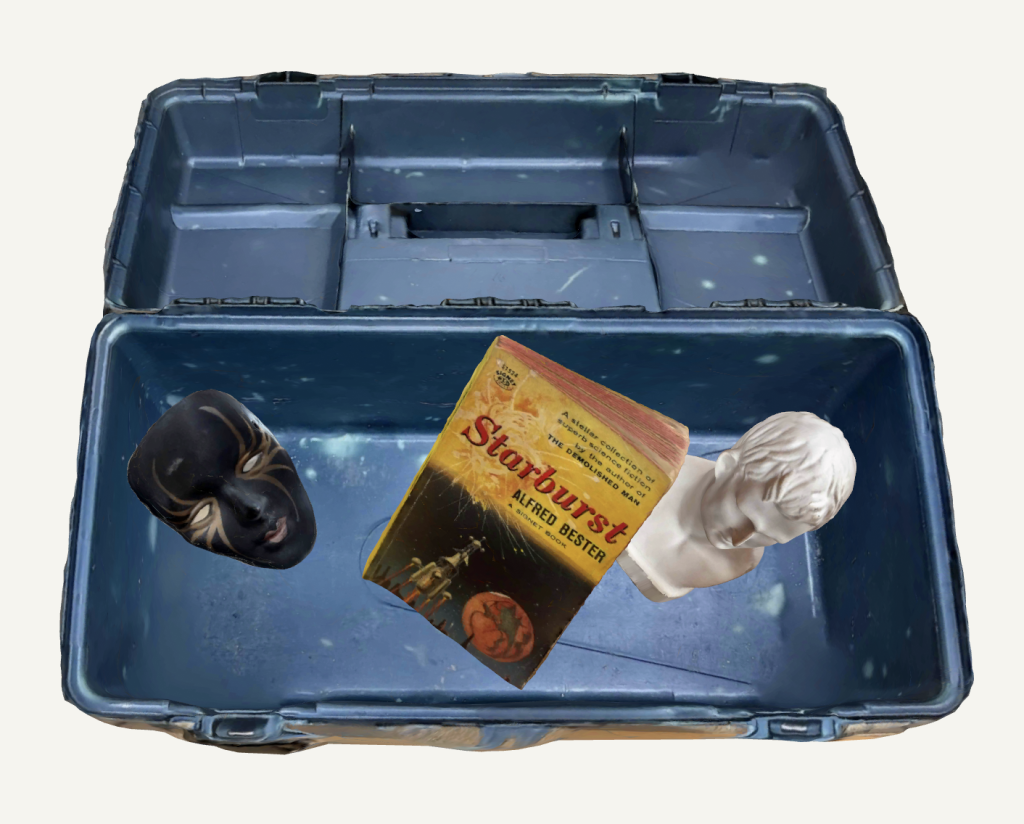
The project became more emotionally charged than anticipated. Participants brought in objects including a ceramic lotus flower, a hand-carved wooden wand, a 1958 sci-fi paperback, a fraying leather glove, a wooden cross, vintage lace, a painted mask, a plaster matador mold, and a takeout bag from a halal truck. The wand had been carved by its owner’s ex-boyfriend on a camping trip. The cross held no religious significance, but had been left behind after the participant’s grandmother passed away. Through this activity, colleagues revealed more about each other’s histories than months of conversation had.
“This object was recently purchased to remind me of the Lotus Garden my daughter and I visited this summer in California. Our time together there was so precious, and the lotuses were in full bloom. A photograph of us was taken in front of the lotuses, and it’s my favorite photo of us together.” -Participant
The last prompt, the museum label, asks participants to make these stories legible in a few words for a stranger, forcing a confrontation with what documentation preserves and what it discards. In this way, they, and eventually students, practice concise language and empathy for strangers as they share something meaningful.
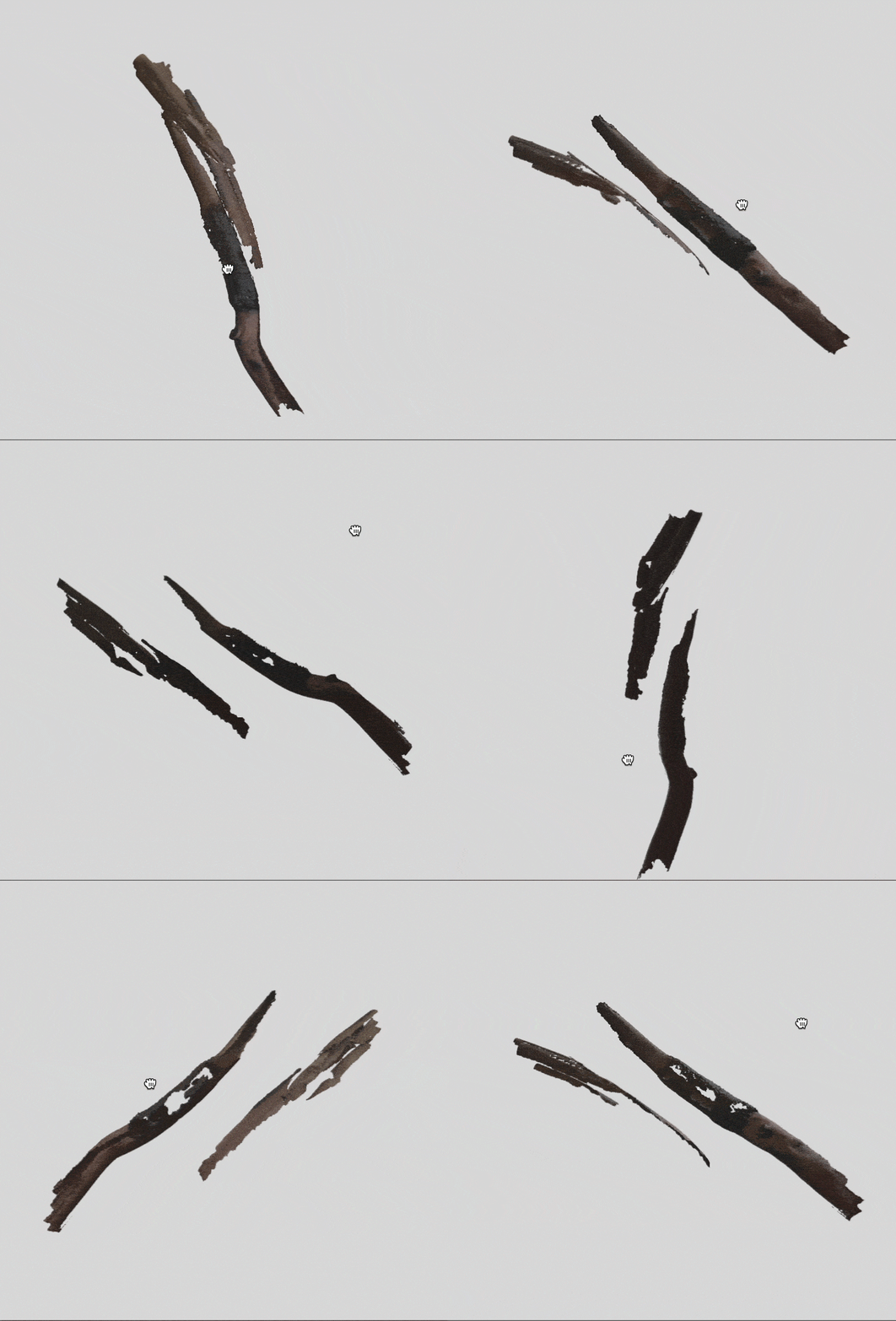
“Kitchen Wand, 2007 (+/- a few years), New York, NY, carved and gifted by Jonathan Checler, perfect size for your hand.” -Participant
A side effect of this project was that a local artist who uses the makerspace regularly and was not part of the initial group began bringing objects to scan as part of their own practice. Assisting with their work has strengthened the kind of bonds makerspaces are uniquely positioned to foster: relationships built through sustained, shared making.
Glitch as Learning Experience
Some scans closely resembled their originals. Others did not. The wand’s organic surface gave the scanner few spatial reference points, producing a ribbon-like form twisting in space. Flat objects like lace couldn’t be rendered in 3D at all, and translucent, reflective, dark, or very matte materials also created problems.
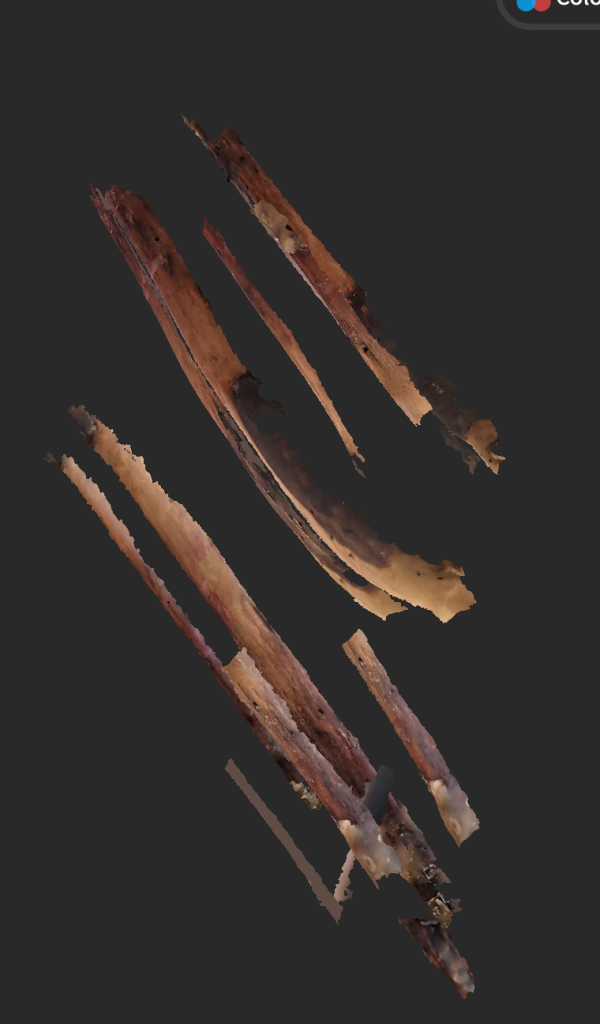
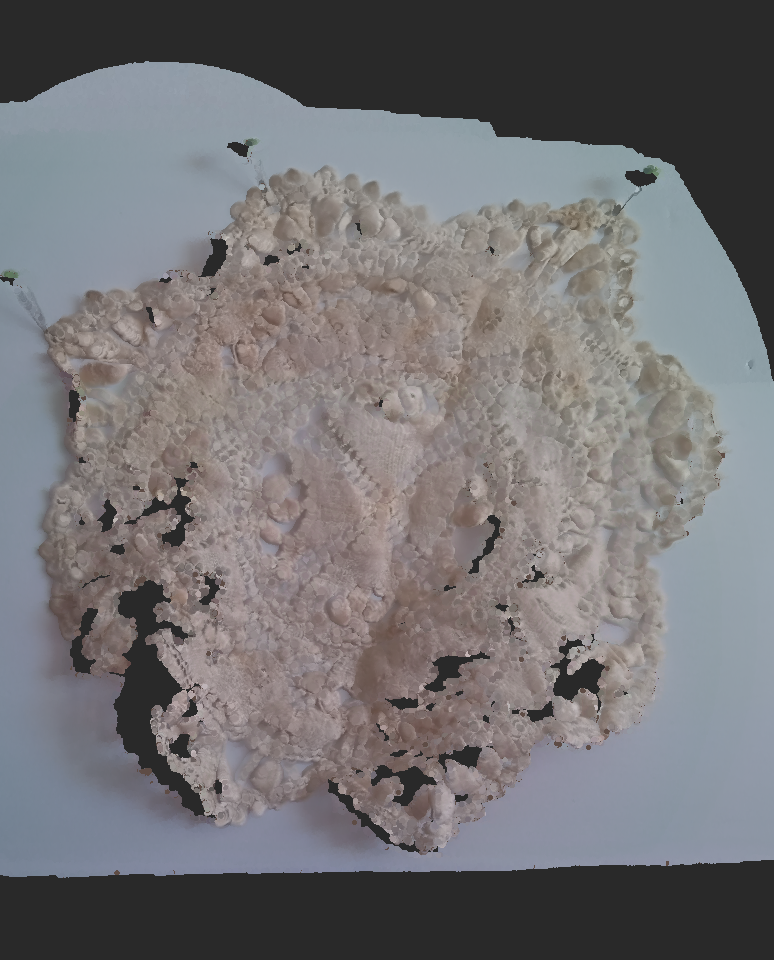
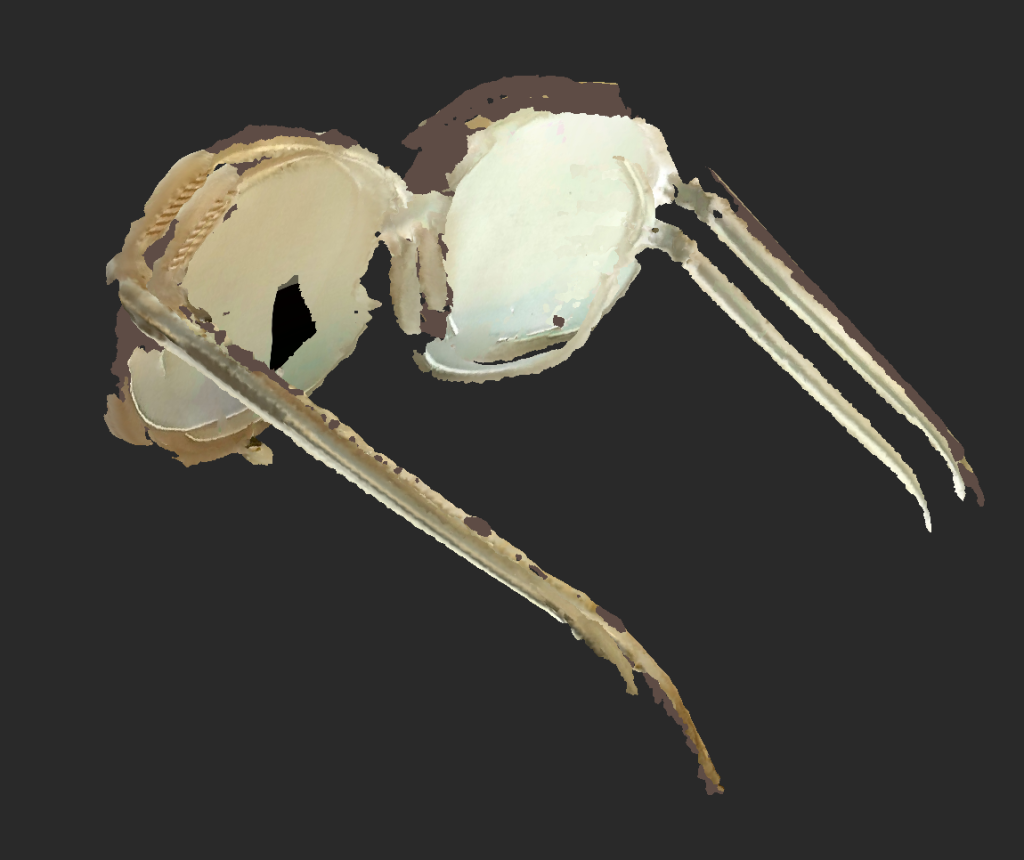
These failures are pedagogically productive. What does the technology assume about surface, depth, and geometry? Glitched forms can subvert the assumptions of digital capture systems, and they require users to adapt or change the technology. If this were an assignment for students, they would need encouragement to consider the glitches, either to incorporate them with purpose, resolve them with something like a 3D scanning spray (shoe spray as a dupe) or other method, or to choose another object. They would confront the fact that computer processing systems are flawed, and that not all objects can be preserved in the same way, a consideration that could be coupled with a museum visit.
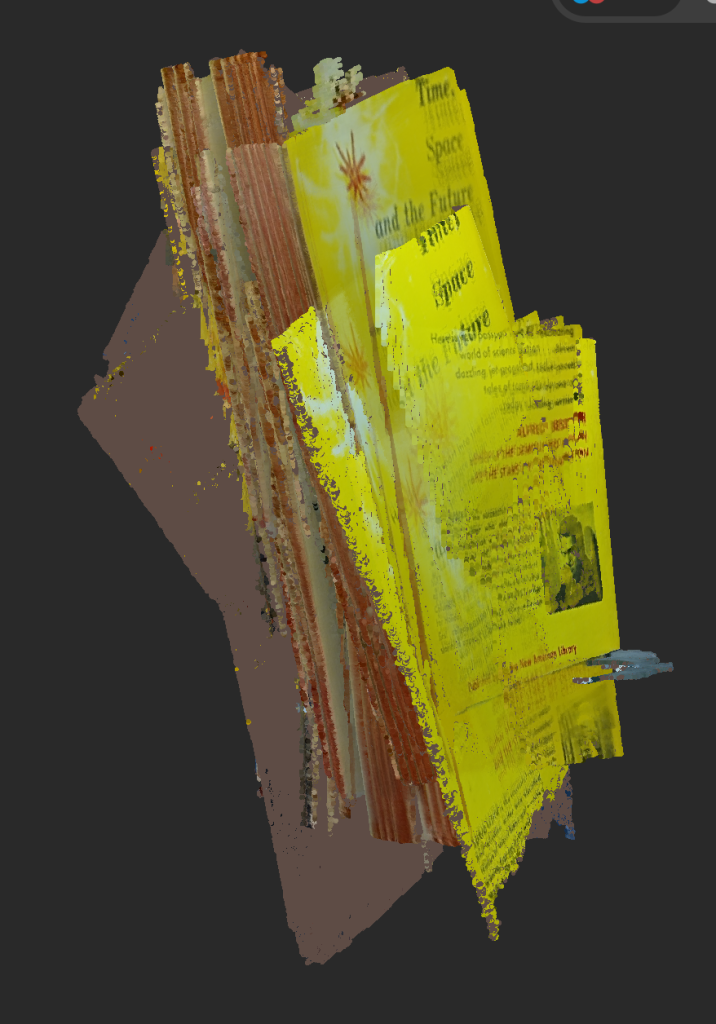
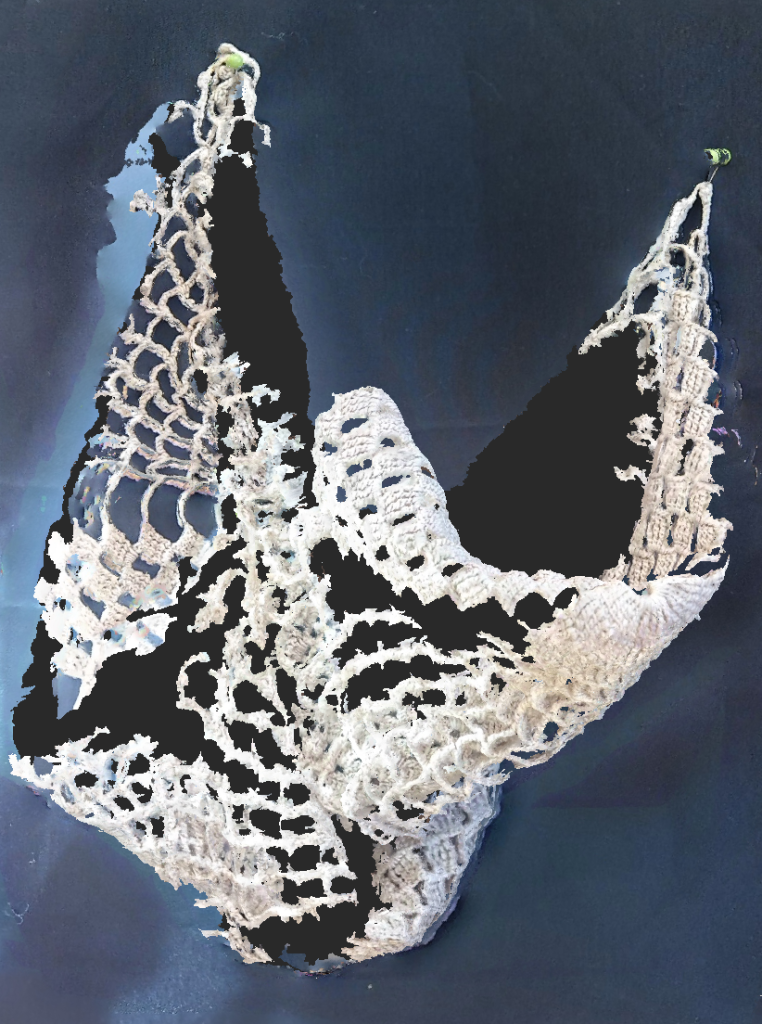
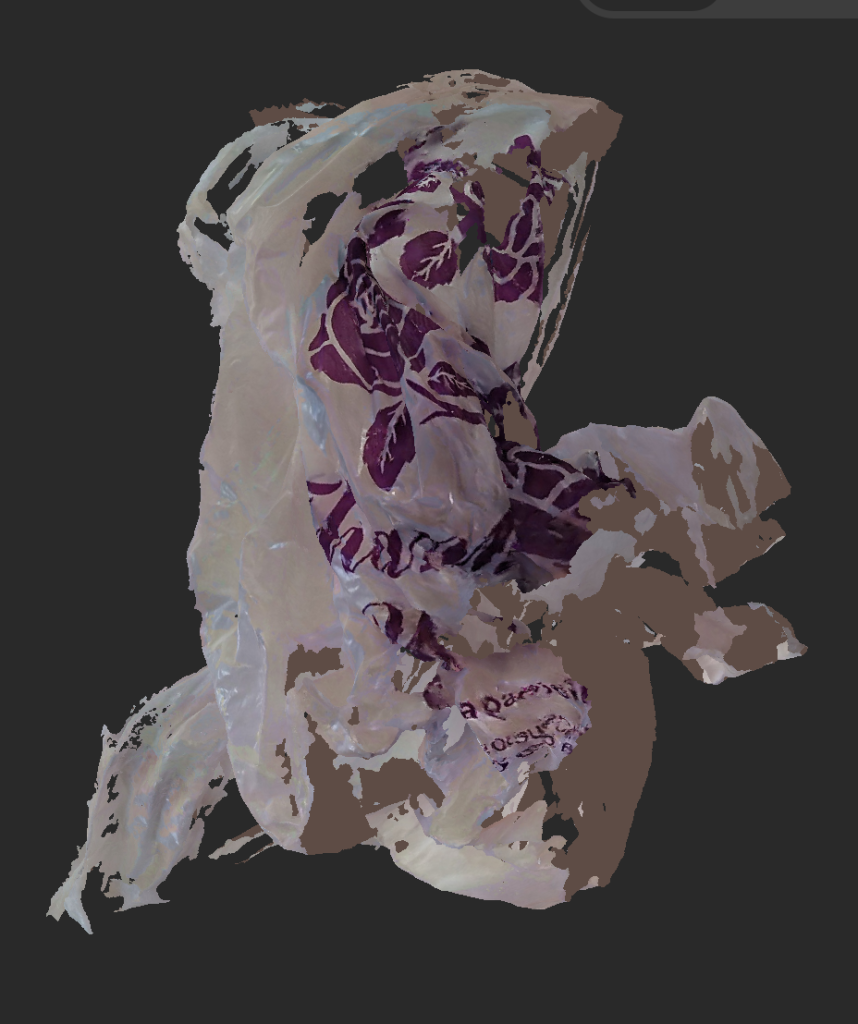
After testing multiple tools, the most consistent workflow I found was Polycam with an iPhone camera, although new software and hardware tools are being released rapidly.
Next Steps: From Objects to Bodies
The object survey was a way to learn to use scanning and rendering tools. That work now informs the second project, creating paper molds. I’ve begun building and printing paper molds in OpenSCAD with our Bambu Labs printers and will begin testing vacuum forming and heat-gun manipulations on 3D-printed paper molds. The shift from small objects to bodies introduces more complications (undercuts, depth, incomplete forms). That process will be the subject of the next post.
References
Baumstark, M. C., & Slater, T. (2020). Toward a practice of digital handicraft. In A. D. Knochel, C. Liao, & R. M. Patton (Eds.), Critical Digital Making in Art Education (pp. 1–22). Peter Lang Verlag.
Berglin, L. T. H., & Eriksson, K. G. (2020). Experimental material-digital art education by Vague Research Studios. In A. D. Knochel, C. Liao, & R. M. Patton (Eds.), Critical Digital Making in Art Education (pp. 35–44). Peter Lang Verlag.
Fritzsche, M. (2020). Critical perspectives on 3D printing in art education. In A. D. Knochel, C. Liao, & R. M. Patton (Eds.), Critical Digital Making in Art Education (pp. 45–60). Peter Lang Verlag.
Heijnen, E., Bremmer, M., Koelink, M., & Groenendijk, T. (2020). Arts laboratories and science studios: How ArtsSciences can innovate arts education. In A. D. Knochel, C. Liao, & R. M. Patton (Eds.), Critical Digital Making in Art Education (pp. 171–186). Peter Lang Verlag.
Jordan, A., Knochel, A. D., Meisel, N., Reiger, K., & Sinha, S. (2021). Making on the move: Mobility, makerspaces, and art education. International Journal of Art and Design Education, 40(1), 52–65. https://doi.org/10.1111/jade.12333
Knochel, A., D., Liao, C., Patton, R., M. (2020). Critical Digital Making in Art Education. New York, United States of America: Peter Lang Verlag.
Meeken, L. A., & Knochel, A. D. (2022). Glitching form: Subverting digital systems that capture the physical world. Art Education, 75(4), 49–56. https://doi.org/10.1080/00043125.2022.2053478
Segal, E., Hoff, C., & Cho, J. (Eds.). (2024). An Encyclopedia of Radical Helping. Thick Press.