by Hannah Tardie
Hello Hannah! Tell us a little about yourself.
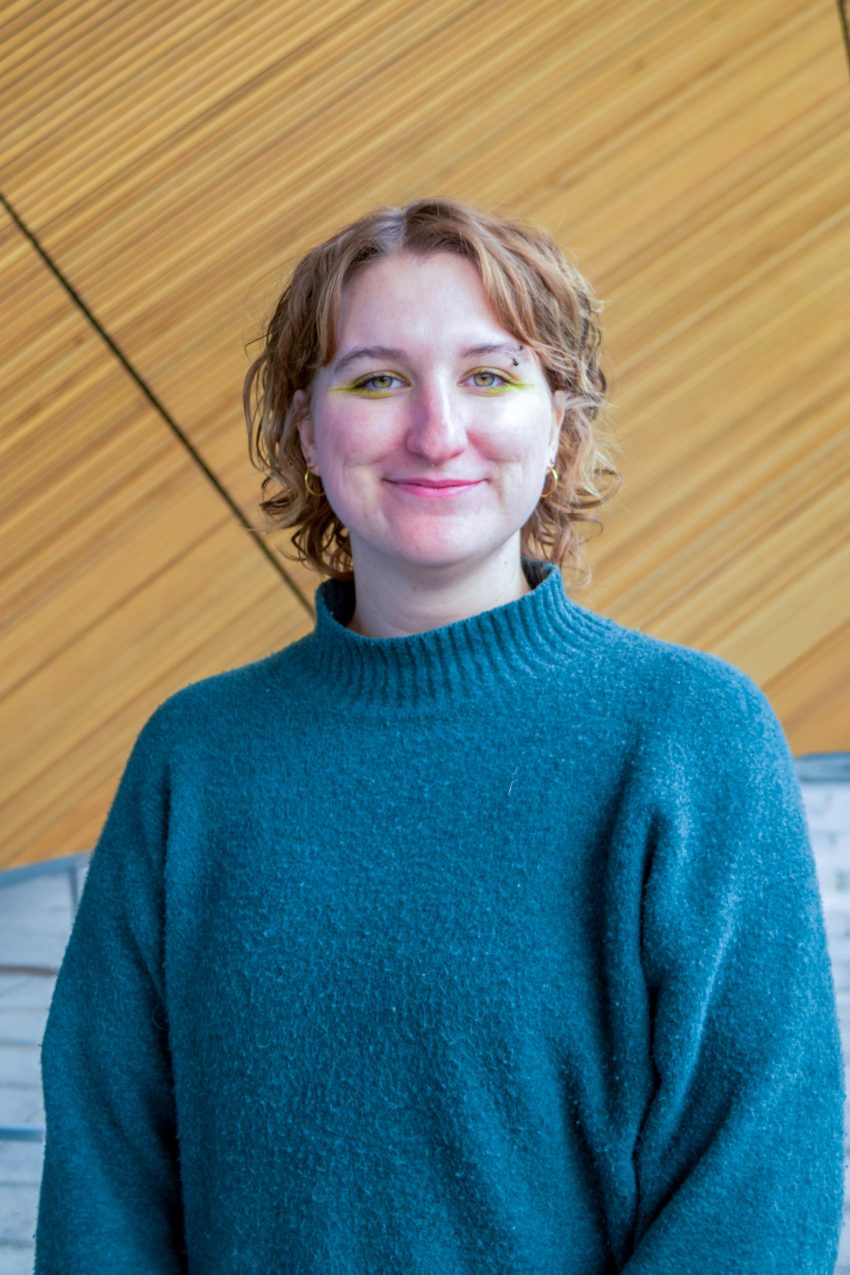
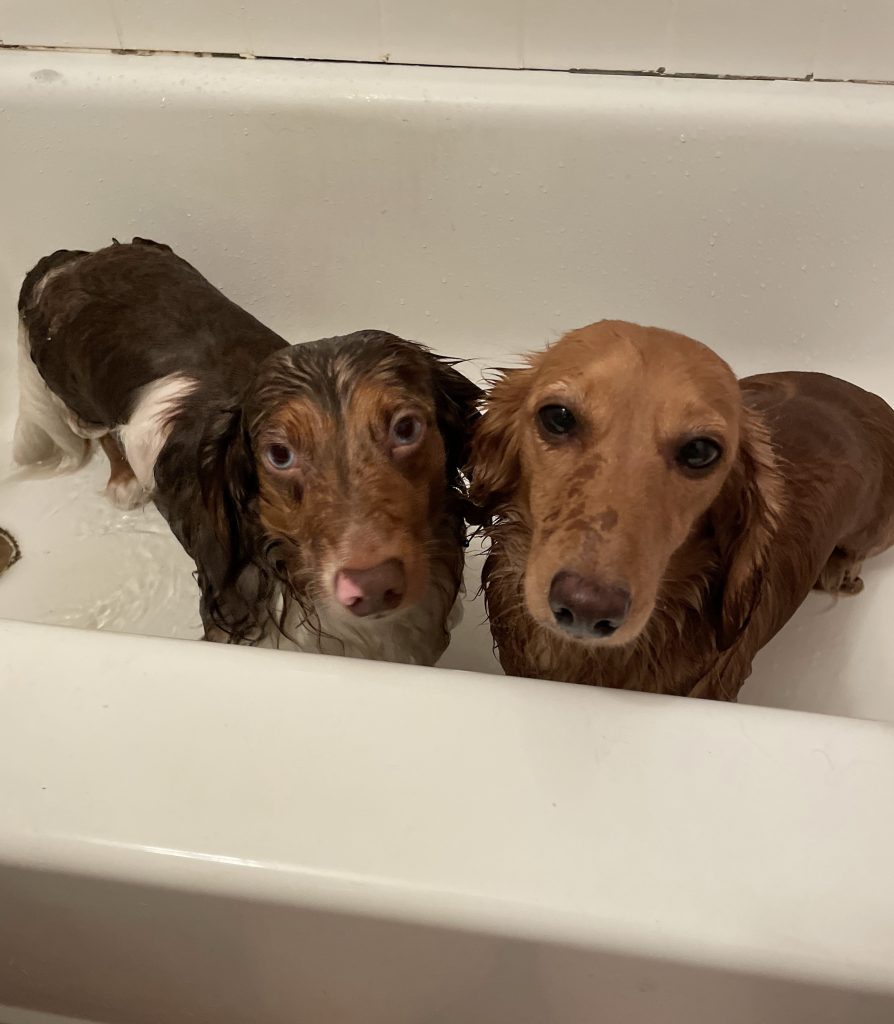
My name is Hannah Tardie and I live in South Philly with my partner and our two mini dachshunds, Dobbins and Gizmo. I moved to Philly after managing a makerspace at the University of Maine and taught undergraduate courses in art and design at a myriad of undergraduate institutions. Prior to working in Maine, I attended graduate school at New York University’s Interactive Telecommunications Program where I studied creative and critical applications of digital fabrication and electronics.
What do you do at the LCDSS?
I currently manage the Makerspace which includes a vast catalog of 3D printers, laser cutters, a vinyl cutter, industrial sewing equipment, a craft room, and soldering irons, bench electronics, Arduino and Raspberry Pi microcontrollers, and a pcb printer in our new electronics lab. With the help of my incredible student workers, I oversee the daily operations and service to patrons. I also maintain and repair equipment, plan workshops and other programming, and forecast equipment and services to push the Makerspace in new directions.
What kinds of projects/technologies do you work with the most?
I work on a wide range of machines and projects, but I’d say I work with 3D Printing, Laser Cutting, and Electronics most frequently. One of the things I like most about working in the Makerspace is the wide range of projects we’re able to support. We’ll help students print anything from pencil holders shaped like Hello Kitty to enlarged models of bacteria samples from images taken in one of Temple’s biology labs. Because there aren’t a ton of folks at Temple who work with electronics, my consultations and project assistance are frequently about teaching patrons to trigger lights and sounds with sensors, build custom electronic instruments, work with motors to animate sculptures, and more.
What is your favorite type of technology to work with in the LCDSS?
My favorite piece of equipment in the Makerspace is our typewriter. I just love that we have it and what it symbolizes in a cutting-edge space. I am interested in media archaeology and I love that we have a usable machine that may surprise and intrigue patrons due to its age and obsolescence. I love seeing students use the typewriter alongside a machine like the laser cutter. It’s a helpful pedagogical practice to situate new technologies within a larger history, and so much of the new technology in the Makerspace has a lineage in printing history. I especially love that the typewriter instills the idea that writing and literacy are integral components of a library makerspace.
What project have you enjoyed working on/helping with the most?
This semester I am teaching a mixed graduate and undergraduate class in Boyer’s Music Technology department called Circuit Design for Sound which meets in the Electronics Lab. It has been a joy to see a structured group activate the space by experimenting with electronics. My favorite program that I’ve started at Temple is our annual Electronics Faire, and I’m excited to see how my Circuit Design students will participate and show off what they have made in the class at this year’s faire on April 9th and 10th.
What’s an example of a time you’ve supported a student or faculty (or class) learning a new method that felt particularly successful and rewarding?
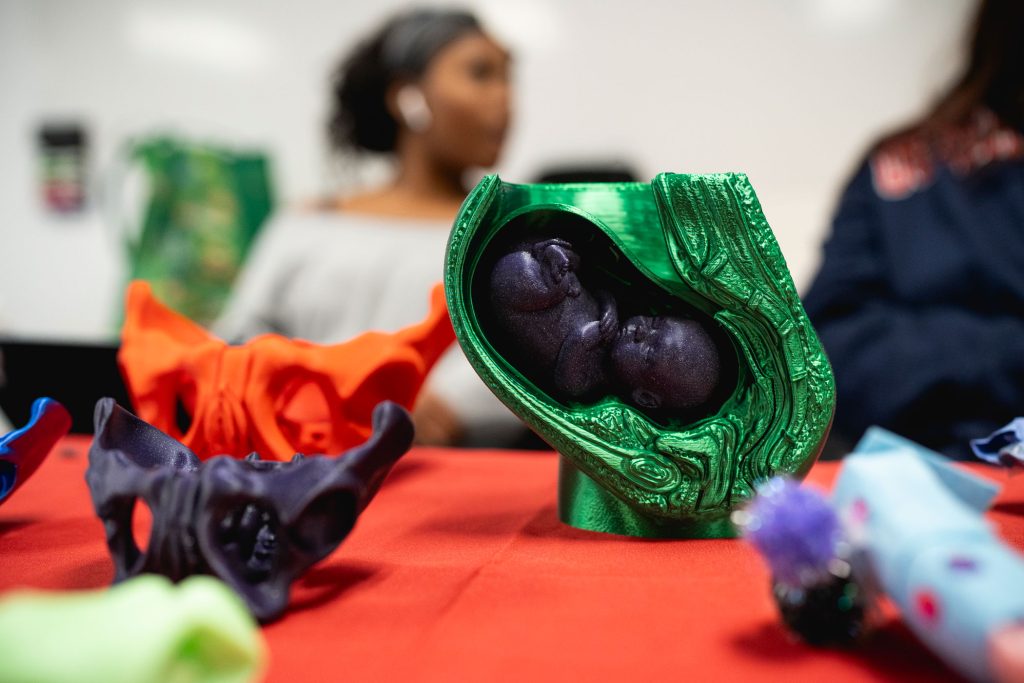
Last year, through our Makerspace Grant Program, we supported a general education course in the College of Public Health on the topic of Human Sexuality. The professor, Ryan McKee, had no prior experience in 3D Printing and his course was not typically one that would use 3D Printing. He pitched the great idea of having his students come to the Makerspace to 3D print different anatomical models to better understand the anatomy of sex organs. He did a wonderful job of requesting filaments that were playful and fun: lots of silk, rainbow, sparkle, and glow in the dark PLA was used. After the class ended, he displayed his students’ 3D Prints at the College of Public Health’s Sex Ed Week. While on a technical level what his students did was quite simple, it was deeply rewarding to see the imagination applied to it. Digital fabrication isn’t something that I would initially think applies to this discipline, and Professor McKee and his students pushed themselves to learn how to 3D Print objects that expanded their learning of course material. I am continually surprised and impressed when faculty and students can apply the tools we have in the Makerspace to their unique academic pursuits and disciplines across varying levels.
What is your favorite thing to eat on campus?
I have a chronic illness that comes with strict food intolerances and restrictions, so there are a lot of places on campus I can’t eat at that sound (and smell!) yummy. My favorite place is probably the taco truck near the bell tower on 13th street, Los Jimenez. I usually get chicken or veggie tacos. Their tortillas and green salsa always stand out, they are just so good. I’m from California, so a good taco is very comforting to me as it reminds me of home. And in case you want to bribe me, I am totally addicted to the hot vanilla bean matcha latte at Saxby’s. They get their matcha from my favorite matcha spot in New York, and the little bit of vanilla makes it such a treat.
What game are you most enjoying playing right now?
I have a Nintendo switch at home and love to play cozy games. I played Stardew Valley for a very long time and am super excited to play Haunted Chocolatier when it comes out. Over Winter Break I started playing Hollow Knight Silksong which has been very fun and quite challenging—I don’t typically enjoy games with combat, but the story and visuals are striking. I’ve taken a break from playing it regularly but might pick it back up or start playing the Legend of Zelda Tears of the Kingdom.
What technologies are you most excited to learn more about at the LCDSS?
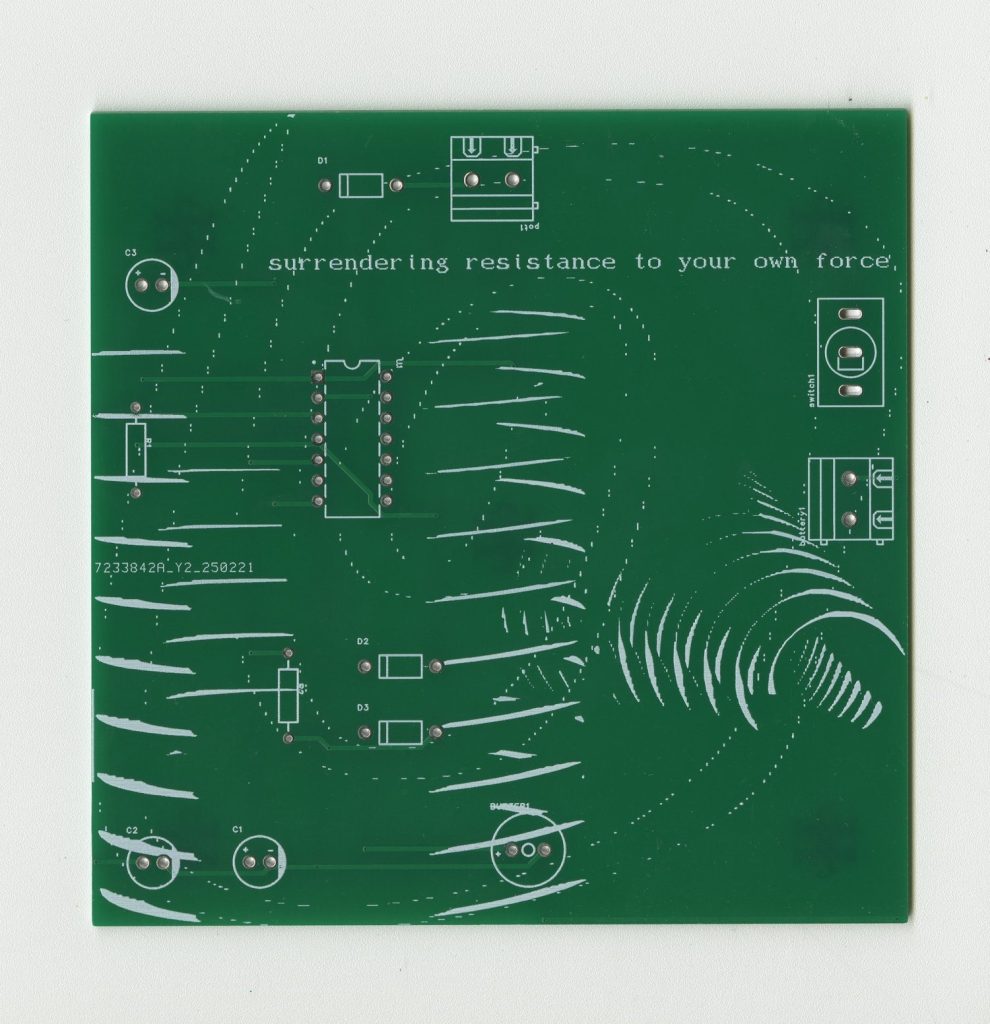
I’d like to dive into our new printed circuit board (pcb) printer, the Voltera V One, when I get some time. I have designed and fabricated custom pcbs with my own artwork on writing on them in the past, and am excited to work on some Voltera prototypes for the Electronics Lab. I usually get time to dive deep into different technologies we have over the summer, but last summer I was all consumed by the Makerspace Expansion. This summer could be a great time to explore the Voltera. Creating custom circuit boards at the quality offered by Voltera is very exciting and offers a lot of potential for patron projects and programming we can offer.