Categories
Uncategorized

So, you wanna volunteer on a farm?

After graduating high school in the midst of a global pandemic, I felt unsure about what my next year would look like.  Jumping right into college, especially with so much uncertainty, was not a good choice for me.  I wanted to travel and learn things outside of a classroom that I could carry with me throughout college and my career.  After much research and contemplation, I decided on a program that would allow me to volunteer and spend two months in Hawaii camping, hiking, and of course, farming.

To make my decision, I spent a lot of time googling various gap year programs before settling on Carpe Diem Education.

Websites like Gap Year Association (GYA) and Go Overseas are particularly helpful since they give a list of top programs, a description of the program and reviews from people who went. The most reliable organizations will fall under the Accredited Gap Year Programs which are determined by GYA’s guidelines. I landed on Carpe Diem after seeing it at the top of the list on various gap year websites and reading about the experiences that former students had.

Worldwide opportunities on Organic Farms or WWOOF is another great organization if you’re looking specifically for a sustainable farming experience or place to volunteer.  If you have an idea of where you’d like to travel, you can look for farms located in that country and read about what kind of experience you would have there. Farms you find through WWOOF will provide housing and food in exchange for a certain number of hours of work per day. These sites might seem more directed towards gap year students, but most organizations will offer summer programs and volunteer options as well.

Safety is incredibly important to consider before traveling abroad, and it’s also crucial for getting your parents on board. Each program page should have their own Health and Safety section where they discuss how they handle emergency situations. Since you will be traveling during the pandemic, pay special attention to their Covid-19 policy to make sure you stay safe abroad. All programs should have staff available to schedule zoom meetings to clear up any questions or concerns before traveling.

“Choosing to travel abroad was the best decision I ever made.” 

During my time in Hawaii, I spent two weeks living and working on an organic sustainable farm called Pono Grown in the East Maui mountains.  As the owner described it,

““Pono” is the Hawaiian word for righteousness and harmony.  He chose the name based on a deep belief that the earth will only take care of you if you take care of it too.”

At Pono, I came to realize how reliant we are on the environment.  The farm provides fresh food for the whole community, and it made me wonder where my food comes from and if my practices are honoring the land as Pono tries to do.

Another two weeks of my trip were spent working with Maui Cultural Lands on a land restoration project called Kipuka Olowalu.  Unlike the farm in East Maui, the Olowalu valley was considered a sacred space.  Each day we would begin with a chant led by a cultural practitioner to ask permission from the land to enter the valley.  At Olowalu we learned not just of the connection we have to earth through food, but also of the spiritual connection that is possible.  The staff taught us the Hawaiian phrase Malama ‘Aina, meaning “to care for the land.” This mantra was repeated many times over the course of our two weeks with them.  I came to realize that this was not just their job at Olowalu, but something meaningful that many Hawaiians live by.

Over the two months, we spent almost every day working with the land.  Our longer stays were at Pono Grown and Kipuka Olowalu, but we had volunteer days at the Botanical Gardens, in taro patches, and even at Grammy-winner George Kahumoku’s home farm.  

“At each of these places, the pattern of love and appreciation that Hawaiians have for the earth was not lost on my group. We left with a new perspective and greater appreciation for the land and environment.”

It’s not only where our food comes from, but it’s where we live.  The simple concept of Malama ‘Aina and having love for the earth is lost on many Americans.  I didn’t quite understand it myself until I spent time with people for whom it is their whole life. I can’t express my gratitude for getting to experience the land the way I did on Maui, especially as the climate crisis becomes a greater threat.  Such a strong connection to the land is incredibly rare, which is why most people are so quick to ignore the destruction we have caused.  We stopped taking care of the land, so it stopped taking care of us. 

It is essential that we learn to appreciate the land in order to reach a state of pono in which both people and the land care for each other. 

I highly encourage students to take any opportunity they can to work with the land and volunteer when they can.  Growing food that feeds people, and especially yourself, helps you develop an intimate relationship with the earth.  It is an overwhelming feeling of gratitude and belonging that comes from living in connection with the land.


Sustainability and Education Abroad: What you should know and what you can do

Temple Office of Sustainability and Education Abroad and Overseas Campuses teamed up to design a host of resources to help you incorporate sustainable practices into each step along your journey, from choosing your program to planning for your travel and life abroad, to implementing lessons learned abroad upon your return.

Your carbon footprint

Calculate your study abroad carbon footprint and explore resources to reduce and offset.

Global impact of climate change

Find out how climate change is affecting countries around the world, including your host country.

Community perspectives

Check out what our students have learned about sustainability and climate change from living abroad, and hear from faculty experts on our community perspectives page.

Sustainability courses abroad

Enroll in courses focused on sustainability abroad.

Temple Global Green Grants

Want to be an ambassador for sustainability abroad? Apply for our new Temple Global Green Grant!

Sustainability events

Explore sustainability events happening at Temple.

The recommendations, views, and opinions expressed in this blog are solely those of the original authors. Theses recommendations, views, and opinions do not represent those of Temple University, Temple University Office of Sustainability, the staff, and/or any/all contributors to this site.
Categories
Annual Report

The 2020-2021 Temple Sustainability Report Is Here

Resilience in the Face of Adversity

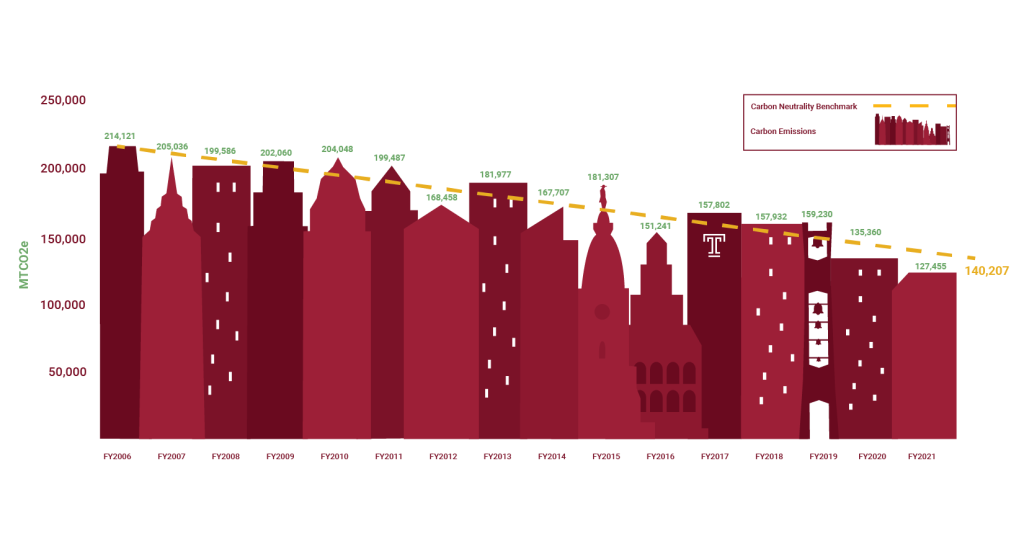
Our progress towards carbon neutrality has been significant, driving down emissions by 40% since 2006. Our continued investment in systems that support low, and no-carbon operations will allow us to meet out carbon neutrality goal in the future and create a resilient campus even in the face of adversity.

Ken Kaiser, Senior Vice President and Chief Administration Officer

Check out the Temple University Sustainability Annual Report. Learn about our continued commitment to sustainability and our progress to the climate action goals we have in place.

Thank you for being a part of history in the making.
Categories
Climate Policy Digest

Innovative Solutions to Address Philadelphia’s Energy Burden

The average Philadelphian spends 6.7% of their income on energy. That’s more than twice the national average. As the city of Philadelphia explores decarbonization and renewable energy options, we need to make sure our solutions are addressing Philadelphia’s energy burden.

Energy in Philadelphia

Philadelphia Gas Works (PGW) is the city-owned gas utility of Philadelphia. PGW produces 24% of greenhouse gas emissions in Philadelphia and serves almost 500,000 customers. They are one of the most important players in the city’s goal to reach carbon neutrality by 2050.

They are one of the most important players in the city’s goal to reach carbon neutrality by 2050.

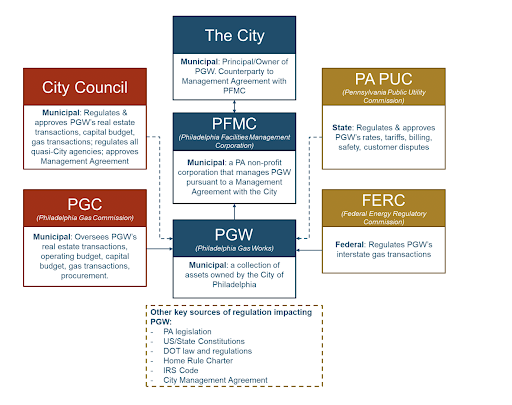
Philadelphia Gas Works Business Diversification Study: Energy in Philly.
This image shows the city, state, and federal agencies that PGW reports to. Understanding the structure of PGW allows us to recognize which stakeholders influence decisions made by PGW.
 
Source: Philadelphia Gas Works Business Diversification Study.

Philadelphia’s Office of Sustainability and PGW recently released a Business Diversification Study which explores the ways in which PGW can work to reduce greenhouse gas emissions while simultaneously sustaining jobs and addressing the energy burden placed on low and moderate-income families.

This study offers a glimpse into the future of PGW’s sustainability initiatives by presenting three pilot programs that PGW plans on pursuing. In order to hold PGW accountable and understand which energy programs offer viable, affordable, and sustainable options for the future, it’s important to explore the implications of these potential energy solutions.

Pilot Program #1: Weatherization

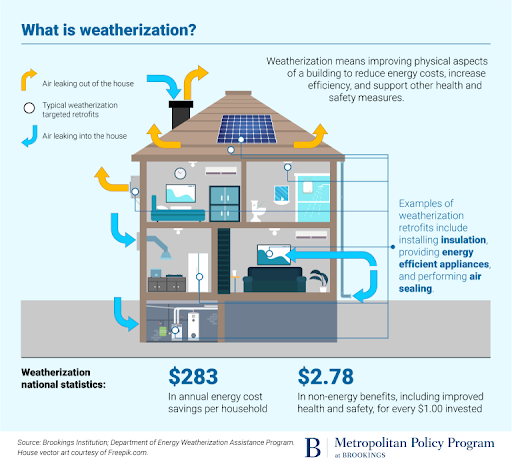
Weatherization is the process of improving energy efficiency in order to reduce energy usage and decrease the amount of outside air entering the building. This requires less energy usage and costs during the winter months because weatherization decreases the amount of cold air entering a building. 

The process of weatherization typically requires a larger upfront investment to make changes to a building such as improving insulation, sealing air ducts, and replacing and sealing drafty doors and windows.

The intent is that these investments will pay off in the long run by decreasing energy costs.

PGW already has a weatherization program, but the pilot program would expand weatherization efforts to low and moderate-income households by utilizing an on-bill financing method. This program would have PGW pay the upfront costs of weatherization improvements to a home, and then this money would be recovered through a monthly payment on the customer’s energy bill. 

Details of Weatherization: Energy in Philly.


However, a representative from Community Legal Services, a Philadelphia-based group that provides legal services to low-income families, expressed disapproval of the on-bill financing program as a method of addressing Philadelphia’s energy burden.

The representative mentioned that there are programs in the city that will make weatherization improvements to houses of low-income residents for free, which is a more viable and affordable option for families who may not be able to afford the extra monthly payment.

Pilot Program #2: Networked Geothermal Systems

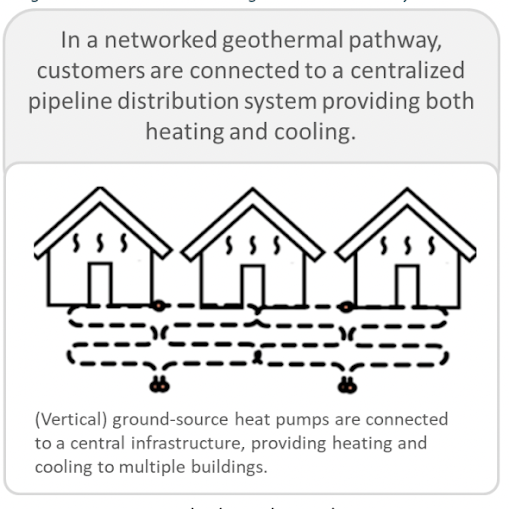
While the weatherization pilot program is an extension of PGW’s existing programs, the other two programs presented in the report are completely new to PGW. The second program, which is set to begin with a feasibility study rather than the implementation of a full pilot program, involves the exploration of networked geothermal district systems.

Geothermal Pathways: Energy in Philadelphia.
Image Source: Philadelphia Gas Works
Business Diversification Study

PGW will explore the potential of the geothermal district systems, which would involve the use of geothermal heat pumps to extract heat from the Earth in the winter and then store it during the summer. These heat pumps are used to heat and cool buildings by carrying cold water, hot water, or steam. 

This is seen as one of the projects with the most potential because it would likely allow for PGW’s workforce to be retained while redirecting PGW’s revenue stream to come from a renewable energy source. Massachusetts recently launched its own networked geothermal pilot project, and geothermal energy has been a successful renewable energy source in Europe for years. 

While more research is needed to determine what a networked geothermal system would look like in Pennsylvania, this has been identified as one of the most promising options for reducing emissions.

Pilot Program #3: Decarbonized Gas

Converting city waste to biomethane, which is a renewable gas!

PGW’s third pilot program proposes that PGW partner with the Philadelphia Water & Streets Department to investigate the potential of converting city waste to biomethane, which is a renewable gas. 

The benefit of this program is that it would allow PGW to continue using the gas infrastructure that it has set up. The limitations to this program lie in the fact that it will not significantly decrease fossil fuel combustion since the majority of the gas used will continue to be fossil gas, and it also does not offer a method of addressing the energy burden. 

Why These Programs Matter for Philadelphia’s Energy

In order for the city of Philadelphia to reach carbon neutrality by 2050, PGW will have to dramatically transform its business model and explore alternative energy methods. The pilot programs outlined above present the first step forward for PGW, and networked geothermal systems are particularly promising for a sustainable future.

Temple University Small Business Development Center: Energy in Philly.
Two small businesses, ATP-PA and Metal Light were awarded funding and mentorship opportunities from PGW and Temple for their environmentally conscious and innovative energy projects

Image Source: Temple University Small Business Development Center. 

Finding innovative and creative solutions is the first step to enacting long-lasting, sustainable changes to our energy system.

The pilot methods PGW is working to implement are a prime example of the importance of pushing energy companies to consider alternative methods that reduce the energy burden placed on low-income families and decrease greenhouse gas emissions.

Last month, Temple partnered with PGW to highlight two small businesses with new and groundbreaking environmentally friendly energy ideas. These businesses were awarded funding and mentorship opportunities from PGW and Temple’s Small Business Development Center. 

As consumers, we are in a unique position to demand that PGW and other energy providers pursue new methods of addressing energy needs, such as exploring networked geothermal systems and decreasing the energy burden placed on consumers.

Reducing greenhouse gas emissions and improving energy affordability in Philadelphia requires cooperation and collaboration between a variety of actors, and the pilot programs presented in the Business Diversification Study are one of many steps we need to explore in order to reduce emissions and address Philadelphia’s energy burden.
Categories
Campus Sustainability Month Stories of Sustainability Sustainable Fashion

Slow Fashion in Philly

Culture on campus is ripe for climate action and Temple Sustainability is encouraging you to ‘decarbonize your life’. Let’s think critically about our consumption: What is the true cost of consumer goods? Where are we now and where do we need to go? How can students be a part of the solution?

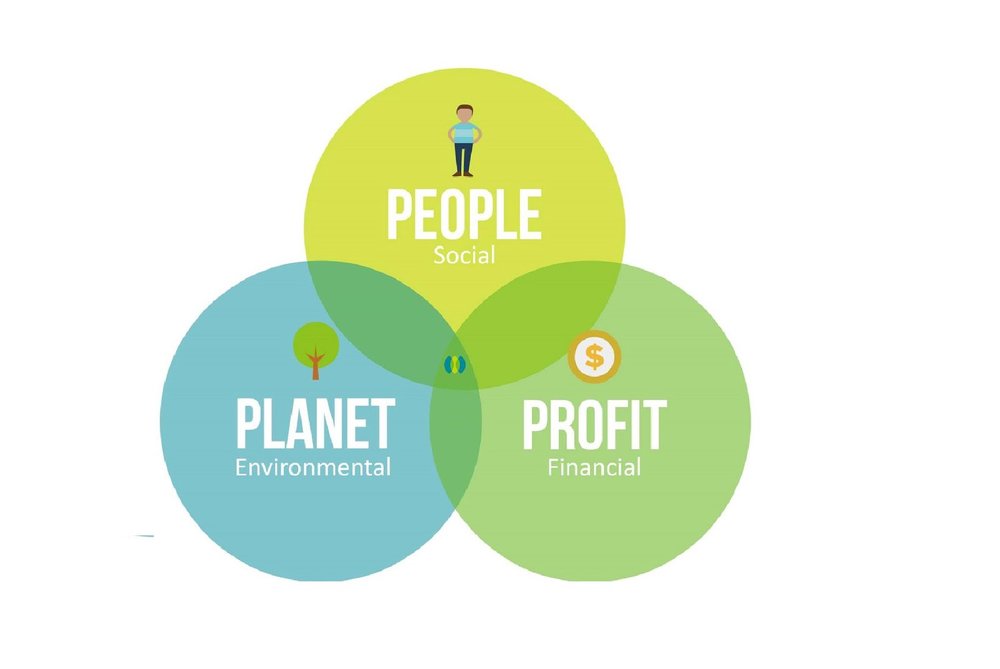
Everyone’s favorite on-campus sustainable retail experience returned this semester. After sorting over one ton of Give and Go Green donations in May, Temple Thrift, our own triple bottom business, was in action at the Bell Tower on October 6th and 13th.

Slow Fashion with Temple Thrift

Hundreds of students in residence halls donated and over 20 volunteers sorted donations to divert 1,279 pounds of clothing from the landfill for this year’s Give and Go Green initiative, a collaboration between Temple Sustainability and the Division of Student Affairs. 1,142 pounds of food and hygiene products were donated directly to the Cherry Pantry. 99 pounds of food waste was sent to the landfill, and 9 pounds of waste was recycled.

Of the clothing donated by Temple students, we gathered the following insights:

  • Majority of items were from some of the largest contributors of fast fashion, including Forever 21, American Eagle, Shein, H&M and Old Navy. 
  • Over 30% of the items were made with a combination of cotton, polyester, nylon and spandex and contained microplastics Read more about reducing their negative ecological impact in your laundry here.
  • It took 344 pounds of oil to create the cotton items GGG collected.
  • Only 3% of the textiles were manufactured in the United States.
  • Over 80% of textiles were manufactured in China, Vietnam, or Bangladesh.

60 individuals volunteered to help run two days of pop-up sales, completing over 100 unique shifts. 395 shoppers spiced up their wardrobes and picked up practical home goods affordably — no item was over $5! Still, we collected $5,057 in sales revenue on items that were otherwise headed to the landfill. All the proceeds were donated directly to the Cherry Pantry, an on-campus pantry for students.

Decarbonize your Closet

It is hard to deny Temple Thrift’s positive impact, but thrifting is not a silver bullet. Second hand sales are not a solution to this much larger global crisis. 

The problem is overconsumption and our ‘out of sight, out of mind’ mindset. Fast fashion is the world’s second largest pollutant and 85% of the post-consumer textile waste — 3.8 billion pounds– slowly decays in landfills each year. You can read a deep dive on the ecological impact of the fashion industry in our Waste Conscious Fashion Community blog. Our choices — from the second we click purchase on an online webstore, to the moment we throw them away or drop them off at a donation site — have a real impact on people and the planet. 

As climate advocates and social entrepreneurs, we should think hard about the true cost of each and every garment.

(The Considerate Consumer)

Advocating for slow fashion looks beyond simply thrifting to support a movement and a community of conscious consumers. Through their choices, slow fashion advocates support sustainable and ethical brands that benefit “the planet and all people,” embodying the shift from purchasing cheap items for a short period of time to investing in high-quality items for their long lifespan.

Everyone can decarbonize their closets – whether it’s upcycling items, swapping clothes with peers, shopping from sustainable brands, or shopping for pre-loved items. Encourage your friends and family to join the movement.

Philadelphia’s Slow Fashion

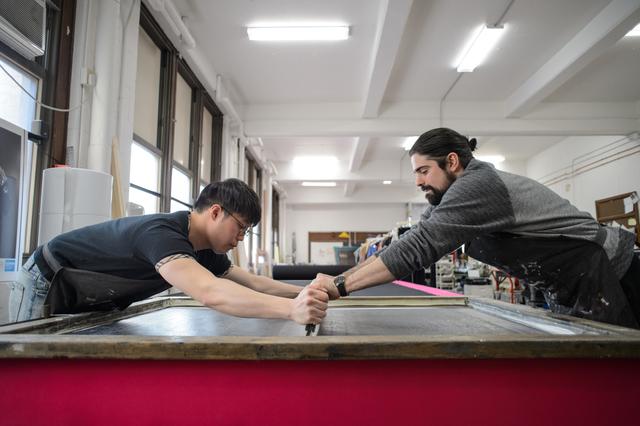
Local sustainable fashion companies in Philadelphia, like Lobo Mau and Grant BLVD, have taken social and ecological impact to a new level. Labo Mau’s use of hemp, eco-friendly screen printing, local manufacturing, and penchant for upcycling serve as an aspirational example for individual consumers and brands alike. Grant BLVD designs with secondhand clothing and preloved fabric to curate unique garments and connects their work with the larger global crises of climate change and poverty through their mission and message.

Shay, an EcoLead and intern at Grant BLVD, tells us about the difficulty of navigating this work on the ground.

“Whether it’s becoming a Zero Waste Partner with the City of Philadelphia, which is actually centered around recycling initiatives, or the lack of existing programming and resources to successfully execute sustainable initiatives — these small businesses are essentially starting from scratch  and still creating a positive impact”.

– Shay Strawser

FABSCRAP, one-stop textile reuse and recycling resource, opened in Philadelphia on November 15th. A business solution to pre-consumer textile waste, FabScrap Philadelphia will pick up fabric scraps, process by fiber content and recycle with fiber-to-fiber technologies or give local creators the opportunity to reuse materials for a low-cost. Anyone can volunteer with FabScrap for 3 hours and take home 5 pounds of free textiles for their next project. 

Use fashion as a STATEMENT

Every stage within the lifecycle of fashion is associated with environmental and social costs, as highlighted by Earth Logic. Fashion is culture. It shapes and is shaped by our lifestyles and communities. I encourage you to continue to use fashion as a statement, not by purchasing more items, but by making intentional decisions that align with your values and consider your carbon and waste footprint. Be conscious of the lifecycle of items — take note of the fabric(s) used, where it was made, and its capacity to move with you as you grow. 

Let’s think about the ten-dollar SHEIN pants you bought on Monday: They were most likely manufactured in Guangzhou, China by a young woman who was paid three cents for making this garment. The trendy design was likely conceived less than a week before it was made and was probably copied from an independent designer. The pants are cheap — in price and in quality. From an aesthetic and construction standpoint, they are unlikely to be worth the time and resources necessary to repair them which means they are destined for the landfill.

But, what if you bought one-hundred dollar pants sourced from a sustainable and ethical fashion brand? These pants would be made of recycled materials or with ecologically ethical and locally grown fabrics like hemp or cotton, designed locally and sewn by individuals that are paid a fair living wage. 

A higher price point is the true cost of a garment and sustainability. These pants are made of great quality and to last you a lifetime, a garment you can upcycle and eventually recycle with the designer you purchased from in the first place. 

You’ve taken the time to learn, and you may have a better understanding of what it means to be a conscious consumer. Although this might be startling, I challenge you to put it into practice by considering the true cost of your purchase -- to people and to the planet -- each time you decide to buy.

This Campus Sustainability month, climate leaders took action to decarbonize their closets and engaged with the community through slow fashion. 

  • Transportation EcoLeads led an EcoReps Excursion and group ride to South Street in Philadelphia, where they shopped second hand at Philly Aids Thrift, Retrospect, and Raxx Vintage
  • The Innovation and Entrepreneurship Institute hosted a Sustainable Fashion and Innovative Performance speaker session with Matt Dwyer of Patagonia.
  • Green Council has led to connections and opportunities, like that with the Temple University American Marketing Association and Thrift and Flop. Both are currently accepting donations of gently used winter clothing for individuals that lack housing during the colder months.
  • The Green Living cohort completed their week 7 action items for purchasing decisions. With a focus on a circular economy, student leaders were encouraged to walk through four questions:
    • Why do you buy & consume the products that you do?
    • Which of those products do you need? Which do you want?
    • How do you decide what you need vs. want?
    • Who benefits from you buying those products? Who loses?
Categories
Campus Sustainability Month Stories of Sustainability

Community Engagement and Environmental Justice

Policy EcoLead and Temple Student Government Director of Grounds nad Sustainability, Katie Perrone, shares her local climate action planning internship experience and discusses learning from environmental justice EcoChampions throughout Pennsylvania. She explores the question: how can we remove systemic barriers and reach out to communities that have historically been overlooked?

Local Climate Action Planning

Last year, the Office of Sustainability hosted an event about Students & Local Climate Action Planning in Philadelphia, which detailed the experiences of students who participated in last year’s Local Climate Action Program (LCAP) cohort. In August, I learned that I was accepted into this year’s LCAP cohort, and I’ve spent the last couple of months diving into the world of local government planning, climate policy, and environmental justice. 

The LCAP program paired me with local government officials from Warrington Township, Pennsylvania, and I am responsible for helping them develop and implement a climate action plan for their community. The first step in beginning to draft our climate action plan for Warrington Township was forming a task force. Key stakeholders were invited to participate and the task force gives all of us working on the climate action plan an opportunity to bounce ideas off of one another. 

Creating graphs, analyzing greenhouse gas emission data, and starting to conduct a climate change vulnerability assessment have been just a few of the tasks that I have worked on with the task force during my first few months as an LCAP intern. However, no part of my LCAP experience has been as interesting as learning about the impact that community engagement has on local planning.

Community Engagement

One of the first things that I learned during my internship training is that creating an effective community engagement strategy is essential to drafting effective policy. Community engagement can come in many forms, from hosting workshops and community meetings to reaching out to underrepresented communities to gain their perspectives.

In the case of Warrington Township, we are drafting a survey to be distributed to the entire township. The survey includes questions about which actions residents are already taking to reduce the impact of climate change and which actions they would like to see the township implement. The main objective of our survey is to gain the perspectives of community members, understand their priorities for addressing climate change, and build transparency between the township and its residents. 

The LCAP program trainings have taught me that community engagement isn’t as simple as planning a workshop or creating a survey. In order for either of those actions to be effective, they need to incorporate the entire community. This means specifically reaching out to any groups that have been historically marginalized and underrepresented and making sure that they play a significant role in the process. Environmental justice is a crucial component of any community engagement strategy for climate action.

(Image from MobilizeGreen.org)

Environmental Justice

A few weeks ago, Alison Acevedo, the director of Pennsylvania’s Office of Environmental Justice, led an LCAP training session about environmental justice and how to address the causes of systemic environmental inequalities. She began by explaining the differences between equality, equity, and justice, and the importance of working to remove systemic barriers and achieve justice.

The history of redlining in Pennsylvania is one of the direct causes of environmental injustice. Communities of color and those without a lot of economic resources were much more likely to be located near industries and factories, and therefore these communities disproportionately dealt with high levels of air pollution and hazardous waste. The environmental history of Pennsylvania, and specifically Philadelphia, has been permeated by a shameful legacy of environmental racism and injustice.

Environmental Justice at Temple

As I learned more about the history of environmental injustice, I began wondering what our university is doing to address environmental injustice. Between 2010 and 2019, Temple has taken multiple steps to better address the inequalities and systemic barriers that exist within our society. 

This is best shown by the updated climate action plan that Temple published in 2019. This plan is written with a comprehensive approach that incorporates environmental justice planning into the framework of the plan. The university begins by updating its definition of sustainability to recognize the importance of creating an equitable and just society.  

“Sustainability seeks to balance a healthy environment with a just, equitable and economically viable society”

2019 Temple Climate Action Plan

The plan presents goals to address food insecurity, incorporate environmental justice principles into at least a third of the Office of Sustainability’s programming, and include more diverse voices and perspectives in the conversation regarding sustainability at Temple. During my time at the Office of Sustainability, I have already had the chance to attend multiple events regarding environmental injustice, lead an energy sovereignty workshop, and learn about innovative research being conducted at Temple to address inequality in Philadelphia.

Struggle Space to a Green New Deal

One of the events that was particularly fascinating was the Struggle Space to the Green New Deal discussion that the Office of Sustainability hosted last spring. This conversation centered around the concept of a ‘struggle space,’ which refers to the overwhelming structural and racial injustices that communities of color continue to face. One of the speakers at this event explained that climate planning is doomed to fail if it does not address this struggle space. 

To make progress, we need to acknowledge the past, address the present, and work collectively to create an equitable future.

Stories of Sustainability: Struggle Space

The first step to addressing this struggle space is identifying the inequalities that exist in our current system, and in particular this means focusing on the discrimintion and inequality that is historically involved in urban planning. In Philadelphia, rapid gentrification and development threaten to exacerbate the problem of environmental injustice. 

One professor from Temple’s Geography and Urban Studies Department, Christina Rosan, is working to address the struggle space through her research. Along with other researchers at Temple, Professor Rosan created an equity index to identify the areas in Philadelphia that face systemic inequalities. 

Professor Rosan’s index identifies areas of environmental need, areas lacking amenities such as playgrounds and parks, and areas of socio-economic disadvantage. The image below shows her results, with those areas experiencing more need or disadvantage colored darker.

Both Alison Acevedo’s training and the research being done at Temple highlight the importance of developing a comprehensive community engagement strategy to address environmental injustice and the struggle space. I am excited to have the opportunity to participate in this important conversation by working with Warrington Township to draft a community-wide survey and brainstorming other ideas to increase community engagement in Warrington. 

Recognizing that environmental injustice is an essential part of every conversation about climate change is the first step to creating meaningful and long-lasting change. We must stop thinking about sustainability and injustice as two separate goals and acknowledge that they are interconnected and must be addressed as one. Until we remove systemic barriers and achieve environmental justice, it will be impossible to fully address the effects of climate change.
Categories
Campus Sustainability Month Stories of Sustainability

Transportation and Climate Change

This will be the first of three blog posts on the transit system in Philadelphia and its connections to climate justice. Stay tuned for our next transportation blog post: Transit Equity in Philadelphia.

The transit system in Philadelphia isn’t quite as multifaceted as the city it serves, but it's got layers to it nonetheless. Let’s peel some of those layers back and ask two foundational questions of our transit system: how does transportation relate to climate justice? And how is our transit system structured?

Transportation and Climate

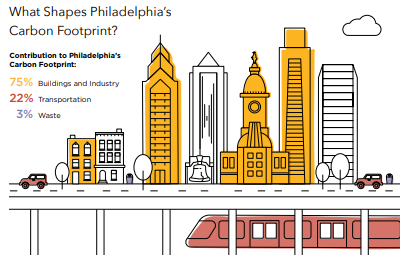
Energy is the fuel that powers our transit system, as we’ve established in our blog post on Energy, Electricity, and the Climate Crisis. Sadly, we’ve also established that most of the energy we use is generated from fossil fuels. As a result, transportation accounts for 22% of Philadelphia’s Greenhouse Gas emissions, much of which comes from our car-related emissions due to a lack of funding for SEPTA (which we’ll touch on momentarily). 

Transit
(Philadelphia Climate Action Playbook, pg. 13)

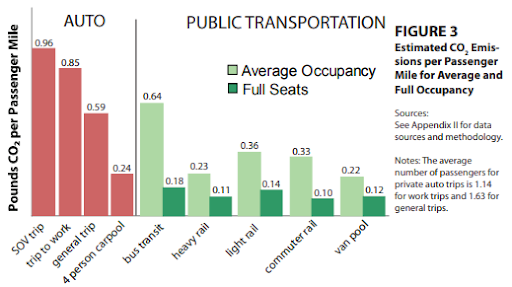
This reliance on cars both exacerbates climate change and creates harmful air pollution, as Philadelphia ranks as the 12th most polluted city in the country. Personal automobiles, here, are a big part of the problem. In 2009, cars, SUVs, pickup trucks, and freight trucks accounted for 77% of all transportation GHGs. Contrastingly, public transit emits much less pollution per passenger mile, especially when ridership is high, as shown below.

(Public Transportation’s Role in Responding to Climate Change, 2010)

Bold climate action requires deeper investments in public transit. Sadly, public transit is drastically underfunded across the country, and Philadelphia is no exception. To change that, though, we’ll need to understand how our transit system is structured. So let’s get to it!

Our Transit System: SEPTA

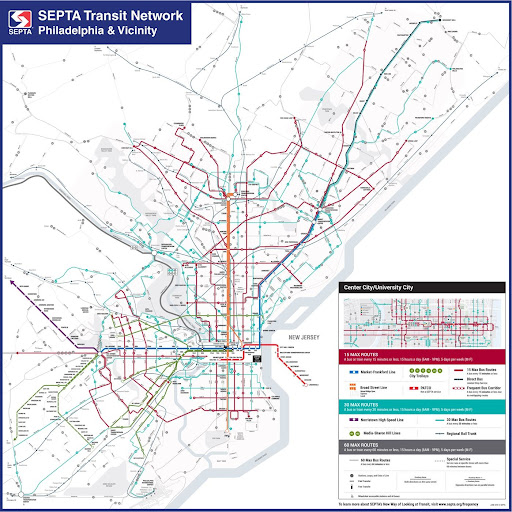
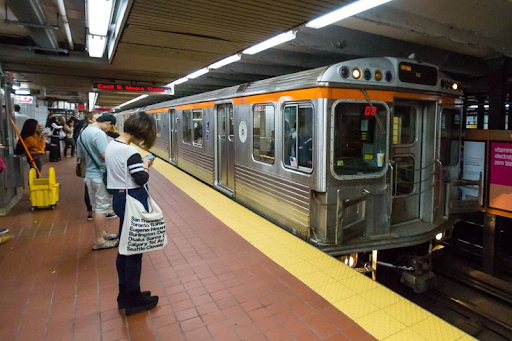
First, let’s talk about SEPTA or the Southeastern Pennsylvania Transportation Authority. SEPTA is a metropolitan transportation agency that oversees public transit in Philadelphia and the surrounding counties of Bucks, Chester, Delaware, Montgomery. In Philadelphia, SEPTA offers bus, subway, regional rail, and trolley services across the city, the full map of which is shown below.

SEPTA is a regional authority, not a City agency. So, each of the five counties in SEPTA has equal representation on SEPTA’s board. Still, most of the transit agency’s ridership, usually 80% or more, comes from Philadelphia. This means that, because the rest of the counties in SEPTA are less populous than Philadelphia but each receives the same number of votes, the transit agency disproportionately represents the interests of less-densely populated, suburban residents.

Pennsylvania’s Contribution to Transit System: SEPTA

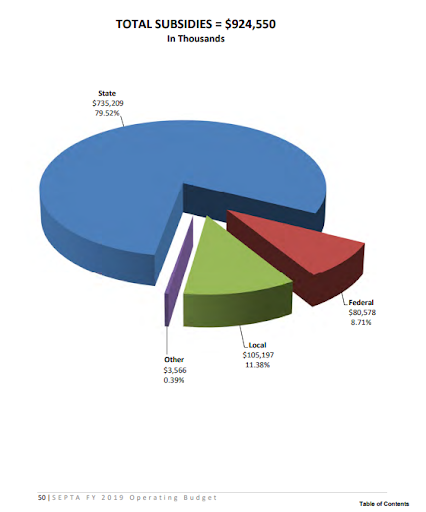
How does our state government impact our transit system? Well, this is where the thick of it lies. Most of SEPTA’s funding comes from the PA State Government. As a result, the transit agency has not had a steady, dedicated funding source for most of its history. 

(SEPTA 2019 Operating Budget Subsidies)


When it comes to government funding mechanisms, there are two kinds of budgets. Firstly, there are operating budgets. These budgets include buses, employee wages, ongoing maintenance costs, etc. It’s helpful thinking of operational budgets to be for short-term expenditures. Secondly, there are capital budgets, which include projects like rebuilding train stations, constructing new electrical systems, or building a bridge. These are the more long-term infrastructure investments.

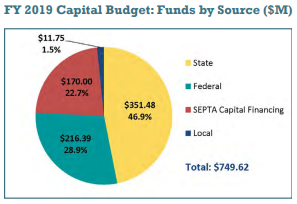
In 2019, state funds accounted for almost 80% of SEPTA’s operating budget and almost 50% of SEPTA’s capital budget. Much of the state’s funding to SEPTA comes from Act 89 in 2013 which allows the Pennsylvania Department of Transit (PennDOT) a $450 million infusion to public transit agencies. However, Act 89 is set to expire in 2022, meaning a big chunk of SEPTA’s funding source could dry up as soon as 2022.

(SEPTA 2019 Capital Budget Subsidies)

This arrangement is unusual for American transit agencies. Most other agencies receive larger support from their local governments, especially in west coast cities where revenues are raised directly from sales taxes. These local funding streams also make localities more responsive to ridership needs. Nevertheless, if the state funding dissolves, SEPTA will need to find alternative sources of funding from local or federal governments.

The Federal Government’s Role in Our Transit System

What role does the federal government play in all of this? I’m glad you asked! The federal government sends funds to local and regional transit agencies across the country, like SEPTA, which are tasked with managing transportation systems in a particular area. However, ever since the Reagan era and the 1980s, the federal government has steadily decreased subsidies for transit agencies’ operating budgets. For instance, federal funds accounted for 11.4% of SEPTA’s operating budget in 2019, as shown above.

When transit agencies need additional capital funds, they can apply for competitive grant programs through the Federal Transit Administration. SEPTA has not submitted a major capital grant for some time but is trying to do so to modernize our trolly system


The federal government’s distant role in our transit system is unusual for wealthy nations. In 2019, the United States invested 0.6% of its GDP into inland infrastructure investments, while France and the United Kingdom each invested 0.9% of their GDP in the same year. Clearly, the federal government needs to deepen its investments in public transit agencies like SEPTA.

Transportation and Climate Change: Conclusion

In summary, the federal government has disinvested from transit agencies like SEPTA, and some state governments, like Pennsylvania, have not played their part either. Finally, SEPTA itself is designed to cater to the needs of suburban areas more than the city. Fighting climate change will require changes to all of the above, creating a cleaner, better-funded public transit system in Philadelphia and beyond. What might this look like? Who could it work for? Stay tuned for our next blog post Transit Equity in Philadelphia to find out!
Categories
Act on Climate

Energy, Electricity, and the Climate Crisis

Modern American society crumbles without energy. Employers who store all their files online, young drivers of gas-powered cars who rely on Google Maps to get where they’re going, residents who pay their rent and gas-powered utilities online: all their lives and operations fundamentally change without energy.

Given our reliance on energy, one would think that we all knew more about where it comes from and how it’s related to the climate crisis. But many of us don’t. And too few of us realize why that’s a problem.

So where does our energy come from? How does it shape the climate crisis? And what can we do about it? Let’s get to it!

How is my energy generated?

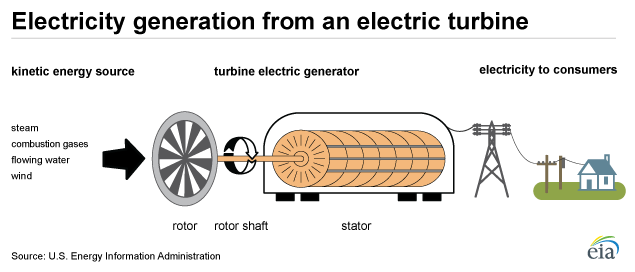
Different machines rely on different forms of energy. For instance, most forms of transportation in America rely on fossil fuels, from the gasoline that fills your SUV to the gasoline that powers the bus you take to work. Here, we’ll focus on how electricity is generated (you’ll see why soon).

U.S. energy information administration

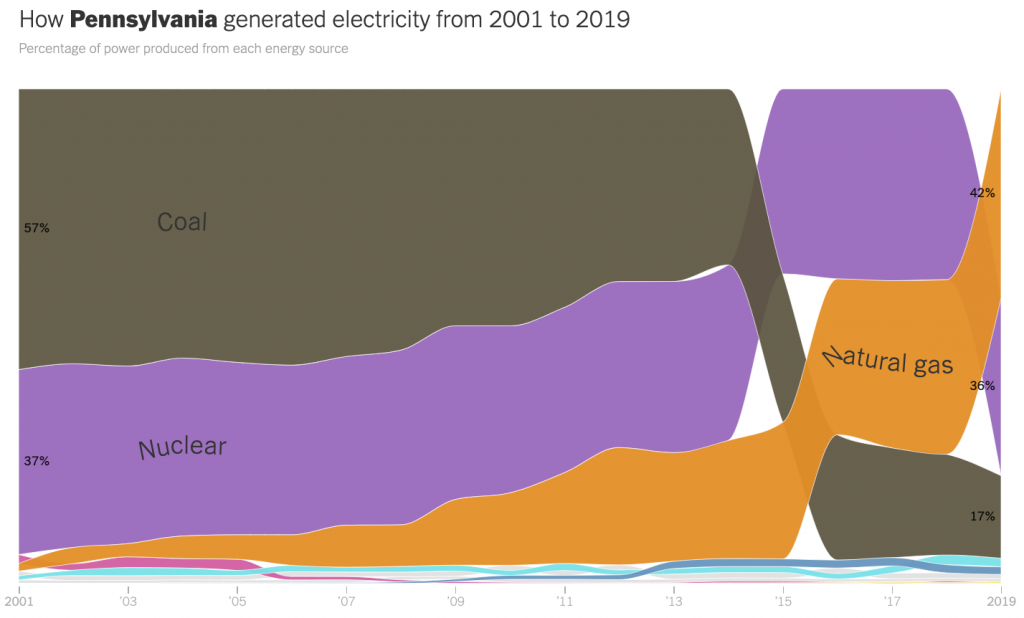
Most electricity generated today is done by pouring water (in dams) or steam (in most U.S. power plants) through a wheel (i.e. rotor), which spins a turbine. A generator converts the energy of the spinning turbine into electricity. As shown below, most power plants in the United States, and Pennsylvania, use fossil fuels to boil water into steam. They then funnel that steam through the turbine to generate electricity.

how Pennsylvania generated electricity from 2001-2019

In Pennsylvania, a measly 5% of the Commonwealth’s generated electricity comes from renewable sources. Chances are, the outlet you use to charge your phone is delivering you dirty energy. Why is this the case? Well, let’s talk about how you get your electricity.

How do I get my electricity?

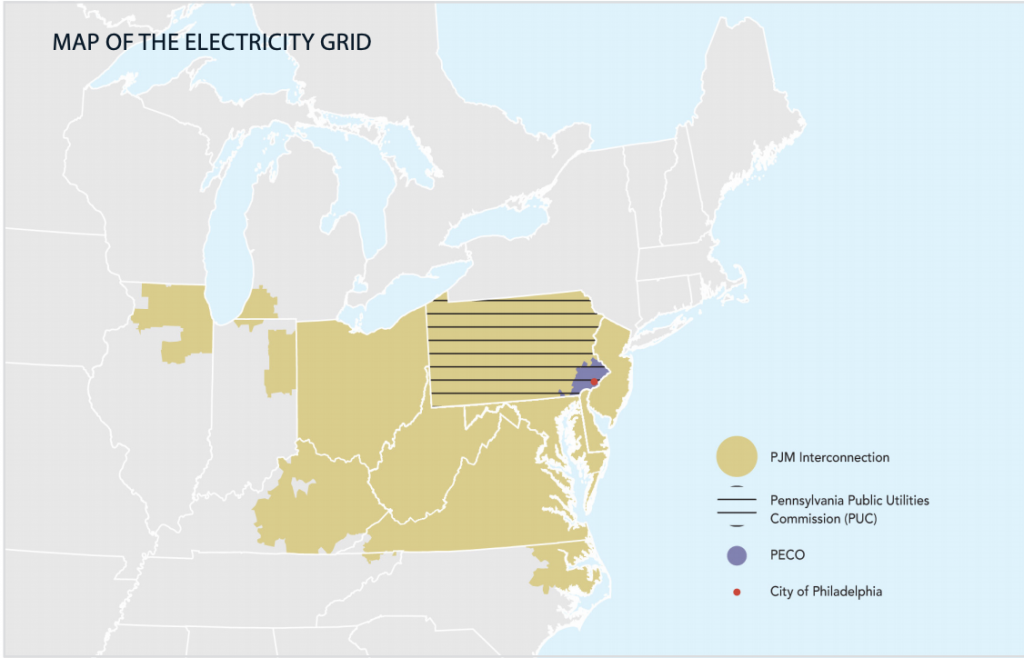
Our electricity system, dubbed “the grid,” is complex and confusing. Let’s start with a broad view. The U.S. does not have a national grid, but a host of Regional Transmission Organizations (RTOs) systems overseen by the Federal Energy Regulatory Commission (FERC). The RTO from which Pennsylvanians receive their electricity is from the Pennsylvania-New Jersey-Maryland Interconnection, or PJM, shown below.

map of united states with overlapping regional utilities, powering our future: a clean energy vision for philadelphia
Map of the United States with overlapping regional utilities, Powering Our Future: A Clean Energy Vision for Philadelphia

PJM controls the wholesale electricity marketplace across 13 states, including Pennsylvania, and does long-term planning around what fuel sources are used to generate electricity, where that electricity is generated, and how it is sent to places that need it. Each state sets its own regulations on PJM. Pennsylvania’s Public Utilities Commission (PUC), for instance, determines how much your electricity costs, i.e. “set rates.” At the municipal level, the Philadelphia Electric Company (PECO) distributes electricity to residents.

Importantly, PECO is owned by Exelon, a for-profit energy company that owns more than a dozen nonrenewable power plants in the state.
lightbulb

This trend is not uncommon. Many utility companies have deep investments in the burning of fossil fuels. Many are also dangerously close to their PUCs and respective governments, bordering corruption. For instance, FirstEnergy, an energy company operating across PJM and throughout Pennsylvania, recently spent $61 million in bribes on Ohio lawmakers to pass a nuclear energy bailout law. The energy companies, who are guaranteed monopolies from the state, siphon profits off of ratepayers, and because media outlets rarely cover these stories, few people in the public know enough to care about it.

Energy and the Climate Crisis

Energy is the glue that holds modern society together, but that glue bears the stain of fossil fuels in Pennsylvania. 

From the gas in our buses to the plastic of our candy wrappers, fossil fuels have infiltrated almost every aspect of our lives. As a result, using energy or energy-intensive products exacerbates the climate crisis. However, it doesn’t have to be this way. We can decarbonize our grid and our economy. But we would need to electrify everything first.

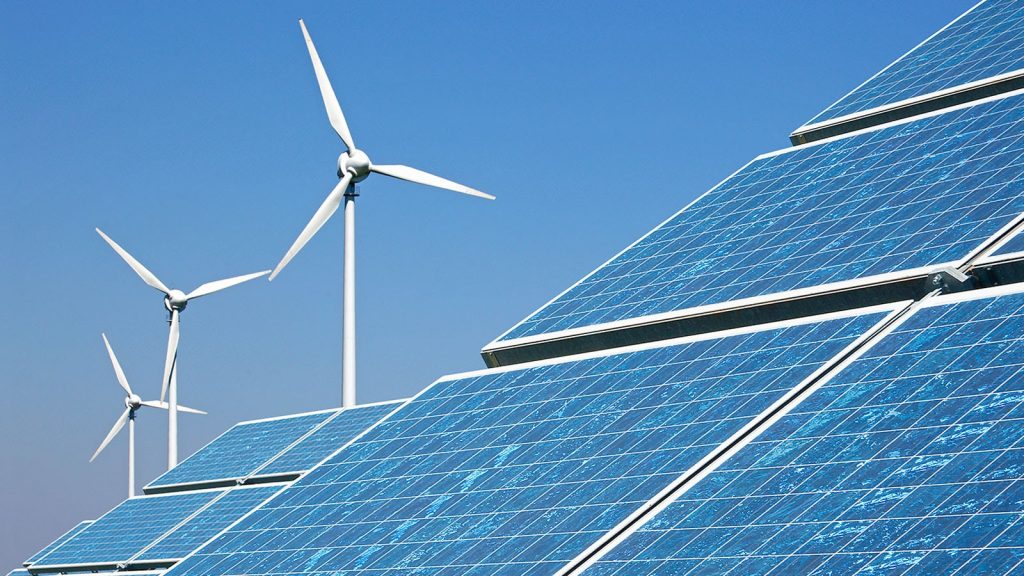
solar and wind power

Renewable energy, like that of solar power, does not operate like liquid fossil fuels. Remember that most power plants burn fossils to spin turbines and generate electricity. In contrast, solar energy is converted into electricity almost immediately. This means that renewable energy is best suited to serving electrical devices, like computers and medical equipment. This also means it’s poorly suited for machines that are directly reliant on liquid fossil fuels, like airplanes and gas heating units. This is a serious problem, considering that electricity accounts for 28 % of America’s greenhouse gas emissions.

So we can decarbonize the grid, but that won’t decarbonize the economy. Doing that will require us to electrify everything. Simply enough, we need to replace our machines that rely on fossil fuels with machines that rely on renewable energy. However, because we have delayed the transition for so long, we need urgent and rapid mass action, including political and social movements.

Categories
Act on Climate

Civilian Climate Corps

Historic heat waves are sweeping the Northwest with roads buckling under heat stress and hundreds already pronounced dead. Climate-related crises like these are becoming commonplace for younger generations and will require creative action to confront. But one thing’s for sure: tackling the climate crisis will take a lot of work.

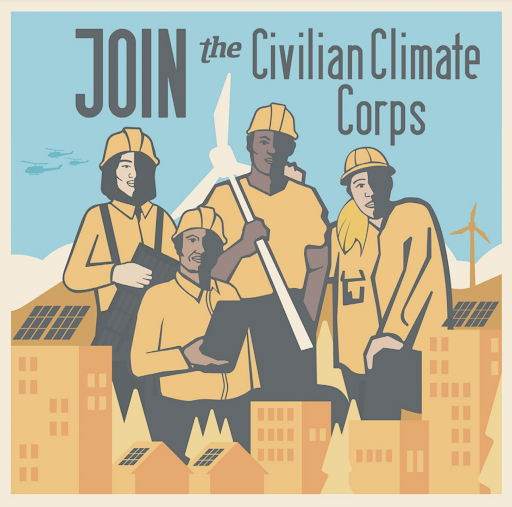
Four workers stand together with the caption “Join the Civilian Climate Corps”

We need to modernize our electricity grid, revamp our agricultural systems, establish rapid disaster-response networks, and more. Meanwhile millions of Americans are unemployed or underemployed. So why not put them to work fighting climate change? This is the logic of the Civilian Climate Corps.

The Civilian Climate Corps

The Civilian Climate Corps (CCC) is a proposed government jobs program that would employ Americans to fight the climate crisis. According to the White House, the program would aim to “conserve and restore public lands and waters, bolster community resilience, increase reforestation, increase carbon sequestration in the agricultural sector, protect biodiversity, improve access to recreation, and address the changing climate.” 

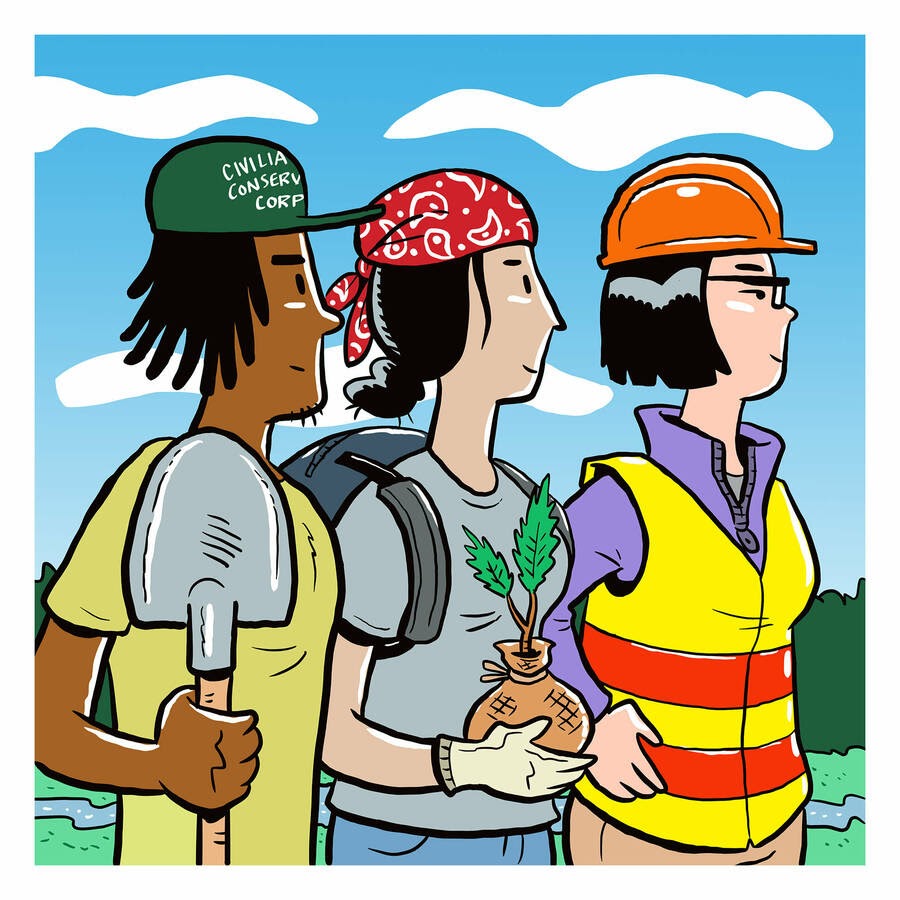
Illustration by Terry LaBan

The Civilian Climate Corps draws inspiration from a similar New Deal job program, the Civilian Conservation Corps, a national public works program that employed over 3 million people over a decade building, repairing, and conserving forests, parks, and natural resources across the country. Like much of the New Deal, however, the CCC largely excluded nonwhite, nonmale people. The Civilian Climate Corps charts a different path.

There are a handful of CCC proposals floating around Washington DC. The most ambitious proposal goes to Ed Markey who seeks to employ an equitable and diverse group of 1.5 million Americans over 5 years. Even this amount is insufficient to meet the scale of the crisis, but it’s a start. It’s also much more comprehensive than other proposals. In his American Jobs Infrastructure bill, President Biden asked for about $10 billion over a decade to fund his CCC, equating to about 10-20,000 jobs a year. Even that figure was whittled down in recent compromises.

Sunrise Movement and the Civilian Climate Corps

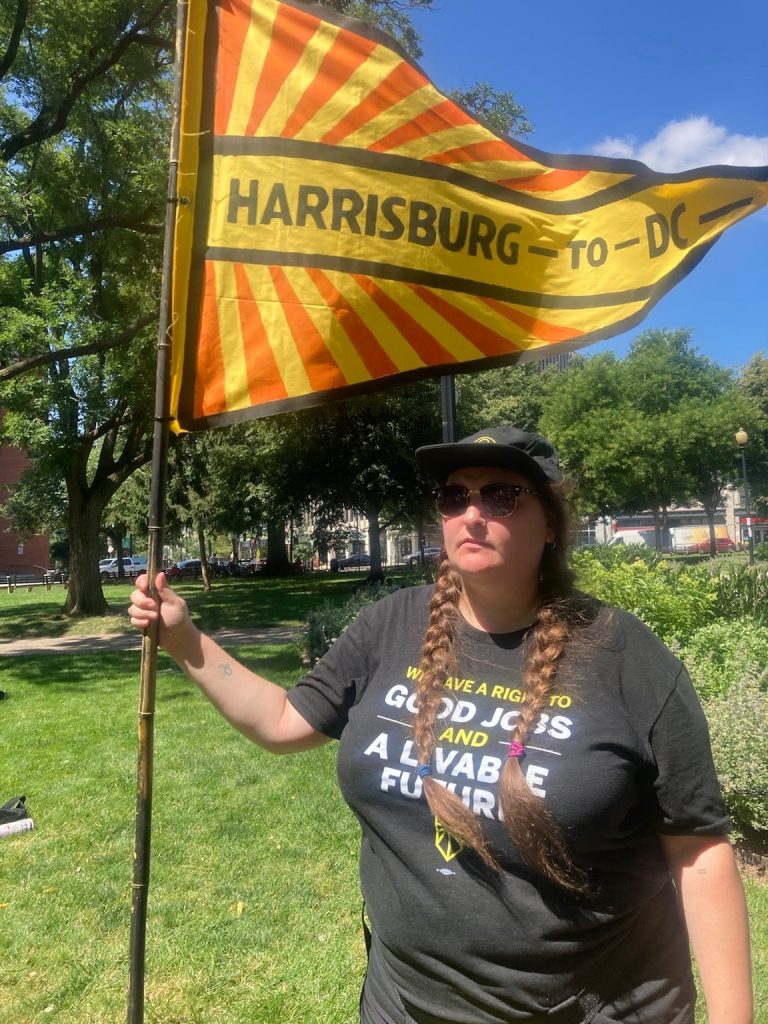
Sunrise Lewisburg hub coordinator, Mary Collier holds a “HARRISBURG – TO – DC –” flag


In response to Biden’s decision to mortgage my generation’s future on an insufficient CCC, I joined a dozen Pennsylvanians in the Sunrise Movement who were trekking from Harrisburg to Washington, DC to demand a bold Civilian Climate Corps. We trekked over 100 miles through the woodlands of Pennsylvania and along the highway shoulders of Maryland. The days were long and hot, the types of days that my generation will endure for decades. So we took care of each other and kept on walking.

We arrived in DC on Sunday, June 27th, and joined hundreds of young people from across the country, including a Gulf Coast Trek and a California Trek. It is important to protect our lives from being compromised away. It is us that can not settle for anything less. So members of the Sunrise Movement rallied outside the White House with young people from across the country and representatives Jamaal Bowman (NY-16), Cori Bush (MA-07), and Alexandria Ocasio-Cortez (NY-14). But we knew that wouldn’t be enough. We needed more.

We used our bodies to nonviolently blockade every entrance of the White House for hours in the scorching sun. Eventually, the Secret Service had to arrest dozens of us. By then we had made our point, so the protest wrapped up soon after.

The experience, from the trek to the protest, grounded my stake in climate action. At 22 years old, what does my future hold when each summer brings another heat wave worse than the last? How long does my family have until disaster strikes? My life and the lives of my loved ones are at stake. We need bold climate action now.

From our author and EcoLead, Sean Welch.

Categories
Act on Climate

Philosophy and the Climate Crisis

In order to tackle the climate crisis, we will need thousands of people organizing their friends, family, neighbors, and co-workers to take bold, collective action that creates power. That much is true for people from all walks of life… including philosophers!

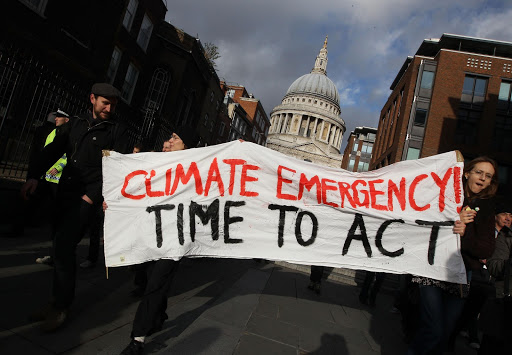
Two people carry a banner reading “CLIMATE EMERGENCY! TIME TO ACT”

Fortunately, an international group of philosophers are getting organized to do just that, encouraging their profession to take leadership on climate change and sustainability. They call themselves Philosophers for Sustainability.

Philosophers for Sustainability.

The group was co-founded by Temple’s own Eugene Chislenko, a professor in the Philosophy Department and local eco-champion. In the Office of Sustainability’s new and student-run podcast, Climate Conversations, we interviewed Eugene earlier this month on his work with the group. While they are still a relatively new group, they have already successfully persuaded the American Philosophical Association (APA) to include more sustainable practices in their professional guidelines. 

A wave crashes into a rocky seashore.

Philosophers for Sustainability has several ongoing projects. They are hosting local Sustainable Practices in Philosophy Workshops across the country through their members, integrating environmental sustainability into their teaching, advocating for greater course offerings on climate change to their departments, sharing best practices with each other, and so much more. In fact, they just held their 2021 conference: Philosophy & the Climate Crisis this past weekend through Temple University.

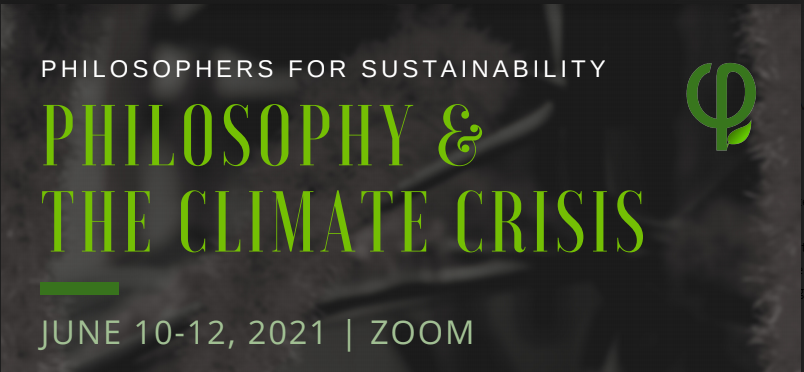
Conference 2021: Philosophy & the Climate Crisis.

The 3-day conference covered a range of topics. Panel organizers facilitated conversations on minorities in Philosophy, philosophical cases for climate action, teaching the climate crisis, and more. 

I attended the symposium on Teaching the Climate Crisis and was impressed by the panelists’ commitment to creating educational experiences that prepared students for a world in flux.

The panelists were professors across the country who made up Engaged Philosophy, a group of philosophy professors using their courses to teach civic engagement. Professors in the group, like Ramona Ilea in Pacific University, provide hands-on activist projects for their students, building classroom content from their students’ experiences and not the other way around. I left wishing that I had taken more classes like theirs, with my imagination stimulated on education’s role in climate action.

Listen to our Climate Conversations podcast to hear from Euguene himself.

Getting involved.

Learn more about Engaged Philosophy by checking out their website and the resources they provide. You can get involved with Philosophers for Sustainability, consider joining them as a member, although there are several other ways to get involved. If you have any questions, contact the group at philosophersforsustainability@gmail.com.

Finally, Eugene is teaching a pilot Gen-Ed class at Temple this Fall on Climate Change and Climate Justice. If you are interested, send him an email at chislenko@temple.edu! 

Categories
Act on Climate

Climate Action and Global Citizenship

Environmental issues do not distinguish between borders, so it is only natural that an international perspective is brought into the discussion. That is exactly what the Temple Office of Sustainability and International Student Advisory Board (ISAB) hosted; a dialogue about Climate Action and Global Citizenship. In which four international students from around the world were able to share their views that, while as diverse as the students themselves, were united by the common theme of environmental concern.

Environmental Education & Mainstream Media.

The event began with a discussion about environmental education and the role these issues had in mainstream media around the world. It was soon evident that different countries could have drastically different attitudes on the environment which were reflected in their educational policy and the presence of these topics held in the media.

In China, one student relates, he was made aware of environmental issues from a very young age, and that the country experiences a great deal of action when it comes to addressing environmental issues.

On the other hand, a student recounts that Mexico holds no such emphasis on the environment and instead focuses on other domestic issues.

Extreme Weather & Climate Change.

The discussion then shifted to how extreme weather events are dealt with around the world, and how they are connected to climate change. And, since greenhouse gases from transportation emissions are heavily linked to the warming climate, this was also a point of discussion. In a country like Brazil, which has been in the spotlight in connection to the wildfires in the Amazon forest, it is difficult not to take into account extreme weather events, especially after having experienced a devastating drought. Similarly, cities like New Dehli in India, which experience oppressive amounts of pollution, have had to resort to policies that attempt to grapple with the environment, such as restrictions on driving depending on the day and license plate number.

Global Gala.

Global Impact.

Another extremely important environmental aspect to discuss was the impact the U.S has on other countries, whether it be through travel or the consumption of goods. For example, Mexico takes many queues from its northern neighbor, so it is not misleading to say that U.S tourists hold a lot of sways when it comes to where they spend their money.

Furthermore, one student from India began to question the status quo of plastic use that is so prevalent around the world, but especially in the U.S. “I love to travel,” said Moumita, from India, but the way my consumption pattern, or that of the people around me, is based on using a lot of plastic every day, then how can I say I am able to visit places that are beautiful? Because I am spoiling the natural resources, I am spoiling everything.”

When it comes to discussing issues in the U.S, whether it be environmental or otherwise, hearing an international perspective has the effect of jolting Americans out of the perspective they find normal. When it comes to human-induced climate change, this is very much the desired effect– we must realize that this is not normal, and it cannot remain so.