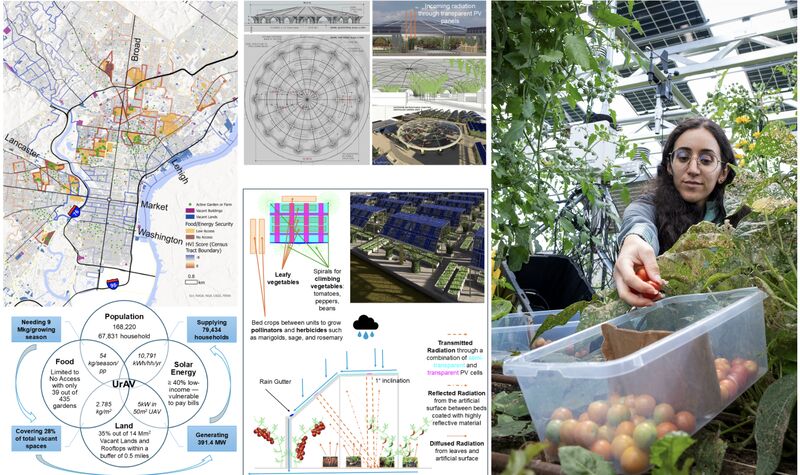
Our new study (Caroline Merheb et al., 2026, in @npj Urban Sustainability Nature Portfolio explores how integrating solar photovoltaics with urban agriculture can address two major urban challenges: food and energy insecurity. We conducted this research using a range of methods, including yield trials across multiple crops, sensor networks to evaluate microclimatic modifications, physiological measurements, nutrient quality analysis, and GIS-based assessments, to evaluate the potential co-benefits and trade-offs of this innovative approach.
Read; https://doi.org/10.1038/s42949-026-00381-6
The study, the first evaluation of ground-based urban agrivoltaics, shows that while early-season yields may decline in temperate climates due to reduced light, productivity rebounds during summer. This extension of harvest windows and increased crop resilience is especially beneficial in arid cities facing water stress.
Converting even a fraction of vacant land and rooftops to multi-use systems (solar PV, crop, pollinators) could generate renewable energy for thousands of households, while also improving access to fresh produce in urban communities. Beyond that, urban agrivoltaics provides additional co-benefits, including the creation of green community spaces, reduced urban heat vulnerability, and more decentralized, resilient energy systems.