Inspiring change through scalable urban agriculture
Project Summary
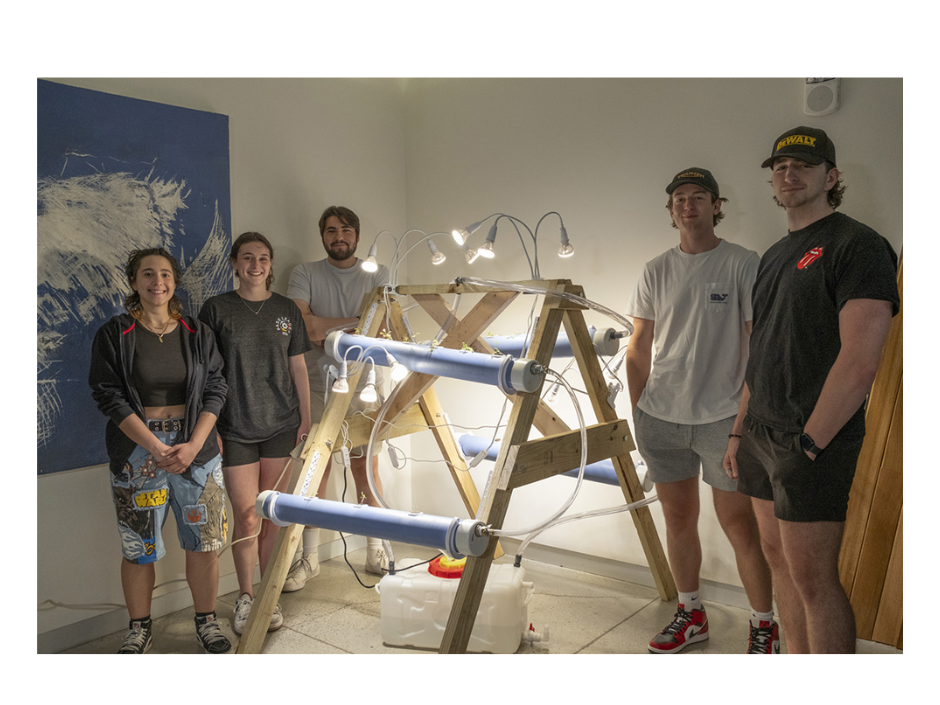
In collaboration with Charles Library, the Office of Sustainability is excited to announce the final installation of a sustainable hydroponics display constructed by Green Grant recipients, Engineers for Climate Action. The Green Grant funds student-led projects, programs and initiatives that advance Temple University’s commitment to sustainability through their positive impact on campus and our local environment and community. This year, Engineers for Climate Action is excited to cap off Earth Month with their final display of their sustainable hydroponics system, an innovative solution for growing plants using mineral-rich water in lieu of soil.
This hydroponics system represents a strong example of addressing the interconnected challenges of climate change through innovation and education. By creating a hands-on, scalable model of urban agriculture, this project aims to inspire actionable change and provide meaningful learning opportunities for students and community members. The hydroponics system is not just a tool for growing plants—it is a platform for cultivating awareness, fostering collaboration, and driving progress toward a more sustainable future.
Why use hydroponics?
Enhances plant yields: plants can be more densely packed than when planted in soil on land, leading to higher yields. In addition, pH, nutrients, and light availability can be constantly monitored and controlled.
Less water: as much as 10 times less water than traditional field crop watering methods. The water reservoir recycles nutrient rich water instead of allowing it to run off and drain to the environment.
Locally grown: Indoor hydroponic systems allow plants to grow almost anywhere all year round.
Prevents soil degradation: Reduces the need for soil and land use.
About this system
Features a modular A-frame structure made with recycled gutter piping and minimal energy requirements
Utilizes reclaimed PVC drainage pipes as the plant rack
Inspired by the need for compact, water-efficient systems in urban environments
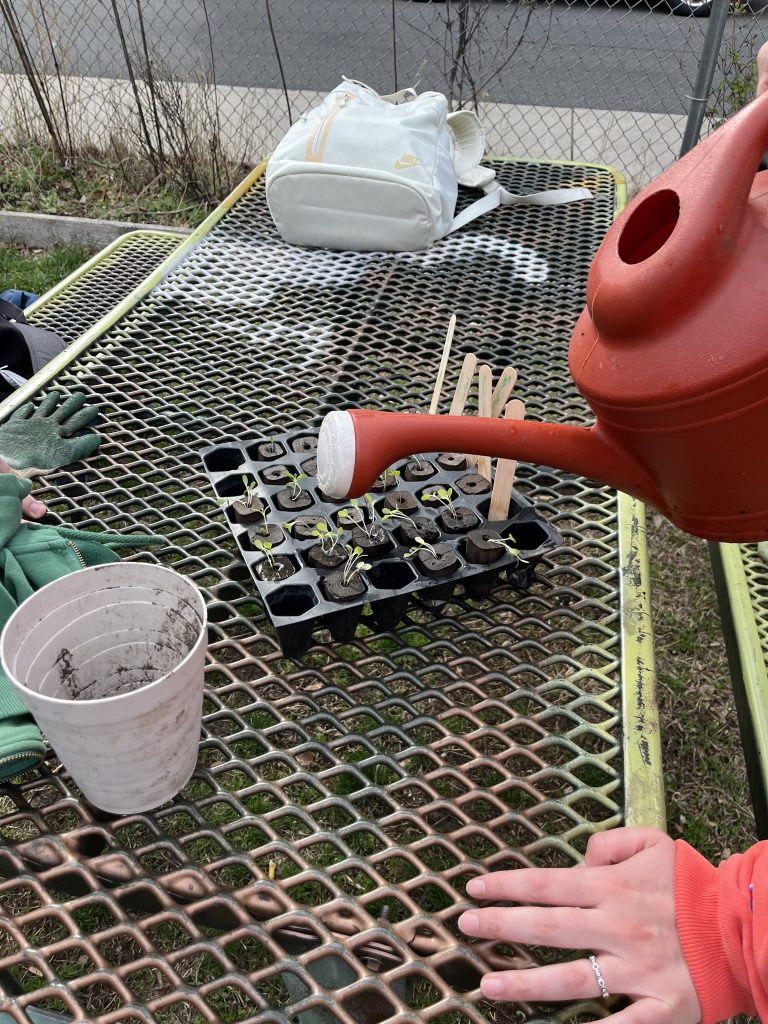
Seedling Planting
Frame Construction
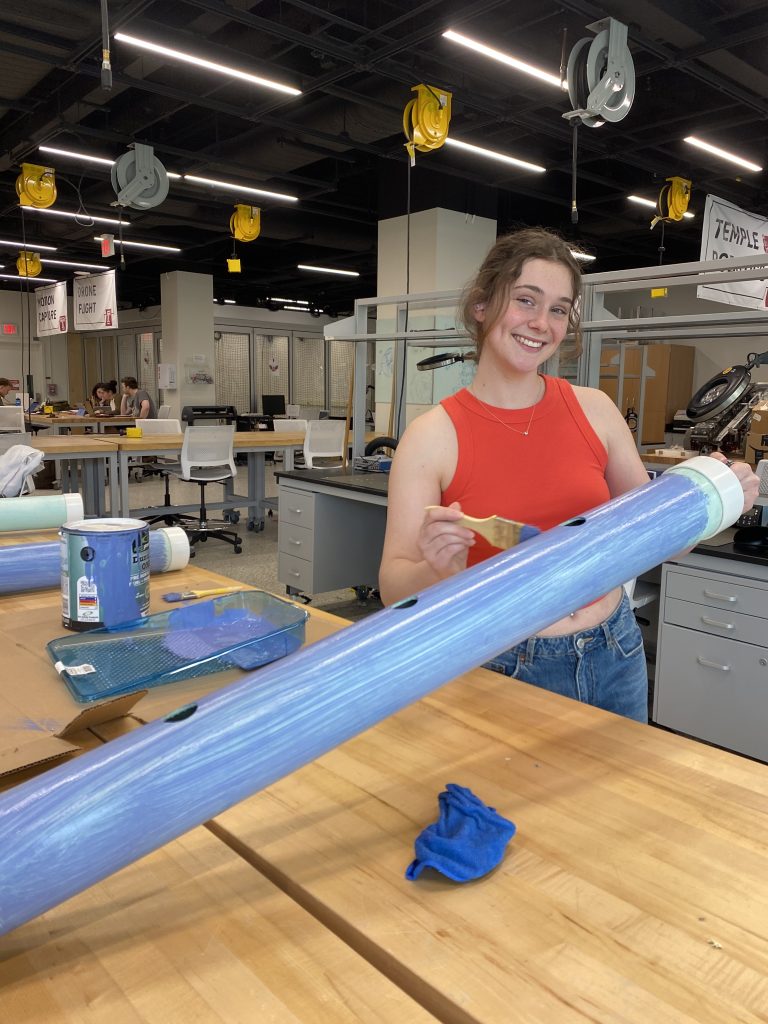
Painting
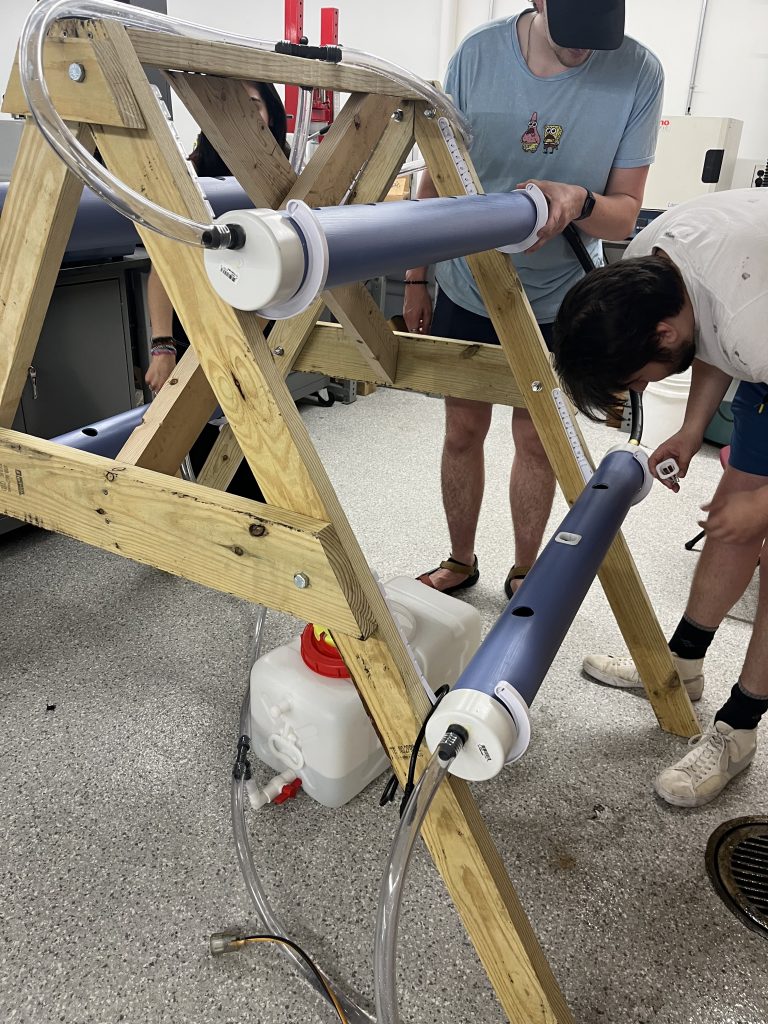
Wet Test
Annotated Design DrawingStructural Analysis through SolidWorks
The design above shows the results of the SolidWorks simulation run on the model of the hydroponics design.
Using the known properties of wood, a stress analysis was run to determine if the estimated loading on the structure could result in failure. Blue areas on the simulation model represent regions of material that will not be under a significant amount of stress. With accounting for the mass of the water, the plants, and the apparatus itself, it was found that the structure is adequately designed against failure.
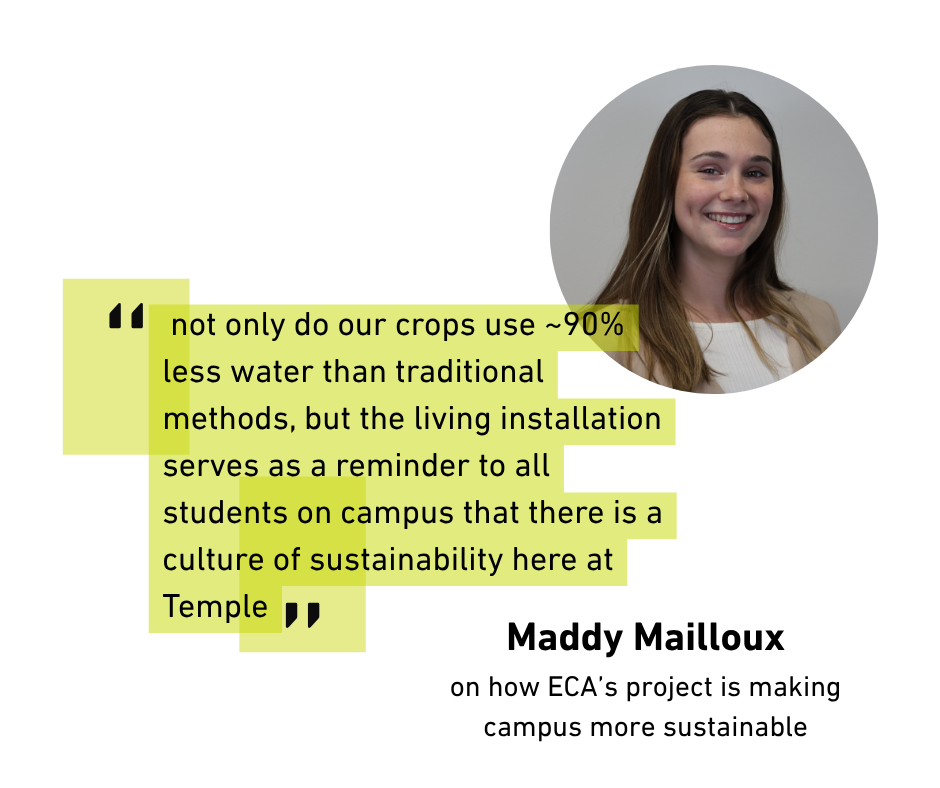
Hear from the students
About the Green Grant
Engineers for Climate Action were awarded $900 from the Office of Sustainability’s Green Grant for parts associated with the construction of the hydroponics display.
Temple Sustainability’s Green Grant builds upon Temple University’s commitment to sustainability by funding student-led projects, programs and initiatives that advance the Office of Sustainability’s mission and have a positive impact on campus and our local environment and community. The grant application opens late in the fall semester and winners are selected early the following calendar year. Project implementation and execution spans the spring semester.
Temple University’s Office of Sustainability is thrilled to present our February events and this year’s Campus Race to Zero Waste campaign. Join us in sowing the seeds of change and nurturing a more eco-friendly campus.
Campus Race to Zero Waste is a sustainability competition in which Temple University goes head-to-head against schools across the country to see who can divert the most waste from landfills.
Want to get started? Check out the calendar below to discover the array of events happening on and off campus this February. Click the links to RSVP and become a part of the movement toward a circular economy!
Kickoff: Feb 2 – March 29, 2025
Theme
Event
Where & When
RSVP
Sustainable Fashion
Temple Thrift Pop-Up
Tuesday, February 11, Morgan Hall North D301, 10AM – 3PM
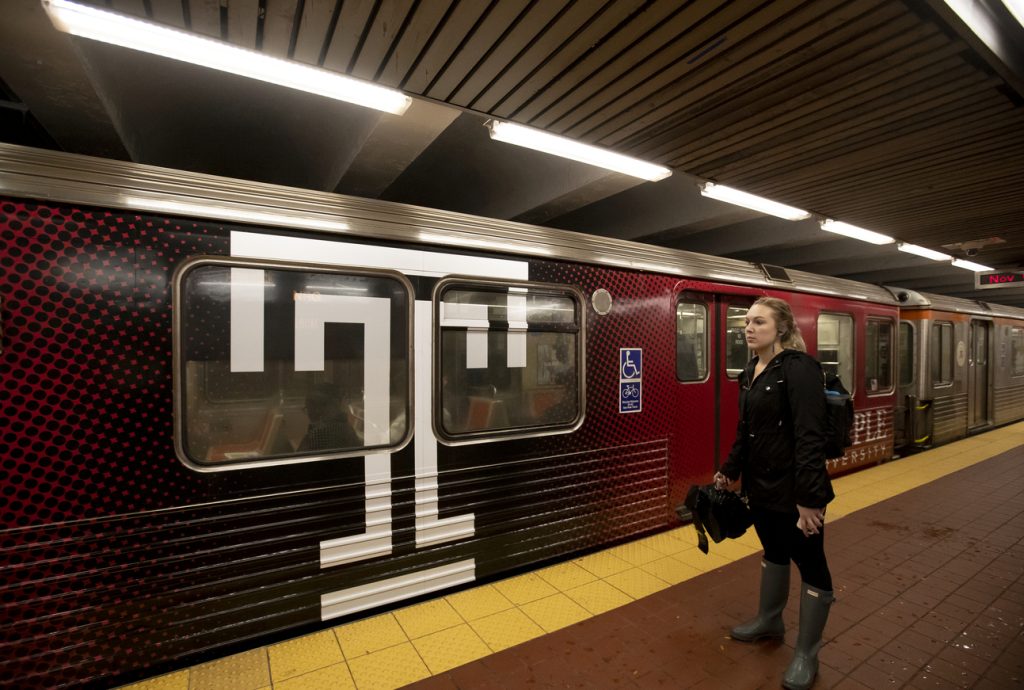
Temple community commutes via the Broad Street line subway
Temple’s Transportation Survey aims to assess the university’s environmental impact. The survey tracks progress on our greenhouse gas emissions inventory, calculates annual emissions from commuting, and aids in future planning. Results will be published on the Office of Sustainability website in Spring 2025, and previous survey results are available below.
We encourage all students, faculty, and staff to participate in this brief, 10-minute online survey. It is crucial data for our emissions inventory and for fulfilling our university climate commitment.
Take the survey:
You received an email from Ken Kaiser, SVP, inviting you to complete the 2024 Transportation and Sustainability Survey on Monday, 11/4
You may have received another email from Rebecca Collins on Wednesday, 11/13.
Search “transportation survey” in your Outlook inbox and click your unique link to contribute to this critical sustainability reporting.
It takes less than 10 minutes to complete! Participants who complete the survey can enter a raffle to win a sustainable prize.
In 2022, the most common primary mode of transportation reported by respondents was driving a car (32%)
Temple University students, faculty, and staff, take an estimated 263,580 one-way trips to and from campus in a typical week
88% of all respondents reported driving a car with a combustion engine to campus followed by 9.8% who drive hybrids and 2.5% who reported driving an electric vehicle
Frequently Asked Questions
What is the purpose of this study?
This survey will help the University understand its transportation energy use and find ways to reduce our impact on the environment generally.
I don’t even drive. Do you still want me to do this transportation survey?
Yes! We need accurate information from Temple people who do not drive as well as those who do. Whether you live near or far, use public transportation or drive, walk or bicycle, your answers are very important to the outcome of the survey.
How long does the survey take?
The online survey is very short. Most people will finish it in less than 10 minutes. Many have completed it within a few minutes.
What will you do with my answers?
Your answers will be held in strict confidence. When the data are analyzed, no one will be able to associate your name with your answers. Results will be studied to formulate the University’s energy policies, strategic planning and engagement opportunities for the years ahead.
What’s in it for me?
Two things: First, by participating, you can help Temple take a real step toward a more energy-sustainable community. Second, participants who complete the survey will be entered in a raffle. See below for prizes.
What does “sustainability” mean, anyway?
Sustainability has been defined by the National Academy of Science USA as “meeting the needs of present and future generations while substantially reducing poverty and conserving the planet’s life support systems.” More simply, it means meeting our own needs without compromising the ability of future generations to meet theirs.
Greenhouse gas emissions have been linked to global climate changes. Individual efforts are the first step in reducing negative effects of climate change locally and around the world.
I have questions about the survey. Who should I contact?
Please email sustainability@temple.edu with any questions and we will do our best to respond within 1 business day.
For more information, check out previous Transportation Survey Reports:
This Campus Sustainability Month, the Office of Sustainability will create pathways for understanding how small, grassroots actions can have a longstanding impact.
A series of different workshops, events and service opportunities will focus on select United Nations Sustainable Development Goals and the Temple community will learn what they can do here in Philly and on campus to affect sustainable change globally.
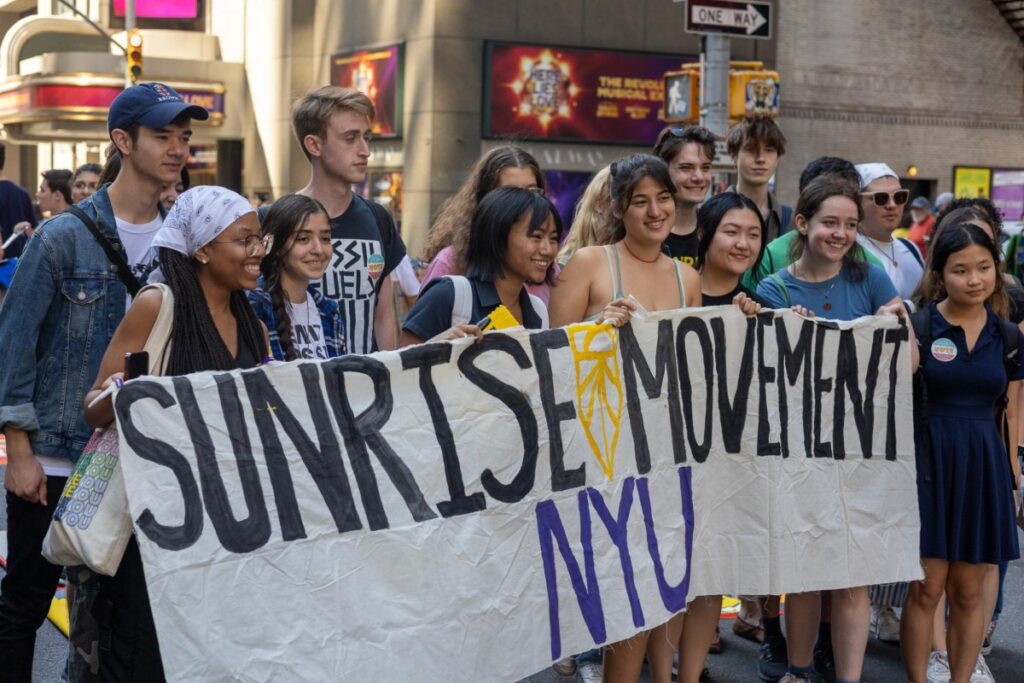
After an eleven year battle between climate activists and administration members, New York University has finalized its decision to divest from fossil fuels and move towards a more sustainable future for their campus. The push for this change was led by NYU students, faculty, and staff that campaigned under the Sunrise Movement NYU chapter. Founded in 2017, Sunrise Movement is a national non-profit organization designed to help youth push back against climate change and end the “corrupting influence of fossil fuel executives on our politics”.
Group of Sunrise NYU members on the street in NYC
NYU’s commitment to divesting from fossil fuels originally began in August, with a letter delivered to student activists by university president William R. Berkely. The letter stated that “New York University commits to avoid any direct investments in any company whose primary business is the exploration or extraction of fossil fuels, including all forms of coal, oil, and natural gas, and not to renew or seek out any dedicated private funds whose primary aim is to invest in the exploration or extraction of fossil fuels”. According to NYU spokesperson Joseph Tirella, this commitment will be applied to the top 200 coal, oil, and gas providing companies—which are derived from a list managed by Fossil Free Indexes. Outside of divestment, NYU has also made improvements by reducing emissions from energy use in buildings, and has pledged to have net-zero emissions by 2040.
So what is fossil fuel divestment? Why is it so important?
2021 global fossil fuel investment data via Energy Policy Tracker
Despite the rising cost of tuition, student housing, and service fees, many universities are unable to meet all of their needs from student funding. To create capital, many universities choose to invest billions of dollars in outside companies, including those that produce or rely heavily on fossil fuels. The money given back to the university through investment (as well as the money from donors) is known as an endowment. This funding is used to create more investments, or in some cases used to fund specific scholarships. Divestment is a push for universities to end their investment in fossil fuel companies and put their endowment towards green energy infrastructure or other sustainable investment opportunities. It can also mean ending sponsorships provided by companies with high greenhouse gas emissions, or ending contracts with services that create environmental waste.
NYU, a private university, currently has an endowment of $5 billion. In 2014, NYU had $139 million (4% of its then $3.4 billion endowment) invested in coal, oil, and gas. In 2016, NYU had the opportunity to divest, but chose not to after arguing that divestment does not reduce money going towards fossil fuel companies but rather “transfers ownership of stock from one holder to another”, among other things. Had NYU kept 4% of their endowment invested in fossil fuels, their current investment would be $200 million. This was a huge victory in the battle against climate change, and a much needed example of students having a say in the actions of their university.
Temple University and Fossil Fuel Divestment
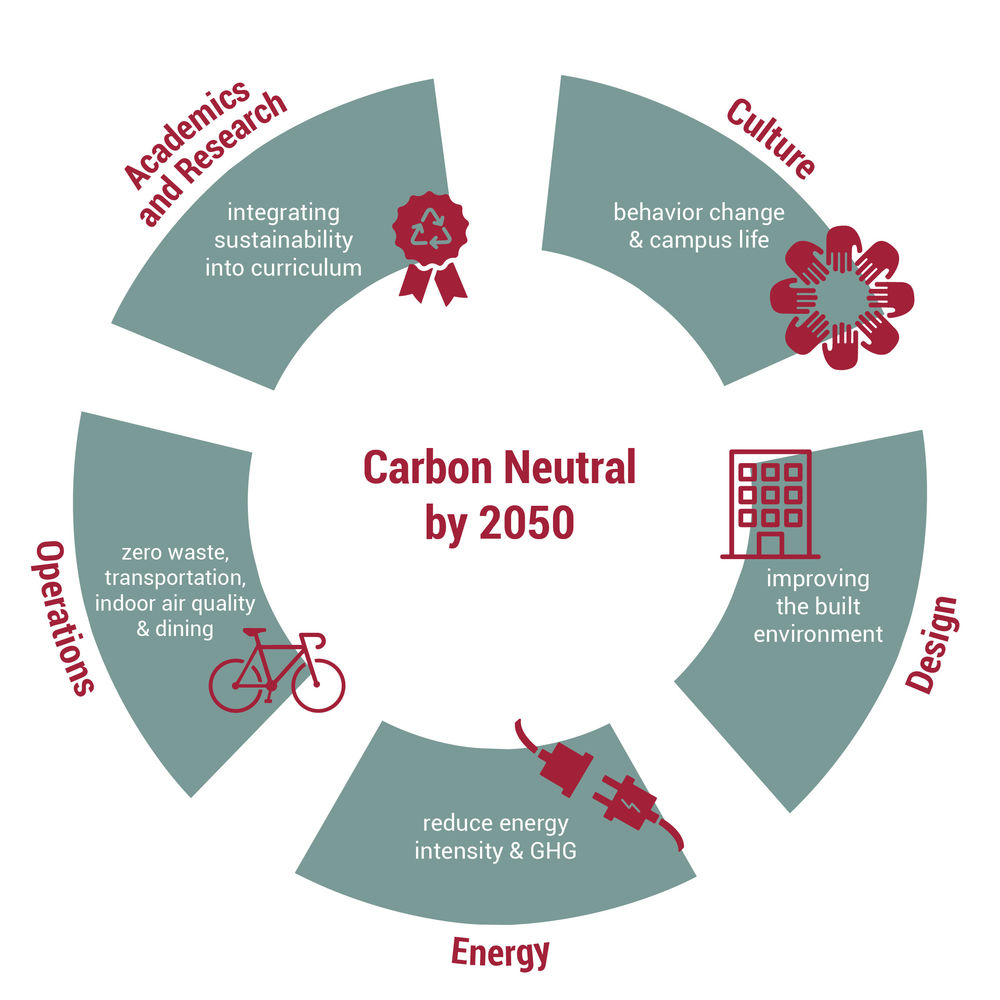
Temple University Climate Action Goals via Office of Sustainability
Temple University is a public research university, and is not obligated to disclose its financial investments. However, investment in fossil fuel companies seems to be the norm amongst American universities, and without a clear divestment statement it is fair to assume some of Temple University’s $778 million endowment (as of 2022) comes from companies similar to those that NYU has supported in the past. Temple has many sustainability efforts in progress, such as adding sustainability focused curricula and reducing energy consumption, but many Temple community members feel that these efforts are not enough without a promise of divestment.
The Sunrise Movement is present in Philadelphia, and has contributed to local green policy change through protests, teach-ins, voter education sessions, and more. Temple also has an unaffiliated, but highly dedicated group known as Temple Climate Action, a collection of students, staff, and faculty members dedicated to the fight against climate change. The principal goals of the organization are to divest from fossil fuels, encourage transparency and accountability from Temple’s administration, and advocate for the care of our planet.
As we saw from the participation of graduate and undergraduate students alike in the TUGSA Strike of Spring 2023, Temple scholars are fearless and more than willing to stand up for what they believe is right. With hope, the combination of student voices and divestment in other institutions will give Temple University the push it needs to play a part in ending the power of the fossil fuel industry and bringing us one step closer to a sustainable future.
The past year of wildfires, floods, and toxic hazards are urgent warning signs to look closer at the intersection between human health and the health of our environment. The interdependence between people and the planet is the key to sustainability and that’s why the theme for Campus Sustainability Month is Building A Healthy Future.
Through events, collaborations, and service, learning & engagement opportunities, the Office of Sustainability, will engage in conversations about environmental wellness, ecological health, and how to build and sustain thriving and equitable communities.
Check the calendar below to see all of the incredible Campus Sustainability Month happenings at Temple this October. Click the links to sign up for events and join the movement toward a healthier, happier planet.
For more information on the Office of Sustainability and its programming and other strategic initiatives, please visit our website Temple University Office of Sustainability.
Before I even knew there was a Temple University in Philadelphia, I was already dreaming about flying across the Pacific to attend Temple University Japan. Most students have the opportunity to learn Spanish, French, or Latin in American high schools, but when I entered the 9th grade I was surprised to learn that Japanese was one of the languages I could choose from. I studied Japanese for four years, and soon enough representatives from every Japanese university under the sun were soliciting our class for prospective students. Out of the myriad of choices, Temple certainly caught my attention the most. However, I realized that attending four years of university in Japan was probably a little too ambitious, so I wound up applying to Main Campus instead. I still planned to study abroad at TUJ for a semester, but I decided to save it for my Junior year. This past Spring, it finally happened. My dream of visiting Japan came true.
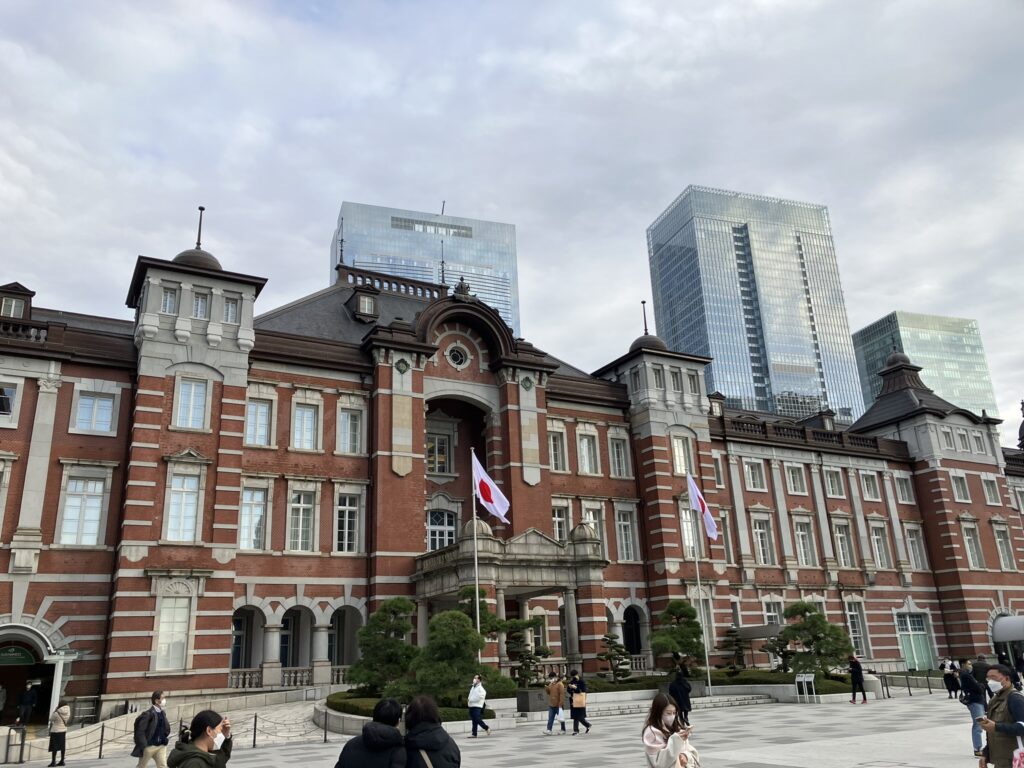
Tokyo Central Station
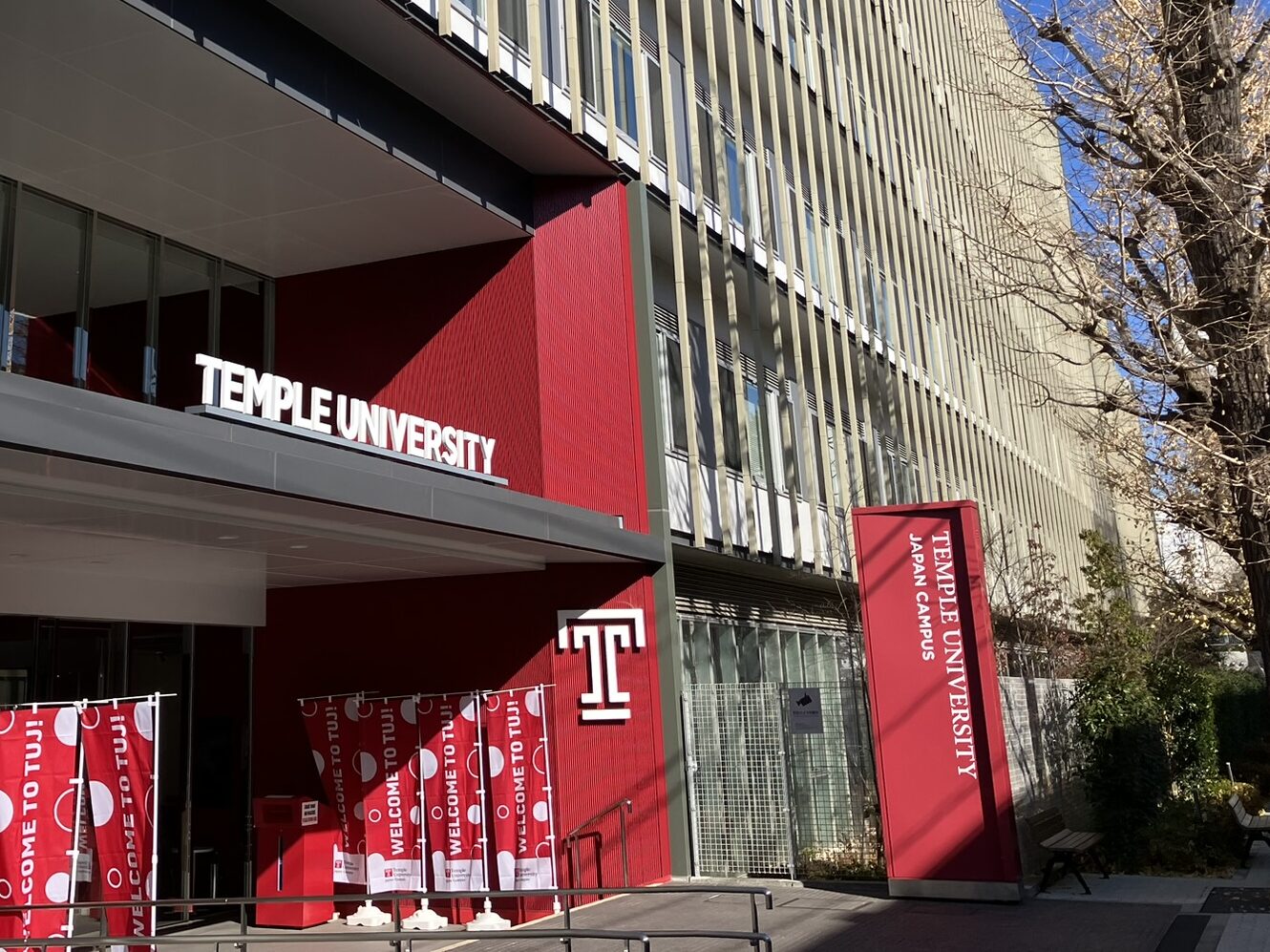
Due to my interests and my experience as the Office of Sustainability’s Transportation EcoLead and a Geography and Urban Studies student, I spent most of my time exploring the transportation system of Tokyo. Many days after school, I would walk out of Temple Japan’s building and make my way towards Sangenjaya Station on the Den-en-toshi metro line. From there, it only takes two stops to reach the bustling entertainment district of Shibuya, famous for its iconic scramble crossing. Besides entertainment, Shibuya also hosts one of the many mega-transfer stations in the Tokyo region, a bustling hub of commercial activity with eight train lines intersecting within it its massive structure of impressive skyscrapers and labyrinthian hallways all intertwined. Every day was a new adventure with all the options I had at the tap of a PASMO smartcard. That’s honestly what’s truly magical about Tokyo: the plethora of options and the convenience that they provide, and one of the places this truly manifests is in its transit system.
Like the rest of Tokyo, public transit usage at Temple University Japan is incredibly high. Practically every student gets to school by train, and those who don’t bike or walk. But why is public transit so popular amongst students? For one, the university is conveniently located near Sangenjaya Station on both the Setagaya and Den-en-toshi lines.
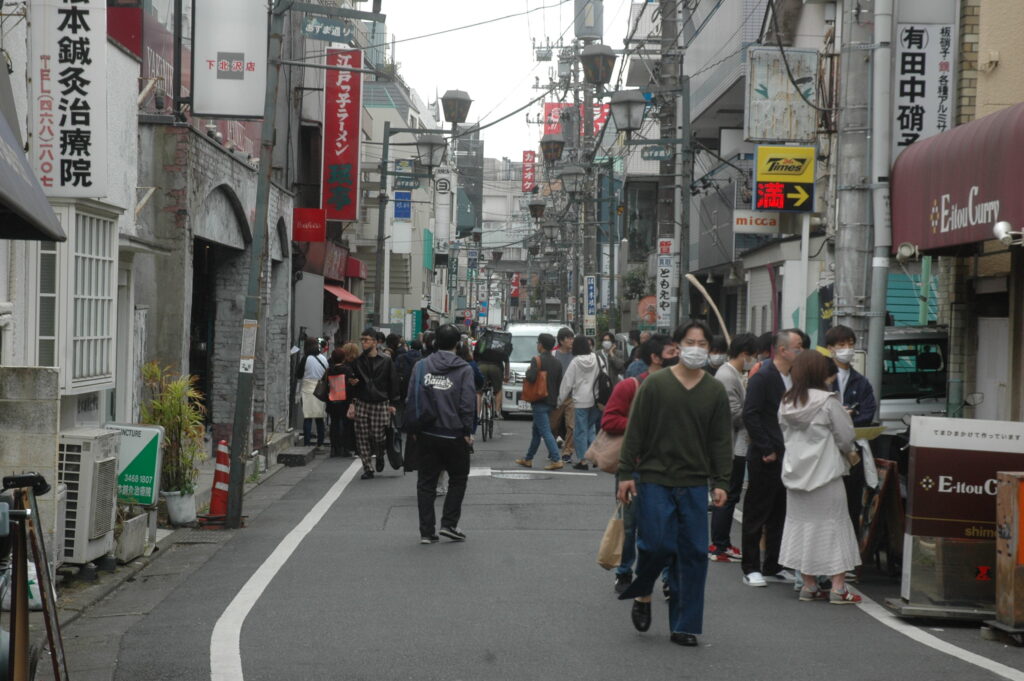
Narrow roads allow pedestrians to move (mostly) without the danger of cars
This connectivity allows practically anyone in Tokyo’s 23 wards to get to school in an hour or less. Secondly, driving to school is made nearly impossible by the lack of parking, the narrow roads leading to campus, and the difficulties innate to buying and owning a car in Tokyo, especially as a foreign student. Biking or walking to school is made easy by the narrow streets, which put bikes and pedestrians first and cars second. Additionally, a convenient system of bike shares and bike parking reduces the hassle of buying and safely parking a bike that we often see in American cities. Through a combination of frequent service, plentiful amenities, and excellent reliability, Tokyo’s rail network is certainly among the greatest in the world, and as such, the ridership numbers are extremely high: over 8.7 million people ride the subway network every day.
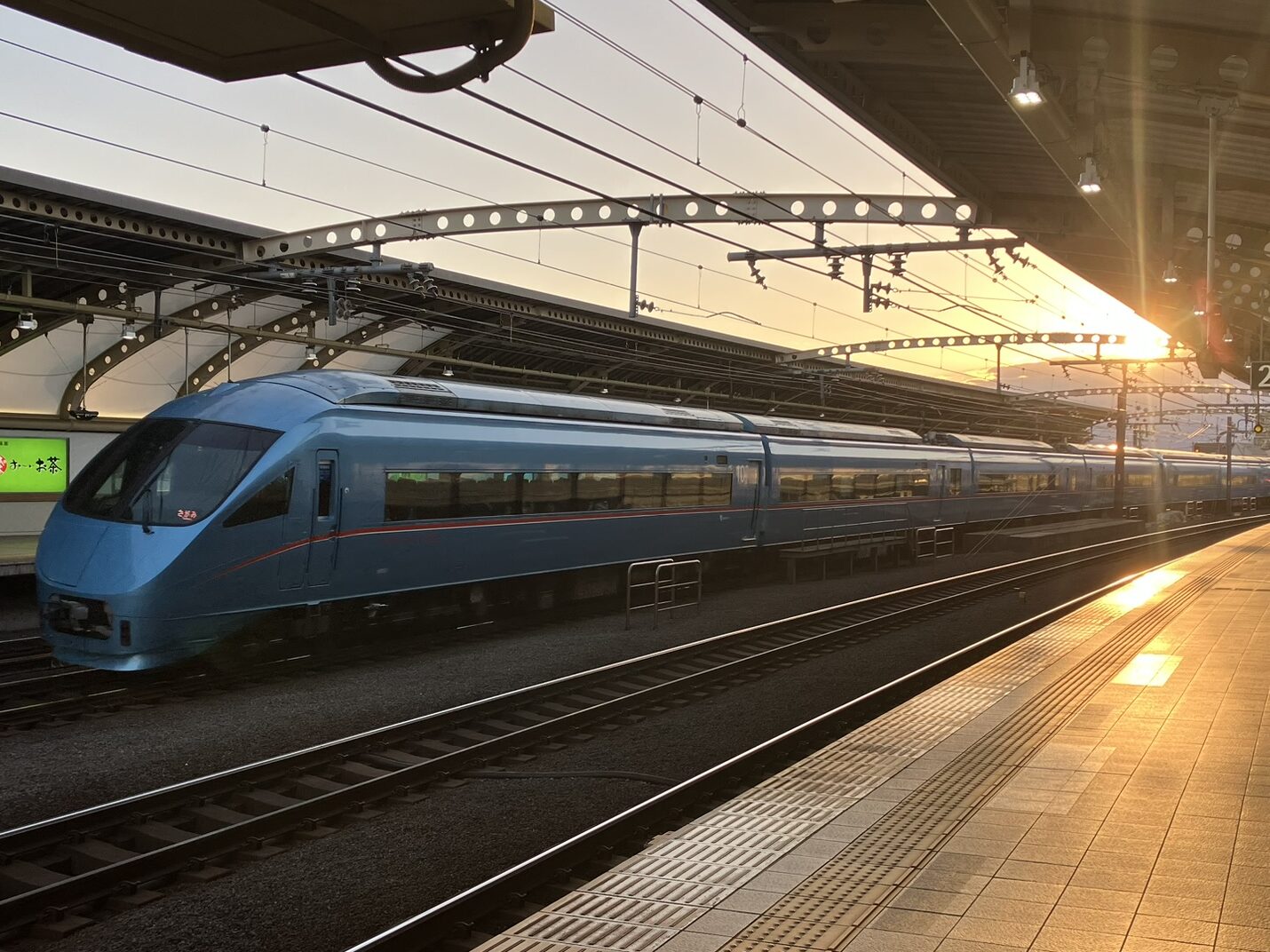
Romancecar (Shinkansen) in Gotokuji Station, Setagaya, Tokyo
Unlike in American cities, hardly anyone in the Tokyo area thinks twice about riding public transit to their destination. In my time there, I recall only once or twice running into any major hiccup such as a delay or gap in service. I could often just walk out of my apartment in the morning without any rush or stress to catch a specific train. All I needed to do was show up at my local station, and the system would take me where I needed to go in almost exactly the same amount of time every single day.
By contrast, here in Philadelphia I almost always map my route on the Transit App or Apple Maps or check the schedules so I know exactly when I have to leave to catch a specific train or bus. If I don’t catch that specific one, then it’s possible I’ll be late to my destination or miss a transfer somewhere along the way. However, even if I plan, no amount of planning can account for a train or bus just not arriving at the scheduled time or extremely infrequent service. SEPTA is volatile and often unpredictable or inconvenient. This is something that has to change if we are to get more people out of their cars and onto the more sustainable option: public transit.
Personal automobiles are quite popular in Philadelphia and the United States as a whole, and some say they’re completely unavoidable for most transportation needs, but in reality, Temple’s Main Campus actually has a lot of the same bones required to be just as good at getting students out of cars as the Tokyo campus.
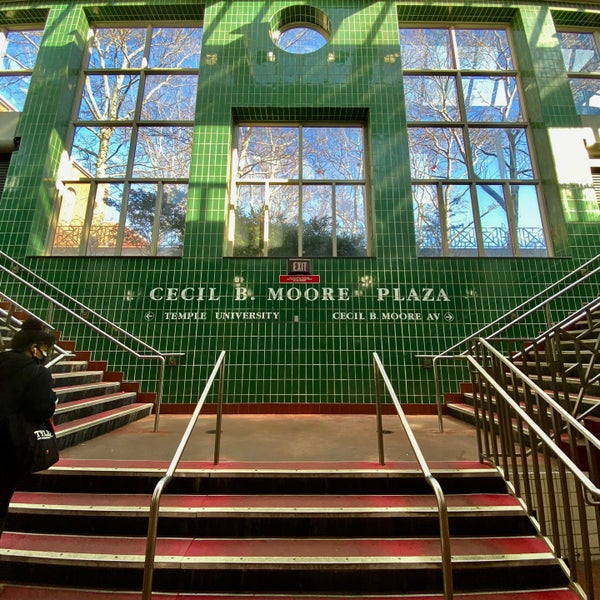
Cecil B Moore Station is the Broad Street Line station most used by Temple Students
Three transit stations and multiple bus routes exist on or near campus, and the bike share and bike parking around campus are quite plentiful. The issue isn’t a lack of options, but that all of these features lack the same level of quality and reliability as those in Tokyo, preventing them from reaching their true potential. Additionally, the dominance of car infrastructure and a lack of decent funding for transit and bike infrastructure in Philadelphia and the United States as a whole leaves much to be desired for current and potential users. That’s not to mention the safety and cleanliness issues that disincentivize people from choosing transit, another symptom of government disinvestment and sparse funding. If we are to be serious about sustainable and equitable transportation in this country, we need to call upon our elected officials and government agencies alike to put the needed investment into our public transportation systems and bike networks. Not only could it save lives, but it also might save our planet in the process.
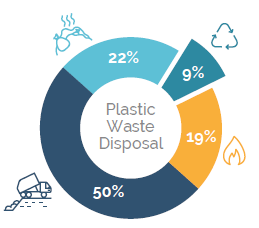
In 2019, 9% of plastic waste was recycled. The rest was incinerated, put in landfills, or disposed of using unregulated methods
Last month, Circular Philadelphia released a comprehensive policy guide on the current state of single-use plastic legislation in Philadelphia.
Despite the clear negative impacts of plastic production on the environment and our increasingly overwhelmed waste management systems, single-use plastic production has doubled in the last 60 years. This increase in production was exacerbated by the pandemic through online purchasing of delivery and takeout food orders increasing the demand for single-use packaging and food containers. The pandemic also hindered Philadelphia’s ability to manage plastic waste, as sanitation workers faced both an overwhelming amount of waste to clean up and a disproportionately high risk of exposure to COVID-19 due to their working conditions. This forced the city to prioritize trash management over recycling, leading to a drop from 22% in 2019 to a low 8% in 2022.
Despite the surge of single-use plastic during the pandemic, Philadelphia has recently taken several steps in the right direction when it comes to managing waste. The city increased on-time trash collections from 56% in 2021 to 96% in 2022 and added 150 new personnel for trash collection. Philadelphia also passed its ban of single-use plastic bags in 2022. A recent report found that after three months, reusable bag use doubled, and plastic bag use fell to almost zero.
Possible Solutions
Circular Philadelphia also reports that there are steps the city can take to reduce plastic waste even further in as short as a few years. The easiest solution to waste is legislation that bans or punishes single-use plastic, a measure that has already been used to eliminate plastic bag use in states such Hawai’i, Maine, and New York as well as municipalities such as Boston, Los Angeles, Seattle, and of course, Philadelphia.
Other methods include shifting responsibility for plastic consumption away from consumers, and instead pushing producers to reduce the amount of single-use plastic they use in their manufacturing and shipping process. In 2022, California passed a law that requires all packaging to be either recyclable or compostable by 2032, which is expected to help reduce plastic packaging by 25% and requires 65% of all single-use plastic packaging to be recycled within the following decade.
Another possible option is utilizing market-based solutions. Market based solutions often rely on a change in behavior from the consumer based on new trends or beliefs about what is socially favorable/acceptable. For example, it is favorable to like and protect animals, which made purchasing reusable straws popular when plastic straws were linked with harming sea turtles. But here are also several opportunities for change to come from the producers, such as manufacturing companies replacing traditional plastic bags with ones made from bioplastics, or stores offering reward points to customers who use reusable bags. A single cure-all solution for single-use plastic waste will be difficult to find, but combining several methods is a great start for achieving a waste-free future.
Circular Philadelphia’s Plan
Circular Philadelphia makes the argument that simple but thorough legislation informed by practices in other cities and regions is likely the best way to achieve fair, consistent, and measurable change when it comes to plastic waste in Philadelphia. Their recommended solution is a three-step legislation mechanism that eliminates certain single-use plastics from the take-out operations of restaurants’ and other prepared food establishments
Step 1. Ban certain single use plastics for take-out food
The most straightforward step to this process is banning items that are commonly littered after use, which includes polystyrene containers, plastic straws/cutlery, and plastic lined cups.
Step 2. Encourage a shift to reusable containers by imposing a fee on continued use of single-use plastics for take-out food
In order to encourage businesses to stop using any single-use items that remain unbanned, Philadelphia can incorporate an inspection for single-use plastics into the responsibilities of the Health Department and charge a fee for restaurants that are not compliant. The success of this part relies on its enforceability, which means it would mainly apply to places with food establishment licenses. It also requires flexible definitions for what is single-use, recyclable, compostable, reusable, etc. so that the city can update standards based on the available systems in its recycling department.
Step 3. Reinvestment of fee proceeds to clean up Philly and create a transition fund
Fees from noncompliant businesses would then be reinvested into waste management practices such as street sweeping, public trash cans, and assistance for businesses trying to switch to reusables.
Can It Be Done? Will it Work? Is It Worth It?
Short answer, Yes! Circular Philadelphia has already worked with the Health department to create a system of identifying restaurants that have reusable containers, meaning the framework is already in place to help more businesses comply with the proposed legislation.
If this legislation were to pass, Circular Philadelphia estimates that the benefits would include reducing the $48M spent on annual litter clean up, lowering food packaging costs from $0.29 per use for single-use to less than $0.01 per use by leveraging reusable containers, and addressing concerns such as microplastic consumption and the impacts of climate change.
Single-use Plastic and Campus Life
If these proposals were adopted, things could really change around campus. The multitude of student-serving food trucks, who are not owned or operated by Temple University, but under the jurisdiction of the city, would be on the hook for any plastic utensils and Styrofoam containers they distribute.
The majority of restaurants students eat “at” on campus don’t have indoor, or any, seating options and also lack the facilities to wash the number of dishes needed to meet rush hour demand. Reusable options available to other restaurants, such as metal utensils and sturdy dishes, generally aren’t viable for food trucks or “the Wall” vending pad by Mazur Hall. Students also tend to be on the move and use takeaway options in between classes, which would mean carrying around a dirty reusable plastic container. Unfortunately, this is considered a major inconvenience to a lot of students, and they’re not going to bring their own reusable containers if they still have the option for disposables.
All-encompassing waste policies like these — with real teeth and that extend beyond just the Aramark-owned and operated campus dining providers — could instigate broader behavioral and operational change across the city and on campus, especially with the massively popular food trucks. Until then, students can get us closer to a sustainable and waste free future by joining the fight for meaningful policy change, doing their best to use reusables themselves, and supporting those local businesses who are leading the way.
Hi Temple! My name is Riya Shah, I am a sophomore Health Professions Major and a Food Systems Sustainability EcoLead at the Department of Sustainability.
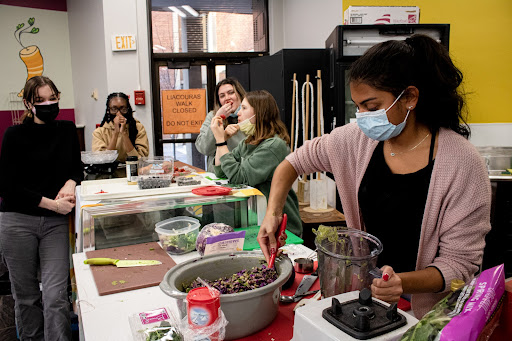
This semester I was able to host two Low-Carbon Eating workshops which allowed students to learn about carbon emissions associated with food production, transportation, and decomposition. We also made a plant-based dish at each workshop using local ingredients that exemplified budget friendly meals that were also healthy, convenient to make, and environmentally friendly.
Cooking Low Carbon
Often, it is difficult to put much thought into the sustainability of the food that we purchase and consume as busy college students, but these decisions have a large impact on our planet. Plant foods have a significantly lower carbon footprint (amount of carbon released into the atmosphere contributing to global warming) than animal foods. Foreign foods like tropical fruits that have to travel far distances contribute high amounts of emissions as compared to locally-grown produce, and require artificial chemical processes to preserve the foods which pose health side effects and environmental run-off.
Finding affordable, low carbon foods can be a challenge as well, especially depending on one’s location. One such organization that helps to alleviate this challenge and provide free, locally donated produce to the community at no cost is Sharing Excess. Temple University’s chapter has generously been hosting pop-ups almost every Friday to both Temple Students and local Philadelphia residents.