Inspiring change through scalable urban agriculture
Project Summary
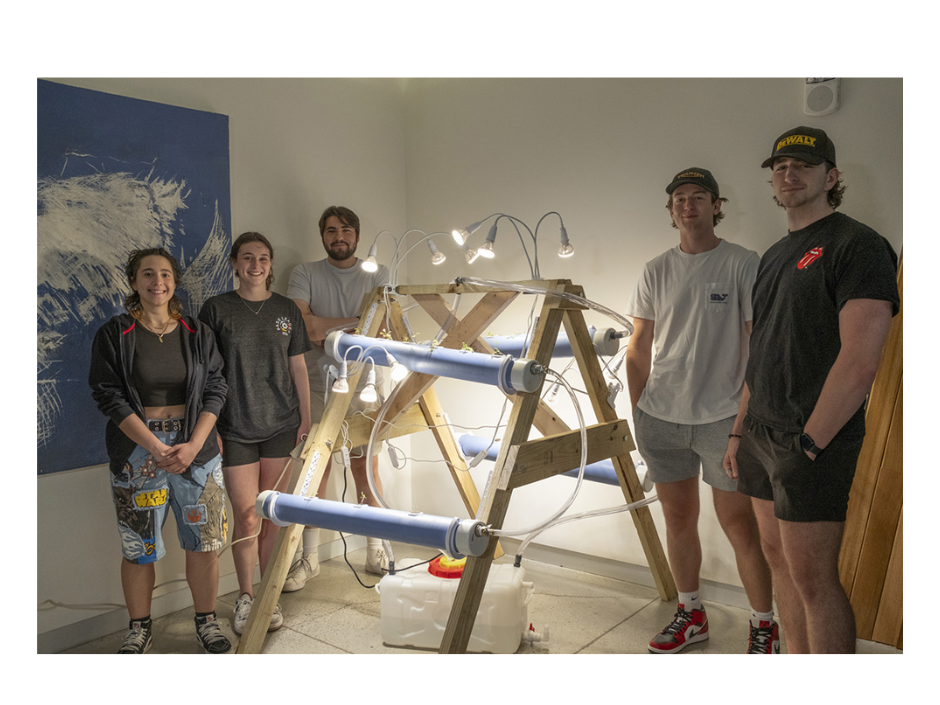
In collaboration with Charles Library, the Office of Sustainability is excited to announce the final installation of a sustainable hydroponics display constructed by Green Grant recipients, Engineers for Climate Action. The Green Grant funds student-led projects, programs and initiatives that advance Temple University’s commitment to sustainability through their positive impact on campus and our local environment and community. This year, Engineers for Climate Action is excited to cap off Earth Month with their final display of their sustainable hydroponics system, an innovative solution for growing plants using mineral-rich water in lieu of soil.
This hydroponics system represents a strong example of addressing the interconnected challenges of climate change through innovation and education. By creating a hands-on, scalable model of urban agriculture, this project aims to inspire actionable change and provide meaningful learning opportunities for students and community members. The hydroponics system is not just a tool for growing plants—it is a platform for cultivating awareness, fostering collaboration, and driving progress toward a more sustainable future.
Why use hydroponics?
Enhances plant yields: plants can be more densely packed than when planted in soil on land, leading to higher yields. In addition, pH, nutrients, and light availability can be constantly monitored and controlled.
Less water: as much as 10 times less water than traditional field crop watering methods. The water reservoir recycles nutrient rich water instead of allowing it to run off and drain to the environment.
Locally grown: Indoor hydroponic systems allow plants to grow almost anywhere all year round.
Prevents soil degradation: Reduces the need for soil and land use.
About this system
Features a modular A-frame structure made with recycled gutter piping and minimal energy requirements
Utilizes reclaimed PVC drainage pipes as the plant rack
Inspired by the need for compact, water-efficient systems in urban environments
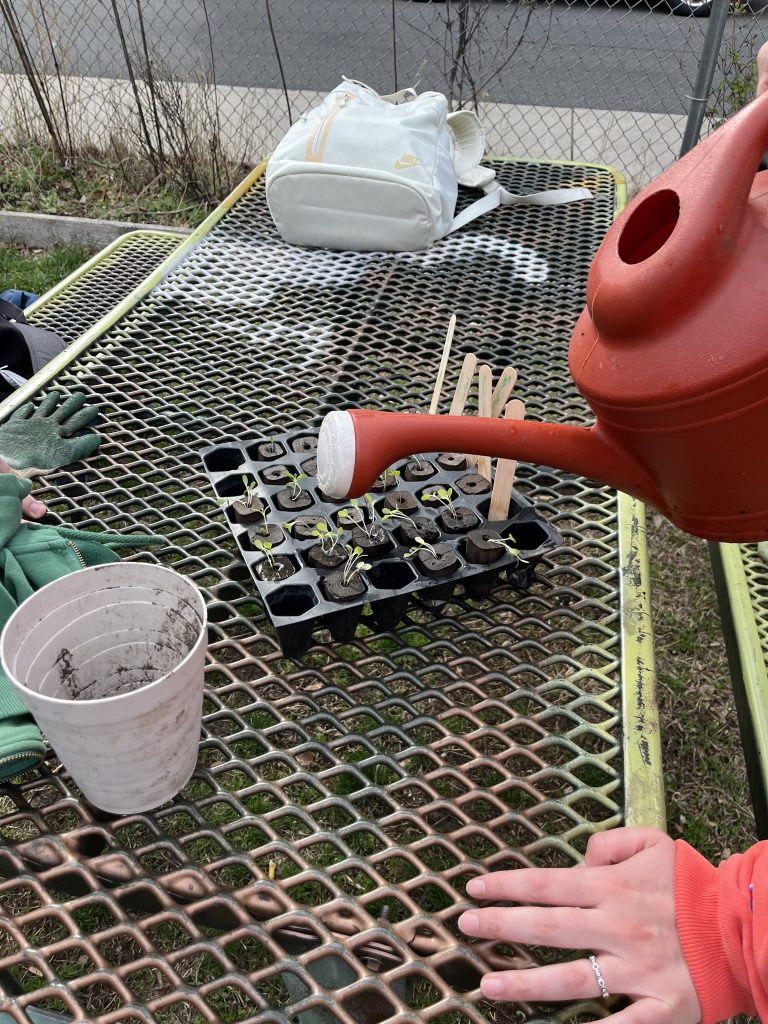
Seedling Planting
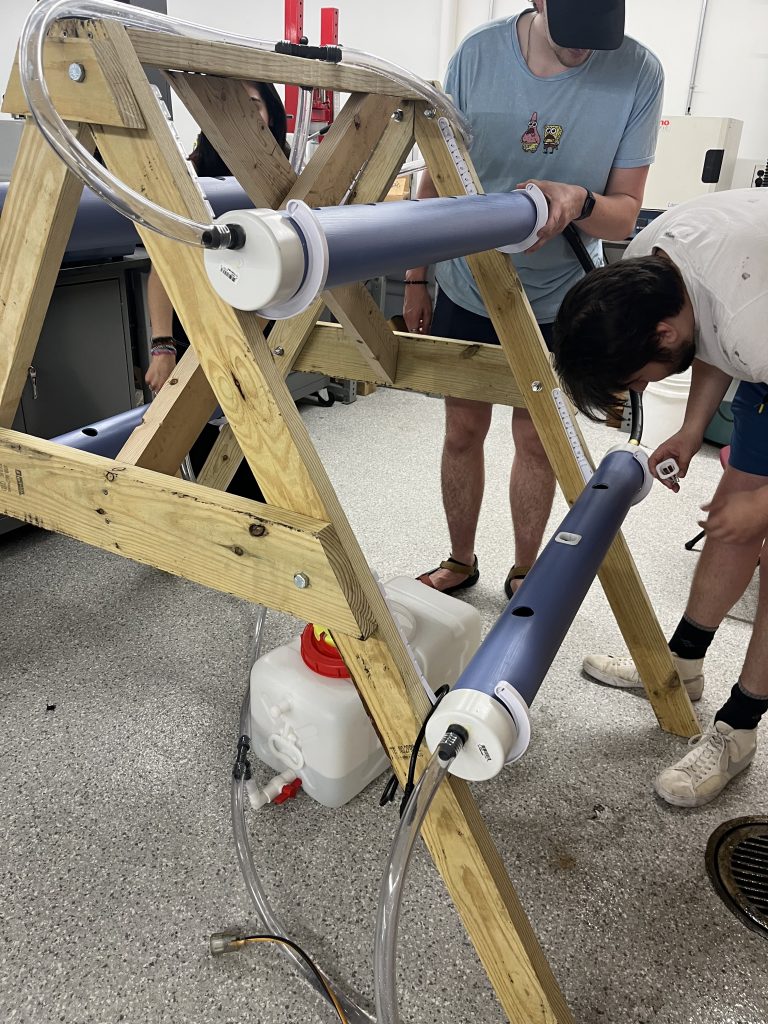
Frame Construction
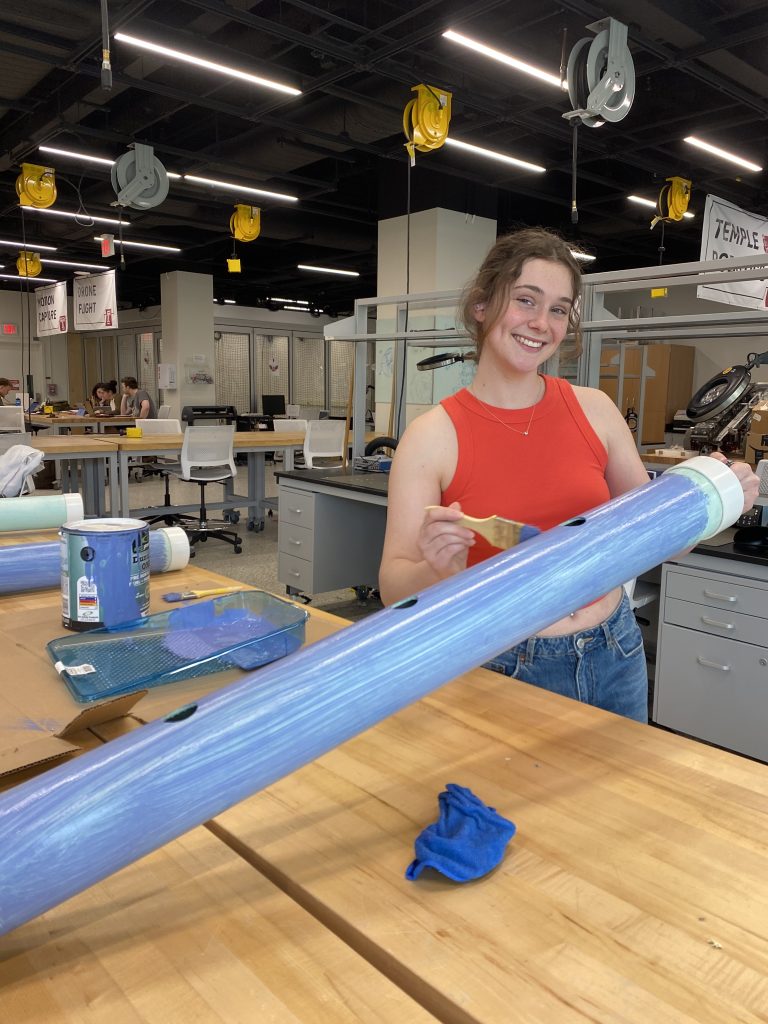
Painting
Wet Test
Annotated Design DrawingStructural Analysis through SolidWorks
The design above shows the results of the SolidWorks simulation run on the model of the hydroponics design.
Using the known properties of wood, a stress analysis was run to determine if the estimated loading on the structure could result in failure. Blue areas on the simulation model represent regions of material that will not be under a significant amount of stress. With accounting for the mass of the water, the plants, and the apparatus itself, it was found that the structure is adequately designed against failure.
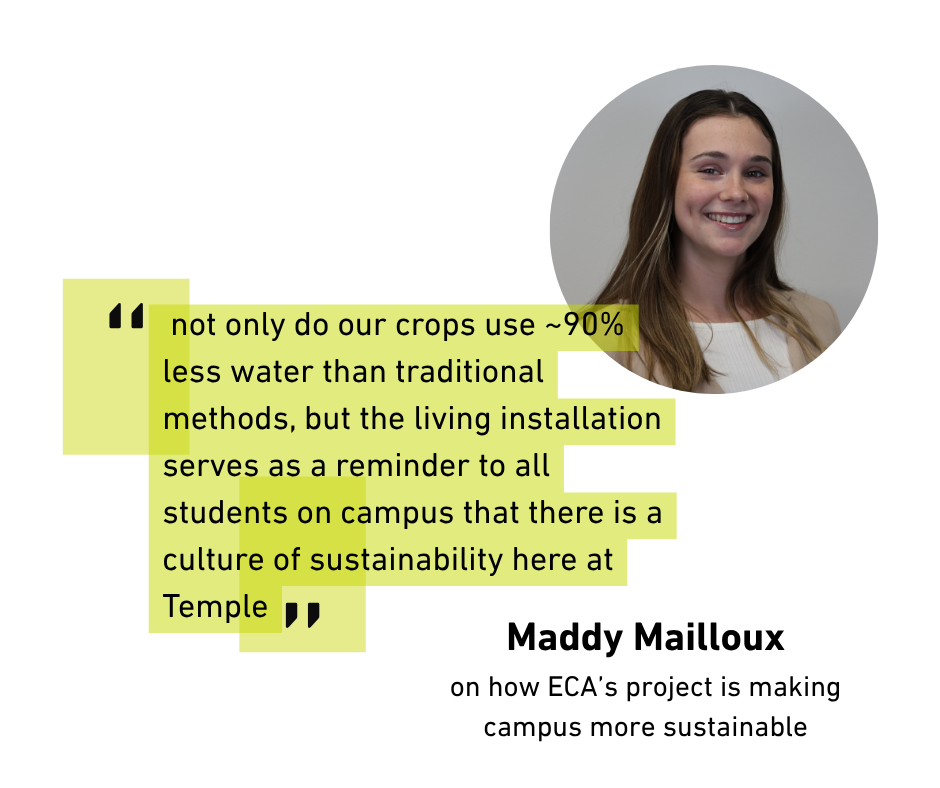
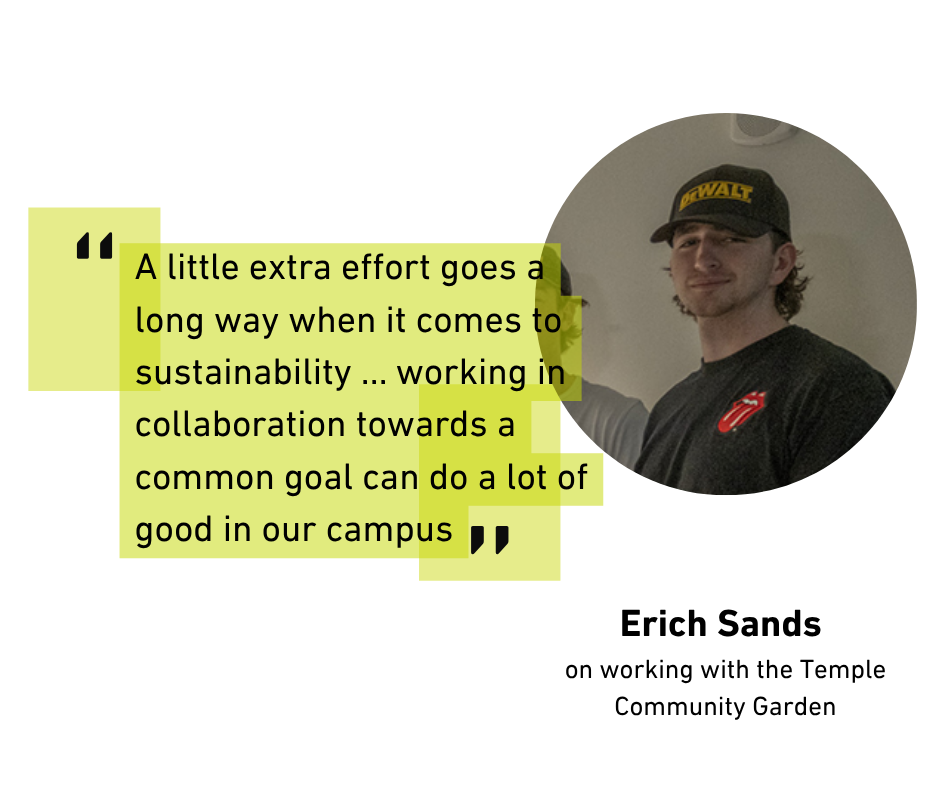
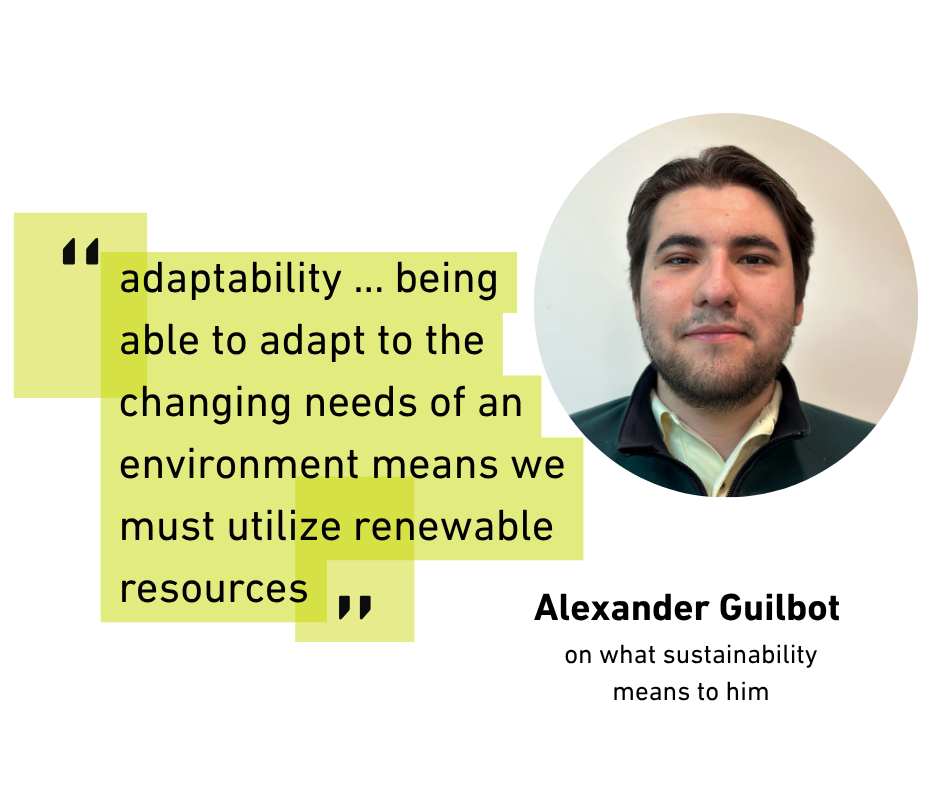
Hear from the students
About the Green Grant
Engineers for Climate Action were awarded $900 from the Office of Sustainability’s Green Grant for parts associated with the construction of the hydroponics display.
Temple Sustainability’s Green Grant builds upon Temple University’s commitment to sustainability by funding student-led projects, programs and initiatives that advance the Office of Sustainability’s mission and have a positive impact on campus and our local environment and community. The grant application opens late in the fall semester and winners are selected early the following calendar year. Project implementation and execution spans the spring semester.
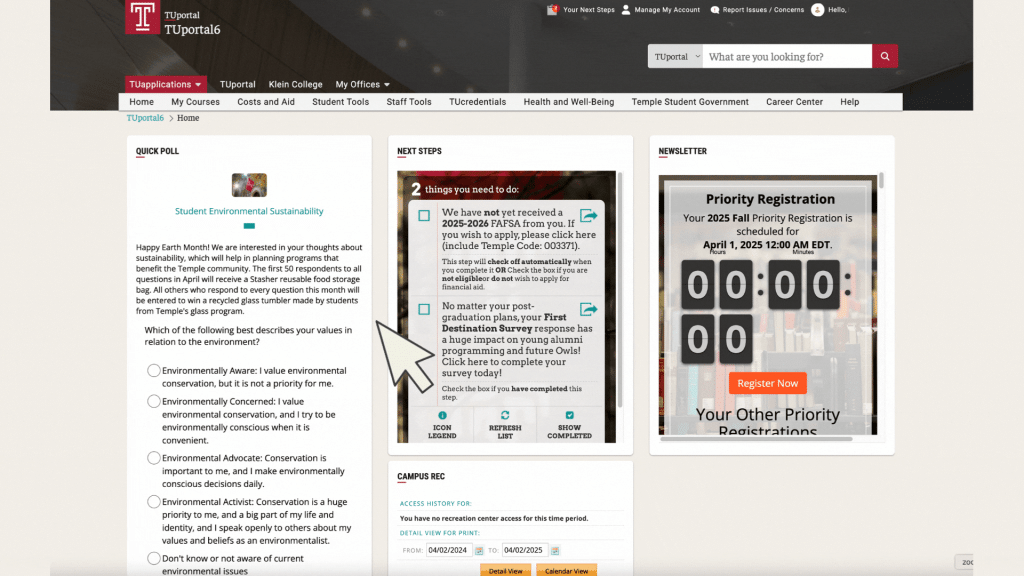
All Temple students, staff, and faculty will see new questions about sustainability in TUportal throughout the month of April from the 2nd through the 25th.
Every few days you’ll be asked about your personal values and actions when it comes to the environment, your thoughts and preferences on sustainability infrastructure and programs, and sustainability in your academic program or your professional role as a staff person.
Help us help you!
Your answers will help us plan programs that will benefit the Temple community for years to come.
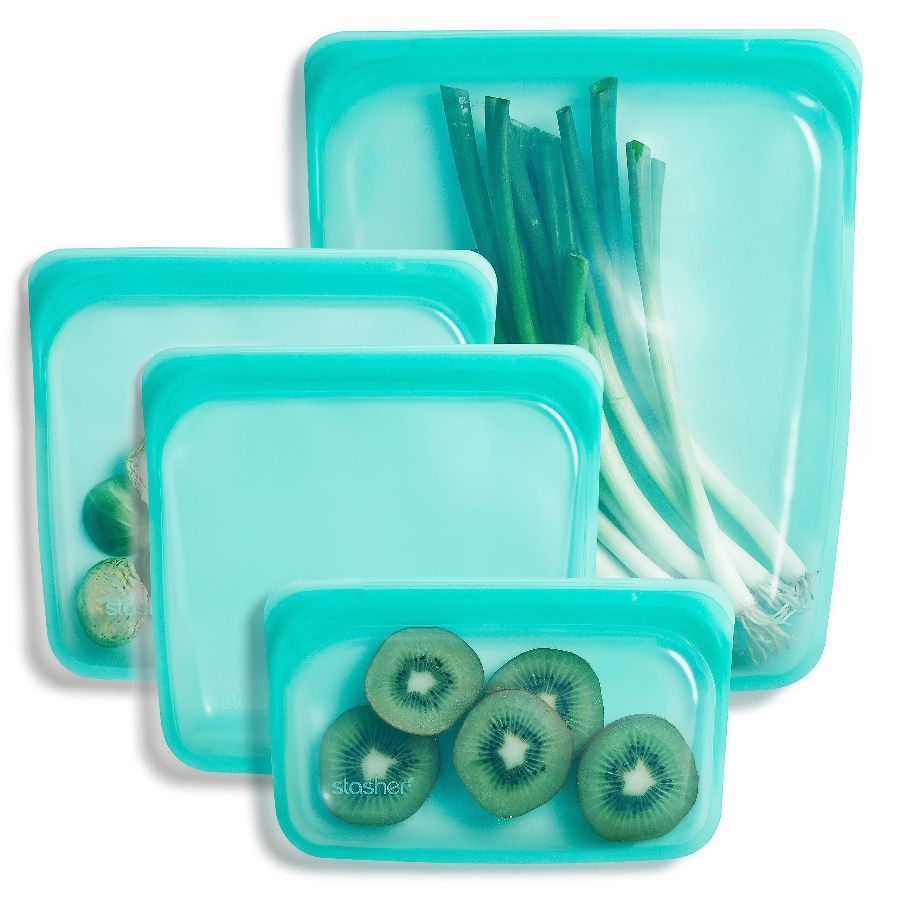
The first 50 students and staff members to complete all the polls will receive a brand-new Stasher reusable storage bag.
February was Environmental Justice Month
In 2014, the Environmental Protection Agency (EPA) declared February to be Environmental Justice Month to commemorate the signing of historic 1994 executive order 12898: “Federal Actions to Address Environmental Justice in Minority Populations.”
Temple University’s Office of Sustainability is thrilled to present our February events and this year’s Campus Race to Zero Waste campaign. Join us in sowing the seeds of change and nurturing a more eco-friendly campus.
Campus Race to Zero Waste is a sustainability competition in which Temple University goes head-to-head against schools across the country to see who can divert the most waste from landfills.
Want to get started? Check out the calendar below to discover the array of events happening on and off campus this February. Click the links to RSVP and become a part of the movement toward a circular economy!
Kickoff: Feb 2 – March 29, 2025
Theme
Event
Where & When
RSVP
Sustainable Fashion
Temple Thrift Pop-Up
Tuesday, February 11, Morgan Hall North D301, 10AM – 3PM
This Campus Sustainability Month, the Office of Sustainability will create pathways for understanding how small, grassroots actions can have a longstanding impact.
A series of different workshops, events and service opportunities will focus on select United Nations Sustainable Development Goals and the Temple community will learn what they can do here in Philly and on campus to affect sustainable change globally.
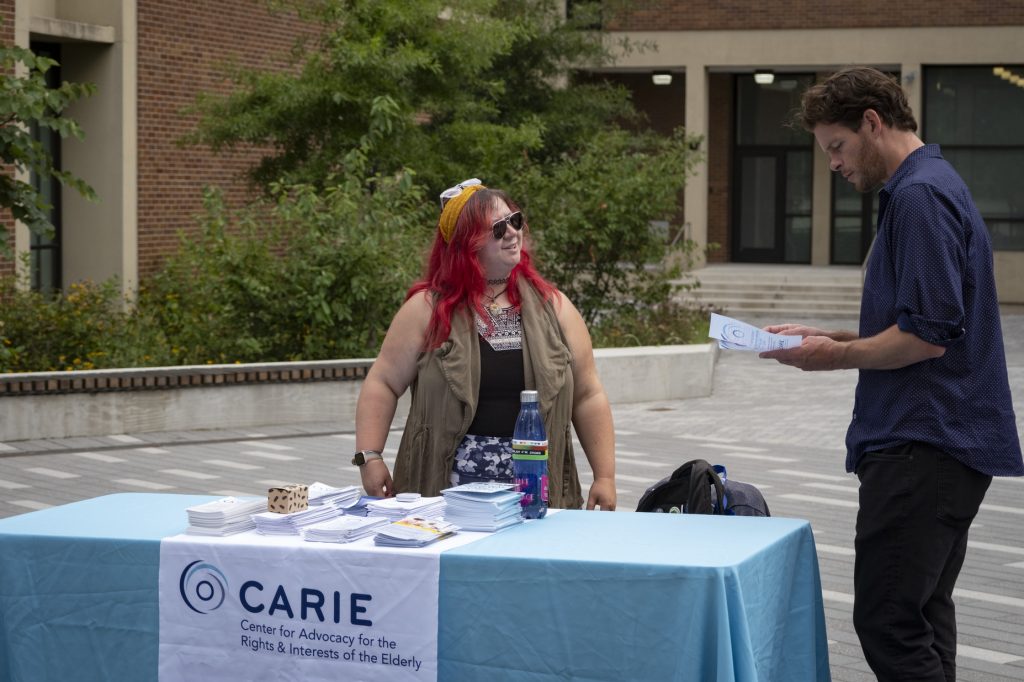
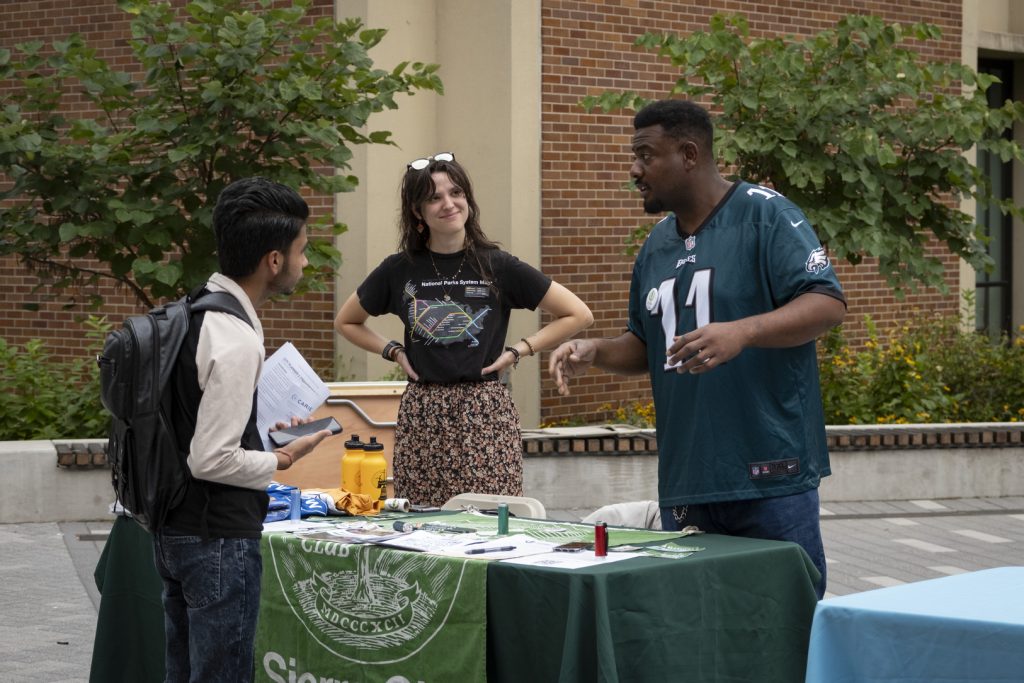
Sustainable transportation is a safe and clean option for traveling, and what better way to discuss and inform others about their mobility options than a transportation fair? This past Friday, September 6th, we had organizations come out to our Transportation Fair to discuss Temple University students’ many eco-friendly traveling options around the Philadelphia area.
At our Transportation Fair, we also interviewed organization representatives and students to gain insight into what sustainable transportation means to them. A member of CARIE described what sustainable transportation means to them:
“Sustainable transportation is good for the people, good for the environment. It means protecting everybody [and] making sure that everyone has access to transportation.”
Another organization, Sierra Club, talked about Transit to Trails, a campaign to improve public transportation options so that green spaces become easily accessible to everyone. Sierra Club believes that sustainable transportation is “accessible to everyone in all communities, helps them have full autonomy over their lives, and is clean and good for the environment.”
“Sustainable transportation helps [people] have full autonomy over their lives.”
SEPTA, Philadelphia’s largest transportation system highlighted the benefits of our transit system. It is one of the greenest, lowest emissions options in our city and provides us with a safe and environmentally friendly way of getting around, whether that is by bus, train, subway, or trolley.
For students, having options and choices was a common theme when it came to sustainable transportation. When students were asked what sustainable transportation means to them, they often focused on options such as electric cars, bicycles, public transportation, and walking, acknowledging the environmentally friendly transportation options they have access to around Philadelphia. It also gives us insight into ways that students are actively thinking of and engaging with sustainable modes of transport.
Our Transportation Fair provided a space for students to learn about local transportation organizations and the resources they can provide. It was also a wonderful opportunity to hear from our broader Temple community what exactly sustainable transportation means to them.
The past year of wildfires, floods, and toxic hazards are urgent warning signs to look closer at the intersection between human health and the health of our environment. The interdependence between people and the planet is the key to sustainability and that’s why the theme for Campus Sustainability Month is Building A Healthy Future.
Through events, collaborations, and service, learning & engagement opportunities, the Office of Sustainability, will engage in conversations about environmental wellness, ecological health, and how to build and sustain thriving and equitable communities.
Check the calendar below to see all of the incredible Campus Sustainability Month happenings at Temple this October. Click the links to sign up for events and join the movement toward a healthier, happier planet.
For more information on the Office of Sustainability and its programming and other strategic initiatives, please visit our website Temple University Office of Sustainability.
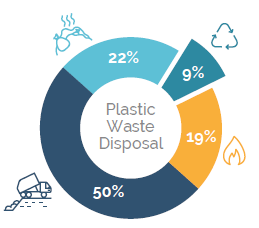
In 2019, 9% of plastic waste was recycled. The rest was incinerated, put in landfills, or disposed of using unregulated methods
Last month, Circular Philadelphia released a comprehensive policy guide on the current state of single-use plastic legislation in Philadelphia.
Despite the clear negative impacts of plastic production on the environment and our increasingly overwhelmed waste management systems, single-use plastic production has doubled in the last 60 years. This increase in production was exacerbated by the pandemic through online purchasing of delivery and takeout food orders increasing the demand for single-use packaging and food containers. The pandemic also hindered Philadelphia’s ability to manage plastic waste, as sanitation workers faced both an overwhelming amount of waste to clean up and a disproportionately high risk of exposure to COVID-19 due to their working conditions. This forced the city to prioritize trash management over recycling, leading to a drop from 22% in 2019 to a low 8% in 2022.
Despite the surge of single-use plastic during the pandemic, Philadelphia has recently taken several steps in the right direction when it comes to managing waste. The city increased on-time trash collections from 56% in 2021 to 96% in 2022 and added 150 new personnel for trash collection. Philadelphia also passed its ban of single-use plastic bags in 2022. A recent report found that after three months, reusable bag use doubled, and plastic bag use fell to almost zero.
Possible Solutions
Circular Philadelphia also reports that there are steps the city can take to reduce plastic waste even further in as short as a few years. The easiest solution to waste is legislation that bans or punishes single-use plastic, a measure that has already been used to eliminate plastic bag use in states such Hawai’i, Maine, and New York as well as municipalities such as Boston, Los Angeles, Seattle, and of course, Philadelphia.
Other methods include shifting responsibility for plastic consumption away from consumers, and instead pushing producers to reduce the amount of single-use plastic they use in their manufacturing and shipping process. In 2022, California passed a law that requires all packaging to be either recyclable or compostable by 2032, which is expected to help reduce plastic packaging by 25% and requires 65% of all single-use plastic packaging to be recycled within the following decade.
Another possible option is utilizing market-based solutions. Market based solutions often rely on a change in behavior from the consumer based on new trends or beliefs about what is socially favorable/acceptable. For example, it is favorable to like and protect animals, which made purchasing reusable straws popular when plastic straws were linked with harming sea turtles. But here are also several opportunities for change to come from the producers, such as manufacturing companies replacing traditional plastic bags with ones made from bioplastics, or stores offering reward points to customers who use reusable bags. A single cure-all solution for single-use plastic waste will be difficult to find, but combining several methods is a great start for achieving a waste-free future.
Circular Philadelphia’s Plan
Circular Philadelphia makes the argument that simple but thorough legislation informed by practices in other cities and regions is likely the best way to achieve fair, consistent, and measurable change when it comes to plastic waste in Philadelphia. Their recommended solution is a three-step legislation mechanism that eliminates certain single-use plastics from the take-out operations of restaurants’ and other prepared food establishments
Step 1. Ban certain single use plastics for take-out food
The most straightforward step to this process is banning items that are commonly littered after use, which includes polystyrene containers, plastic straws/cutlery, and plastic lined cups.
Step 2. Encourage a shift to reusable containers by imposing a fee on continued use of single-use plastics for take-out food
In order to encourage businesses to stop using any single-use items that remain unbanned, Philadelphia can incorporate an inspection for single-use plastics into the responsibilities of the Health Department and charge a fee for restaurants that are not compliant. The success of this part relies on its enforceability, which means it would mainly apply to places with food establishment licenses. It also requires flexible definitions for what is single-use, recyclable, compostable, reusable, etc. so that the city can update standards based on the available systems in its recycling department.
Step 3. Reinvestment of fee proceeds to clean up Philly and create a transition fund
Fees from noncompliant businesses would then be reinvested into waste management practices such as street sweeping, public trash cans, and assistance for businesses trying to switch to reusables.
Can It Be Done? Will it Work? Is It Worth It?
Short answer, Yes! Circular Philadelphia has already worked with the Health department to create a system of identifying restaurants that have reusable containers, meaning the framework is already in place to help more businesses comply with the proposed legislation.
If this legislation were to pass, Circular Philadelphia estimates that the benefits would include reducing the $48M spent on annual litter clean up, lowering food packaging costs from $0.29 per use for single-use to less than $0.01 per use by leveraging reusable containers, and addressing concerns such as microplastic consumption and the impacts of climate change.
Single-use Plastic and Campus Life
If these proposals were adopted, things could really change around campus. The multitude of student-serving food trucks, who are not owned or operated by Temple University, but under the jurisdiction of the city, would be on the hook for any plastic utensils and Styrofoam containers they distribute.
The majority of restaurants students eat “at” on campus don’t have indoor, or any, seating options and also lack the facilities to wash the number of dishes needed to meet rush hour demand. Reusable options available to other restaurants, such as metal utensils and sturdy dishes, generally aren’t viable for food trucks or “the Wall” vending pad by Mazur Hall. Students also tend to be on the move and use takeaway options in between classes, which would mean carrying around a dirty reusable plastic container. Unfortunately, this is considered a major inconvenience to a lot of students, and they’re not going to bring their own reusable containers if they still have the option for disposables.
All-encompassing waste policies like these — with real teeth and that extend beyond just the Aramark-owned and operated campus dining providers — could instigate broader behavioral and operational change across the city and on campus, especially with the massively popular food trucks. Until then, students can get us closer to a sustainable and waste free future by joining the fight for meaningful policy change, doing their best to use reusables themselves, and supporting those local businesses who are leading the way.
Hi Temple! My name is Riya Shah, I am a sophomore Health Professions Major and a Food Systems Sustainability EcoLead at the Department of Sustainability.
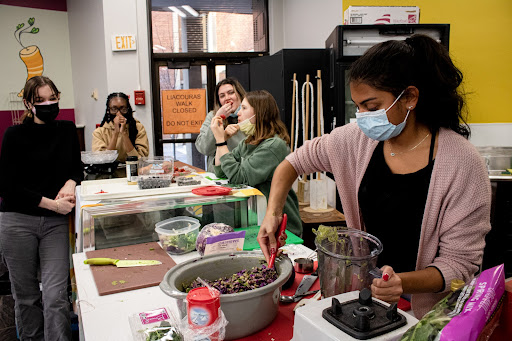
This semester I was able to host two Low-Carbon Eating workshops which allowed students to learn about carbon emissions associated with food production, transportation, and decomposition. We also made a plant-based dish at each workshop using local ingredients that exemplified budget friendly meals that were also healthy, convenient to make, and environmentally friendly.
Cooking Low Carbon
Often, it is difficult to put much thought into the sustainability of the food that we purchase and consume as busy college students, but these decisions have a large impact on our planet. Plant foods have a significantly lower carbon footprint (amount of carbon released into the atmosphere contributing to global warming) than animal foods. Foreign foods like tropical fruits that have to travel far distances contribute high amounts of emissions as compared to locally-grown produce, and require artificial chemical processes to preserve the foods which pose health side effects and environmental run-off.
Finding affordable, low carbon foods can be a challenge as well, especially depending on one’s location. One such organization that helps to alleviate this challenge and provide free, locally donated produce to the community at no cost is Sharing Excess. Temple University’s chapter has generously been hosting pop-ups almost every Friday to both Temple Students and local Philadelphia residents.
Culture on campus is ripe for climate action and Temple Sustainability is encouraging you to ‘decarbonize your life’. Let’s think critically about our consumption:What is the true cost of consumer goods?Where are we now and where do we need to go? How can students be a part of the solution?
Temple Thrift at the Bell TowerTemple Thrift at the Bell Tower
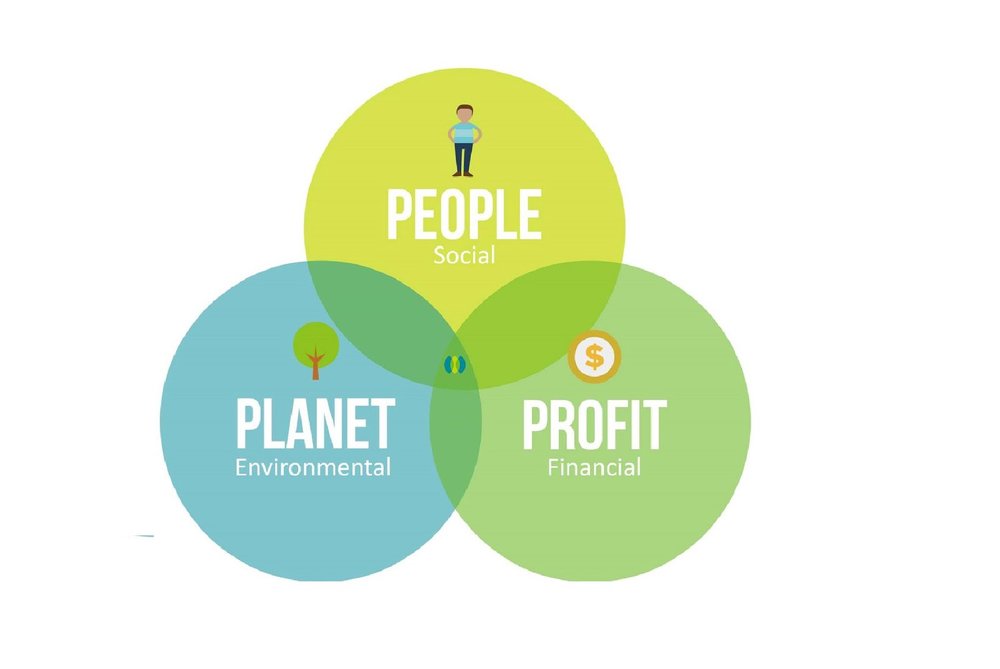
Everyone’s favorite on-campus sustainable retail experience returned this semester. After sorting over one ton of Give and Go Green donations in May, Temple Thrift, our own triple bottom business, was in action at the Bell Tower on October 6th and 13th.
Slow Fashion with Temple Thrift
Hundreds of students in residence halls donated and over 20 volunteers sorted donations to divert 1,279 pounds of clothing from the landfill for this year’s Give and Go Green initiative, a collaboration between Temple Sustainability and the Division of Student Affairs. 1,142 pounds of food and hygiene products were donated directly to the Cherry Pantry. 99 pounds of food waste was sent to the landfill, and 9 pounds of waste was recycled.
Of the clothing donated by Temple students, we gathered the following insights:
Majority of items were from some of the largest contributors of fast fashion, including Forever 21, American Eagle, Shein, H&M and Old Navy.
Over 30% of the items were made with a combination of cotton, polyester, nylon and spandex and contained microplastics Read more about reducing their negative ecological impact in your laundry here.
Only 3% of the textiles were manufactured in the United States.
Over 80% of textiles were manufactured in China, Vietnam, or Bangladesh.
60 individuals volunteered to help run two days of pop-up sales, completing over 100 unique shifts. 395 shoppers spiced up their wardrobes and picked up practical home goods affordably — no item was over $5! Still, we collected $5,057 in sales revenue on items that were otherwise headed to the landfill. All the proceeds were donated directly to the Cherry Pantry, an on-campus pantry for students.
Decarbonize your Closet
It is hard to deny Temple Thrift’s positive impact, but thrifting is not a silver bullet. Second hand sales are not a solution to this much larger global crisis.
The problem is overconsumption and our ‘out of sight, out of mind’ mindset. Fast fashion is the world’s second largest pollutant and 85% of the post-consumer textile waste — 3.8 billion pounds– slowly decays in landfills each year. You can read a deep dive on the ecological impact of the fashion industry in our Waste Conscious Fashion Community blog. Our choices — from the second we click purchase on an online webstore, to the moment we throw them away or drop them off at a donation site — have a real impact on people and the planet.
As climate advocates and social entrepreneurs, we should think hard about the true cost of each and every garment.
(The Considerate Consumer)
Advocating for slow fashion looks beyond simply thrifting to support a movement and a community of conscious consumers. Through their choices, slow fashion advocates support sustainable and ethical brands that benefit “the planet and all people,” embodying the shift from purchasing cheap items for a short period of time to investing in high-quality items for their long lifespan.
Everyone can decarbonize their closets – whether it’s upcycling items, swapping clothes with peers, shopping from sustainable brands, or shopping for pre-loved items. Encourage your friends and family to join the movement.
Philadelphia’s Slow Fashion
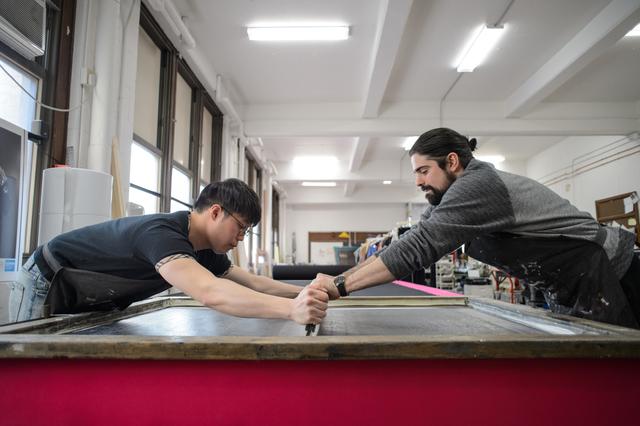
Local sustainable fashion companies in Philadelphia, like Lobo Mau and Grant BLVD, have taken social and ecological impact to a new level. Labo Mau’s use of hemp, eco-friendly screen printing, local manufacturing, and penchant for upcycling serve as an aspirational example for individual consumers and brands alike. Grant BLVD designs with secondhand clothing and preloved fabric to curate unique garments and connects their work with the larger global crises of climate change and poverty through their mission and message.
Grant BLVDLobo Mau
Shay, an EcoLead and intern at Grant BLVD, tells us about the difficulty of navigating this work on the ground.
“Whether it’s becoming a Zero Waste Partner with the City of Philadelphia, which is actually centered around recycling initiatives, or the lack of existing programming and resources to successfully execute sustainable initiatives — these small businesses are essentially starting from scratch and still creating a positive impact”.
– Shay Strawser
FABSCRAP, one-stop textile reuse and recycling resource, opened in Philadelphia on November 15th. A business solution to pre-consumer textile waste, FabScrap Philadelphia will pick up fabric scraps, process by fiber content and recycle with fiber-to-fiber technologies or give local creators the opportunity to reuse materials for a low-cost. Anyone can volunteer with FabScrap for 3 hours and take home 5 pounds of free textiles for their next project.
Use fashion as a STATEMENT
Every stage within the lifecycle of fashion is associated with environmental and social costs, as highlighted by Earth Logic. Fashion is culture. It shapes and is shaped by our lifestyles and communities. I encourage you to continue to use fashion as a statement, not by purchasing more items, but by making intentional decisions that align with your values and consider your carbon and waste footprint. Be conscious of the lifecycle of items — take note of the fabric(s) used, where it was made, and its capacity to move with you as you grow.
Let’s think about the ten-dollar SHEIN pants you bought on Monday: They were most likely manufactured in Guangzhou, China by a young woman who was paid three cents for making this garment. The trendy design was likely conceived less than a week before it was made and was probably copied from an independent designer. The pants are cheap — in price and in quality. From an aesthetic and construction standpoint, they are unlikely to be worth the time and resources necessary to repair them which means they are destined for the landfill.
But, what if you bought one-hundred dollar pants sourced from a sustainable and ethical fashion brand? These pants would be made of recycled materials or with ecologically ethical and locally grownfabrics like hemp or cotton, designed locally and sewn by individuals that are paid a fair living wage.
A higher price point is the true cost of a garment and sustainability. These pants are made of great quality and to last you a lifetime, a garment you can upcycle and eventually recycle with the designer you purchased from in the first place.
You’ve taken the time to learn, and you may have a better understanding of what it means to be a conscious consumer. Although this might be startling, I challenge you to put it into practice by considering the true cost of your purchase -- to people and to the planet -- each time you decide to buy.
This Campus Sustainability month, climate leaders took action to decarbonize their closets and engaged with the community through slow fashion.
Transportation EcoLeads led an EcoReps Excursion and group ride to South Street in Philadelphia, where they shopped second hand at Philly Aids Thrift, Retrospect, and Raxx Vintage.
The Innovation and Entrepreneurship Institute hosted a Sustainable Fashion and Innovative Performance speaker session with Matt Dwyer of Patagonia.
The Green Living cohort completed their week 7 action items for purchasing decisions. With a focus on a circular economy, student leaders were encouraged to walk through four questions:
Why do you buy & consume the products that you do?
Which of those products do you need? Which do you want?
How do you decide what you need vs. want?
Who benefits from you buying those products? Who loses?