
Congrats to Yunhui Ge on getting his newly minted PhD! On April 13, he successfully defended of his thesis, “Using molecular dynamic simulations and statistical models to understand biomolecular conformational dynamics.” Dr. Yunhui Ge will soon be off to sunnier vistas in California to pursue postdoctoral work.
Shahlo presents at the The Symposium for Undergraduate Research and Creativity
On April 13-14, Shahlo Solieva presented her work, “Using Molecular Simulation to Understand the Role of Conserved Residues in an Extremophilic β-galactosidase,” at the Symposium for Undergraduate Research and Creativity. It is a distinct honor to be selected for this University-wide showcase of top undergraduate work.
Due to social distancing, the symposium was held virtually. The upshot: you can see Shahlo’s talk online at https://voicethread.com/share/14064486/
Voelz Lab COVID-19 research in the news
Here’s a roundup of recent articles about the work our lab has been doing with Folding@home and the COVID Moonshot projects to help fight coronavirus:
4/07/20 Temple Now
A distributed computing project takes on COVID-19
4/06/20 Leaps Magazine
Anyone with a computer can join the fight against COVID-19 right now
4/06/20 Bismarck Tribune
Bakken Gas helps power the search for coronavirus drugs
4/02/20 New Statesman Tech
How a supercomputer network of 700,000 PCs is helping to find a Covid-19 cure
3/29/20 Sunday Times (UK)
Gamers against coronavirus
Fighting COVID-19 with Folding@home
Things at Temple have taken an unexpected turn as the global coronavirus pandemic continues to affect all our lives. All classes have moved online and non-essential personnel have been asked to leave campus. Many of our communities are on “lockdown” to enforce social distancing as a measure to prevent the spread of the virus.
At the same time, our lab has embarked on some exciting efforts to use our expertise in biomolecular simulation to help fight COVID-19.
Our lab helps to run Folding@home (http://foldingathome.org), a distributed computing platform enabling us to perform massively parallel simulations. Now, our Folding@home research consortium is focusing efforts on simulating many of the COVID-19 viral proteins that have been recently solved, to inform new drug discovery efforts. The outpouring of support for Folding@home’s fight against COVID-19 has been truly overwhelming, expanding the number of participants by ten-fold, and making Folding@home now the largest supercomputer in the world with > 470 petaFLOPS of processing power.
What can we do with this enormous computing power? Specifically, the Voelz Lab has been working with an international team of researchers to computationally screen potential inhibitors of the COVID-19 protease. Timely high-throughput crystallization work by Diamond Light Source XChem project and the Frank von Delft group at University of Oxford have identified drug fragments that bind the protease, and now the race is on to use these initial hits to drive computational prioritization of compounds to synthesize. Our group, in collaboration with the Chodera Lab and the COVID Moonshot initiative are gearing up to screen tens of thousands of compounds using free energy perturbation calculations. The best of these will be synthesized.
If you want to know how you can contribute by helping at running simulations at home, visit: http://foldingathome.org
If you are a medicinal or computational chemist and would like to submit inhibitor designs for the Moonshot team to synthesize, see: https://covid.postera.ai/covid
If you would like to donate money towards making and testing chemical compounds against COVID-19, visit https://www.gofundme.com/f/covidmoonshot .
Voelz Lab crushes BPS meeting in San Diego!
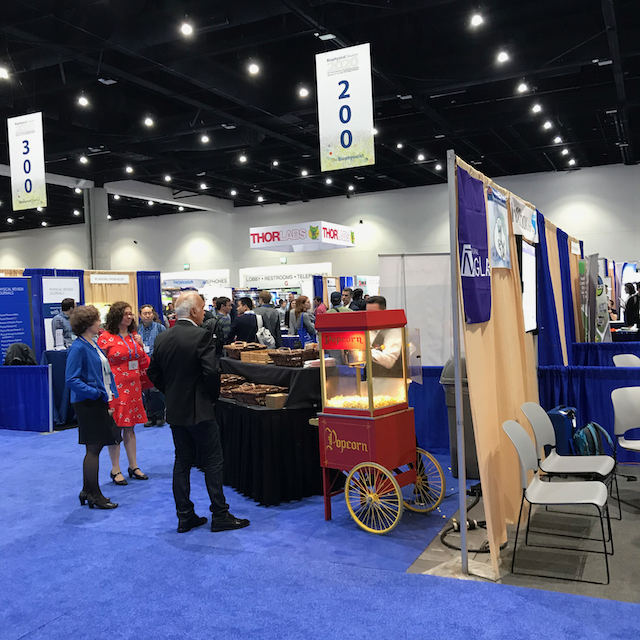
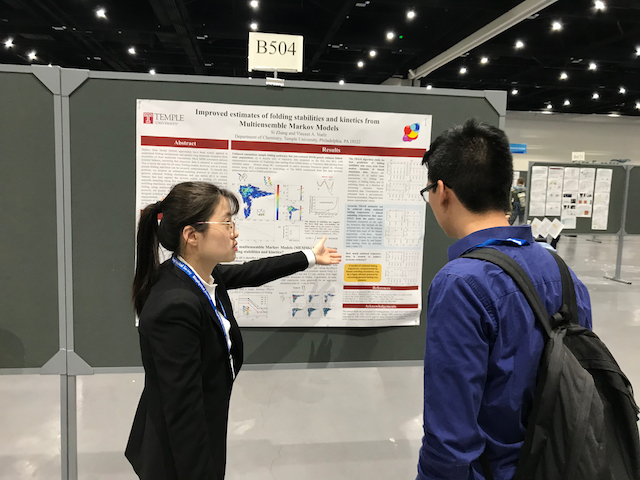
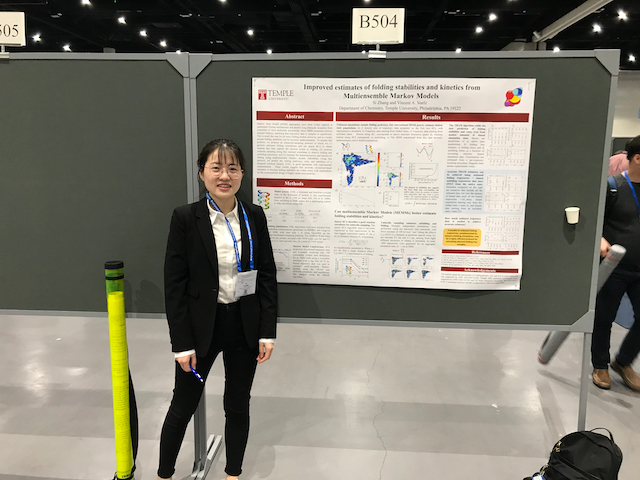
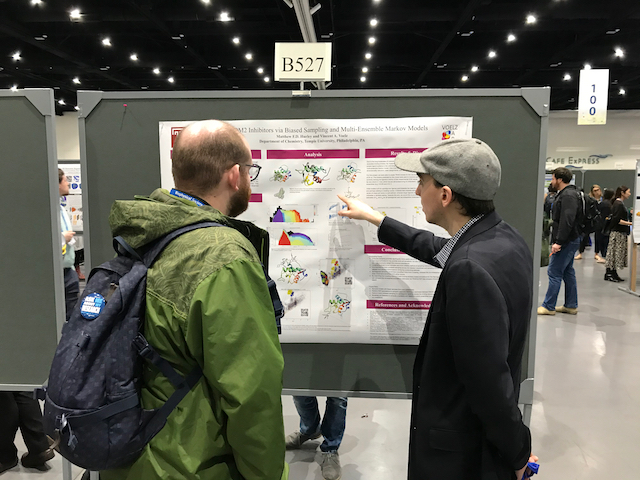
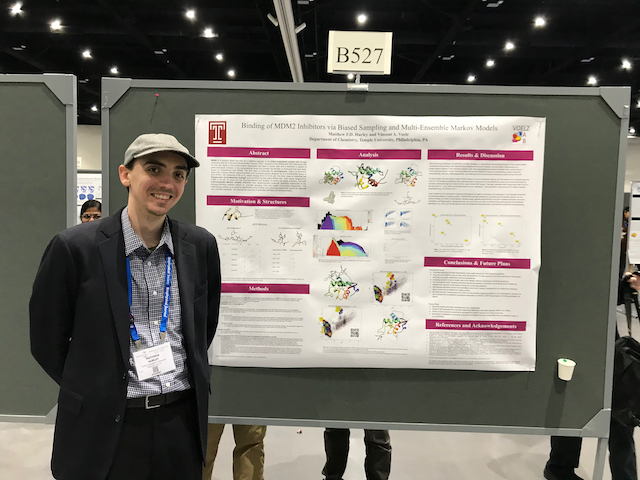
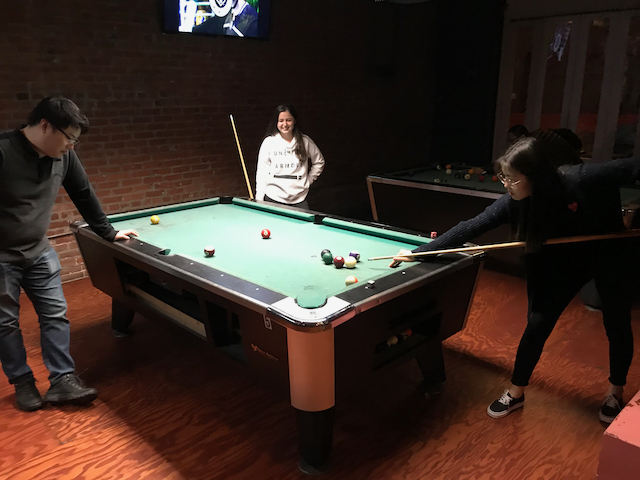
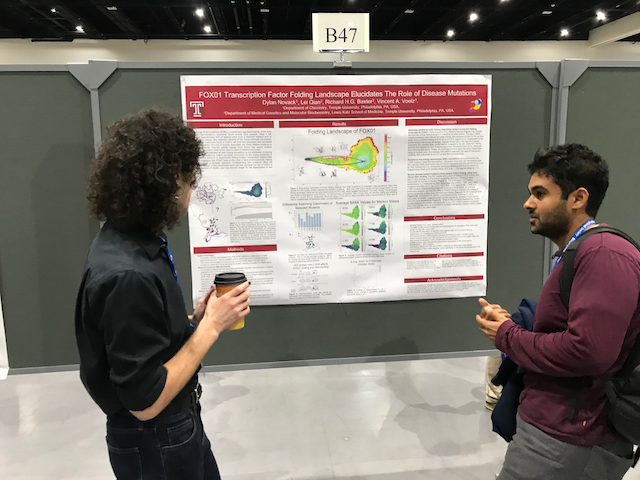
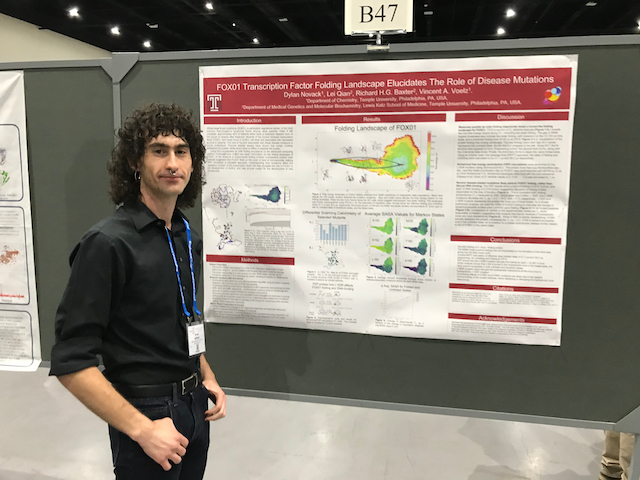
The Voelz Lab made an unprecedented showing at the 64th Annual Meeting of the Biophysical Society in San Diego last week, with eight of us attending! Congratulations to everyone on their presentations! It’s very exciting to see all of the great science coming out of our lab.
Presentations:
- “BICePs 2.0: new tools for Bayesian Inference of Conformational Populations from Theory and Experiment”. Yunhui Ge, Robert M. Raddi and Vincent A. Voelz
- “Efficient estimation of binding kinetics using scaled non-bonded interactions and harmonic restraints”. Yunhui Ge and Vincent A. Voelz
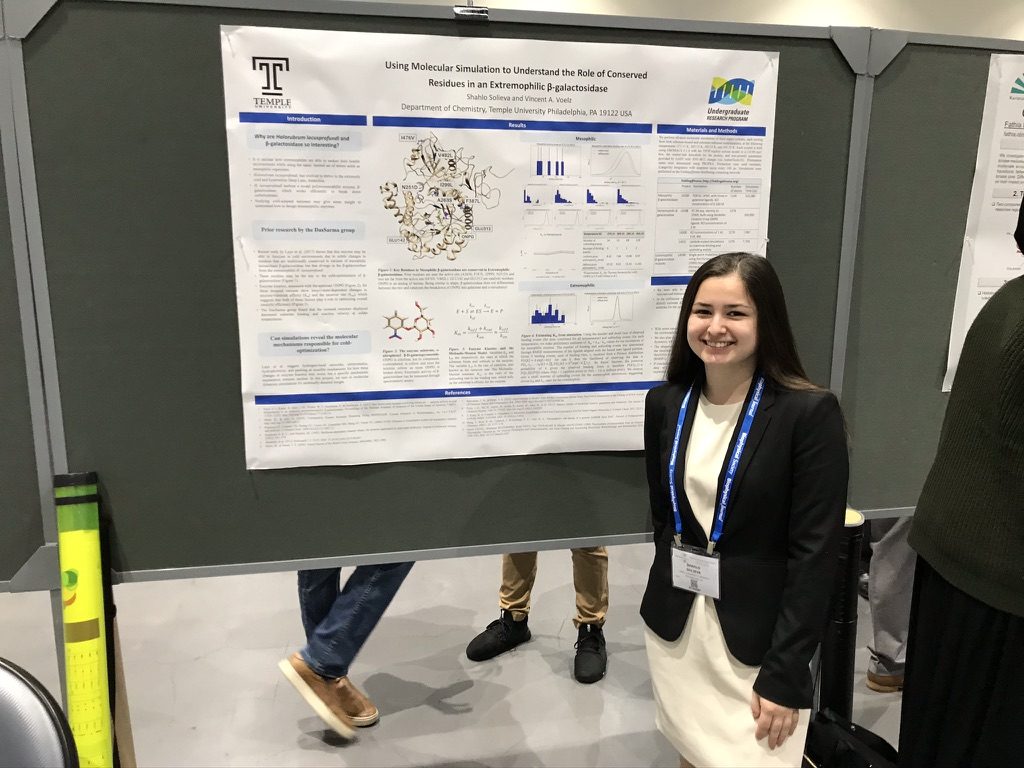
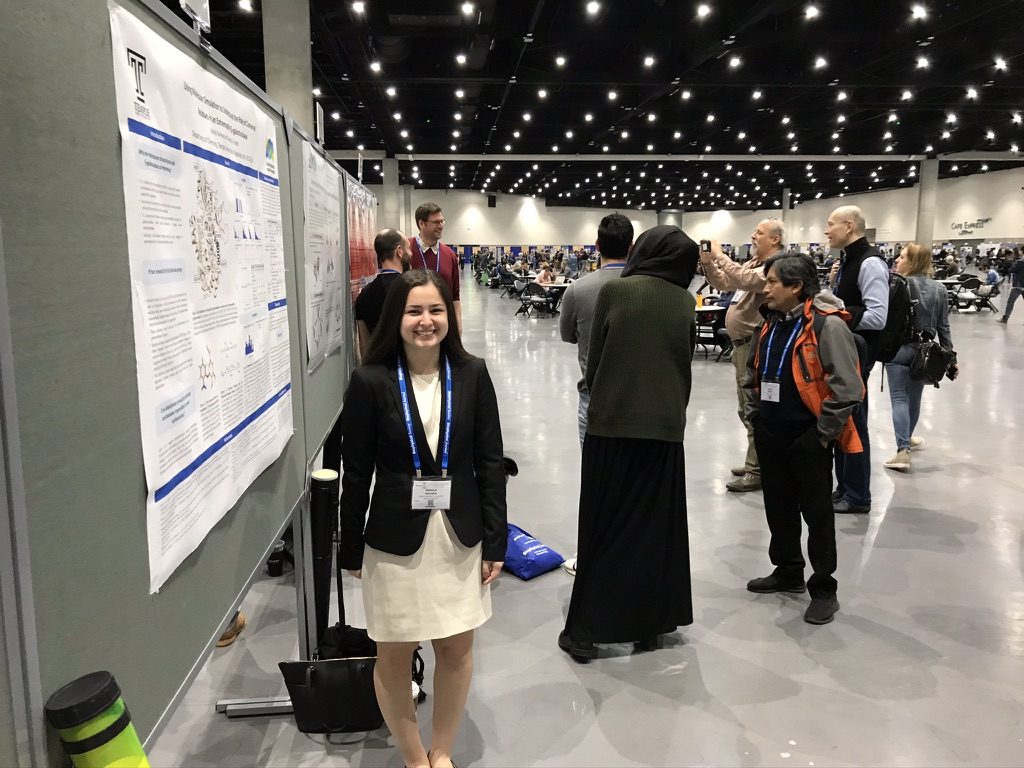
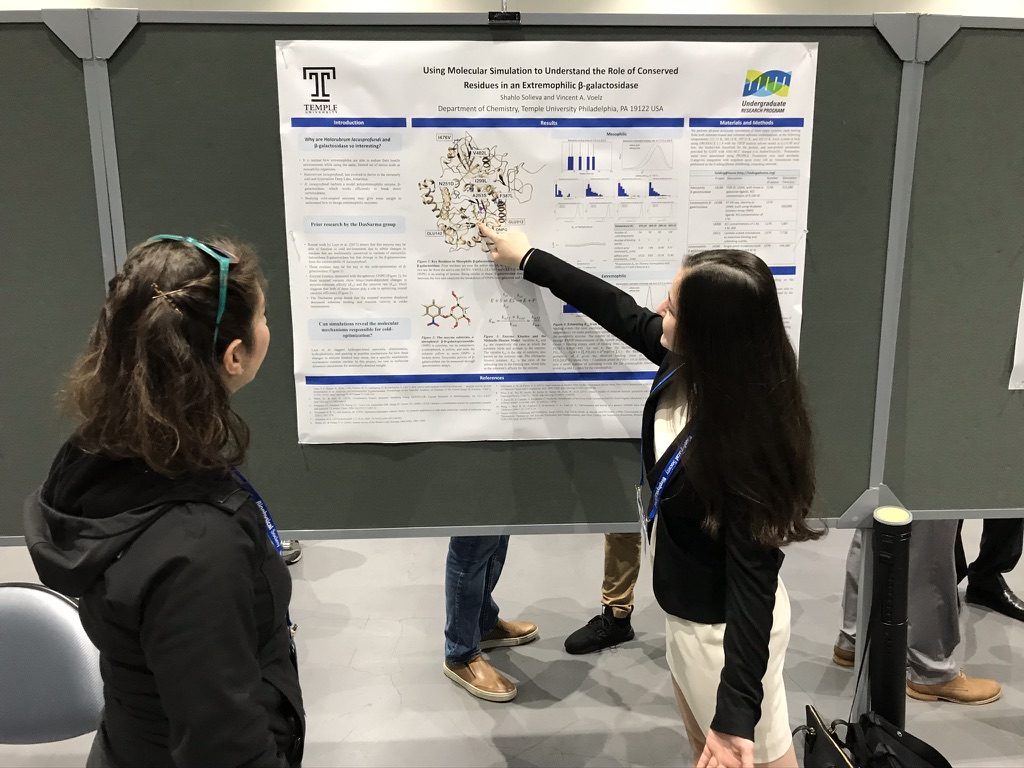
- “Using Molecular Simulation to Understand the Role of Conserved Residues in an Extremophilic Beta-galactosidase”. Shahlo Solieva and Vincent A. Voelz
- “Markov State Model approach to estimating rates and mechanisms of VSL12 peptide to Src-family kinase SH3 domains”.
Robert M. Raddi and Vincent A. Voelz - “Binding of MDM2 inhibitors via Biased Sampling and Multi-Ensemble Markov Models.” Matthew F. D. Hurley and Vincent A. Voelz
- “Improved estimates of folding stabilities and kinetics from Multiensemble Markov Models”. Si Zhang and Vincent A. Voelz
- “FOX01 transcription factor folding landscape elucidates the role of disease mutations”. Dylan Novack, Lei Qian†, Richard H. G. Baxter†, and Vincent A. Voelz










Shahlo awarded a CARAS travel grant
Undergraduate Shahlo Solieva has been awarded a CARAS travel grant to attend the 64th Annual Meeting of the Biophysical Society in San Diego, CA. Shahlo presents her work, “Using Molecular Simulation to Understand the Role of Conserved Residues in an Extremophilic Beta-Galactosidase”, on February 18.
Congratulations Shahlo!
New JCTC paper on inferring conformational ensembles from MD and HDX
Congrats to Hongbin, Yunhui and Asghar on the publication our new paper on inferring conformational ensembles from MD and HDX, now out in the Journal of Chemical Theory and Computation! In this work, we used biased molecular dynamics (MD) simulations to construct a series of Markov Models which are then refined against hydrogen deuterium exchange (HDX) protection factor data using our Bayesian Inference of Conformational Populations (BICePs) algorithm. As part of this work, we also had to develop a new model to predict HDX protection factors from molecular simulation data. As an example, we apply this approach to modeling the partially disordered regions of apomyoglobin.
You can read the full paper here: https://pubs.acs.org/doi/10.1021/acs.jctc.9b01240
New JCP paper on adaptive seeding
Hot off the press is our new paper on adaptive seeding in Journal of Chemical Physics. Congrats, Hongbin!
Hongbin Wan and Vincent A. Voelz. Adaptive Markov state model estimation using short reseeding trajectories. J. Chem. Phys. 152, 024103 (2020); https://doi.org/10.1063/1.5142457
ABSTRACT
In the last decade, advances in molecular dynamics (MD) and Markov State Model (MSM) methodologies have made possible accurate and efficient estimation of kinetic rates and reactive pathways for complex biomolecular dynamics occurring on slow time scales. A promising approach to enhanced sampling of MSMs is to use “adaptive” methods, in which new MD trajectories are “seeded” preferentially from previously identified states. Here, we investigate the performance of various MSM estimators applied to reseeding trajectory data, for both a simple 1D free energy landscape and mini-protein folding MSMs of WW domain and NTL9(1–39). Our results reveal the practical challenges of reseeding simulations and suggest a simple way to reweight seeding trajectory data to better estimate both thermodynamic and kinetic quantities.
Yunhui receives Francis Case Fellowship award
Yunhui Ge has been selected to receive the 2019 Francis H. Case Fellowship Award for outstanding graduate research. The Case Fellowship was established several years ago as a memorial to Professor Francis Case, a truly distinguished member of the Department of Chemistry. It was designed to help outstanding graduate students as they pursue their dissertation research.
Congratulations Yunhui!
Rob receives Guy Allen Award for Outstanding Teaching
The Department of Chemistry has selected Rob Raddi to receive a Guy Allen Award for Outstanding Teaching for the 2019-2020 Academic Year.
Congratulations Rob!