Categories
Act on Climate Stories of Sustainability

Students & Local Climate Action Planning in Pennsylvania

How can college students take climate action in local government? This question is at the core of the Local Climate Action Program (LCAP) under the Pennsylvania Department of Environmental Protection  (DEP). The program matches college students with local governments across the state, then trains both of them through a DEP contractor, ICLEI USA, on how to develop a Greenhouse Gas (GHG) inventory and climate action plan for that government. 

The program’s most recent cohort included three Temple students, so our Office of Sustainability sat them down to discuss their experiences on Earth Day in Stories of Sustainability: ICLEI & Local Climate Action Planning in the Commonwealth.

Creating a GHG Inventory.

After being accepted into the program, the three students, Mark Costanzo, Nicole Somers, and Jada Ackley, received training from ICLEI on creating a GHG inventory tool in Fall 2020. These GHG inventories, as explained by Mark, are lists of emissions sources in the municipality (like homes, energy plants, transit systems, etc.) along with how many CO2 equivalents they emit. These inventories provide crucial information on setting goals of emissions reductions in the later climate action plans.
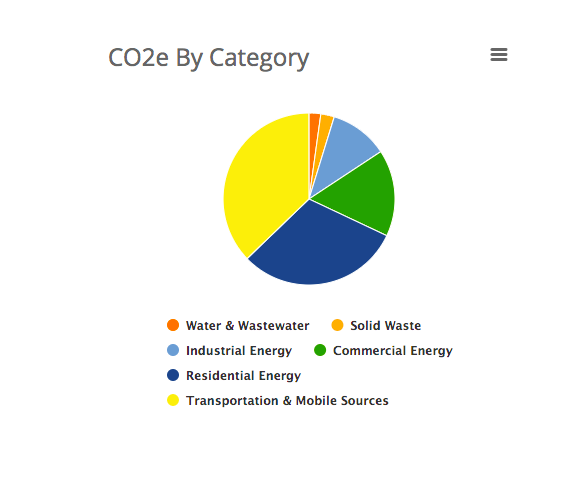
Pie chart of carbon-dioxide equivalents emissions by category for Warwick Township

Students compiled data from local utility companies, transit sources, waste facilities, and more to build these inventories, and soon found that GHG inventories looked different in different places. For example, transportation and residential activities were the major contributors in Warwick Township, PA, the government with which Mark Costanzo collaborated on LCAP.

Local Climate Action Planning.

Students and local governments received additional training in Spring 2021 to create their climate action plan (CAP). These plans, as explained by fellow student Nicole Somers, were meant to reduce GHG emissions while preparing for the impacts of climate change. Accordingly, CAPs include GHG mitigation targets, objectives, and actions, like changing town ordinances to require energy efficiency standards on new buildings, alongside adaptation actions, like expanding green spaces and incorporating climate change vulnerability assessments into future construction plans. Lastly, they developed a monitoring plan to keep track of reductions going forward.
 Image of ICLEI Local Governments For Sustainability.
 Image of ICLEI Local Governments For Sustainability

The third student, Jada Ackley,  discussed the importance of community engagement in any CAP. On one hand, they explained, it helps governments gather information from residents for the plan, but also fosters community support for it. For some examples, Jada used surveys and community workshops to engage residents on what a CAP for Haverford Township needed to include.

Getting Involved.

In her closing remarks, Heidi Kunka, Energy Programs Specialist at DEP and overseer of LCAP, discussed the importance of getting a diversity of perspectives in climate action planning and invited students to fill out an interest form if they may want to apply next year. If you’re interested, check it out!

Everyone has something to gain from fighting climate change, and something to lose from letting it run unchecked.
Categories
Act on Climate

Struggle Space to a Green New Deal

Decades upon decades of racial discrimination have shaped the landscape of who has power and resources in Philadelphia. These inequities remain today and stand to be exacerbated as the climate crisis worsens. So what can we do? The Office of Sustainability hosted Struggle Space to Green New Deal: Recognizing Past Racial and Environmental Injustice to Inform Urban Climate Justice Policy to begin finding some answers

Struggle Space.

At the center of the event was the term “struggle space.” Panelist and professor in Temple’s GUS department, Christina Rosan, explained that the term was coined in passing by an African-American cab driver of hers to describe the systemic injustices he and his community faced: “they got us in this struggle space.” The term clicked and Rosan has since used it to describe historic and continued spaces of racialized disinvestment. 

What does the struggle space look like in Philadelphia?

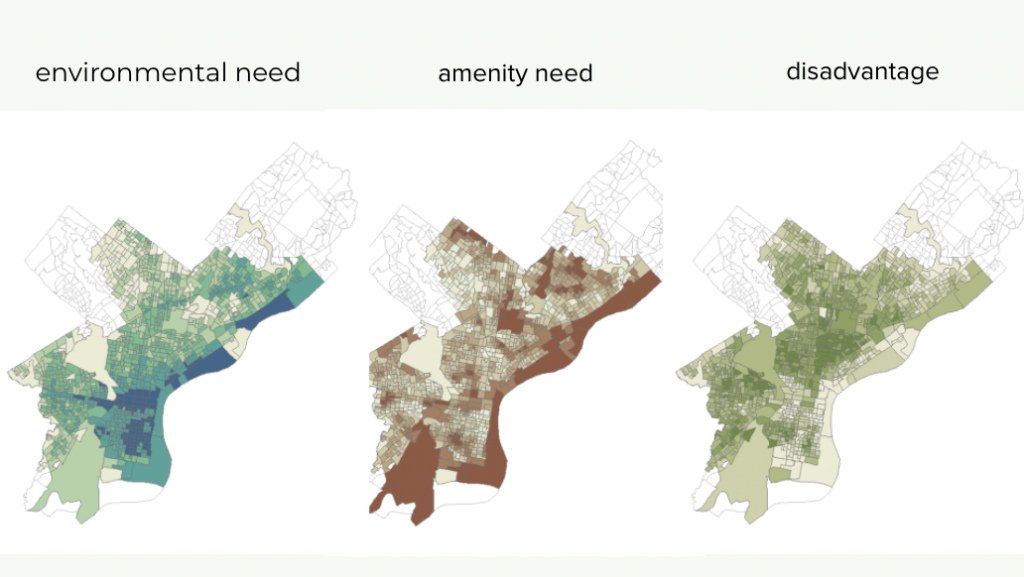
Rosan and fellow panelist and colleague, Megan Heckert, shared an equity index they had developed to help map out the struggle space in Philadelphia. The index serves as the compilation of three other indexes on environmental needs, amenity needs, and areas of socio-economic disadvantage, along with information on existing resources in communities, like schools.

This index is a helpful tool to help quantitatively identify degrees of needing reinvestment across Philadelphia, including resources on which type of reinvestment those neighborhoods may need. That being said, any process of community reinvestment must also include authentic conversations with community members, allowing them to name their needs and design the reinvestment themselves wherever possible.

Struggle Space to a Green New Deal.

Rosan, Heckert, and every other panelist stressed the need for climate action to take equity-based approaches. “Climate planning is doomed to fail,” Rosan said, “if it does not address the struggle space.” In other words, before we talk about a Green New Deal, we need to acknowledge the “Raw Deal” that communities of color in Philadelphia have had and still have.

In Philadelphia, this means acknowledging the history of planning as blatantly discriminatory and racist and simultaneously taking bold action to right those wrongs, urgently addressing issues like rapid gentrification and “green gentrification” that hit communities of color hardest.

The history of this city, and indeed this country, are inseparable racial injustice. We cannot change the past. We can, however, acknowledge it, learn from it, and start creating a city that finally works for all of us for today and every day to come.

Categories
Act on Climate

Climate Policy: A Conversation with Rep. Mary Gay Scanlon (PA-05)

In September of 2020, the Temple College of Public Health hosted several political leaders to discuss Social Justice, Public Health, and the 2020 Election. Most questions posed to the panelists centered around electoral participation. Nevertheless, one question in particular caught our attention.

Just over halfway through the discussion, the panelists were asked to reflect on climate change as a public health issue. U.S. Representative Mary Gay Scanlon, a Democrat from Delaware Country, took to the zoom stage in response.

Courtesy of Penn Environment

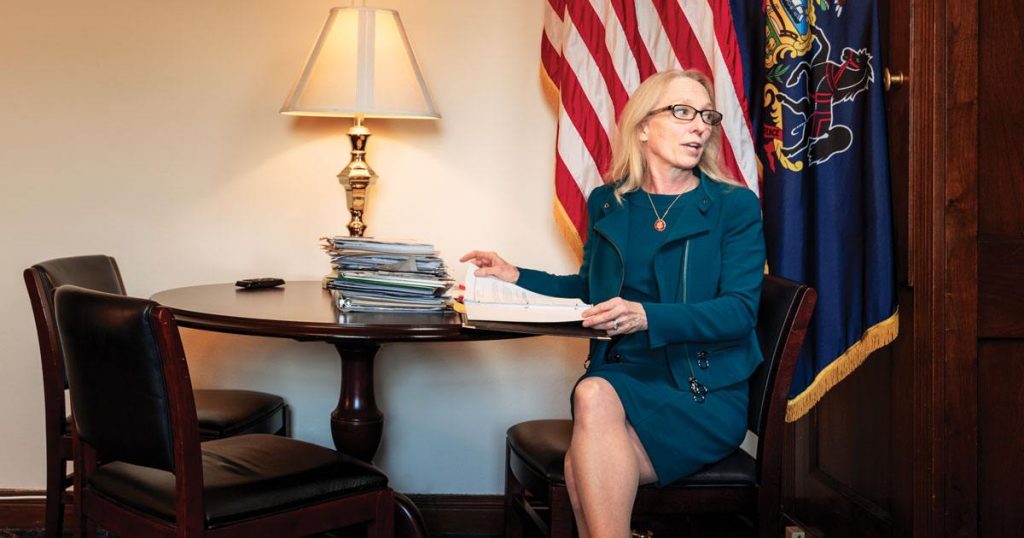
After acknowledging the PES refinery explosion and the trash-burning plant in her district, both being textbook examples of environmental racism, Scanlon provided an overview of some of regulatory confines under which climate action policies operate:

“When I was on the local school board, we had to do some rebuilding. Of course, you want to do it in a sustainable way. But the laws and regulations you operate under require certain things with respect to funding and you can’t raise taxes more than a certain amount in our school districts so… the budget was always a concern. 

“People wanted to put solar panels on and would say, ‘well right across the river in New Jersey all those schools are doing solar panels.’ Well, New Jersey had implemented state funding to incentivize the use of solar energy. We didn’t have that in Pennsylvania so that became economically not possible.”

Scanlon then stressed the federal government’s role in funding state and local climate action. The Representative’s story illustrates a tension between climate action policies and the divisions of power between our governments.

Local governments are reliant on state and federal funding, revenue streams which have withered over the past half-century due to predominance of neoliberal governance — leaving cities, and communities of color in particular, out to dry. This problem is pronounced in Philadelphia, where the state government’s flat tax rate inhibits Philadelphia’s ability to raise revenue. 
Assuredly, there are other revenue-raising tools the city can employ which have gone underutilized. Still the issue remains: much of the funding for a Just Transition will need to come from the federal government.

Categories
Act on Climate

Climate Policy: Microplastics in Philadelphia

America has a Plastic Problem.

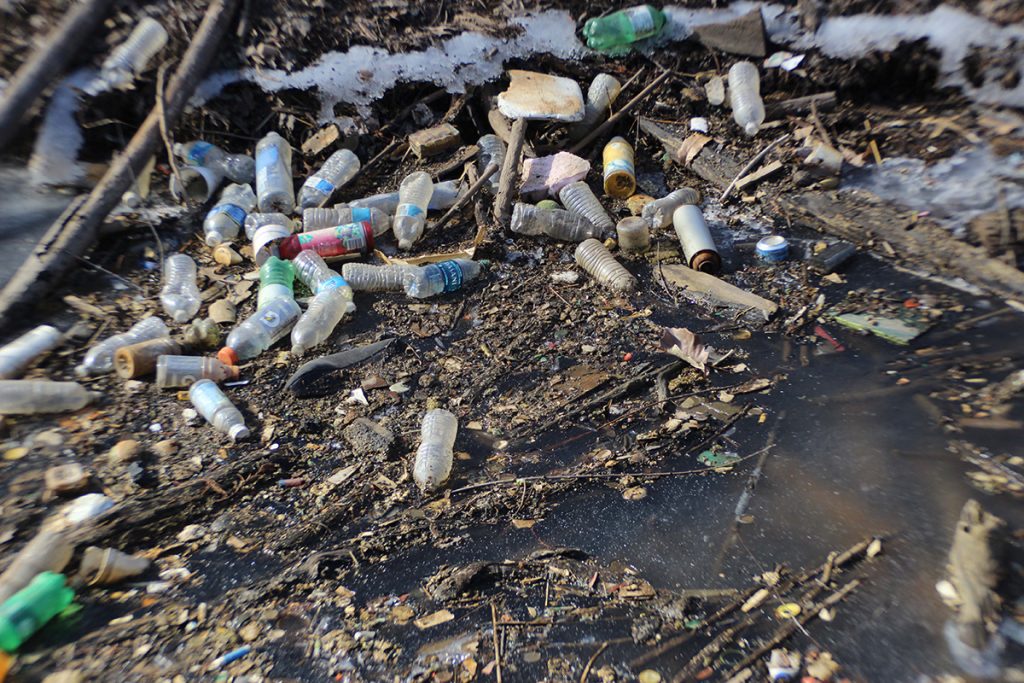
We generate over 35 million tons of plastic waste each year, or enough to fill the Dallas Cowboys football stadium every 16 hours. Most of that plastic is sent to landfills or incinerators, both of which are deeply problematic, while the rest of it floats our roads and meanders its way into our waterways. 

Philadelphia waterways (City of Philadelphia Water Department)

Philadelphia is No Expectation.

In fact, we’re especially problematic. We consume an estimated 1 billion plastic bags a year while the City’s Water Department removes 44 tons of trash from the Schuylkill and Delaware rivers in a single year. But some forms of plastic are easier to remove than others. 

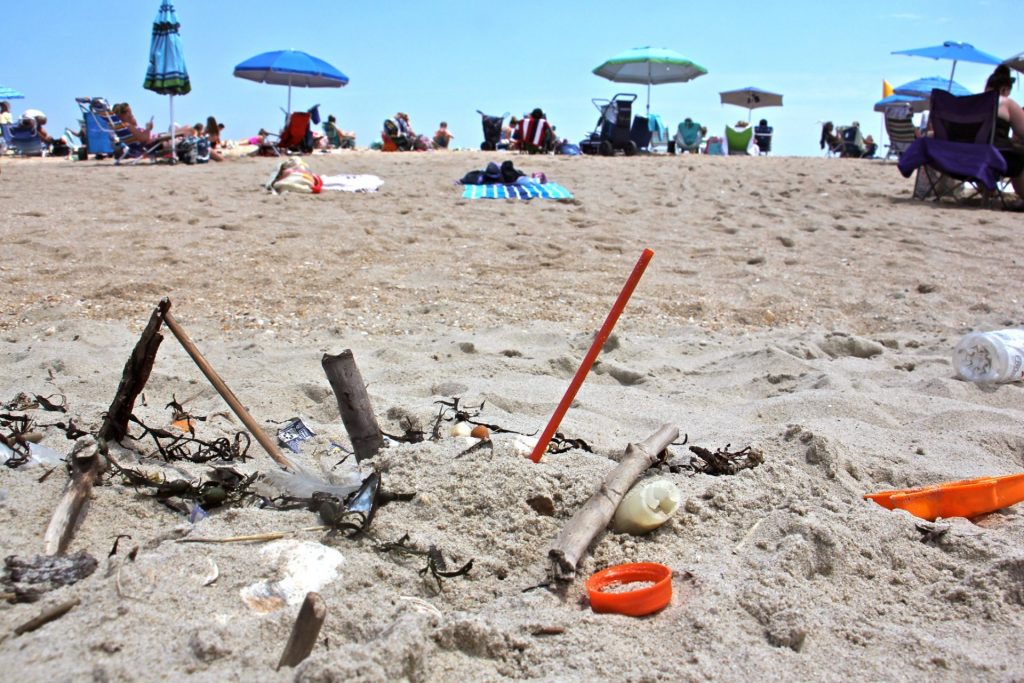
Plastic doesn’t biodegrade like food waste or paper does. It just breaks up into smaller pieces. Those pieces get smaller and small until they are virtually impossible to remove. We call these “microplastics,” or plastics less than 5 millimeters in length. That’s the size of a grain of rice.

Because they are so small, microplastics are then easily consumed by wildlife. As the plastic accumulates in their bellies, they may starve to death. They may suffer but still survive. Either way, they pass those plastics onto the next animal who eats them, who will pass it onto the next one. As it moves through the food chain, that plastic eventually reaches humans

We don’t know the long term effects of microplastics on our bodies’ health or on the overall health of the food chain. However, we do know that the problem is only getting worse. Half of all plastics ever manufactured were made in the past 15 years and, at its current rate of production, plastic is estimated to outweigh all the fish in the sea by 2050.

Monmouth, New Jersey (StateImpact)

In Pennsylvania alone, microplastics were found in more than 50 of most popular waterways.

It’s time for policy change to reduce plastic pollution in the city and state. Sadly, a state law temporarily bans local governments from banning plastic bags. Fortunately, the local governments of Philadelphia, West Chester, and Narberth are suing the state government on grounds that this ban is unconstitutional.

While a step in the right direction, a plastic bag ban is not sufficient to ensure the well-being of human and non-human life in Pennsylvania.

In their report “Microplastics in Pennsylvania,” the environmental advocacy organization PennEnvironment calls for the policies to phase out single-use plastics, establish responsibility for waste producers to manage post-consumer waste, prevent overstocking in the clothing industry, and developing green infrastructure to filter microplastics from our sewage. 

Categories
Stories of Sustainability

Creative Action for Philadelphia’s Rising Temperatures

Southeast Philadelphia park.

Disinvestment in Philadelphia Communities.

Evident in the name, global warming is driving hotter days in many parts of the world. But that heat isn’t felt equally. In Philadelphia, decades of racist lending practices by private banks and the federal government, called “redlining,” along with continued disinvestment have created conditions for some neighborhoods in the city to be 22°F hotter than other areas of the city at times. The consequences are, all too often, fatal for people who are isolated and elderly, and will only get worse as the climate crisis worsens.

There is a great need for equitable heat response systems throughout Philadelphia. But what does equitable heat response look like? How can we prepare our communities for the crises to come? This past Friday, Temple’s Office of Sustainability hosted a mini-panel for Stories of Sustainability Act on Climate: Heat Response & creative action for Philly’s rising temperatures to begin answering those questions and more. 

One panelist, Cheyenne Flores of the City’s Office of Sustainability, shared information on the City’s Beat the Heat: Hunting Park program along with her reflections on best practices. Billy Yalowitz, our other panelist and professor in Temple’s Community Arts Practices program, shared an overview of Heat Response PHL, which is engaging with three Philadelphia neighborhoods to tell their stories on how they deal with extreme heat.

Philly’s Heat Response.

As we dove into best practices for individuals, both panelists highlighted the importance’s of building long-lasting relationships with neighbors, educating yourself on available resources, and participating in community organizations. That looks like knowing how to apply to the state’s Low-Income Home Energy Assistance Program (LIHEAP), saying hello to your neighbors, asking around how you can get involved in your community, and more.

William Cramp Elementary School.

As for the organizations of larger heat response systems, Chey and Billy stressed the importance of honoring and supporting community leaders while resourcing programs with sustained commitment at their helm. Success in heat response projects cannot be measured in a few months or one summer, but over several years and even decades.

Then there is the reality of historical and continued oppression. “There are reasons,” Billy said, “that folks coming from City Agencies and Universities are not trusted when we walk into these neighborhoods. We shouldn’t be… There’s a history to overcome.” Those histories, like Temple University’s history with North Philadelphia, are often painful and must be accounted for whenever we speak of equity or justice. 

In any case, heat response in one neighborhood will look different from heat response in another. Each community has its own unique histories, beauties, and challenges. Our responses should reflect that uniqueness. But we know it can be done.

Categories
Stories of Sustainability

Temple Adventure Bound Organization Shaping Zero-Waste Culture on Campus

Race to Zero Waste #EcoChampions.

As Leave No Trace instructors, these four superstar leaders are shaping zero-waste culture on campus with 85 of their peers and student organization, Adventure Bound.

  • Brandon, certified in EMT, is a nursing major (2024) from Massachusetts. He will be guiding in Northern Maine for a canoe outfitter summer of 2021. 
  • Christina, certified in NREMT, is a Health Professions major (2022) with a minor in Biology, and is on pre-medical track. She helped start the first Adventure Bound organization at Brookdale Community College
  • Issa Kabeer is an Environmental Science major (2021). Issa is an EcoRep with Temple Sustainability and works at hospitals providing emotional therapy
  • Nadia Ramos, certified in LNT, is a psychology major (2022) on the pre-occupational therapy track. She also transferred from Brookdale and peer coaches students with intellectual disability.

Adventure Bound.

Adventure Bound is a club that takes place out of the classroom, a place to meet like-minded, motivated individuals. Adventure Bound facilitates all types of adventures ranging from hiking, biking, rafting and surfing, snowboarding, zip-lining, camping, museum trips, and even going international! With the beautiful city of Philadelphia at our doorstep, they have the privilege to get outside, visit museums, go to concerts, and explore different parts of the city as a group.

As for social impact, Adventure Bounds goal is to partner with local youth — provide outdoor education an mentorship and increase access to green spaces, taking young people on hikes, museum trips, and all types of adventures.

See their Instagram @templeadventurebound for daily updates

Student Leaders Shaping Zero-Waste Culture on Campus.

Since day one, Adventure Bound takes the utmost responsibility for their ecological footprint. As their mission spreads across campus, their conversations are an example of the zero-waste culture Temple students aspire to cultivate. Adventure Bound plans to use their newfound knowledge in many different areas of sustainability. 

  • Mentor program for general members to maintain their Leave No Trace certification.
  • Facilitate regular Leave No Trace workshops within the Student Center, or over Zoom.
  • Online informational brochure with tips on packing sustainably, hitching a tent, hanging hammocks, and sustainable travel ideas, accessible by QR code. 
  • Purchasing sustainable camping and outdoor gear for future excursions with equipment that will allow discarding of waste easily and hear made from sustainable and renewable resources.
  • Paying visits to various thrift stores to purchase things like jackets and cookware

End goal: Utilize knowledge and sustainable gear on camping trips. And also create a vlog for members to be more educated about sustainability for the outdoors and leaving no trace!

Leave No Trace Solutions: 100+ Areas Have Been Restored Nationwide

Leave No Trace strives to educate people about what it means to “leave the environment just how you find it.” As a non-profit organization, its mission is to educate the public on the most effective, environmentally sustainable, and ethical ways to enjoy the outdoors. 

Throughout the next semester, Adventure Bound will be hosting a series of LNT workshops open to Temple students.

Learn more from Leave No Trace.

The Seven Principles.

Leave No Trace’s 7 principles provide an easily understood framework of minimum impact practices visiting the outdoors. Click on the links to learn more.

Plan Ahead & Prepare

  • Helping backcountry travelers accomplish trip goals safely and enjoyably while minimizing damage to the land

Travel & Camp on Durable Surfaces

  • Two primary factors increase how off-trail travel affects the land: durability of surfaces and vegetation, and frequency of travel (or group size).

Dispose of Waste Properly

  • “Pack it in, Pack it out” is a familiar mantra to seasoned wildland visitors. Any user of recreation lands has a responsibility to clean up before he or she leaves.

Leave What You Find

  • Allow others a sense of discovery by leaving rocks, plants, archaeological artifacts and other objects of interest as you find them.

Minimize Campfire Impacts

  • A true Leave No Trace fire shows no evidence of having been constructed.

Respect Wildlife

  • Learn about wildlife through quiet observation. Do not disturb wildlife or plants just for a “better look.”

Be Considerate of Other Visitors 

  • Many people come to the outdoors to listen to nature. Excessive noise, uncontrolled pets and damaged surroundings take away from the natural appeal of the outdoors.

2020 Green Grant Award Winners.

The Green Grant has already enabled Adventure Bound to build their own website. The funds will help Adventure Bound show and emphasize how easy it is to be sustainable while outdoors and how to leave the environment just the way you found it. 

Sneak peak to the Green Grant Application and Abstract.

Temple University’s Green Grant builds upon Temple University’s commitment to sustainability by funding projects led by students that focus on advancing the mission and have a positive impact on our local environment and community.

Learn more about the Temple University Office of Sustainability Green Grant!

Categories
Activism Climate Action Plan Uncategorized

The Sustainability Annual Report Is Here

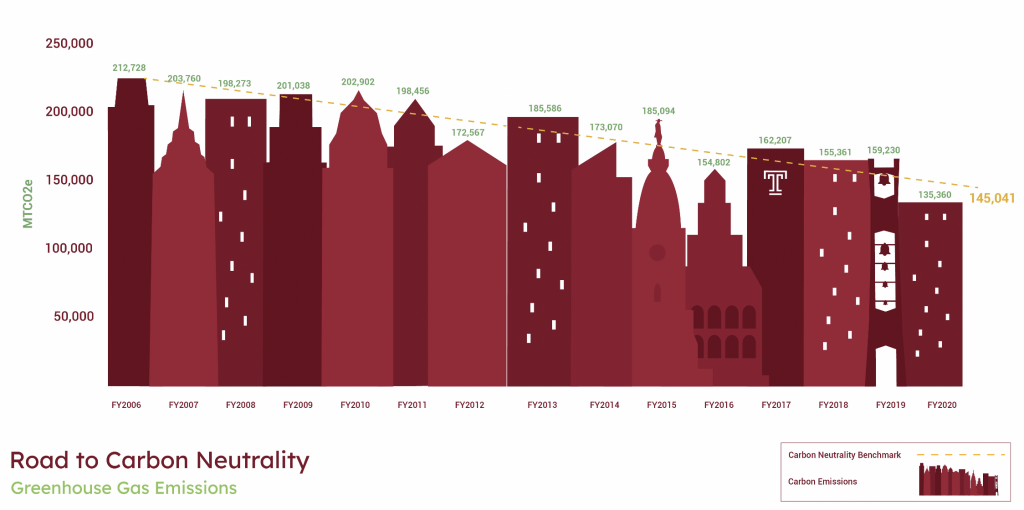
The 2019-2020 academic year started with a renewed strategic vision for climate activism at Temple University. Goals included in the 2019-2020 Sustainability Annual Report were established in the 2019 Climate Action Plan.

The Climate Action Plan, released in April 2019, provided a roadmap for continued progress towards carbon neutrality by 2050. Over 300 members of the Temple community collaborated to articulate goals in 5 different focus areas. These are Academics and Research, Culture, Design, Energy, and Operations. The plan reflects a true commitment from Temple students, faculty and staff to work together to shape a more sustainable and just climate future on campus, in Philadelphia and beyond.

Although the COVID-19 outbreak pushed our report’s release, our students, faculty and staff remained committed to climate action. This Sustainability Annual Report details significant progress towards a more environmentally, socially, and economically sustainable future. Highlights include memorable accomplishments and progress toward goals in all focus areas.

Greenhouse gas emissions progress as seen in the Sustainability Annual Report.
Greenhouse gas emissions progress as seen in the Sustainability Annual Report

Check out the Temple University Sustainability Annual Report. Learn about our commitment to sustainability and our progress to the climate action goals we have in place.

Thank you for being a part of history in the making.

Categories
Race to Zero Waste Stories of Sustainability Uncategorized

Philadelphia’s First Low-Waste Store Front: Good Buy Supply

Co-Founders of Good Buy Supply.
Jason (left) and Emily (right).

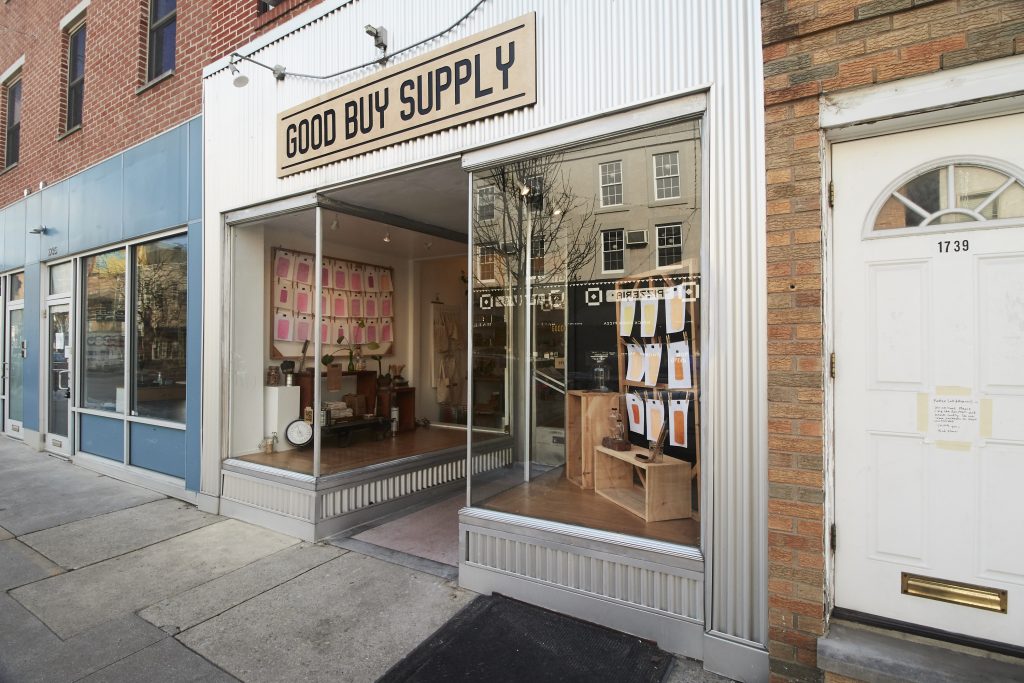
Temple Sustainability was happy to welcome the second Race to Zero Waste #EcoChampion: Emily Rodia! Emily grew up outside of Trenton, NJ and moved to Philadelphia in early 2007 to study Fine Art at The University of the Arts and received a BFA in Painting. Though always being an environmentally conscious person, she never knew how to navigate reducing her waste in Philly. And soon enough co-founded Philadelphia’s first low-waste home goods storefront.

Combining Arts with Sustainable Values.

Emily began her career by creating found object sculpture pieces sourced from trash from the street. A passion for nature evolved as she came to realization of the true, and immediate, trash problem in the United States.

Alarming fact: In the United States, about 4.9 pounds per person is generated each day.

As Emily became more interested in the low-waste movement she eventually saw the need for a storefront like Good Buy Supply. Combining her artistic background and sustainable values the brand was born. Emily, and her co-founder/fiancé, Jason hope Good Buy Supply can become a place to inspire others to live more simply and sustainably.

“I walk to work everyday and bring my reusables wherever I go. This is a little kit of items I have for when I’m on the go. (Water Bottle, handkerchief, reusable tote, coffee Mug, etc.) Bringing these items really helps curb single use items I may encounter in my day.”

– Emily Rodia

Philadelphia’s One-Stop Low-Waste Storefront.

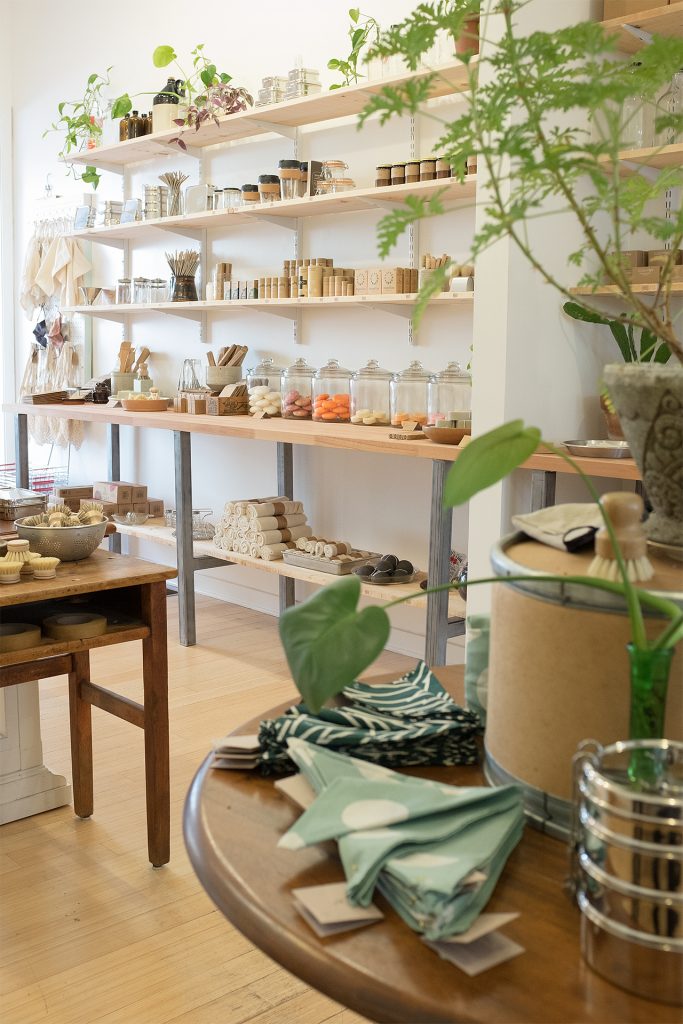
The #1 Goal for Good Buy Supply is Reduction. Emily shares her store motto when customers visit: if you don’t need it, don’t buy it! Emily offers items and products based on strategic placement in finding the best option for the East Passyunk storefront. She puts into consideration what Good Buy Supply is putting into the world, how products are produced, and where products are manufactured.

Good Buy Supply low-waste Store Front in East Passyunk.

Maintaining low-waste practices during COVID-19 while operating a successful business is hard to balance. Partnerships with Terracycle and Rabbit Recycling, ensure that plastic is properly recycled after being received unintentionally or by surprise. 

Emily’s goals are for the good for the people. She encourages Temple students to use a voice for change by advocating for better wages and responsibility to be put on manufacturers. Simply, if people were paid more, then they would be able to live more responsible lifestyles.

Live Low-Waste at Home.

If you don’t need it, don’t buy it. Living sustainably doesn’t have to be complicated or expensive. Good Buy Supply is offering the Philadelphia community a place to reduce waste, live better, and save money down the line – in-person and online. See below to learn how you can visit Emily.

Tip from Emily: Use up your current products and when it’s time to buy new, buy with sustainable intention!

Emily points out that plastic didn’t explode in our society until the 1980’s, thinking back to where we started and living more simply. Do you need these extra things in your life? What can you eliminate?

Snapshot of the GBS bulk bar for simple low-waste living.

Bring your own container to the Good Buy Supply refill station! You can stock up on earth-friendly products like shampoo, conditioner, laundry soap, disinfectant cleaner, and more. FYI: Bulk products are sold by the ounce, ranging from to $0.30 to $1.20 an ounce.

Low-waste shampoo bars from the GBS bulk bar.

Tired of your glass not being recycled properly? Drop off your clean glass jars and bottles to close the loop. As a Bottle Underground drop-off location, they collaborate with Remark Glass to create hand blown glassware.

Did you know? 70% of post-consumer glass will end up in landfills, mostly due to contamination.

Stop into the East Passyunk Location.

Are you a student looking to visit Good Buy Supply?

Cecil B. Moore → Good Buy Supply

  1. Arrive at Cecil B. Moore Subway Station 
  2. Take Broad Street Line towards City Hall for 14 minutes
  3. Get off subway at Tasker Morris Station 
  4. Walk East on Morris Street, turn right on South Iseminger Street, turn left on Pierce Street, and Right on East Passyunk Avenue
  5. You’ve arrived at Good Buy Supply

Good Buy Supply: 1737 E. Passyunk Avenue, Philadelphia, PA 19148

Store Hours: Tuesday – Saturday: 10am – 6pm and Sunday: 10am – 4pm

Contact Emily: hello@goodbuysupply.co

Categories
Race to Zero Waste Stories of Sustainability

E-Waste and Digital Equity with Temple CRC

Temple Sustainability is kicking off the spring semester with Stories of Sustainability: Race to Zero Waste! Our first #EcoChampion is Jonathan Latko, Director of the Temple University Computer Recycling Center. Jonathan hosted a critical discussion with students, staff, and faculty about e-waste in Philadelphia, and the institutional impact of equity and access in upcycling electronics.

#EcoChampion: Jonathan Latko

Jonathan has been with the Computer Recycling Center (CRC) for 17 years after receiving his MBA in E-Commerce from the Fox School of Business at Temple University in 2003.  Jonathan also serves as an adjunct instructor in the Fox School of Business.  He began his journey with the CRC in 2002, as the University grew larger and so did the need for more technology.

“Sustainability is a way of life based on a concept of Kaizen, balancing the triple bottom line. Leaving the planet and people we are interconnected with better off then how we found it”

Stories of Sustainability: E-Waste with #EcoChampion Jonathan Latko

The Temple CRC  is an award-winning operation that gathers surplus computer and electronic equipment from around the university to refurbish, redeploy, donate and, where appropriate, securely dispose of equipment. On average the CRC processes more than 90 tons of equipment each year. Jonathan’s work helps Temple University reach the 2050 climate goals by reducing the need to always buy new, extending the life of the resources we do have, and reducing waste ending up in landfills and incinerators.

Out of Sight, Out of Mind.

E-Waste: Discarded electrical, or electronic devices also known as Electronic Waste.

E-waste has a poor reputation of disposal and improper management. Commonly being disposed of on streets, sidewalks,  in curbside collections, its life cycle never truly ends. E-waste ends up being stored in perpetuity, sent to landfills or to an incinerator and burned. These irresponsible and illegal methods of disposal put people, especially poor communities and communities of color, at risk of the negative health impacts associated with burning electronics.

Find a home for everything at Earth 911 and
Get your waste picked up (for free)

Fast Growing E-Waste Stream.

In 2003, Jonathan asked himself: How do we treat surplus assets? What are its alternative uses? How can we get computers to those that need them?

When Jonathan arrived at Temple, Facilities would throw “old” computers into storage or work with an external waste vendor to remove them from campus.  Jonathan challenged the institution to think of these used machines, not as a nuisance or liability, but as assets. With a bit of e-waste education and a $25 equipment fee attached to each unit purchased, Jonathan got enough money and buy-in to start refurbishing these computers and redistributed them to university departments and employees at a discounted rate, or for free. Now, with a full scale surplus program in place, the CRC is able to provide equipment to students in need, and Temple facilities and departments, and centers on campus. 45% of the computers collected have been redistributed, totaling in over 20,000 computers and 14,000 monitors! 

Jonathan at the CRC.

Q: Is your research project a climate solution? How or why?

A: We live within a finite system where  everything and everyone interconnected and dependent upon each other. Realizing that this system is based on a carbon dependent economy in which our  individual and collective behavior can affect that carbon dependency and thus the effects it has on people and the planet.

Tracking numbers are placed on the additional 115K pieces collected, and are diverted responsibly,  in accordance with state and federal law. The Computer Recycling Center has won 3 awards for their efficiency and their unique, tuition dollar-saving model.

CRC expands with OwlTech storefront.

Trade in, Trade up at Temple

In 2019, the CRC expanded to open OwlTech, a retail, storefront operation in Pearson Lobby. OwlTech has a complete lifecycle of electronics, offers warranty and discounts, a trade in and trade up system, and new products to purchase.

OwlTech in Pearson Hall at Temple University: Main Campus.

Q: How have the challenges of COVID and work from home presented opportunities for sustainable innovation?

A: COVID exacerbated the already widening digital divide but led to the acceleration, acceptance and recognition of the deep value presented by refurbishing and extending the life of existing resources, like computer devices need for those without.

Digital Equity for North Philly.

Technology is an essential tool and can be an equalizer in the economy. To ensure civic and cultural participation, employment, lifelong learning and access to essential services, one needs access to online services. The pandemic posed a problem for the North Philadelphia community. Playing a zero sum game, Jonathan continued the $25 model to refurbish machines and recover costs.  The CRC collaborated with several partners to identify community members in need.

200 laptops were donated to community members in North Philadelphia. Educational, “Ikea Style”,  step-by-step documents were distributed with the computers explaining how to set them up. The CRC also provided customer service, where Jonathan and his student workers offered remote tech support to community members. 

https://youtu.be/0R3mNZIepoE
Watch a snippet from Stories of Sustainability to hear directly from our #EcoChampion about the North Philly Digital Navigator Workforce Development Initiative and building community tech centers throughout the city.

Jonathan’s Not so Secret, Secrets to Success.

  1. Triple Bottom Line
  2. Reduce, Reuse, Recycle
  3. Systems Theory and Logistics
  4. Product Life Cycle
  5. Willing to experiment
  6. Focusing on the holes value proposition
  7. Look at everything for opportunities

Stay in touch with #EcoChampion, Jonathan.

Web: https://crc.temple.edu

Email: jonathan.latko@temple.edu

LinkedIn: https://www.linkedin.com/in/jonathan-latko-a0354a42/

Categories
Activism Climate Action Plan Uncategorized

Urban Bees: Rethinking City Green Spaces

Meet GRASP Award Winner and #EcoChampion

urban bees
GRASP Award Winner and #EcoChampion

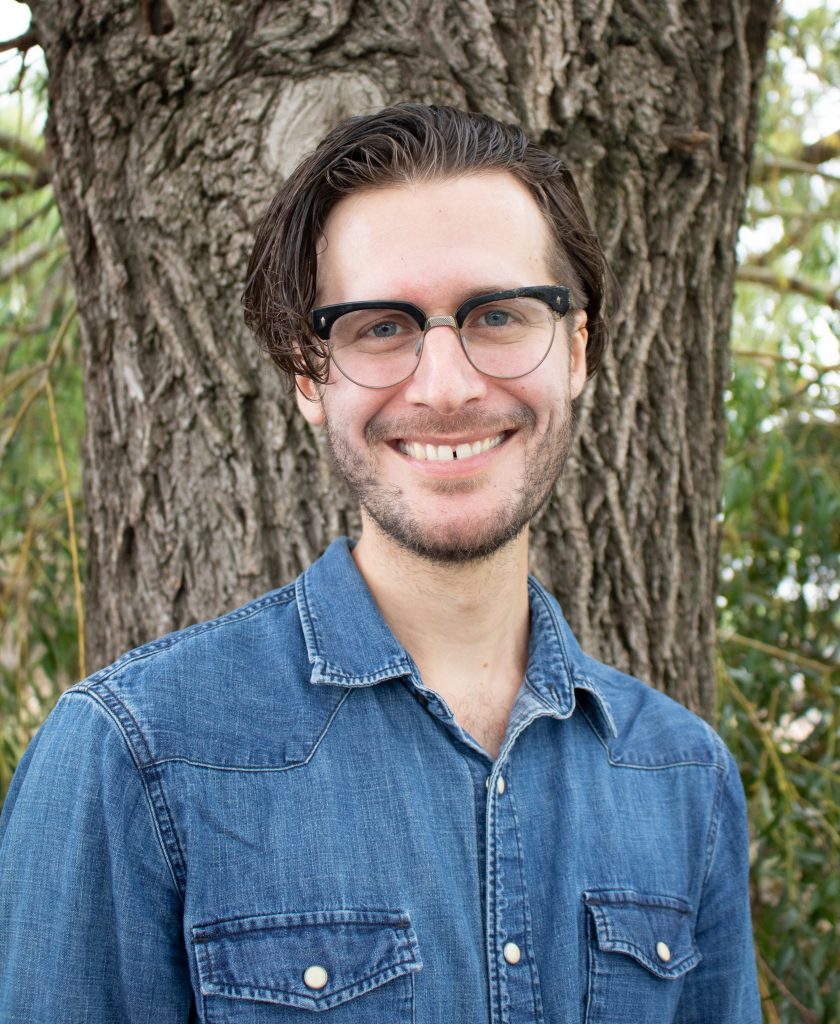
We concluded our Birds, Bees, & Trees series with Austin Martin, the 2020 Graduate Research Award Sustainability Program (GRASP) award winner and Ph.D. candidate in Geography and Urban Studies. Austin presented his findings on urban honey bees and pollinator forage as he examines how urban development and social control factor into urban pollinator systems.

Austin’s research seeks to better understand how capital flows through the urban built environment and what this means for urban ecosystems, specifically the health of native and non-native bees. His research considers the critical, social aspects of sustainability offering integrated and transformative climate solutions to urban communities and organizations. 

Let’s dive deeper into Austin’s research.

https://youtu.be/iMt-qWjV9Lw

The gateway to larger ecological questions.

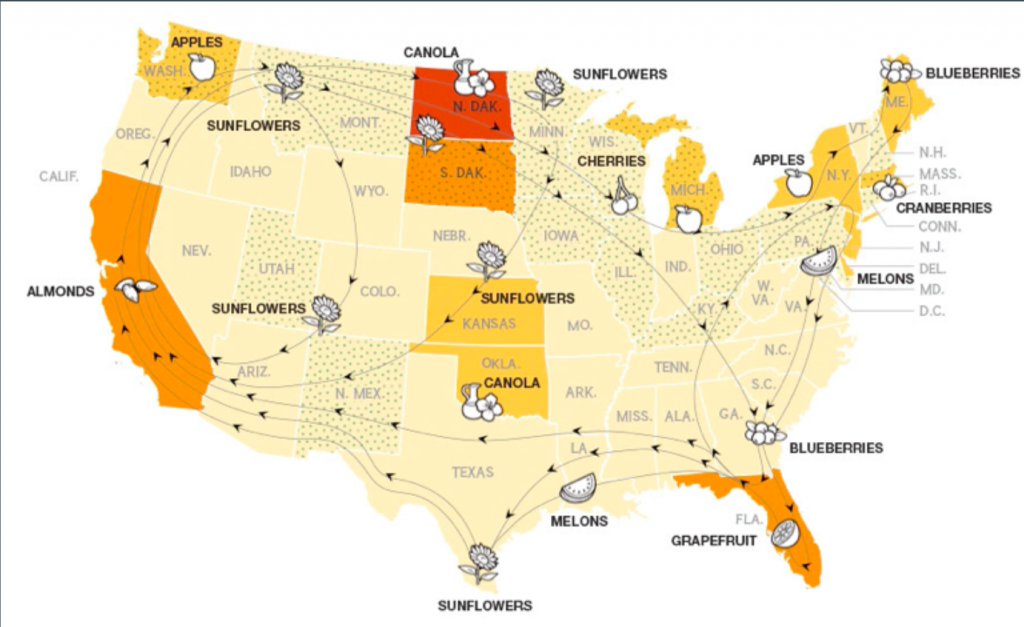
In the past decade, honey bees have rightfully garnered much public attention and concern. They sustain our multibillion dollar agricultural industry, which is heavily reliant on monocropping. Industrial scale beekeepers transport their hives across the United States to employ millions of honey bees as pollinators. As featured on the map, these crops include sunflowers, apples, canola, cherries, blueberries, cranberries, melons, and grapefruit, all across the US.

Austin gained the first-hand experience during his time at the University of Michigan. He learned that honey bees are important not only for our food system but for human-nature connection. There are no other species that humans can cultivate and connect within the way that humans can with honeybees because of their colony scale.

Cities as a haven for bees.

Throughout his research, Austin found that honey bees in rural landscapes were not thriving nearly as well as honey bees in urban landscapes. He saw this same counterintuitive pattern  with honey bees in the urban landscape of South Philadelphia rooftop.

The collapse of beehives begins with the poor biodiversity of flowers for bees to pollinate with. Beehives continue to decline through a series of self-reinforcing feedback loops including various toxins, weather conditions, parasites and poor nutrition. 

Bees normally travel up to 3 miles to pollinate, but not in urban landscapes! In urban areas, the landscapes are rich enough with forage that the bees pollinate locally, increasing their lifespan. People plant new and diverse flowers in cities too. This brings new and unique pollination opportunities to bees.

Rethinking urban green spaces.

The data demonstrates a strong connection between wealth and bee richness. Low income areas had both higher bee abundance and higher richness. Low income communities and stewards of these urban green spaces also suffer from public disinvestment and a lack of capital. In neighborhoods and parks such as Cobbs Creek, we see this manifest in more woody vines, greater disarray in parks and sometimes higher occurrences of crime. This calls for a rethinking of how to manage our urban spaces. 

Austin’s research better characterizes this uneven development across urban landscapes. He challenges our traditional notions of urban greening, asking if what is good for urban greening is truly good for urban ecology. 

As a Temple community, we are in constant pursuit of a more ecologically, politically, and socially viable city. Leveraging this critical study of urban pollinators is an important step in centering community control of public spaces. We can strive for a more just and sustainable commons which equitably serves all Philadelphians, our flora, and our fauna. 

Insight from Austin.

“As a beekeeper, I have learned that a good pesticide to use is called Oxalic acid which is relatively benign to the bees and kills the mites in the hive.”

“My favorite bee is the Blue Banded bee native to Australia and of course honey bees with my childhood connection.”

Contact Austin: aumartin@temple.edu

Check out the Philadelphia BeeKeepers guide!

Learn more about the GRASP Award!

The Temple University Graduate Research Award Sustainability Program (GRASP) advances the university’s goal of expanding sustainability research by providing funding to a graduate student research project focused on sustainability.