Categories
Act on Climate Activism Climate Policy Digest Environmental History Uncategorized

Held v Montana: America’s youth combat climate change

Love them or hate them, the founding fathers of the United States were wise to design a constitution with change and reinterpretation in mind. After all, in their time, concepts such as online privacy, modern firearms, and racial equality were nearly unfathomable—there was no way for them to predict the future, and so there was no way they could cover every single legal issue in an unchanging document. This intentional flexibility is what has allowed crucial social justice cases such as Brown v Board and Obergefell v Hobbes to be decided in favor of progress. It has also allowed sixteen adolescents from Montana to challenge the state and federal government on the biggest human rights issue of today: climate change.

Facts of the Case 

In 2020, the young plaintiffs of Held v Montana joined with Our Children’s Trust, a nonprofit law firm focused on the youths’ rights to a safe and stable climate. The suit was filed against the state of Montana, with a claim that the government’s lack of acknowledgement towards climate-related environmental degradation went against the state constitution, which guarantees residents “the right to a clean and healthful environment,” and stipulates that the state and individuals are responsible for maintaining and improving the environment “for present and future generations”. 
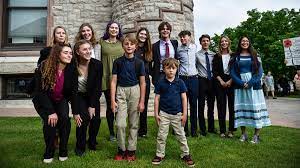
Plaintiffs of Held v Montana

The plaintiffs have joined together from across the state, ranging from two to eighteen years old at the beginning of the trial. The youngest plaintiff is now a five-year-old boy with respiratory issues worsened by climate change-related wildfires, and the oldest is twenty-two-year-old Rikki Held, who claims that climate change has made supplying water to her family’s 7,000-acre ranch difficult. Other notable plaintiffs include the Busse brothers, who live just outside of Glacier National Park and Sariel Sandoval, who grew up on the Flathead Indian Reservation. 

Despite being from diverse backgrounds, the plaintiffs have all felt the impact of climate change in Montana, whether it be from increased wildfire smoke, eroded hiking trails, water scarcity, or loss of traditional subsistence methods. As Lander Busse, the older of the two brothers, states: “A lot of this is just rooted in how many Montanans, including us, live life on an everyday basis, and how ingrained the wildlife and the land and the nature is in who we are.” 

Montana and Fossil Fuel

More often than not, climate change is a difficult issue to seek justice for because of the variety of greenhouse gas emission sources. After all, it would be a tedious and drawn-out legal battle if the plaintiffs in this case intended to go after high energy factories or fossil fuel refineries in the state. However, the plaintiffs of Held v Montana are accusing a government of going against its own constitution, which makes the case concise.
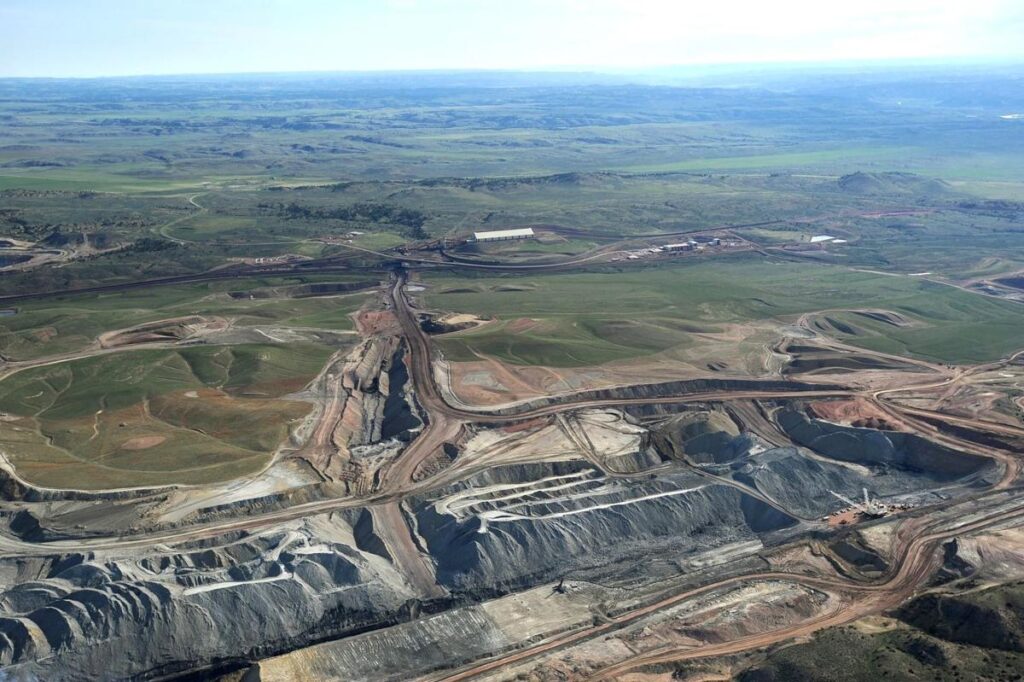
Surface coal mine in Decker, Mt

The plaintiffs argue that Montana has “extensive support for fossil fuels like coal, oil and gas”, and that it has a duty to address climate change. The state responded to the claim by disputing the relationship between the fossil fuel industry and climate change and denying the pattern of increasingly severe weather systems in the state. It is important to note that just before the trial began, language was added to a piece of legislation from 2011 which explicitly prevented Montana’s EPA from evaluating greenhouse gas emission/climate impacts in and beyond Montana’s borders during project approval, known as the MEPA Limitation. If you aren’t allowed to report on climate change, it becomes easy to deny any potential causes. 

Much like climate change is truly a bipartisan issue, this case is another example of the political power the fossil fuel industry has on politicians across the aisle. When the case was first filed, Montana’s democrat governor Steve Bullock called climate change “one of the defining challenges of our time”, and then defended the state against Held’s claims. Similar actions from West Virginia’s democrat senator, Joe Manchin, have happened in the past.  
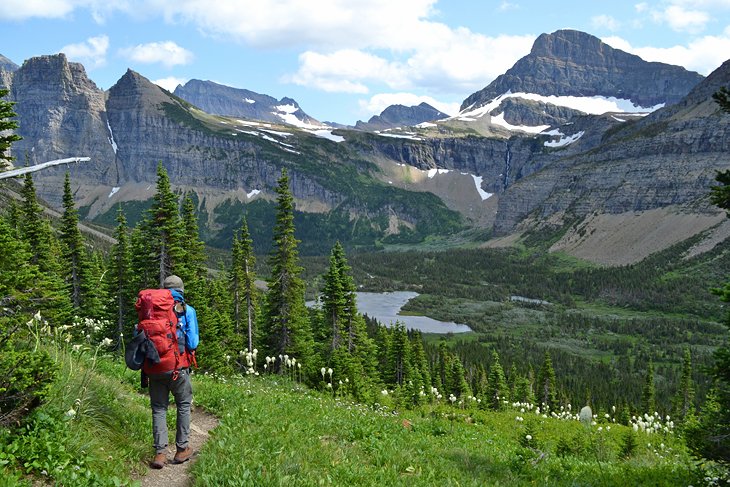
Montana’s Glacier National Park provides access to the great outdoors, but is not safe from rising temperatures

When a state protects the fossil fuel industry regardless of party, it is usually due to a historical reliance on the industry. Montana’s original constitution was drafted in 1889 and was heavily influenced by mining executives. According to Michelle Bryan, a law professor at the University of Montana, “Some historians called it a corporate colony: all the profits were going out of the state and residents weren’t seeing the benefits.” By that logic, the 1972 constitutional amendment which first defined citizens’ right to a safe environment was “Montana’s declaration of independence from corporate mining.” Even so, Montana is the fifth largest coal producing state and the 12th largest oil producing state in the country. 

A Landmark Victory

After much deliberation, Held v Montana resulted in a victory for the young plaintiffs in early August. District Judge Kathy Seely determined that Montana’s emissions, coming from 5,000 gas wells, 4,000 oil wells, four refineries and six coal mines, proved to be a major factor in affecting climate change. The decision was easy: beyond the scientific evidence of fossil fuels contributing to climate change, the defendants also failed to provide any evidence proving the MEPA Limitation was in the best interest of the government.  As a result, the MEPA Limitation is officially unconstitutional, as well as a different piece of Bill 557, which would allow Montana agencies to approve permits without an evaluation of greenhouse gas emissions. 
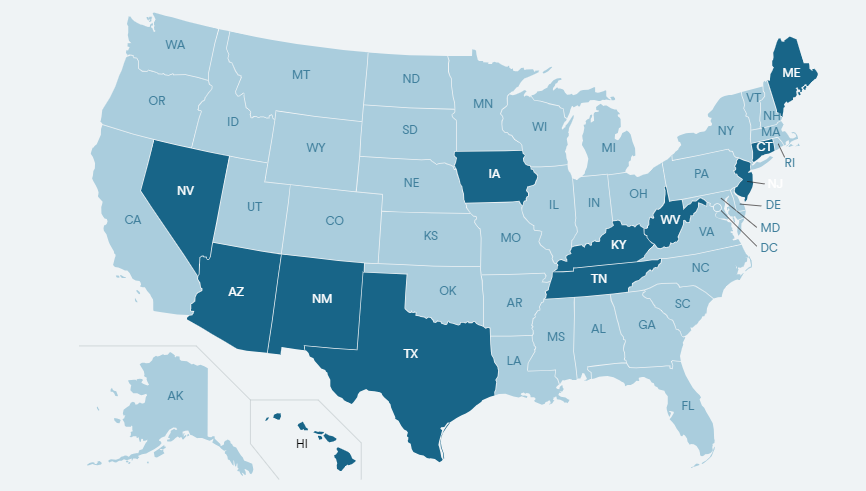
Map of Current Green Amendment Legislation via National Caucus of Environmental Legislators

As one of the first victorious court cases to identify climate change as a constitutional issue, and as a powerful example of young people’s dedication to environmental justice and civic duty, Held v Montana is a momentous victory that will alter the way we talk about climate change forever. The victory in Montana sets an important legal precedent for similar cases that are already moving forward in Hawaii, Utah, and Virginia. New York and Pennsylvania also have state constitutions that recognize the right to a clean environment, and nine other states are currently proposing their own “green amendments”, including Kentucky, Texas, and Maine. Of the states mentioned, several (and Pennsylvania in particular) have a long, contentious history with the fossil fuel industry and are suffering the environmental consequences. As the news of victory spreads, so will the confidence of young environmentalists across the country, and with hope we will soon see a wave of progress towards the end of climate change. 
Categories
Act on Climate Activism Earth Day Race to Zero Waste

Move-out of your apartment sustainably!

With a little planning you can donate and recycle most everything you might otherwise end up on the curb. 

Every spring, thousands of students move out of apartments all over Philadelphia. Unfortunately, this process creates a lot of trash and can negatively impact our neighbors.  

But here’s the good news; it doesn’t have to be that way! There are so many resources available here in Philadelphia. With just a little bit of planning, you can have a positive impact on the environment as well as your community. 

Furniture Donation

To successfully donate your furniture, it will take a little bit of planning. Some of the resources below offer pick-up services and request that you book an appointment a minimum of a week in advance. Others require you to drop off your donations at the location.  

Looking to maximize your impact, see if your neighbors have furniture to donate as well. 

Re-Store

Re-store is Habitat for Humanity’s discount home improvement store. 100% of ReStore profits go to build and repair homes in Philadelphia. 

How to donate: TUmove has partnered with Habitat for Humanity during peak move-out weeks. You can schedule a furniture donation pick-up through the TUmove website.

Not moving out during peak move-out weeks? You can schedule a pick-up directly with Habitat for Humanity Restore or drop-off directly at the store Tuesday-Saturday from 10am-3pm. 

Cost: Free! 

Philadelphia Furniture Bank 

The Philadelphia Furniture Bank (PFB) furnishes more than 1,400 homes annually for Philadelphians exiting homelessness.  

How to donate: PFB offers two pick-up services. Click here to learn more and to schedule a pick-up. 

Cost: A small fee is charged to cover the cost of operating the service. Fees vary based on pick-up service. 

Goodwill Donation Center 

This national non-profit provides education, job training and career services that help individuals faced with barriers to become competitively employed. 

How to donate: Goodwill accepts furniture donations via direct drop off at their donation centers and stores. Click here for directions. 

Cost: The cost of gas if you have your own vehicle. 

Clothing Donation 

After swapping or selling your clothes, donation is the next best thing. Most of the resources require you to bring your donations directly to the store. Luckily all are just a short distance and accessible via SEPTA. 

Circle Thrift 

Circle Thrift sells items at a reduced price to members of Fishtown, Kensington, and South Philadelphia. 

How to donate: Drop off only. Click here for directions. 

Cost: Free 

Philly Aids Thrift 

This non-profit supports local charities by taking donations and selling them at their thrift store. Proceeds are distributed to local organizations involved in the fight against HIV/AIDS. 

How to donate: Drop off only. Click here for directions. 

Cost: Free 

Retrievr 

Retrievr is a pickup service that diverts waste from landfills by recycling or re-selling unwanted clothing and electronics. 

How to donate: Schedule a pickup here

Cost: Free or up to $10 

Categories
Act on Climate

Energy, Electricity, and the Climate Crisis

Modern American society crumbles without energy. Employers who store all their files online, young drivers of gas-powered cars who rely on Google Maps to get where they’re going, residents who pay their rent and gas-powered utilities online: all their lives and operations fundamentally change without energy.

Given our reliance on energy, one would think that we all knew more about where it comes from and how it’s related to the climate crisis. But many of us don’t. And too few of us realize why that’s a problem.

So where does our energy come from? How does it shape the climate crisis? And what can we do about it? Let’s get to it!

How is my energy generated?

Different machines rely on different forms of energy. For instance, most forms of transportation in America rely on fossil fuels, from the gasoline that fills your SUV to the gasoline that powers the bus you take to work. Here, we’ll focus on how electricity is generated (you’ll see why soon).

U.S. energy information administration

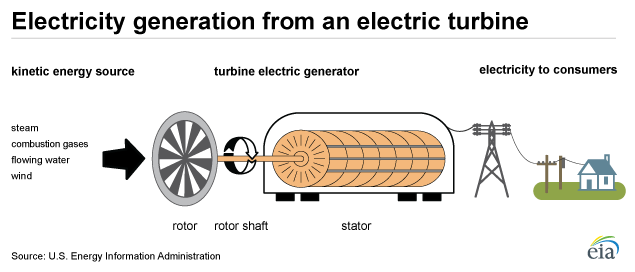
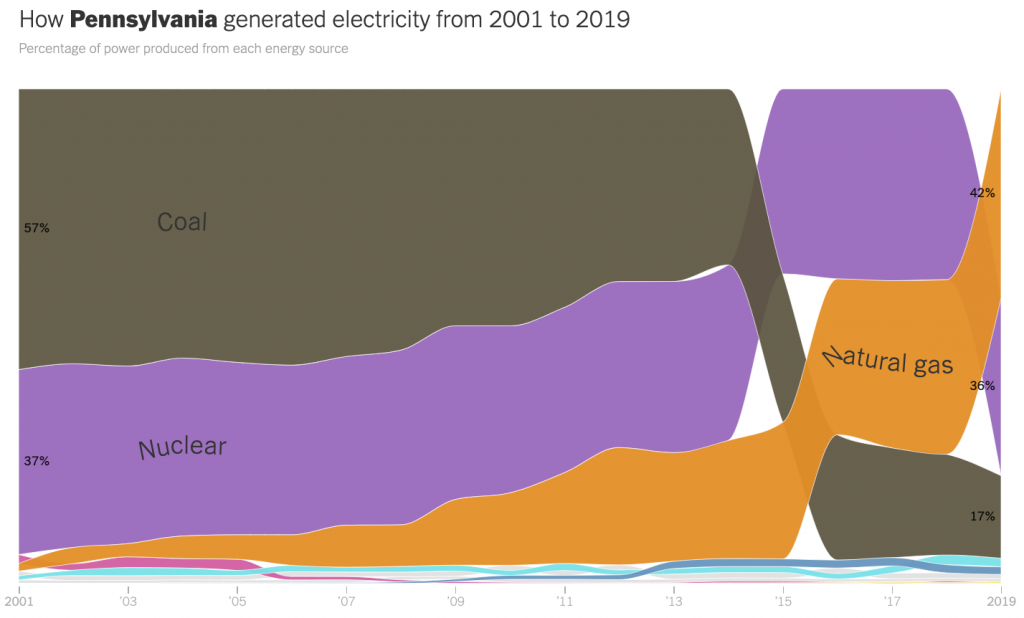
Most electricity generated today is done by pouring water (in dams) or steam (in most U.S. power plants) through a wheel (i.e. rotor), which spins a turbine. A generator converts the energy of the spinning turbine into electricity. As shown below, most power plants in the United States, and Pennsylvania, use fossil fuels to boil water into steam. They then funnel that steam through the turbine to generate electricity.

how Pennsylvania generated electricity from 2001-2019

In Pennsylvania, a measly 5% of the Commonwealth’s generated electricity comes from renewable sources. Chances are, the outlet you use to charge your phone is delivering you dirty energy. Why is this the case? Well, let’s talk about how you get your electricity.

How do I get my electricity?

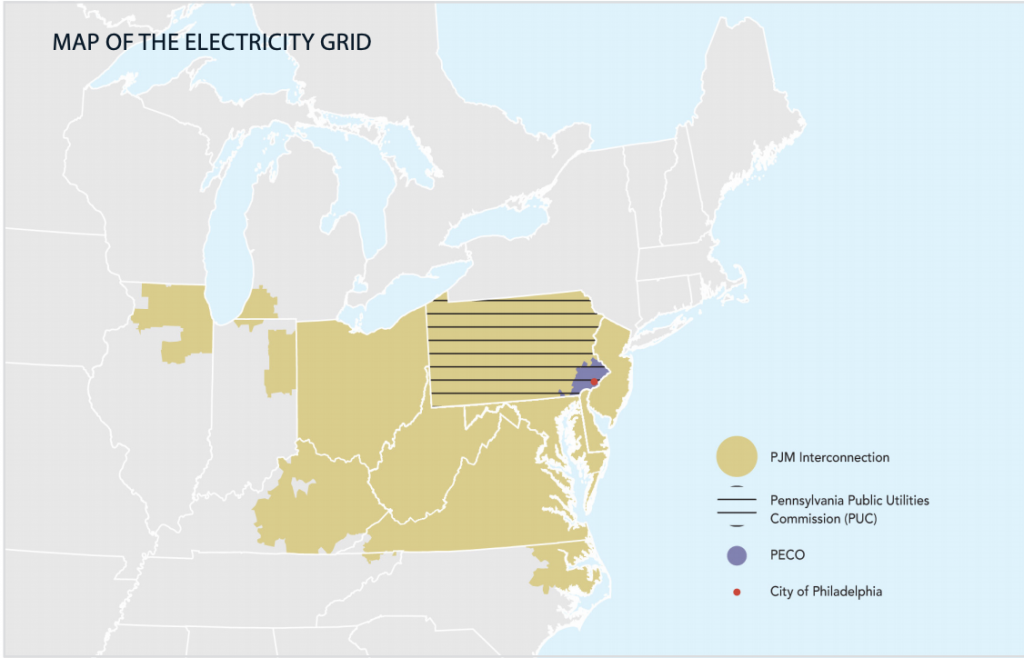
Our electricity system, dubbed “the grid,” is complex and confusing. Let’s start with a broad view. The U.S. does not have a national grid, but a host of Regional Transmission Organizations (RTOs) systems overseen by the Federal Energy Regulatory Commission (FERC). The RTO from which Pennsylvanians receive their electricity is from the Pennsylvania-New Jersey-Maryland Interconnection, or PJM, shown below.

map of united states with overlapping regional utilities, powering our future: a clean energy vision for philadelphia
Map of the United States with overlapping regional utilities, Powering Our Future: A Clean Energy Vision for Philadelphia

PJM controls the wholesale electricity marketplace across 13 states, including Pennsylvania, and does long-term planning around what fuel sources are used to generate electricity, where that electricity is generated, and how it is sent to places that need it. Each state sets its own regulations on PJM. Pennsylvania’s Public Utilities Commission (PUC), for instance, determines how much your electricity costs, i.e. “set rates.” At the municipal level, the Philadelphia Electric Company (PECO) distributes electricity to residents.

Importantly, PECO is owned by Exelon, a for-profit energy company that owns more than a dozen nonrenewable power plants in the state.
lightbulb

This trend is not uncommon. Many utility companies have deep investments in the burning of fossil fuels. Many are also dangerously close to their PUCs and respective governments, bordering corruption. For instance, FirstEnergy, an energy company operating across PJM and throughout Pennsylvania, recently spent $61 million in bribes on Ohio lawmakers to pass a nuclear energy bailout law. The energy companies, who are guaranteed monopolies from the state, siphon profits off of ratepayers, and because media outlets rarely cover these stories, few people in the public know enough to care about it.

Energy and the Climate Crisis

Energy is the glue that holds modern society together, but that glue bears the stain of fossil fuels in Pennsylvania. 

From the gas in our buses to the plastic of our candy wrappers, fossil fuels have infiltrated almost every aspect of our lives. As a result, using energy or energy-intensive products exacerbates the climate crisis. However, it doesn’t have to be this way. We can decarbonize our grid and our economy. But we would need to electrify everything first.

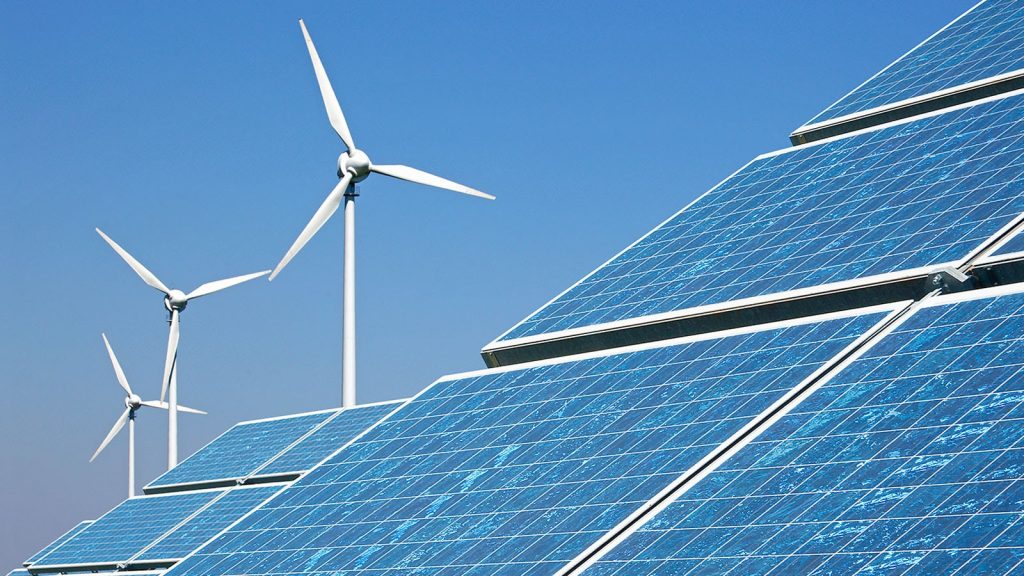
solar and wind power

Renewable energy, like that of solar power, does not operate like liquid fossil fuels. Remember that most power plants burn fossils to spin turbines and generate electricity. In contrast, solar energy is converted into electricity almost immediately. This means that renewable energy is best suited to serving electrical devices, like computers and medical equipment. This also means it’s poorly suited for machines that are directly reliant on liquid fossil fuels, like airplanes and gas heating units. This is a serious problem, considering that electricity accounts for 28 % of America’s greenhouse gas emissions.

So we can decarbonize the grid, but that won’t decarbonize the economy. Doing that will require us to electrify everything. Simply enough, we need to replace our machines that rely on fossil fuels with machines that rely on renewable energy. However, because we have delayed the transition for so long, we need urgent and rapid mass action, including political and social movements.

Categories
Act on Climate

Civilian Climate Corps

Historic heat waves are sweeping the Northwest with roads buckling under heat stress and hundreds already pronounced dead. Climate-related crises like these are becoming commonplace for younger generations and will require creative action to confront. But one thing’s for sure: tackling the climate crisis will take a lot of work.

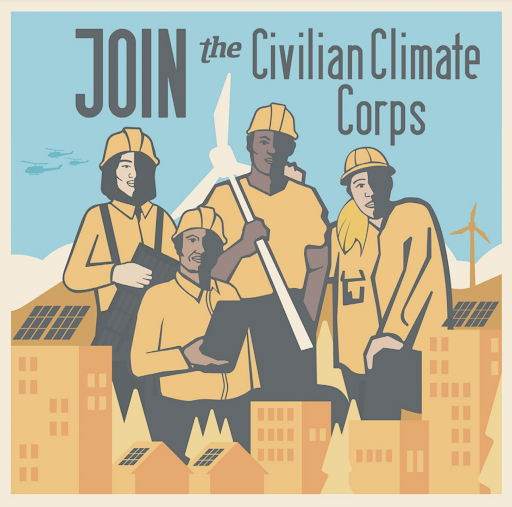
Four workers stand together with the caption “Join the Civilian Climate Corps”

We need to modernize our electricity grid, revamp our agricultural systems, establish rapid disaster-response networks, and more. Meanwhile millions of Americans are unemployed or underemployed. So why not put them to work fighting climate change? This is the logic of the Civilian Climate Corps.

The Civilian Climate Corps

The Civilian Climate Corps (CCC) is a proposed government jobs program that would employ Americans to fight the climate crisis. According to the White House, the program would aim to “conserve and restore public lands and waters, bolster community resilience, increase reforestation, increase carbon sequestration in the agricultural sector, protect biodiversity, improve access to recreation, and address the changing climate.” 

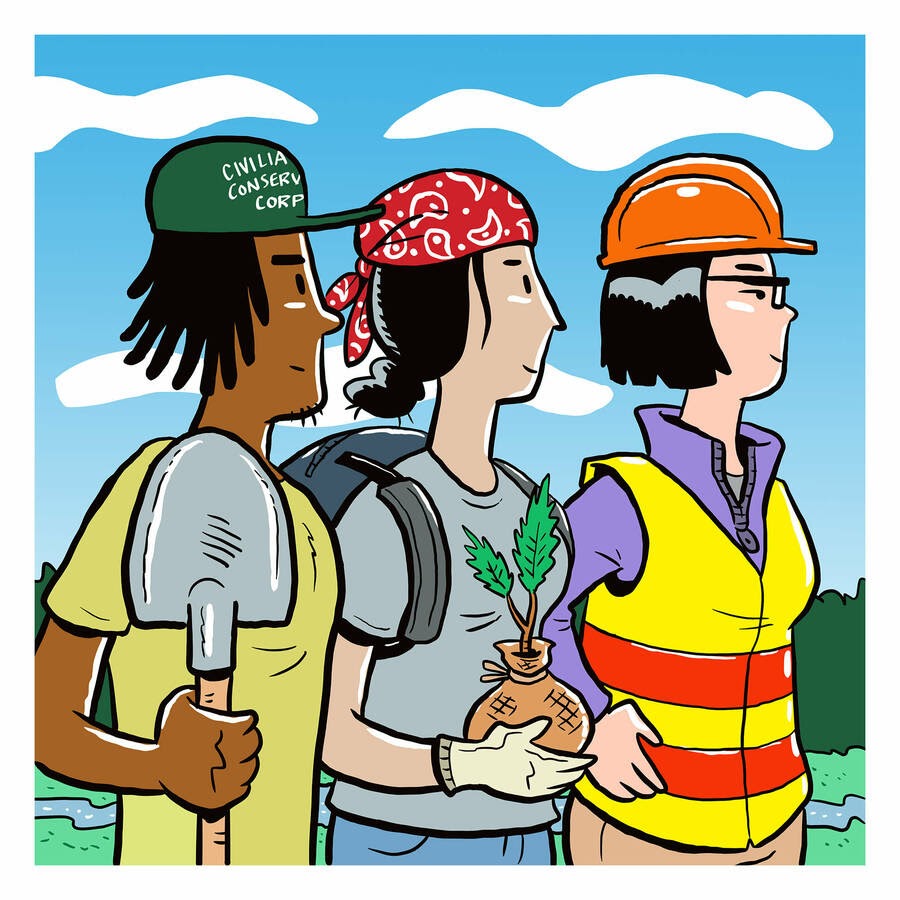
Illustration by Terry LaBan

The Civilian Climate Corps draws inspiration from a similar New Deal job program, the Civilian Conservation Corps, a national public works program that employed over 3 million people over a decade building, repairing, and conserving forests, parks, and natural resources across the country. Like much of the New Deal, however, the CCC largely excluded nonwhite, nonmale people. The Civilian Climate Corps charts a different path.

There are a handful of CCC proposals floating around Washington DC. The most ambitious proposal goes to Ed Markey who seeks to employ an equitable and diverse group of 1.5 million Americans over 5 years. Even this amount is insufficient to meet the scale of the crisis, but it’s a start. It’s also much more comprehensive than other proposals. In his American Jobs Infrastructure bill, President Biden asked for about $10 billion over a decade to fund his CCC, equating to about 10-20,000 jobs a year. Even that figure was whittled down in recent compromises.

Sunrise Movement and the Civilian Climate Corps

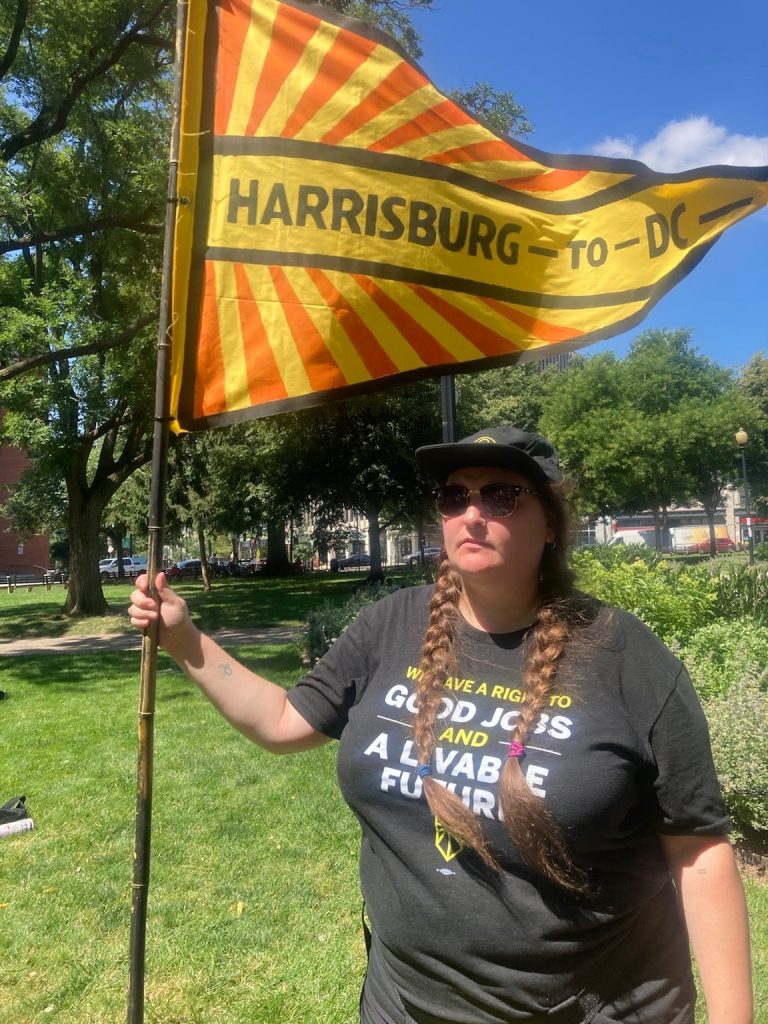
Sunrise Lewisburg hub coordinator, Mary Collier holds a “HARRISBURG – TO – DC –” flag


In response to Biden’s decision to mortgage my generation’s future on an insufficient CCC, I joined a dozen Pennsylvanians in the Sunrise Movement who were trekking from Harrisburg to Washington, DC to demand a bold Civilian Climate Corps. We trekked over 100 miles through the woodlands of Pennsylvania and along the highway shoulders of Maryland. The days were long and hot, the types of days that my generation will endure for decades. So we took care of each other and kept on walking.

We arrived in DC on Sunday, June 27th, and joined hundreds of young people from across the country, including a Gulf Coast Trek and a California Trek. It is important to protect our lives from being compromised away. It is us that can not settle for anything less. So members of the Sunrise Movement rallied outside the White House with young people from across the country and representatives Jamaal Bowman (NY-16), Cori Bush (MA-07), and Alexandria Ocasio-Cortez (NY-14). But we knew that wouldn’t be enough. We needed more.

We used our bodies to nonviolently blockade every entrance of the White House for hours in the scorching sun. Eventually, the Secret Service had to arrest dozens of us. By then we had made our point, so the protest wrapped up soon after.

The experience, from the trek to the protest, grounded my stake in climate action. At 22 years old, what does my future hold when each summer brings another heat wave worse than the last? How long does my family have until disaster strikes? My life and the lives of my loved ones are at stake. We need bold climate action now.

From our author and EcoLead, Sean Welch.

Categories
Act on Climate

Philosophy and the Climate Crisis

In order to tackle the climate crisis, we will need thousands of people organizing their friends, family, neighbors, and co-workers to take bold, collective action that creates power. That much is true for people from all walks of life… including philosophers!

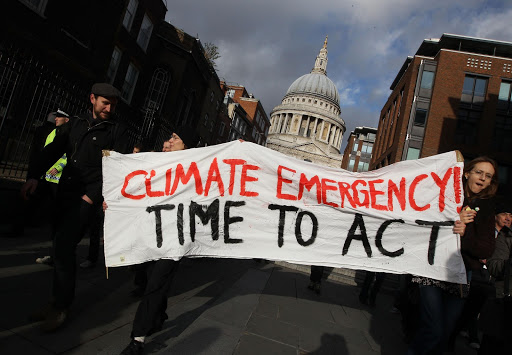
Two people carry a banner reading “CLIMATE EMERGENCY! TIME TO ACT”

Fortunately, an international group of philosophers are getting organized to do just that, encouraging their profession to take leadership on climate change and sustainability. They call themselves Philosophers for Sustainability.

Philosophers for Sustainability.

The group was co-founded by Temple’s own Eugene Chislenko, a professor in the Philosophy Department and local eco-champion. In the Office of Sustainability’s new and student-run podcast, Climate Conversations, we interviewed Eugene earlier this month on his work with the group. While they are still a relatively new group, they have already successfully persuaded the American Philosophical Association (APA) to include more sustainable practices in their professional guidelines. 

A wave crashes into a rocky seashore.

Philosophers for Sustainability has several ongoing projects. They are hosting local Sustainable Practices in Philosophy Workshops across the country through their members, integrating environmental sustainability into their teaching, advocating for greater course offerings on climate change to their departments, sharing best practices with each other, and so much more. In fact, they just held their 2021 conference: Philosophy & the Climate Crisis this past weekend through Temple University.

Conference 2021: Philosophy & the Climate Crisis.

The 3-day conference covered a range of topics. Panel organizers facilitated conversations on minorities in Philosophy, philosophical cases for climate action, teaching the climate crisis, and more. 

I attended the symposium on Teaching the Climate Crisis and was impressed by the panelists’ commitment to creating educational experiences that prepared students for a world in flux.

The panelists were professors across the country who made up Engaged Philosophy, a group of philosophy professors using their courses to teach civic engagement. Professors in the group, like Ramona Ilea in Pacific University, provide hands-on activist projects for their students, building classroom content from their students’ experiences and not the other way around. I left wishing that I had taken more classes like theirs, with my imagination stimulated on education’s role in climate action.

Listen to our Climate Conversations podcast to hear from Euguene himself.

Getting involved.

Learn more about Engaged Philosophy by checking out their website and the resources they provide. You can get involved with Philosophers for Sustainability, consider joining them as a member, although there are several other ways to get involved. If you have any questions, contact the group at philosophersforsustainability@gmail.com.

Finally, Eugene is teaching a pilot Gen-Ed class at Temple this Fall on Climate Change and Climate Justice. If you are interested, send him an email at chislenko@temple.edu! 

Categories
Act on Climate

Climate Action and Global Citizenship

Environmental issues do not distinguish between borders, so it is only natural that an international perspective is brought into the discussion. That is exactly what the Temple Office of Sustainability and International Student Advisory Board (ISAB) hosted; a dialogue about Climate Action and Global Citizenship. In which four international students from around the world were able to share their views that, while as diverse as the students themselves, were united by the common theme of environmental concern.

Environmental Education & Mainstream Media.

The event began with a discussion about environmental education and the role these issues had in mainstream media around the world. It was soon evident that different countries could have drastically different attitudes on the environment which were reflected in their educational policy and the presence of these topics held in the media.

In China, one student relates, he was made aware of environmental issues from a very young age, and that the country experiences a great deal of action when it comes to addressing environmental issues.

On the other hand, a student recounts that Mexico holds no such emphasis on the environment and instead focuses on other domestic issues.

Extreme Weather & Climate Change.

The discussion then shifted to how extreme weather events are dealt with around the world, and how they are connected to climate change. And, since greenhouse gases from transportation emissions are heavily linked to the warming climate, this was also a point of discussion. In a country like Brazil, which has been in the spotlight in connection to the wildfires in the Amazon forest, it is difficult not to take into account extreme weather events, especially after having experienced a devastating drought. Similarly, cities like New Dehli in India, which experience oppressive amounts of pollution, have had to resort to policies that attempt to grapple with the environment, such as restrictions on driving depending on the day and license plate number.

Global Gala.

Global Impact.

Another extremely important environmental aspect to discuss was the impact the U.S has on other countries, whether it be through travel or the consumption of goods. For example, Mexico takes many queues from its northern neighbor, so it is not misleading to say that U.S tourists hold a lot of sways when it comes to where they spend their money.

Furthermore, one student from India began to question the status quo of plastic use that is so prevalent around the world, but especially in the U.S. “I love to travel,” said Moumita, from India, but the way my consumption pattern, or that of the people around me, is based on using a lot of plastic every day, then how can I say I am able to visit places that are beautiful? Because I am spoiling the natural resources, I am spoiling everything.”

When it comes to discussing issues in the U.S, whether it be environmental or otherwise, hearing an international perspective has the effect of jolting Americans out of the perspective they find normal. When it comes to human-induced climate change, this is very much the desired effect– we must realize that this is not normal, and it cannot remain so.

Categories
Act on Climate Stories of Sustainability

Students & Local Climate Action Planning in Pennsylvania

How can college students take climate action in local government? This question is at the core of the Local Climate Action Program (LCAP) under the Pennsylvania Department of Environmental Protection  (DEP). The program matches college students with local governments across the state, then trains both of them through a DEP contractor, ICLEI USA, on how to develop a Greenhouse Gas (GHG) inventory and climate action plan for that government. 

The program’s most recent cohort included three Temple students, so our Office of Sustainability sat them down to discuss their experiences on Earth Day in Stories of Sustainability: ICLEI & Local Climate Action Planning in the Commonwealth.

Creating a GHG Inventory.

After being accepted into the program, the three students, Mark Costanzo, Nicole Somers, and Jada Ackley, received training from ICLEI on creating a GHG inventory tool in Fall 2020. These GHG inventories, as explained by Mark, are lists of emissions sources in the municipality (like homes, energy plants, transit systems, etc.) along with how many CO2 equivalents they emit. These inventories provide crucial information on setting goals of emissions reductions in the later climate action plans.

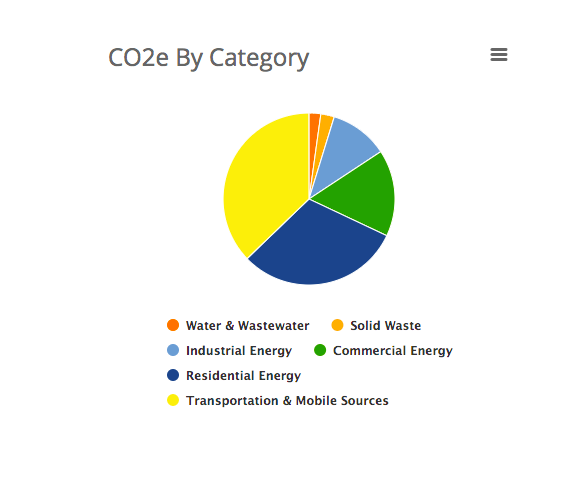
Pie chart of carbon-dioxide equivalents emissions by category for Warwick Township

Students compiled data from local utility companies, transit sources, waste facilities, and more to build these inventories, and soon found that GHG inventories looked different in different places. For example, transportation and residential activities were the major contributors in Warwick Township, PA, the government with which Mark Costanzo collaborated on LCAP.

Local Climate Action Planning.

Students and local governments received additional training in Spring 2021 to create their climate action plan (CAP). These plans, as explained by fellow student Nicole Somers, were meant to reduce GHG emissions while preparing for the impacts of climate change. Accordingly, CAPs include GHG mitigation targets, objectives, and actions, like changing town ordinances to require energy efficiency standards on new buildings, alongside adaptation actions, like expanding green spaces and incorporating climate change vulnerability assessments into future construction plans. Lastly, they developed a monitoring plan to keep track of reductions going forward.
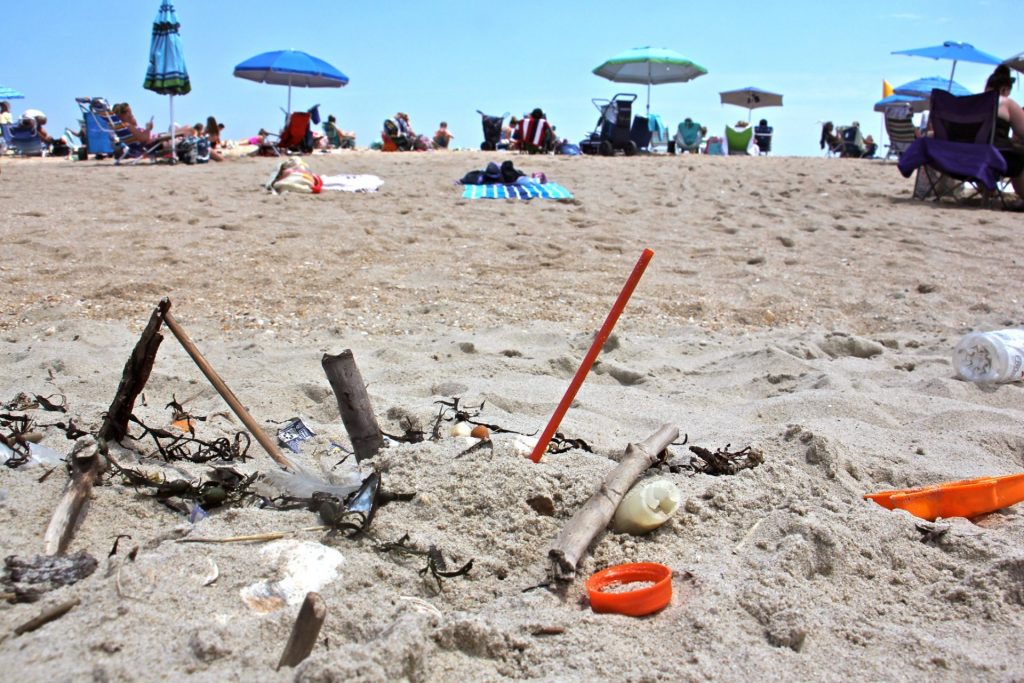
 Image of ICLEI Local Governments For Sustainability.
 Image of ICLEI Local Governments For Sustainability

The third student, Jada Ackley,  discussed the importance of community engagement in any CAP. On one hand, they explained, it helps governments gather information from residents for the plan, but also fosters community support for it. For some examples, Jada used surveys and community workshops to engage residents on what a CAP for Haverford Township needed to include.

Getting Involved.

In her closing remarks, Heidi Kunka, Energy Programs Specialist at DEP and overseer of LCAP, discussed the importance of getting a diversity of perspectives in climate action planning and invited students to fill out an interest form if they may want to apply next year. If you’re interested, check it out!

Everyone has something to gain from fighting climate change, and something to lose from letting it run unchecked.

Categories
Act on Climate

Struggle Space to a Green New Deal

Decades upon decades of racial discrimination have shaped the landscape of who has power and resources in Philadelphia. These inequities remain today and stand to be exacerbated as the climate crisis worsens. So what can we do? The Office of Sustainability hosted Struggle Space to Green New Deal: Recognizing Past Racial and Environmental Injustice to Inform Urban Climate Justice Policy to begin finding some answers

Struggle Space.

At the center of the event was the term “struggle space.” Panelist and professor in Temple’s GUS department, Christina Rosan, explained that the term was coined in passing by an African-American cab driver of hers to describe the systemic injustices he and his community faced: “they got us in this struggle space.” The term clicked and Rosan has since used it to describe historic and continued spaces of racialized disinvestment. 

What does the struggle space look like in Philadelphia?

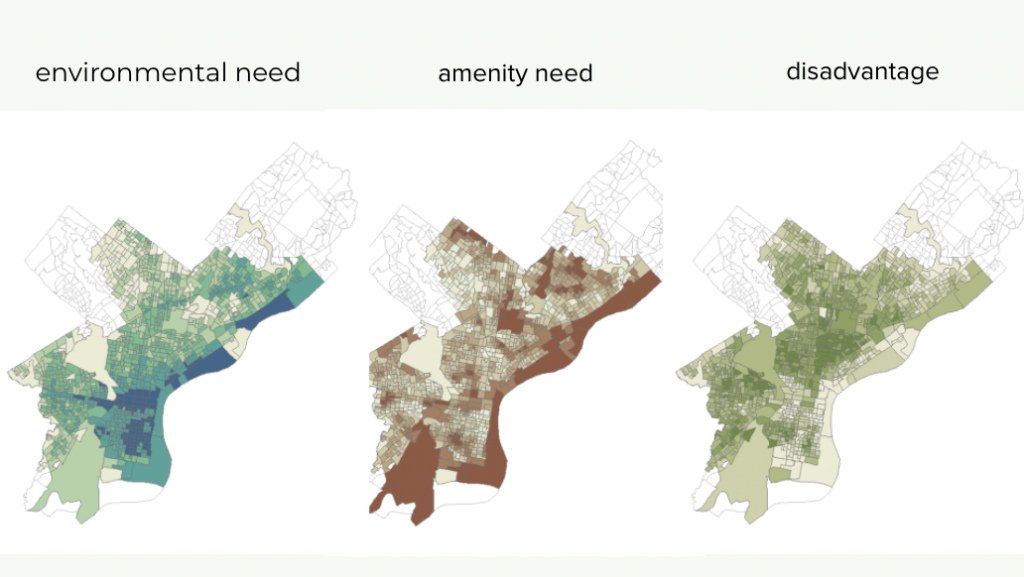
Rosan and fellow panelist and colleague, Megan Heckert, shared an equity index they had developed to help map out the struggle space in Philadelphia. The index serves as the compilation of three other indexes on environmental needs, amenity needs, and areas of socio-economic disadvantage, along with information on existing resources in communities, like schools.

This index is a helpful tool to help quantitatively identify degrees of needing reinvestment across Philadelphia, including resources on which type of reinvestment those neighborhoods may need. That being said, any process of community reinvestment must also include authentic conversations with community members, allowing them to name their needs and design the reinvestment themselves wherever possible.

Struggle Space to a Green New Deal.

Rosan, Heckert, and every other panelist stressed the need for climate action to take equity-based approaches. “Climate planning is doomed to fail,” Rosan said, “if it does not address the struggle space.” In other words, before we talk about a Green New Deal, we need to acknowledge the “Raw Deal” that communities of color in Philadelphia have had and still have.

In Philadelphia, this means acknowledging the history of planning as blatantly discriminatory and racist and simultaneously taking bold action to right those wrongs, urgently addressing issues like rapid gentrification and “green gentrification” that hit communities of color hardest.

The history of this city, and indeed this country, are inseparable racial injustice. We cannot change the past. We can, however, acknowledge it, learn from it, and start creating a city that finally works for all of us for today and every day to come.

Categories
Act on Climate

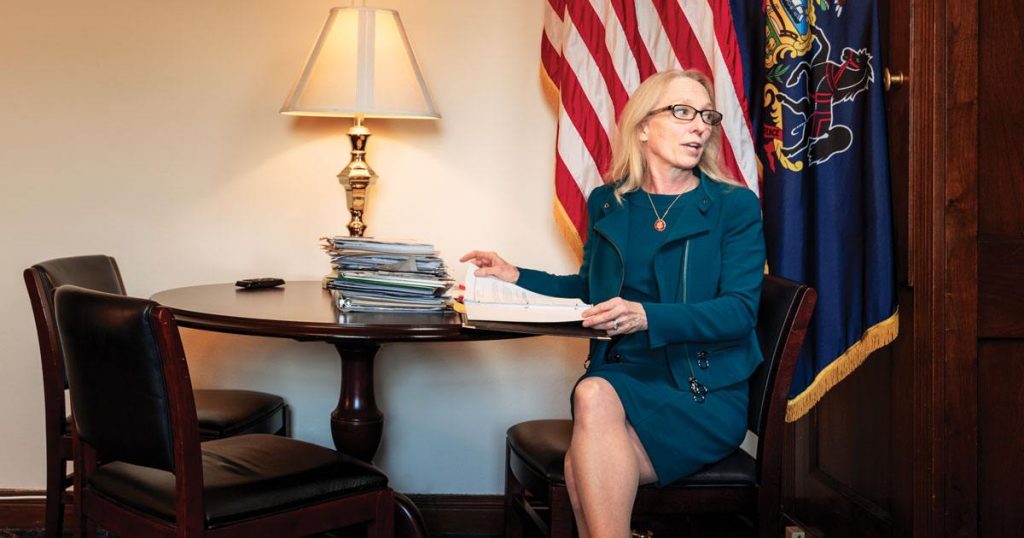
Climate Policy: A Conversation with Rep. Mary Gay Scanlon (PA-05)

In September of 2020, the Temple College of Public Health hosted several political leaders to discuss Social Justice, Public Health, and the 2020 Election. Most questions posed to the panelists centered around electoral participation. Nevertheless, one question in particular caught our attention.

Just over halfway through the discussion, the panelists were asked to reflect on climate change as a public health issue. U.S. Representative Mary Gay Scanlon, a Democrat from Delaware Country, took to the zoom stage in response.

Courtesy of Penn Environment

After acknowledging the PES refinery explosion and the trash-burning plant in her district, both being textbook examples of environmental racism, Scanlon provided an overview of some of regulatory confines under which climate action policies operate:

“When I was on the local school board, we had to do some rebuilding. Of course, you want to do it in a sustainable way. But the laws and regulations you operate under require certain things with respect to funding and you can’t raise taxes more than a certain amount in our school districts so… the budget was always a concern. 

“People wanted to put solar panels on and would say, ‘well right across the river in New Jersey all those schools are doing solar panels.’ Well, New Jersey had implemented state funding to incentivize the use of solar energy. We didn’t have that in Pennsylvania so that became economically not possible.”

Scanlon then stressed the federal government’s role in funding state and local climate action. The Representative’s story illustrates a tension between climate action policies and the divisions of power between our governments.

Local governments are reliant on state and federal funding, revenue streams which have withered over the past half-century due to predominance of neoliberal governance — leaving cities, and communities of color in particular, out to dry. This problem is pronounced in Philadelphia, where the state government’s flat tax rate inhibits Philadelphia’s ability to raise revenue. 
Assuredly, there are other revenue-raising tools the city can employ which have gone underutilized. Still the issue remains: much of the funding for a Just Transition will need to come from the federal government.

Categories
Act on Climate

Climate Policy: Microplastics in Philadelphia

America has a Plastic Problem.

We generate over 35 million tons of plastic waste each year, or enough to fill the Dallas Cowboys football stadium every 16 hours. Most of that plastic is sent to landfills or incinerators, both of which are deeply problematic, while the rest of it floats our roads and meanders its way into our waterways. 

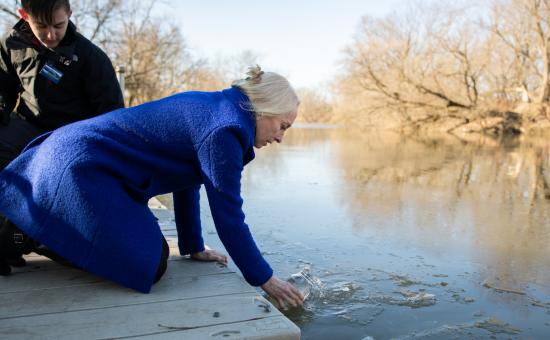
Philadelphia waterways (City of Philadelphia Water Department)

Philadelphia is No Expectation.

In fact, we’re especially problematic. We consume an estimated 1 billion plastic bags a year while the City’s Water Department removes 44 tons of trash from the Schuylkill and Delaware rivers in a single year. But some forms of plastic are easier to remove than others. 

Plastic doesn’t biodegrade like food waste or paper does. It just breaks up into smaller pieces. Those pieces get smaller and small until they are virtually impossible to remove. We call these “microplastics,” or plastics less than 5 millimeters in length. That’s the size of a grain of rice.

Because they are so small, microplastics are then easily consumed by wildlife. As the plastic accumulates in their bellies, they may starve to death. They may suffer but still survive. Either way, they pass those plastics onto the next animal who eats them, who will pass it onto the next one. As it moves through the food chain, that plastic eventually reaches humans

We don’t know the long term effects of microplastics on our bodies’ health or on the overall health of the food chain. However, we do know that the problem is only getting worse. Half of all plastics ever manufactured were made in the past 15 years and, at its current rate of production, plastic is estimated to outweigh all the fish in the sea by 2050.

Monmouth, New Jersey (StateImpact)

In Pennsylvania alone, microplastics were found in more than 50 of most popular waterways.

It’s time for policy change to reduce plastic pollution in the city and state. Sadly, a state law temporarily bans local governments from banning plastic bags. Fortunately, the local governments of Philadelphia, West Chester, and Narberth are suing the state government on grounds that this ban is unconstitutional.

While a step in the right direction, a plastic bag ban is not sufficient to ensure the well-being of human and non-human life in Pennsylvania.

In their report “Microplastics in Pennsylvania,” the environmental advocacy organization PennEnvironment calls for the policies to phase out single-use plastics, establish responsibility for waste producers to manage post-consumer waste, prevent overstocking in the clothing industry, and developing green infrastructure to filter microplastics from our sewage.