We are glad to have the Southeastern Pennsylvania Transit Authority (SEPTA) mention using our first iteration of the Ready to Ride curriculum as part of their accessibility materials in their 36th Anniversary of the Americans with Disabilities Act (ADA). You can check out the article here: SEPTA 36th Anniversary of ADA
Category Archives: In the News
REACH Collective Peer Specialist is interviewed by WHYY!
Exciting News From The REACH Lab – PCORI award $7.5 million for a new study!
Read more in these publications:



The Patient-centered Outcomes Research Institute (PCORI) has awarded Temple University $7.5 million for a new study comparing approaches to help young adults with intellectual and developmental disabilities learn to use public transportation. Drs. Pfeiffer (Temple University) and Kramer (University of Florida), along with the REACH lab team and collaborators from University of Florida, University of New Hampshire, and University of Minnesota, will lead a multisite study to evaluate the effectiveness of two different service delivery methods for a community mobility intervention called Chance to Ride.
The team will compare outcomes when this intervention is provided by peer supporters with intellectual and developmental disabilities and when it is provided by professional staff. They will work with eight community service organizations across the United States to learn about how to best implement the intervention. (This includes two community partners in Philadelphia, CIS and JEVS, who have a long and collaborative history of working with the REACH lab).
The team is excited for this work, as transportation is one of the biggest barriers to accessing in meaning activities in the community for transition age youth and young adults with IDD.
IN PERSON at STRIVE DE
We had SO MUCH FUN last week visiting one of the REACH Lab’s favorite community partners. Strive Program – Dover, Delaware. These awesome young people participated in a focus group to give their ideas on what new section we could/should add to our SAFE Program! Thank you STRIVE!

Announcing new publication re: peer mediated travel training
The REACH Lab is pleased to announce that we have a newly published article.

For a limited time, the Journal of Transport and Health has provided a link to download a copy of the article for your future reference.
Get Ready to Ride
As part of a Field Initiated Project (FIP) funded by the National Institute on Disability, Independent Living, and Rehabilitation Research (NIDILRR), our research team developed Ready to Ride, a travel training curriculum for transitional aged youth with intellectual and/or developmental disabilities (IDD). The curriculum consists of 6 lessons and provides powerpoint slideshows for the trainer as well as the trainee. Click here to see more about this and other resources we have developed.
Effectiveness of a peer-mediated travel training intervention for adults with autism spectrum disorders
Abstract
Background: Individuals with autism often experience transportation challenges as primary barriers to essential community services such as health care and employment. Research of travel training interventions has identified evidence-based techniques for improving specific transportation-related competencies. Peer-mediated interventions are recognized as effective and when provided in natural social contexts. This study evaluated a peer-mediated travel training approach with adults with autism to provide and improve specific skills necessary for independent travel on public transportation.
Purpose: This study aimed to evaluate the efficacy and feasibility of a systematic peer-mediated travel training to improve public transportation travel independence for autistic adults to increase their access to the community.
Method: A randomized control trial (RCT) was used to determine the effectiveness of a peer-mediated travel training program on travel skills, community mobility goals, community participation, and self-efficacy for individuals with ASD. Measures including self-report, observational measures, and GPS data were collected at baseline and two weeks after the intervention. Data on community participation and self-efficacy was collected again 4 months post-intervention. Analysis Analyses to compare group differences over time were completed. Pearson correlations were used to examine the associations between different constructs at baseline.
Results: Seventy-five individuals were enrolled in the study, with 38 individuals in the control group and 37 in the experimental group. The group receiving peer-mediated intervention significantly improved the travel skills necessary for public transportation and community mobility (p < 0.0001), although there were no significant differences between groups in community participation or self-efficacy. Results identified that peer-mediated travel training was feasible for adults with autism.
Conclusion: The results of the current study identify promise for a comprehensive peer-mediated travel training intervention to improve travels skills and community mobility. Future research is needed that examines the implementation and effectiveness of different service delivery models such as peer versus staff-delivered interventions.
APA Citation:
Pfeiffer, B., Davidson, A. P., Brusilovskiy, E., Feeley, C., Kinnealey, M., & Salzer, M. (2024). Effectiveness of a peer-mediated travel training intervention for adults with autism spectrum disorders. Journal of Transport & Health, 35, 101781. https://doi.org/10.1016/j.jth.2024.101781
Coming Soon! Community Mobility Planning research study
The REACH Lab is happy to announce that we received funding through the National Institute on Disability, Independent Living, and Rehabilitation Research (NIDILR) to develop and refine a Community Mobility Intervention for adolescents and young adults with intellectual disabilities that will help them plan community outings from start to finish and increase independence and participation in their favorite activities. Soon we will be recruiting participants in the development phase of this study. More information to come!
Beth Pfeiffer honored by 2023 Temple Gallery of Success
The Temple University Gallery of Success, which honors esteemed alumni, has named College of Public Health graduate Beth A. Pfeiffer to its 2023 list of honorees. Now in its 25th year, the Gallery of Success celebrates outstanding professional achievement by graduates of Temple’s 17 Schools and Colleges.
Beth Pfeiffer has gained international prominence for her work in occupational therapy for people with autism and other intellectual and developmental disabilities. An associate professor of health and rehabilitation sciences at the College of Public Health, Pfeiffer earned her master’s degree in occupational therapy at CPH in 1997.
In 2008, she co-founded an outpatient pediatric clinic in the Lehigh Valley area that continues to serve families. As a professor she has conducted research fueled by more than $15 million in funding, with approximately $5 million channeled directly to her Research, Engagement and Advocacy for Community and Health (REACH) lab. In 2022, she presented her research at the World Federation of Occupational Therapists in Paris and was awarded the Philadelphia Department of Behavioral Health Intellectual Disability Services Community Leadership Award of Excellence.
Pfeiffer’s clinical and research work focuses on helping individuals with IDD, including adolescents and young adults, engage more fully in their communities, feel productive, and become participating stakeholders in research and practice that concerns them.
“Working with kids in the school system and seeing them transition into adult roles and life has always been really rewarding,” she says. “I just love what I do. It means so much to me, the opportunity to make changes that are meaningful in people’s lives.”
REACH Lab presents at Discover Your Future STEM Event
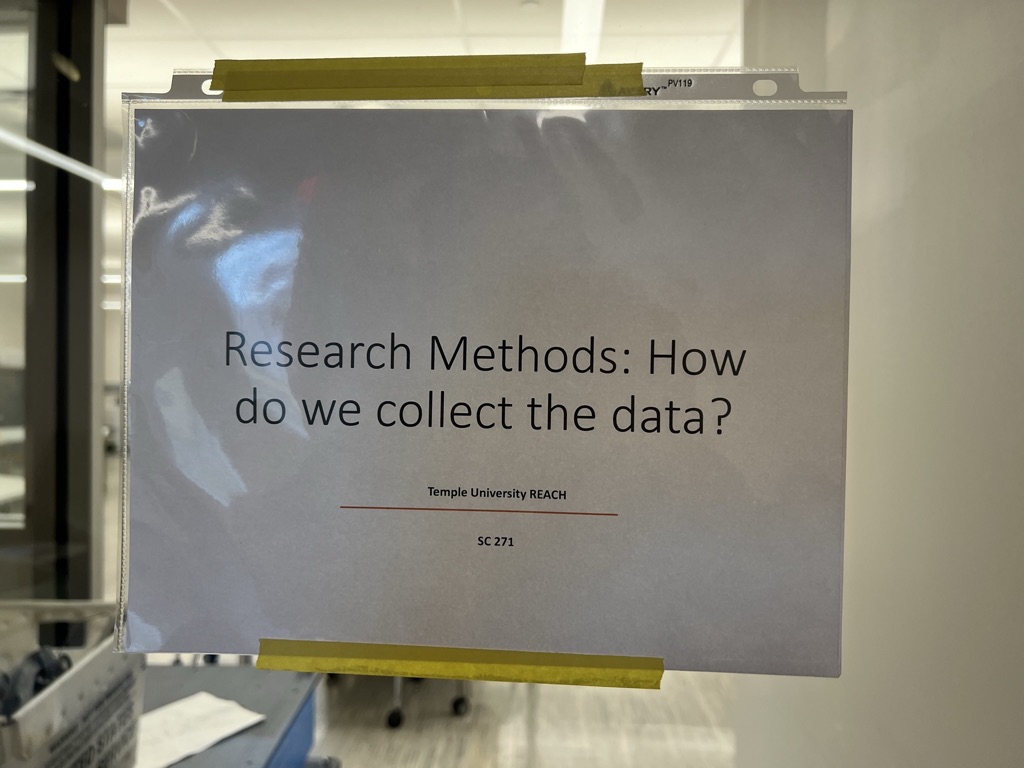
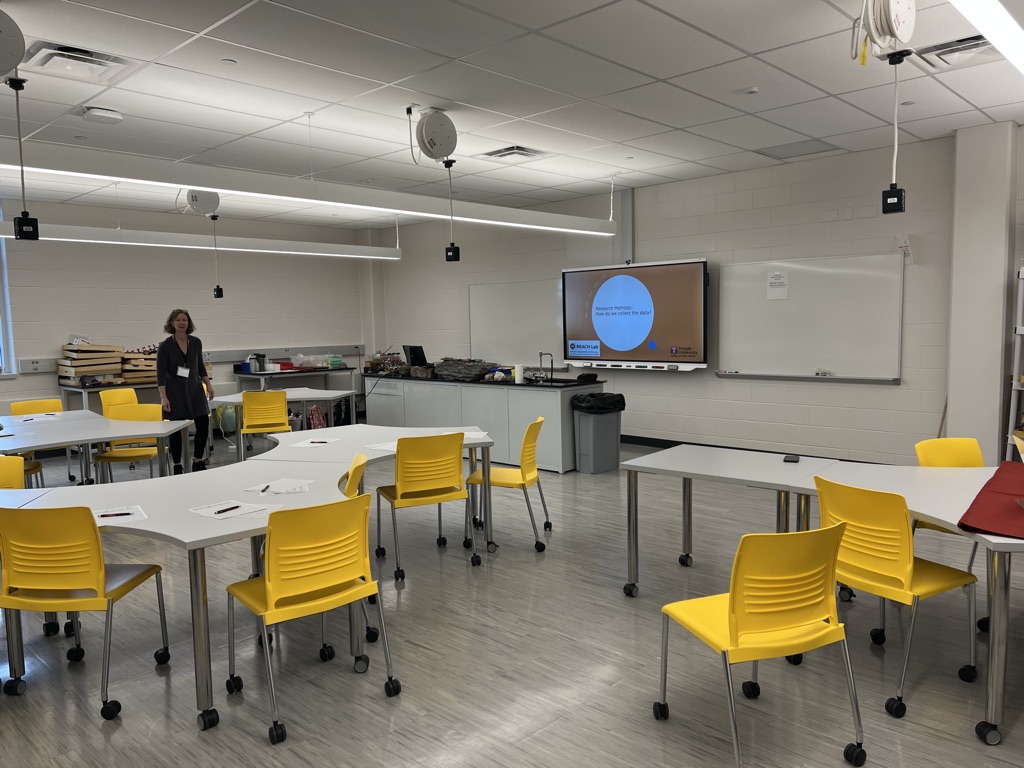
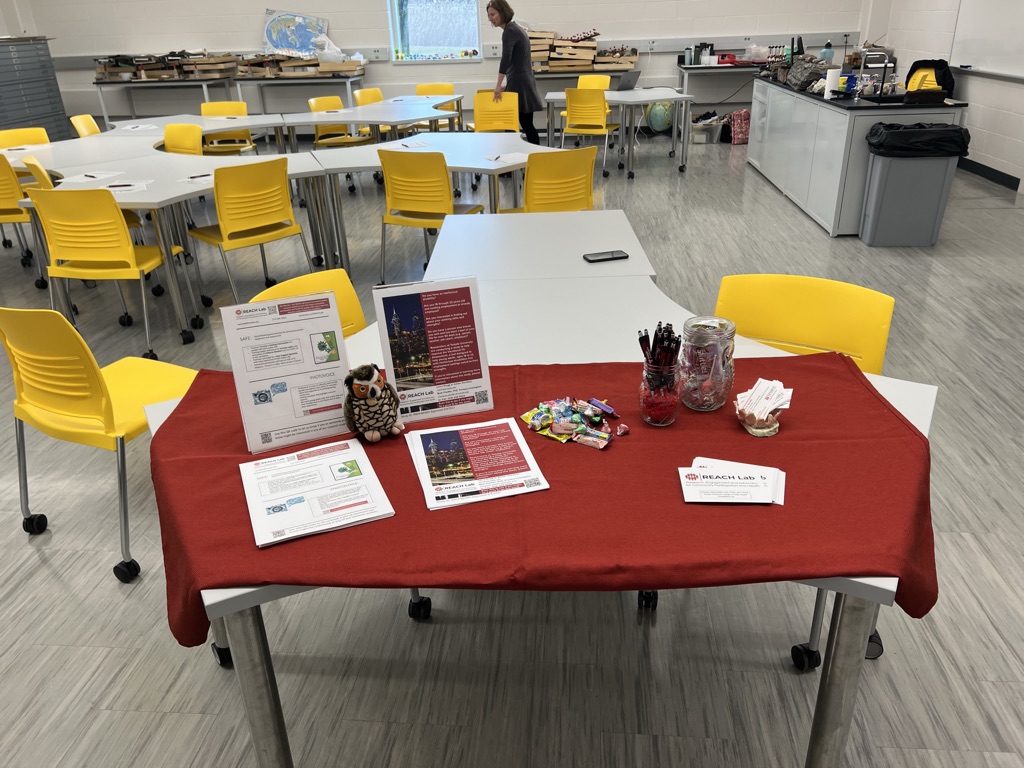
Research Coordinators Amber Davidson and Laura Slugg were happy to participant in the AAUW Lansdale Branch Annual Discover Your Future STEM Event for girls 5th – 8th grades on March 4th at Montgomery County Community College!
The American Association of University Women (AAUW) is an organization that works towards greater gender equality in the workplace.
There was a wonderful turn out and we were pleased to lead 4 groups in fun learning activities about different ways to collect data and how research can help identify problems and solutions to issues of Public Health. We talked about quantitative data collection like surveys, and then highlighted an emerging qualitative data collection method called PhotoVoice.
Looking forward to next year.