Temple University’s Office of Sustainability is thrilled to present our February events and this year’s Campus Race to Zero Waste campaign. Join us in sowing the seeds of change and nurturing a more eco-friendly campus.
Campus Race to Zero Waste is a sustainability competition in which Temple University goes head-to-head against schools across the country to see who can divert the most waste from landfills.
Want to get started? Check out the calendar below to discover the array of events happening on and off campus this February. Click the links to RSVP and become a part of the movement toward a circular economy!
Kickoff: Feb 2 – March 29, 2025
Theme
Event
Where & When
RSVP
Sustainable Fashion
Temple Thrift Pop-Up
Tuesday, February 11, Morgan Hall North D301, 10AM – 3PM
Policy EcoLead and Temple Student Government Director of Grounds nad Sustainability, Katie Perrone, shares her local climate action planning internship experience and discusses learning from environmental justice EcoChampions throughout Pennsylvania. She explores the question: how can we remove systemic barriers and reach out to communities that have historically been overlooked?
Local Climate Action Planning
Last year, the Office of Sustainability hosted an event about Students & Local Climate Action Planning in Philadelphia, which detailed the experiences of students who participated in last year’s Local Climate Action Program (LCAP) cohort. In August, I learned that I was accepted into this year’s LCAP cohort, and I’ve spent the last couple of months diving into the world of local government planning, climate policy, and environmental justice.
The LCAP program paired me with local government officials from Warrington Township, Pennsylvania, and I am responsible for helping them develop and implement a climate action plan for their community. The first step in beginning to draft our climate action plan for Warrington Township was forming a task force. Key stakeholders were invited to participate and the task force gives all of us working on the climate action plan an opportunity to bounce ideas off of one another.
Creating graphs, analyzing greenhouse gas emission data, and starting to conduct a climate change vulnerability assessment have been just a few of the tasks that I have worked on with the task force during my first few months as an LCAP intern. However, no part of my LCAP experience has been as interesting as learning about the impact that community engagement has on local planning.
Community Engagement
One of the first things that I learned during my internship training is that creating an effective community engagement strategy is essential to drafting effective policy. Community engagement can come in many forms, from hosting workshops and community meetings to reaching out to underrepresented communities to gain their perspectives.
In the case of Warrington Township, we are drafting a survey to be distributed to the entire township. The survey includes questions about which actions residents are already taking to reduce the impact of climate change and which actions they would like to see the township implement. The main objective of our survey is to gain the perspectives of community members, understand their priorities for addressing climate change, and build transparency between the township and its residents.
The LCAP program trainings have taught me that community engagement isn’t as simple as planning a workshop or creating a survey. In order for either of those actions to be effective, they need to incorporate the entire community. This means specifically reaching out to any groups that have been historically marginalized and underrepresented and making sure that they play a significant role in the process. Environmental justice is a crucial component of any community engagement strategy for climate action.
(Image from MobilizeGreen.org)
Environmental Justice
A few weeks ago, Alison Acevedo, the director of Pennsylvania’s Office of Environmental Justice, led an LCAP training session about environmental justice and how to address the causes of systemic environmental inequalities. She began by explaining the differences between equality, equity, and justice, and the importance of working to remove systemic barriers and achieve justice.
The history of redlining in Pennsylvania is one of the direct causes of environmental injustice. Communities of color and those without a lot of economic resources were much more likely to be located near industries and factories, and therefore these communities disproportionately dealt with high levels of air pollution and hazardous waste. The environmental history of Pennsylvania, and specifically Philadelphia, has been permeated by a shameful legacy of environmental racism and injustice.
Environmental Justice at Temple
As I learned more about the history of environmental injustice, I began wondering what our university is doing to address environmental injustice. Between 2010 and 2019, Temple has taken multiple steps to better address the inequalities and systemic barriers that exist within our society.
This is best shown by the updated climate action plan that Temple published in 2019. This plan is written with a comprehensive approach that incorporates environmental justice planning into the framework of the plan. The university begins by updating its definition of sustainability to recognize the importance of creating an equitable and just society.
“Sustainability seeks to balance a healthy environment with a just, equitable and economically viable society”
2019 Temple Climate Action Plan
The plan presents goals to address food insecurity, incorporate environmental justice principles into at least a third of the Office of Sustainability’s programming, and include more diverse voices and perspectives in the conversation regarding sustainability at Temple. During my time at the Office of Sustainability, I have already had the chance to attend multiple events regarding environmental injustice, lead an energy sovereignty workshop, and learn about innovative research being conducted at Temple to address inequality in Philadelphia.
Struggle Space to a Green New Deal
One of the events that was particularly fascinating was the Struggle Space to the Green New Deal discussion that the Office of Sustainability hosted last spring. This conversation centered around the concept of a ‘struggle space,’ which refers to the overwhelming structural and racial injustices that communities of color continue to face. One of the speakers at this event explained that climate planning is doomed to fail if it does not address this struggle space.
To make progress, we need to acknowledge the past, address the present, and work collectively to create an equitable future.
Stories of Sustainability: Struggle Space
The first step to addressing this struggle space is identifying the inequalities that exist in our current system, and in particular this means focusing on the discrimintion and inequality that is historically involved in urban planning. In Philadelphia, rapid gentrification and development threaten to exacerbate the problem of environmental injustice.
One professor from Temple’s Geography and Urban Studies Department, Christina Rosan, is working to address the struggle space through her research. Along with other researchers at Temple, Professor Rosan created an equity index to identify the areas in Philadelphia that face systemic inequalities.
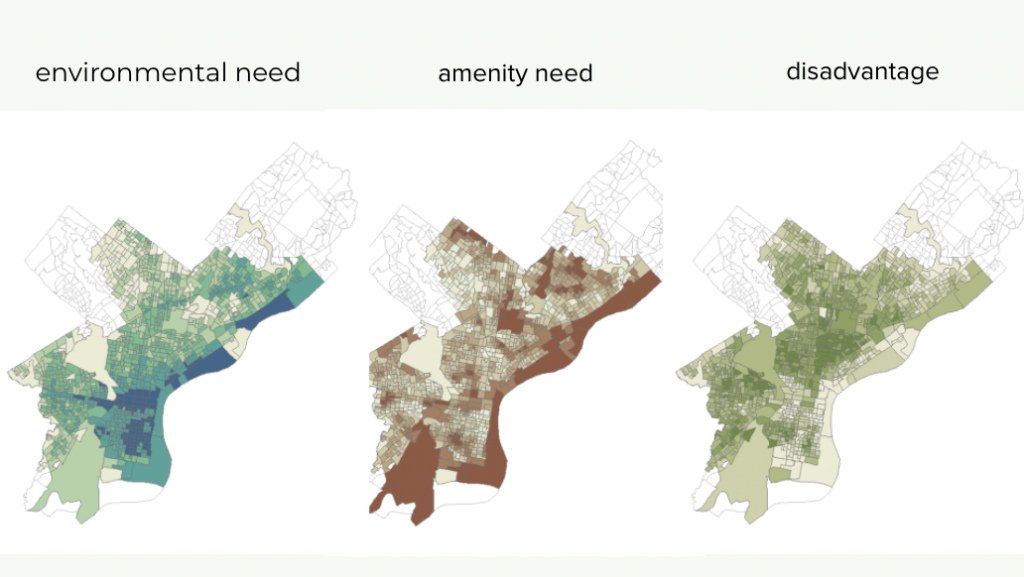
Professor Rosan’s index identifies areas of environmental need, areas lacking amenities such as playgrounds and parks, and areas of socio-economic disadvantage. The image below shows her results, with those areas experiencing more need or disadvantage colored darker.
Both Alison Acevedo’s training and the research being done at Temple highlight the importance of developing a comprehensive community engagement strategy to address environmental injustice and the struggle space. I am excited to have the opportunity to participate in this important conversation by working with Warrington Township to draft a community-wide survey and brainstorming other ideas to increase community engagement in Warrington.
Recognizing that environmental injustice is an essential part of every conversation about climate change is the first step to creating meaningful and long-lasting change. We must stop thinking about sustainability and injustice as two separate goals and acknowledge that they are interconnected and must be addressed as one. Until we remove systemic barriers and achieve environmental justice, it will be impossible to fully address the effects of climate change.
This will be the first of three blog posts on the transit system in Philadelphia and its connections to climate justice. Stay tuned for our next transportation blog post: Transit Equity in Philadelphia.
The transit system in Philadelphia isn’t quite as multifaceted as the city it serves, but it's got layers to it nonetheless. Let’s peel some of those layers back and ask two foundational questions of our transit system: how does transportation relate to climate justice? And how is our transit system structured?
Transportation and Climate
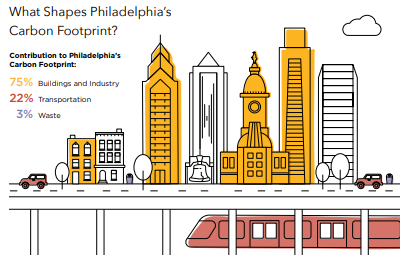
Energy is the fuel that powers our transit system, as we’ve established in our blog post on Energy, Electricity, and the Climate Crisis. Sadly, we’ve also established that most of the energy we use is generated from fossil fuels. As a result, transportation accounts for 22% of Philadelphia’s Greenhouse Gas emissions, much of which comes from our car-related emissions due to a lack of funding for SEPTA (which we’ll touch on momentarily).
(Philadelphia Climate Action Playbook, pg. 13)
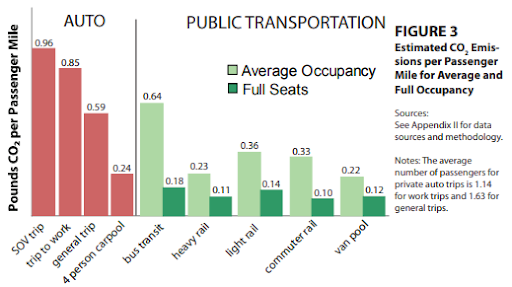
This reliance on cars both exacerbates climate change and creates harmful air pollution, as Philadelphia ranks as the 12th most polluted city in the country. Personal automobiles, here, are a big part of the problem. In 2009, cars, SUVs, pickup trucks, and freight trucks accounted for 77% of all transportation GHGs. Contrastingly, public transit emits much less pollution per passenger mile, especially when ridership is high, as shown below.
(Public Transportation’s Role in Responding to Climate Change, 2010)
Bold climate action requires deeper investments in public transit. Sadly, public transit is drastically underfunded across the country, and Philadelphia is no exception. To change that, though, we’ll need to understand how our transit system is structured. So let’s get to it!
Our Transit System: SEPTA
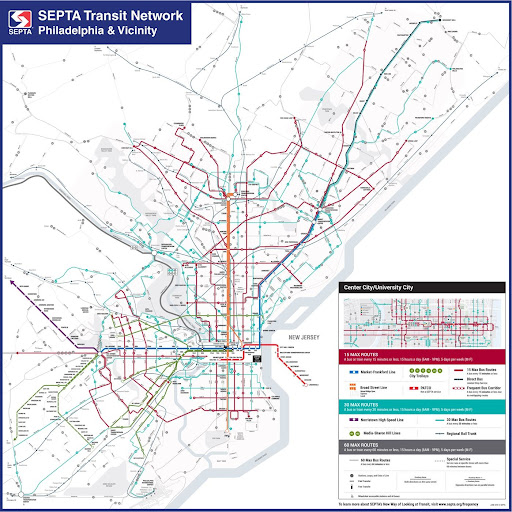
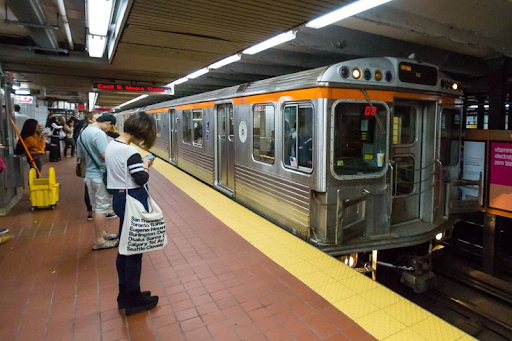
First, let’s talk about SEPTA or the Southeastern Pennsylvania Transportation Authority. SEPTA is a metropolitan transportation agency that oversees public transit in Philadelphia and the surrounding counties of Bucks, Chester, Delaware, Montgomery. In Philadelphia, SEPTA offers bus, subway, regional rail, and trolley services across the city, the full map of which is shown below.
SEPTA is a regional authority, not a City agency. So, each of the five counties in SEPTA has equal representation on SEPTA’s board. Still, most of the transit agency’s ridership, usually 80% or more, comes from Philadelphia. This means that, because the rest of the counties in SEPTA are less populous than Philadelphia but each receives the same number of votes, the transit agency disproportionately represents the interests of less-densely populated, suburban residents.
Pennsylvania’s Contribution to Transit System: SEPTA
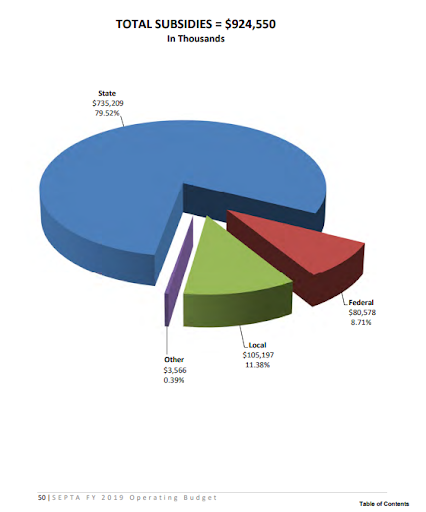
How does our state government impact our transit system? Well, this is where the thick of it lies. Most of SEPTA’s funding comes from the PA State Government. As a result, the transit agency has not had a steady, dedicated funding source for most of its history.
(SEPTA 2019 Operating Budget Subsidies)
When it comes to government funding mechanisms, there are two kinds of budgets. Firstly, there are operating budgets. These budgets include buses, employee wages, ongoing maintenance costs, etc. It’s helpful thinking of operational budgets to be for short-term expenditures. Secondly, there are capital budgets, which include projects like rebuilding train stations, constructing new electrical systems, or building a bridge. These are the more long-term infrastructure investments.
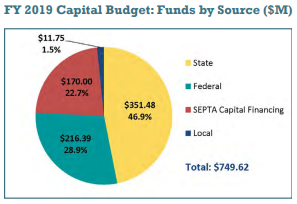
In 2019, state funds accounted for almost 80% of SEPTA’s operating budget and almost 50% of SEPTA’s capital budget. Much of the state’s funding to SEPTA comes from Act 89 in 2013 which allows the Pennsylvania Department of Transit (PennDOT) a $450 million infusion to public transit agencies. However, Act 89 is set to expire in 2022, meaning a big chunk of SEPTA’s funding source could dry up as soon as 2022.
(SEPTA 2019 Capital Budget Subsidies)
This arrangement is unusual for American transit agencies. Most other agencies receive larger support from their local governments, especially in west coast cities where revenues are raised directly from sales taxes. These local funding streams also make localities more responsive to ridership needs. Nevertheless, if the state funding dissolves, SEPTA will need to find alternative sources of funding from local or federal governments.
The Federal Government’s Role in Our Transit System
What role does the federal government play in all of this? I’m glad you asked!The federal government sends funds to local and regional transit agencies across the country, like SEPTA, which are tasked with managing transportation systems in a particular area. However, ever since the Reagan era and the 1980s, the federal government has steadily decreased subsidies for transit agencies’ operating budgets. For instance, federal funds accounted for 11.4% of SEPTA’s operating budget in 2019, as shown above.
When transit agencies need additional capital funds, they can apply for competitive grant programs through the Federal Transit Administration. SEPTA has not submitted a major capital grant for some time but is trying to do so to modernize our trolly system.
The federal government’s distant role in our transit system is unusual for wealthy nations. In 2019, the United States invested 0.6% of its GDP into inland infrastructure investments, while France and the United Kingdom each invested 0.9% of their GDP in the same year. Clearly, the federal government needs to deepen its investments in public transit agencies like SEPTA.
Transportation and Climate Change: Conclusion
In summary, the federal government has disinvested from transit agencies like SEPTA, and some state governments, like Pennsylvania, have not played their part either. Finally, SEPTA itself is designed to cater to the needs of suburban areas more than the city. Fighting climate change will require changes to all of the above, creating a cleaner, better-funded public transit system in Philadelphia and beyond. What might this look like? Who could it work for? Stay tuned for our next blog post Transit Equity in Philadelphia to find out!
How can college students take climate action in local government? This question is at the core of the Local Climate Action Program (LCAP) under the Pennsylvania Department of Environmental Protection (DEP). The program matches college students with local governments across the state, then trains both of them through a DEP contractor, ICLEI USA, on how to develop a Greenhouse Gas (GHG) inventory and climate action plan for that government.
The program’s most recent cohort included three Temple students, so our Office of Sustainability sat them down to discuss their experiences on Earth Day in Stories of Sustainability: ICLEI & Local Climate Action Planning in the Commonwealth.
Creating a GHG Inventory.
After being accepted into the program, the three students, Mark Costanzo, Nicole Somers, and Jada Ackley, received training from ICLEI on creating a GHG inventory tool in Fall 2020. These GHG inventories, as explained by Mark, are lists of emissions sources in the municipality (like homes, energy plants, transit systems, etc.) along with how many CO2 equivalents they emit. These inventories provide crucial information on setting goals of emissions reductions in the later climate action plans.
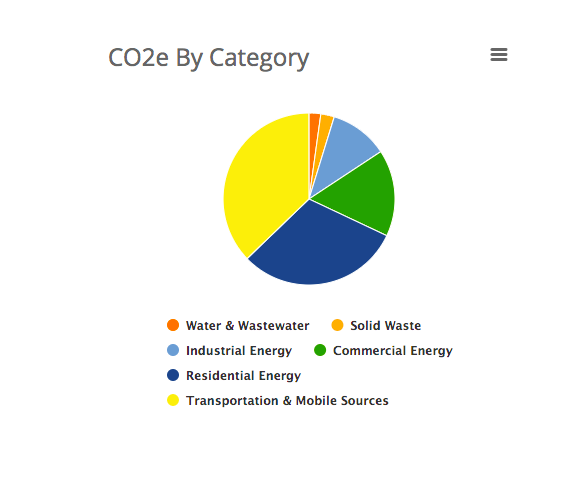
Pie chart of carbon-dioxide equivalents emissions by category for Warwick Township
Students compiled data from local utility companies, transit sources, waste facilities, and more to build these inventories, and soon found that GHG inventories looked different in different places. For example, transportation and residential activities were the major contributors in Warwick Township, PA, the government with which Mark Costanzo collaborated on LCAP.
Local Climate Action Planning.
Students and local governments received additional training in Spring 2021 to create their climate action plan (CAP). These plans, as explained by fellow student Nicole Somers, were meant to reduce GHG emissions while preparing for the impacts of climate change. Accordingly, CAPs include GHG mitigation targets, objectives, and actions, like changing town ordinances to require energy efficiency standards on new buildings, alongside adaptation actions, like expanding green spaces and incorporating climate change vulnerability assessments into future construction plans. Lastly, they developed a monitoring plan to keep track of reductions going forward.
Image of ICLEI Local Governments For Sustainability
The third student, Jada Ackley, discussed the importance of community engagement in any CAP. On one hand, they explained, it helps governments gather information from residents for the plan, but also fosters community support for it. For some examples, Jada used surveys and community workshops to engage residents on what a CAP for Haverford Township needed to include.
Getting Involved.
In her closing remarks, Heidi Kunka, Energy Programs Specialist at DEP and overseer of LCAP, discussed the importance of getting a diversity of perspectives in climate action planning and invited students to fill out an interest form if they may want to apply next year. If you’re interested, check it out!
Everyone has something to gain from fighting climate change, and something to lose from letting it run unchecked.
Decades upon decades of racial discrimination have shaped the landscape of who has power and resources in Philadelphia. These inequities remain today and stand to be exacerbated as the climate crisis worsens. So what can we do? The Office of Sustainability hosted Struggle Space to Green New Deal: Recognizing Past Racial and Environmental Injustice to Inform Urban Climate Justice Policy to begin finding some answers
Struggle Space.
At the center of the event was the term “struggle space.” Panelist and professor in Temple’s GUS department, Christina Rosan, explained that the term was coined in passing by an African-American cab driver of hers to describe the systemic injustices he and his community faced: “they got us in this struggle space.” The term clicked and Rosan has since used it to describe historic and continued spaces of racialized disinvestment.
What does the struggle space look like in Philadelphia?
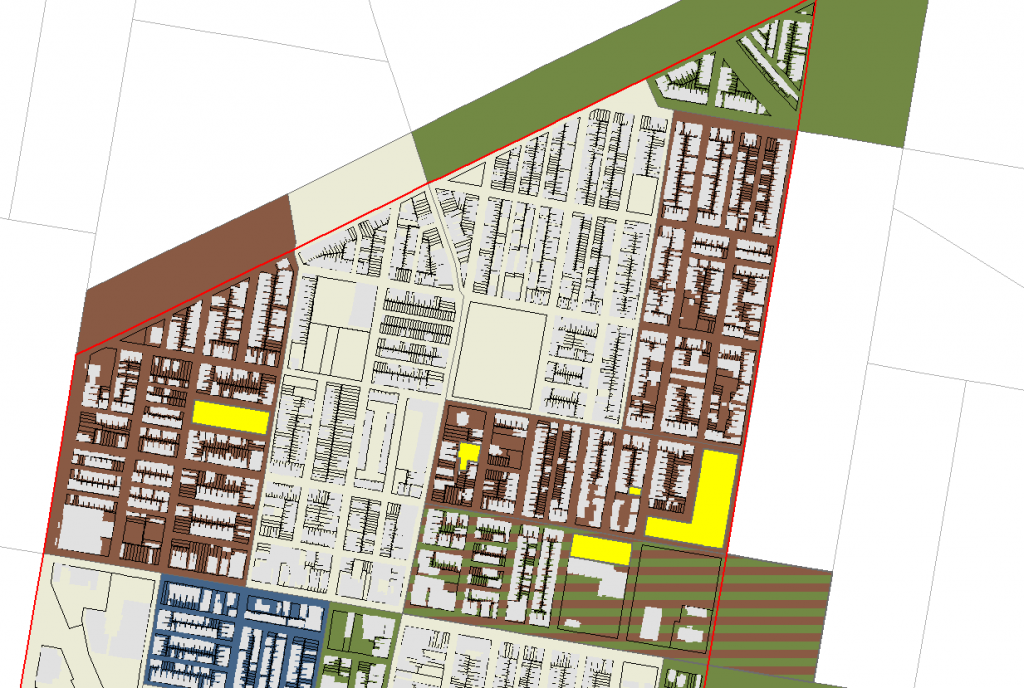
Rosan and fellow panelist and colleague, Megan Heckert, shared an equity index they had developed to help map out the struggle space in Philadelphia. The index serves as the compilation of three other indexes on environmental needs, amenity needs, and areas of socio-economic disadvantage, along with information on existing resources in communities, like schools.
Left: one neighborhood in Philadelphia with all three indexes at visualized at once, along with yellow areas for schools in the neighborhood; Right: three maps of Philadelphia, each visualizing the struggle space of neighborhoods with the indexes of environmental needs, amenity needs, and disadvantage across the city
This index is a helpful tool to help quantitatively identify degrees of needing reinvestment across Philadelphia, including resources on which type of reinvestment those neighborhoods may need. That being said, any process of community reinvestment must also include authentic conversations with community members, allowing them to name their needs and design the reinvestment themselves wherever possible.
Struggle Space to a Green New Deal.
Rosan, Heckert, and every other panelist stressed the need for climate action to take equity-based approaches. “Climate planning is doomed to fail,” Rosan said, “if it does not address the struggle space.” In other words, before we talk about a Green New Deal, we need to acknowledge the “Raw Deal” that communities of color in Philadelphia have had and still have.
In Philadelphia, this means acknowledging the history of planning as blatantly discriminatory and racist and simultaneously taking bold action to right those wrongs, urgently addressing issues like rapid gentrification and “green gentrification” that hit communities of color hardest.
The history of this city, and indeed this country, are inseparable racial injustice. We cannot change the past. We can, however, acknowledge it, learn from it, and start creating a city that finally works for all of us for today and every day to come.
Evident in the name, global warming is driving hotter days in many parts of the world. But that heat isn’t felt equally. In Philadelphia, decades of racist lending practices by private banks and the federal government, called “redlining,” along withcontinued disinvestment have created conditions for some neighborhoods in the city to be 22°F hotter than other areas of the city at times. The consequences are, all too often, fatal for people who are isolated and elderly, and will only get worse as the climate crisis worsens.
There is a great need for equitable heat response systems throughout Philadelphia. But what does equitable heat response look like? How can we prepare our communities for the crises to come? This past Friday, Temple’s Office of Sustainability hosted a mini-panel for Stories of Sustainability Act on Climate: Heat Response & creative action for Philly’s rising temperatures to begin answering those questions and more.
One panelist, Cheyenne Flores of the City’s Office of Sustainability, shared information on the City’s Beat the Heat: Hunting Park program along with her reflections on best practices. Billy Yalowitz, our other panelist and professor in Temple’s Community Arts Practices program, shared an overview of Heat Response PHL, which is engaging with three Philadelphia neighborhoods to tell their stories on how they deal with extreme heat.
Philly’s Heat Response.
As we dove into best practices for individuals, both panelists highlighted the importance’s of building long-lasting relationships with neighbors, educating yourself on available resources, and participating in community organizations. That looks like knowing how to apply to the state’s Low-Income Home Energy Assistance Program (LIHEAP), saying hello to your neighbors, asking around how you can get involved in your community, and more.
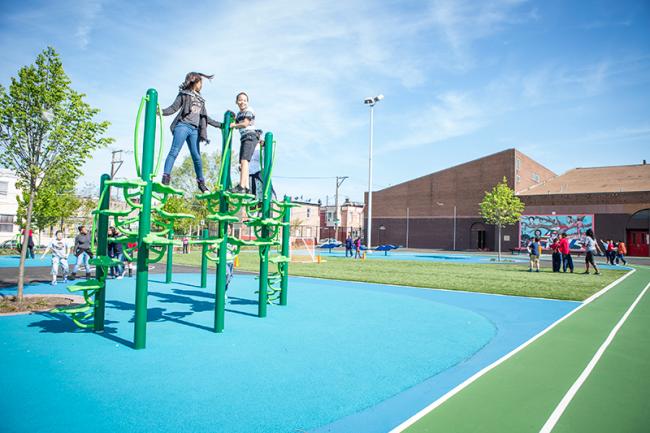
William Cramp Elementary School.
As for the organizations of larger heat response systems, Chey and Billy stressed the importance of honoring and supporting community leaders while resourcing programs with sustained commitment at their helm. Success in heat response projects cannot be measured in a few months or one summer, but over several years and even decades.
Then there is the reality of historical and continued oppression. “There are reasons,” Billy said, “that folks coming from City Agencies and Universities are not trusted when we walk into these neighborhoods. We shouldn’t be… There’s a history to overcome.” Those histories, like Temple University’s history with North Philadelphia, are often painful and must be accounted for whenever we speak of equity or justice.
In any case, heat response in one neighborhood will look different from heat response in another. Each community has its own unique histories, beauties, and challenges. Our responses should reflect that uniqueness. But we know it can be done.