“The greatest threat to our planet is the belief that someone else will save it.” – Robert Swan
Temple University’s Office of Sustainability is thrilled to present our February events and this year’s Campus Race to Zero Waste campaign. Join us in sowing the seeds of change and nurturing a more eco-friendly campus.
Campus Race to Zero Waste is a sustainability competition in which Temple University goes head-to-head against schools across the country to see who can divert the most waste from landfills.
Want to get started? Take the Campus Race to Zero Waste pledge and check out the calendar below to discover the array of events happening on and off campus this February. Click the links to RSVP and become a part of the movement toward a circular economy!
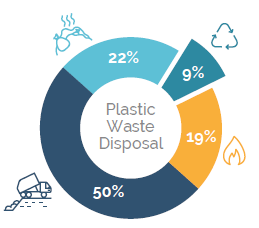
In 2019, 9% of plastic waste was recycled. The rest was incinerated, put in landfills, or disposed of using unregulated methods
Last month, Circular Philadelphia released a comprehensive policy guide on the current state of single-use plastic legislation in Philadelphia.
Despite the clear negative impacts of plastic production on the environment and our increasingly overwhelmed waste management systems, single-use plastic production has doubled in the last 60 years. This increase in production was exacerbated by the pandemic through online purchasing of delivery and takeout food orders increasing the demand for single-use packaging and food containers. The pandemic also hindered Philadelphia’s ability to manage plastic waste, as sanitation workers faced both an overwhelming amount of waste to clean up and a disproportionately high risk of exposure to COVID-19 due to their working conditions. This forced the city to prioritize trash management over recycling, leading to a drop from 22% in 2019 to a low 8% in 2022.
Despite the surge of single-use plastic during the pandemic, Philadelphia has recently taken several steps in the right direction when it comes to managing waste. The city increased on-time trash collections from 56% in 2021 to 96% in 2022 and added 150 new personnel for trash collection. Philadelphia also passed its ban of single-use plastic bags in 2022. A recent report found that after three months, reusable bag use doubled, and plastic bag use fell to almost zero.
Possible Solutions
Circular Philadelphia also reports that there are steps the city can take to reduce plastic waste even further in as short as a few years. The easiest solution to waste is legislation that bans or punishes single-use plastic, a measure that has already been used to eliminate plastic bag use in states such Hawai’i, Maine, and New York as well as municipalities such as Boston, Los Angeles, Seattle, and of course, Philadelphia.
Other methods include shifting responsibility for plastic consumption away from consumers, and instead pushing producers to reduce the amount of single-use plastic they use in their manufacturing and shipping process. In 2022, California passed a law that requires all packaging to be either recyclable or compostable by 2032, which is expected to help reduce plastic packaging by 25% and requires 65% of all single-use plastic packaging to be recycled within the following decade.
Another possible option is utilizing market-based solutions. Market based solutions often rely on a change in behavior from the consumer based on new trends or beliefs about what is socially favorable/acceptable. For example, it is favorable to like and protect animals, which made purchasing reusable straws popular when plastic straws were linked with harming sea turtles. But here are also several opportunities for change to come from the producers, such as manufacturing companies replacing traditional plastic bags with ones made from bioplastics, or stores offering reward points to customers who use reusable bags. A single cure-all solution for single-use plastic waste will be difficult to find, but combining several methods is a great start for achieving a waste-free future.
Circular Philadelphia’s Plan
Circular Philadelphia makes the argument that simple but thorough legislation informed by practices in other cities and regions is likely the best way to achieve fair, consistent, and measurable change when it comes to plastic waste in Philadelphia. Their recommended solution is a three-step legislation mechanism that eliminates certain single-use plastics from the take-out operations of restaurants’ and other prepared food establishments
Step 1. Ban certain single use plastics for take-out food
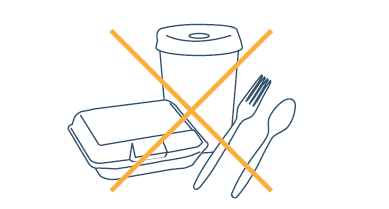
The most straightforward step to this process is banning items that are commonly littered after use, which includes polystyrene containers, plastic straws/cutlery, and plastic lined cups.
Step 2. Encourage a shift to reusable containers by imposing a fee on continued use of single-use plastics for take-out food
In order to encourage businesses to stop using any single-use items that remain unbanned, Philadelphia can incorporate an inspection for single-use plastics into the responsibilities of the Health Department and charge a fee for restaurants that are not compliant. The success of this part relies on its enforceability, which means it would mainly apply to places with food establishment licenses. It also requires flexible definitions for what is single-use, recyclable, compostable, reusable, etc. so that the city can update standards based on the available systems in its recycling department.
Step 3. Reinvestment of fee proceeds to clean up Philly and create a transition fund
Fees from noncompliant businesses would then be reinvested into waste management practices such as street sweeping, public trash cans, and assistance for businesses trying to switch to reusables.
Can It Be Done? Will it Work? Is It Worth It?
Short answer, Yes! Circular Philadelphia has already worked with the Health department to create a system of identifying restaurants that have reusable containers, meaning the framework is already in place to help more businesses comply with the proposed legislation.
If this legislation were to pass, Circular Philadelphia estimates that the benefits would include reducing the $48M spent on annual litter clean up, lowering food packaging costs from $0.29 per use for single-use to less than $0.01 per use by leveraging reusable containers, and addressing concerns such as microplastic consumption and the impacts of climate change.
Single-use Plastic and Campus Life
If these proposals were adopted, things could really change around campus. The multitude of student-serving food trucks, who are not owned or operated by Temple University, but under the jurisdiction of the city, would be on the hook for any plastic utensils and Styrofoam containers they distribute.
The majority of restaurants students eat “at” on campus don’t have indoor, or any, seating options and also lack the facilities to wash the number of dishes needed to meet rush hour demand. Reusable options available to other restaurants, such as metal utensils and sturdy dishes, generally aren’t viable for food trucks or “the Wall” vending pad by Mazur Hall. Students also tend to be on the move and use takeaway options in between classes, which would mean carrying around a dirty reusable plastic container. Unfortunately, this is considered a major inconvenience to a lot of students, and they’re not going to bring their own reusable containers if they still have the option for disposables.
All-encompassing waste policies like these — with real teeth and that extend beyond just the Aramark-owned and operated campus dining providers — could instigate broader behavioral and operational change across the city and on campus, especially with the massively popular food trucks. Until then, students can get us closer to a sustainable and waste free future by joining the fight for meaningful policy change, doing their best to use reusables themselves, and supporting those local businesses who are leading the way.
With a little planning you can donate and recycle most everything that might otherwise end up on the curb.
Every spring and summer, thousands of students move out of apartments all over Philadelphia. Unfortunately, this process creates a lot of trash and can negatively impact our neighbors.
But here’s the good news–it doesn’t have to be that way! There are so many resources available here in Philadelphia. With just a little bit of planning, you can have a positive impact on the environment and your community.
Furniture Donation
To successfully donate your furniture, it will take a little bit of planning. Some of the resources below offer pick-up services and request that you book an appointment a minimum of a week in advance. Others require you to drop off your donations at the location.
Looking to maximize your impact? See if your neighbors have furniture to donate as well.
Habitat ReStores are independently owned reuse stores operated by local Habitat for Humanity organizations.
ReStores are not like other thrift stores. The sales from donated items help Habitat for Humanity partner with local families to build, rehabilitate and repair safe and affordable homes in our community.
This national non-profit provides education, job training and career services that help individuals faced with barriers to become competitively employed.
How to donate: Goodwill of Southern New Jersey & Philadelphia offers free pick up of up to five bags or boxes picked up by a courier at your home. Click here to visit their scheduling portal.
Goodwill also accepts furniture and other household item donations via direct drop off at their donation centers and stores. Click here for directions.
Cost: Free for up to 5 bags or boxes weighing less than 50 pounds each. Large to extra large items such as furniture require a nominal fee payment.
The Philadelphia Furniture Bank (PFB) furnishes more than 1,400 homes annually for Philadelphians exiting homelessness.
How to donate: PFB offers pickups via Good Haul, with whom they share a warehouse. Click here to learn more and to schedule a pick-up.
Drop offs to their warehouse (3650 I Street) are also welcome Monday-Friday from 10am-2pm. More information on their drop off procedures can be found here.
Cost: Minimum fee of $99 for pick up. Drop offs are free.
Clothing Donation
After swapping or selling your clothes, donation is the next best thing. Most of the resources require you to bring your donations directly to the store. Luckily all are just a short distance and accessible via SEPTA.
This non-profit supports local charities by taking donations and selling them at their thrift store. Proceeds are distributed to local organizations involved in the fight against HIV/AIDS.
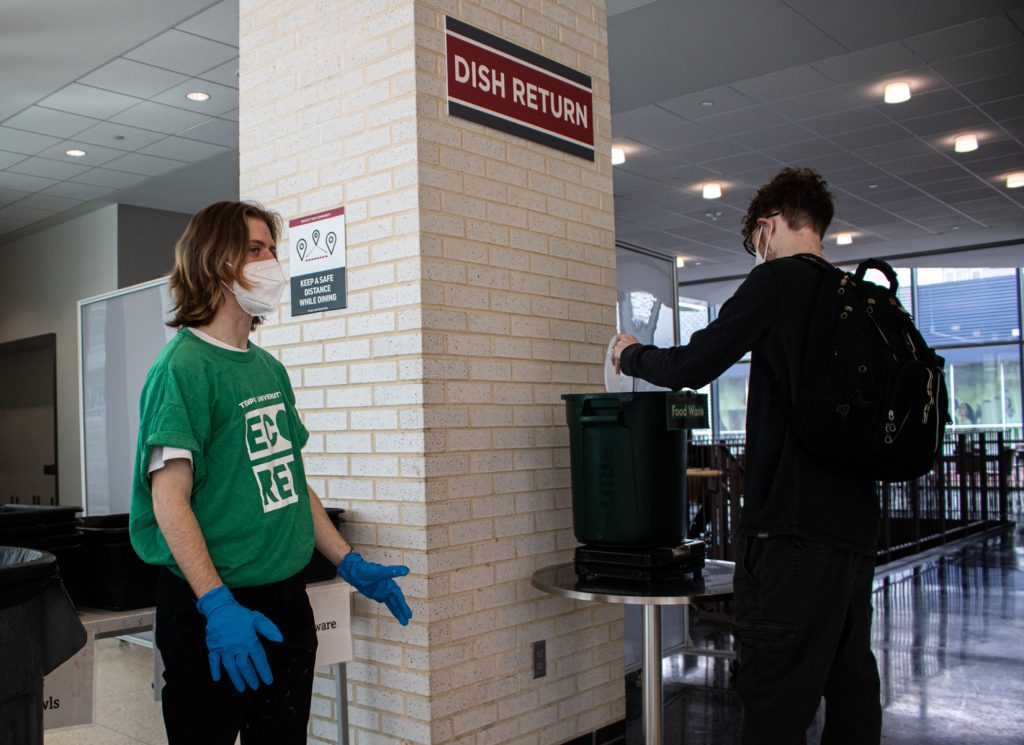
Over the course of two weeks, students volunteered during lunch from 11am – 2pm at the dish return station in Morgan Dining Hall. From buffalo cauliflower wings to unfinished pizza slices, students were able to get a glimpse at the process of diverting food waste from landfills.
Goal: Teach students about food waste and get metrics on how much food ends up in the dining hall’s bio digester. The two weeks inspired a multitude of learning opportunities and insights around waste literacy on Temple’s campus.
Here are some of the key takeaways from the Weigh the Waste event:
Even though the food waste bucket is at the dish return spot in the dining hall all the time, this event highlighted the lack of student familiarity with separating food waste.
Most of the students eating at the dining hall were unaware that there was a food waste bucket at the dish return table in Morgan.
A majority of the students however, were willing to listen to instructions on where to put their waste when directed by the dining hall staff and EcoReps.
Thanks to students’ willingness to learn, we saw individuals become more familiar with the process of separating their food waste.
EcoLead Mason Dofflemyer instructs student diner on how to properly dispose food waste
Food Waste and Future Opportunities
From this event, there is a lot of momentum around the scope of food waste. We are so excited to continue to partner with Aramark to address the issue of food waste on Temple’s campus. These two weeks of Weigh the Waste have identified how we can improve our food waste mitigations strategies as students and as an institution.
Co-Founders of Good Buy Supply. Jason (left) and Emily (right).
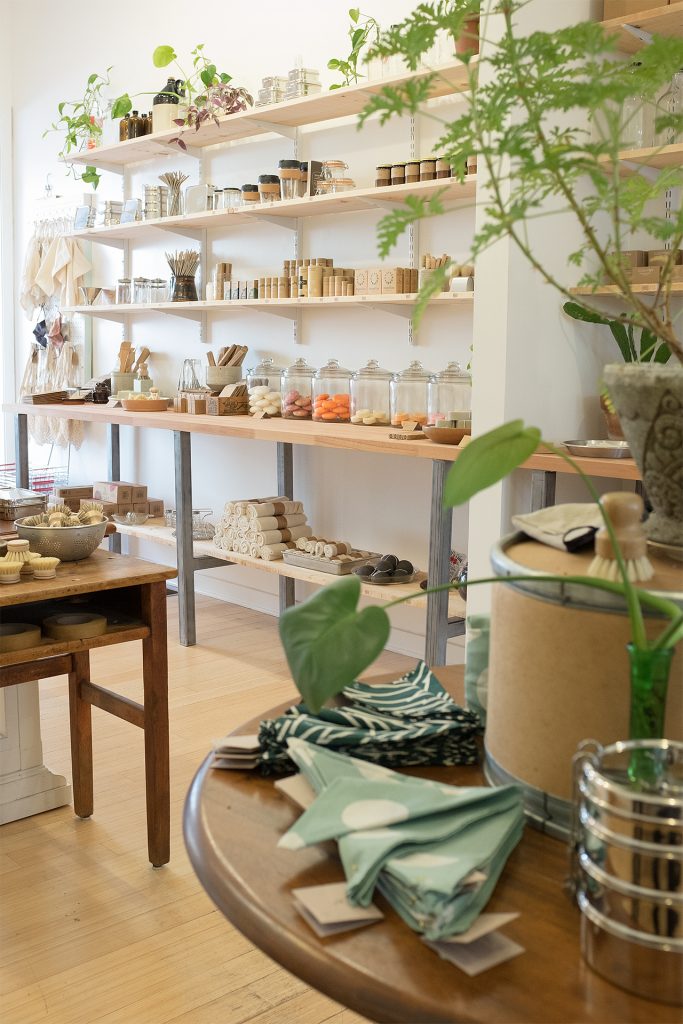
Temple Sustainability was happy to welcome the second Race to Zero Waste #EcoChampion: Emily Rodia! Emily grew up outside of Trenton, NJ and moved to Philadelphia in early 2007 to study Fine Art at The University of the Arts and received a BFA in Painting. Though always being an environmentally conscious person, she never knew how to navigate reducing her waste in Philly. And soon enough co-founded Philadelphia’s first low-waste home goods storefront.
Combining Arts with Sustainable Values.
Emily began her career by creating found object sculpture pieces sourced from trash from the street. A passion for nature evolved as she came to realization of the true, and immediate, trash problem in the United States.
Alarming fact: In the United States, about 4.9 pounds per person is generated each day.
As Emily became more interested in the low-waste movement she eventually saw the need for a storefront like Good Buy Supply. Combining her artistic background and sustainable values the brand was born. Emily, and her co-founder/fiancé, Jason hope Good Buy Supply can become a place to inspire others to live more simply and sustainably.
“I walk to work everyday and bring my reusables wherever I go. This is a little kit of items I have for when I’m on the go. (Water Bottle, handkerchief, reusable tote, coffee Mug, etc.) Bringing these items really helps curb single use items I may encounter in my day.”
– Emily Rodia
Philadelphia’s One-Stop Low-Waste Storefront.
The #1 Goal for Good Buy Supply is Reduction. Emily shares her store motto when customers visit: if you don’t need it, don’t buy it! Emily offers items and products based on strategic placement in finding the best optionfor the East Passyunk storefront. She puts into consideration what Good Buy Supply is putting into the world, how products are produced, and where products are manufactured.
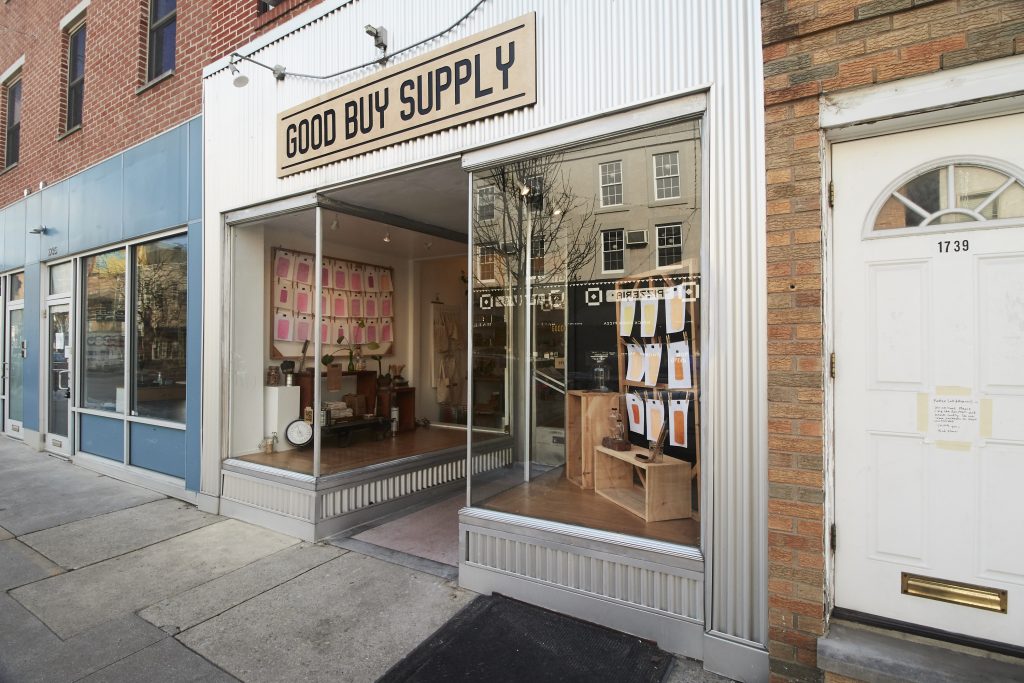
Good Buy Supply low-waste Store Front in East Passyunk.
Maintaining low-waste practices during COVID-19 while operating a successful business is hard to balance. Partnerships with Terracycle and Rabbit Recycling, ensure that plastic is properly recycled after being received unintentionally or by surprise.
Emily’s goals are for the good for the people. She encourages Temple students to use a voice for change by advocating for better wages and responsibility to be put on manufacturers. Simply, if people were paid more, then they would be able to live more responsible lifestyles.
Live Low-Waste at Home.
If you don’t need it, don’t buy it. Living sustainably doesn’t have to be complicated or expensive. Good Buy Supply is offering the Philadelphia community a place to reduce waste, live better, and save money down the line – in-person and online. See below to learn how you can visit Emily.
Tip from Emily: Use up your current products and when it’s time to buy new, buy with sustainable intention!
Emily points out that plastic didn’t explode in our society until the 1980’s, thinking back to where we started and living more simply. Do you need these extra things in your life? What can you eliminate?
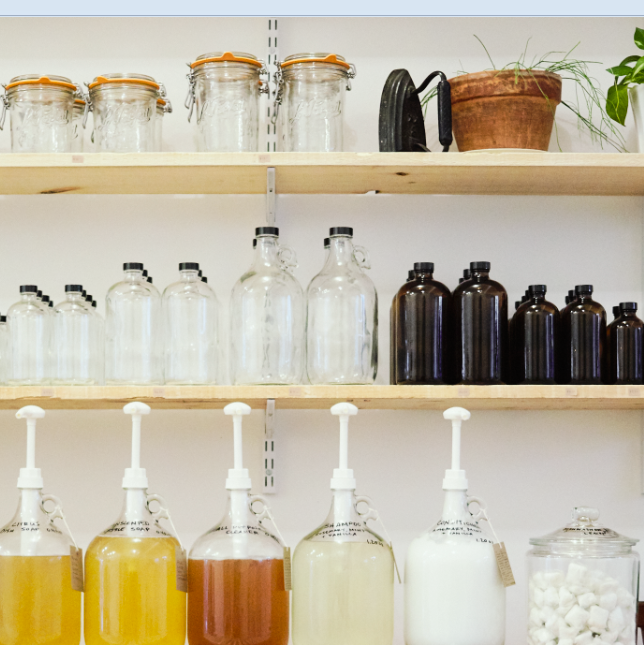
Snapshot of the GBS bulk bar for simple low-waste living.
Bring your own container to the Good Buy Supply refill station! You can stock up on earth-friendly products like shampoo, conditioner, laundry soap, disinfectant cleaner, and more. FYI: Bulk products are sold by the ounce, ranging from to $0.30 to $1.20 an ounce.
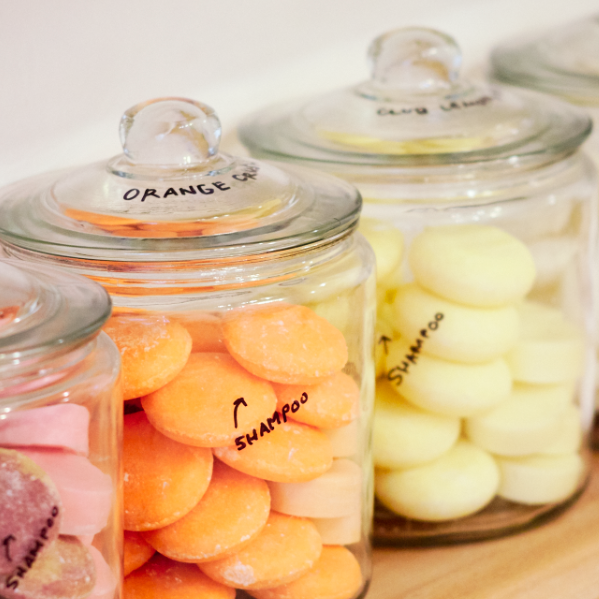
Low-waste shampoo bars from the GBS bulk bar.
Tired of your glass not being recycled properly? Drop off your clean glass jars and bottles to close the loop. As a Bottle Underground drop-off location, they collaborate with Remark Glass to create hand blown glassware.
Did you know? 70% of post-consumer glass will end up in landfills, mostly due to contamination.
Stop into the East Passyunk Location.
Are you a student looking to visit Good Buy Supply?
Cecil B. Moore → Good Buy Supply
Arrive at Cecil B. Moore Subway Station
Take Broad Street Line towards City Hall for 14 minutes
Get off subway at Tasker Morris Station
Walk East on Morris Street, turn right on South Iseminger Street, turn left on Pierce Street, and Right on East Passyunk Avenue
You’ve arrived at Good Buy Supply
Good Buy Supply: 1737 E. Passyunk Avenue, Philadelphia, PA 19148
Store Hours: Tuesday – Saturday: 10am – 6pm and Sunday: 10am – 4pm
Temple Sustainability is kicking off the spring semester with Stories of Sustainability: Race to Zero Waste! Our first #EcoChampion is Jonathan Latko, Director of the Temple University Computer Recycling Center. Jonathan hosted a critical discussion with students, staff, and faculty about e-waste in Philadelphia, and the institutional impact of equity and access in upcycling electronics.
#EcoChampion: Jonathan Latko
Jonathan has been with the Computer Recycling Center (CRC) for 17 years after receiving his MBA in E-Commerce from the Fox School of Business at Temple University in 2003. Jonathan also serves as an adjunct instructor in the Fox School of Business. He began his journey with the CRC in 2002, as the University grew larger and so did the need for more technology.
“Sustainability is a way of life based on a concept of Kaizen, balancing the triple bottom line. Leaving the planet and people we are interconnected with better off then how we found it”
Stories of Sustainability: E-Waste with #EcoChampion Jonathan Latko
The Temple CRC is an award-winning operation that gathers surplus computer and electronic equipment from around the university to refurbish, redeploy, donate and, where appropriate, securely dispose of equipment. On average the CRCprocesses more than 90 tons of equipment each year. Jonathan’s work helps Temple University reach the 2050 climate goals by reducing the need to always buy new, extending the life of the resources we do have, and reducing waste ending up in landfills and incinerators.
Out of Sight, Out of Mind.
E-Waste: Discarded electrical, or electronic devices also known as Electronic Waste.
E-waste has a poor reputation of disposal and improper management. Commonly being disposed of on streets, sidewalks, in curbside collections, its life cycle never truly ends. E-waste ends up being stored in perpetuity, sent to landfills or to an incinerator and burned. These irresponsible and illegal methods of disposal put people, especially poor communities and communities of color, at risk of the negative health impacts associated with burning electronics.
In 2003, Jonathan asked himself: How do we treat surplus assets? What are its alternative uses? How can we get computers to those that need them?
When Jonathan arrived at Temple, Facilities would throw “old” computers into storage or work with an external waste vendor to remove them from campus. Jonathan challenged the institution to think of these used machines, not as a nuisance or liability, but as assets. With a bit of e-waste education and a $25 equipment fee attached to each unit purchased, Jonathan got enough money and buy-in to start refurbishing these computers and redistributed them to university departments and employees at a discounted rate, or for free. Now, with a full scale surplus program in place, the CRC is able to provide equipment to students in need, and Temple facilities and departments, and centers on campus. 45% of the computers collected have been redistributed, totaling in over 20,000 computers and 14,000 monitors!
Jonathan at the CRC.
Q: Is your research project a climate solution? How or why?
A: We live within a finite system where everything and everyone interconnected and dependent upon each other. Realizing that this system is based on a carbon dependent economy in which our individual and collective behavior can affect that carbon dependency and thus the effects it has on people and the planet.
Tracking numbers are placed on the additional 115K pieces collected, and are diverted responsibly, in accordance with state and federal law. The Computer Recycling Center has won 3 awards for their efficiency and their unique, tuition dollar-saving model.
In 2019, the CRC expanded to open OwlTech, a retail, storefront operation in Pearson Lobby. OwlTech has a complete lifecycle of electronics, offers warranty and discounts, a trade in and trade up system, and new products to purchase.
OwlTech in Pearson Hall at Temple University: Main Campus.
Q: How have the challenges of COVID and work from home presented opportunities for sustainable innovation?
A: COVID exacerbated the already widening digital divide but led to the acceleration, acceptance and recognition of the deep value presented by refurbishing and extending the life of existing resources, like computer devices need for those without.
Digital Equity for North Philly.
Technology is an essential tool and can be an equalizer in the economy. To ensure civic and cultural participation, employment, lifelong learning and access to essential services, one needs access to online services. The pandemic posed a problem for the North Philadelphia community. Playing a zero sum game, Jonathan continued the $25 model to refurbish machines and recover costs. The CRC collaborated with several partners to identify community members in need.
200 laptops were donated to community members in North Philadelphia. Educational, “Ikea Style”, step-by-step documents were distributed with the computers explaining how to set them up. The CRC also provided customer service, where Jonathan and his student workers offered remote tech support to community members.
https://youtu.be/0R3mNZIepoE
Watch a snippet from Stories of Sustainability to hear directly from our #EcoChampion about the North Philly Digital Navigator Workforce Development Initiative and building community tech centers throughout the city.