Categories
Food Waste

Low Carbon Eating with Riya

Hi Temple! My name is Riya Shah, I am a sophomore Health Professions Major and a Food Systems Sustainability EcoLead at the Department of Sustainability.
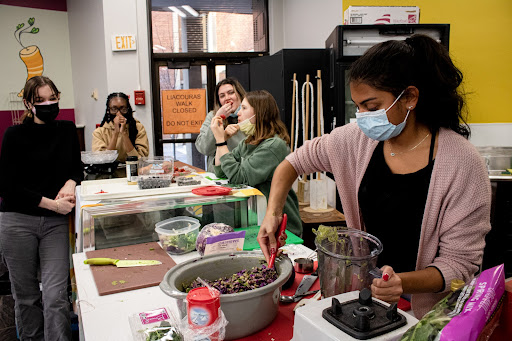
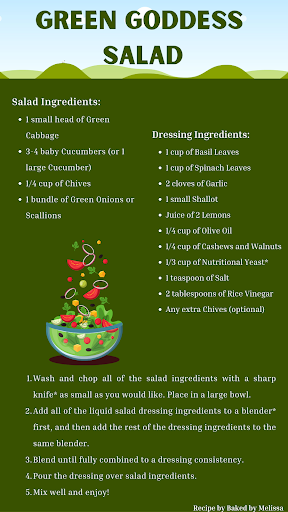
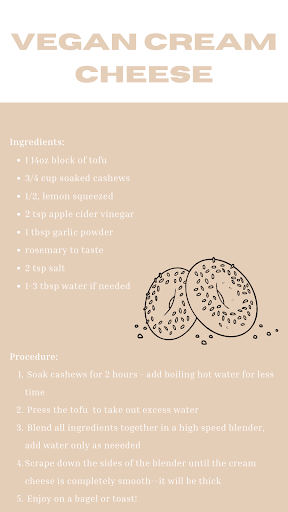
This semester I was able to host two Low-Carbon Eating workshops which allowed students to learn about carbon emissions associated with food production, transportation, and decomposition. We also made a plant-based dish at each workshop using local ingredients that exemplified budget friendly meals that were also healthy, convenient to make, and environmentally friendly

Cooking Low Carbon

Often, it is difficult to put much thought into the sustainability of the food that we purchase and consume as busy college students, but these decisions have a large impact on our planet. Plant foods have a significantly lower carbon footprint (amount of carbon released into the atmosphere contributing to global warming) than animal foods. Foreign foods like tropical fruits that have to travel far distances contribute high amounts of emissions as compared to locally-grown produce, and require artificial chemical processes to preserve the foods which pose health side effects and environmental run-off.  
Finding affordable, low carbon foods can be a challenge as well, especially depending on one’s location. One such organization that helps to alleviate this challenge and provide free, locally donated produce to the community at no cost is Sharing Excess. Temple University’s chapter has generously been hosting pop-ups almost every Friday to both Temple Students and local Philadelphia residents. 
Categories
Food Waste Race to Zero Waste Uncategorized

Campus Race to Weigh the Waste

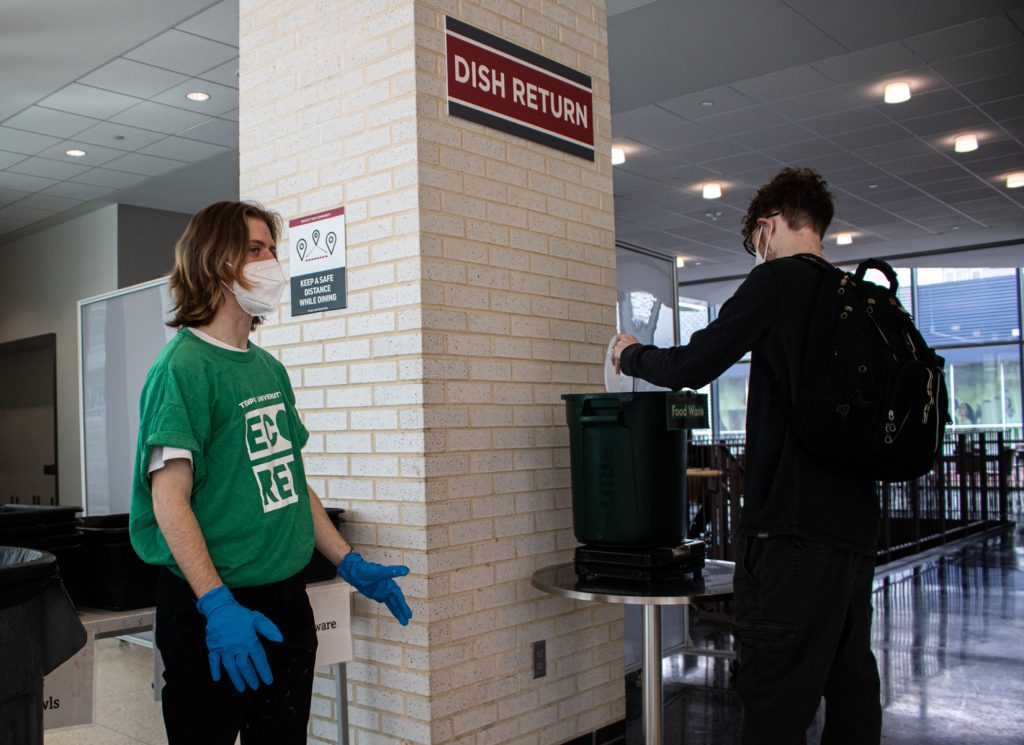
Diverting food waste from the landfill in Morgan Dining Hall.

Over the course of two weeks, students volunteered during lunch from 11am – 2pm at the dish return station in Morgan Dining Hall. From buffalo cauliflower wings to unfinished pizza slices, students were able to get a glimpse at the process of diverting food waste from landfills. 

Goal: Teach students about food waste and get metrics on how much food ends up in the dining hall’s bio digester. The two weeks inspired a multitude of learning opportunities and insights around waste literacy on Temple’s campus. 

https://www.youtube.com/watch?v=uLogXtpHbFM
Learn more about this project on Temple Update

Here are some of the key takeaways from the Weigh the Waste event:

  • Even though the food waste bucket is at the dish return spot in the dining hall all the time, this event highlighted the lack of student familiarity with separating food waste.
  • Most of the students eating at the dining hall were unaware that there was a food waste bucket at the dish return table in Morgan.
  • A majority of the students however, were willing to listen to instructions on where to put their waste when directed by the dining hall staff and EcoReps. 
  • Thanks to students’ willingness to learn, we saw individuals become more familiar with the process of separating their food waste.
EcoLead Mason Dofflemyer instructs student diner on how to properly dispose food waste

Food Waste and Future Opportunities

From this event, there is a lot of momentum around the scope of food waste. We are so excited to continue to partner with Aramark to address the issue of food waste on Temple’s campus. These two weeks of Weigh the Waste have identified how we can improve our food waste mitigations strategies as students and as an institution.

Learn more about different food waste initiatives and how to get involved through Temple’s Office of Sustainability’s website.