About

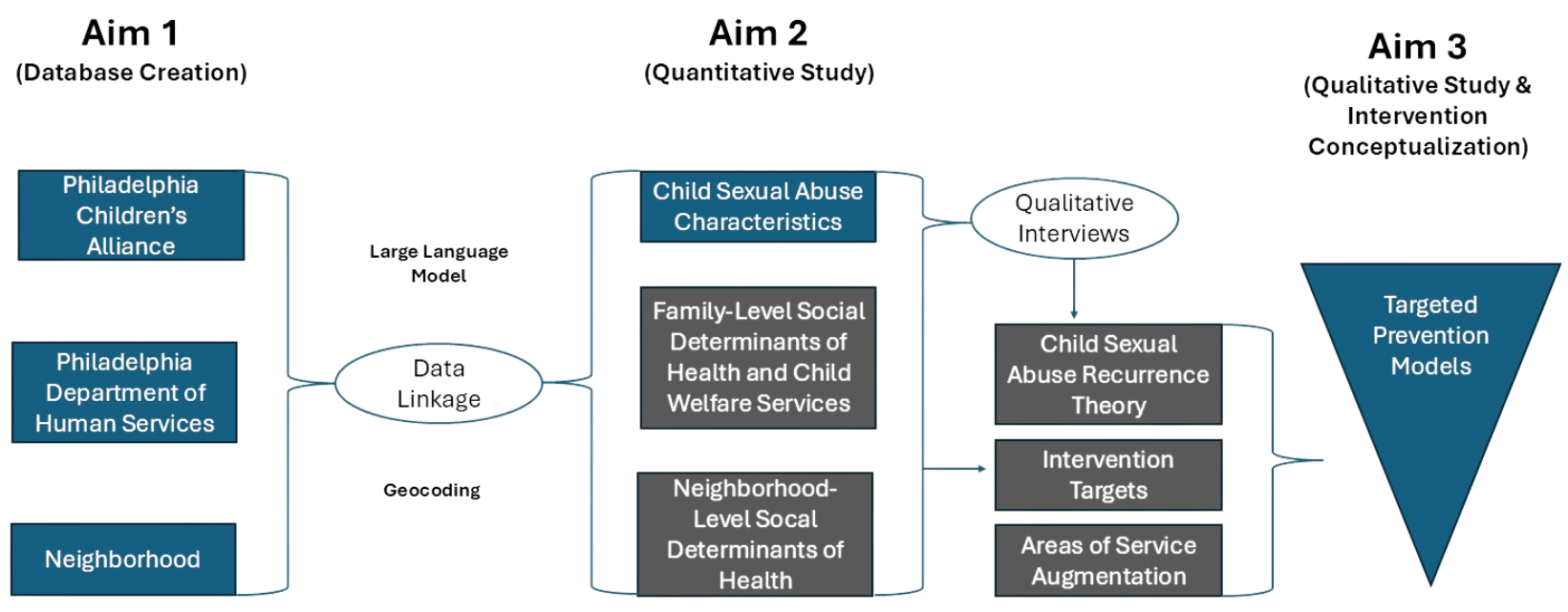
This study has three aims.

This image describes the three aims of the study. Aim 1 database creation involves PCA, DHS, and Neighborhood. This feeds into data linkage, where the large language model and geocoding take place. Data linkage feeds into Aim 2 quantitative study. Under Aim 2 is child sexual abuse characteristics, family-level SDH and child welfare services, and neighborhood-level SDH. These three components feed into Aim 3, qualitative study and intervention conceptualization. Under aim 3 is qualitative interviews, as well as CSA recurrence theory, intervention targets, and areas of service augmentation. Qualitative interviews also feeds into CSA recurrence theory, intervention targets, and areas of service augmentation. CSA recurrence theory, intervention targets, and areas of service augmentation feed into targeted prevention model(s), also under aim 3.

Aim 1. Data Linkage Study. Create a dataset to comprehensively study CSA recurrence.

  • Link and combine PCA and Philadelphia DHS data
  • Calculate measures of neighborhood-level characteristics
  • Extract information from forensic interview narratives to enrich data

Aim 2. Quantitative Study. Use the dataset to determine factors that contribute to (or protect from) CSA recurrence including:

  • Child sexual abuse characteristics
  • Child welfare services
  • Social determinants of health (SDH) at the family and neighborhood levels

Aim 3. Qualitative Study.

  • Obtain perspectives of workers, survivors, and caregivers on factors that contribute to child sexual abuse recurrence, including strengths/limitations of the system.
  • Conceptualize prevention models for recurrent CSA
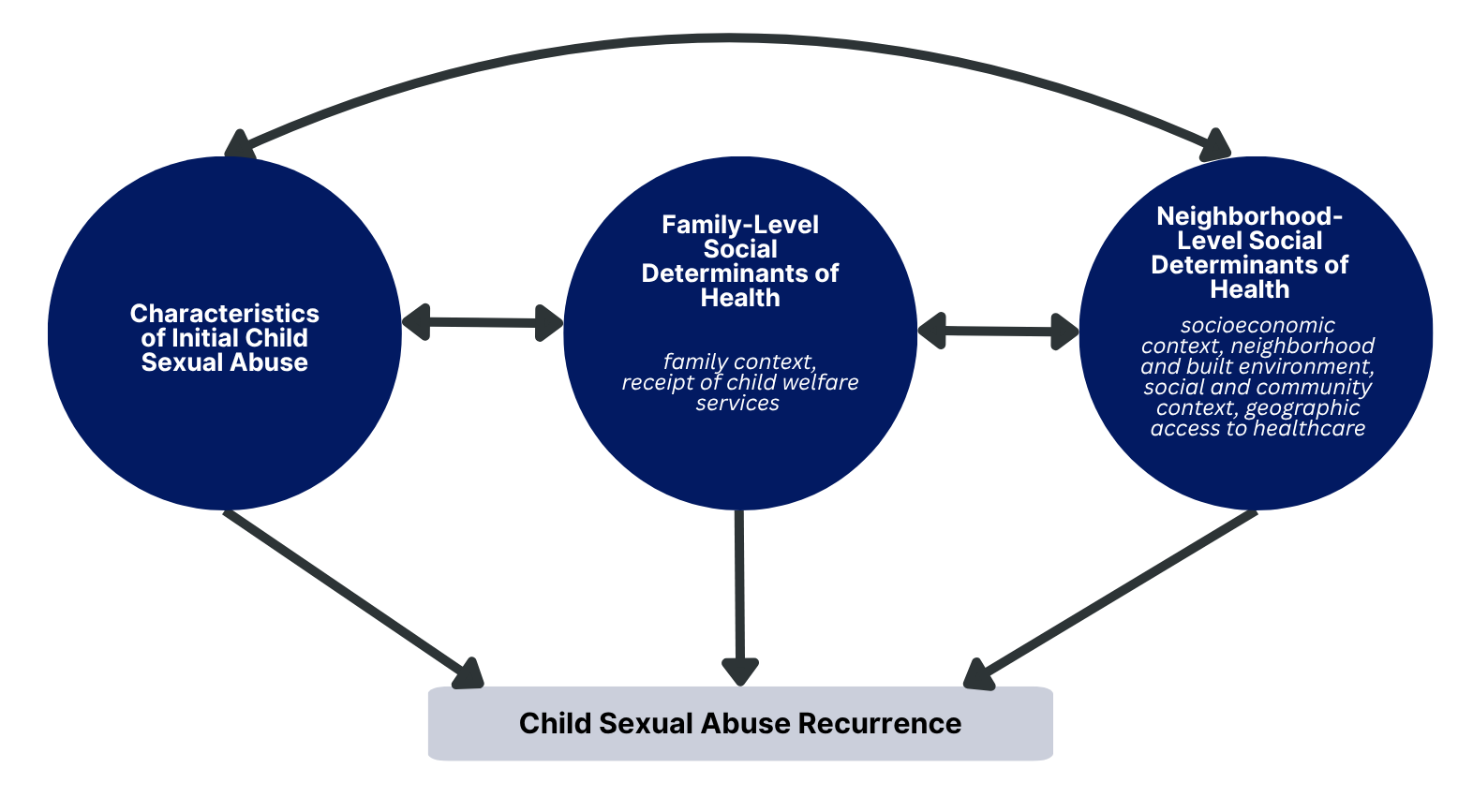
Conceptual model showing relationships among three factors associated with child sexual abuse recurrence: characteristics of initial child sexual abuse, family-level social determinants of health (family context and receipt of child welfare services), and neighborhood-level social determinants of health (socioeconomic context, neighborhood and built environment, social and community context, and geographic access to healthcare). Arrows indicate relationships among all three factors and their connections to child sexual abuse recurrence. Arrows from all three factors feed into child sexual abuse recurrence.