Renato is presenting at Ford Motor Company’s 3rd Artificial Intelligence & Machine Learning Conference 12/2022.
Data-driven Discovery of Governing Equations of Li-ion Batteries Pertaining State of Charge
The complex electrochemical behavior of batteries results in nonlinear and high-dimensional dynamics. Accurate SOC prediction is paramount for increased performance, improved operational safety, and extended longevity of LiBs. The battery’s internal parameters are cell-dependent and change with operating conditions and battery health variations. We present a data-driven solution to discover governing equations pertaining to SOC dynamics from battery operando measurements.
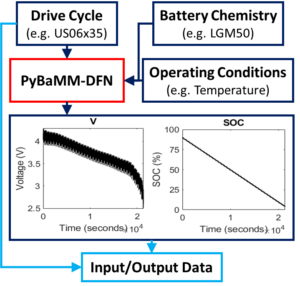
Schematic of Data Collection Process
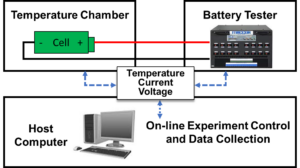
Schematic of Experimental Setup
Our approach relaxes the need for detailed knowledge of the battery’s composition while maintaining prediction fidelity. The predictor consists of a library of candidate terms and a set of coefficients found via a sparsity-promoting algorithm. The library was enhanced with explicit physics-inspired terms to improve the predictor’s interpretability and generalizability. Further, we developed a Monte Carlo search of additional nonlinear terms to efficiently explore the high-dimensional search space and improve the characterization of highly nonlinear behaviors. Also, we developed a hyperparameter autotuning approach for identifying optimal coefficients that balance accuracy and complexity.
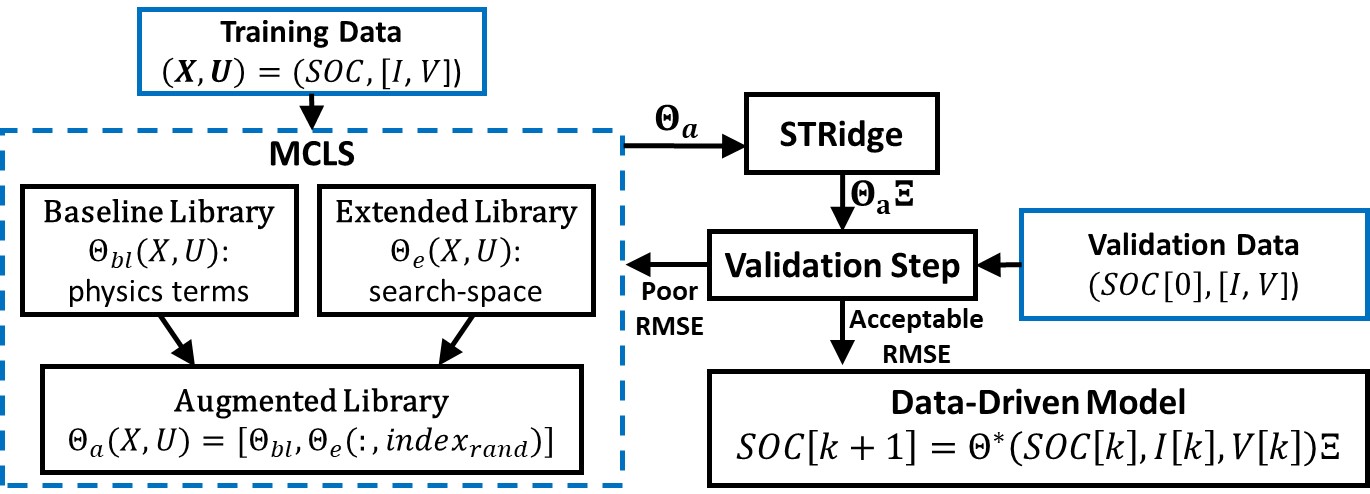
Schematic of Monte Carlo Library Search (MCLS)
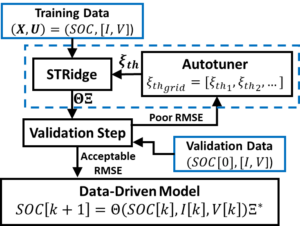
Schematic of Hyperparameter Autotuner
We tuned the model’s performance and sparsity by exploring different combinations of candidate terms (basis functions) and data sampling rates. The resulting SOC predictor achieved high predictive performance scores (RMSE) of 2.2e-6 and 4.8e-4, respectively, for training and validation on experimental results corresponding to a stochastic drive cycle.
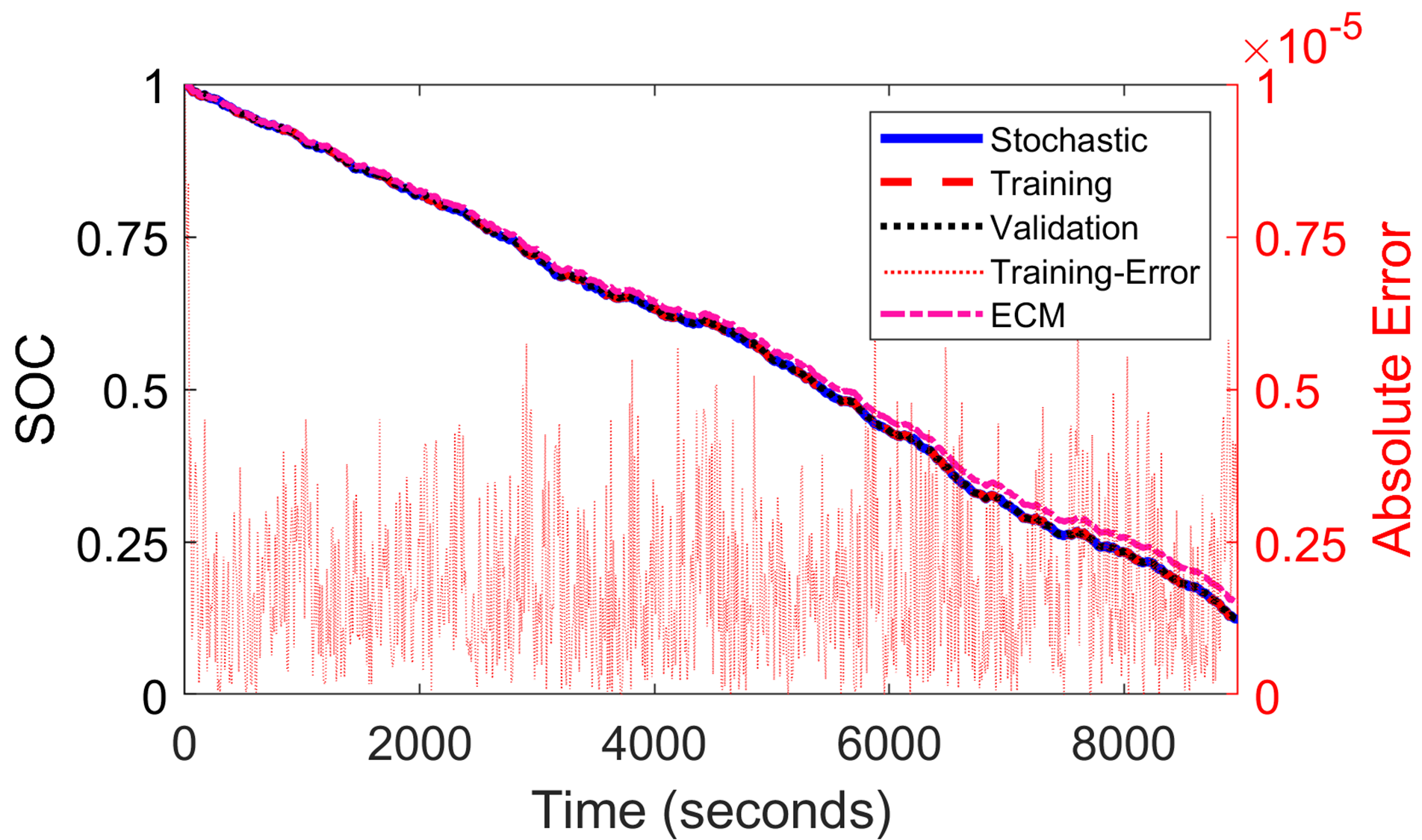
Training Results and Model-Validation to predict SOC from current, voltage, and initial SOC (Experimental Data)
The predictor achieved a generalizability RMSE of 8.5e-4 on unseen battery measurements corresponding to the standard US06 drive cycle, further showcasing the adaptability of the predictor and the enhanced modeling approach to new conditions.
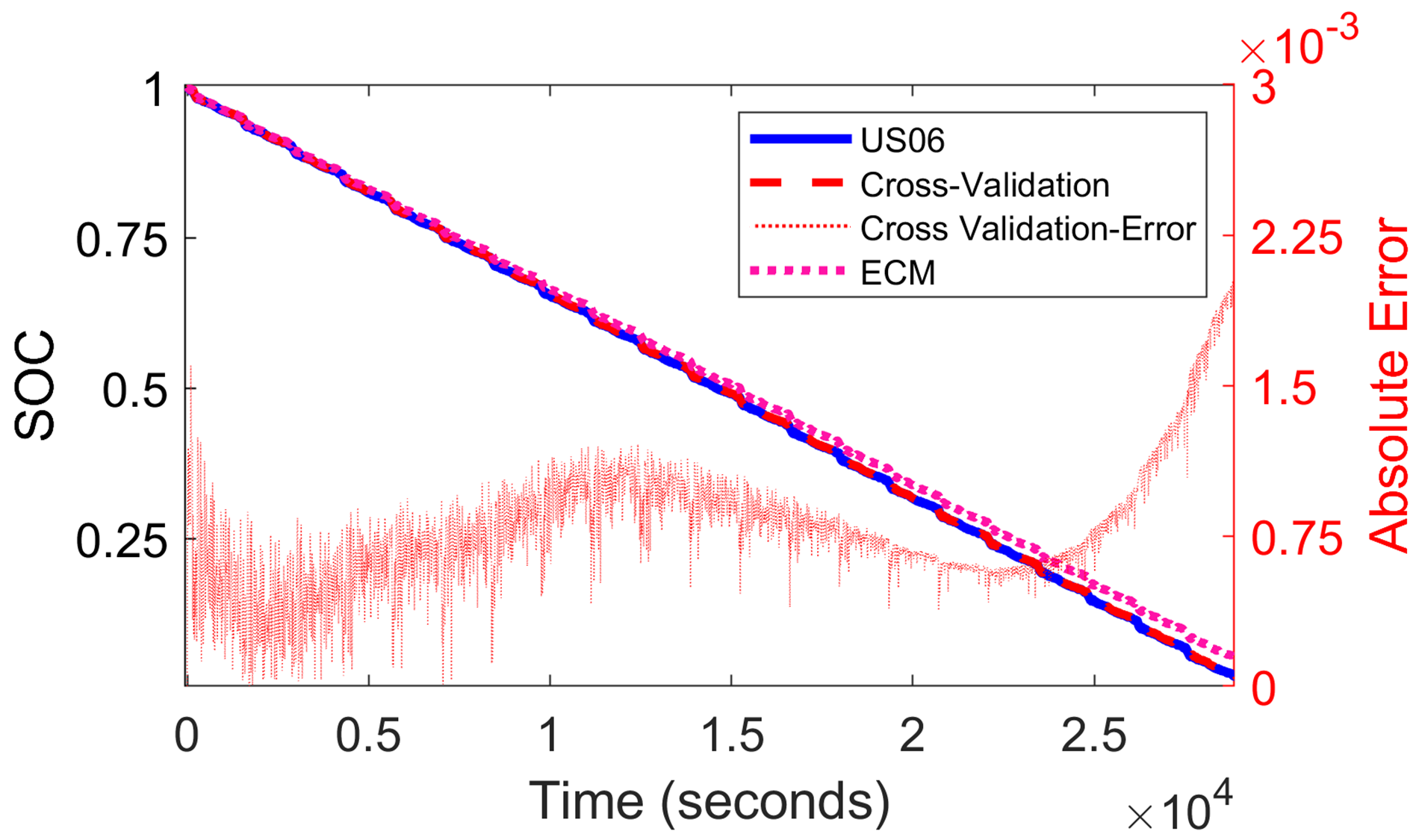
The modeling technique includes explicit physics-inspired terms, which allows for interpretable and generalizable models. Furthermore, the procedures and methods developed in this research are generic and can guide machine learning modeling of other dynamical systems.
Publications
- Rodriguez, R.., Ahmadzadeh, O., Wang, Y., & Soudbakhsh, D. (2023). Data-driven Discovery of Lithium-Ion Battery State of Charge Dynamics. Journal of Dynamic Systems, Measurement, and Control, 1-13, https://doi.org/10.1115/1.4064026.
- Rodriguez, R., Ahmadzadeh, O., Wang, Y., & Soudbakhsh, D. (2023, May). Discovering governing equations of li-ion batteries pertaining state of charge using input-output data. In 2023 American Control Conference (ACC) (pp. 3081-3086), IEEE, https://doi.org/10.23919/ACC55779.2023.10156114.
- Ahmadzadeh, O., Rodriguez, R., Wang, Y., & Soudbakhsh, D. (2023, May). A physics-inspired machine learning nonlinear model of li-ion batteries. In 2023 American Control Conference (ACC) (pp. 3087-3092). IEEE, https://doi.org/10.23919/ACC55779.2023.10156368.
- Ahmadzadeh, O., Rodriguez, R., and Soudbakhsh, D. “Modelling of Li-ion Batteries for Real-Time Analysis: A Data-Driven Approach”, American Control Conference, 2022, https://doi.org/10.23919/ACC53348.2022.9867616
Renato is presenting at ALCOS 2022
Renato presented at the ALCOS 2022, Adaptive & Learning Control Systems Conference, IFAC.
Title: Adaptive Learning for Maximum Takeoff Efficiency of High-Speed Sailboats
Abstract: This paper presents an optimal takeoff maneuver for an AC75 foiling sailboat competing in the America’s Cup. The innovative sailboat design introduces extra degrees of freedom and articulations in the boat that result in nonlinear, high-dimensional, and unstable dynamics. The optimal maneuvers were achieved by exploring out-of-the-box solutions through adaptive control and optimization. We used a high-fidelity sailboat simulator for the data generation process and an adaptive control approach (Jacobian Learning (JL)) to optimize the sailing maneuver. Takeoff is a dynamic sailboat maneuver that involves transitioning the boat from a low-speed in-water status (displacement mode) to a high-speed out-of-water status (foiling mode) via actuation of the sailboat’s inputs. We optimized the time for the boat’s transitions from displacement mode to foiling mode while maximizing the projection of the velocity (Velocity Made Good (VMG)) in the desired target direction (True Wind Angle (TWA)). Furthermore, we optimized the sailboat’s upwind steady-state performance (closed-haul VMG) for varying sailing directions (TWA) and used the optimal TWA to formulate the takeoff.
The optimal solution is subject to physical/actuator constraints and the ones enforced to ensure the feasibility of the maneuvers by humans (sailors). The optimal takeoff achieved an average VMG of 7.42~m/s. This maneuver serves as a performance benchmark for the sailors and provides insightful information about the underlying dynamics of the boat.
IFAC-PapersOnLine: Volume 55, Issue 12, 2022, Pages 402-407
Publication Alert: Mohsen’s paper to appear in Cell Reports Physical Science
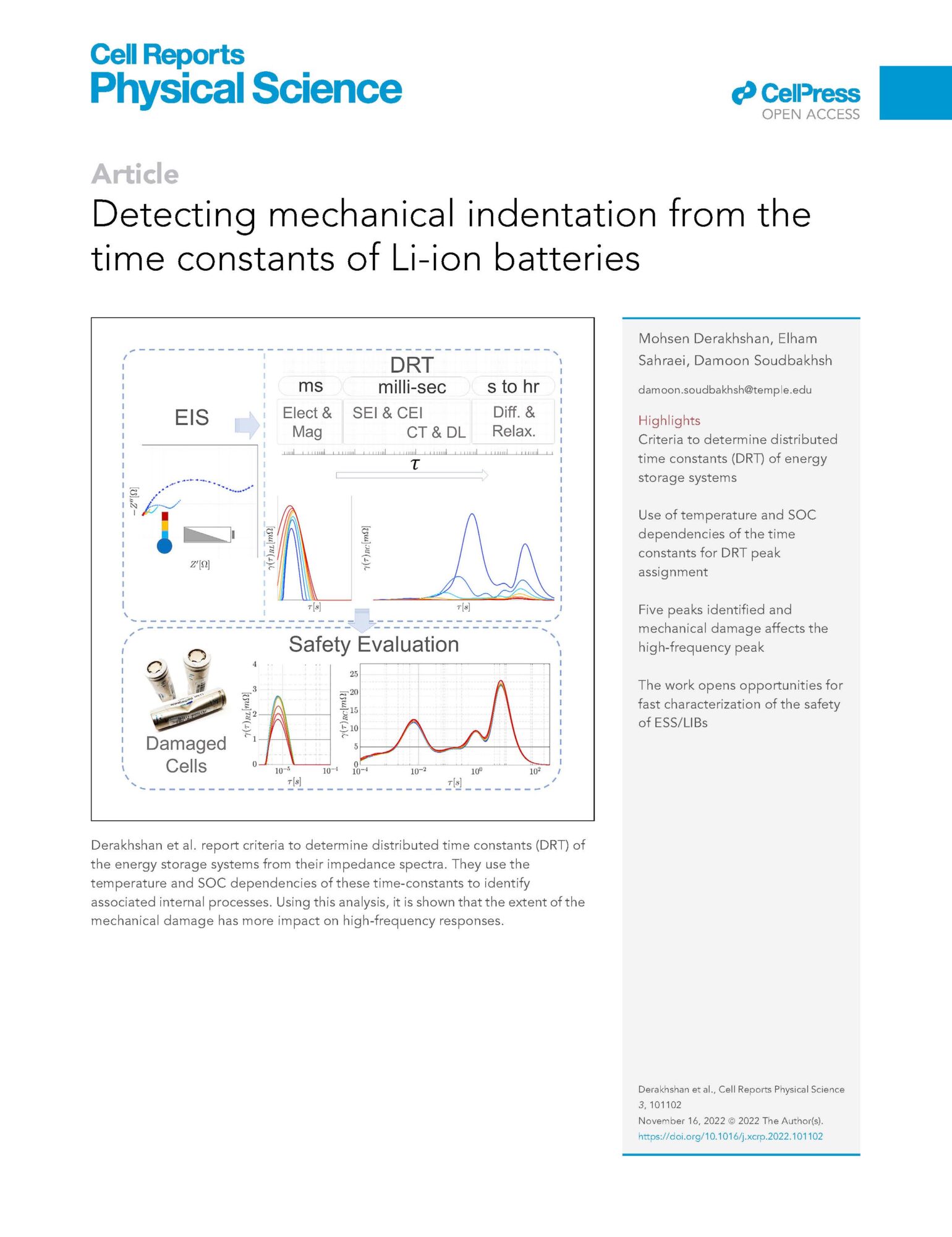
Mohsen Derakhshan, Elham Sahraei, and Damoon Soudbakhsh. “Detecting mechanical indentation from the time constants of Li-ion batteries.” Cell Reports Physical Science (2022): https://doi.org/10.1016/j.xcrp.2022.101102.
In this paper, we report new criteria to determine the distribution function of the relaxation times (DRT) parameters and demonstrate its application in evaluating the safety of mechanically damaged Li-ion cells. Here is the summary of the paper:
Summary: Lithium-ion batteries pose severe hazards if their safety is compromised. Previous work has shown that mechanical damage to the battery may not affect its voltage, capacity, or other primary specifications. Therefore, currently, there is no method to check the integrity of battery cells inside an electric vehicle battery pack once it has been subjected to a shock or impact. Here, we report a method to detect mechanical damage to Li-ion cells from their electrical response. We formulate the distribution function of relaxation times (DRT) by a series of passive electrical elements consisting of inductors, resistors, and capacitors. Using our DRT formulation and criteria, we show that the indented cells have substantially different high-frequency time constant characteristics than the control group. This non-invasive method has the potential for detecting hazardous mechanical damage to the batteries of electric vehicles after a road crash or impact landings of drones.
Mohsen is presenting at ACC’22
Derakhshan, Mohsen, and Damoon Soudbakhsh. “Temperature-Dependent Time Constants of Li-Ion Batteries.” IEEE Control Systems Letters 6 (2022): 2012–17. https://doi.org/10.1109/LCSYS.2021.3138036.
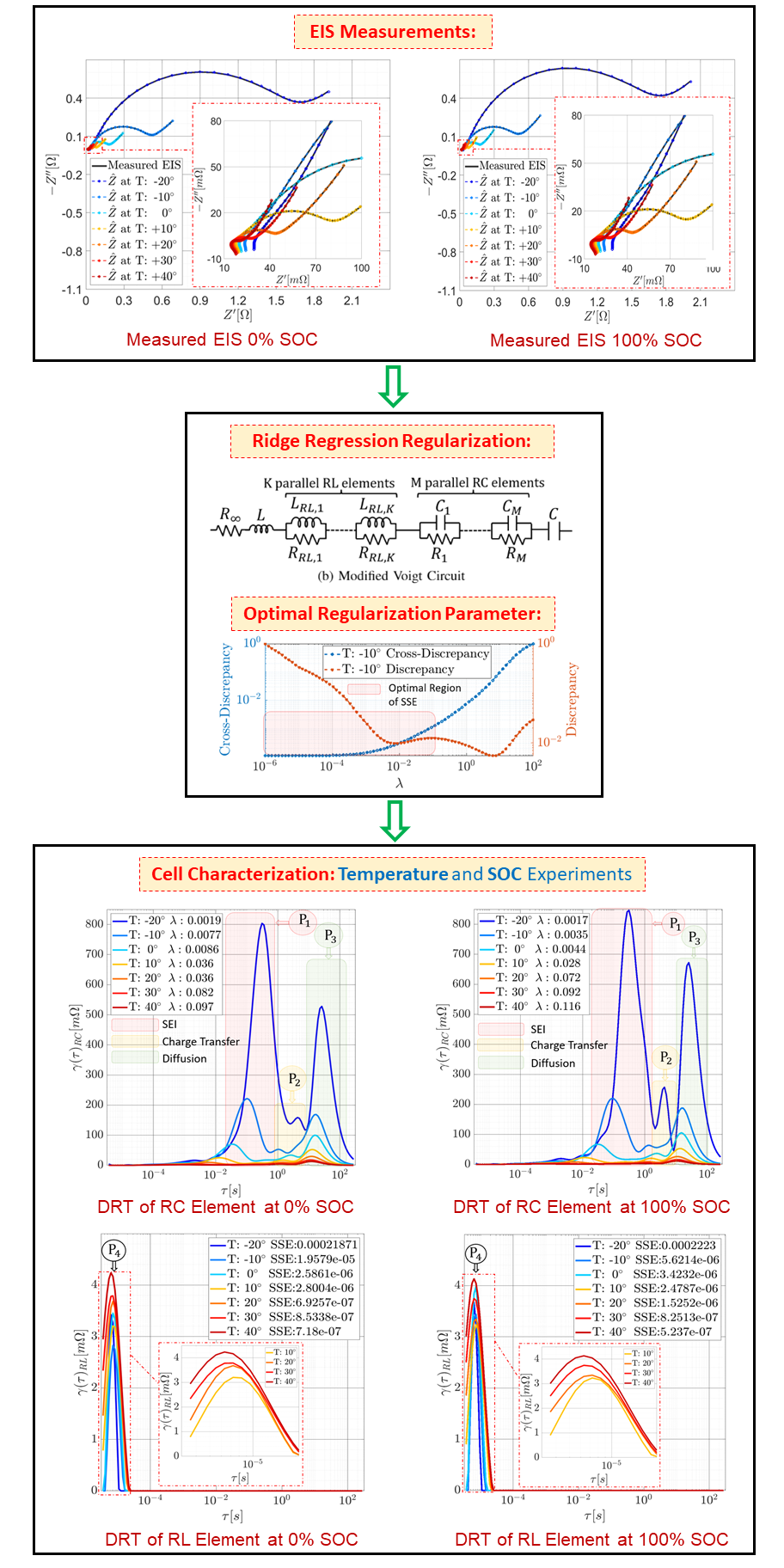
Abstract:We investigate the effect of temperature on the time constants of Li-ion batteries (LIBs). Using the distribution of relaxation times (DRT), the time constants of three cylindrical Li-ion cells were determined. EIS (Electrochemical Impedance Spectroscopy) was conducted on the cells, and the measured impedance spectra were analyzed using DRT. The DRT analysis is usually formulated as a Ridge Regression optimization problem. While the regression tuning parameter has a significant impact on the results, the studies on selecting this parameter are very limited. This letter proposes novel cost functions to select the optimal regressions parameters. The cost functions include (i) Discrepancy, (ii) Cross-Discrepancy, and (iii) the Sum of Squared Errors. The first two criteria exploit the Kramers-Kronig relations, and they quantify the discrepancy of the reconstructed impedance spectra using only its real, imaginary, or both components. The last criterion quantifies the errors in real and imaginary components of the data from the reconstructed EIS. The method was applied to the impedance spectra of Li-ion cells at low and high temperatures and different state of charges (SOCs). We identified the time constants of the cells using the proposed criteria for different test conditions.
Omidreza is presenting at ACC’22
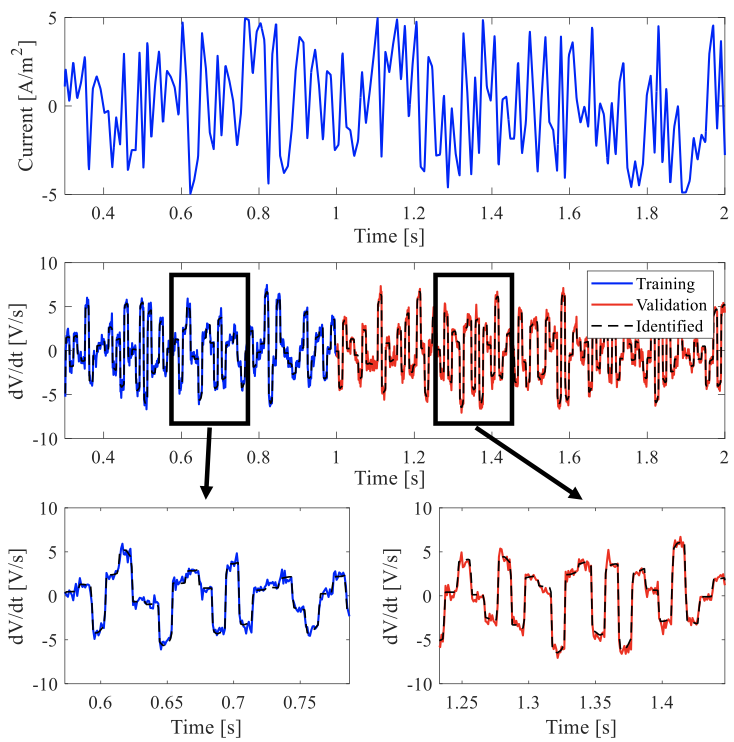
We are working towards data-driven modeling (DDM) of Li-ion batteries (LIBs). Lithium-ion batteries are present in many modern world applications due to several desirable properties like high energy and power density. Accurate real-time modeling of the LiBs improves their operation and safety. However, developing physics-based models is a very cumbersome, time-consuming task and requires several measurements and information that often are not available. The new DDM techniques offer a solution for control-oriented modeling of energy storage devices. We developed a sparse model of batteries using a technique called sparse identification of nonlinear dynamics. We explored a set of potential terms known as library to develop the model. The sparse model was achieved by formulating the problem as a ridge regression optimization and finding the dominant terms. Model performance and robustness were assessed via validation and generalization tests. Additionally, the model was tested for its robustness to noise. We showed the trend of the model parameters with the charge/discharge curves. Next, we improved the model by including information about the state of charge (SOC) in the library. The model with SOC as a parameter does not need the interpolation of the parameters as the battery goes through charge/discharge. We showed the performance of this model using the US06 highway driving cycle.
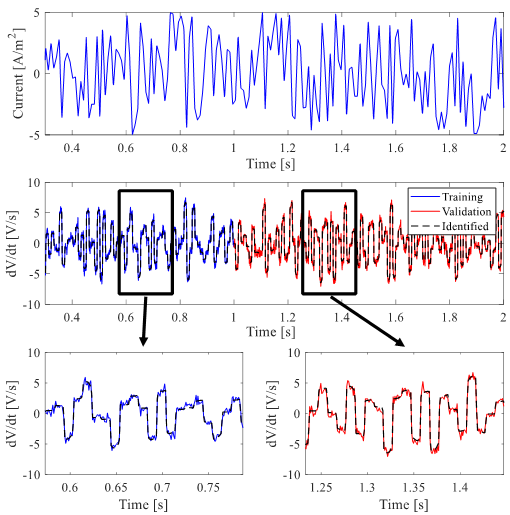
O. Ahmadzadeh, R. Rodriguez and D. Soudbakhsh, “Modeling of Li-ion batteries for real-time analysis and control: A data-driven approach,” 2022 American Control Conference (ACC), Atlanta, GA, USA, 2022, pp. 392-397
Data-Drive Modeling of Complex Dynamical Systems
Complex dynamical systems such as energy storage systems (ESS) have high-order models, which are costly to develop as they require the tedious task of determining the material and physical parameters of the system. We aim to mitigate these shortcomings by developing data-driven models of such systems from the input/output response data. We utilize tools from subspace identification, sparsity promoting regularization, and switching systems theory to determine the optimal time-varying data-driven models. Further, we develop Koopman operators’ modeling techniques and extend them to control ESS.
Publications:
Ahmadzadeh, O., Rodriguez, R., and Soudbakhsh, D. “Modelling of Li-ion Batteries for Real-Time Analysis: A Data-Driven Approach”, American Control Conference, 2022.
Optimal Control of an AC75 Sailboat for the America’s Cup Race
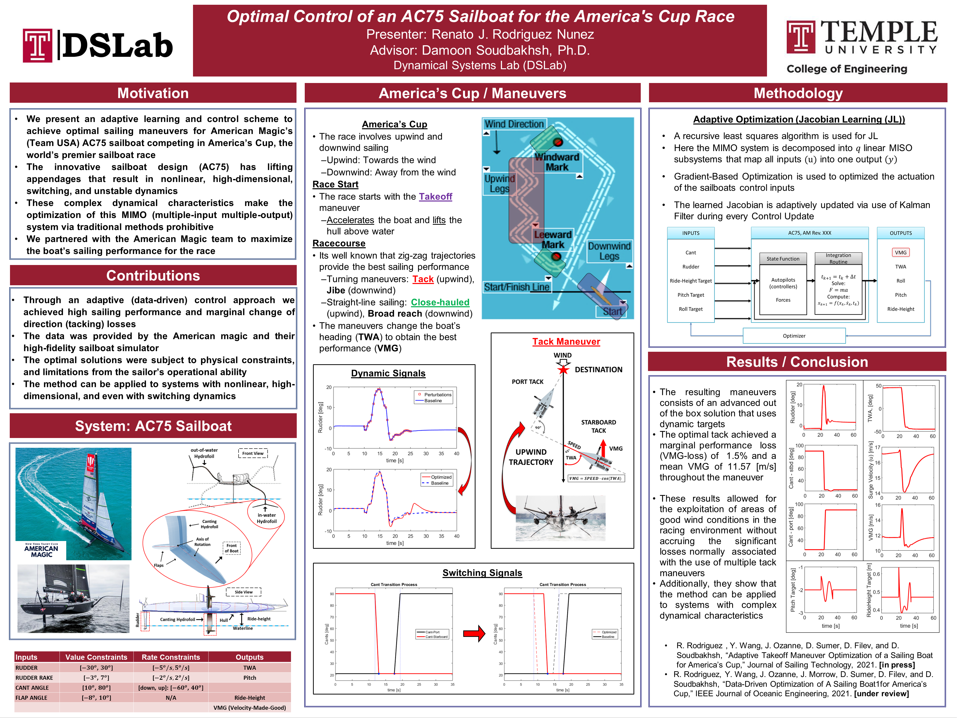
Renato is presenting at ECC’22
Renato is presenting at the European Control Conference (ECC) 2022.
Rodriguez, R., Wang, Y., Ozanne, J., Sumer, D., Filev, D., Soudbakhsh, D., “Adaptive Takeoff Maneuver Optimization of a Sailing Boat for America’s Cup”, European Control Conference, (ECC) 2022.
Abstract: This paper presents optimal sailing maneuvers for an AC75 foiling sailboat competing in America’s Cup. The innovative sailboat design introduces extra degrees of freedom and articulations in the boat that result in nonlinear, high-dimensional, and unstable dynamics. The optimal maneuvers were achieved via the exploration of out-of-the-box solutions through adaptive control and optimization. We used a high-fidelity sailboat simulator for the data generation process, and an adaptive control approach (Jacobian Learning (JL))to optimize the sailing maneuvers. These maneuvers serve as benchmarks and provide insightful information about the underlying dynamics of the boat. The close-hauled and tacking maneuvers were optimized to achieve maximum Velocity MadeGood (VMG) and minimum loss of VMG, respectively. The optimal solutions are subject to physical/actuator constraints as well as the ones enforced to ensure the feasibility of the maneuvers by humans (sailors). The optimal maneuvers boast a marginal loss in sailing performance (VMG) of less than1.5%, which enables exploiting areas of good wind conditions in the racing environment by maneuvering towards these areas without accruing the significant losses traditionally associated with performing multiple maneuvers.
Safety Evaluation of Li-ion Batteries
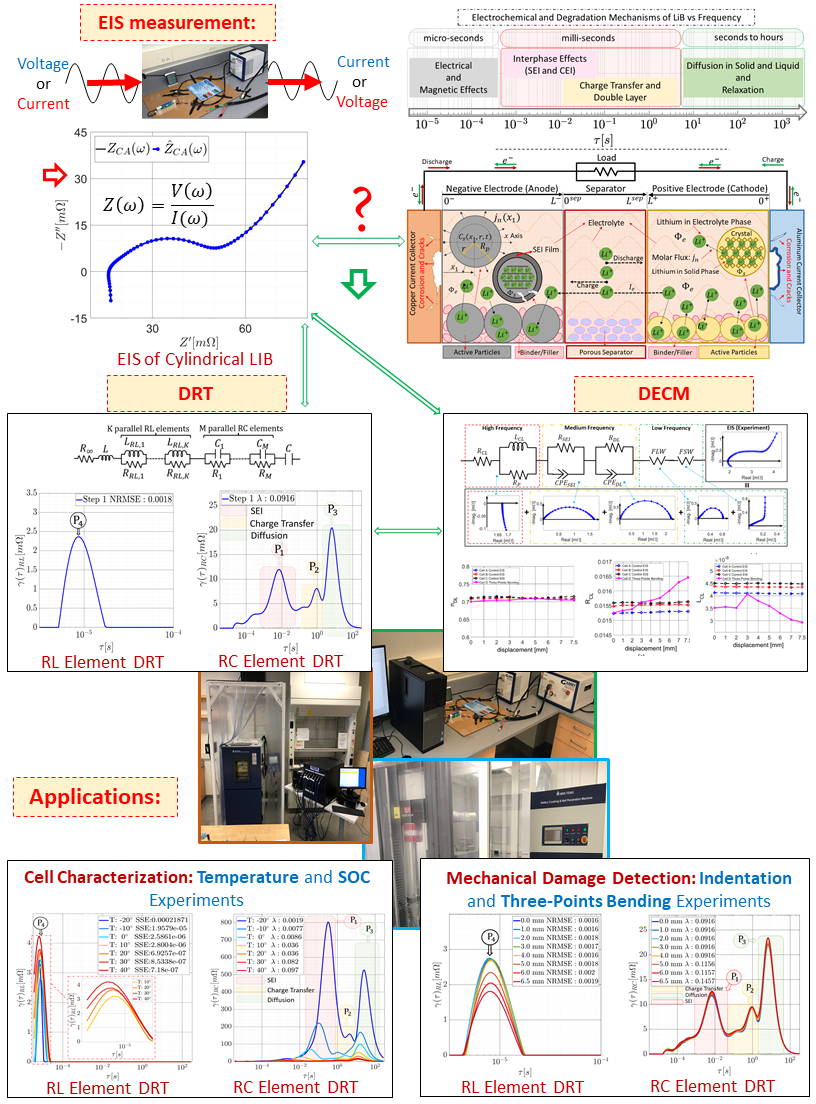
Energy storage systems (ESS) such as Li-ion Batteries (LIBs) are the solution for many applications including cellphones and electric vehicles. However, they can pose serious hazards if their safety is compromised such as after sustaining mechanical damage. Lithium-ion batteries have several internal processes that contribute to their response to current excitation. There is a frequency range associated with each of these internal processes in which they are most active. Therefore, conducting EIS (Electrochemical Impedance Spectroscopy) experiments can be used to investigate the effect of different excitation/environmental conditions on these time constants. EIS is an important tool in analyzing and modeling ESS which is based on applying sinusoidal inputs in the form of voltage or current to the cell and measuring the output current or voltage. EIS plots provide the response of the system to a wide range of frequencies. However, due to the presence of several processes inside ESS, the interpretation of EIS data is a challenging task. Therefore, supplementary tools are needed to extract the required information from EIS data. Distributed Equivalent Circuit Model (DECM) and Distribution of Relaxation Time (DRT) are two main tools for analyzing EIS data. However, in the DECM approach, the number and type of circuit’s elements and their connection to the cell’s physics is still an open question. DRT approach can decouple the processes by identifying the time constants of the EIS data. However, the DRT method and its variations do not work on ESS due to their complex impedance spectra, which violates the underlying assumptions commonly used in DRT.
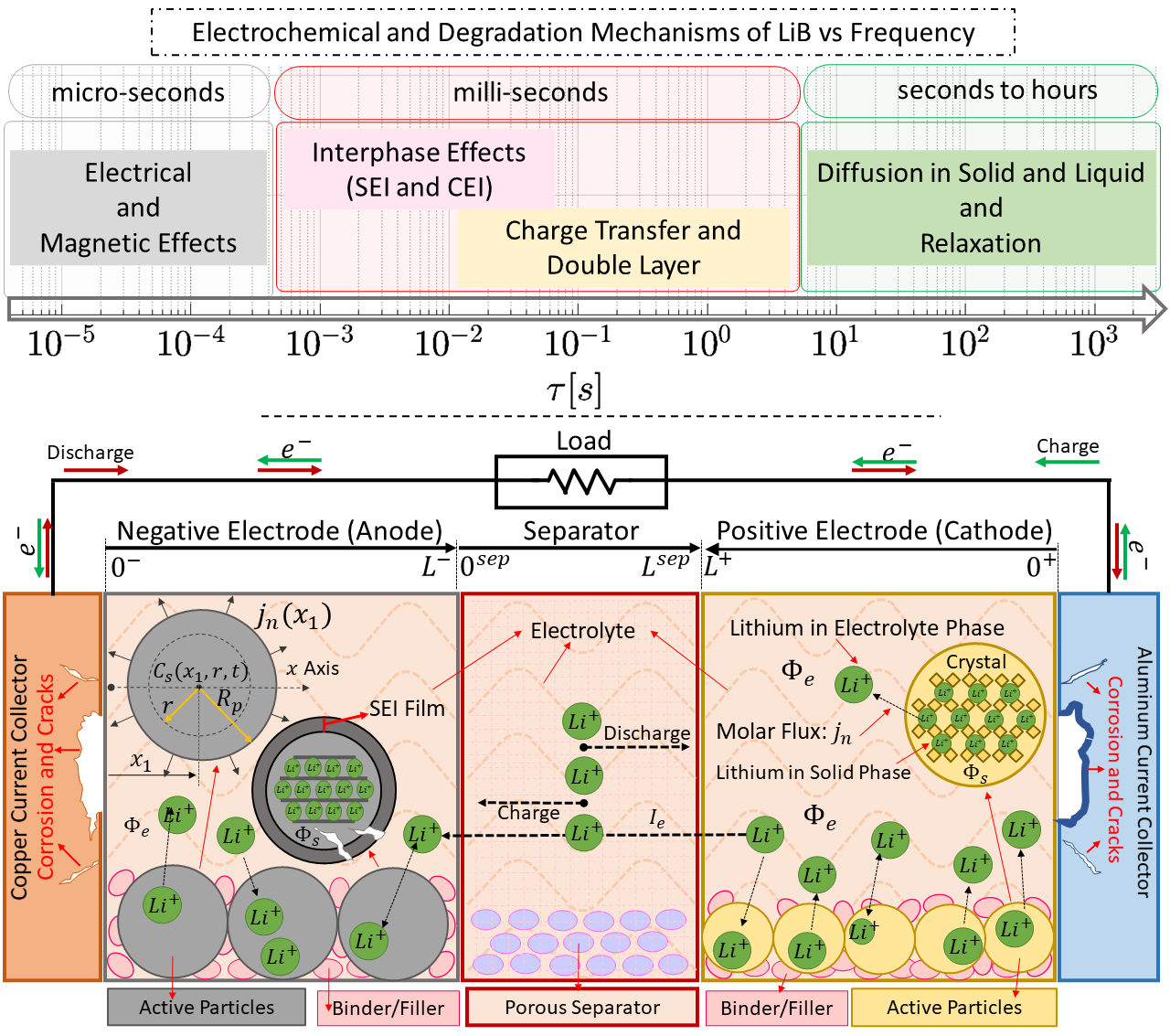
In this research, we address characterizing the safety status of Li-ion batteries based on their time constants. We introduce a method to determine time constants of energy storage systems (ESS) using their impedance spectra. The Distribution of Relaxation Times (DRT) function has been suggested to determine such time constants. We formulated DRT as a ridge regression optimization. We introduced criteria (discrepancy, cross-discrepancy, and the normalized root mean squared errors) to determine the time constants as the peaks of the resulting distributed function. The proposed approach was validated using experiments on Li-ion batteries (LIBs). We measured the impedance spectra of LIBs using an EIS instrument at different cell temperatures ( to and State-of-charge ( and SOC). We determined the time constants and used the SOC and temperature data to assign the peaks to appropriate electrochemical processes and verified them using the experimentally calculated time constants reported in the literature. We hypothesize that the time constants of ESS can be used for their fault detection and health monitoring, such as after sustaining mechanical load/impact. To validate this hypothesis, we measured impedance spectra and determined time constants of intact and mechanically damaged 18650 cylindrical cells. The DRT peaks showed the main differences between these groups and suggested criteria to determine the extent of mechanical damage from the impedance spectra. The method has application in the fields beyond ESS, where the frequency response can be measured. The time constants determined using our proposed method can guide the control-oriented data-driven models as well as the equivalent circuit models of ESS. For example, the number of time constants can determine the minimum number of elements to model ESS as well as the range of frequency at which these elements are excited. Furthermore, the time constants (and the basis function) can be used for distributed modeling of ESS with many elements and used for their fault detection and health monitoring.
Publications:
- Derakhshan, M., Sahraei, E., and Soudbakhsh, D. “Detecting Mechanical Indentation From the Time Constants of Li-ion Batteries, ” in Cell Reports Physical Science, 2022, doi: 10.1016/j.xcrp.2022.101102.
- Derakhshan, M., and Soudbakhsh, D. “Temperature-Dependent Time Constants of Li-ion Batteries,” in IEEE Control Systems Letters, vol. 6, pp. 2012-2017, 2022, doi: 10.1109/LCSYS.2021.3138036.
- Keshavarzi, M., Derakhshan, D., Gilaki, M., L’Eplattenier, P., Caldichoury, I., Soudbakhsh, D., and Sahraei, E., “Coupled Electrochemical-Mechanical Modeling of Lithium-Ion Batteries Using Distributed Randle Circuit Model,” 2021 International Conference on Electrical, Computer and Energy Technologies (ICECET), 2021, pp. 1-6, doi: 10.1109/ICECET52533.2021.9698796.
-
Derakhshan, M., Gilaki, M., Stacy, A., Sahraei, E., and Soudbakhsh, D. (January 22, 2021). “Bending Detection of Li-Ion Pouch Cells Using Impedance Spectra.” ASME. Letters Dyn. Sys. Control. July 2021; 1(3): 031005. doi: 10.1115/1.4049527.
-
Soudbakhsh, D., Gilaki, M., Lynch, W., Zhang, P., Choi, T., Sahraei, E. Electrical Response of Mechanically Damaged Lithium-Ion Batteries. Energies 2020, 13, 4284. doi: 10.3390/en13174284
-
Stacy, A., Gilaki, M., Sahraei, E., and Soudbakhsh, D. ”Investigating the Effects of Mechanical Damage on Electrical Response of Li-Ion Pouch Cells,” 2020 American Control Conference (ACC), 2020, pp. 242-247, doi: 10.23919/ACC45564.2020.9147883.
-
Sahraei, E., Gilaki, M., Lynch, W., Kirtley, J., and Soudbakhsh, D. “Cycling Results of Mechanically Damaged Li-Ion Batteries,” 2019 IEEE Electric Ship Technologies Symposium (ESTS), 2019, pp. 226-230, doi: 10.1109/ESTS.2019.8847923.