JOURNAL OF DESTINATION MARKETING & MANAGEMENT
Optimal-fit model of risk perception and travel-related behaviors during a global pandemic
- 2024
- JOURNAL OF DESTINATION MARKETING & MANAGEMENT
- 10.1016/j.jdmm.2024.100958
Liu-Lastres, Bingjie; Yang, Yang; Zhang, Carol X.
Abstract
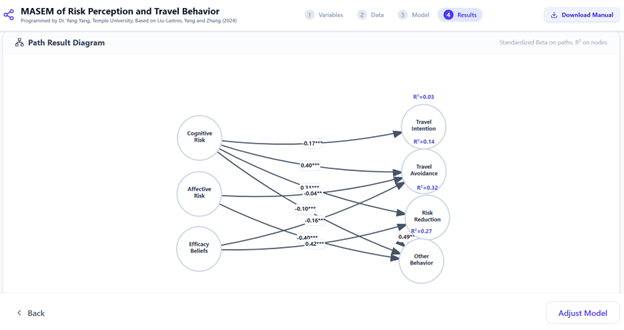
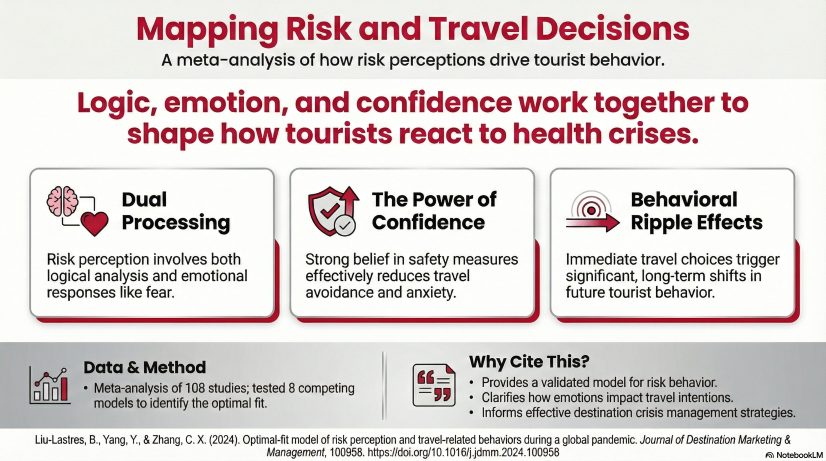
Risk perception research plays a critical role in tourism studies, given its ability to shape the appeal and viability of destinations. There has been a surge in research on tourism risk perception and travel-related behaviors due to the pandemic. This context offers a unique opportunity to review and aggregate risk perception studies to identify behavior patterns and changes. Accordingly, this study adopted the PSALSAR framework to analyze these studies, which consists of a synthesized literature review and a meta-analysis of tests involving competing theoretical models. The synthesis revealed the various behavioral outcomes and diverse theoretical backgrounds included in the sample. Our meta-analysis uncovered the model with an optimal fit and delineated the relationships among tourists’ cognitive and affective risk perceptions, efficacy beliefs, and behavior across different stages. This study offers theoretical and empirical insights into the effects of tourists’ risk perception attitude variables. Findings can inform more effective tourism crisis management strategies for destination management and marketing.
Keywords
Risk perception; Tourist behavior; Decision making; Meta-analysis; Literature review; Competing model testing; PSALSAR framework
Research topic
Sustainability and Resilience
Research method
Meta-analysis
Geographic area
Global
AI Audio Overview
AI Infographic
Extra Information
MASEM Tool of Risk Perception and Travel Behavior [link]