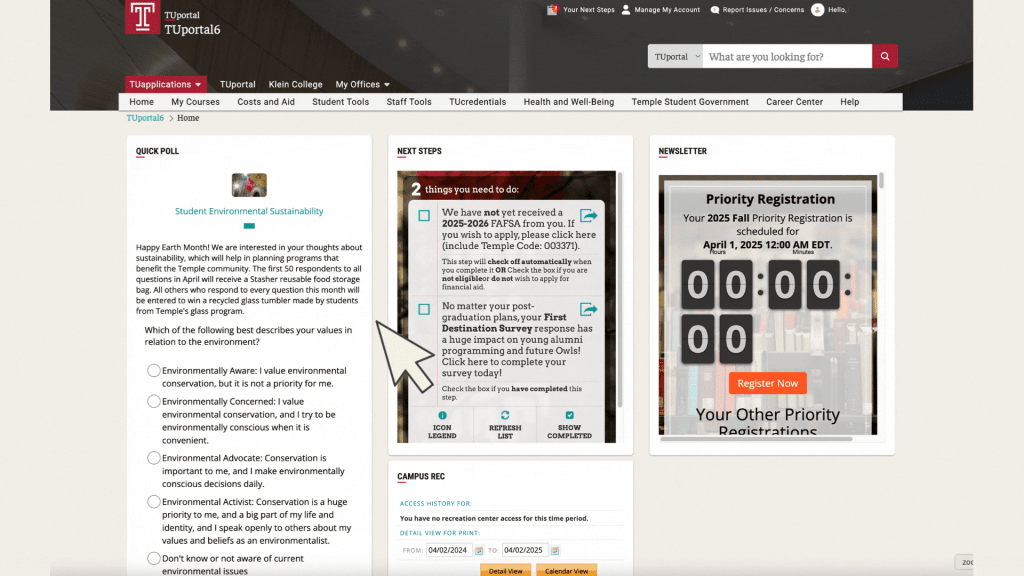
All Temple students, staff, and faculty will see new questions about sustainability in TUportal throughout the month of April from the 2nd through the 25th.
Every few days you’ll be asked about your personal values and actions when it comes to the environment, your thoughts and preferences on sustainability infrastructure and programs, and sustainability in your academic program or your professional role as a staff person.
Help us help you!
Your answers will help us plan programs that will benefit the Temple community for years to come.
The first 50 students and staff members to complete all the polls will receive a brand-new Stasher reusable storage bag.
February was Environmental Justice Month
In 2014, the Environmental Protection Agency (EPA) declared February to be Environmental Justice Month to commemorate the signing of historic 1994 executive order 12898: “Federal Actions to Address Environmental Justice in Minority Populations.”
Temple University’s Office of Sustainability is thrilled to present our February events and this year’s Campus Race to Zero Waste campaign. Join us in sowing the seeds of change and nurturing a more eco-friendly campus.
Campus Race to Zero Waste is a sustainability competition in which Temple University goes head-to-head against schools across the country to see who can divert the most waste from landfills.
Want to get started? Check out the calendar below to discover the array of events happening on and off campus this February. Click the links to RSVP and become a part of the movement toward a circular economy!
Kickoff: Feb 2 – March 29, 2025
Theme
Event
Where & When
RSVP
Sustainable Fashion
Temple Thrift Pop-Up
Tuesday, February 11, Morgan Hall North D301, 10AM – 3PM
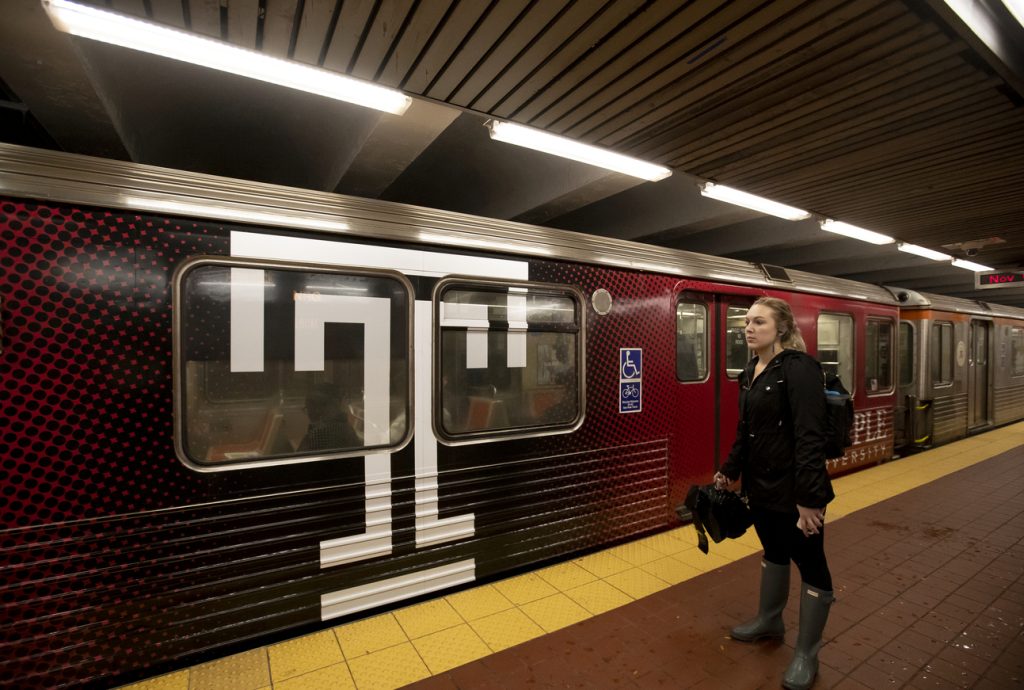
Temple community commutes via the Broad Street line subway
Temple’s Transportation Survey aims to assess the university’s environmental impact. The survey tracks progress on our greenhouse gas emissions inventory, calculates annual emissions from commuting, and aids in future planning. Results will be published on the Office of Sustainability website in Spring 2025, and previous survey results are available below.
We encourage all students, faculty, and staff to participate in this brief, 10-minute online survey. It is crucial data for our emissions inventory and for fulfilling our university climate commitment.
Take the survey:
You received an email from Ken Kaiser, SVP, inviting you to complete the 2024 Transportation and Sustainability Survey on Monday, 11/4
You may have received another email from Rebecca Collins on Wednesday, 11/13.
Search “transportation survey” in your Outlook inbox and click your unique link to contribute to this critical sustainability reporting.
It takes less than 10 minutes to complete! Participants who complete the survey can enter a raffle to win a sustainable prize.
In 2022, the most common primary mode of transportation reported by respondents was driving a car (32%)
Temple University students, faculty, and staff, take an estimated 263,580 one-way trips to and from campus in a typical week
88% of all respondents reported driving a car with a combustion engine to campus followed by 9.8% who drive hybrids and 2.5% who reported driving an electric vehicle
Frequently Asked Questions
What is the purpose of this study?
This survey will help the University understand its transportation energy use and find ways to reduce our impact on the environment generally.
I don’t even drive. Do you still want me to do this transportation survey?
Yes! We need accurate information from Temple people who do not drive as well as those who do. Whether you live near or far, use public transportation or drive, walk or bicycle, your answers are very important to the outcome of the survey.
How long does the survey take?
The online survey is very short. Most people will finish it in less than 10 minutes. Many have completed it within a few minutes.
What will you do with my answers?
Your answers will be held in strict confidence. When the data are analyzed, no one will be able to associate your name with your answers. Results will be studied to formulate the University’s energy policies, strategic planning and engagement opportunities for the years ahead.
What’s in it for me?
Two things: First, by participating, you can help Temple take a real step toward a more energy-sustainable community. Second, participants who complete the survey will be entered in a raffle. See below for prizes.
What does “sustainability” mean, anyway?
Sustainability has been defined by the National Academy of Science USA as “meeting the needs of present and future generations while substantially reducing poverty and conserving the planet’s life support systems.” More simply, it means meeting our own needs without compromising the ability of future generations to meet theirs.
Greenhouse gas emissions have been linked to global climate changes. Individual efforts are the first step in reducing negative effects of climate change locally and around the world.
I have questions about the survey. Who should I contact?
Please email sustainability@temple.edu with any questions and we will do our best to respond within 1 business day.
For more information, check out previous Transportation Survey Reports:
This Campus Sustainability Month, the Office of Sustainability will create pathways for understanding how small, grassroots actions can have a longstanding impact.
A series of different workshops, events and service opportunities will focus on select United Nations Sustainable Development Goals and the Temple community will learn what they can do here in Philly and on campus to affect sustainable change globally.
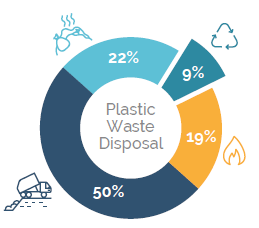
In 2019, 9% of plastic waste was recycled. The rest was incinerated, put in landfills, or disposed of using unregulated methods
Last month, Circular Philadelphia released a comprehensive policy guide on the current state of single-use plastic legislation in Philadelphia.
Despite the clear negative impacts of plastic production on the environment and our increasingly overwhelmed waste management systems, single-use plastic production has doubled in the last 60 years. This increase in production was exacerbated by the pandemic through online purchasing of delivery and takeout food orders increasing the demand for single-use packaging and food containers. The pandemic also hindered Philadelphia’s ability to manage plastic waste, as sanitation workers faced both an overwhelming amount of waste to clean up and a disproportionately high risk of exposure to COVID-19 due to their working conditions. This forced the city to prioritize trash management over recycling, leading to a drop from 22% in 2019 to a low 8% in 2022.
Despite the surge of single-use plastic during the pandemic, Philadelphia has recently taken several steps in the right direction when it comes to managing waste. The city increased on-time trash collections from 56% in 2021 to 96% in 2022 and added 150 new personnel for trash collection. Philadelphia also passed its ban of single-use plastic bags in 2022. A recent report found that after three months, reusable bag use doubled, and plastic bag use fell to almost zero.
Possible Solutions
Circular Philadelphia also reports that there are steps the city can take to reduce plastic waste even further in as short as a few years. The easiest solution to waste is legislation that bans or punishes single-use plastic, a measure that has already been used to eliminate plastic bag use in states such Hawai’i, Maine, and New York as well as municipalities such as Boston, Los Angeles, Seattle, and of course, Philadelphia.
Other methods include shifting responsibility for plastic consumption away from consumers, and instead pushing producers to reduce the amount of single-use plastic they use in their manufacturing and shipping process. In 2022, California passed a law that requires all packaging to be either recyclable or compostable by 2032, which is expected to help reduce plastic packaging by 25% and requires 65% of all single-use plastic packaging to be recycled within the following decade.
Another possible option is utilizing market-based solutions. Market based solutions often rely on a change in behavior from the consumer based on new trends or beliefs about what is socially favorable/acceptable. For example, it is favorable to like and protect animals, which made purchasing reusable straws popular when plastic straws were linked with harming sea turtles. But here are also several opportunities for change to come from the producers, such as manufacturing companies replacing traditional plastic bags with ones made from bioplastics, or stores offering reward points to customers who use reusable bags. A single cure-all solution for single-use plastic waste will be difficult to find, but combining several methods is a great start for achieving a waste-free future.
Circular Philadelphia’s Plan
Circular Philadelphia makes the argument that simple but thorough legislation informed by practices in other cities and regions is likely the best way to achieve fair, consistent, and measurable change when it comes to plastic waste in Philadelphia. Their recommended solution is a three-step legislation mechanism that eliminates certain single-use plastics from the take-out operations of restaurants’ and other prepared food establishments
Step 1. Ban certain single use plastics for take-out food
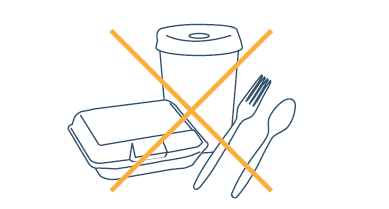
The most straightforward step to this process is banning items that are commonly littered after use, which includes polystyrene containers, plastic straws/cutlery, and plastic lined cups.
Step 2. Encourage a shift to reusable containers by imposing a fee on continued use of single-use plastics for take-out food
In order to encourage businesses to stop using any single-use items that remain unbanned, Philadelphia can incorporate an inspection for single-use plastics into the responsibilities of the Health Department and charge a fee for restaurants that are not compliant. The success of this part relies on its enforceability, which means it would mainly apply to places with food establishment licenses. It also requires flexible definitions for what is single-use, recyclable, compostable, reusable, etc. so that the city can update standards based on the available systems in its recycling department.
Step 3. Reinvestment of fee proceeds to clean up Philly and create a transition fund
Fees from noncompliant businesses would then be reinvested into waste management practices such as street sweeping, public trash cans, and assistance for businesses trying to switch to reusables.
Can It Be Done? Will it Work? Is It Worth It?
Short answer, Yes! Circular Philadelphia has already worked with the Health department to create a system of identifying restaurants that have reusable containers, meaning the framework is already in place to help more businesses comply with the proposed legislation.
If this legislation were to pass, Circular Philadelphia estimates that the benefits would include reducing the $48M spent on annual litter clean up, lowering food packaging costs from $0.29 per use for single-use to less than $0.01 per use by leveraging reusable containers, and addressing concerns such as microplastic consumption and the impacts of climate change.
Single-use Plastic and Campus Life
If these proposals were adopted, things could really change around campus. The multitude of student-serving food trucks, who are not owned or operated by Temple University, but under the jurisdiction of the city, would be on the hook for any plastic utensils and Styrofoam containers they distribute.
The majority of restaurants students eat “at” on campus don’t have indoor, or any, seating options and also lack the facilities to wash the number of dishes needed to meet rush hour demand. Reusable options available to other restaurants, such as metal utensils and sturdy dishes, generally aren’t viable for food trucks or “the Wall” vending pad by Mazur Hall. Students also tend to be on the move and use takeaway options in between classes, which would mean carrying around a dirty reusable plastic container. Unfortunately, this is considered a major inconvenience to a lot of students, and they’re not going to bring their own reusable containers if they still have the option for disposables.
All-encompassing waste policies like these — with real teeth and that extend beyond just the Aramark-owned and operated campus dining providers — could instigate broader behavioral and operational change across the city and on campus, especially with the massively popular food trucks. Until then, students can get us closer to a sustainable and waste free future by joining the fight for meaningful policy change, doing their best to use reusables themselves, and supporting those local businesses who are leading the way.
The 2019-2020 academic year started with a renewed strategic vision for climate activism at Temple University. Goals included in the 2019-2020 Sustainability Annual Report were established in the 2019 Climate Action Plan.
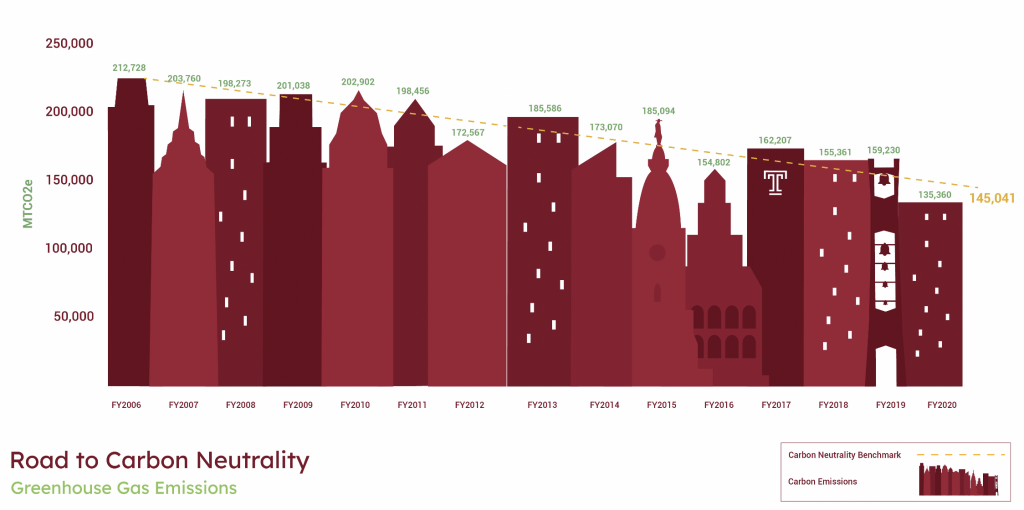
The Climate Action Plan, released in April 2019, provided a roadmap for continued progress towards carbon neutrality by 2050. Over 300 members of the Temple community collaborated to articulate goals in 5 different focus areas. These are Academics and Research, Culture, Design, Energy, and Operations. The plan reflects a true commitment from Temple students, faculty and staff to work together to shape a more sustainable and just climate future on campus, in Philadelphia and beyond.
Although the COVID-19 outbreak pushed our report’s release, our students, faculty and staff remained committed to climate action. This Sustainability Annual Report details significant progress towards a more environmentally, socially, and economically sustainable future. Highlights include memorable accomplishments and progress toward goals in all focus areas.
Greenhouse gas emissions progress as seen in the Sustainability Annual Report