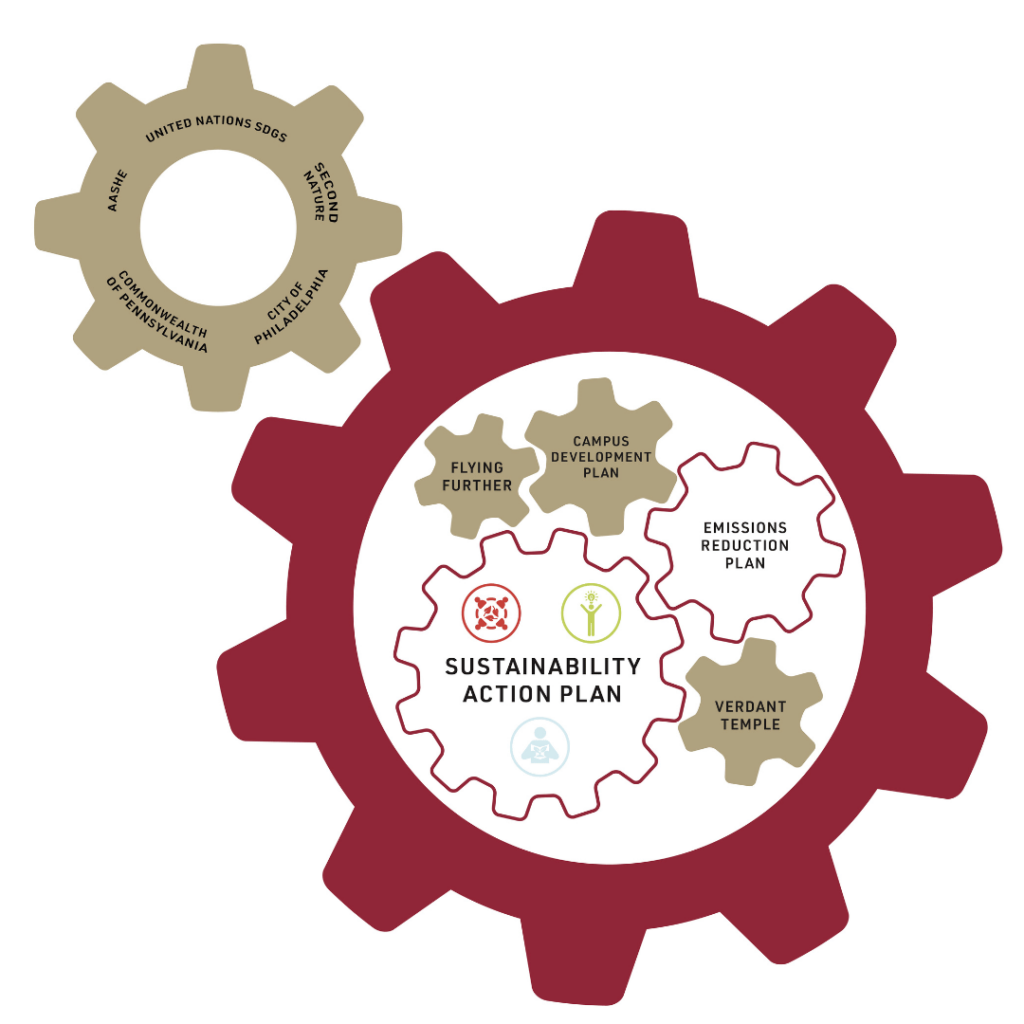
The 2024 Sustainability Action Plan represents a more holistic approach to addressing climate change and the environment, economic justice, and social equity in an integrated, interconnected way.
We invite all members of the Temple community to provide feedback on the proposed structure and strategic emphases as well as offer ideas, ask questions, and share their vision for a sustainable Temple.
Make your voice heard by filling out the Feedback Form and stopping by this month’s events!
Feedback Form
Join us in shaping a sustainable Temple
We encourage you to share ideas, questions, or your personal vision for a sustainable Temple. Help us fulfill our institutional climate commitment through your feedback.
Let’s face it, while many of us are very aware of the immense threat posed by climate change, for some, it can feel like this distant, poorly defined phenomenon without clear connections to everyday life. Scientists can point to lower artic sea ice coverage or increases in atmospheric CO2 concentrations, but without making these findings accessible and connecting them back to the issues people face every day, it’s hard to mobilize them to act. That’s exactly why, this past Monday, we teamed up with Temple Libraries to host a Climate Communications Workshop that helped students, researchers, and faculty alike explore strategies to maximize their research’s impact.
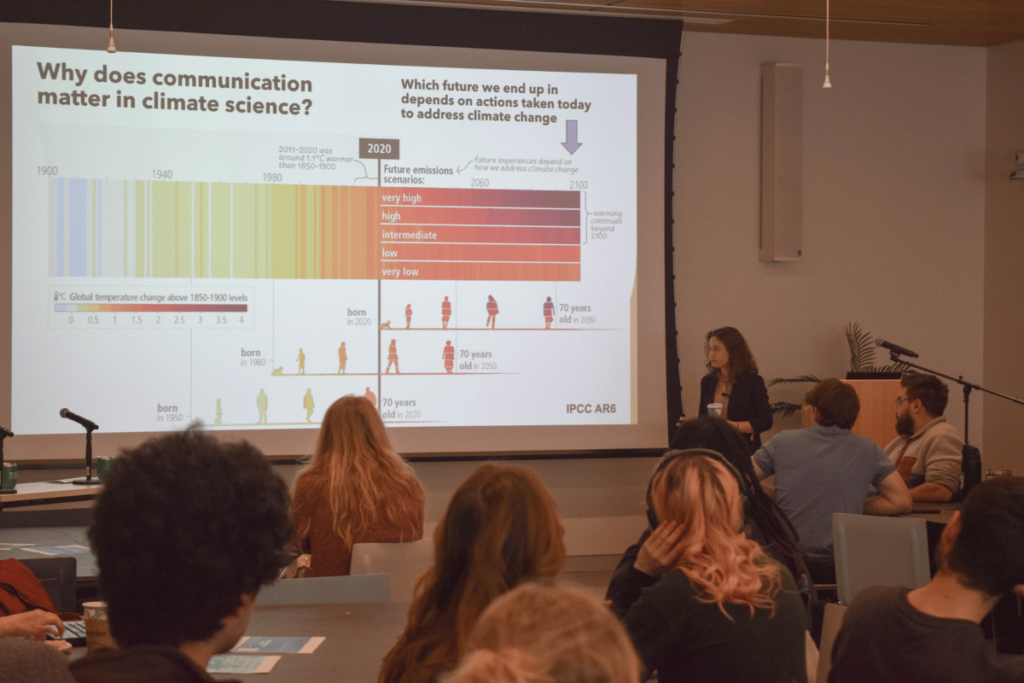
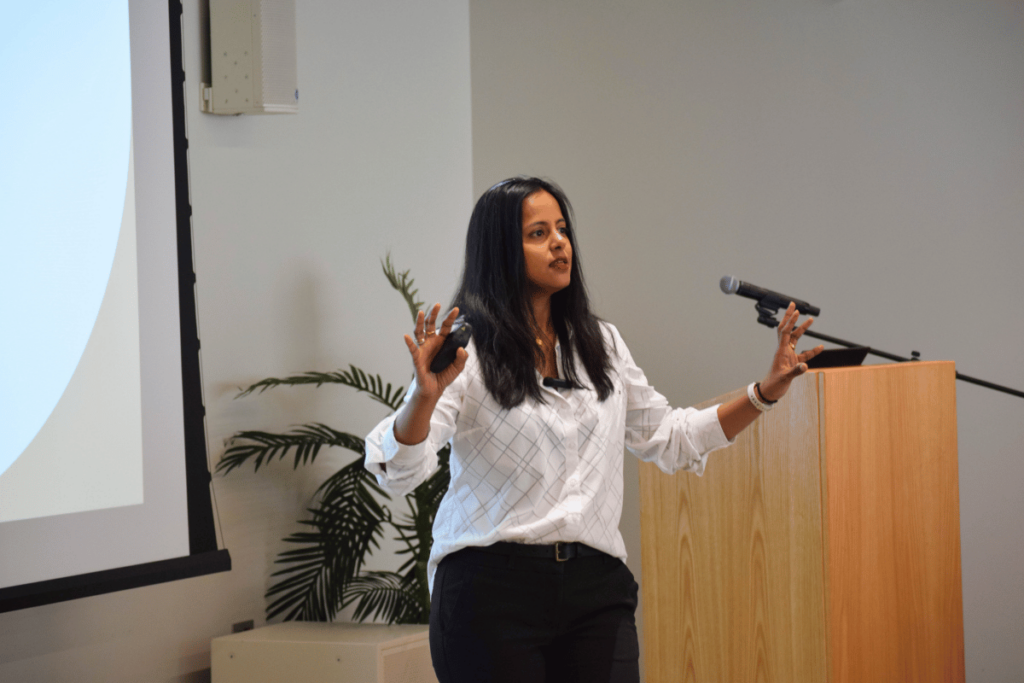
Dr. Beadling provides an example of how to convey the urgency of climate change by connecting predicted future temperature changes to real human lifespans.
The room was lively- bringing students and faculty from a wide range of disciplines together – eager to share ideas and learn from our guest speakers. Temple professor Dr. Becki Beadling (Department of Earth and Environmental Science) kicked us off – drawing on her experiences communicating her research on the ocean’s role in climate change to highlight four key ways scholars can use their findings to encourage action by establishing trust, informing and educating, conveying urgency, and providing actionable steps.
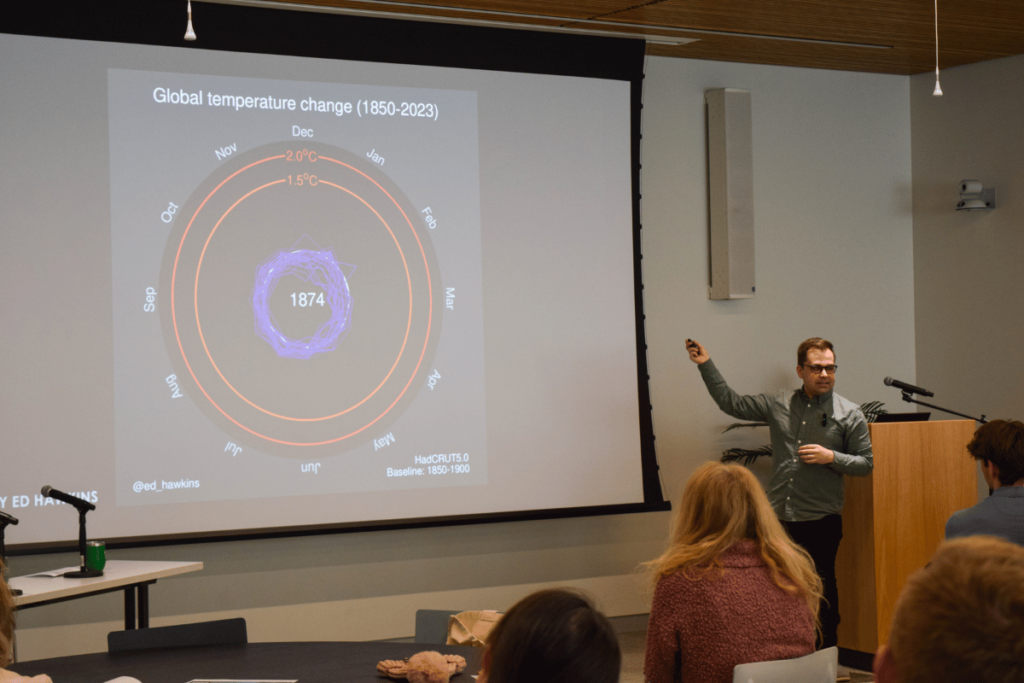
Dr. Zachary M. Labe shares an example of a compelling climate data graphic from fellow researcher Ed Hawkins. To see more examples of Dr. Labe’s data visualizations, follow him on X.
These science communications goals are a great place to start, but what do they look like in practice? We were lucky to welcome NOAA Geophysical Fluid Dynamics Lab Post-doctoral researcher Zachary Labe as a keynote speaker to demonstrate how he uses clear graphics to turn data on arctic temperature change into compelling stories. One key element of his approach is to leverage social media to compete with the speed of media coverage by providing daily, accurate, and legible climate data to a diverse audience. These stories resonate on a personal level and represent the importance of bringing people into the science journey.
“To me, it’s all about telling stories.”
Dr. Zachary M. Labe
During the first workshop exercise participants got the chance to draft and practice “elevator pitches” for their research. They teamed up with their fellow climate scholars and advocates to share what they do and why it matters. This not only helped them practice Dr. Beadling and Dr. Labe’s techniques but strengthened Temple’s climate community by facilitating collaboration and knowledge-sharing across disciplines.
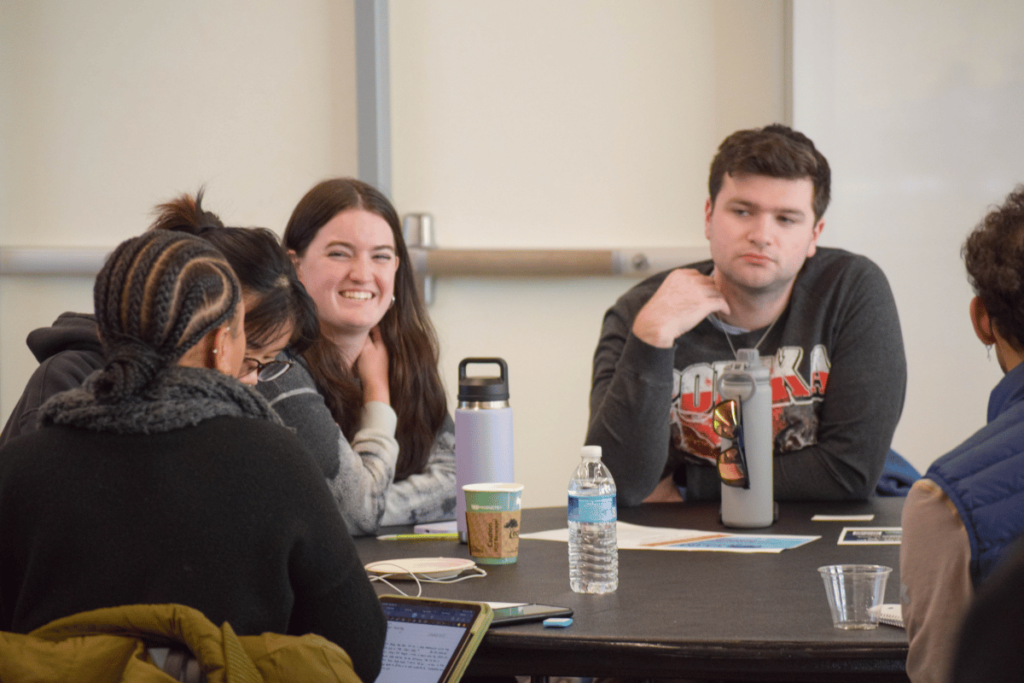
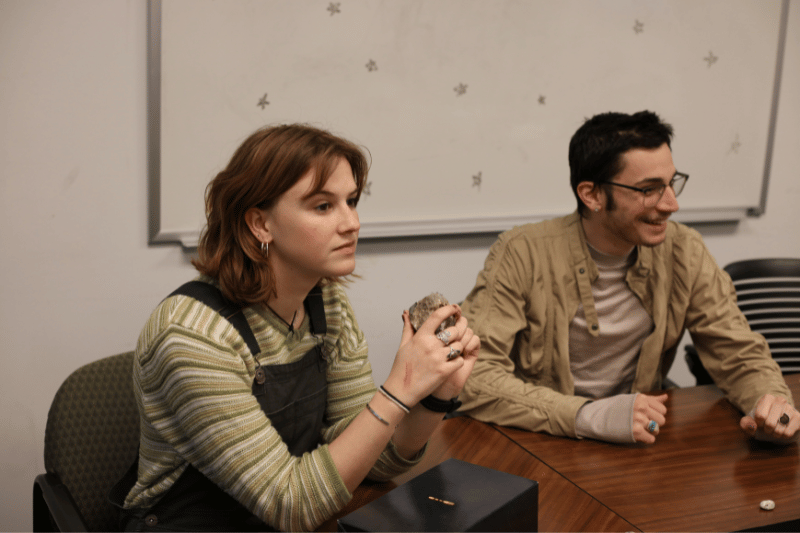
Students and faculty used the techniques from Dr. Beadling and Dr. Labe to begin drafting elevator pitches for their work.
At first, participants struggled to narrow down their pitches. This led to the question: who are you trying to reach? This is where Temple professor Dr. Meghnaa Tallapragada (Department of Advertising and Public Relations) used specific examples from her research in strategic science communications to emphasize the importance of defining your audience and tailoring your approach to touch on their lived experiences. For example, you would approach an acquaintance you met a party who doesn’t believe in climate change much differently than a highschooler who is interested in studying climate science.
Dr. Tallapragada provided participants with strategies for overcoming common challenges in translating their research with key takeaways from the latest science communications research.
“You have to ground [your research] in a context that matters for people.”
Dr. Meghnaa Tallapragada
Using specific strategies from Dr. Tallapragada’s examples, workshop participants refined their pitches to target those two aforementioned groups specifically. Two strategies that participants seemed to find most helpful were connecting their research back to relevant examples from their audience’s everyday lives and ending their pitches with a call to action – emphasizing the threat of their issue but building efficacy instead of fear.
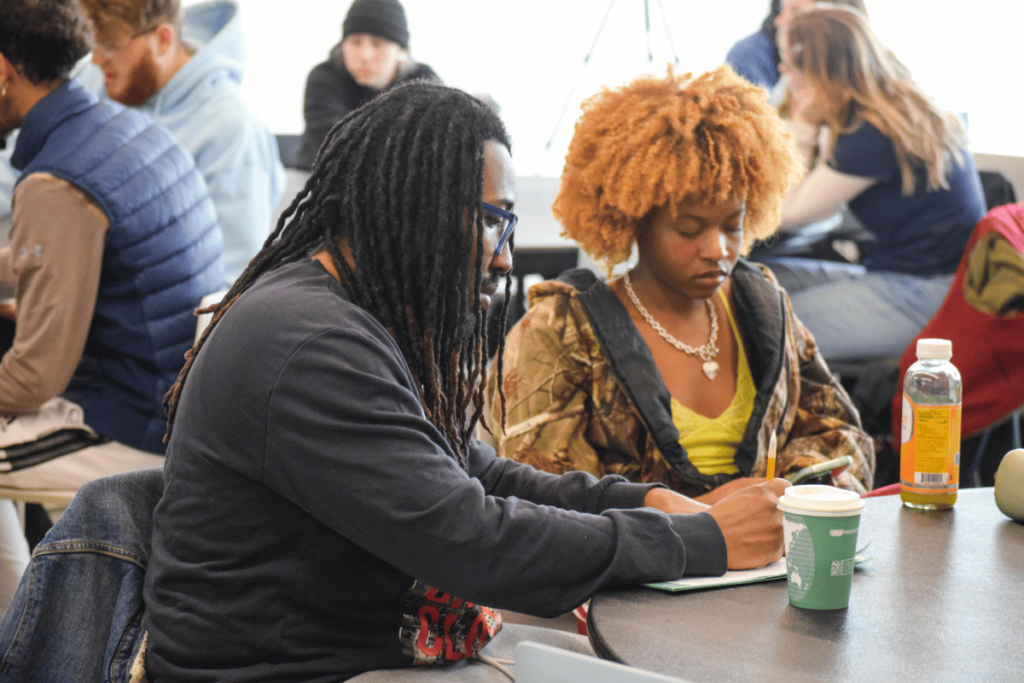
Students and faculty refined their pitches to target specific audiences based on Dr. Tallapragada’s strategies and feedback from their peers.
“Including a solution gives people hope.”
Livia Haines, Fox ’25
In the end, participants gained not only the tools to amplify the positive impact of their research but forged new connections with fellow climate scholars and advocates – providing lasting opportunities to foster climate action on campus and beyond. None of this would have been possible without the illuminating contributions from guest speakers Dr. Beadling, Dr. Labe, and Dr. Tallapragada alongside the organizational efforts of Temple Libraries Staff Nancy B. Turner and Ella Lathan and the support of Dean Joe Lucia.
“This series is a prime example of how we can further integrate Charles Library as a hub for learning, creativity, collaboration.”
Joe Lucia, Dean of Temple Libraries
A Time to Act: Responses to Climate Change within and Beyond the University
This event was the second in our ongoing series with Temple Libraries designed to foster a more sustainable and environmentally equitable university campus and community. Follow the link below to learn more about and register upcoming events in this series.
Check the calendar below to see all of the events occurring both on and off campus this Earth Month. Click the links to sign up for events and join the movement toward a healthier, happier planet.
Explore how student, faculty, and community initiatives to promote combined human and environmental well-being empower Temple’s journey to a more collective, equitable, and sustainable future.
What does Environmental Wellness look like?
Promoting environmental wellness is a crucial part of the Office of Sustainability’s goal, as established in the 2019 Climate Action Plan, to create a more inclusive and permeating sustainable culture on campus. According to the Substance Abuse and Mental Health Services Administration (SAMHSA), Environmental Wellness Dimension involves being able to be safe and feel safe. This can include accessing clean air, food, and water; preserving the areas where we live, learn, and work; occupying pleasant, stimulating environments that support our well-being; and promoting learning, contemplation, and relaxation in natural places and spaces.
To pursue this goal, The Office and key partners at Temple Ambler, Student Activities, and the Wellness Resource Center have developed several student-focused programs, academic and community engagement initiatives.
The Ambler Campus provides opportunities for Temple and greater community members alike to develop a healthy relationship with nature through various educational programs and activities. The Ambler Arboretum’s membership in the Campus Nature Rx Network – a network of 70 colleges and universities dedicated to supporting campus mental and physical health through inclusive and equitable nature engagement teaching, research, and outreach – exemplifies their innovative leadership in promoting environmental wellness.
During Temple’s October 2022 Wellness Day, the Ambler Campus hosted a diverse range of programming including yoga in the gardens, guided mindfulness activities, self-guided nature scavenger hunts, a succulent planting workshop, and a facilitated experience on the challenge course to promote student wellbeing through environmental engagement.
Ambler Campus’ Recreation, Outdoor Education, and Wellness (ROW) department draws upon the growing body of research suggesting a connection between outdoor activity and increased positive mental health outcomes to provide outdoor recreation education for students and community members alike.
One such initiative is the ROW program’s collaboration with the Philadelphia Outward Bound School (POBS) to provide training opportunities for volunteer trip leaders – expanding access to outdoor leadership opportunities for Philadelphia youth.
Climate Cafes are unique therapeutic models for individuals experiencing climate grief or eco-anxiety that create an informal, open, respectful, and confidential space to safely share emotional responses and reactions to the climate emergency.
During these sessions, EcoReps from the Office of Sustainability, trained to facilitate climate cafes by the North American Climate Psychology Alliance, guided over 50 students of all different majors to come together to share intimate feelings of grief, anxiety, guilt and helplessness – enabling deep connection and dialogue amongst like-minded peer facilitators.
By sharing their diverse perspectives and approaches to interacting with climate and the environment, students created an interdisciplinary and holistic experience where peers learn from each other, coming together to work through and process shared climate grief intellectually, cognitively and emotionally.
Join the Wellness Resource Center and Student Activities on Tuesday, March 19 from 1-3 pm in the HGSC room 200 for their bi-annual Self Care Fair. Students will get the chance to find community and learn skills and strategies for a joyful life by connecting with campus resources and partaking in mindfulness activities.
Celebrate Arbor Day on April 26 at Ambler Campus alongside Temple community members and the public with a dynamic mix of interactive performances and experiential activities that promote self-care, community care, and planetary wellness like a Recreational Therapy conference, the Ambler Arboretum’s launching of an Art in Nature application, and the Ambler Research Symposium, Follow @templeambler on Instagram for updates on the event.
Green is the prime color of the world, and that from which its loveliness arises.
– Pedro Calderón de la Barca
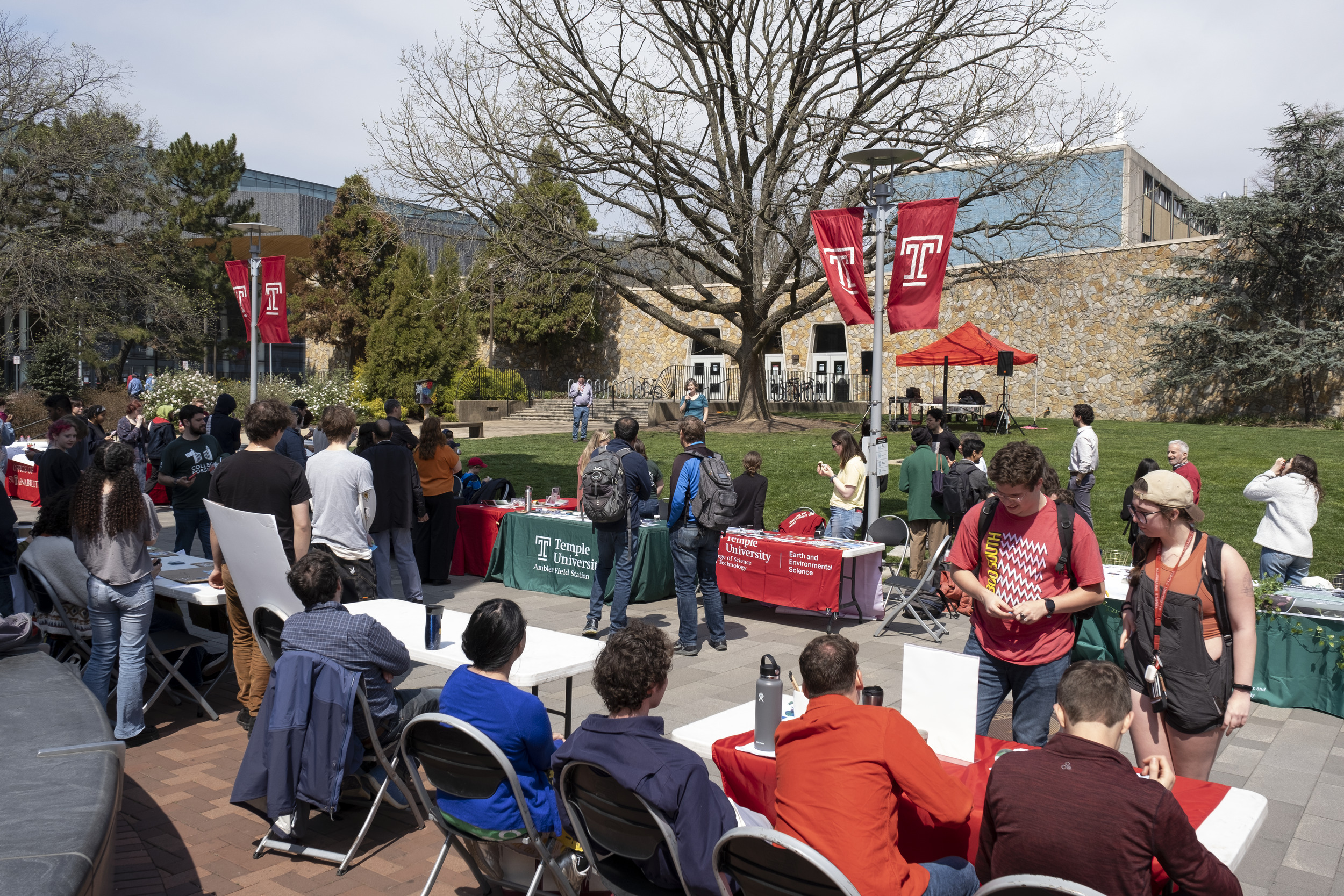
As the weather warms up and the days become longer, the start of the spring season offers a perfect opportunity to embrace sustainable living. This March, Temple University’s Office of Sustainability presents a bouquet of eco-conscious events, blooming with the essence of renewal and environmental stewardship.
Let’s make this March a season of blossoming, appreciation, and eco-friendly choices. Together, we can plant the seeds of change and nurture a more sustainable and vibrant world.
Check the calendar below to see all of the events occurring both on and off campus this November. Click the links to sign up for events and join the movement toward a healthier, happier planet.
Explore how the collective actions of Temple students, faculty, staff, and administration continue to propel us forward toward a brighter, more sustainable future.
“As the university enters a critical time of transition and concludes the Boundless Temple campus development planning process, we are hopeful that the integration of sustainable practices and policy will continue to propel this institution forward.”
Ken Kaiser, Chief Operating Officer, and Gregory N. Mandel, Senior Vice President & Provost
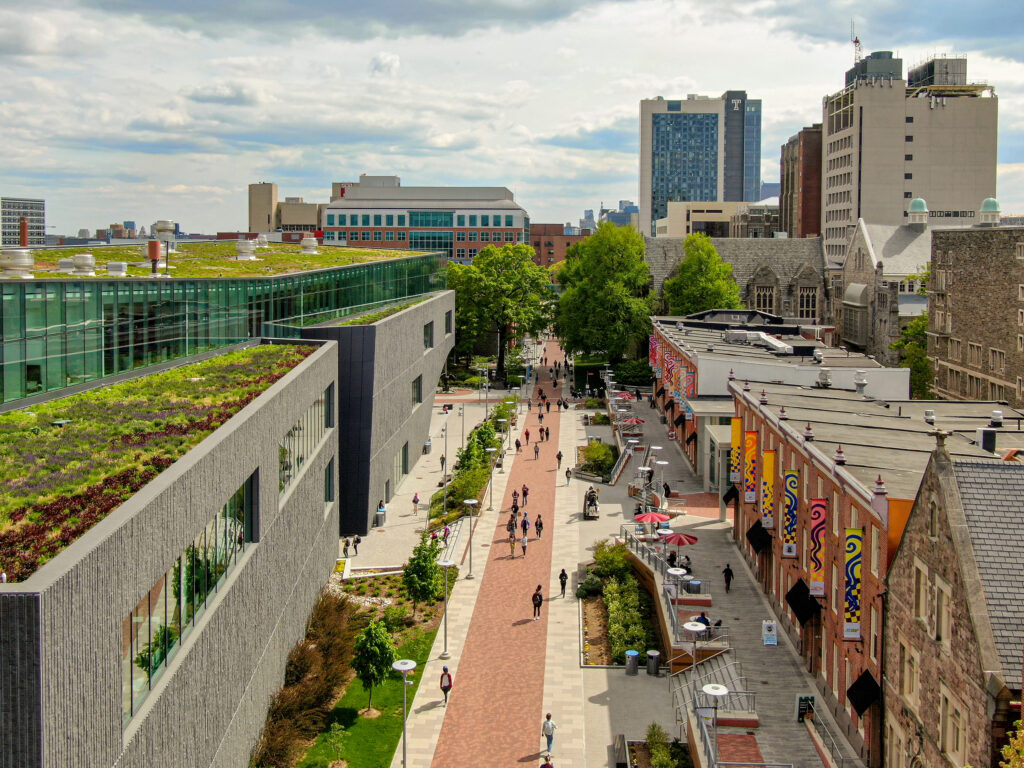
Temple’s campus development planning effort integrates Flying Further, the institutional strategic plan and the Verdant Temple landscape master plan, for a cohesive, sustainable vision of its future.
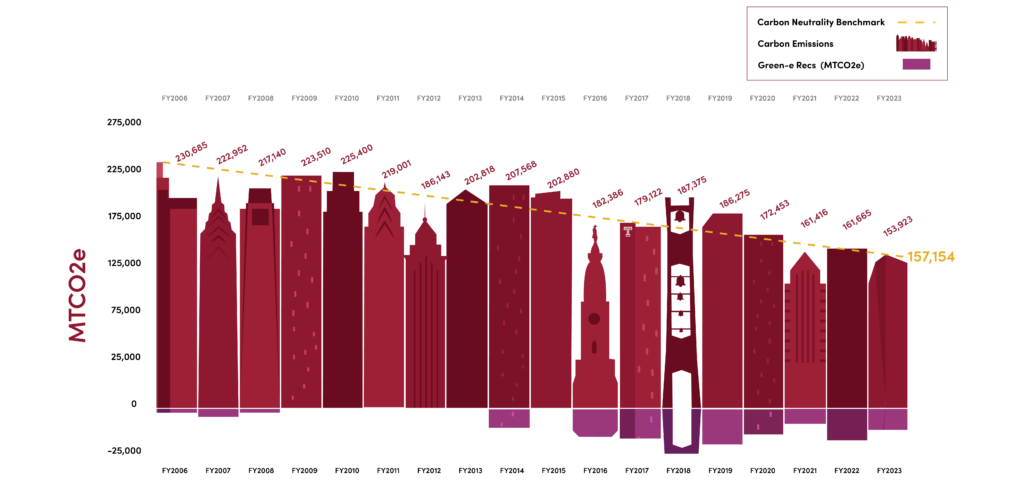
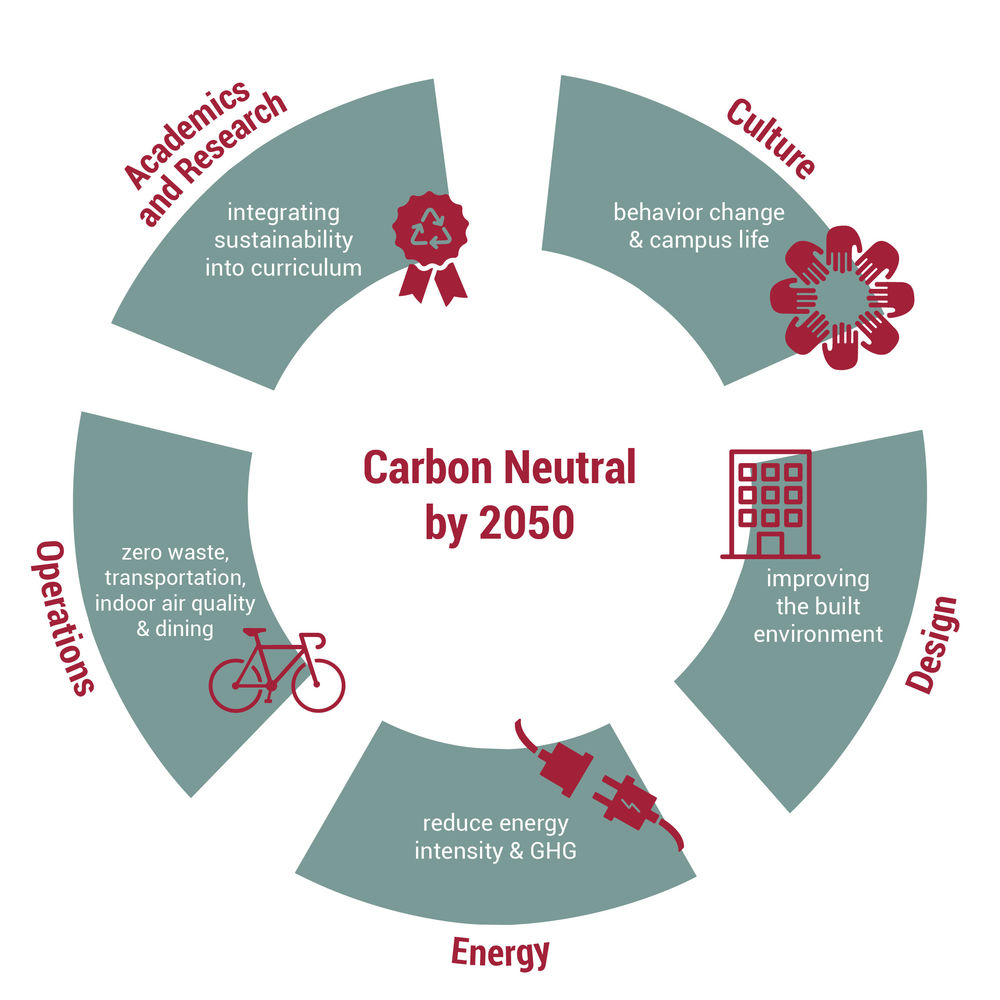
Temple is well on its way to a carbon neutral future.
Since 2006, Temple has reduced gross emissions by 33% even while increasing the physical space of the university by more than 36%. The reductions are a result of increased efficiency in operations, investments in new carbon reduction technology, renewable energy sourcing, and a culture of climate leadership.
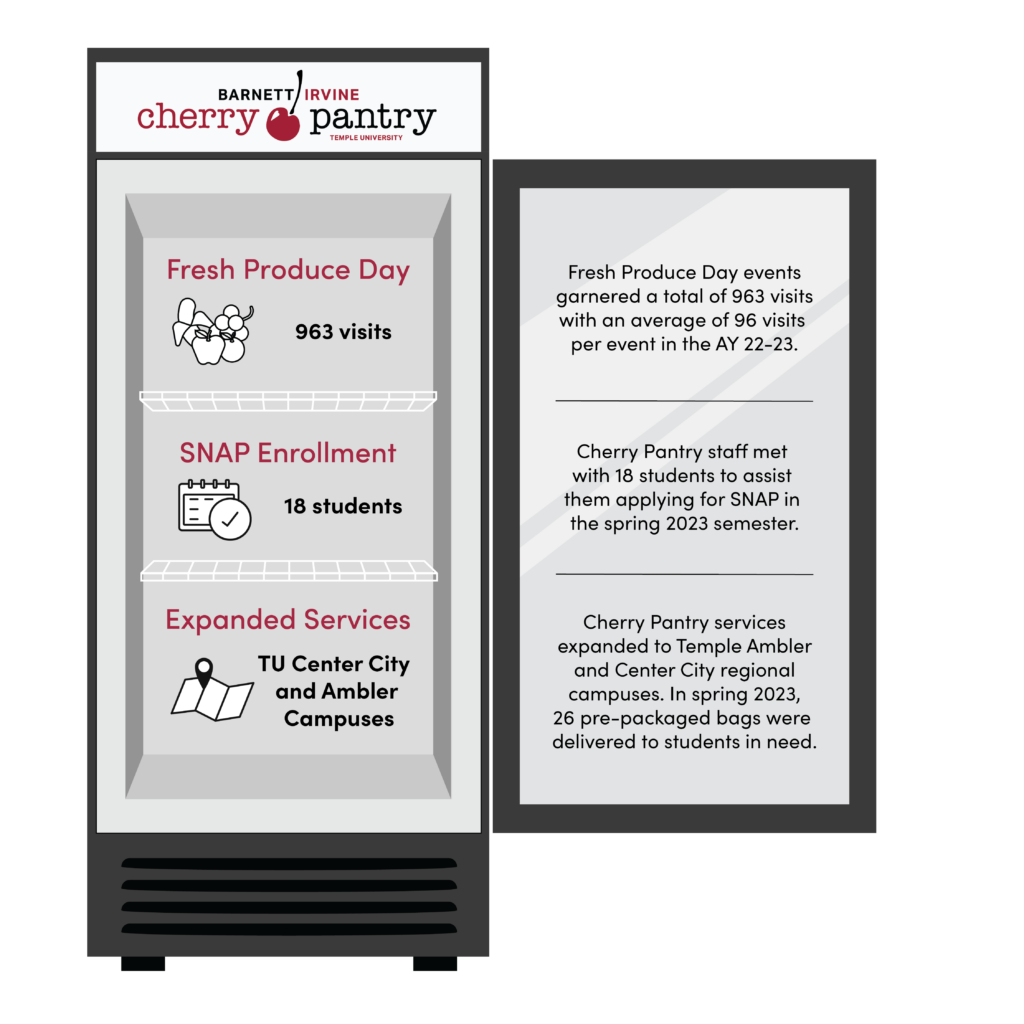
After 5 years of providing students with non-perishable food and personal hygiene items, the pantry was renamed in honor of a donation from Temple alum Christopher M Barnett and his business partner Nathan Irvine. Increasing visitorship by 73% between AY 2021 and AY 2022 and beginning to offer unlimited fresh produce in Spring 2023, The Barnett Irvine Cherry Pantry continues to grow beyond achieving Temple’s goal of addressing food insecurity on campus by 2019.
Climate in the Classroom
The Office of Sustainability supports students, faculty, researchers, and entrepreneurs in tackling today’s most pressing environmental issues by incorporating sustainability-related topics into curriculums, research, and projects. In Spring 2023, representatives from 20 of the 80 departments and programs currently offering sustainability-related courses gathered to highlight the importance of teaching and learning about the climate crisis.
Minimizing Waste: Give + Go Green and Temple Thrift Develop Circular Systems on Campus
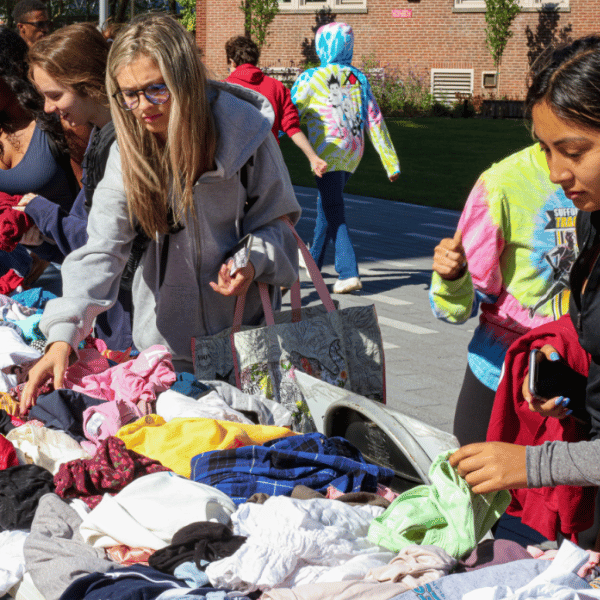
This year, Temple exceeded its waste minimization goals to achieve a 55% diversion rate and a 54% core recycling rate. These efforts are bolstered by on-campus initiatives like Give + Go Green and Temple Thrift that promote circularity and equity. In May 2023, over 70 student and staff volunteers helped sort through 5,905 total pounds of donations. Of this, 1,326 pounds were nonperishable food items that were boxed and brought directly to the Cherry Pantry. The remaining 4,579 pounds of donations consisted of textiles and clothing that was packaged for sale at Temple Thrift on campus.
Greening our commutes: Insights from the Transportation Culture Survey
In 2022, the Office of Sustainability expanded the regularly administered Transportation Survey to also include questions about sustainability culture on campus. The Temple University Transportation and Sustainability Culture Survey Report captures students, staff and faculty’s perceptions, beliefs and behaviors related to sustainability and climate change in addition to typical data related to commute modes and associated emissions.
The survey found that 67% of students, faculty, and staff currently use sustainable modes of transportation in their commutes. To encourage further participation in these modes, the University offers Green Your Commute resources such as the student discount SEPTA University Pass and pre-tax commuter benefits for employees via WageWorks.
The Office of Sustainability is launching our LinkedIn page to foster a community where students, faculty, and alumni can share their commitments to sustainable initiatives at Temple and beyond. Join today to stay up to build your climate action community.
Of all the seasons, autumn offers the most to man and requires the least of him.
-Hal Borland
As the weather gets cooler and the days get shorter, there has never been a better time to make a sustainable change. This November, Temple University’s Office of Sustainability offers a cornucopia of eco-conscious events that celebrate the spirit of sustainability and environmental stewardship.
Let’s make this November a season of growth, gratitude, and green living. Together, we can sow the seeds of change and cultivate a more sustainable and harmonious world.
Check the calendar below to see all of the events occurring both on and off campus this October. Click the links to sign up for events and join the movement toward a healthier, happier planet.
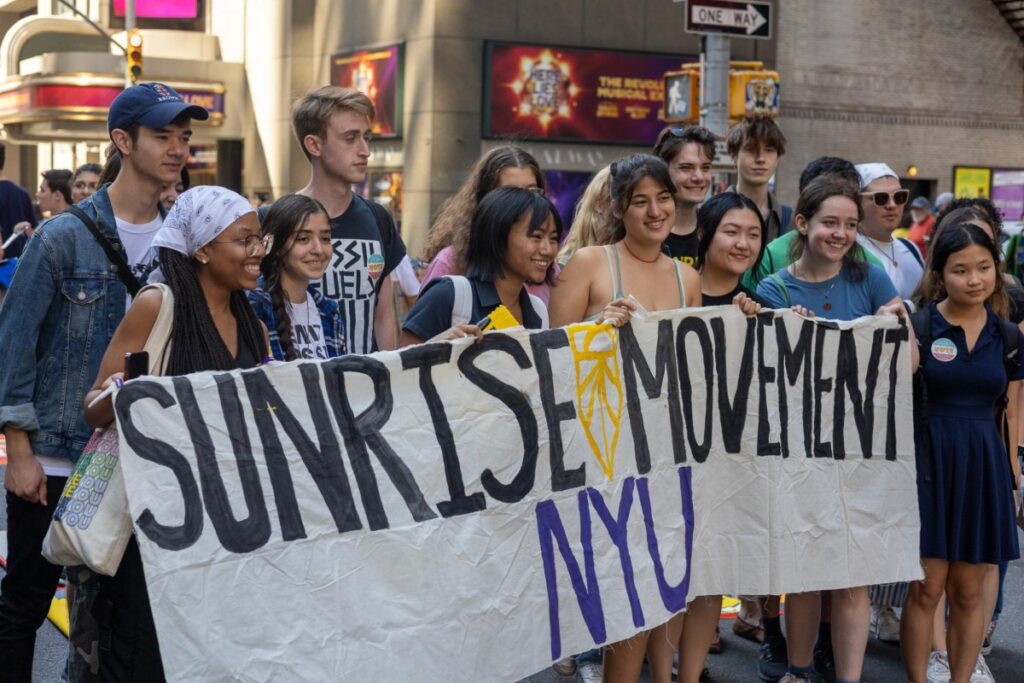
After an eleven year battle between climate activists and administration members, New York University has finalized its decision to divest from fossil fuels and move towards a more sustainable future for their campus. The push for this change was led by NYU students, faculty, and staff that campaigned under the Sunrise Movement NYU chapter. Founded in 2017, Sunrise Movement is a national non-profit organization designed to help youth push back against climate change and end the “corrupting influence of fossil fuel executives on our politics”.
Group of Sunrise NYU members on the street in NYC
NYU’s commitment to divesting from fossil fuels originally began in August, with a letter delivered to student activists by university president William R. Berkely. The letter stated that “New York University commits to avoid any direct investments in any company whose primary business is the exploration or extraction of fossil fuels, including all forms of coal, oil, and natural gas, and not to renew or seek out any dedicated private funds whose primary aim is to invest in the exploration or extraction of fossil fuels”. According to NYU spokesperson Joseph Tirella, this commitment will be applied to the top 200 coal, oil, and gas providing companies—which are derived from a list managed by Fossil Free Indexes. Outside of divestment, NYU has also made improvements by reducing emissions from energy use in buildings, and has pledged to have net-zero emissions by 2040.
So what is fossil fuel divestment? Why is it so important?
2021 global fossil fuel investment data via Energy Policy Tracker
Despite the rising cost of tuition, student housing, and service fees, many universities are unable to meet all of their needs from student funding. To create capital, many universities choose to invest billions of dollars in outside companies, including those that produce or rely heavily on fossil fuels. The money given back to the university through investment (as well as the money from donors) is known as an endowment. This funding is used to create more investments, or in some cases used to fund specific scholarships. Divestment is a push for universities to end their investment in fossil fuel companies and put their endowment towards green energy infrastructure or other sustainable investment opportunities. It can also mean ending sponsorships provided by companies with high greenhouse gas emissions, or ending contracts with services that create environmental waste.
NYU, a private university, currently has an endowment of $5 billion. In 2014, NYU had $139 million (4% of its then $3.4 billion endowment) invested in coal, oil, and gas. In 2016, NYU had the opportunity to divest, but chose not to after arguing that divestment does not reduce money going towards fossil fuel companies but rather “transfers ownership of stock from one holder to another”, among other things. Had NYU kept 4% of their endowment invested in fossil fuels, their current investment would be $200 million. This was a huge victory in the battle against climate change, and a much needed example of students having a say in the actions of their university.
Temple University and Fossil Fuel Divestment
Temple University Climate Action Goals via Office of Sustainability
Temple University is a public research university, and is not obligated to disclose its financial investments. However, investment in fossil fuel companies seems to be the norm amongst American universities, and without a clear divestment statement it is fair to assume some of Temple University’s $778 million endowment (as of 2022) comes from companies similar to those that NYU has supported in the past. Temple has many sustainability efforts in progress, such as adding sustainability focused curricula and reducing energy consumption, but many Temple community members feel that these efforts are not enough without a promise of divestment.
The Sunrise Movement is present in Philadelphia, and has contributed to local green policy change through protests, teach-ins, voter education sessions, and more. Temple also has an unaffiliated, but highly dedicated group known as Temple Climate Action, a collection of students, staff, and faculty members dedicated to the fight against climate change. The principal goals of the organization are to divest from fossil fuels, encourage transparency and accountability from Temple’s administration, and advocate for the care of our planet.
As we saw from the participation of graduate and undergraduate students alike in the TUGSA Strike of Spring 2023, Temple scholars are fearless and more than willing to stand up for what they believe is right. With hope, the combination of student voices and divestment in other institutions will give Temple University the push it needs to play a part in ending the power of the fossil fuel industry and bringing us one step closer to a sustainable future.
The past year of wildfires, floods, and toxic hazards are urgent warning signs to look closer at the intersection between human health and the health of our environment. The interdependence between people and the planet is the key to sustainability and that’s why the theme for Campus Sustainability Month is Building A Healthy Future.
Through events, collaborations, and service, learning & engagement opportunities, the Office of Sustainability, will engage in conversations about environmental wellness, ecological health, and how to build and sustain thriving and equitable communities.
Check the calendar below to see all of the incredible Campus Sustainability Month happenings at Temple this October. Click the links to sign up for events and join the movement toward a healthier, happier planet.
For more information on the Office of Sustainability and its programming and other strategic initiatives, please visit our website Temple University Office of Sustainability.
Love them or hate them, the founding fathers of the United States were wise to design a constitution with change and reinterpretation in mind. After all, in their time, concepts such as online privacy, modern firearms, and racial equality were nearly unfathomable—there was no way for them to predict the future, and so there was no way they could cover every single legal issue in an unchanging document. This intentional flexibility is what has allowed crucial social justice cases such as Brown v Board and Obergefell v Hobbes to be decided in favor of progress. It has also allowed sixteen adolescents from Montana to challenge the state and federal government on the biggest human rights issue of today: climate change.
Facts of the Case
In 2020, the young plaintiffs of Held v Montana joined with Our Children’s Trust, a nonprofit law firm focused on the youths’ rights to a safe and stable climate. The suit was filed against the state of Montana, with a claim that the government’s lack of acknowledgement towards climate-related environmental degradation went against the state constitution, which guarantees residents “the right to a clean and healthful environment,” and stipulates that the state and individuals are responsible for maintaining and improving the environment “for present and future generations”.
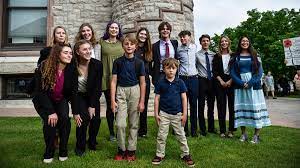
Plaintiffs of Held v Montana
The plaintiffs have joined together from across the state, ranging from two to eighteen years old at the beginning of the trial. The youngest plaintiff is now a five-year-old boy with respiratory issues worsened by climate change-related wildfires, and the oldest is twenty-two-year-old Rikki Held, who claims that climate change has made supplying water to her family’s 7,000-acre ranch difficult. Other notable plaintiffs include the Busse brothers, who live just outside of Glacier National Park and Sariel Sandoval, who grew up on the Flathead Indian Reservation.
Despite being from diverse backgrounds, the plaintiffs have all felt the impact of climate change in Montana, whether it be from increased wildfire smoke, eroded hiking trails, water scarcity, or loss of traditional subsistence methods. As Lander Busse, the older of the two brothers, states: “A lot of this is just rooted in how many Montanans, including us, live life on an everyday basis, and how ingrained the wildlife and the land and the nature is in who we are.”
Montana and Fossil Fuel
More often than not, climate change is a difficult issue to seek justice for because of the variety of greenhouse gas emission sources. After all, it would be a tedious and drawn-out legal battle if the plaintiffs in this case intended to go after high energy factories or fossil fuel refineries in the state. However, the plaintiffs of Held v Montana are accusing a government of going against its own constitution, which makes the case concise.
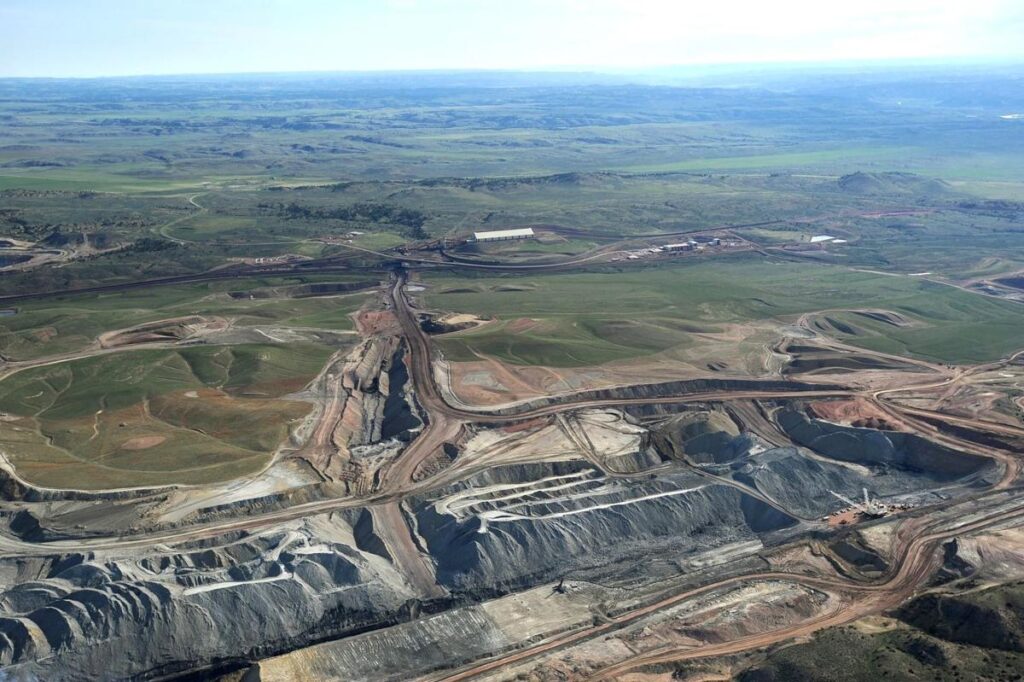
Surface coal mine in Decker, Mt
The plaintiffs argue that Montana has “extensive support for fossil fuels like coal, oil and gas”, and that it has a duty to address climate change. The state responded to the claim by disputing the relationship between the fossil fuel industry and climate change and denying the pattern of increasingly severe weather systems in the state. It is important to note that just before the trial began, language was added to a piece of legislation from 2011 which explicitly prevented Montana’s EPA from evaluating greenhouse gas emission/climate impacts in and beyond Montana’s borders during project approval, known as the MEPA Limitation. If you aren’t allowed to report on climate change, it becomes easy to deny any potential causes.
Much like climate change is truly a bipartisan issue, this case is another example of the political power the fossil fuel industry has on politicians across the aisle. When the case was first filed, Montana’s democrat governor Steve Bullock called climate change “one of the defining challenges of our time”, and then defended the state against Held’s claims. Similar actions from West Virginia’s democrat senator, Joe Manchin, have happened in the past.
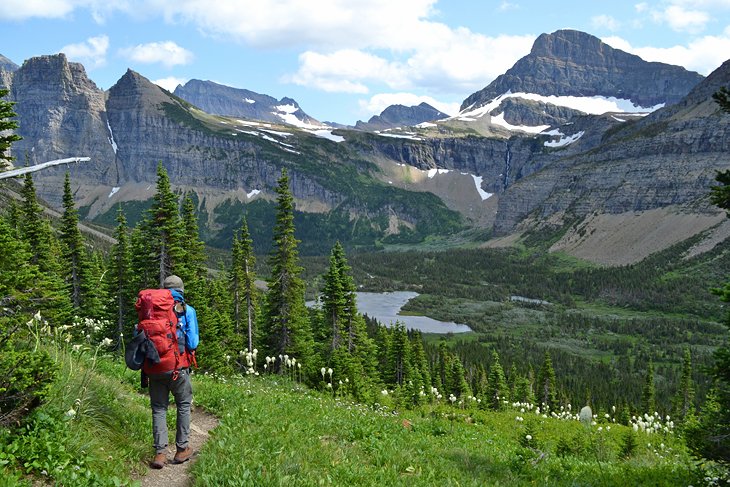
Montana’s Glacier National Park provides access to the great outdoors, but is not safe from rising temperatures
When a state protects the fossil fuel industry regardless of party, it is usually due to a historical reliance on the industry. Montana’s original constitution was drafted in 1889 and was heavily influenced by mining executives. According to Michelle Bryan, a law professor at the University of Montana, “Some historians called it a corporate colony: all the profits were going out of the state and residents weren’t seeing the benefits.” By that logic, the 1972 constitutional amendment which first defined citizens’ right to a safe environment was “Montana’s declaration of independence from corporate mining.” Even so, Montana is the fifth largest coal producing state and the 12th largest oil producing state in the country.
A Landmark Victory
After much deliberation, Held v Montana resulted in a victory for the young plaintiffs in early August. District Judge Kathy Seely determined that Montana’s emissions, coming from 5,000 gas wells, 4,000 oil wells, four refineries and six coal mines, proved to be a major factor in affecting climate change. The decision was easy: beyond the scientific evidence of fossil fuels contributing to climate change, the defendants also failed to provide any evidence proving the MEPA Limitation was in the best interest of the government. As a result, the MEPA Limitation is officially unconstitutional, as well as a different piece of Bill 557, which would allow Montana agencies to approve permits without an evaluation of greenhouse gas emissions.
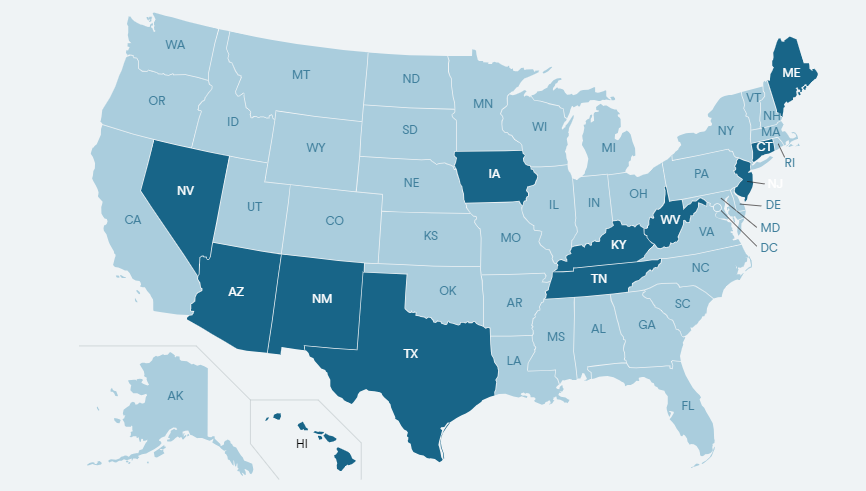
Map of Current Green Amendment Legislation via National Caucus of Environmental Legislators
As one of the first victorious court cases to identify climate change as a constitutional issue, and as a powerful example of young people’s dedication to environmental justice and civic duty, Held v Montana is a momentous victory that will alter the way we talk about climate change forever. The victory in Montana sets an important legal precedent for similar cases that are already moving forward in Hawaii, Utah, and Virginia. New York and Pennsylvania also have state constitutions that recognize the right to a clean environment, and nine other states are currently proposing their own “green amendments”, including Kentucky, Texas, and Maine. Of the states mentioned, several (and Pennsylvania in particular) have a long, contentious history with the fossil fuel industry and are suffering the environmental consequences. As the news of victory spreads, so will the confidence of young environmentalists across the country, and with hope we will soon see a wave of progress towards the end of climate change.