Introduction to Nursing & ABC Assessment
Student Name: ___________________________
Date: ______________________
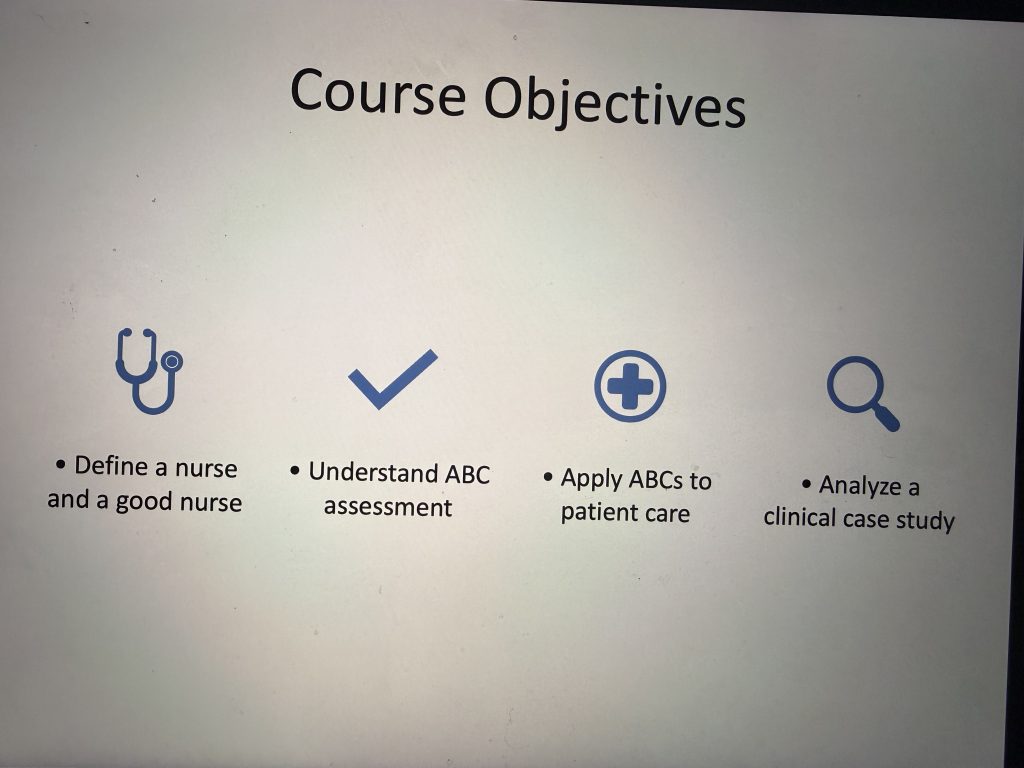
Learning Objectives
By the end of this lesson, you will be able to:
- Define a nurse and describe the qualities of a good nurse.
- Understand the ABC (Airway, Breathing, Circulation) assessment.
- Apply the ABC assessment to patient care situations.
- Analyze a clinical case study using the ABC framework.
- Reflect on how ABC assessment supports safe, patient-centered care.
Part 1: What Is a Nurse?
Definition
A nurse is a licensed healthcare professional who provides compassionate, evidence based care to individuals, families, and communities. Nurses promote health, prevent illness, care for patients during recovery, educate patients, and advocate for their safety and well-being.
What Makes a Good Nurse
A good nurse demonstrates:
- Compassion and empathy
- Effective communication
- Critical thinking
- Clinical knowledge and skills
- Professionalism
- Teamwork
- Cultural sensitivity
- Accountability
- Adaptability
- Commitment to lifelong learning
Think About It
Which three qualities do you believe are most important for a nurse?
Explain your choices:
Part 2: ABC Assessment
When caring for a patient, always assess life-threatening problems first.
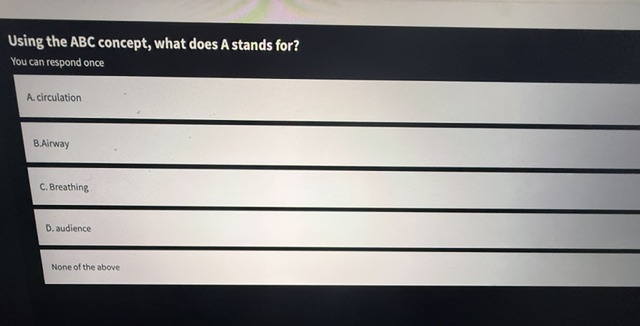
A – Airway
Ask yourself:
- Is the airway open?
- Can the patient speak?
- Is anything blocking the airway?
Signs of concern:
- Choking
- Stridor
- Gurgling sounds
- Inability to speak
- Swelling
Nursing Actions:
- Open the airway
- Remove visible obstruction if appropriate
- Suction if indicated
- Call for assistance
B – Breathing
Assess:
- Respiratory rate
- Oxygen saturation
- Chest movement
- Breath sounds
- Work of breathing
Signs of concern:
- Shortness of breath
- Cyanosis
- Rapid breathing
- Slow breathing
- Wheezing
Nursing Actions:
- Position the patient
- Apply oxygen as ordered
- Monitor oxygen saturation
- Notify the healthcare provider
- Prepare for emergency interventions if needed
C – Circulation
Assess:
- Heart rate
- Blood pressure
- Skin color and temperature
- Capillary refill
- Bleeding
- Peripheral pulses
Signs of concern:
- Severe bleeding
- Weak pulse
- Low blood pressure
- Pale or cool skin
- Altered mental status
Nursing Actions:
- Control bleeding
- Monitor vital signs
- Establish IV access if indicated
- Report changes promptly
- Continue reassessment
Why Are ABCs Important?
The ABC approach helps nurses:
- Identify life-threatening conditions quickly.
- Prioritize patient care.
- Improve patient safety.
- Guide emergency decision-making.
- Communicate patient status effectively.
Post Class Activity
Reflection Activity
“One Minute Reflection”
Take a few minutes to think about today’s lesson.
1. One thing I learned today:
2. One concept that is still confusing:
3. How will using the ABC assessment improve patient safety?
4. Which quality of a good nurse do you want to strengthen? Why?
Exit Ticket
Key Takeaways
- Nurses provide safe, compassionate, evidence based care.
- Good nurses combine knowledge with communication, empathy, and critical thinking.
- Always prioritize Airway, Breathing, and Circulation (ABC) when assessing patients.
- ABC assessment helps identify life-threatening conditions quickly.
- Reflection strengthens clinical reasoning and prepares nurses for real-world patient care.