Temple University’s Office of Sustainability is thrilled to present our February events and this year’s Campus Race to Zero Waste campaign. Join us in sowing the seeds of change and nurturing a more eco-friendly campus.
Campus Race to Zero Waste is a sustainability competition in which Temple University goes head-to-head against schools across the country to see who can divert the most waste from landfills.
Want to get started? Check out the calendar below to discover the array of events happening on and off campus this February. Click the links to RSVP and become a part of the movement toward a circular economy!
Kickoff: Feb 2 – March 29, 2025
Theme
Event
Where & When
RSVP
Sustainable Fashion
Temple Thrift Pop-Up
Tuesday, February 11, Morgan Hall North D301, 10AM – 3PM
As Leave No Trace instructors, these four superstar leaders are shaping zero-waste culture on campus with 85 of their peers and student organization, Adventure Bound.
Brandon, certified in EMT, is a nursing major (2024) from Massachusetts. He will be guiding in Northern Maine for a canoe outfitter summer of 2021.
Christina, certified in NREMT, is a Health Professions major (2022) with a minor in Biology, and is on pre-medical track. She helped start the first Adventure Bound organization at Brookdale Community College.
Issa Kabeer is an Environmental Science major (2021). Issa is an EcoRep with Temple Sustainability and works at hospitals providing emotional therapy.
Nadia Ramos, certified in LNT, is a psychology major (2022) on the pre-occupational therapy track. She also transferred from Brookdale and peer coaches students with intellectual disability.
Adventure Bound.
Adventure Bound is a club that takes place out of the classroom, a place to meet like-minded, motivated individuals. Adventure Bound facilitates all types of adventures ranging from hiking, biking, rafting and surfing, snowboarding, zip-lining, camping, museum trips, and even going international! With the beautiful city of Philadelphia at our doorstep, they have the privilege to get outside, visit museums, go to concerts, and explore different parts of the city as a group.
As for social impact, Adventure Bounds goal is to partner with local youth — provide outdoor education an mentorship and increase access to green spaces, taking young people on hikes, museum trips, and all types of adventures.
Student Leaders Shaping Zero-Waste Culture on Campus.
Since day one, Adventure Bound takes the utmost responsibility for their ecological footprint. As their mission spreads across campus, their conversations are an example of the zero-waste culture Temple students aspire to cultivate. Adventure Bound plans to use their newfound knowledge in many different areas of sustainability.
Mentor program for general members to maintain their Leave No Trace certification.
Facilitate regular Leave No Trace workshops within the Student Center, or over Zoom.
Online informational brochure with tips on packing sustainably, hitching a tent, hanging hammocks, and sustainable travel ideas, accessible by QR code.
Purchasing sustainable camping and outdoor gear for future excursions with equipment that will allow discarding of waste easily and hear made from sustainable and renewable resources.
Paying visits to various thrift stores to purchase things like jackets and cookware
End goal: Utilize knowledge and sustainable gear on camping trips. And also create a vlog for members to be more educated about sustainability for the outdoors and leaving no trace!
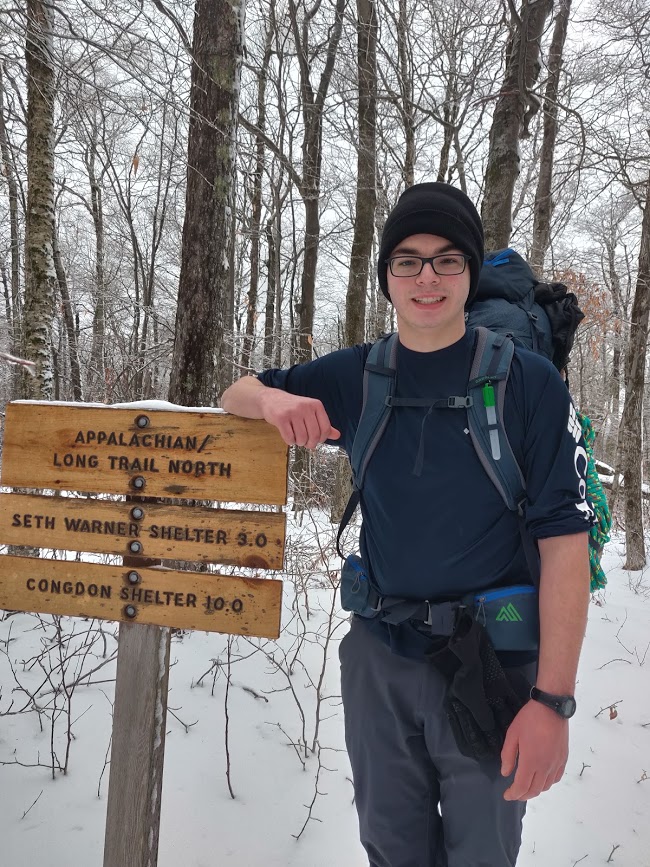
Brandon hiking on the Appalachian Trail.
Leave No Trace Solutions: 100+ Areas Have Been Restored Nationwide
Leave No Trace strives to educate people about what it means to “leave the environment just how you find it.” As a non-profit organization, its mission is to educate the public on the most effective, environmentally sustainable, and ethical ways to enjoy the outdoors.
Throughout the next semester, Adventure Bound will be hosting a series of LNT workshops open to Temple students.
Leave No Trace’s 7 principles provide an easily understood framework of minimum impact practices visiting the outdoors. Click on the links to learn more.
“Pack it in, Pack it out” is a familiar mantra to seasoned wildland visitors. Any user of recreation lands has a responsibility to clean up before he or she leaves.
Many people come to the outdoors to listen to nature. Excessive noise, uncontrolled pets and damaged surroundings take away from the natural appeal of the outdoors.
2020 Green Grant Award Winners.
The Green Grant has already enabled Adventure Bound to build their own website. The funds will help Adventure Bound show and emphasize how easy it is to be sustainable while outdoors and how to leave the environment just the way you found it.
Temple University’s Green Grant builds upon Temple University’s commitment to sustainability by funding projects led by students that focus on advancing the mission and have a positive impact on our local environment and community.
Temple Sustainability is kicking off the spring semester with Stories of Sustainability: Race to Zero Waste! Our first #EcoChampion is Jonathan Latko, Director of the Temple University Computer Recycling Center. Jonathan hosted a critical discussion with students, staff, and faculty about e-waste in Philadelphia, and the institutional impact of equity and access in upcycling electronics.
#EcoChampion: Jonathan Latko
Jonathan has been with the Computer Recycling Center (CRC) for 17 years after receiving his MBA in E-Commerce from the Fox School of Business at Temple University in 2003. Jonathan also serves as an adjunct instructor in the Fox School of Business. He began his journey with the CRC in 2002, as the University grew larger and so did the need for more technology.
“Sustainability is a way of life based on a concept of Kaizen, balancing the triple bottom line. Leaving the planet and people we are interconnected with better off then how we found it”
Stories of Sustainability: E-Waste with #EcoChampion Jonathan Latko
The Temple CRC is an award-winning operation that gathers surplus computer and electronic equipment from around the university to refurbish, redeploy, donate and, where appropriate, securely dispose of equipment. On average the CRCprocesses more than 90 tons of equipment each year. Jonathan’s work helps Temple University reach the 2050 climate goals by reducing the need to always buy new, extending the life of the resources we do have, and reducing waste ending up in landfills and incinerators.
Out of Sight, Out of Mind.
E-Waste: Discarded electrical, or electronic devices also known as Electronic Waste.
E-waste has a poor reputation of disposal and improper management. Commonly being disposed of on streets, sidewalks, in curbside collections, its life cycle never truly ends. E-waste ends up being stored in perpetuity, sent to landfills or to an incinerator and burned. These irresponsible and illegal methods of disposal put people, especially poor communities and communities of color, at risk of the negative health impacts associated with burning electronics.
In 2003, Jonathan asked himself: How do we treat surplus assets? What are its alternative uses? How can we get computers to those that need them?
When Jonathan arrived at Temple, Facilities would throw “old” computers into storage or work with an external waste vendor to remove them from campus. Jonathan challenged the institution to think of these used machines, not as a nuisance or liability, but as assets. With a bit of e-waste education and a $25 equipment fee attached to each unit purchased, Jonathan got enough money and buy-in to start refurbishing these computers and redistributed them to university departments and employees at a discounted rate, or for free. Now, with a full scale surplus program in place, the CRC is able to provide equipment to students in need, and Temple facilities and departments, and centers on campus. 45% of the computers collected have been redistributed, totaling in over 20,000 computers and 14,000 monitors!
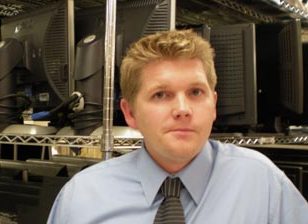
Jonathan at the CRC.
Q: Is your research project a climate solution? How or why?
A: We live within a finite system where everything and everyone interconnected and dependent upon each other. Realizing that this system is based on a carbon dependent economy in which our individual and collective behavior can affect that carbon dependency and thus the effects it has on people and the planet.
Tracking numbers are placed on the additional 115K pieces collected, and are diverted responsibly, in accordance with state and federal law. The Computer Recycling Center has won 3 awards for their efficiency and their unique, tuition dollar-saving model.
In 2019, the CRC expanded to open OwlTech, a retail, storefront operation in Pearson Lobby. OwlTech has a complete lifecycle of electronics, offers warranty and discounts, a trade in and trade up system, and new products to purchase.
OwlTech in Pearson Hall at Temple University: Main Campus.
Q: How have the challenges of COVID and work from home presented opportunities for sustainable innovation?
A: COVID exacerbated the already widening digital divide but led to the acceleration, acceptance and recognition of the deep value presented by refurbishing and extending the life of existing resources, like computer devices need for those without.
Digital Equity for North Philly.
Technology is an essential tool and can be an equalizer in the economy. To ensure civic and cultural participation, employment, lifelong learning and access to essential services, one needs access to online services. The pandemic posed a problem for the North Philadelphia community. Playing a zero sum game, Jonathan continued the $25 model to refurbish machines and recover costs. The CRC collaborated with several partners to identify community members in need.
200 laptops were donated to community members in North Philadelphia. Educational, “Ikea Style”, step-by-step documents were distributed with the computers explaining how to set them up. The CRC also provided customer service, where Jonathan and his student workers offered remote tech support to community members.
https://youtu.be/0R3mNZIepoE
Watch a snippet from Stories of Sustainability to hear directly from our #EcoChampion about the North Philly Digital Navigator Workforce Development Initiative and building community tech centers throughout the city.