Categories
Activism Climate Action Plan Uncategorized

Benefits of Birds in Urban Environments

Meet our Birds, Bees, & Trees #EcoChampion

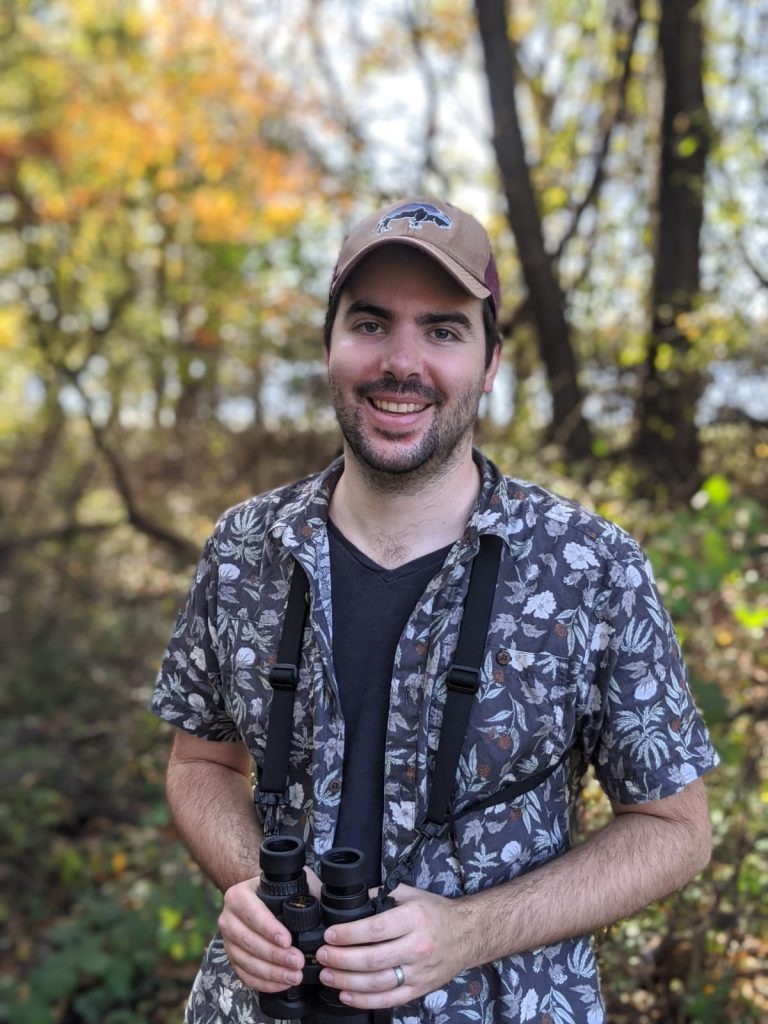
We welcomed Timothy Swartz, a current PhD student in the Integrative Ecology Lab at Temple University, to discuss the benefits of birds in urban environments. Timothy is an ecologist, conducting research on patterns of biodiversity and their relationship to the distribution and quality of habitat. He is particularly interested in studying the ecology of organisms in human-altered environments like urban landscapes. 

Where it all started.
benefits of birds in urban environments
#EcoChampion: Timothy Swartz

Swartz started his academic career at Messiah College where he earned a BS in biology and the conservation of amphibian communities in vernal pools. In 2018, he earned a MS in Natural Resources and Environmental Sciences from the University of Illinois at Urbana-Champaign and worked in the Ecology and Conservation Biology Lab. Now he is a PhD student with Dr. Jocelyn Behm in the Integrative Ecology Lab at Temple University.

Life in the field.

As a  field biologist, Timothy’s recent research investigates the role of birds in providing benefits to urban residents. Without being asked, birds fill our neighborhoods with song, hunt down pesky insects in our vegetable gardens, and gobble up littered food from our sidewalks. Timothy’s goal has been to investigate how people can return the favor by ensuring that our urban green spaces have the trees and other plants birds need to thrive. His findings could help fuel solutions to the growing problems of litter, tree canopy loss, and the widening gap between people and nature in Philly neighborhoods.

Here are some of our favorite facts from Timothy’s research, highlighted in our Stories of Sustainability webinar.

Positive impacts of birds in city landscapes.

With over 100 urban bird species in the city of Philadelphia and beyond, there are countless benefits that humans derive from nature. In Timothy’s research, he found that cities provide novel resources to people and ecosystems, including birds. 

Species provide ecosystem services, which are services that include acoustic enrichment, pest control, seed dispersal, and visual enrichment. Birds provide songs to the spaces that people enjoy, control pests for our gardens and outdoor spaces, scatter seeds to help our urban areas, and add pops of color that are aesthetically pleasing. These factors all make birds vital to urban sustainability. 

Timothy defines urban sustainability as finding the balance between habitat for animals and plants  and the health and wellbeing of people…

“Creating cities where all people and nature can thrive”

https://youtu.be/jRE4PZFFjGo

Linking birds between habitat and ecosystem services.

By using these traits to link birds to ecosystem services, Timothy found that Philadelphia supports a diverse array of birds. Acoustic enrichment is supported by birds’ song syllables and the pleasure that strong and complex songs bring to humans. Birds with a majority diet of insects provide great pest control for our urban crops. Similarly, birds that eat a lot of fruits play a large role in seed dispersal. Birds with warm tones, like yellow, red, and orange, trigger a psychological response of enjoyment. 

Differences in habitat influence which birds are present and what ecosystem services they provide. Philadelphia itself has a variety of urban green spaces. Varying from big open parks, overgrown and populated trails, and vacant lots. Timothy concluded in his research that the most important factor in these urban green spaces was local tree cover. 

Timothy then led his research asking, how much of the park is covered by trees? 

Areas with higher canopy cover had birds with a higher average syllable count, visual enrichment, pest control, yet a weak pattern for seed dispersal. Landscape tree cover saw even larger effects, especially with song complexity and a much greater increase in pest control and seed dispersal.

Trees, wealth, and ecosystem services go hand-in-hand.

His research found that trees are really important to both green spaces and across the urban landscapes. Not only do they provide cooler areas in cities, but they also provide habitat for organisms that provide ecosystem services like birds. 

Thinking in the context of urban canopy tree cover, areas of low wealth have far fewer trees and less canopy cover. Therefore, communities that suffer from racial injustice and redlining have lost more than what they have. Timothy found that there were higher enrichments, pest control, and seed dispersion, bringing much more positive effects to wealthier neighborhoods.

Learn more about the longstanding systemic inequalities that impact both people and nature in cities with a research paper written by Christopher J Schell in 2020.

To build sustainable cities, we must think about them as integrated social-ecological systems.
Dive deeper into birds and urban ecology!

Timothy’s research.

Timothy’s website.

Join the Temple Audubon Chapter.

Learn more about SEEDS.

Categories
Activism Climate Action Plan Sustainable Fashion Uncategorized

Channeling Passion for Social Change

Bringing awareness of mass incarceration through sustainable fashion.

Wrapping up Stories of Sustainability: Fashion Series with Sustainable Fashion and Social Impact Q+A! We welcomed CEO and Founder of Grant Blvd, Kimberly McGlonn, in conversation with Temple Made sustainable student leaders. Using sustainable fashion, Grant BLVD designs inclusive pathways and creates employment opportunities. Grant BLVD proposes a solution to addressing the larger global crisis and social problems stemming from climate change and poverty.

Kimberly McGlonn

Meet our thought leader.

Kimberly is an activist, teacher, podcaster, and business owner tackling mass incarceration through sustainable fashion. She earned her Ph.D. from LSU and serves as a councilmember and school teacher in Montgomery County. Kimberly opened Grant BLVD’s storefront in August of 2020, tapping into West Philly using fashion as a “mechanism for creating opportunities”. As a creative director, she uses her platform to bring attention to the challenges of mass incarceration and the need for prison reform.

Meet our superstar student leaders.

We were joined by five superstar students. With varying majors and career goals, student leaders came together through their passion and desire to learn. They channeled their passion for the environment, fashion, and making a positive difference by leading an insightful and empowering conversation with Kimberly.

The power of acting with love and speaking out against inequity.

Hear directly from Kimberly on her journey and present efforts to make a change! Here we have highlighted our answers and insight from Kimberly. 

We are guided through this conversation by superstar student leaders with three main topics in mind: People, Planet, and Profit.

Layers of permanent disruption are created once someone is convicted of a crime. Whether one can secure a job trickles into their housing, funding, and ability to reunite with their children. Kimberly’s legacy is just beginning as she founded Grant BLVD, knowing she could channel her passion for style by creating a sustainable fashion brand and eliminating barriers to provide employment opportunities. 

https://youtu.be/c1vgTTFnaW4
Sustainable Fashion and Social Impact with Kimberly McGlonn

Q: What advice would you have for people beginning their journeys in sustainable fashion, and for sustainable entrepreneurs?
A: Being sustainable starts with committing individually, to be able to defend the decisions that we make in terms of sustainability while educating others. The high standard of sustainability is reducing consumption, the second highest is repurposing items to avoid adding waste and the highest standard is that we don’t buy new products. Overall, circularity and reusing products are most important – and that is how we are bringing Grant BLVD to the next level. Our goal is to encourage our shoppers to bring their garments back to us, to extend their life and give them a new purpose.

https://youtu.be/xHt-FbNpRcY

Grant BLVD stands out against its competitors with its diverse and queer female staff, partnerships with communities in Philadelphia and their efforts of giving to non-profit organizations. 

The larger challenge for humans is to overcome our current consumer behavior. With consistency and endurance, we must demand more from our consumers, regulating purchases, and recognizing purchasing power while acting on it. For a more in-depth conversation with Kimberly about consumers and consumption, head over to the Green Dreamer Podcast.

Q: Do you have any advice for someone who loves fashion but is feeling disillusioned with the fashion industry as a whole?
A: Much of the disillusionment comes from brands claiming they are sustainable but not being ethical. It continues into the history of fashion in America and the cotton industry. These “sustainable” brands negatively affect Black and Brown communities through their manufacturing efforts and low-fair wages. It comes down to conducting research, and to stop shopping with brands that truly only benefit the top 5%. We must police ourselves and our consumption.

https://youtu.be/3W7WVS0xrro

It’s a tricky balance! Kimberly is constantly trying to figure out how to strike the balance between advocacy and sales. Determining how to strike the balance of being aware of the real things happening in our neighborhoods and country while still recognizing that Grant BLVD is telling a story about fashion.

https://youtu.be/c8XeGhLyR8k

Q: Do you believe that one day sustainable fashion will be affordable for the average person?
A: Well, we have gotten comfortable in this society where things cost more than we think they should and vice versa. I know that I am investing in my pieces, spending more because what I am wearing reflects my values which is not supporting slave labor or destroying the planet. Embracing our value as consumers, I believe, is the next step for the system to start recalibrating itself.

In the next 10 years, Kimberly hopes to see Grant BLVD break into new markets, build upon a talented team, and develop strategic partnerships with smaller brands.  Overall, Kimberly is excited about educating people around various backgrounds about the intersections of sustainability and justice, sustainability and democracy, sustainability and equity and sustainability, and the survival of us as a whole.

https://youtu.be/NoP_n2Lx6zE

Q: What barriers did you face as you founded Grant BLVD and built upon the brand?
A: As a woman, I was presented with those barriers. And a teacher for the last 15 years, I was constantly approached with the questions of: what do you know about fashion? For me, it was about countering narratives about what my talent was. I constantly remind myself that I am capable of. I was really careful about my tribe of people, and investing my time in people who encourage me and have faith in me.

https://youtu.be/gBJJuEUgZWQ

Q: We’re all in this fight and we are here for the gradual change of how people live their lives sustainability. What do you have to say to someone with the “I want to change now” mentality?
A: As Americans, we are addicted to convenience and ease. It is challenging to overcome that mindset. But one word that I believe can help us is legacy. To remind ourselves of our legacy, what we leave behind, and the power that we have to influence others.

https://youtu.be/6NqlbzxHh9s

It is about “making sacrifices as a leader and businesswoman” to make change. It was truly beautiful to be in a space with like-minded people pushing for change. During this conversation, we empowered each other and learned from each other’s experiences.

Remain empowered and learn more from Kimberly.

Join Grant BLVD community.

Shop with Grant BLVD.

Connect with Kimberly.

Remain inspired by Kimberly through Instagram.

Listen to School for Disruptors podcast.

Watch 13th on Netflix.

Read Kimberly’s recent go-to book about becoming grounded and finding pleasure in life while making a change: Pleasure Activism by Adrienne Maree Brown.


Hey Eco Owl! Remain informed and stay connected:

Join our OwlConnect to remain informed and updated on all upcoming events with the Sustainability community at Temple. Check out our new EcoReps program while you’re there to gain hands on experience with greening our campus!

Take a look at our last Stories of Sustainability, Join the Waste Conscious Fashion Community. Learn about #EcoChampions and Founders of Thrift & Flop, Allison Altobelli and Miya Wager!

Follow along with us on our socials to stay engaged and learn more about our upcoming #EcoChampion! 

Instagram: @TUsustainability

Twitter: @TempleEcoOwls

Categories
Uncategorized

Where to Donate Clothing Here in Philadelphia

Temple Thrift 2019

Let’s be real. We live in a society where consumption is the culture. We all buy things, and rightfully so, because we need them, but what if we started to put just as much thought into the end of that product’s lifespan as we do the beginning.

Styles change and trends move fast. So what do you do with your clothes when you don’t want them anymore? After swapping or selling your unwanted garments, consider donating them! Read on to learn where you can donate your unwanted clothing in Philadelphia.

Donation Centers

Always shop smart and for the long haul, invest in clothing that lasts! We understand some of those buys can be unavoidable, that’s why it’s important to think about where you can donate! If not, why not turn those old t-shirts into rags for cleaning? Or if that clothing is 100% cotton, compost it!

Broad Street Ministry

315 S. Broad St., Philadelphia, Pa. 19107

215-735-4847 / donate@broadstreetministry.org

As a faith-based organization that serves people experiencing poverty, Broad Street Ministry operates its clothing closet called 315 Threadz. They are seeking new or gently-used items: adult sneakers, backpacks, jeans, pants, shorts, and sweatpants.

Donations are accepted on an appointment basis on Mondays and Thursdays from 12 p.m. to 2 p.m. If you are interested see the email above.

The Wardrobe

1822 Spring Garden St., Philadelphia, Pa. 19130

215-568-6693 / info@careerwardrobe.org

Formally Career Wardrobe, The Wardrobe is a non-profit organization that donates professional clothing to unemployed job seekers for free. Career Wardrobe has people place their donations next to the side door on 19th street. Donations must be limited to five boxes or less, and they must be cleaned and packaged in a bag or box.

The non-profit is accepting no-contact donations on Tuesdays and Thursdays from noon to 4 p.m.

Circle Thrift

2233 Frankford Ave., Philadelphia Pa. 19125

215-423-1222 / circlethriftdonations@gmail.com.

1125 S. Broad St., Philadelphia, Pa. 19147

215-468-0645 / circlethriftdonations@gmail.com.

Circle Thrift sells items at a reduced price for the members of Fishtown, Kensington, and South Philadelphia communities. Circle Thrift primarily takes clothing donations, but they also accept donations of furniture, toys, and other household items.

Donations are accepted Friday through Sunday 11 a.m. to 5 p.m.

Green Drop

888-944-3767

As a charitable donation service, Green Drop takes donations of gently-used clothing and household items and sells them to local thrift stores.

You can schedule an at-home pickup by heading over to their website.

Project HOME

Main office: 1515 Fairmount Ave., Philadelphia, Pa. 19130 

Sacred Heart Recovery Residence: 1315 W. Hunting Park Ave., Philadelphia, Pa. 19140

215-232-7272

Project HOME serves people experiencing homelessness and poverty by connecting them to resources. The organization is in need of several items. Donations are accepted at either location Monday through Saturday from 9 a.m. to 5 p.m.

Priority items include new sweatpants, jeans, shoes, and boots, t-shirts, and underwear. They are also collecting donations of new blankets, surgical masks, and various hygienic supplies.

Retrievr

Retriever is a pickup service that diverts waste from landfills by recycling or re-selling unwanted clothing and electronics. The company picks up clothing and smaller-sized electronics for free.

Donate by:

Texting PICKUP to 757-70-FETCH (757-703-3824) 

Calling 757-70-FETCH (757-703-3824)

Sunday Breakfast Rescue Mission

302 N. 13th St., Philadelphia, Pa. 19107

215-922-6400

Sunday Breakfast Rescue Mission serves people experiencing homelessness in Philadelphia. The Rescue Mission is accepting donations of Men’s clothing Monday through Sunday 8 a.m. to 8 p.m. Here is a full list of donation items being accepted.

Philly Aids Thrift

Philly Aids Thrift supports local charities by taking donations and selling them to the Philadelphia community through their very own thrift store. Proceeds are distributed to local organizations involved in the fight against HIV/AIDS.

Donations are accepted Tuesdays, Thursdays, and Saturdays from 12 p.m. to 6 p.m.

Categories
Activism Campus Sustainability Week Sustainable Fashion Uncategorized

Join the Waste Conscious Fashion Community

Leave waste behind and move fashion forward!

Campus Sustainability Month is under way, and our #EcoChampions Allison and Miya are keeping the momentum going with Thrift and Flop. On October 14th, Allison and Miya hosted a valuable conversation with superstar students, and passionate faculty members. Read on to learn more about this Temple student-led waste conscious fashion forward community!

About our #EcoChampions

Allison Altobelli and Miya Wagner are students in the College of Liberal Arts at Temple University. Allison is a communications major with a minor in digital media engagement. Miya is also a communications major with a minor in psychology. As the recipients of the 2019-2020 Green Grant, they are entering their second year with Thrift and Flop. We are ecstatic to be featuring them both as our #EcoChampions, as they bring awareness to the negative effects of fast fashion and use their creative skills to channel a positive message through upcycling clothing!

Building a waste conscious and fashion forward community.

Miya founded Thrift and Flop in October of 2019 soon after realizing she wanted to be involved at Temple, but there was not a club that resonated with her passions. With Miya’s combined passion for upcycling clothes and craving a community of like-minded people, she collaborated with Allison and they founded Thrift and Flop. 

Thrift and Flop began their community through an Instagram page, inviting students to create authentic pieces of clothing by channeling their creativity through fashion and sustainability. Now, as we are in the 2020 school year, Thrift and Flop has over 800 followers and 85 paying members. Thrift and Flop’s success is  highlighted by the community of waste conscious fashion forward students. They continue to build upon this community of students by normally operating with weekly demonstrations, photoshoots, thrifting trips, clothing swaps, fashion shows and giveaways.

Join the Thrift & Flop Community!

Follow Thrift & Flop on Instagram to learn how to join the fashion forward group for workshops, photoshoots & more. 

Instagram: @ThriftAndFlop

Facebook: Thrift and Flop


Reduce, Reuse, Recycle: upcycling clothing.

Many people want to feel fashionable. The fast fashion community makes people feel that they have to do so with low prices and cheap non durable clothing. In America, we throw away about four billion pounds of clothing annually – making fast fashion the world’s second largest pollutant as 85% of the textiles slowly decay in landfills. Fast fashion is an ethical, environmental and economic issue. It pollutes the earth affecting our ecosystems, brings light to a major human rights issue, and makes people question: what happens to clothes before they are put in stores and after they are bought?

A waste conscious fashion solution.

As people question their buying habits, we continue to move one step closer to slow fashion. Thrift and Flop offers a solution: upcycling clothing. Being zero waste, is not just recycling but it’s repairing, reusing and rethinking. The vision behind Thrift and Flop is brought to life through this solution. By taking garments that would rather be thrown away, one can take these garments and create a unique, beautiful piece of clothing. By altering their aesthetic or repairing them, the product life cycle is extended and fashionable pieces are created. 

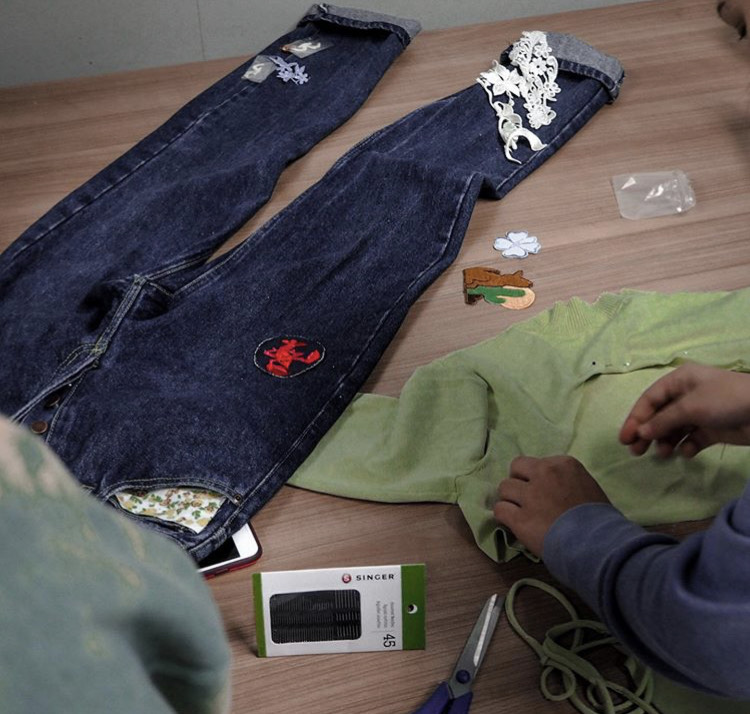
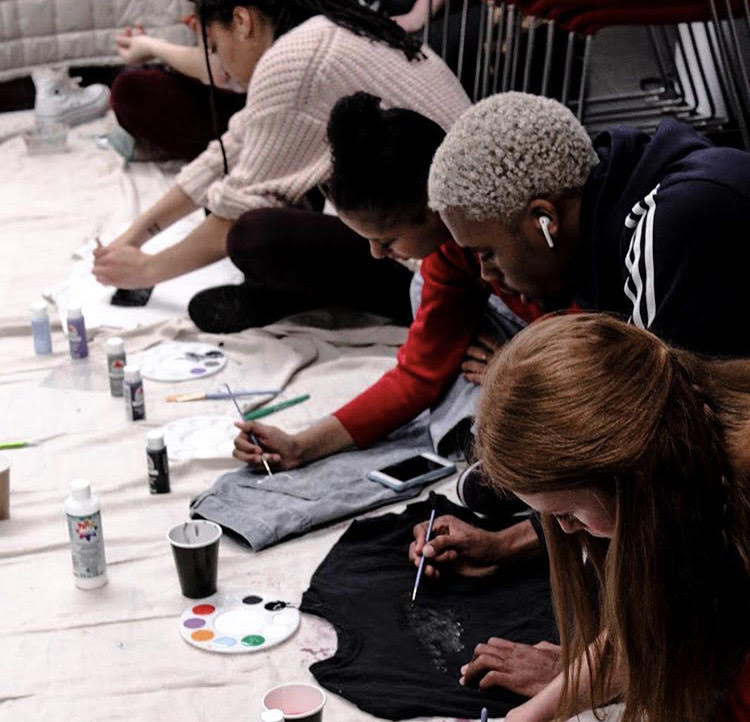
Thrift and Flop hosts several workshops for upcycling clothes – demonstrating how to distress denim, paint on fabric, sew, make jewelry, acid wash and so much more!

Be an Eco-Friendly consumer in Philadelphia. 

As a part of the community in Philadelphia, we can make a positive impact and difference by being Eco-Friendly consumers. Before you buy that next clothing item, ask yourself: Do I have an item like this already in my closet? Is the price tag reasonable and worth it? What brand is this garment? Is it eco-friendly?

Visit our latest blog post to learn more about where to ethically and sustainably donate your clothes in Philadelphia.

Thrift and Flop’s Green Grant journey. 

The Green Grant enabled Thrift and Flop to purchase needed supplies for their meetings and operations making this semester possible. The Office of Sustainability continues to guide Allison and Miya, bringing their vision of sustainability and zero waste to life.

green grant office of sustainability

Learn more and apply for the Green Grant!

Temple University’s Green Grant builds upon Temple University’s commitment to sustainability by funding projects led by students that focus on advancing the mission and have a positive impact on our local environment and community. The application deadline is November 30th, so head over to our website to learn more about applying!

2019-20 Green Grant Recipients:

Thrift & Flop

Bucha Leather Inc.

Upcoming Green Grant Info Session:

Thursday October 22nd 12pm

RSVP here!


Hey Eco Owl! Remain informed and stay connected:

Join our OwlConnect to remain informed and updated on all upcoming events with the Sustainability community at Temple. Check out our new EcoReps program while you’re there to gain hands on experience with greening our campus!

Take a look at our last Stories of Sustainability, Sustainable Innovative with Bucha Leather Inc. Learn about #EcoChampion and CEO of Bucha Leather Inc., Zimri Hinshaw!

Follow along with us on our socials to stay engaged and learn more about our upcoming #EcoChampion! 

Instagram: @TUsustainability

Twitter: @TempleEcoOwls

Categories
Activism Environmental History Uncategorized

Voices of a Movement: Latinx Activists

The hard fight for climate justice is not fought alone. We’re made up of a community of passionate activists, coming together from all walks of life. 

Voices of a Movement is a new series created by The Office of Sustainability to share diverse and powerful voices with the world. Our mission is to provide strong eco-leaders a platform and to share their resources and initiatives with the Temple Community.

Latinx Advocates

National Latinx Heritage Month was celebrated this September 15 – October 15. In honor of the movement, we wanted to recognize the incredible contributions Latinx people have made to the environmental justice movement here in the United States.

The struggle for climate justice owes so much to the work of our heroic Latinx changemakers.

Activist #1: Elizabeth Yeampierre

Elizabeth Yeampierre

Elizabeth Yeampierre leads Brooklyn’s oldest Latino community based organisation – UPROSE. She is the first latina chair of EPA’s National Environmental Advisory Council and is a national leader on climate justice. She is an advocate for sustainable development, environmental justice and community led climate adaptation and community resiliency as an internationally recognized Puerto Rican attorney. 

Source: YaleNews

“I’m really grass roots, and community matters more than anything.”

“Justice doesn’t happen nine to five. You have to be there when the community needs it. This is not a job, this is a life.”

Learn more about Yeampierre’s early life, community engagement, and some of her biggest challenges in this article and interview from the Brooklyn Reporter. Take a look at her involvement and experience with UPROSE to see the passion and drive that guides her involvement with the climate fight.

Activist #2: Adrianna Quintero

Adrianna Quintero

Quintero is a leading voice in the front to diversify the environmental movement. She is Senior Director of Diversity, Equity and Inclusion at Energy Foundation and is a nationally recognized expert on sustainability, equity and diversity. 

Her career began as an attorney litigating cases on pesticides, toxics, drinking water and air quality at the National Resources Defense Council (NRDC). In 2007, Quintero founded and served as Executive Director of Voces Verdes, an organization calling for action on clean energy and climate.

Source: Re-imagining the Environmentalist | Bioneers

“Any chance I get, I talk to anybody and everybody about how important it is and take action to tell my leaders how I feel and how important this is for me and for my family.”

Her activist works on delivering justice to the Latinx community and all people disproportionately affected by climate change. Learn more about this work from her biography with the Energy Foundation.

More Resources for Quintero

Adrianna Quintero: Talking about Race Means Facing our Biases

Some of My Best Friends Are Green | Adriana Quintero | TEDxBerkeley

Adrianna Quintero – Re-imagining the Environmentalist | Bioneers

Activist #3:  Lydia Avila

Lydia Avila

Lydia Avila is a first gen Mexican-American and her journey for climate justice began when she was a university student herself! She attended UCLA where she was an activist with student-initiated and run social justice & service organizations. She went on to work as Executive Director of Power Shift Network which mobilizes youths to advocate for a clean energy future.

Avila then spent three years working with the Sierra Club, leading two major “Beyond Coal” campaigns. The initiative focused on replacing coal with clean energy and organized grassroots activists to advocate for the removal of all US coal plants with the goal of restoring coal mining communities.

Avila is now Program Officer for the Climate and Clean Energy Equity Fund where she helps develop and execute even more grassroots campaigns. She encourages marginalized voices to be heard within the climate movement, fighting structural inequities along the way.

“Young people are all about creating a healthy economy, healthy communities, and justice. When done correctly, 100% renewable energy gets us there. We can create jobs, reduce asthma rates and bring economic justice to communities who have suffered at the hands of the fossil fuel industry for decades.”

These incredible Latinx women are fighting to create a greener, more just future, with so many more working alongside them. Their passion and dedication to the movement was truly inspiring to explore throughout the month.

This is important to continue. Let’s show support for our Latinx and indigenous climate advocates not only from the month of September 15th through October 15th, but educate ourselves and celebrate them every single day of every month.


Voices of a Movement is our newest ongoing series educating students and community members about some of our leader climate leaders. Next up, as we prepare for the upcoming election, we will be starting our next mini series focused on Student Activists and their work towards voting climate!

Take a look at Temple Votes, a program committed to providing comprehensive voter registration, education, and mobilization efforts at Temple University.  It is a non-partisan initiative led by a committee of students, faculty, administrators, and voter education organizations.

#TempleVotesClimate


Hey Eco Owl! Remain informed and stay connected:

Join our OwlConnect to remain informed and updated on all upcoming events with the Sustainability community at Temple. Check out our new EcoReps program while you’re there to gain hands on experience with greening our campus! 

Take a look at our other new series, Stories of Sustainability.

Follow along with us on our socials to stay engaged and view our next Voices of a Movement: Student Activists series! 

Instagram: @TUsustainability

Twitter: @TempleEcoOwls

Categories
Activism Campus Sustainability Week Uncategorized

Sustainable Innovation with Bucha Leather Inc.

Sustainable Innovation with CEO of Bucha Leather Inc: Zimri Hinshaw!

We are happy to kick off Temple Campus Sustainability Month with our #EcoChampion Zimri Hinshaw! As the Founder and CEO of Bucha Leather, Zimri hosted an important and interactive conversation on his solution to the leather industry. Read on to learn all about this incredible sustainable innovation!

sustainable innovation conversation with zimri hinshaw

Zimri is a Temple College of Liberal Arts Economic major with a minor in Business from the Fox School of Business. He is the Founder and CEO of Bucha Leather Inc., which he founded after growing kombucha in his dorm room at Temple. After submitting his entrepreneurial idea to various competitions he has worked to perfect Bucha’s triple bottom line business model. Bucha creates premium animal-free leather made out of bacterial nanocellulose. Bucha Leather is Zimri’s seventh entrepreneurial journey and as the recipient of the Green Grant, we are excited to feature him as our #EcoChampion!

Within every glass of kombucha is the solution to the leather industry.

Bucha Leather is not an alternative to leather, is it replacing traditional animal leather products. The problem behind the leather industry and its alternatives lie in their unsustainable production, energy and waste. The global leather industry pollutes the earth with over four million tons of solid waste every year. Its competitors, synthetic and faux leather, use unsustainable products that take up to 500 years to decompose littering our earth in landfills. 

Bucha Leather provides the real solution to the leather industry. It is grown from strong bacterial nanocellulose and treated with all-natural waxes and dyes. It is animal-free with no plastic additives, has high strength and durability while boasting a premium leather texture. Bucha does not compromise on sustainability while meeting high-end industry and consumer standards. For their goal textile, Bucha implements five steps within their scientific and production process. This whole process takes 22 days, 15 days for growth, and 7 days for drying & treatment. Bucha has the fastest manufacturing time across the entire leather industry!

Bucha sells sheets of textiles directly to creators and designers and wholesale to manufacturers. They look for those trying to incorporate sustainable textiles into their final products.

Bucha Pillow: Animal-free with no plastic additives, high strength and durability, & a premium leather texture!

Building a sustainably-focused venture.

Zimri, along with his team, have built a sustainable production system. Goals within this production system are focused on a full cycle of sustainability, creating zero waste and low impact on the earth. After the growth period is complete and treatments are applied, the material dries and is ready for its finish touches. Bucha products come full circle. After they are applied and come to its end of use, the textiles can be composted and recycled back into earth! 

When working to achieve a long-term vision and maximum profitability, Zimri highlights the importance of making compromises and knowing how to scale back in the future. With Bucha’s commitment to full cycle sustainability, highlighted as the triple bottom line, he touches on the importance of balancing people, planet and profit. 
As Zimri builds this model, he is constantly thinking about Bucha’s sustainable innovation. Asking himself, and his team: What is our end of life for our product? How can we be biodegradable and recyclable? How do we balance that with textiles that need to be durable and have a long life?

Pursuing a sustainable venture?

Fill out the b-corporation assessment

Zimri recommends this as a great tool for incorporating sustainability and the triple bottom line into your business model. 

Innovation and Entrepreneurship Institute

Many competitions are happening. Great resource to receive feedback.

Blackstone LaunchPad

Consulte with mentors and collaborate with peers.

Venture Cafe

Opportunity to become active with companies at the cafe. 

Temple Office of Sustainability Eco Reps Program

Brand new leadership development program that keeps you honest and on track with your goals.

Featured questions, answered by Zimri!

sustainable innovation
#EcoChampion Zimri during sustainable innovation Webinar

Q: What does sustainability mean to you, as the Founder and CEO of Bucha Leather?

A: I am always thinking about zero waste and what the end of life is for our product. Constantly thinking about making our production as clean as humanly possible while keeping it inspired and our values centered around circular production goals. 

Q: Can you consume the product that is used to create Bucha Leather?

A: Yes! It is safe but it won’t be like kombucha and will probably taste like sweet bacterial tea.

Q: How many different types of products can Bucha imitate?

A: We will move into new products as we achieve new levels of technical strength and durability. But it is important to note that we are not imitating – we are replacing the traditional leather industry! We are the new and the next leather. Currently, we are working with partners to craft the possibility of shoes, pillows and clothing. 

Q: How is Bucha Leather a climate solution?

A: We are replacing traditional animal leather products, eliminating one of the worlds largest pollutants. As a widely appealing product, Bucha appeals to all consumers. From meat lovers, to vegans, Bucha Leather is for everyone.

Follow Bucha Leather along their zero waste business journey!

Feel free to send a direct message to ask any questions and connect with the brains behind Bucha Leather Inc.

Instagram: @BuchaLeather

Facebook: @BuchaLeather

LinkedIn: Bucha Leather

green grant office of sustainability

Learn more and apply for the Green Grant!

Temple University’s Green Grant builds upon Temple University’s commitment to sustainability by funding projects led by students that focus on advancing the mission and have a positive impact on our local environment and community. The application deadline is November 30th, so head over to our website to learn more about applying!


Hey Eco Owl! Remain informed and stay connected:

Join our OwlConnect to remain informed and updated on all upcoming events with the Sustainability community at Temple. Check out our new EcoReps program while you’re there to gain hands on experience with greening our campus!

Take a look at our last Stories of Sustainability #EcoChampion, Will Fraser too!

Follow along with us on our socials to stay engaged and learn more about our upcoming #EcoChampion! 

Instagram: @TUsustainability

Twitter: @TempleEcoOwls

Categories
Activism Climate Action Plan Transportation Uncategorized

#EcoChampion Will Fraser: Green Transportation

Welcoming our first ever #EcoChampion, Will Fraser!

Our first #EcoChampion Will Fraser (CLA ‘15) with the Clean Air Council, spoke with Temple students, faculty and staff in an important conversation on Green Transportation as a climate solution!

Will graduated from Temple in 2015 with a degree in Environmental Studies. As the Transportation Outreach Coordinator, Will focuses his work on educating and organizing businesses to adopt sustainable commute benefits. Currently, Will chairs the City of Philadelphia’s Office of Transportation + Infrastructure, as well as Sustainability’s Vision Zero Education Sub-committee.

Will Fraser, green transportation
#EcoChampion: Will Fraser

Making the shift as a Temple Owl.

 More than any other sector of greenhouse gas emissions, transportation generates the largest share. The emitted greenhouse gases come from our common use of burning fossil fuels for our use of cars, trucks, ships, and planes. A huge shift that Temple students, faculty and staff can make individually while changing the narrative together, is the shift towards Green Transportation!

In our Philadelphia community, we have the unique ability to make this shift. The most environmentally friendly modes of transportation are walking and biking, as they emit zero greenhouse emissions. Plus – it is a great form of exercise which benefits your health.

When walking and biking is not an option, public transportation is a great option that the City of Philadelphia offers. Utilizing the subway, bus, and trolley is a great alternative to utilizing a car. Also, carpooling and van-pooling is offered through many programs, where you can save money, and connect with your community.

Head over to our Temple’s on the Move blog to learn more about getting around campus sustainably.

How can I make a sustainable and effective shift?

The City of Philadelphia and Temple University, both have plenty of safe green commute and transportation options. Our #EcoChampion, Will Fraser, shared several eco friendly resources featured below!

Philadelphia Commute Options

Options for transit passes, carpooling, and van pooling allowing employees to set aside pre-tax dollars to pay for expenses related to commuting to and from work! These are great resources to learn more and connect:

Commuting to Temple

While walking is a great green mode of transportation, sometimes biking is faster and easier! You can utilize the following:

  • Indego: Philadelphia’s Bike Share, which is readily available on and off Temple’s campus. 
  • GoPhillyGo: Great resource to get around the city of Philadelphia safely while utilizing mostly bike lanes and local trails.
  • Circuit Trails: Hundreds of miles of multi-use trails connecting local communities and providing endless opportunities for recreating and commuting.

Trails near Temple

Get out in nature by taking a bike ride or a walk, these trails are close to the city and easy to access:

Get Involved

  • Global Bike Challenge: Sign up with CycleSeptember  to earn points by riding while encouraging others to ride too. These points can lead to amazing prizes including an ebike!
  • Feet First Philly: Pedestrian advocacy group sponsored by the Clean Air Council! Promoting safer streets and advocating for pedestrian rights. Join their newsletter and follow them on Facebook and Twitter too!

Gain real-life experience diving deeper into Green Transportation!

green transportation
Broad Street Looking North

Apply to receive your walk-audit certification with the Office of Sustainability and Clean Air Council! This semester-long training course is for anyone who is interested in learning more about sustainability, environmental justice and community development, and transportation advocacy.

Participating in this training will set you up for future student leadership opportunities with the Office of Sustainability and our partners, and teach you how to be a better neighbor and more engaged citizen of the city.

This training will take place over two 90 minute sessions, and together with data collection, will require about 5 hours of your time over the course of the semester. All students of every major are invited to apply.

Please fill out this application in its entirety and reach out to caroline.burkholder@temple.edu with any questions.


Hey Eco Owl! Remain informed and stay connected:

Join our OwlConnect to remain informed and updated on all upcoming events with the Sustainability community at Temple. Check out our new EcoReps program while you’re there to gain hands on experience with greening our campus!

Follow along with us on social to stay engaged and find out who our next #EcoChampion will be!

Instagram: @TUsustainability

Twitter: @TempleEcoOwls

Categories
Uncategorized

Black Lives Matter

Environmental Justice is Racial Justice.

Temple is Philadelphia. As the only four-year public college in Philadelphia and as an urban institution that is deeply engaged in the community, Temple University’s commitment to sustainability can have a profound impact on the health and quality of life of a large and diverse population within Temple and its surrounding environment. The university is positioned to be an important educational resource for teaching sustainability, with its three pillars of environment, economics and social justice. 

We are committed to demonstrating the value of environmental justice principles through our own example and through the activities we sponsor in the community. Temple aims to serve as a model for similar urban institutions and to burnish its national reputation for excellence and commitment to principled policy and action.

Our staff is continually encouraged and inspired by our students’ demands for justice and equity. We commit to challenge ourselves to incorporate the daily work of anti-racism and the unlearning and dismantling of white supremacy into our sustainability programming and in the fulfillment of our Climate Action Plan.

We know our work is just beginning and built on a large body of scholarship and activism from many dedicated and brilliant people, celebrated and lesser known. We look forward to working for a just climate future together in community with Temple students, staff and faculty and our North Philly neighbors. We’re starting by learning and listening.

Here are some action steps and reading lists from our own Temple Sustainability staff:

Teach-In: Environmental Justice

Just this past April we celebrated the 50th anniversary of Earth Day with a student-led teach-in on a brief history of environmental justice and conversation about inclusive climate leadership at Temple. You can see the slides here. For more even more background, the NAACP has great resources here on their site.

Get Involved: Support #BlackBirders

Beloved Temple alum and Philly community member, Tykee James, currently serves as an Audubon Society’s Government Affairs Coordinator and co-founded #BlackBirdersWeek to show that diversity in outdoor recreation exists, and to reinforce that nature is meant to be enjoyed by everyone. See Tykee in action here.

Temple Sustainability is proud to support #BlackBirdersWeek and join all Audubon’s efforts to ensure the outdoors – and the joy of birds – is safe and welcoming for all people. If you would like to learn more about this initiative and join the student-led environmental justice working group within our new Audubon campus chapter, you can sign up via this form.

Staff Picks

  • Caroline Burkholder, Sustainability Manager, is a student of Urban Bioethics at the Lewis Katz School of Medicine and thinking hard about the embodied experience of structural inequality and environmental insecurity as it relates to climate change, clinical care and community accountability. She is reading and re-reading “Police Power and Particulate Matters: Environmental Justice and the Spatialities of In/Securities in U.S. Cities” by Julie Sze and Lindsay Dillon. Check it out here.
  • Rebecca Collins, Director of Sustainability, recommends this essential perspective from Black climate expert, Ayana Elizabeth Johnson, and this call to action from a grandfather of the climate movement, Bill McGibbon, for the New Yorker.

If you would like to unpack these readings with us or join us in active dialogue about how to better incorporate principles of environmental justice into sustainability work on campus, please reach out via email to sustainability@temple.edu.