Pre-prints/In review
Spigler RB, LM Smith-Ramesh, and S Kalisz. Too attractive to self: How pollinators can interfere with the evolution of selfing. bioRxiv doi: https://doi.org/10.1101/2020.05.21.108225
Published
McManus, CA**, MH Koski, RB Spigler (Accepted) Urbanization drives parallel shifts in morphology and colouration of Pieris rapae across three cities. bioRiv doi: https://doi.org/10.64898/2026.02.11.705400. Ecological Entomology.
Walker, MJ** and RB Spigler (Accepted) Fine-scale density dependence in a spatially heterogeneous plant population. Journal of Plant Ecology.
Dudash, MR, JB Fant, RB Spigler (2026), Preface: Using past, present, and future genetic knowledge to inform the conservation and management of plant biodiversity around the globe, Annals of Botany, Volume 138, Issue 1, July 2026, Pages 1–6, https://doi.org/10.1093/aob/mcag163. Preface to Special Issue on Plant Conservation Genetics.
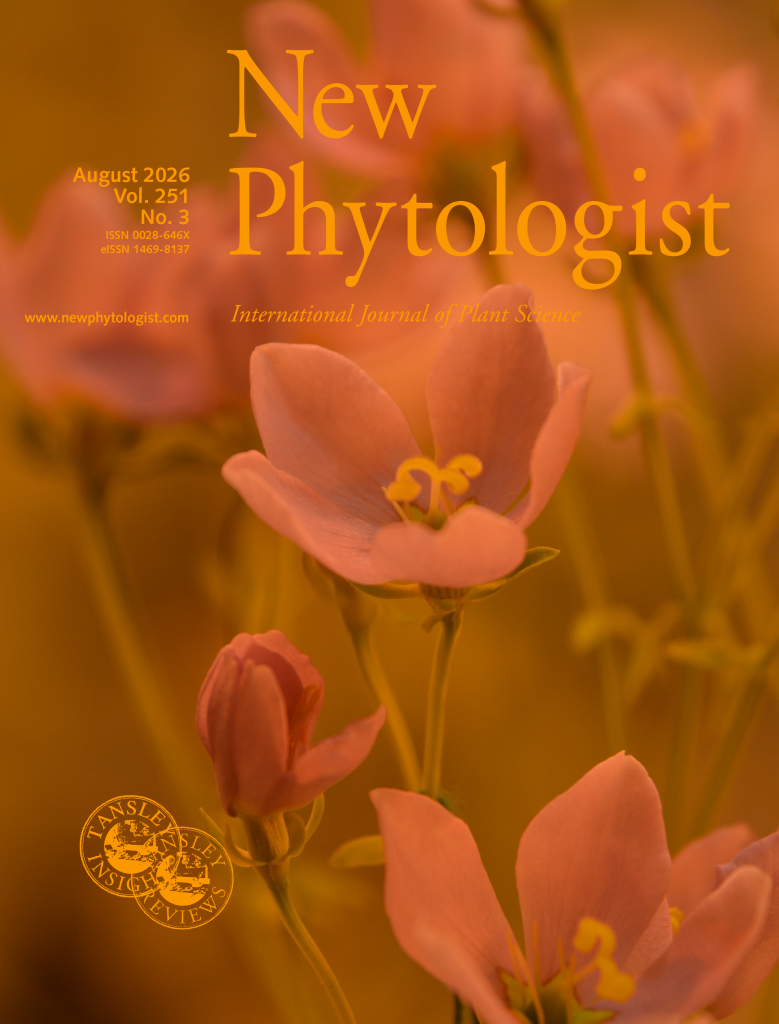
Spigler, RB and S Ostrowski* (2026) Pollination context and abiotic stress reshape variation in floral longevity and its exposure to selection. New Phytologist. 251(3): 1524-1537. https://doi.org/10.1111/nph.71130
Walker MJ** and Spigler RB (2024) Experimental evidence of inbreeding depression for competitive ability and its population-level consequences in a mixed-mating plant. Front. Plant Sci. 15:1398060. doi:10.3389/fpls.2024.1398060
Godineau**, C, K Theodorou, and RB Spigler. 2024. Effect of the seed bank on evolutionary rescue in small populations: univariate and multivariate demogenetic dynamics. The American Naturalist. 204(3) https://doi.org/10.1086/731402
Chmielewski**, MW, Naya**, S, Borghi, M, Cortese*, J, Fernie, AR, Swartz, MT, Zografou, K, Sewall, BJ, & Spigler, RB. 2023. Phenology and foraging bias contribute to sex-specific foraging patterns in the rare declining butterfly Argynnis idalia idalia. Ecology and Evolution, 13, e10287. Open access.
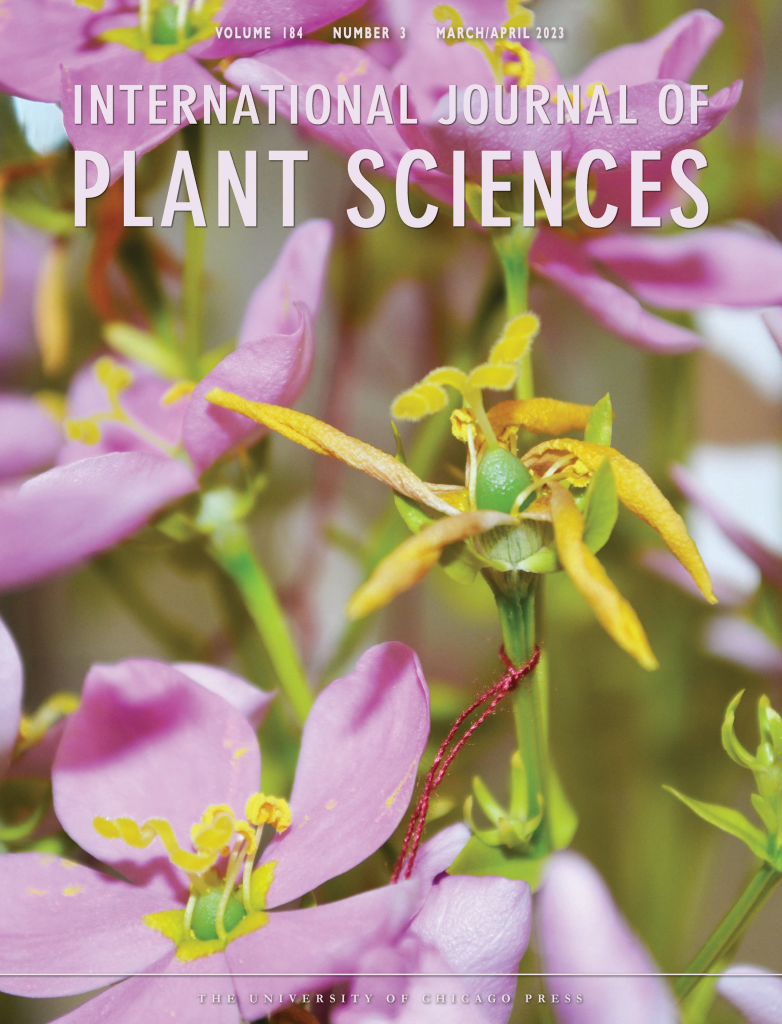
Spigler, RB and A Charles*. 2023. Inbreeding reduces floral longevity and flower size in the mixed-mating biennial Sabatia angularis. International Journal of Plant Sciences 184(3): 157-163. Available open access
Spigler, RB and R Maguiña*. 2022. Changes in female function and autonomous selfing across floral lifespan interact to drive variation in the cost of selfing. American Journal of Botany, 109(4), pp.616-627. Available open access
McElderry, R, RB Spigler, D Vogler, and S Kalisz. 2022. How early does the selfing syndrome arise? Associations between selfing ability and flower size within populations of the mixed mater Collinsia verna. American Journal of Botany 109(2) 1– 12. https://doi.org/10.1002/ajb2.1804
Smith**, GX, M Swartz, and RB Spigler. 2021. Causes and consequences of variation in heterospecific pollen receipt in Oenothera fruticosa. American Journal of Botany. 108:1612–1624 https://doi.org/10.1002/ajb2.1720
Frazee**, LJ, J Rifkin, DC Maheepala, A-G Grant, S Wright, S Kalisz, A Litt and RB Spigler. 2021. New genomic resources and comparative analyses reveal differences in floral gene expression in selfing and outcrossing Collinsia sister species. G3: Genes|Genomes|Genetics https://doi.org/10.1093/g3journal/jkab177
Emel**, SL, S Wang, RP Metz, and RB Spigler. 2021. Type and intensity of surrounding human land use, not local environment, shape genetic structure of a native grassland plant. Molecular Ecology 30:639–655.
Spigler, R. B. and A. J. Woodard*. 2019. Context-dependency of resource allocation trade-offs highlights constraints to the evolution of floral longevity in a monocarpic herb. New Phytologist 221: 2298-2307.doi:10.1111/nph.15498.
Randle, A.M, R.B. Spigler, and S. Kalisz. 2018. Shifts to earlier selfing in sympatry may reduce costs of pollinator sharing. Evolution 72-8: 1587–1599.
Spigler, R. B. 2018. Small and surrounded: population size and land use intensity interact to determine reliance on autonomous selfing in a monocarpic plant. Annals of Botany.
Spigler, R.B. and S. Kalisz. 2017. Persistent pollinators and the evolution of complete selfing. American Journal of Botany. 104 (12): 1783 – 1786.
Emel**, S.L., S. J. Franks, and R.B. Spigler. 2017. Phenotypic selection varies with pollination intensity across populations of Sabatia angularis. New Phytologist. doi:10.1111/nph.14608
Spigler, R.B., K Theodorou, and S.-M. Chang. 2017. Inbreeding depression and drift load in small populations at demographic disequilibrium. Evolution 71(1):81-94 | DOI: 10.1111/evo.13103
Spigler, R.B. 2017. Plasticity of floral longevity and floral display in the self-compatible biennial Sabatia angularis (Gentianaceae): untangling the role of multiple components of pollination. Annals of Botany 119:167–176 | doi: 10.1093/aob/mcw195. Click here for full text!
Kalisz, S., R.B. Spigler, and C.C. Horvitz. 2014. In a long-term experimental demography study, excluding ungulates reversed invader’s explosive population growth rate and restored natives. PNAS 111(12): 4501-4506.
Spigler, R.B. and S. Kalisz. (2013) Phenotypic plasticity in mating system traits in the annual Collinsia verna. Botany 91(9): 597-604.
Ashman, T.-L., R.B. Spigler, M. Goldberg, R. Govindarajulu. (2013) Fragaria: a polyploid lineage for understanding sex chromosome evolution. ‘New Insights on Plant Sex Chromosomes’ Nova Science Publishers. Rafael Navajas-Pérez (Editor).
Spigler, R.B. and T.-L. Ashman (2012) Gynodioecy to dioecy: Are we there yet? (Invited and peer-reviewed review for a special issue on plant mating) Annals of Botany 109: 531-543.
Spigler, R.B. and T.-L. Ashman (2011) Sex ratio and subdioecy in Fragaria virginiana: the roles of plasticity and gene flow examined. New Phytologist 190: 1058-1068.
Spigler, R.B., K.L. Lewers, and T.-L. Ashman (2011) Genetic architecture of sexual dimorphism in a subdioecious plant with a proto-sex chromosome. Evolution 65-4: 1114-1126. Selected for ‘Faculty of 1000 Biology’ by D. Charlesworth: http://f1000.com/1001695
Goldberg*, M.T., R.B. Spigler, and T.-L. Ashman (2010) Comparative genetic mapping points to different sex chromosomes in sibling species of wild strawberry (Fragaria). Genetics 186: 1425-1433.
Spigler, R.B., K.S. Lewers, A.L. Johnson, and T.-L. Ashman (2010) Comparative mapping reveals autosomal origin of sex chromosome in octoploid Fragaria virginiana. Journal of Heredity (Special Issue on Sex and Recombination) 101 (Supplement I): S107-S117.
Bishop*, E., R.B. Spigler, and T.-L. Ashman (2010) Sex-allocation plasticity in hermaphrodites of sexually dimorphic Fragaria virginiana (Rosaceae). Botany 88: 231-240.
Spigler, R.B., J.L. Hamrick, and S.-M. Chang (2010) Increased inbreeding but not homozygosity in small populations of Sabatia angularis (Gentianaceae). Plant Systematics and Evolution 284: 131-140.
Spigler, R.B. and S.-M. Chang (2009) Pollen limitation and reproduction varies with population size in experimental populations of Sabatia angularis (Gentianaceae). Botany 87: 330-338.
Spigler, R.B., K.S. Lewers, D. Main, and T.-L. Ashman (2008) Genetic mapping of sex determination in a wild strawberry, Fragaria virginiana, reveals earliest form of sex chromosome. Heredity 101: 507-517.
Featured in ‘News and Commentary’: Moore, R.C. (2008) A ‘missing link’ in the evolution of sex chromosomes. Heredity 102: 211-212. Selected for ‘Faculty of 1000 Biology’ by D. Charlesworth: http://f1000.com/1129838
Spigler, R.B. and S.-M. Chang (2008) Effects of plant abundance on reproductive success in the biennial Sabatia angularis (Gentianaceae): spatial scale matters. Journal of Ecology 96: 323-333.