Associate Professor of Landscape Architecture, Department of Architecture & Environmental Design, Tyler School of Art & Architecture, Temple University
Invasive Plant Removal, Native Plantings @ Shortridge and Maybrook
“One of the penalties of an ecological education is that one lives alone in a world of wounds. Much of the damage inflicted on land is quite invisible to laymen. An ecologist must either harden his shell and make believe that the consequences of science are none of his business, or he must be the doctor who sees the marks of death in a community that believes itself well and does not want to be told otherwise.” –Aldo Leopold, A Sand County Almanac (1966), pg. 197
“No one made a greater mistake than [she/] he who did nothing because he [/she] could do only a little.” -Edmund Burke
While on sabbatical during the 2022-2023 academic year, I made it my business to remove non-native, aggressive (aka, “invasive”) plants at two sites: Shortridge Park and the Maybrook Reserve. My work continues today (up until this writing in January 2026). The benefits of doing so are many:
slow biodiversity loss
acquire practical, direct knowledge of invasive plant management
become intimately familiar with plants; encounter wildlife
exert agency and instill confidence in myself to make positive change
be outdoors
get exercise
meet and work with like-minded people
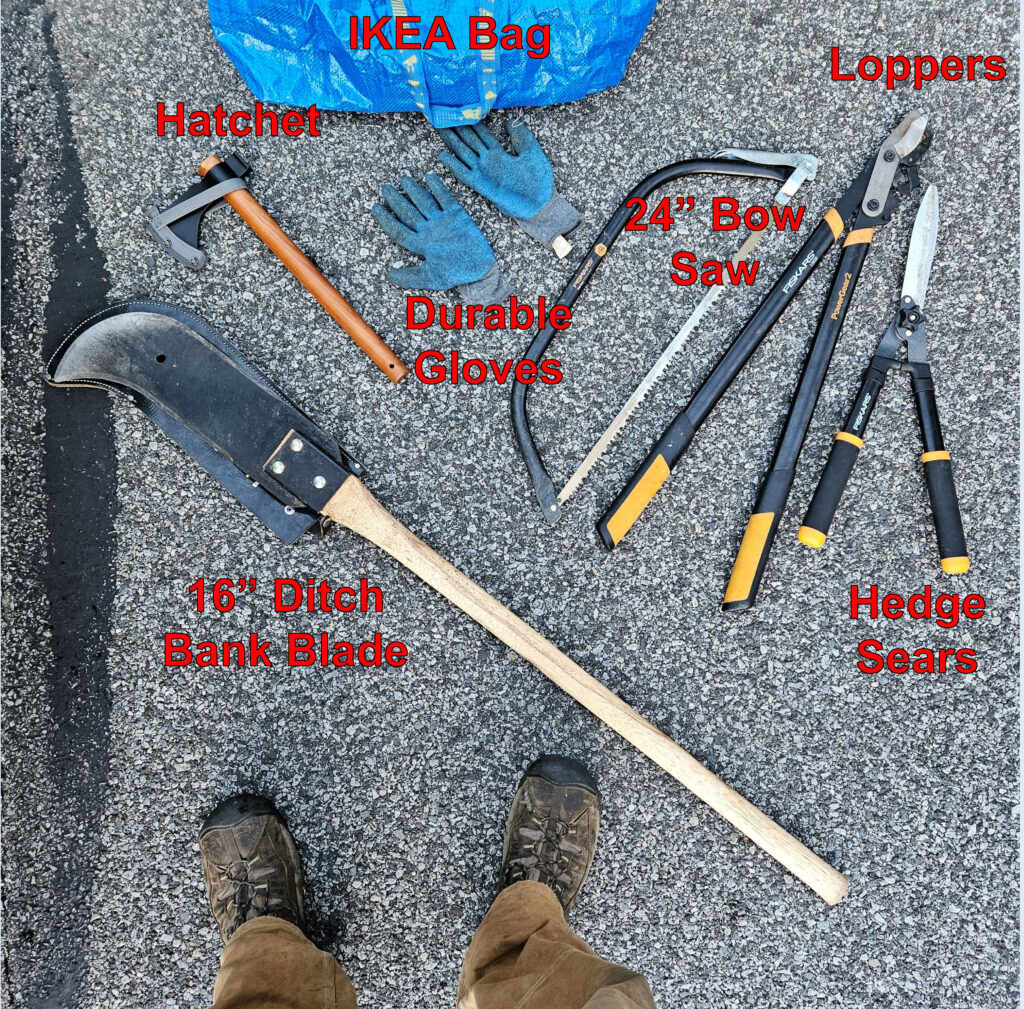
I use hand tools only and shun power tools of any sort, especially those that are gas-powered. The energy I need is food and water.
Maybrook Reserve
At Maybrook, where I spend less time and work alone, my method is best defined and described as editing what volunteers. My colleague, Nate Heavers, made me aware of Warren G. Kenfield, who called the process (using the herbicide 2, 4-D) “intaglio.”
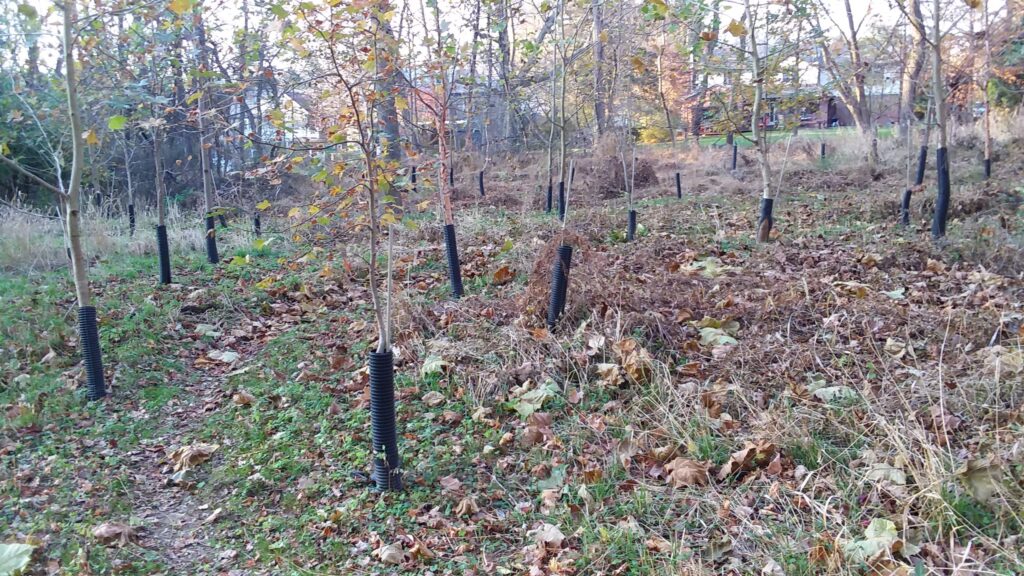
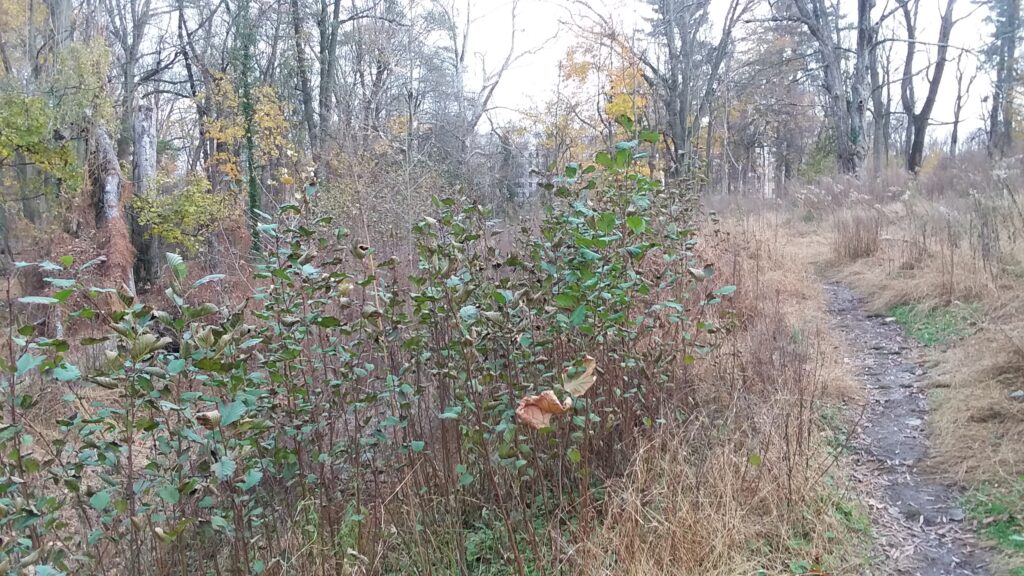
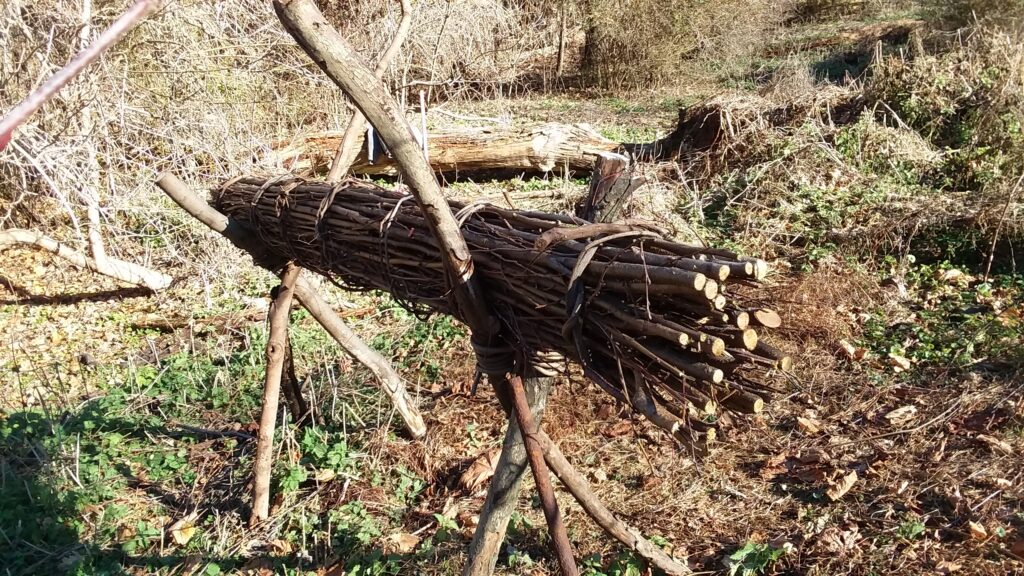
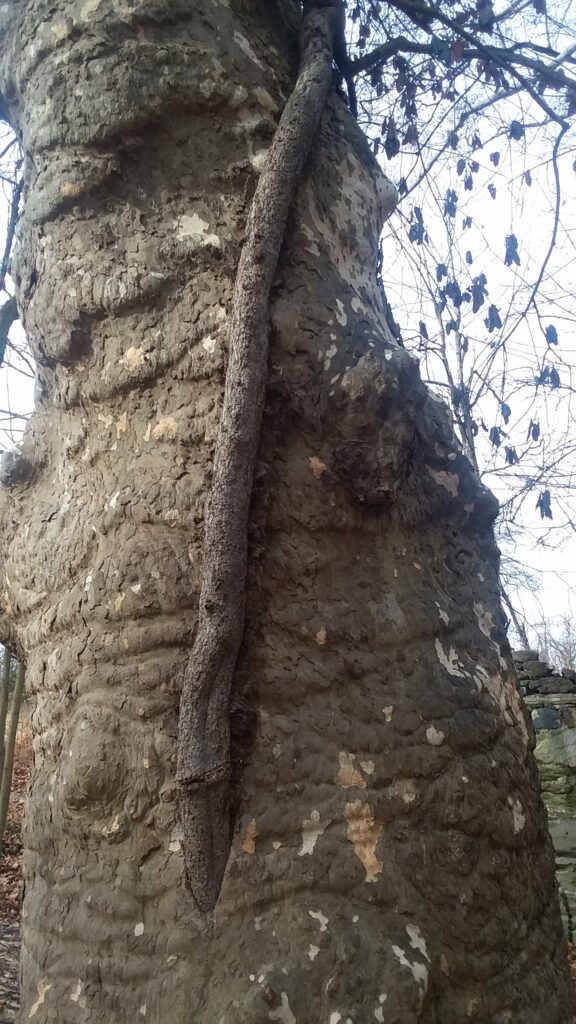
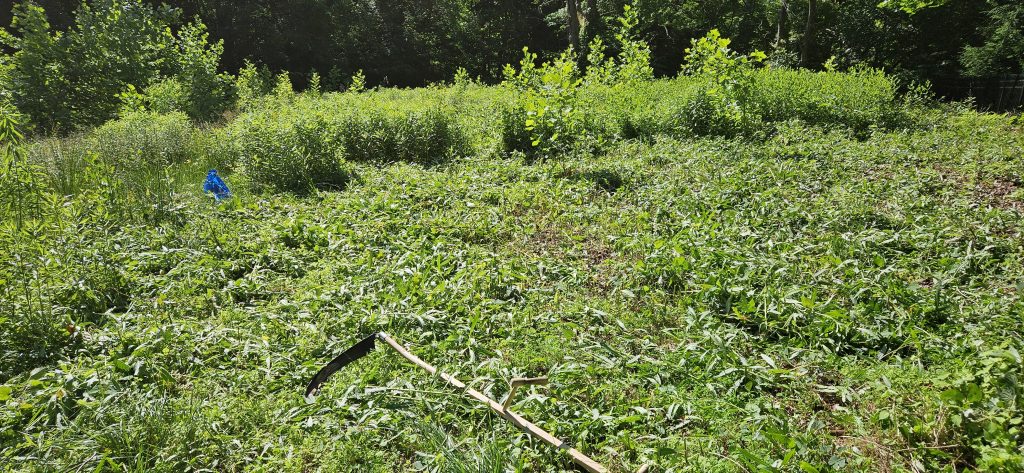
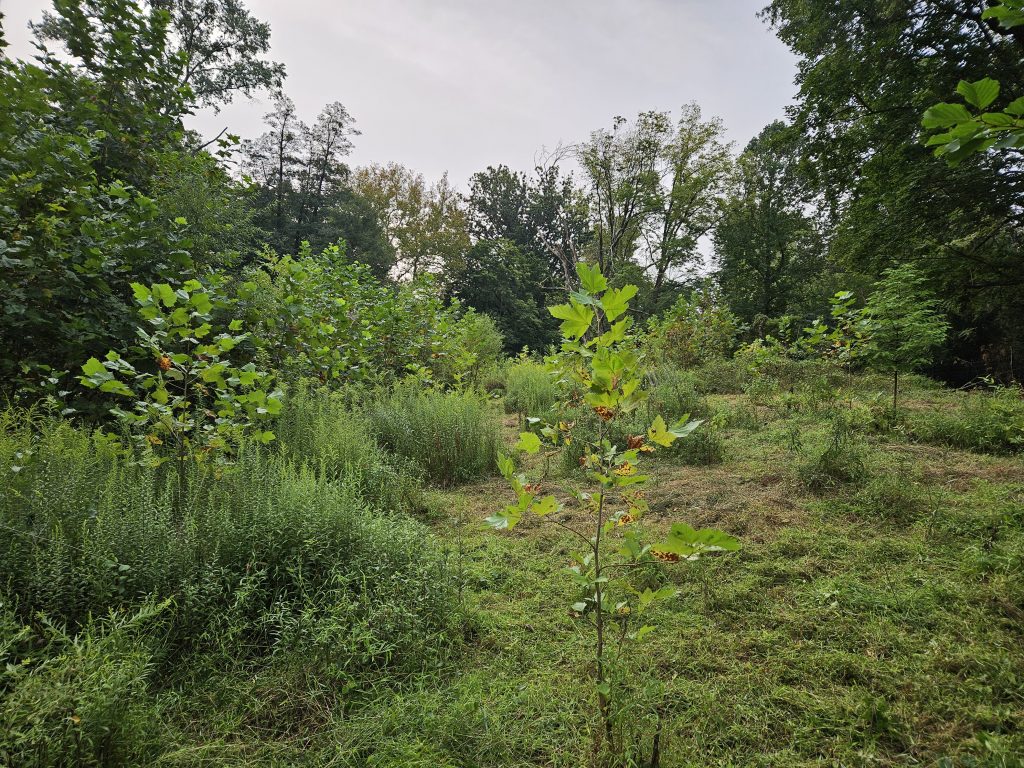
Maybrook Reserve, winter 2021. I noticed that no one was monitoring or managing the woods. I began my effort to repair the world by removing the corrugated pipe strangling many trees planted years ago.A colony of Alnus glutinosa, European Black Alder, winter 2021-2022. After felling the alders, I used kudzu vine to make a stand on which I fashioned fascines. In winter, I removed vines with a bow saw, mallet, and crow bar.Clearly, I ventured deeper into the forest than many had gone before. Shown is a non-native wisteria and my 24″ bow saw. At the end of May in 2024, at the top of the hill in a meadow of Goldenrod (Solidago spp.), I used a scythe to cut thistle before flowering. I’ve harvested meadow seeds from berms nearby and have sprayed glyphosate to eliminate porcelain berry vines that are well established.In September 2025, I bought an electric brushcutter, which I used to cut stiltgrass before it went to seed, thereby (hopefully) suppressing this annual grass. The precision with which I could operate the brushcutter allowed me to leave established drifts of Solidago and volunteer Sycamores, Sweetgums, Willows, and a few Dawn Redwoods.
Shortridge Park
At Shortridge, or “the creek,” as I call it in shorthand, I am one among a dedicated group of neighbors who have formed a “Friends” group. We work with the township parks and recreation staff, and collaborate with at least one other park Friends group, to diversify and beautify the park. With assistance from the township and Archewild, we are managing the non-native aggressive plants and have planted many, many native or hardy plants.
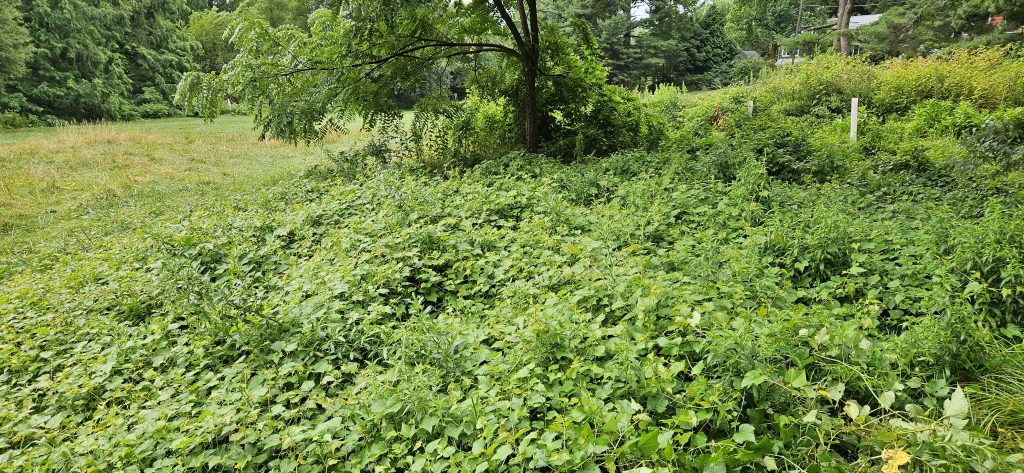
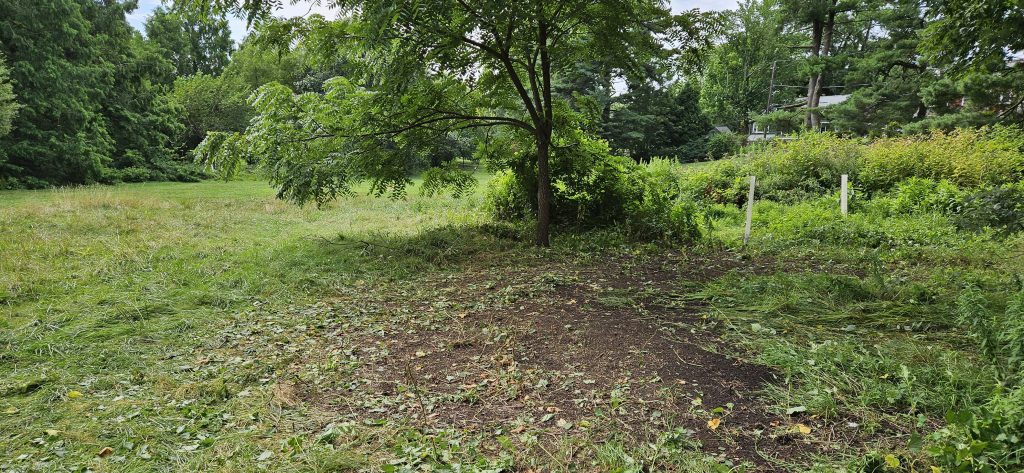
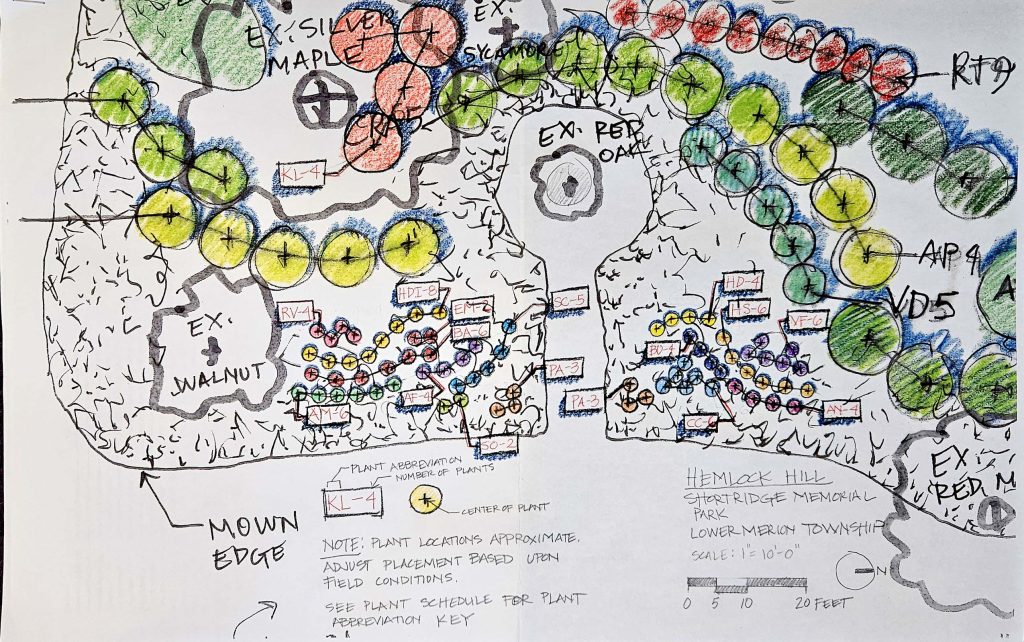
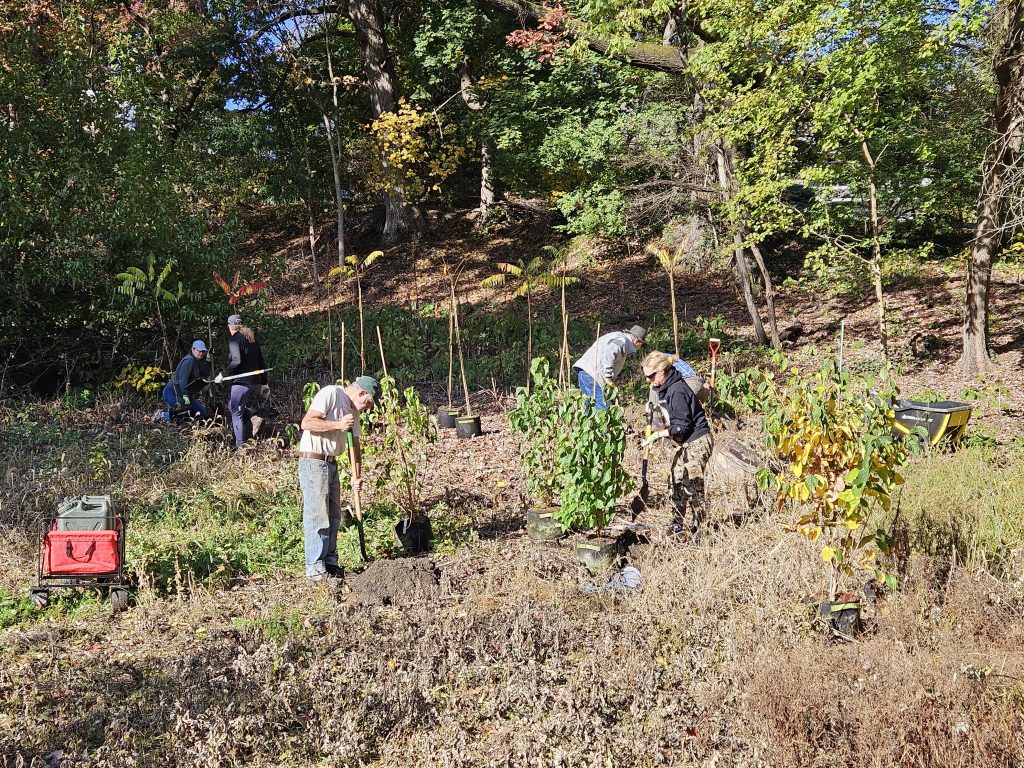
Shortridge Park. Summer 2023. Before plant removal.Shortridge Park. Summer 2023. After plant removal.Shortridge Park. November 2023. Dan Mercer, who helped remove many invasive plants, along with Stacey Hirsch, acquired 500 plants from Ten Million Trees Pennsylvania, 100 of which he generously committed to Shortridge. Some plants include buttonbush, silky dogwood, willow, black oak, sweetbay magnolia, river birch, and many others. The flagged tree in the background is Alnus glutinosa, European Black Alder, which has distributed thousands of seeds and several stands of mature colonies along the creek. Joe Marco, Lower Merion Township Arborist, and crew, along with Dave DeAngelis, Supervisor, Parks and Recreation, have been supportive in numerous ways.“The Meadow” at the base of the sledding hill in “The Quarry” before removing porcelain berry.After removing the porcelain berry with a McLeod and loppers. The township sprayed the vine regrowth in fall and will again in spring in preparation for sowing seed.An excerpt of a planting plan for the meadow. We used a sodcutter to create beds within which perennial herbaceous plants propagated at a neighbors home garden were planted. November 2025 planting day in “The Quarry” upslope from the meadow. The Lower Merion Conservancy donated all plants.