Oral Microbiome Ecology and Biofilm Pathogenesis
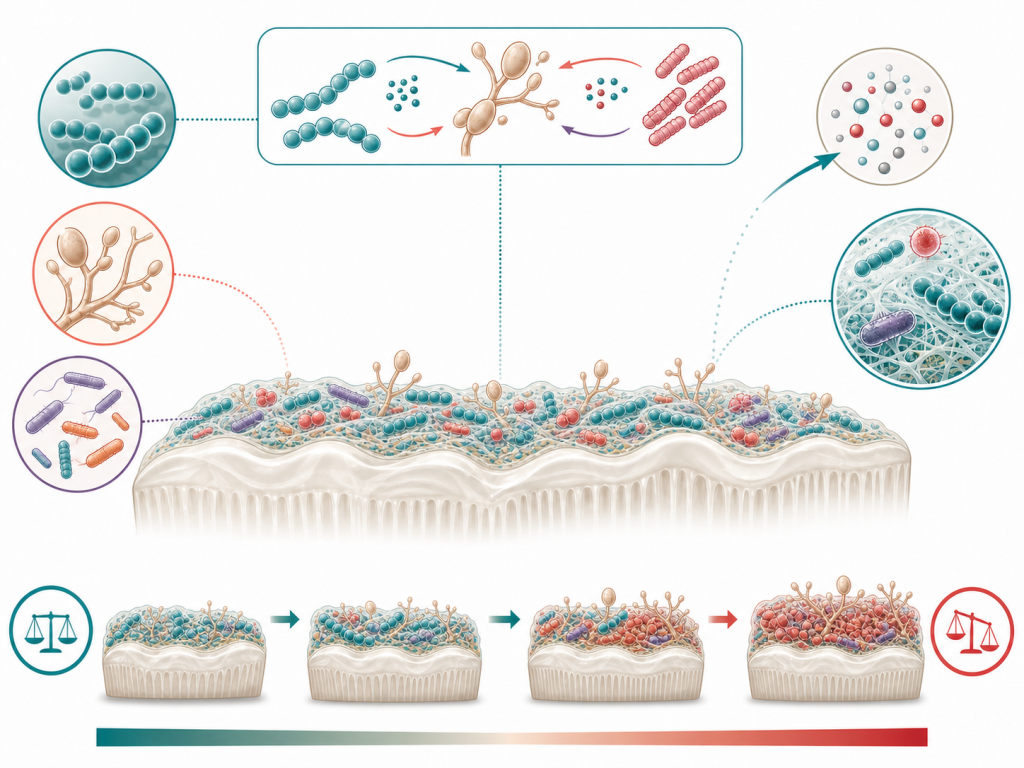
We investigate how bacteria, fungi, and other microorganisms interact within oral biofilms to influence health and disease. A major focus is understanding the cross-kingdom interactions between Streptococcus mutans, Candida albicans, and the broader oral microbiome. By combining microbiology, multi-omics, advanced imaging, and experimental biofilm models, we aim to identify the ecological and molecular mechanisms that drive biofilm virulence, dysbiosis, and the development of oral infectious diseases.
Early-Life Exposures and Childhood Caries Risk
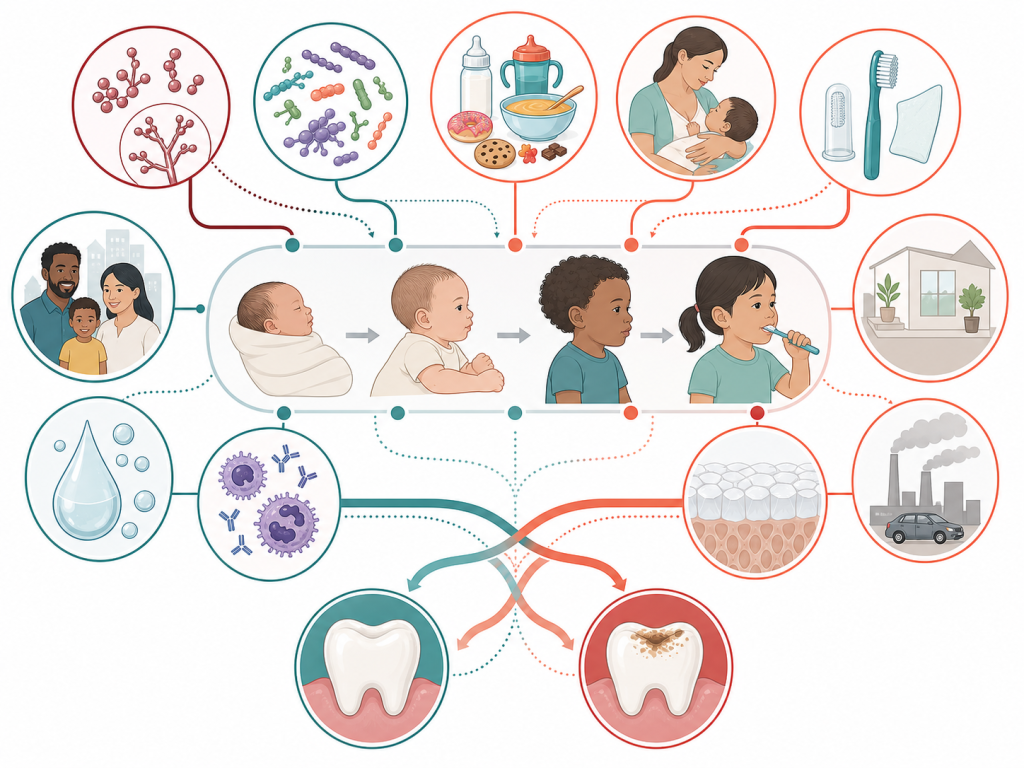
We study how microbial, environmental, behavioral, and host factors shape oral health during infancy and early childhood, with particular emphasis on severe early childhood caries. Our research examines how early fungal colonization, including oral Candida infection, interacts with dietary exposures, oral hygiene practices, socioeconomic conditions, salivary properties, immune responses, and tooth-surface characteristics to influence biofilm development and disease susceptibility. Through longitudinal clinical studies and translational laboratory investigation, we seek to identify predictive biomarkers, clarify pathways of disease initiation, and develop personalized strategies for early risk assessment and caries prevention.
Precision Technologies for Oral Disease Prevention and Treatment
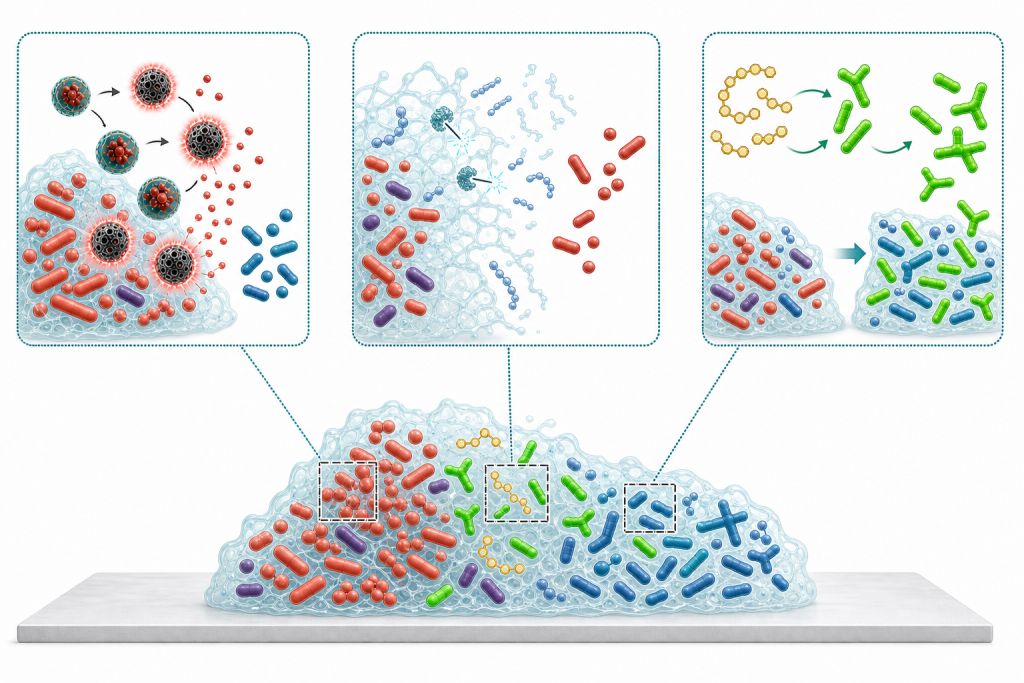
We develop innovative approaches to detect, disrupt, and prevent disease-causing oral biofilms while preserving the beneficial oral microbiota. Our research explores pH-responsive nanoparticles, nanozymes, engineered probiotics, and microbiome-modulating strategies for targeted treatment. By integrating microbiology, materials science, engineering, and clinical research, we aim to translate laboratory discoveries into safe and effective solutions for oral diseases and other biofilm-associated infections.
Oral Health in Children with Leukemia and Other Medically Complex Conditions
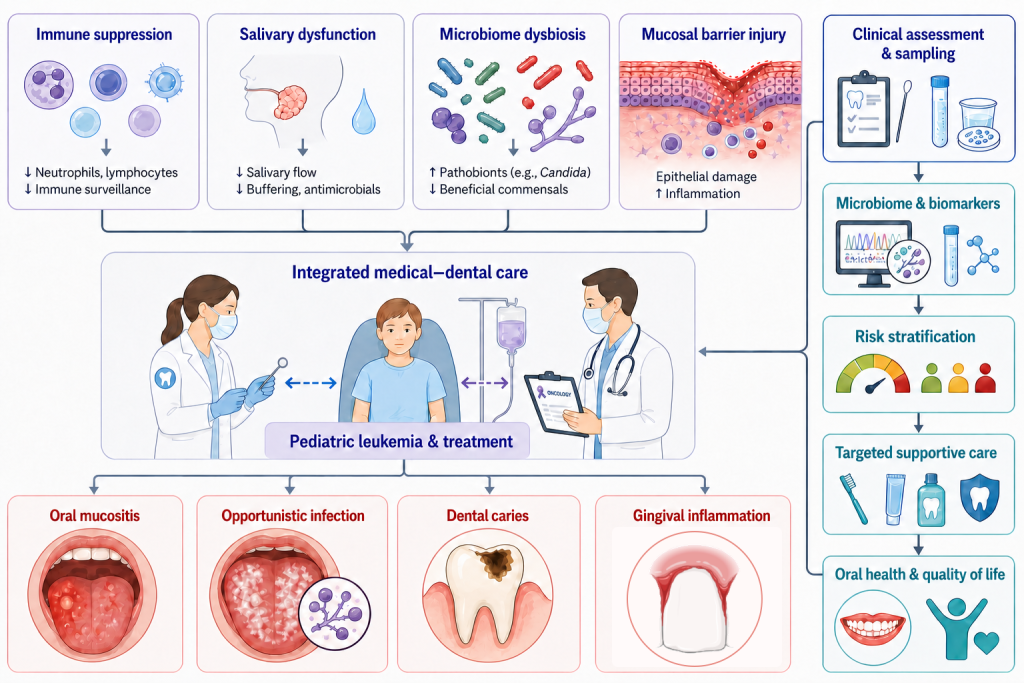
We investigate how complex medical conditions and their treatments affect oral health in children, with a particular focus on pediatric leukemia. Our research examines how chemotherapy-related immune suppression, salivary dysfunction, and oral microbiome dysbiosis interact to increase susceptibility to mucositis, dental caries, gingival infections, and systemic complications. By integrating longitudinal clinical assessments with oral microbiome analyses, we aim to identify early biomarkers of oral complications, define patient-specific risk profiles, and develop preventive and supportive-care strategies that protect oral health throughout cancer treatment and survivorship. Ultimately, our goal is to strengthen collaboration between pediatric dentistry and oncology and improve treatment tolerance, nutrition, and quality of life for medically vulnerable children.