Categories
Uncategorized

Stories of Sustainability: Temple University Japan

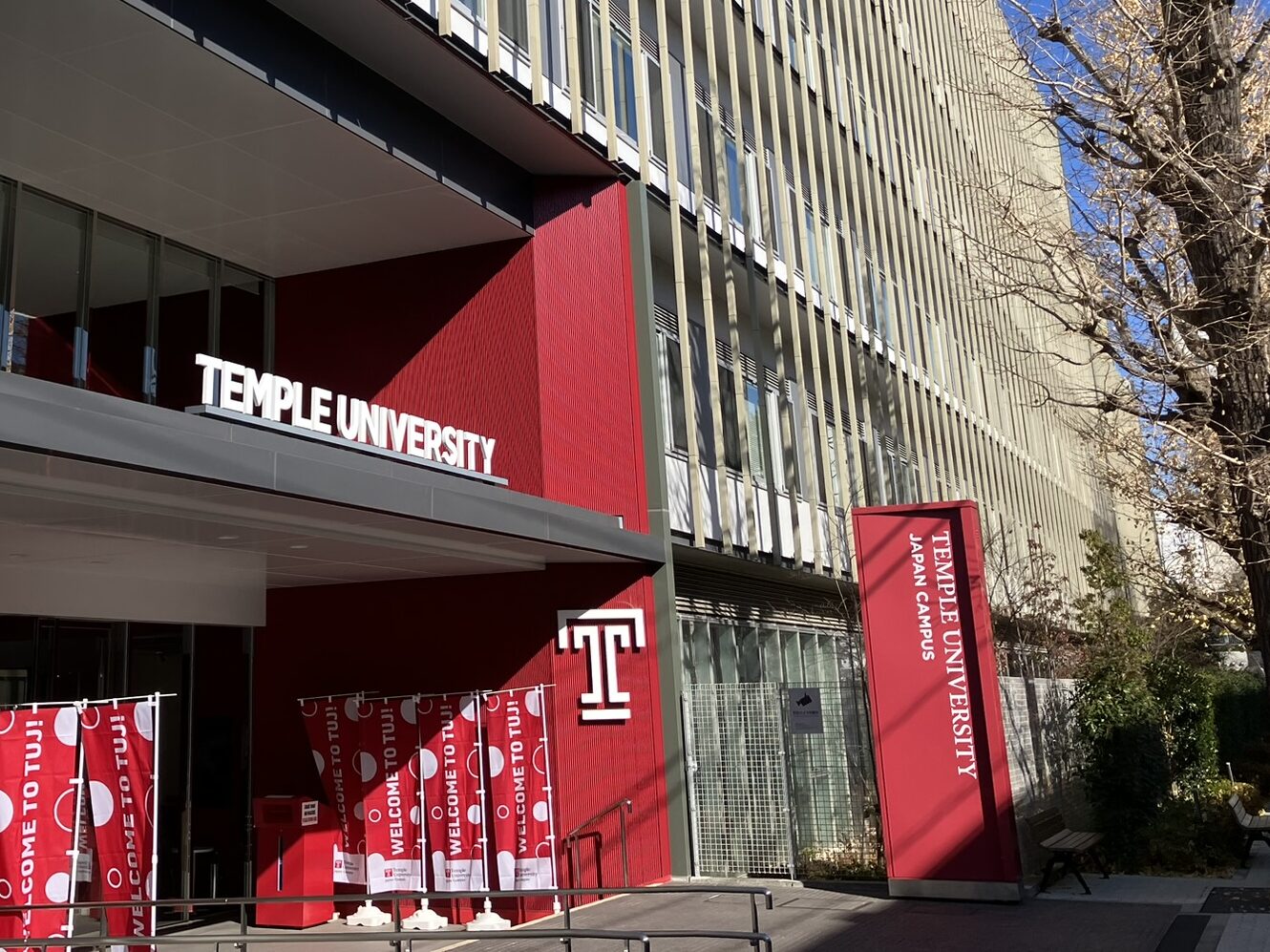
Temple University Japan’s main building

Before I even knew there was a Temple University in Philadelphia, I was already dreaming about flying across the Pacific to attend Temple University Japan. Most students have the opportunity to learn Spanish, French, or Latin in American high schools, but when I entered the 9th grade I was surprised to learn that Japanese was one of the languages I could choose from. I studied Japanese for four years, and soon enough representatives from every Japanese university under the sun were soliciting our class for prospective students. Out of the myriad of choices, Temple certainly caught my attention the most. However, I realized that attending four years of university in Japan was probably a little too ambitious, so I wound up applying to Main Campus instead. I still planned to study abroad at TUJ for a semester, but I decided to save it for my Junior year. This past Spring, it finally happened. My dream of visiting Japan came true. 
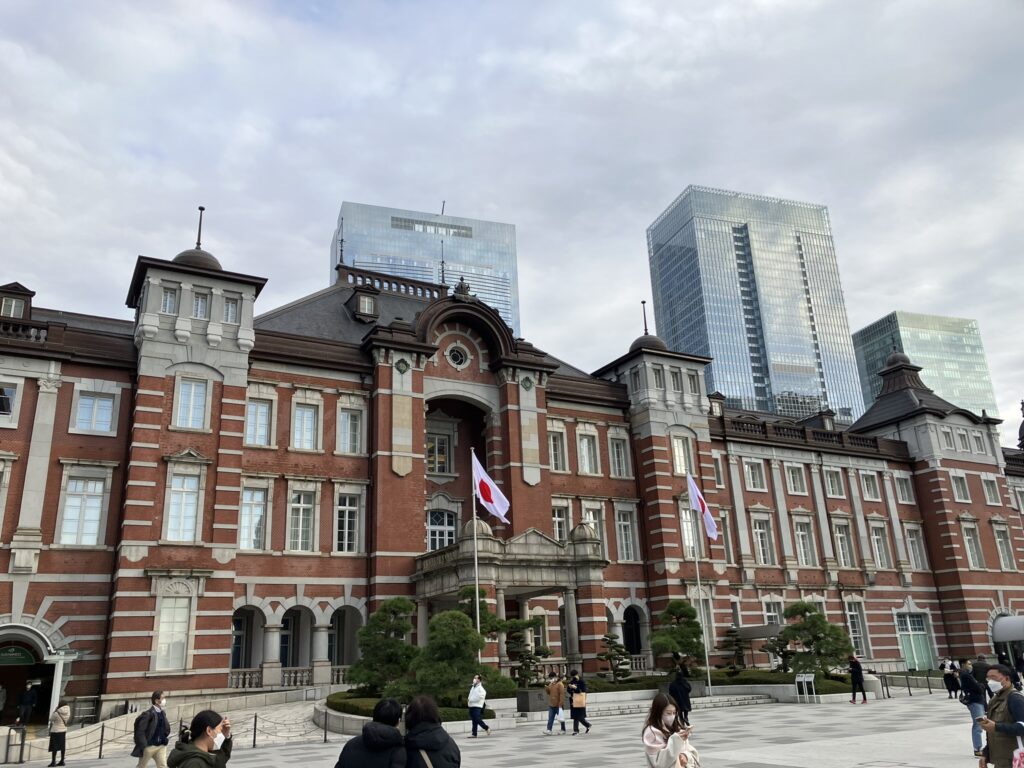

Tokyo Central Station

Due to my interests and my experience as the Office of Sustainability’s Transportation EcoLead and a Geography and Urban Studies student, I spent most of my time exploring the transportation system of Tokyo. Many days after school, I would walk out of Temple Japan’s building and make my way towards Sangenjaya Station on the Den-en-toshi metro line. From there, it only takes two stops to reach the bustling entertainment district of Shibuya, famous for its iconic scramble crossing. Besides entertainment, Shibuya also hosts one of the many mega-transfer stations in the Tokyo region, a bustling hub of commercial activity with eight train lines intersecting within it its massive structure of impressive skyscrapers and labyrinthian hallways all intertwined. Every day was a new adventure with all the options I had at the tap of a PASMO smartcard. That’s honestly what’s truly magical about Tokyo: the plethora of options and the convenience that they provide, and one of the places this truly manifests is in its transit system. 

Like the rest of Tokyo, public transit usage at Temple University Japan is incredibly high. Practically every student gets to school by train, and those who don’t bike or walk. But why is public transit so popular amongst students? For one, the university is conveniently located near Sangenjaya Station on both the Setagaya and Den-en-toshi lines.
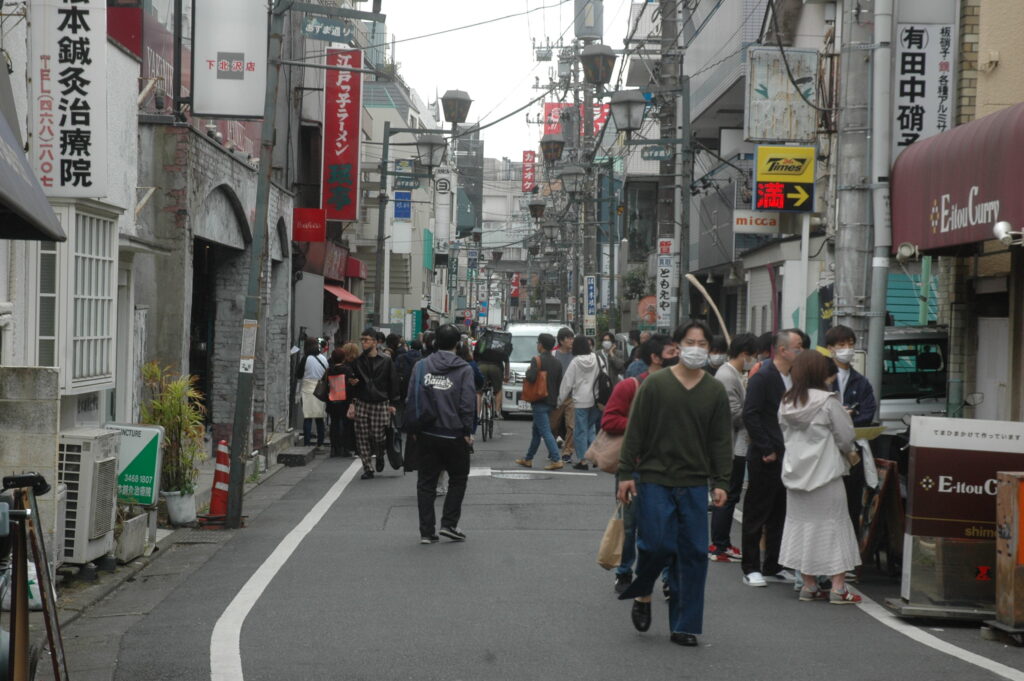
Narrow roads allow pedestrians to move (mostly) without the danger of cars

This connectivity allows practically anyone in Tokyo’s 23 wards to get to school in an hour or less. Secondly, driving to school is made nearly impossible by the lack of parking, the narrow roads leading to campus, and the difficulties innate to buying and owning a car in Tokyo, especially as a foreign student. Biking or walking to school is made easy by the narrow streets, which put bikes and pedestrians first and cars second. Additionally, a convenient system of bike shares and bike parking reduces the hassle of buying and safely parking a bike that we often see in American cities. Through a combination of frequent service, plentiful amenities, and excellent reliability, Tokyo’s rail network is certainly among the greatest in the world, and as such, the ridership numbers are extremely high: over 8.7 million people ride the subway network every day.
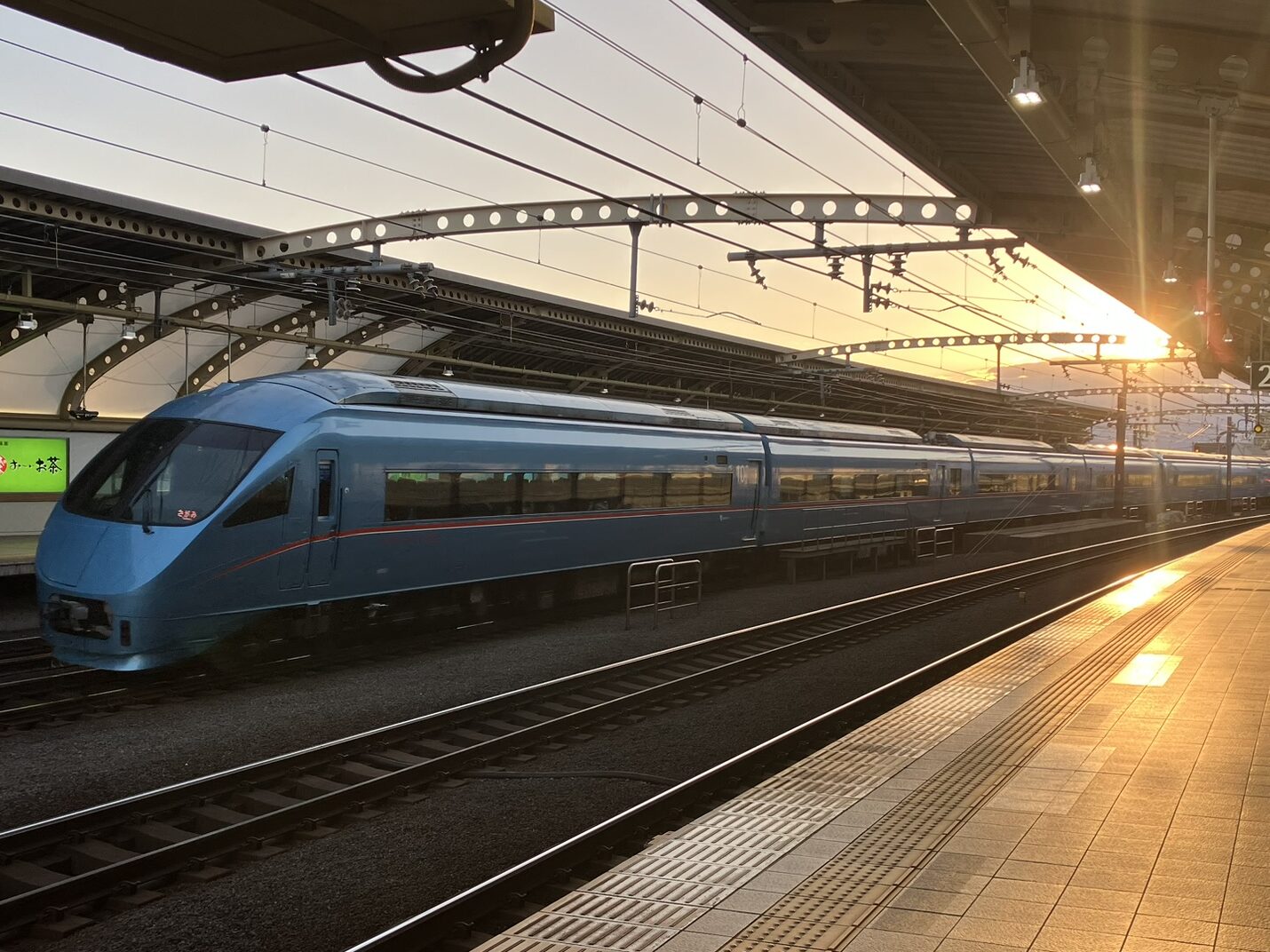

Romancecar (Shinkansen) in Gotokuji Station, Setagaya, Tokyo

Unlike in American cities, hardly anyone in the Tokyo area thinks twice about riding public transit to their destination. In my time there, I recall only once or twice running into any major hiccup such as a delay or gap in service. I could often just walk out of my apartment in the morning without any rush or stress to catch a specific train. All I needed to do was show up at my local station, and the system would take me where I needed to go in almost exactly the same amount of time every single day.

By contrast, here in Philadelphia I almost always map my route on the Transit App or Apple Maps or check the schedules so I know exactly when I have to leave to catch a specific train or bus. If I don’t catch that specific one, then it’s possible I’ll be late to my destination or miss a transfer somewhere along the way. However, even if I plan, no amount of planning can account for a train or bus just not arriving at the scheduled time or extremely infrequent service. SEPTA is volatile and often unpredictable or inconvenient. This is something that has to change if we are to get more people out of their cars and onto the more sustainable option: public transit.

Personal automobiles are quite popular in Philadelphia and the United States as a whole, and some say they’re completely unavoidable for most transportation needs, but in reality, Temple’s Main Campus actually has a lot of the same bones required to be just as good at getting students out of cars as the Tokyo campus.

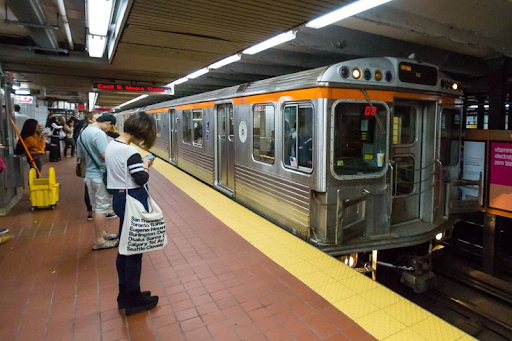
Cecil B Moore Station is the Broad Street Line station most used by Temple Students

Three transit stations and multiple bus routes exist on or near campus, and the bike share and bike parking around campus are quite plentiful. The issue isn’t a lack of options, but that all of these features lack the same level of quality and reliability as those in Tokyo, preventing them from reaching their true potential. Additionally, the dominance of car infrastructure and a lack of decent funding for transit and bike infrastructure in Philadelphia and the United States as a whole leaves much to be desired for current and potential users. That’s not to mention the safety and cleanliness issues that disincentivize people from choosing transit, another symptom of government disinvestment and sparse funding. If we are to be serious about sustainable and equitable transportation in this country, we need to call upon our elected officials and government agencies alike to put the needed investment into our public transportation systems and bike networks. Not only could it save lives, but it also might save our planet in the process. 
 

Categories
Campus Sustainability Month Stories of Sustainability

Transportation and Climate Change

This will be the first of three blog posts on the transit system in Philadelphia and its connections to climate justice. Stay tuned for our next transportation blog post: Transit Equity in Philadelphia.

The transit system in Philadelphia isn’t quite as multifaceted as the city it serves, but it's got layers to it nonetheless. Let’s peel some of those layers back and ask two foundational questions of our transit system: how does transportation relate to climate justice? And how is our transit system structured?

Transportation and Climate

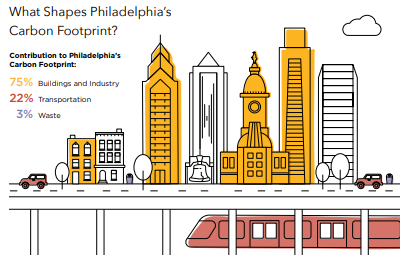
Energy is the fuel that powers our transit system, as we’ve established in our blog post on Energy, Electricity, and the Climate Crisis. Sadly, we’ve also established that most of the energy we use is generated from fossil fuels. As a result, transportation accounts for 22% of Philadelphia’s Greenhouse Gas emissions, much of which comes from our car-related emissions due to a lack of funding for SEPTA (which we’ll touch on momentarily). 

Transit
(Philadelphia Climate Action Playbook, pg. 13)

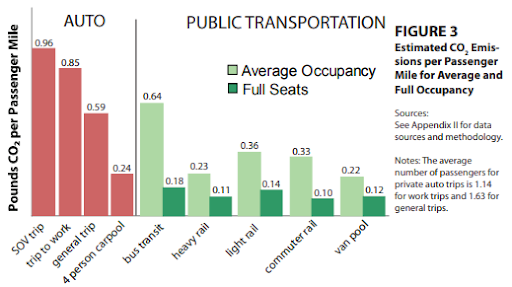
This reliance on cars both exacerbates climate change and creates harmful air pollution, as Philadelphia ranks as the 12th most polluted city in the country. Personal automobiles, here, are a big part of the problem. In 2009, cars, SUVs, pickup trucks, and freight trucks accounted for 77% of all transportation GHGs. Contrastingly, public transit emits much less pollution per passenger mile, especially when ridership is high, as shown below.

(Public Transportation’s Role in Responding to Climate Change, 2010)

Bold climate action requires deeper investments in public transit. Sadly, public transit is drastically underfunded across the country, and Philadelphia is no exception. To change that, though, we’ll need to understand how our transit system is structured. So let’s get to it!

Our Transit System: SEPTA

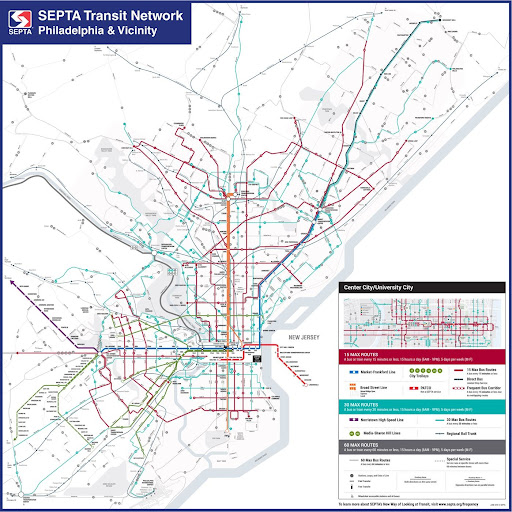
First, let’s talk about SEPTA or the Southeastern Pennsylvania Transportation Authority. SEPTA is a metropolitan transportation agency that oversees public transit in Philadelphia and the surrounding counties of Bucks, Chester, Delaware, Montgomery. In Philadelphia, SEPTA offers bus, subway, regional rail, and trolley services across the city, the full map of which is shown below.

SEPTA is a regional authority, not a City agency. So, each of the five counties in SEPTA has equal representation on SEPTA’s board. Still, most of the transit agency’s ridership, usually 80% or more, comes from Philadelphia. This means that, because the rest of the counties in SEPTA are less populous than Philadelphia but each receives the same number of votes, the transit agency disproportionately represents the interests of less-densely populated, suburban residents.

Pennsylvania’s Contribution to Transit System: SEPTA

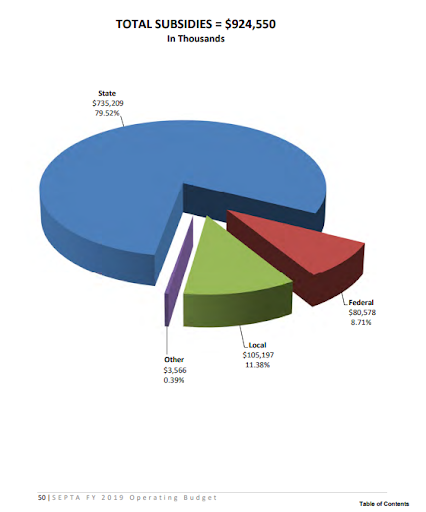
How does our state government impact our transit system? Well, this is where the thick of it lies. Most of SEPTA’s funding comes from the PA State Government. As a result, the transit agency has not had a steady, dedicated funding source for most of its history. 

(SEPTA 2019 Operating Budget Subsidies)


When it comes to government funding mechanisms, there are two kinds of budgets. Firstly, there are operating budgets. These budgets include buses, employee wages, ongoing maintenance costs, etc. It’s helpful thinking of operational budgets to be for short-term expenditures. Secondly, there are capital budgets, which include projects like rebuilding train stations, constructing new electrical systems, or building a bridge. These are the more long-term infrastructure investments.

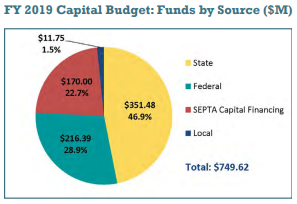
In 2019, state funds accounted for almost 80% of SEPTA’s operating budget and almost 50% of SEPTA’s capital budget. Much of the state’s funding to SEPTA comes from Act 89 in 2013 which allows the Pennsylvania Department of Transit (PennDOT) a $450 million infusion to public transit agencies. However, Act 89 is set to expire in 2022, meaning a big chunk of SEPTA’s funding source could dry up as soon as 2022.

(SEPTA 2019 Capital Budget Subsidies)

This arrangement is unusual for American transit agencies. Most other agencies receive larger support from their local governments, especially in west coast cities where revenues are raised directly from sales taxes. These local funding streams also make localities more responsive to ridership needs. Nevertheless, if the state funding dissolves, SEPTA will need to find alternative sources of funding from local or federal governments.

The Federal Government’s Role in Our Transit System

What role does the federal government play in all of this? I’m glad you asked! The federal government sends funds to local and regional transit agencies across the country, like SEPTA, which are tasked with managing transportation systems in a particular area. However, ever since the Reagan era and the 1980s, the federal government has steadily decreased subsidies for transit agencies’ operating budgets. For instance, federal funds accounted for 11.4% of SEPTA’s operating budget in 2019, as shown above.

When transit agencies need additional capital funds, they can apply for competitive grant programs through the Federal Transit Administration. SEPTA has not submitted a major capital grant for some time but is trying to do so to modernize our trolly system


The federal government’s distant role in our transit system is unusual for wealthy nations. In 2019, the United States invested 0.6% of its GDP into inland infrastructure investments, while France and the United Kingdom each invested 0.9% of their GDP in the same year. Clearly, the federal government needs to deepen its investments in public transit agencies like SEPTA.

Transportation and Climate Change: Conclusion

In summary, the federal government has disinvested from transit agencies like SEPTA, and some state governments, like Pennsylvania, have not played their part either. Finally, SEPTA itself is designed to cater to the needs of suburban areas more than the city. Fighting climate change will require changes to all of the above, creating a cleaner, better-funded public transit system in Philadelphia and beyond. What might this look like? Who could it work for? Stay tuned for our next blog post Transit Equity in Philadelphia to find out!