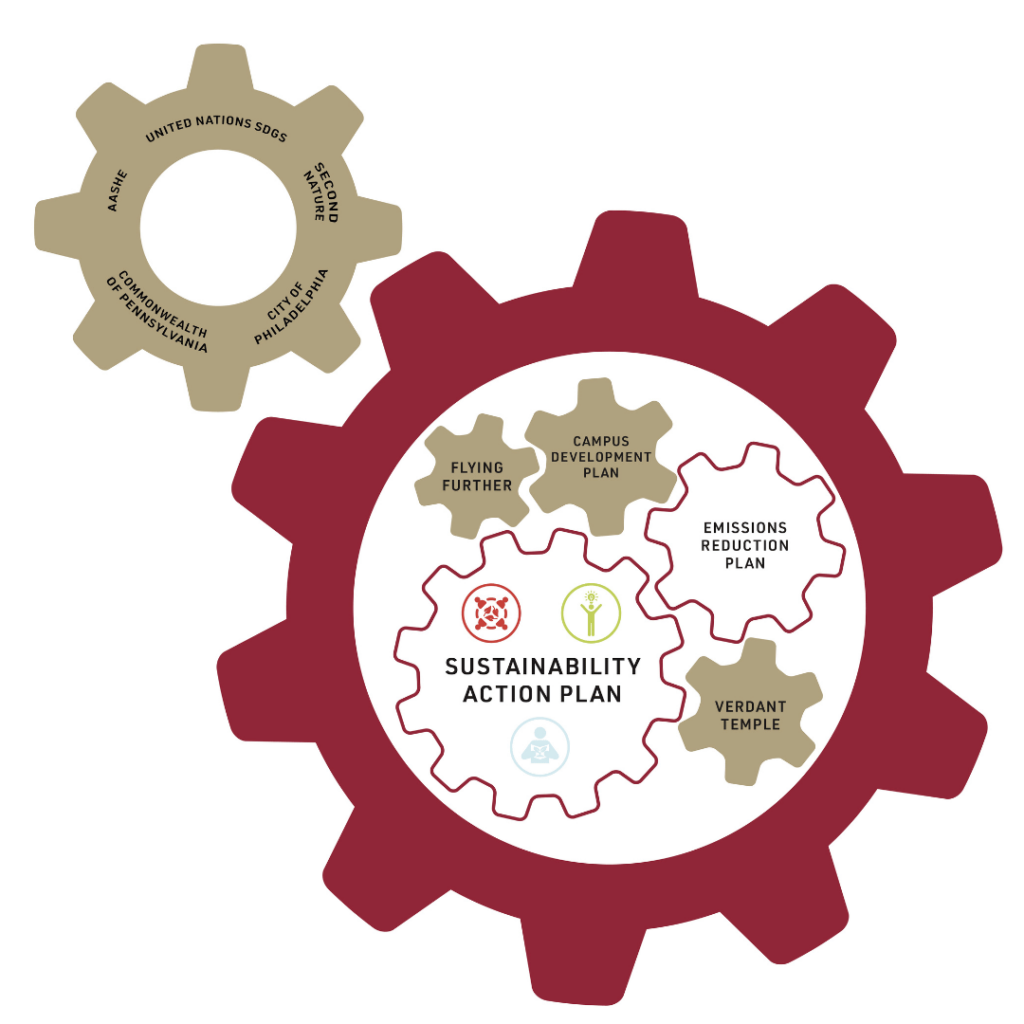
The 2024 Sustainability Action Plan represents a more holistic approach to addressing climate change and the environment, economic justice, and social equity in an integrated, interconnected way.
We invite all members of the Temple community to provide feedback on the proposed structure and strategic emphases as well as offer ideas, ask questions, and share their vision for a sustainable Temple.
Make your voice heard by filling out the Feedback Form and stopping by this month’s events!
Feedback Form
Join us in shaping a sustainable Temple
We encourage you to share ideas, questions, or your personal vision for a sustainable Temple. Help us fulfill our institutional climate commitment through your feedback.
Green is the prime color of the world, and that from which its loveliness arises.
– Pedro Calderón de la Barca
As the weather warms up and the days become longer, the start of the spring season offers a perfect opportunity to embrace sustainable living. This March, Temple University’s Office of Sustainability presents a bouquet of eco-conscious events, blooming with the essence of renewal and environmental stewardship.
Let’s make this March a season of blossoming, appreciation, and eco-friendly choices. Together, we can plant the seeds of change and nurture a more sustainable and vibrant world.
Check the calendar below to see all of the events occurring both on and off campus this November. Click the links to sign up for events and join the movement toward a healthier, happier planet.
“The greatest threat to our planet is the belief that someone else will save it.” – Robert Swan
Temple University’s Office of Sustainability is thrilled to present our February events and this year’s Campus Race to Zero Waste campaign. Join us in sowing the seeds of change and nurturing a more eco-friendly campus.
Campus Race to Zero Waste is a sustainability competition in which Temple University goes head-to-head against schools across the country to see who can divert the most waste from landfills.
Want to get started? Take the Campus Race to Zero Waste pledge and check out the calendar below to discover the array of events happening on and off campus this February. Click the links to RSVP and become a part of the movement toward a circular economy!
B.S. Community Development, currently pursuing M.S. City and Regional Planning
What is a walk audit? Why is it important?
Walk Audits are often the principal step in planning for the built environment. Whether it be transportation and safety planning, as this Fall’s walk audit was focused on, or architecture, landscape design, land use planning, commercial development, and others, walk audits are necessary as the initial research collection in each discipline.
Visiting a site and getting boots on the ground is fundamental in understanding the geographic context and day-to-day functionality of the location in which we are planning or designing. More than simple site observations, walk audits involve a detailed set of research questions and objectives for auditors to look for upon visitation. The audit involves an overarching goal by which the research questions are formed to determine the site’s performance through qualitative and quantitative data that is measurable and comparable. So much of what we experience in the built environment is hard to put into words; it can be simplified to everyday life and the routine movement of people through space. Yet, it is design which enables or disables these routine activities to happen. Walk audits serve to identify how the physicality of a location serves the people who occupy it, and what can be done to improve the user experience.
How did this experience build on what you learned in the classroom or relate to your professional work and career goals, especially as a graduate student and future practitioner?
A good deal of in-class content involves the theoretical aspects of the discipline. In planning, we consider the history of planning movements and the dominant theories that guided city planning practice over the centuries. This helps to explain how the built environment we see today came to exist. We also consider the politics and inter-agency partnerships that are necessary to get stuff done. The walk audit is not theoretical. Participating in the walk audit translated learned theoretical concepts into a real-life planning process. We were able to experience the necessary inter-organizational collaboration as community groups and sustainability advocates cooperated together to collect data and draft actionable recommendations for improving safety on a high-injury corridor. Having the knowledge of how planning works is not quite the same as experiencing planning in action. The walk audit provided invaluable real-world experience that added a layer of depth upon the classroom content. As every planning process is unique to itself with its own objectives and constraints, this concrete experience bolsters a student’s ability to think critically on each project and select the best tools to utilize for any given project.
In my professional work, I serve as a project assistant for a community engagement consulting firm based here in Philadelphia. We see a lot of transportation, streets, and public safety-related projects where communities are seeking support in conducting community engagement to create actionable changes ranging from small scale and temporary to larger scale and more permanent. This semester’s walk audit leveraged Temple students to conduct the site observations and data collection, but community groups and planners can involve regular community members in walk audits as well. For community members, walk audits are a way for folks to gain a deeper understanding of how their community works well, and what doesn’t, along with meaningful ideation on ways to make it better. Walk audits are a fantastic community engagement activity that not only propels the project toward action, but also builds a stronger community bond among residents.
Why is effective community engagement and community engaged, action-research in urban planning an important skill in planning climate-just and resilient cities?
As understood in history, planners and political decision-makers have not always consulted community members regarding impactful proposals and projects in their communities. Instead, they have made decisions on the community’s behalf; many times, miscalculations inflict inequities on those very communities, even when the planners’ intentions were good. Learning from the mistakes of past planners, the next generation of planners are identifying ways to increase community engagement for the sake of better planning.
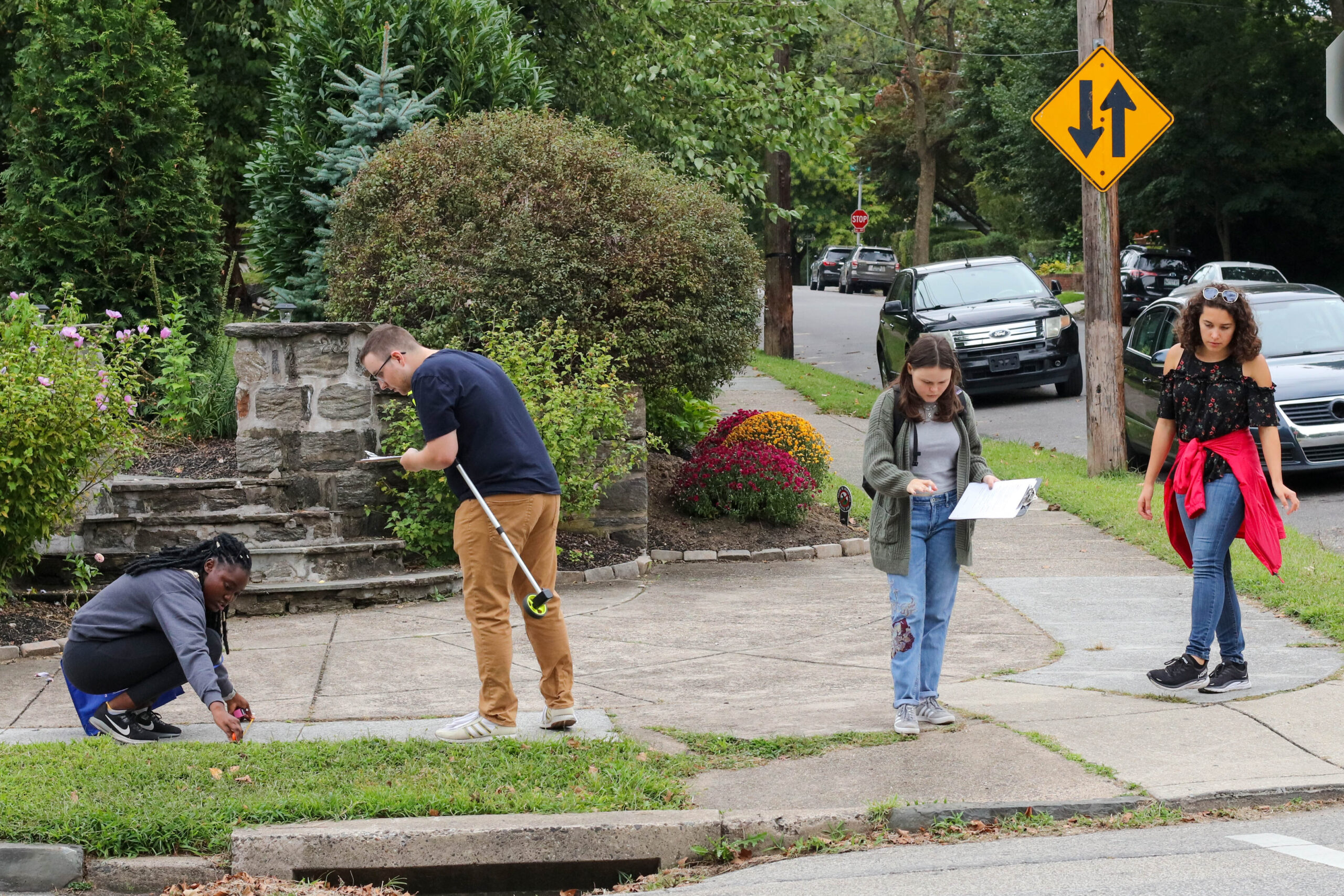
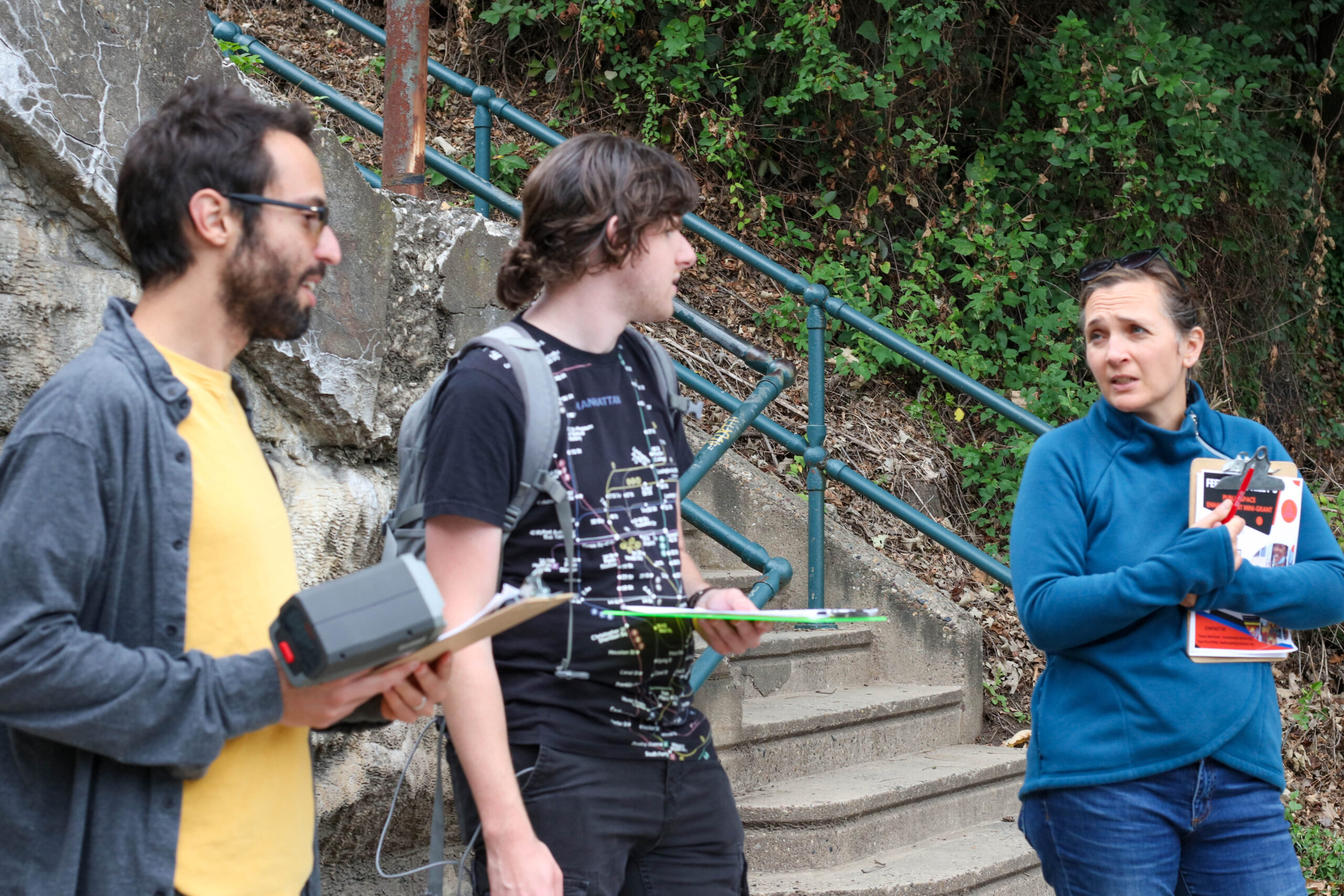
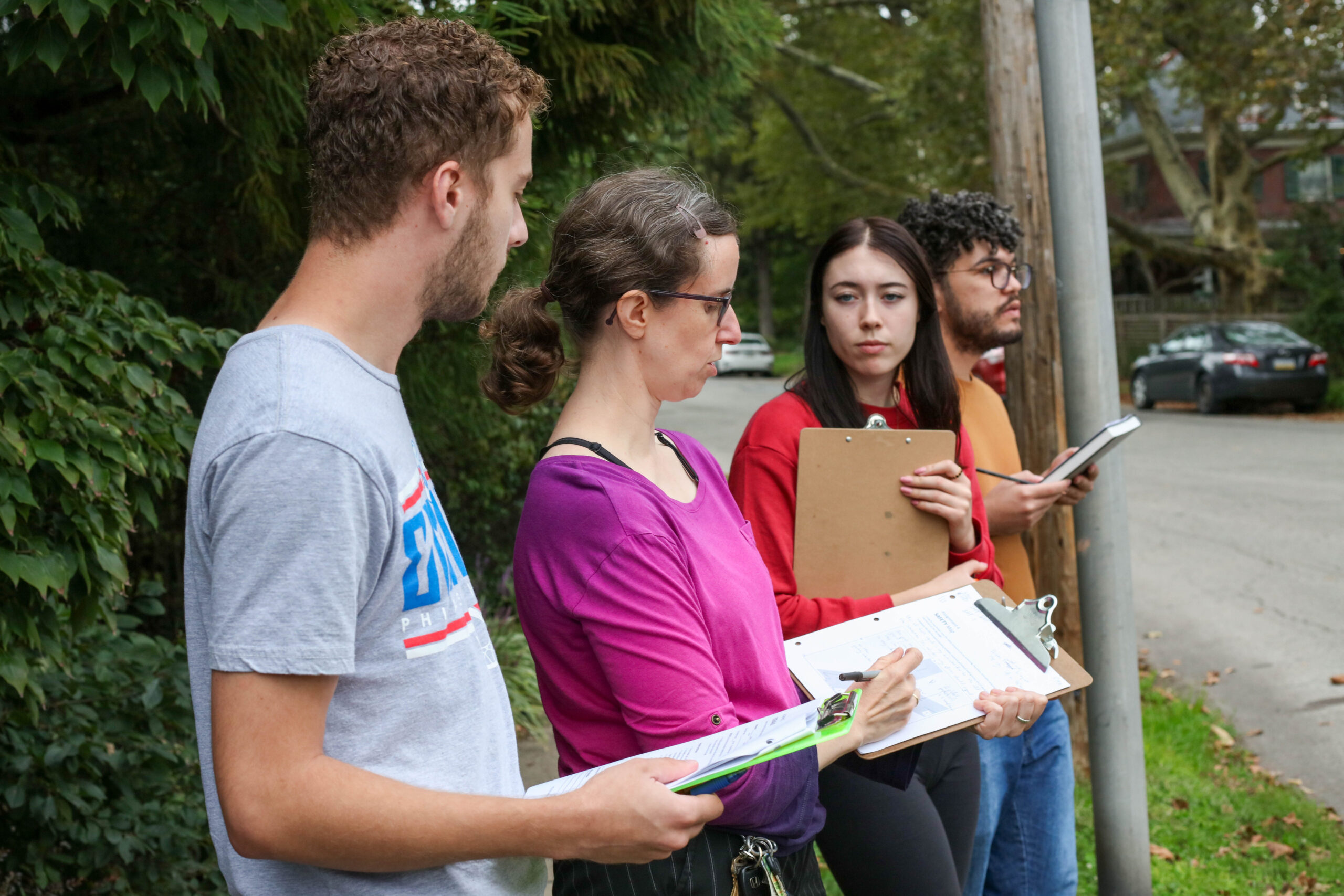
Students collected hands-on data together with a local community group to gain insight into possible improvements to local transportation and pedestrian safety.
Community members know their neighborhoods better than any planner ever could on their own. They have insights about the nitty-gritty details that if left undiscovered could derail a well-designed and well-funded project. Intentional, thoughtful, inclusive, and effective community engagement invites community members to share their knowledge and inform the planning process. For planners, community members offer a breadth of information. They know where and when flooding occurs, and the routes the water will take. When planning a green stormwater infrastructure (GSI) project, the planners may have this available through data too. What they may not know is anything particularly unusual or unique that may be hidden. This is where community members come in; they are likely to know the oddities that happen respective to their specific geography. Planners ought to recognize community members for their valuable insights and include them in the planning process for their community. Without them, planners may miss out on critical details that could decrease the overall effectiveness of any given project.
What was it like working directly with a community organization? What did you take away from this collaborative initiative?
It was truly a pleasure to work with the West Mount Airy Neighbors Association (WMAN) for this semester’s walk audit. Their organization welcomed us students with open arms and helped guide our research and site observations towards achieving a shared, desired outcome. Understanding that our efforts helped their organization move one step closer toward safer streets for everyone in their neighborhood is why I am so passionate about community planning. The WMAN’s level of commitment to their neighborhood exemplifies one way for regular community members to participate in improving the physical environment of where they live. In unity, there is strength. When we come together, each with our different skillsets and backgrounds, we can make things happen. The success of this walk audit has encouraged me to increase my personal involvement within the registered community organization (RCO) in West Poplar (my neighborhood). I plan on attending as many of our community meetings as possible and contribute what I can toward the betterment of our neighborhood.
Of all the seasons, autumn offers the most to man and requires the least of him.
-Hal Borland
As the weather gets cooler and the days get shorter, there has never been a better time to make a sustainable change. This November, Temple University’s Office of Sustainability offers a cornucopia of eco-conscious events that celebrate the spirit of sustainability and environmental stewardship.
Let’s make this November a season of growth, gratitude, and green living. Together, we can sow the seeds of change and cultivate a more sustainable and harmonious world.
Check the calendar below to see all of the events occurring both on and off campus this October. Click the links to sign up for events and join the movement toward a healthier, happier planet.
The past year of wildfires, floods, and toxic hazards are urgent warning signs to look closer at the intersection between human health and the health of our environment. The interdependence between people and the planet is the key to sustainability and that’s why the theme for Campus Sustainability Month is Building A Healthy Future.
Through events, collaborations, and service, learning & engagement opportunities, the Office of Sustainability, will engage in conversations about environmental wellness, ecological health, and how to build and sustain thriving and equitable communities.
Check the calendar below to see all of the incredible Campus Sustainability Month happenings at Temple this October. Click the links to sign up for events and join the movement toward a healthier, happier planet.
For more information on the Office of Sustainability and its programming and other strategic initiatives, please visit our website Temple University Office of Sustainability.