
When focusing on the topic of student success, there really isn’t much of a better place to begin that discussion than with Tyler DeVice, Student Success Program Coordinator for Klein’s College of Media and Communications at Temple. Tyler graduated from Temple with a Bachelor’s in Communication Studies in 2018, and has been working at Temple since April of 2021.
As a Temple alum, Tyler has a unique perspective on how Temple students specifically can be successful, having lived through being one himself. In speaking to Tyler multiple times over the past few months, I can confidently say that he cares a great deal about helping Temple students to be their best selves, and is willing to do as much as possible to help them succeed.
What follows below is a summary of the questions I asked Tyler in an interview he was gracious enough to grant me. New students at Temple’s Klein College who need some guidance on how to better succeed at Temple and the best ways to explore programs within Klein should absolutely get in contact with Tyler. You can get in contact with him via email: tyler.device@temple.edu
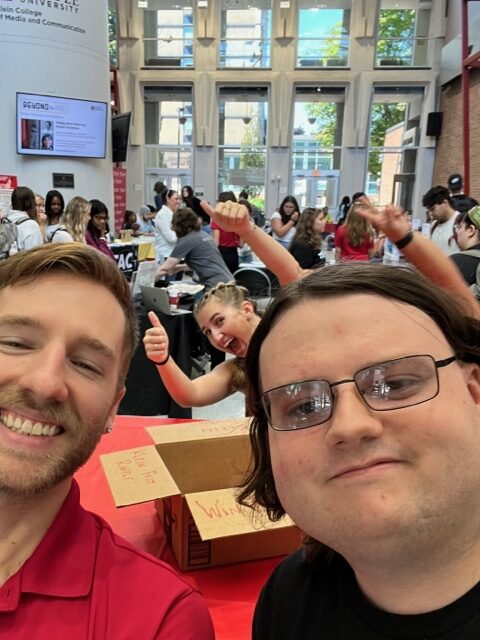
Tyler DeVice interview summary
What is the top skill you believe communication students should learn?
The top skill Tyler identified for communication students is the skill of listening. He discussed the importance of when to be the one speaking in a conversation, absorbing the information someone else is telling you, and really hearing somebody out.
What do you think a successful Temple student looks like, based on what you’ve observed?
A student that understands the value of relationships is one that Tyler believes goes far at Temple. This includes maintaining relationships with professors, advisors, and other students. He also noted the importance of “not being afraid to fail”, and not being worried about trying something you may not be good at. From this, Tyler argued that those students, when they become upperclassmen, can help lead new freshmen students to success by relaying the kind of experience they themselves had, acting in a mentorship-type way to these students in the hopes of helping them succeed.
What is the most rewarding kind of experience you think a student at Temple can participate in?
Tyler highlighted the peer mentor program at Klein that he oversees as a particularly rewarding experience for students, but also discussed the importance of “riding the wave” and remembering that time as a Temple student will go by quickly. With this in mind, he noted the importance of simply enjoying the time and living in the moment, rather than constantly being bombarded by thoughts of what to do next.
What is one thing you feel that Temple students struggle with?
The answer given here ties into the previous question, with Tyler noting he often sees Temple students struggling to live in the moment due to the pressures of looking ahead that are pushed on you at college. He maintained that taking time to live in the moment can ultimately help students make the most of their time at Temple.
As a former Temple student, where did you find yourself looking as you tried to be successful? How helpful was that individual or resource?
Tyler described Dr. Scott Gratson as being an extremely helpful individual to him as a student, primarily due to Dr. Gratson’s pushing of Tyler “to be the best” that he can possibly be in terms of a communications student. Tyler also explained that he believed himself to be a helpful resource, as ultimately, finding that drive to push ahead and keep going is the ultimate tool we have to find success not just in college, but in life.
What is one piece of advice you’d like to offer new students coming to Temple that can help them achieve success?
“Try one thing outside of class within your first year.” This was what Tyler offered as a key piece of advice to new Temple students, as putting yourself out there not only gets you more comfortable with the university, but also that “you never know” what can come of the opportunities that you decide to take part in. He also relayed that new students should never be afraid to come see individuals like himself if they find themselves struggling, and the this can lead to the discovery of resources that the student may not have even been aware of (ones that they are paying for, and thusly, ones that it may very well be worth the time of a student to experience.)
-Sebastian (Connor) McHugh
