Author Archives: Sanchari Biswas

An Inspection into Denial of Service and Distributed Denial of Service Attacks

Abstract

In a client-server ecosystem, sometimes perpetrators try to perform disruptive actions by flooding the server with malicious requests, thus causing it to slow down, and even stop functioning [1]. If there is just a single perpetrator causing the attack, the kind of attack is termed as a Denial of Service attack, in short DoS [1]. On the other hand, if the number of perpetrators is more than one, the kind of attack is termed a Distributed Denial of Service attack, (DDoS) [1]. This paper provides a detailed view of  DoS attacks,  DDoS attacks, their types, and brief information on countermeasures.

Introduction

In this modern era of global Internet connectivity, with the advancement in technology, there has been an advancement in unethical activities too [1]. There are several kinds of threats and attacks on the Internet because, during its commencement, the security underneath was not too emphasized upon [2]. Often termed the most severe of them all, Denial of Service and Distributed DoS attacks highly function on the fact that, disruption of this global connectivity is highly fatal to an immense number of high and low-end organizations [3].

The reason behind the high vulnerability to DoS attacks stems from two facts. Firstly, the know-how and tools for launching such an attack can be acquired from the internet and the skillset and expertise for launching one such attack can even be performed by a layman [1]. Secondly, knowledge pertaining to the detection and the prevention of such attacks, on the contrary, neither is readily available on the internet or other sources, nor is a layman’s task [1]. It requires technical know-how of the type, nature, and method of detection of the attacks [1].

The perpetrators of a DoS attack often control a node, by forging it with malicious software and controlling them, which are generally termed as attacking nodes or zombies, whereas the attacked nodes are termed as victim node [1], [2]. The mode of operation of this genre of attacks is to choke one or more of the operational resources of the victim node, by flooding it with an avalanche of unnecessary, often malformed data [2]. The operation of these attacks is discussed in the following sections of the paper.

This paper is organized as follows: Section II will attempt to classify DoS and DDoS attacks on the basis of various criteria. Section III will discuss the most prevalent countermeasures of the two attacks. Finally, Section IV will conclude the paper.

Classification of DoS and DDoS Attacks

The Denial of service attacks can be classified in different ways, based on differing criteria of distinction.

By the number of attackers and the flooded packet amount, DoS attacks may be broadly classified into two kinds: Software Exploits and Flooding Attacks [1].

Software Exploits: Also called Operating System-based attacks, these are the kind of attacks in which the perpetrator does not choke the victim node, but instead manages to halt its functionality by sending only one or a few potentially malicious packets [1], [3]. One major kind in this category is the Ping of Death (POD) attack, which is discussed later in Section II. of this paper, under the same paragraph heading [1].

As these kinds of attacks target the software rather than the processing functionalities of the victim node, keeping the software up-to-date is an efficient way of preventing them [1].

Flooding attacks: Also called network-based attacks, these are the kind of attacks in which the victim node is ‘flooded’ with a large number of packets of data, leaving no capacity to process anything else, then leading to a halt [1], [3].

Flooding attacks can be further classified into: Single-source and Multi-source attacks.

     Single-source attacks are the ones that are seemingly caused by a single attacking node.
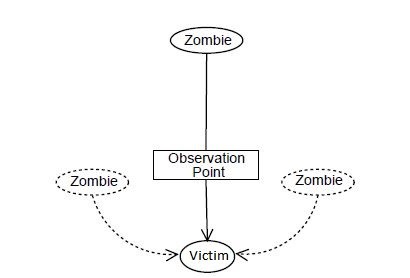
Figure 1: Single-source flooding attack [1].

As shown in Figure 1, there may be more than one zombie, but the terminology is set depending on how many can be perceived by the attacked victim node [1]. If it can perceive only one zombie or attacking node from the reference observation point, it is a single-source attack [1]. The dotted lines in Figure 1 indicate the zombies that have not been perceived.

     Multi-source attacks are the attacks which can be perceived as being caused by more than one zombie or attacking node [1]. These attacks are also termed as Distributed Denial of Service attacks and will be looked into detail in the upcoming section III.6 [4]. By using multiple zombies, the volume of malicious packets is increased by a huge amount and hence is more disastrous [1]. It is also used to camouflage the main attacker [1].

ICMP or Internet Control Message Protocol is a protocol that sends error or information messages, in the case of any issues within a network connection between clients and servers. Reflectors are machines which, on receiving ICMP messages with the victim node’s IP address as the source, reply with an ICMP reply message, thus flooding the victim more and also camouflaging the attacking nodes [1]. Multi-source attacks are launched either by using more than one zombie or reflectors, along with the zombies.
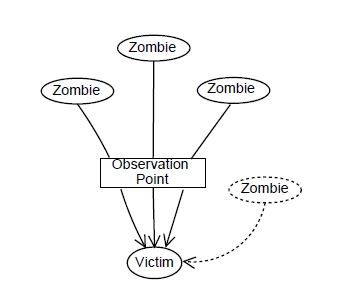
Figure 2: Multi-source attacks using multiple zombies [1].

In Figure 2, the victim node perceives more than one attacking node via the observation point, and hence is a multi-source attack. But, there exist even more attacking nodes (shown via dotted lines) which still cannot be perceived.
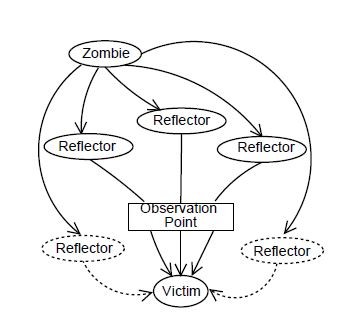
Figure 3: Multi-source attacks using reflectors along with zombies [1].

In Figure 3, the reflectors are perceived along with the zombie, through the observation point.

Getting into further detail, this paper analyzes a few of the prevalent DoS attacks and DDoS attacks.

SYN Flooding Attack:   This form of attack targets the TCP protocol. Figure 5 below shows the process in which a 3-way handshake happens in the TCP protocol.

A client system sends a SYN message to a server system, which in our case is the victim node [3]. The server node sends back a SYN-ACK message to the client, which serves as a confirmation for the SYN message [3]. Finally, the client system sends back a final acknowledgment in the form of an ACK message [3]. Then, the data transfer begins.

For a number of SYN messages, the sequence numbers help in proper identification of the state at which the systems exist at a certain point of time [5].
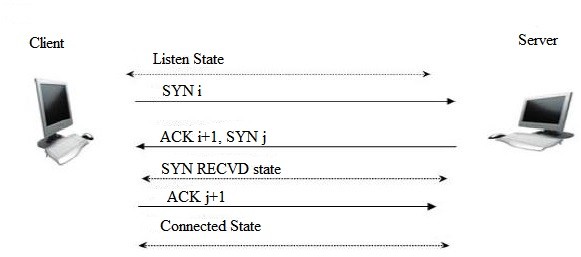
Figure 4: A Proper Scenario of a TCP Protocol 3-way handshake [5].

In Figure 4, the second step is termed as a ‘half-open connection state’ [5]. In this state, the server node waits for the ACK message to come back from the client and sets a timer for this wait period [5].
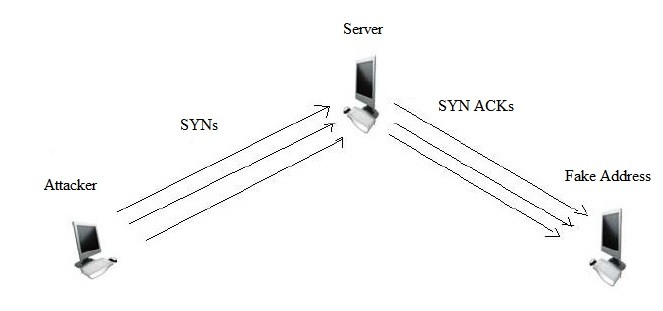
Figure 5: A Compromised Scenario of a TCP Protocol 3-way handshake [5].

Figure 5 shows the situation when a SYN flooding attack scenario happens. In this case, firstly, the attacking node or zombie sends a large number of SYN messages with an incorrect address to the server or the victim node [5]. The victim node then sends out a SYN-ACK message for each of the SYN messages to the hoax address and waits [5]. But the ACK message never comes back [5]. As the queue for storing the waitlisted messages is limited, at one point of time, it fills up, and no more new SYN messages are taken into account, thus jamming the system [5]. However, this attack does not hamper outgoing connections as well as existing connections [5].

Ping of Death (PoD) Attack:     This attack is generated on the basis of the fact that the maximum size of an ICMP message that the victim system can handle is 65,536 bytes [3].
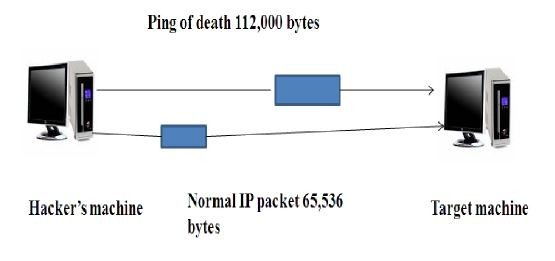
Figure 6: A Compromised Scenario in a Ping of Death (PoD) Attack [6].

In this type of attacks, the attacking node sends a ping message much greater than 65,536 bytes (e.g. in Figure 6, 112,000 bytes) [3]. The TCP protocol transmits it fragment by fragment, and the victim node assembles it [3]. However, while assembling it, due to its huge size, the buffer at the victim node fills up and then overflows, eventually crashing the system [3], [6].

Smurf Attack:    This is a destructive form of a DoS attack, slightly similar to the SYN flooding attack [8]. It uses the same approach of corrupting a 3-way TCP handshake [8].

 In a Smurf Attack, the attacking node morphs an ICMP Echo Request message such that the source address is that of the victim node [8]. It then broadcasts this message along a remote LAN broadcast network [3]. All the active machines on the system will receive this message and generate an ICMP Echo Reply message, with the destination address of the victim node [8]. The more devices, the greater the flow of reply messages, ultimately jamming the network [8]. Furthermore, the attacking node might also incorporate the Ping of Death attack mechanism, generating a larger message size, such that the attack is all the more compelling [8].

Denial of Sleep Attack:  This kind of attack focuses on the power consumption of the victim node [9]. The attacker targets solely the MAC layer protocol of the victim [9]. In wireless sensor networks, in order to decrease power consumption, the transceiver slips into ‘sleep’ mode, when not transmitting or receiving any message for a period of time [10]. The ‘denial of sleep’ attacker keeps the transceiver active constantly and does not let it go into ‘sleep’ mode, which highly reduces the durability of the device, and is thus potentially harmful to the victim node [10].

UDP Flooding Attack:   An UDP (User Datagram Protocol) flooding attack is somewhat similar to a SYN flooding attack, described before.

 Here, the attacker node sends UDP packets with addresses of one targeted UDP device as the source address to another UDP device [11]. What the attacker does is that it links the echo service of one victim node to the character-generating service of the other victim node, generating a non-stop to-and-fro action among both the victim devices [11].

Distributed Denial of Service Attack:  Also, termed as a multi-source attack, the Distributed Denial of Service attack is similar to a Denial of Service attack. In fact, it is a special kind of a DoS attack, in which the main attacking node, also called the master zombie, spreads control over many other systems, also called the slave zombies, and controls these systems to launch an all-in attack on a network [9].
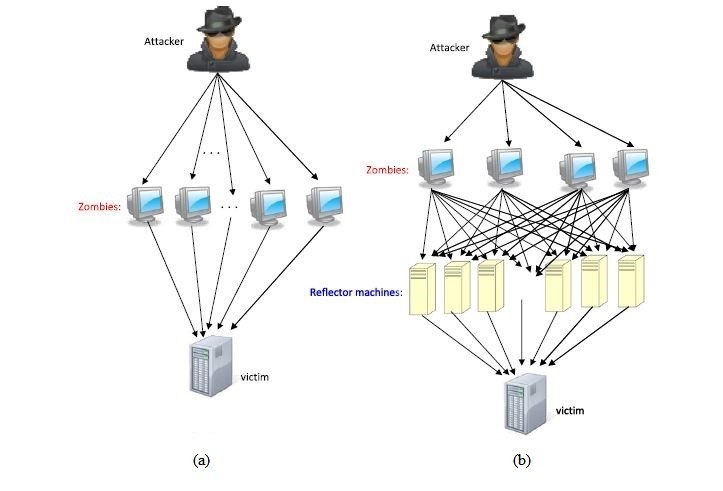
Figure 7: Compromised Scenarios in a DDoS attack: (a) Using multiple zombies. (b) Using zombies and reflectors. [4].

As discussed earlier in this paper, there are two main kinds of DDoS attacks. Figure 7 (a) shows a DDoS attack using multiple zombies [4]. Figure 7 (b) shows a DDoS attack using multiple zombies and multiple reflectors [4].

The main difference between reflector machines and slave machines (zombies) stem from the fact that the zombies are entirely controlled by the attacker or the master zombie, whereas the reflectors are independent machines, not controlled by the attacker per se, but support in the attacking scheme by unknowingly yet methodically serving as a magnifier to the attack, sometimes even helping in camouflaging the real identity of the attacker [1].

Countermeasures for DoS and Distributed DoS attacks

The detection of Denial of Service attacks require immense expertise, and hence, taking preventive measures is tough [1].
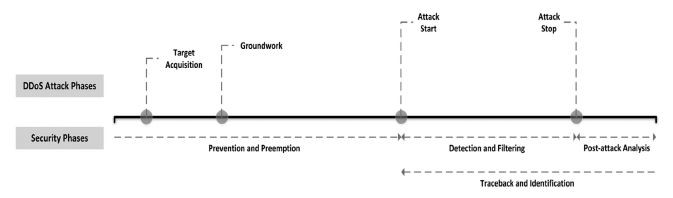
Figure 8: Timeline showing the Prevention and Detection approaches, corresponding to the attack phases [2].

So, from Figure 8, we may classify a typical DoS or DDoS attack into four main phases. The first phase is ‘target acquisition’, where the attacker chooses a target; some choose financial transaction sites, like banks, some choose social media sites, some look for personal gain, even blackmail [11]. In the next phase, the attacker lays the ‘groundwork’. During this phase, the main attacking node, also called the master zombie, targets a number of other devices and takes them under its control, termed as slave zombies [1]. The third phase, the ‘attack start’ phase, involves the start of the physical attack [1]. If the type of attack involves reflectors, they are targeted during this phase [1]. Then, the main victim node is bombarded with the attack mechanism, depending on the type of attack [1]. The final phase is the ‘attack stop’, which most often ends well after the victim node has been rendered completely useless [1].

For a productive countermeasure method against DoS attack, there are certain phases of protection and detection to be followed in parallel with the attack timeline [2]. Before the attack actually happens, i.e., in the ‘target acquisition’ and ‘groundwork’ phases, all systems, that may turn into victim nodes, should take preventive and preemptive measures [2]. Once the system actually is under attack, there is no more space for prevention, but detection methods should be undertaken [2]. After that, comes the post-attack analysis to assess the effect of the attacks [2].

A number of methods for defensive actions against DoS attacks have been developed through the course of time [4]. These defense techniques can be further classified in a number of ways.

Classification according to the Points of Defense:      The most basic way of classifying them stems from the area at which the method is implemented [4]. This yields to four sub-categories: source-end, core-end, victim-end, and distributed defense techniques.

Source-end Defense Techniques –   As the name suggests, this method tries to stop malicious traffic at the source itself [4]. If the harm is stopped right at the source, there is no unnecessary burdening on the resources and also the problem is mitigated at its bud [4]. The downside, however, in this method stems from the fact that the source node has no information about the victim node, and hence maybe be partially or totally ineffective in blocking the actual malicious data [4].

Core-end Defense Techniques – In this kind of techniques, the defense mechanism is implemented in the routers amidst the traffic routes [4]. This method is effective for some of the flooding attack mechanisms where the attacking messages have a distinct feature, e.g. large message size [4]. But, apart from that, owing to the vast types of attacks prevalent, and the highly unknown nature of both the attacking node and the victim node, core-end defense mechanisms are not overall efficient [4].

Victim-end Defense Techniques – The victim-end techniques are highly targeted to the proper mechanism for the proper attack type [4]. However, at this point, the defense for the kind of attacks that target resource-overflowing as their mechanism, is inefficient, because, by the time these attacks reach the victim node, resources such as power or bandwidth have already been filled and, hence, compromised [4].

Distributed Defense Techniques – These are the techniques that merge efficiency and functionality at two or more of the former techniques, i.e., source-end, core-end and victim-end techniques [4].

Classification according to the Time of Reaction:      Another way of classifying defense mechanisms is basing on the reaction time, i.e., at which stage of the happening of the attack do these defense mechanisms kick in [4]. This yields to three sub-categories: survival, proactive, and reactive defense mechanisms [4]. The survival and proactive techniques are the methodologies implemented well before the attack, and the reactive mechanism after the attack.

Survival Techniques – These techniques implement incrementing the resources and capabilities of the victim node, such that exhaustion of those by the attack is not feasible [4]. This can be achieved by introducing a number of proxy servers to back up the main server, increasing the size of the buffers and/or backlog queues, reducing the time-out duration for the connectivity requests or a combination of the above [4].

Proactive Techniques – These techniques stem from the fact that the attack is prevented even before the victim node gains knowledge about it [4]. Hence, these mechanisms are mostly placed in intermediate routers, which act in getting rid of malicious data, so that it does not reach the victim node [4]. But, the inefficiency in these techniques is often related to sifting the malicious packets from the huge amount of data to be processed, and that too in a time-efficient way [4].

Reactive Techniques – These techniques are adopted once the attack has started occurring [4]. The reactive methods happen at the victim node, which detects the incurring attack and then reacts accordingly [4]. Some of the mechanisms include generating alerts while the attack has been identified and rate limiting and/or resource limiting during the ongoing attack [4]. Some victim nodes follow a ‘divide-and-conquer’ strategy when attacked by a Distributed DoS attacker [4]. In this scenario, the victim node tries refuting the attacking zombies one by one [4].

Some popular reactive techniques are the ‘Client-puzzle protocol’ and ‘CAPTCHA (Completely Automated Public Turing test to tell Computers and Humans Apart) protocol’ [4].
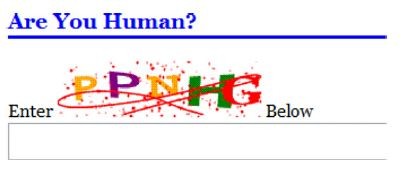
Figure 9: Screenshot of a CAPTCHA Test on a website [4].

Client-puzzle protocols pose one or more mathematical problems for the user to solve [4]. The problems are randomly generated from a large pool and thus cannot be programmed to be answered by a machine, hence stopping overflowing requests [4].

The ‘CAPTCHA’ puzzles are a specific kind of puzzles [4]. As shown in Figure 12, these puzzles generate random strings of characters for the user to type in [4]. This method is more efficient as the words can even be programmed to be meaningless and arbitrary, leaving no space for the attacker to program the inputs from before [4].

However, both of these methods have their respective downsides, e.g. they are relatively inefficient for resource overflow attacks [4]. Also, these mechanisms might backfire, themselves blocking data due to improper encryptions and, hence, acting themselves as Denial of Service [4].

Conclusion

Denial of Service and Distributed Denial of Service are prominent methods of launching attacks on server networks and are immensely harmful on almost every platform. These attacks target various kinds of resources, depleting them or rendering them ineffective. Techniques for encompassing these attacks also have been employed and are still under development. This has led to an ongoing tug-of-war, where techniques are being developed to counter the DoS attacks, and again newer forms of attacks are being launched, bending around those countering techniques.

References

[1]     A. Hussain, J. Heidemann, C. Papadopoulos, “A framework for classifying denial of service attacks”, Proceedings of ACM SIGCOMM, Karlsruhe, Germany, 2003, pp. 99–110.

[2]     K. Singh, P. Singh, and K. Kumar, “A systematic review of IP traceback schemes for denial of service attacks,” Computers & Security, vol. 56, pp. 111–139, 2016.

[3]     K. K. More and P. B. Gosavi, “A survey on effective way of detecting denial-of-service attack using multivariate correlation analysis,” 2015 International Conference on Applied and Theoretical Computing and Communication Technology (iCATccT), 2015.

[4]     H. Beitollahi and G. Deconinck, “Analyzing well-known countermeasures against distributed denial of service attacks,” Computer Communications, vol. 35, no. 11, pp. 1312–1332, 2012.

[5]     K. Geetha and N. Sreenath, “SYN flooding attack — Identification and analysis,” International Conference on Information Communication and Embedded Systems (ICICES2014), Chennai, 2014, pp. 1-7. doi: 10.1109/ICICES.2014.7033828

[6]     M. Buvaneswari and T. Subha, “IHoneycol: A distributed collaborative approach for mitigation of DDoS attack,” 2013 International Conference on Information Communication and Embedded Systems (ICICES), Chennai, 2013, pp. 340-345. doi: 10.1109/ICICES.2013.6508281

[7]     S. Kumar, “Smurf-based Distributed Denial of Service (DDoS) Attack Amplification in Internet,” Second International Conference on Internet Monitoring and Protection (ICIMP 2007), San Jose, CA, 2007, pp. 25-25. doi: 10.1109/ICIMP.2007.42

[8]     G. R. Zargar and P. Kabiri, “Identification of effective network features to detect Smurf attacks,” 2009 IEEE Student Conference on Research and Development (SCOReD), UPM Serdang, 2009, pp. 49-52. doi: 10.1109/SCORED.2009.5443345

[9]     K. N. Mallikarjunan, K. Muthupriya and S. M. Shalinie, “A survey of distributed denial of service attack,” 2016 10th International Conference on Intelligent Systems and Control (ISCO), Coimbatore, 2016, pp. 1-6. doi: 10.1109/ISCO.2016.7727096

[10] V. C. Manju, S. L. Senthil Lekha and M. Sasi Kumar, “Mechanisms for detecting and preventing denial of sleep attacks on wireless sensor networks,” 2013 IEEE Conference on Information & Communication Technologies, JeJu Island, 2013, pp. 74-77. doi: 10.1109/CICT.2013.6558065

[11] L. Garber, “Denial-of-service attacks rip the internet,” Computer, vol. 33, no. 4, pp. 12-17, Apr 2000. doi: 10.1109/MC.2000.839316

Understanding Artificial Intelligence: A Friendly Guide for the Curious

Why Should We Even Care About AI?

Imagine waking up tomorrow and realizing everyone around you suddenly started speaking a new language — not fluently, but enough that they could get work done, create art, solve problems, and even crack jokes in it.
You could ignore it, of course. But eventually you might feel like the only person at the table who didn’t get the memo.

That new language today is Artificial Intelligence.

AI is already recommending what you watch, helping doctors diagnose diseases, navigating cars through traffic, and writing emails that look suspiciously well-worded. It is quietly slipping into everyday tools we use — search engines, smartphones, banking systems, and even household appliances.

The interesting part is that many people are curious about AI but never got the time to sit down and understand it. Maybe it seemed too technical. Maybe life was busy. Or maybe every explanation started with complicated math and lost you halfway through the second paragraph.

This article is meant for those people. If you have ever thought “I should probably understand what AI actually is,” this is for you.

Illustration of AI integrated into everyday life.

A Short History: Before We Called It AI

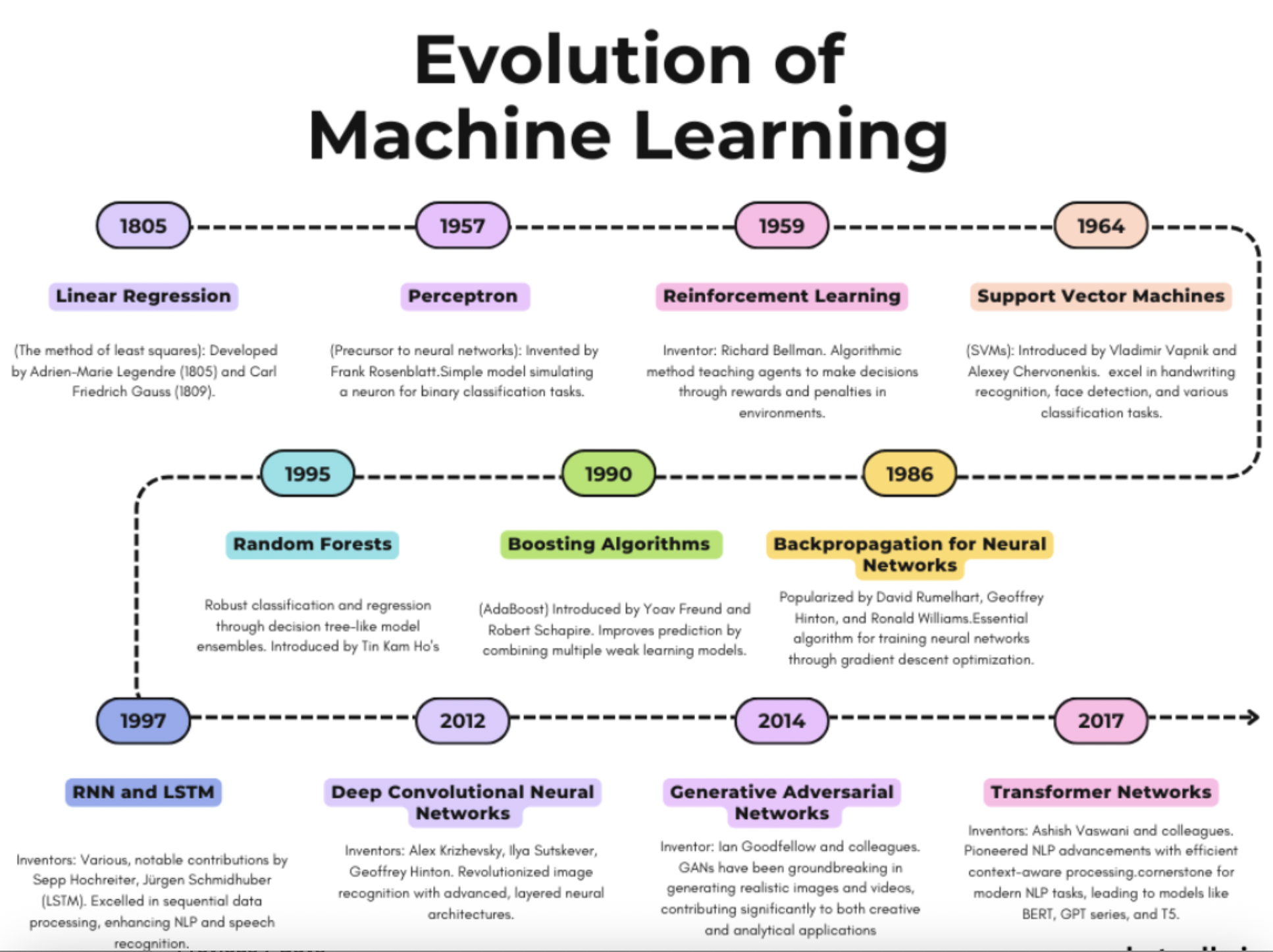
Long before the phrase “Artificial Intelligence” became popular, scientists and statisticians were already building tools that tried to predict things.

One of the earliest ideas was regression, developed in statistics. It sounds intimidating, but the idea is simple: look at patterns in data and use them to estimate outcomes.

For example:

  • Predicting crop yields based on rainfall
  • Estimating housing prices based on neighborhood features
  • Predicting disease outbreaks from environmental patterns

Predicting house prices based on past prices by time.

These models didn’t “think” in any human sense. But they could analyze patterns in large amounts of data and make educated guesses about the future.

Throughout the 20th century, these ideas expanded. Probabilistic models, Bayesian methods, and early machine learning algorithms began helping solve real-world problems.

Airlines optimized routes. Banks evaluated credit risk. Meteorologists improved weather forecasting. Early spam filters started learning how to detect junk email.

None of these systems were called “AI” at first. But they laid the foundation for what would later become modern artificial intelligence.

Timeline of early statistical models and early machine learning.

When Did We Start Calling It Artificial Intelligence?

The term Artificial Intelligence was formally introduced in 1956 at the famous Dartmouth Conference, where researchers proposed an ambitious idea: machines might someday simulate aspects of human intelligence.

But that raises an interesting question:

What do we actually mean by intelligence?

Human intelligence includes many abilities:

  • Recognizing patterns
  • Learning from experience
  • Solving problems
  • Understanding language
  • Making decisions under uncertainty
  • Emotional Intelligence

AI systems attempt to reproduce some of these abilities using data and algorithms. They are not conscious, and they do not “understand” the world the way humans do. But they can perform tasks that previously required human judgment.

John McCarthy, who coined the term Artificial Intelligence.

What Is an AI Model, Really?

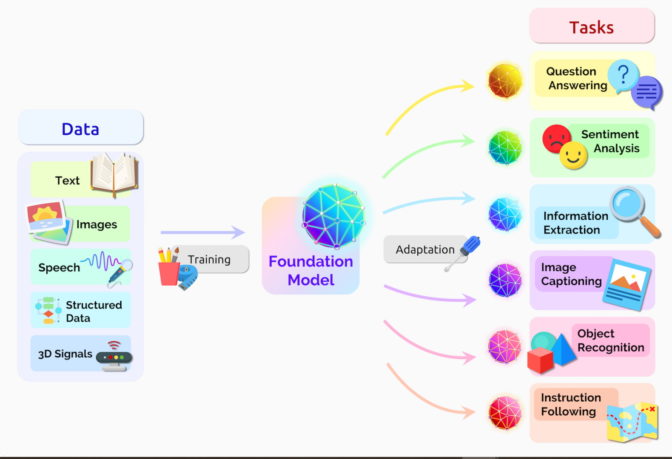
At its core, an AI model is a system that learns patterns from data.

One of the most influential modern architectures is the Transformer, which powers many of today’s language models, translation tools, and generative AI systems.

But here’s an important concept that often surprises people:

AI systems are probabilistic, not deterministic.

That means they work with likelihoods rather than exact rules.

Think about a simple example.

If someone asks you:

“What is 23 + 44?”

You probably don’t consciously add 3 + 4 and then 2 + 4 every time. Instead, your brain recognizes a pattern you’ve seen thousands of times. You simply know the answer is 67.

In a sense, you are extremely confident — maybe 99.99% certain — because of repeated exposure.

AI models operate in a similar spirit. They analyze enormous amounts of data and learn which outputs are most likely given a particular input.

They are not “thinking” through problems the way humans do. They are identifying patterns and predicting the most probable continuation.

Simplified diagram of a transformer model or neural network.

Where Is AI Being Used Today?

AI has quietly spread into many parts of our daily lives.

Chatbots and Virtual Assistants

Modern chatbots can answer questions, assist customers, and help users interact with complex systems. Businesses now use them for customer support, scheduling, and troubleshooting.

Chatbot conversation interface.

Generative AI

Generative AI can create text, images, music, and even videos. Artists, designers, and writers use these tools to brainstorm ideas, prototype concepts, and accelerate creative work.

AI-generated artwork or creative tools.

Agentic AI

Agentic systems go a step further. Instead of simply responding to prompts, they can perform multi-step tasks: planning actions, searching information, and executing workflows.

Imagine telling a system: “Plan my trip to Tokyo.” The system might search flights, compare hotels, recommend attractions, and organize an itinerary.

AI agents coordinating tasks.

GANs and Creative Generation

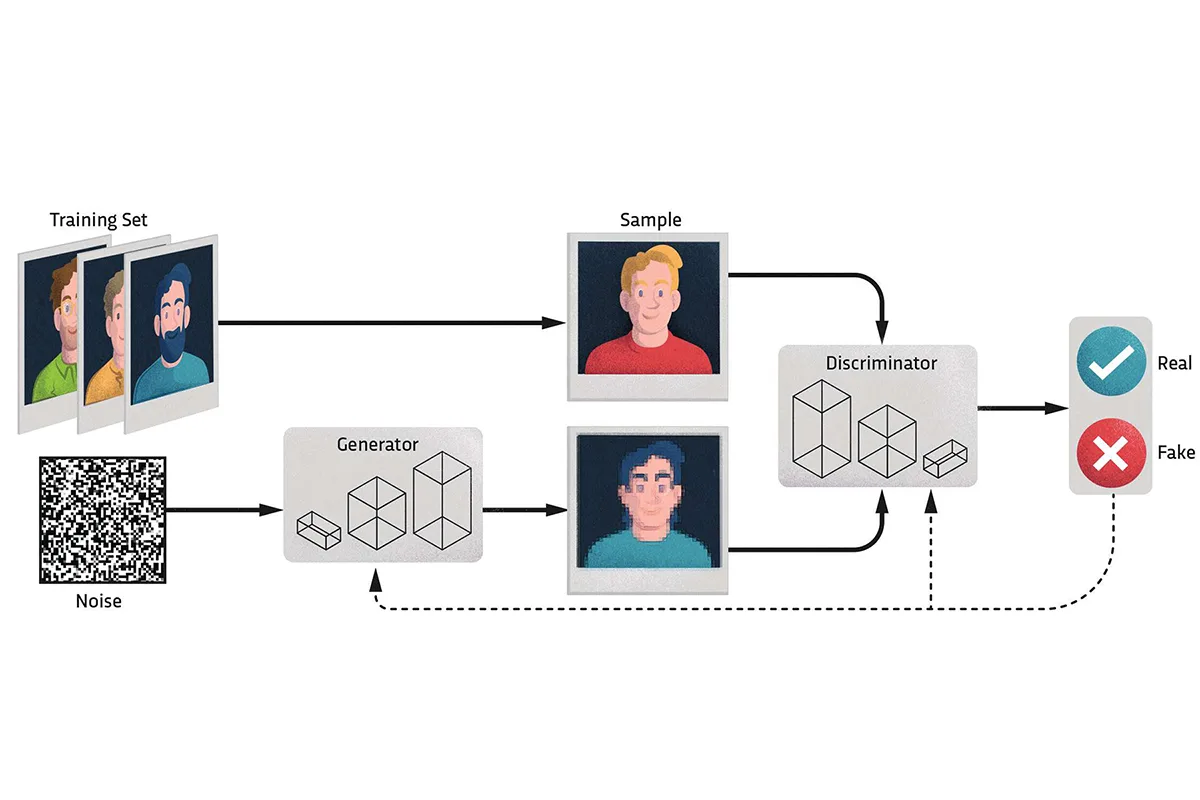
Generative Adversarial Networks (GANs) introduced a clever idea: two neural networks are trained together in a kind of competition. One network, called the generator, tries to create new content—such as images, audio, or video—while the other network, called the discriminator, evaluates that content and decides whether it looks real or artificially generated. During training, the generator continuously improves its outputs in an attempt to fool the discriminator, while the discriminator becomes better at detecting fakes. This back-and-forth process gradually pushes the generator to produce increasingly realistic results. GANs have been used to create highly convincing images of people who do not exist, generate music in the style or voice of artists, and produce synthetic media such as deepfake videos.

GAN training visualization.

Real-World Impact

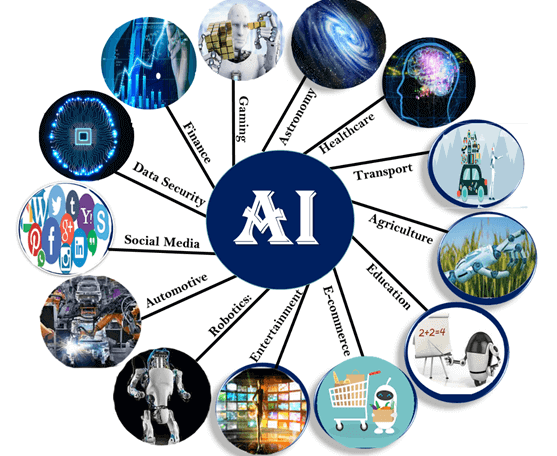
Artificial intelligence is no longer something that lives only in research labs or science fiction movies. It is quietly working behind the scenes in many parts of our everyday lives—sometimes in ways we don’t even notice.

In healthcare, AI systems can analyze medical images such as X-rays, MRIs, and CT scans and help doctors detect diseases like cancer earlier than before. Think of it as giving doctors an incredibly fast assistant that has looked at millions of images and can point out tiny patterns that might otherwise be missed.

On the roads, AI powers driver-assistance systems that help cars stay in their lanes, avoid collisions, and navigate traffic. While your car might not be fully driving you to work yet, it is already acting like a cautious co-pilot reminding you to keep your eyes on the road and your hands where they belong.

Behind the scenes of global commerce, AI helps companies predict what people will want to buy and when they will want it. That means warehouses can stock the right products and delivery systems can move them more efficiently—so the package you ordered at midnight might still somehow arrive the next day.

Language translation has also been transformed. AI tools can translate conversations, documents, and websites almost instantly, allowing people from different countries to communicate more easily. It’s not perfect—sometimes the translations can still sound a bit funny—but it is getting better every year.

Scientists are also using AI to accelerate discoveries. From identifying new drug candidates to predicting the structures of proteins, AI systems can analyze enormous amounts of data far faster than any human team could manage on its own.

And of course, there are the everyday conveniences. Your streaming platform seems to know exactly which show you will binge next. Your phone organizes thousands of photos and somehow knows which ones contain your dog. Your email filters quietly rescue you from a daily avalanche of spam.

In many ways, AI is becoming like electricity or the internet: an invisible layer of technology that quietly powers the tools we rely on every day—sometimes impressively, sometimes imperfectly, and occasionally in ways that make us laugh.

And yes, there is a small chance that an AI system may or may not have assisted in polishing parts of this blog post. But don’t worry—the curiosity behind it, the questions it tries to answer, and the motivation to understand AI still came from a very human place.

AI applications across industries

The Challenges and Risks of AI

Like any powerful technology, AI comes with challenges.

Learning Gaps

As AI tools spread quickly, many people feel left behind because they never had the opportunity to learn about them.

Human and Social Connections

Heavy reliance on digital tools can sometimes reduce meaningful human interaction. Education, workplaces, and communities must carefully balance automation with human connection.

Bias and Discrimination

AI systems learn from historical data. If that data reflects past biases, the system may unintentionally reproduce them.

There have been real-world cases where hiring algorithms favored certain demographics or facial recognition systems performed unevenly across populations.

Security and Misuse

AI can generate convincing fake content, including deepfakes and misinformation. This creates new challenges for media verification, cybersecurity, and public trust.

Stereotyping Bias in AI

So Where Do We Go From Here?

Artificial Intelligence is not a passing trend.

Like electricity, the internet, and smartphones before it, AI is becoming part of the infrastructure of modern life.

But the story is not about machines replacing humans. The real opportunity lies in humans working with AI.

Doctors using AI to detect diseases earlier. Engineers using AI to design better systems. Teachers using AI to personalize education.

The people who benefit most will not necessarily be the ones who build AI systems — but the ones who learn how to collaborate with them.

In other words:

We should learn to work with AI, rather than getting worked by AI.

Curiosity, adaptability, and lifelong learning will matter more than ever.

And the good news is that you have already taken the first step — by wanting to understand it.

Humans and AI collaborating

Image Credits

  1. AI in Everyday Life Illustration – Source: Google Gemini
  2. Predicting House Prices – Source: Github
  3. Early Statistical Models Timeline – Source: https://www.devopsschool.com/
  4. 1950s AI Laboratory Photograph – Source: https://techgenies.com/
  5. Transformer Architecture Diagram – Source: Nvidia Blogs
  6. Chatbot Interface Illustration – Source: https://www.cm.com/
  7. AI Generated Artwork – Source: Meta
  8. Agentic AI Workflow Diagram – Source: https://mitsloan.mit.edu/
  9. GAN Training Visualization – Source: ScienceFocus
  10. AI Applications Across Industries – Source: LinkedIn
  11. AI Bias Illustration – Source: https://cut-the-saas.com/
  12. Human–AI Collaboration Illustration – Source: https://www.qodequay.com/

A/B Testing At Scale

I recently gave a mini-lecture in my Knowledge Discovery and Data Mining on this topic and am sharing those information here in the form of a post. Hope you like it!

A/B Testing

  • Also called Bucket Testing, Split Testing, or Controlled Experiments.
  • An experiment where multiple variants of a product (mostly webpage) are displayed to users at random and the performance response is statistically analysed to determine which is better suited for a given goal.
  • Few of the companies that use A/B Testing: Amazon, eBay, Etsy, Meta, Google, Groupon, LinkedIn, Microsoft, Netflix, and Yahoo

A Simple A/B Test Diagram

  • Consists of two variants: Control (A) and Treatment (B).
  • Keywords in A/B Testing:
    • Overall Evaluation Criterion (OEC)
    • Parameter
    • Variant
    • Randomization unit

Overall Evaluation Criterion (OEC)

  • This is the criterion we evaluate through our experiment. Often, this is the Response or Dependent variable (Y column).
  • Could be active days per user, number of registrations to service, etc.
  • Experiments may have multiple objectives and analysis might use a scorecard approach.

Parameter

  • Controllable experimental variables that might influence the OEC or other metrics of interest.
  • Also called Factors or Variables. Synonymous to the attribute columns.
  • Our simple A/B test contains a single parameter. Such a test is called univariate.
  • There also exist MultiVariate Tests (MVTs), where multiple parameters (such as, both font color and font size) are evaluated simultaneously to find the OEC.

Variant

  • The user experience that is being tested upon.
  • In our simple test, A and B are the two variants, usually called the Control variant and the Treatment variant.

Randomization Unit

  • A pseudo-randomization process (e.g. hashing) applied to units (eg. users) to match them to variants to ensure statistical unbiasedness.
  • If user is the randomization unit (as in most cases), a user should consistently see the same experience.
  • The assignment of a user to a variant should not tell you anything about the assignment of a different user to its variant.

Why use A/B Testing?

  • Correlation: Relationship between variables.
  • Causality: Changes in one variable brings about changes in the other.
  • Sensitivity: Able to detect small changes that are harder to detect with other techniques, such as changes over time.
  • Detect unexpected changes: Many experiments uncover surprising impacts on other metrics, such as, increased crashes/errors, or cannibalizing clicks from other features.

A/B Testing at Scale

  • To keep up with innovation, companies want to be able to experiment with as many ideas as possible simultaneously.
    • When LinkedIn started, the platform supported about 50 experiments per day. Today, that number has increased to more than 400. The number of metrics supported has also grown from 60 to more than 1000.
    • At Microsoft’s Bing, the use of controlled experiments has grown exponentially over time, with over 200 concurrent experiments now running on any given day.
  • The areas experimented on are extremely diverse, from visual changes on home page, to improvements on job recommendation algorithm (LinkedIn) or search result algorithm (Bing), to personalizing subject line of user emails.

Exponential Growth in Experimentation over Time: Bing

Problems with Scaling A/B Tests

  • Large scale experiments can have multiple dimensions, including the number of users and the number of experiments.
  • If we use a multivariate test with N parameters, there would be N simultaneous experiments, where each experiment would modify a different parameter.
  • However, a multivariate test is not feasible in complex environments, since not all parameters are independent and not all values might work with the values for another parameter (e.g., blue text color on a blue background).
  • In reality, most of the companies use an overlapping experiment infrastructure.

Overlapping Experiment Infrastructure

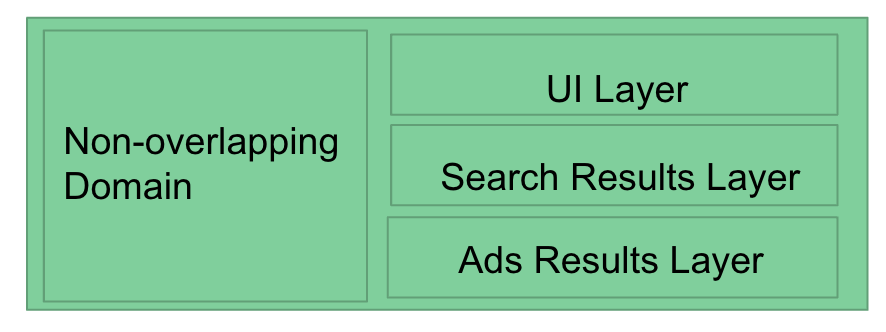
  • The main idea here is to partition parameters into N subsets.
  • Each subset is associated with a layer of experiments.
  • Each test request would trigger at most N experiments simultaneously (one experiment per layer).
  • Each experiment can only modify parameters associated with its layer (i.e., in that subset), and the same parameter cannot be associated with multiple layers.

Challenges of A/B Testing at Scale

  • Increasing cache fragmentation, lowering cache hit rates and increasing latency.
  • Potential to degrade user experience, thus causing user abandonment.
  • False positives due to experimental design issues, data issues, biased analyses, or simply chance.
  • Risk of interactions between different treatments with increasing number of parallel experiments.

Combatting the Challenges

  • Latency might be handled by setting benchmarks and feature selection to reduce the overhead (but not always feasible).
  • A well-structured A/B testing framework can analyse the OEC fast and abandon the experiment before any noticeable degradation.
  • An Empirical Bayesian False Discovery Rate control algorithm is used to identify cases that are most likely be true positives.
  • To prevent interactions between treatments, the experiment system uses a set of constraints to ensure that conflicting experiment do not run together.

Conclusion

MORE…    BETTER…    FASTER…

A/B testing at scale helps in running more experiments, running them better, and getting results faster.

  • More: The platform needs to scale to handle not only today’s data volume but also tomorrow’s.
  • Better: Fewer misconfigured (logging issues, weird error cases), forgotten (start experiments and then forget to analyze them), or unclear experiments (what exactly are you measuring here/what filters are you using).
  • Faster: Pushing out new experiments, implementing new features, running experiments, analysing the results – all concurrently.

References

  1. Alex Deng, Pavel Dmitriev, Somit Gupta, Ron Kohavi, Paul Raff, and Lukas Vermeer. 2017. A/B Testing at Scale: Accelerating Software Innovation. In Proceedings of the 40th International ACM SIGIR Conference on Research and Development in Information Retrieval (SIGIR ’17). Association for Computing Machinery, New York, NY, USA, 1395– 1397. DOI:https://doi.org/10.1145/3077136.3082060
  2. Fabijan, A., Dmitriev, P., Olsson, H. H., & Bosch, J. (2018, August). Online controlled experimentation at scale: an empirical survey on the current state of A/B testing. In 2018 44th Euromicro Conference on Software Engineering and Advanced Applications (SEAA) (pp. 68-72). IEEE.
  3. Xu, Y., Chen, N., Fernandez, A., Sinno, O., & Bhasin, A. (2015, August). From infrastructure to culture: A/B testing challenges in large scale social networks. In Proceedings of the 21th ACM SIGKDD International Conference on Knowledge Discovery and Data Mining (pp. 2227-2236).
  4. Kohavi, R., Deng, A., Frasca, B., Walker, T., Xu, Y., & Pohlmann, N. (2013, August). Online controlled experiments at large scale. In Proceedings of the 19th ACM SIGKDD international conference on Knowledge discovery and data mining (pp. 1168-1176).
  5. Tang, D., Agarwal, A., O’Brien, D., & Meyer, M. (2010, July). Overlapping experiment infrastructure: More, better, faster experimentation. In Proceedings of the 16th ACM SIGKDD international conference on Knowledge discovery and data mining (pp. 17-26).
  6. A / B Testing: The Most Powerful Way to Turn Clicks Into Customers. (2013). Wiley.
  7. Ron Kohavi. 2015. Online Controlled Experiments: Lessons from Running A/B/n Tests for 12 Years. In Proceedings of the 21th ACM SIGKDD International Conference on Knowledge Discovery and Data Mining (KDD ’15). Association for Computing Machinery, New York, NY, USA, 1. DOI:https://doi.org/10.1145/2783258.2785464
  8. Ivaniuk, A. (2020). A/B testing at LinkedIn: Assigning variants at scale. LinkedIn. https:// engineering.linkedin.com/blog/2020/a-b-testing-variant-assignment
  9. Blog, N. T. (2022, January 10). What is an A/B Test? – Netflix TechBlog. Medium. https:// netflixtechblog.com/what-is-an-a-b-test-b08cc1b57962