Our collaboration with the School District of Philadelphia focuses on finding ways to improve participation in the school breakfast and lunch program by using pragmatic and community-centered methods.
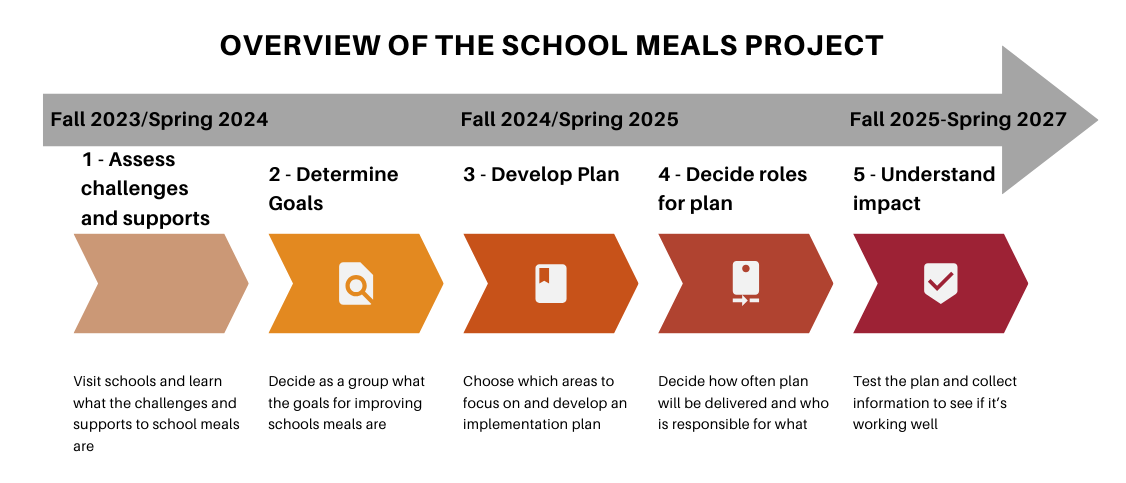
This is a 5-step project that runs from 2023-2027. We began by collecting data on the challenges and supports of school meals within the School District of Philadelphia (2023-24). From this, we entered Phase 2 of the study (steps 2-4; 2024-25) where we held planning meetings with 4 partner schools. These meetings were used to address the main themes that were identified in the needs assessment. We co-created procedures to improve the implementation of school meals based off of the SISTER School Implementation Strategies, Translating ERIC Resources Project.
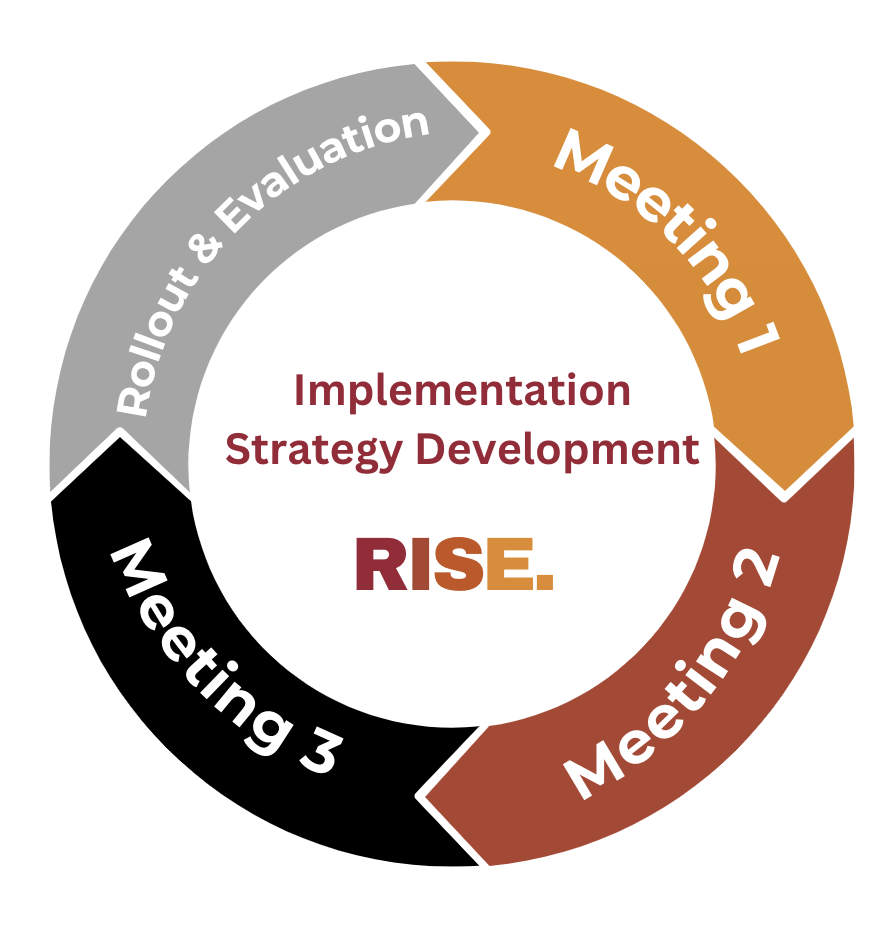
In the second year of the study, we held collaboration meetings to select and design strategies for each school. These meetings involved a team of community members, including students, parents, teachers, school staff, and food service workers. The model below outlines the structure of our three meetings, as well as the start of our testing phase in the 2025-26 school year.
Strategy Rollout
Develop Implementation Strategies
Currently, we are actively working with school to learn the impact of strategies on school meal uptake. More updates coming soon!
Understanding implementation determinants of universal school meals through and equity-driven mixed methods approach.
Key determinants to school breakfast program implementation in Philadelphia public schools: Implications for the role of SNAP-Ed
Advancing implementation science in community settings: the implementation strategies applied in communities (ISAC) compilation
Using implementation mapping to optimize
the impact of Universal School meals: a type
III hybrid implementation‑effectiveness study
protocol
School Meals as a Strategy to Prevent Childhood Obesity and Advance Food Equity: A Narrative Review