
Beyond the Notes presents
Searching for Robert Stolz
Wednesday, October 14, 2026 12:00 PM
Charles Library Event Space
Light refreshments served. Boyer recital credit given.
All programs are free and open to all, and registration is encouraged.
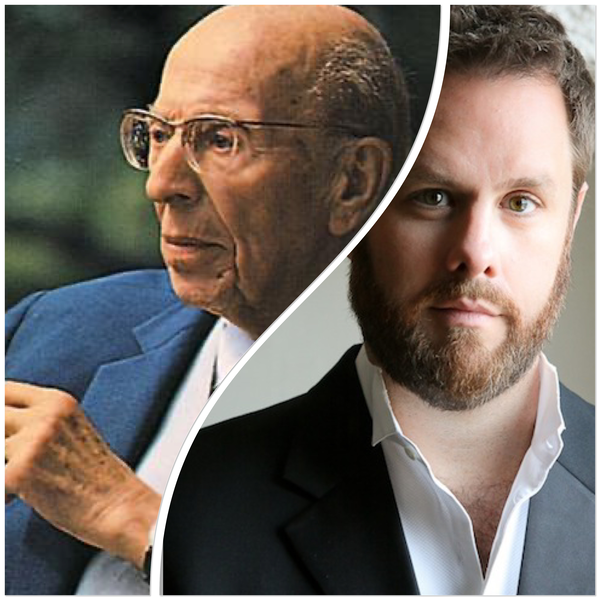
Singer, writer, and educator Daniel Neer has spent about fifteen years developing The Barbed Wire Waltz, a new operetta inspired by Viennese theater in 1938. His interest began with a gift of a book about composer Robert Stolz and grew through correspondence with the family, archival research, and a trip to Austria.
On Wednesday, October 14, Neer will share music and stories from that journey at Charles Library in Beyond the Notes: Searching for Robert Stolz, accompanied by pianist Kim Barroso.
In advance of the performance, Neer spoke with Boyer grad student Christopher Vu about his journey, literally and figuratively, in developing this work.
This interview has been edited and condensed for length and clarity.
Christopher Vu: For people encountering him for the first time, who was he, and why does his music still deserve to be heard?
Daniel Neer: Robert Stolz was an Austrian composer and conductor. He was in his fifties when the Anschluss, the German annexation of Austria, occurred. He was well into a very successful career as a composer of operetta and popular song, but also as a conductor. He was sort of the standard-bearer conductor of the Silver Age of operetta: Franz Lehár, Emmerich Kálmán.
Vienna in the beginning of the 1900s was, in many ways, the capital of Europe, right? Music, literature, theater, opera, symphony We’re talking about Mahler and Klimt, the birthplace of modern psychoanalysis with Freud. It was a bubbling melting pot of thought and art, all of these things clashing together in the most wonderful way.
Stolz was on the more popular entertainment side of that, but he and his colleagues took themselves very seriously. Operetta was big business. We’re talking Broadway levels. There were many theaters in Vienna playing operettas in succession, in competition with one another. Many of the theaters were owned by the same people who produced the operettas.
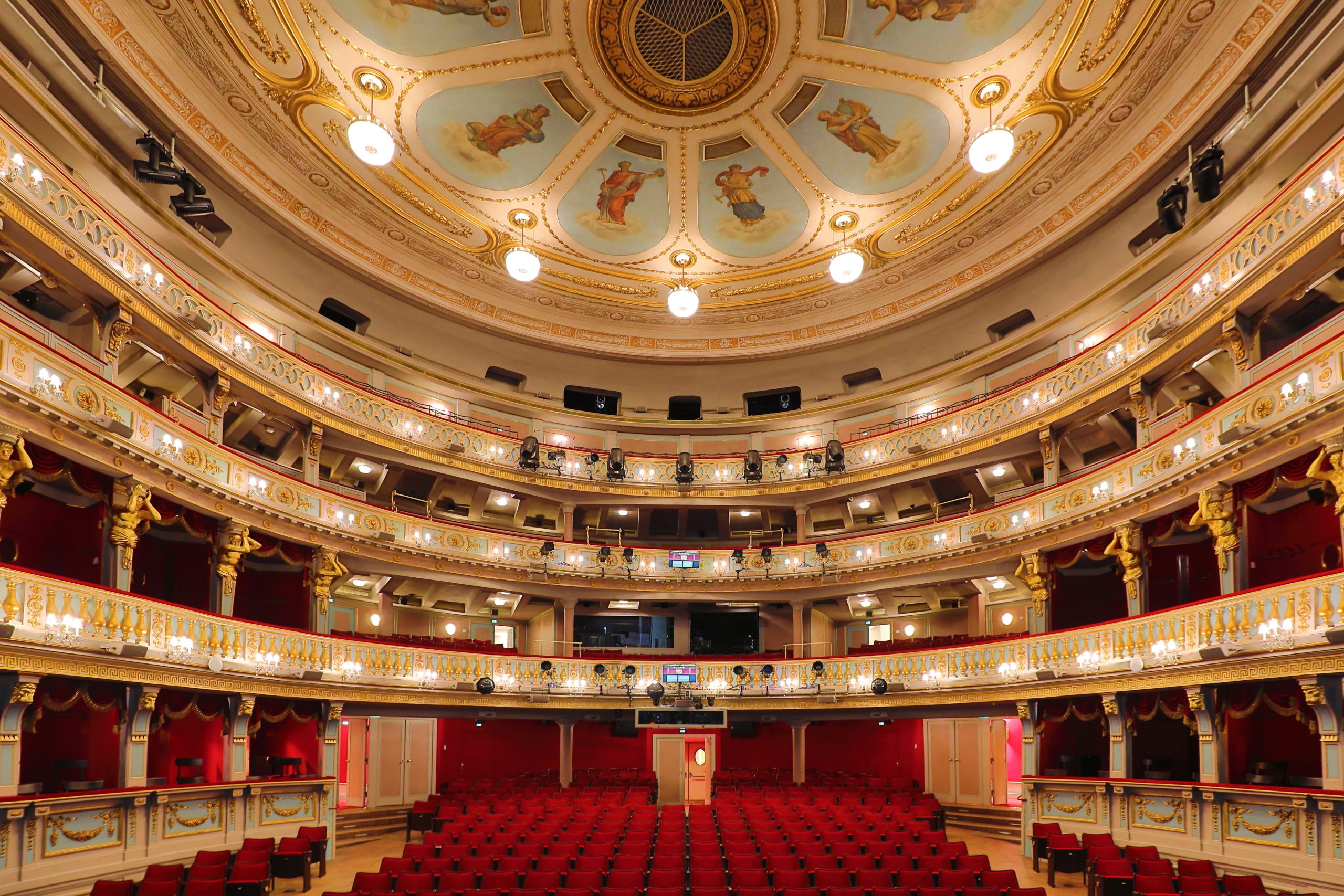
It was also a sort of Austrian national identity. It’s like America with Hollywood, jazz in New Orleans, or Broadway. Austria wasn’t the only country that had operetta. Germany and Hungary had a lot of operetta composers, too, but a lot of them ended up in Vienna, increasing this melting-pot feel.
He really was a celebrity in his day. The closest we maybe have to him would be an Aaron Copland or a Stephen Foster. Leonard Bernstein is maybe going a little too big, but…
Vu: I was thinking Bernstein for a second.
Neer: Definitely someone like Gershwin or Duke Ellington. Somebody who had a nationalistic feel to their name and what they were creating. He loved Austria. He loved being Viennese. He loved the style of music.
Viennese operetta is a very specific musical style. Conductors who are very good at it understand, for instance, the second and third beat of a waltz rhythm. There are lots of traditions in how the music is performed, and he was at the pinnacle of that.
The Anschluss really destroyed the art form, because so many of the composers, librettists, performers, and theater owners were Jewish. With the Anschluss came the Nuremberg Laws, which had already been in force in Berlin. Those people were excluded; many were sent to concentration camps.
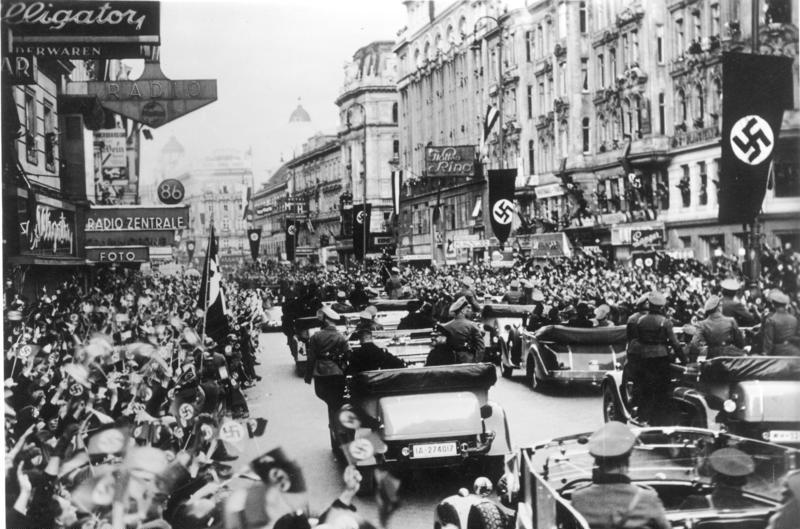
Robert Stolz, even though he was not Jewish, was very much at the forefront of helping his friends. He went to great and dangerous lengths to do that. He was also courted heavily by the Third Reich to compose for them, and he refused.
Eventually he made his way to New York, and later returned to Vienna. The last chapter of his life was really about doing everything he could to keep the art form alive. Because of him, we still have a lot of these pieces, which are gaining a resurgence all over the world.
Vu: In the moment, while all of this was happening, that was incredibly brave. Looking back, he was on the right side of history, too.
Neer: German artists were fleeing to Vienna because, in the early thirties, Vienna was considered safe. Then the same rules and changes that had taken place over a decade in Berlin were enforced in a matter of a month in Austria.
There’s a little bit of, “Oh, it’ll never happen. It’ll go away. That can’t possibly happen here.” Then your worst realities start to happen. Some people saw the warning signs and fled, but a lot thought it was political stuff that would blow over.
It was incredibly swift. Theaters closed mid-production. The bankrolling of shows and theaters collapsed. People went bankrupt. It was over very quickly.
That period of time, especially with someone like him, really intrigued me. It’s been a gnawing mosquito in my ear for a long, long time.
Vu: Tell me more about how Stolz came into your life.
Neer: I should explain: I’m an actor-singer, a librettist, a lyricist, a playwright, and a music educator. I teach voice. So I have this hyphenate career.
When I left grad school and started performing, one of the first places I performed was a little company in Ohio, of all places, that specialized in bringing back Viennese operettas from the twenties and thirties. I totally got bitten by the bug. I was incredibly in love with the beautiful music.
The leader of this operetta company told me about Robert Stolz, and he gave me this book called The Barbed Wire Waltz. I didn’t read it for years, because books accumulate, right? Then I eventually read about this incredible life he had.
I found the writer of the book in D.C., visited him, and interviewed him. He had been on a Fulbright to Austria, also a fan of operetta. He waited by a stage door to meet Robert Stolz in the sixties. Stolz said, “Oh, you’re a writer,” and that began a relationship that resulted in this book.
That started cementing the love affair I had with operetta and this person who, outside Austria, isn’t very well known. In North America, mostly music scholars or people deep into musical theatre history will have heard of him. It’s a shame, because it’s not just his music that’s incredible. It’s his conducting and the way he kept the art form moving.
Vu: In my quick research, I found myself struggling to label him. On one hand, I’m reading about his waltzes and these iconic songs. Then he’s a conductor, too. On top of that, I hear tangos and things that sound like jazz. Could that contribute to why he’s less known here? Is it hard to label him?
Neer: Maybe. I think you might be right. But to understand him, you really have to understand what was happening with Viennese operetta in the thirties.
Die Fledermaus, before 1900, was one form of operetta. But like all art forms, it progressed and changed. In the twenties and thirties, whatever the new fad was, it was going in.
I remember Broadway before Rent. I remember when Rent premiered and how much it changed the landscape. Then how much Hamilton changed the landscape. We’re now in a period of Broadway musicals that’s kind of the Wild West, with so many forms of singing and performance.
With operetta, American jazz was a very big influence. People knew about Glenn Miller and Fred Astaire. Movies were big competition with theaters. Those early Hollywood movie musicals were all the rage.
Stolz wrote a lot of foxtrots, Boston waltzes, and tangos, as did Oscar Straus, Lehár, and Kálmán. Kálmán’s operettas are full of tangos, which are amazing.
Vu: I’m curious about the book and what happened next. What led to your research trip to Vienna, and what did it reveal to you?
Neer: I should backtrack a little. The mentor who gave me that book died. After he died, I decided to read all these things he’d given me, because he was really generous and gave me books about things he thought I’d be interested in.
Inside the front cover was a signature and an address label from Robert Stolz’s wife. I didn’t know whether they’d ever met, or whether she’d heard about this person with an opera company doing Viennese operettas and reached out.
I wrote to the address on the sticker. A couple of months went by, and I got a letter back from Clarissa Henry, Stolz’s daughter. It turned out that his wife had died the same week as the man who gave me the book. I missed communicating with Einzi [Stolz’s wife], but now I had a relationship with Clarissa, who was very kind.
After a few years, I said to her in an email, “There’s a story to be made about your father’s life. I don’t really know what that is, but I feel like it could be a really cool stage story. Why not write something with his music, his songs, and come up with a fictional story inspired by his life?”
It’s kind of a jukebox operetta, right?
Vu: Sure.
Neer: She was excited by this idea and connected me to her cousin Hans Stolz, who lives in Graz, Robert Stolz’s birthplace. Clarissa and Hans collectively run the estate and family archives. The three of us got our heads together, and they agreed to give me carte blanche with anything in the estate: orchestral parts, diaries, things to help me construct a fictional piece inspired by this time.
The story I’m writing is about a theater troupe during the weeks of the Anschluss in March 1938. It’s not an exact retelling of his life, but it’s heavily influenced by that period, which I find fascinating.
I teach at the New School in New York, and I applied for a faculty research grant. I was given a grant to go to Austria to do research to finish this first draft.
Vu: When was your trip?
Neer: This past June. It just happened. The first draft of the libretto is complete, as are nine out of, I think, thirteen song translations.
In Austria, these songs are what they call “evergreens.” They’re tried-and-true Austrian tunes that everybody knows.
Vu: Now I have questions about the English translations. I’m a composer, and I’m thinking about syllables and diction. Did you have trouble going from German to English?
Neer: Big time.
Vu: Can you talk about that a little?
Neer: I’m going to toot my own horn a little, which is embarrassing, but there are a few things in the world I do really well. There are lots of things I’m no good at. One thing I’m very good at is performing.
I’ve performed a lot of really bad translations. Over the years, I’ve been able to pinpoint the annoyances, so I made myself a few rules.
The first was that I wasn’t going to change a single rhythm he wrote. Translators and lyricists will take a quarter note and make two eighth notes out of it to squeeze in another syllable, which is cheating.
The second rule was that whenever he incorporated a rhyme, I would keep it. Even an internal rhyme, which he or his librettists did a lot.
The third was to stick as closely to the translation as possible. That’s tricky because there are tongue-in-cheek, colloquial German and Austrian things going on. It’s like Gershwin’s “’S Wonderful,” with its playful way of shortening words. To somebody who doesn’t speak English, that must drive them insane. I can’t imagine translating that song into another language.
I tried to stay within an idiom where I could explain the joke, or go along with it and reveal it later in the song.
Here’s an example. In one song, a waltz, there’s a reference to wine, and a place-name I couldn’t translate with the right syllables. But there’s a neighboring place equally famous for wine, Grinzing, which is two syllables. So I used that instead. The family loved that I’d paid special attention: if I couldn’t use that word, I’d find another name.
Another great example is the name for Vienna: Wien, one syllable. Just about every song is about Vienna, which is three syllables, with the stress in the middle. That’s really hard.
I absorbed those challenges with my writing ability and by imagining singing it: what’s comfortable to sing?
The problem becomes, can I still make it sound like it’s 1938, and how people talked? I’m from Ohio, and I’ve never changed my accent. We have colloquialisms, but translating into those wouldn’t be comfortable for everyone.
With actors, we have this thing called the Mid-Atlantic accent, which is a starting point for diction and approach to language. It’s somewhere between European and American. I tried very hard to stick with that, too.
Vu: Got it. Okay.
Neer: Being a musician helps. You can always tell when you’re reading a translation by somebody who isn’t a musician, because they’ll change the rhythms, and you’re like, “Wait, you can’t do that.”
Vu: I’m thinking about this from what I know. I’m Vietnamese, and I grew up listening to Vietnamese songs. Later, I realized a lot of the popular songs were translations or reworkings of songs from elsewhere. Suddenly I’m like, “Wait, that’s ‘Bésame Mucho’!”
Are Stolz’s songs that iconic to Austrians? And even though you’re translating them into English, are you trying to preserve as much of the melody as possible?
Neer: Yes, I know what you mean. A lot of his songs were used in American movies. One was Spring Parade, where they took a Stolz tune and changed the language to fit the plot. That happened in Hollywood all the time. You’d pay a fee for a tune, but have no idea what it would turn out to be.
I’ve tried to go back to as much of the original as possible, including how songs were used in the operettas they came from. He was very prolific. Some operettas were very good, and in others the book was terrible, and in the competition of the time they didn’t run long. Very much like Broadway.
Vu: Do you feel alone in this endeavor of celebrating Stolz, or are other people working with and performing these songs? What has your research community looked like?
Neer: I am totally alone here in America, especially after my mentor passed away. He would have been my one touchstone. I know there are people here who know who Stolz is.
But I’ll tell you something: in Austria, I don’t feel alone at all.
When I was in Graz, Hans Stolz took me to a Schubert lieder evening. He’s quite a bon vivant, kind of the unofficial mayor of the city. Everybody knows him. Everybody loves him. After the concert, he said, “I want to take you to this place that has the most fantastic sausages.”
I’m down. Let’s go.
He’s driving along, and he pulls off at what looked like a carnival bus, with a flap on the side. It was a food stand on the side of the road, with a picnic table and the saddest little string of lights above it.
There were these construction workers sitting around smoking.
We sit down, and he introduces me as being from America. Then he says in German that I’m performing a concert of songs by Robert Stolz next week. And all of them start singing their favorite songs. I’m talking guys with dirt on their hands.
I was like, “Wow.” It’s really hard to describe how deep it is. It’s like the Beatles in Liverpool. It’s that big.
There are Stolz fan groups, concert venues doing his operettas, a jazz band touring with Stolz songs. You see his name all the time. Conservatory students doing a song recital will have sets by Schubert, Wolf, Brahms, and Stolz.
Vu: Is there an Austrian songbook where he’s half the songs?
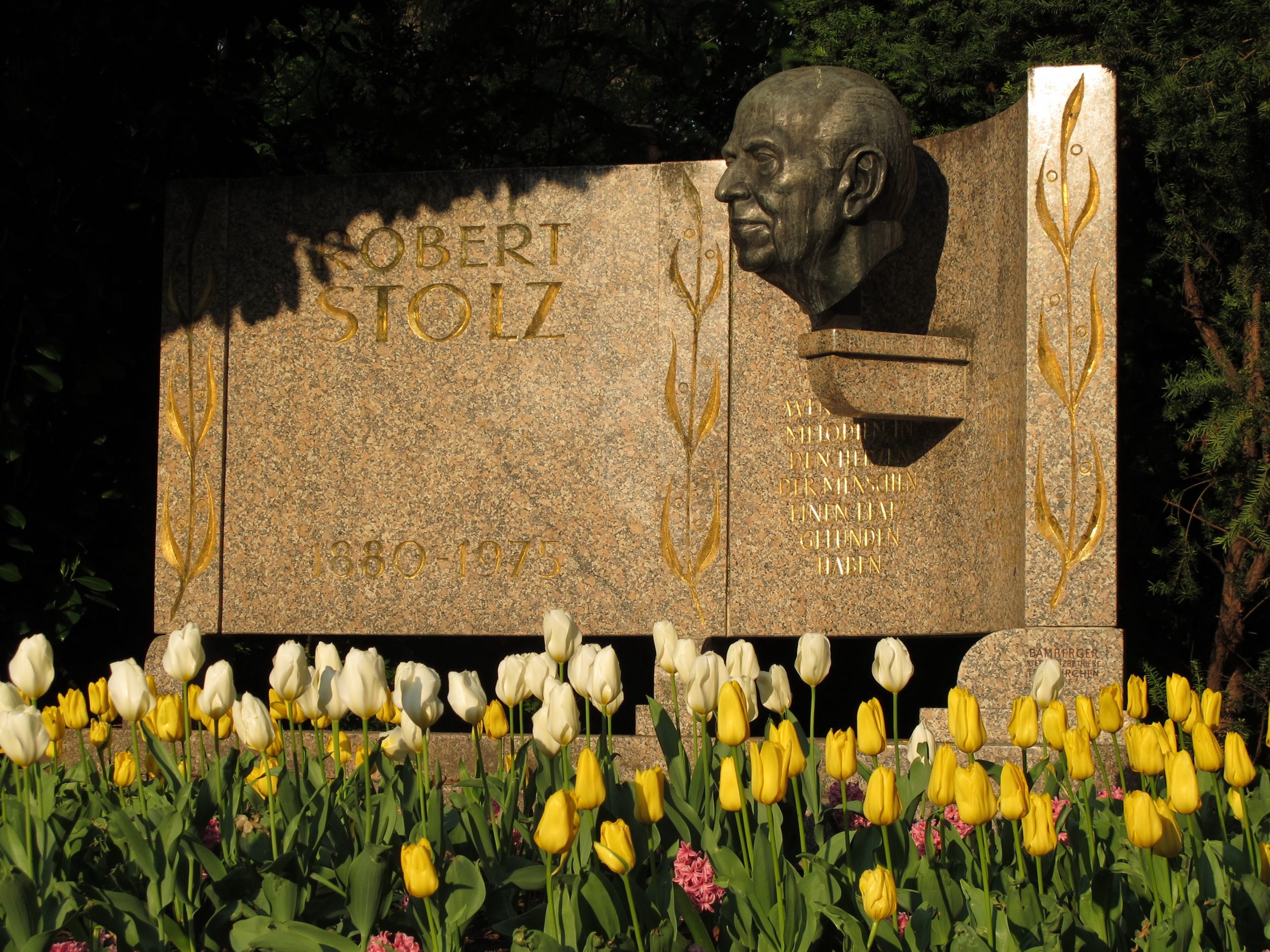
Neer: For sure. Absolutely. What’s funny is that I think most people wouldn’t even know who wrote them. They just can sing them. He’s on stamps. He has streets named after him. There are sculptures of him in city parks. It’s very odd how he isn’t better known here.
Vu: You mentioned that a draft is completed. What are we going to see at Charles Library? And what are your plans after that? Are you looking toward a whole production?
Neer: I’m still in exploratory mode. What you’ll see at Charles Library is probably eight songs with new translations, and a story that accompanies them about what I call “searching for Stolz”: looking for his psyche, being in Vienna, visiting the places he visited, walking in his footsteps to try to get inside his head.
I made visits to the Vienna City Archives, which has boxes and boxes of his personal effects, letters, and diaries. I found a happy-birthday letter from President Nixon. I found the actual document from the Third Reich saying his assets had been liquidated and he was no longer welcome in Germany.
I found amazing things, but I also got more of a grasp of the person he was: this steely, business-minded, smart, savvy person who wrote his own ticket and knew his worth, alongside this very sentimental, gushy guy who would do anything for his friends.
That helps me refine the protagonist in my story. I wanted as much depth of character as possible, to give him personal conflict as the story goes on.
There’s a real story about his older brother, who he wasn’t particularly close with. After the Anschluss, when Stolz was still trying to find a way to remain in Vienna, his brother called to warn him he was going to be arrested. Years earlier, Stolz had smuggled Jewish people out of Germany in the back of his car. He’d sign autographs for the border guards, and they didn’t bother searching because he was so famous. He also wouldn’t write music for the Reich.
His brother called and said, “This is one last brotherly gesture in memory of our mother. I’m giving you twelve hours to get out.” Stolz and his wife packed one suitcase and left. That’s in my story.
You can’t write that. It’s amazing, right?
Vu: Wow. Yeah.
Neer: I want this concert to be a benchmark of where I am right now: I have a really good first draft and some wonderful translations. There are interested producers in America tracking my progress, so I have promising leads.
A show like this is expensive, because opera is expensive, and so is musical theater. The next goal is a reading, with people at music stands, reading the work from beginning to end.
Even if you don’t know him, it’s a great story and fantastic music, written in the style of an old operetta. It’s a callback to a previous style. I’m in a “let’s see” phase, trying to figure out the best way to go about it and talking to lots of people.
I believe in it really strongly. I love it. It’s taken up an enormous part of my life. I’ve been working on and off on it for about fifteen years. With this draft, I feel like I’m beginning to get it out of my system a little bit. That’s part of what I’m going to talk about at Charles Library: it’s a self-discovery thing with me.
Join us for Beyond the Notes: Searching for Robert Stolz on Wednesday, October 14, 2026, from noon to 1 p.m. in the Charles Library Event Space, 1900 N. 13th Street, Philadelphia. Daniel Neer will perform with pianist Kim Barroso. The program is free and open to everyone. Learn more and register.
Daniel Neer is a baritone, actor, writer, and educator whose work spans opera, musical theater, art song, and interdisciplinary performance. As a librettist, lyricist, playwright, and poet, he collaborates on contemporary operas, chamber music, choral works, and multimedia projects. His teaching emphasizes individualized vocal technique and creative expression across classical and contemporary styles. He has voice faculty appointments at Temple University and Mannes Prep at The New School.
by Christopher Vu
Christopher Vu is a composer, pianist, and interdisciplinary artist whose work moves between concert music, theatre, dance, and collaborative performance. He is currently a PhD student in Composition at Temple University. Learn more at www.chrisvumusic.com.
Suggested Reading:
Baranello, Micaela. The Operetta Empire: Music Theater in Early Twentieth-Century Vienna. University of California Press, 2021. https://librarysearch.temple.edu/catalog/991039016058703811.
Belina, Anastasia, and Derek B. Scott, eds. The Cambridge Companion to Operetta. Cambridge University Press, 2020. https://librarysearch.temple.edu/catalog/991037921852703811.
Hurowitz, Richard. In the Garden of the Righteous: The Heroes Who Risked Their Lives to Save Jews during the Holocaust. First edition. Harper, an imprint of HarperCollins publishers, 2023.
Niccolai, Michela, and Clair Rowden, eds. Musical Theatre in Europe 1830-1945. Speculum Musicae, volume XXX. Brepols, 2017. https://librarysearch.temple.edu/catalog/991036865108603811.
Vergo, Peter. Art in Vienna 1898-1918: Klimt, Kokoschka, Schiele and Their Contemporaries. 3. ed. Phaidon, 1993. https://librarysearch.temple.edu/catalog/991032360109703811.