
Beyond the Notes presents
Flûtes en Vacances
Tuesday, April 7th, 2026, 12:00 PM
Charles Library Event Space
Light refreshments served. Boyer recital credit given.
All programs are free and open to all, and registration is encouraged.
This month’s Beyond the Notes concert features performances by flutist Mimi Stillman and her studio. To celebrate the beautiful sound of the flute, this article will provide an overview of how the flute developed into the modern instrument heard in orchestras and bands around the world.
Early Flutes from Around the World
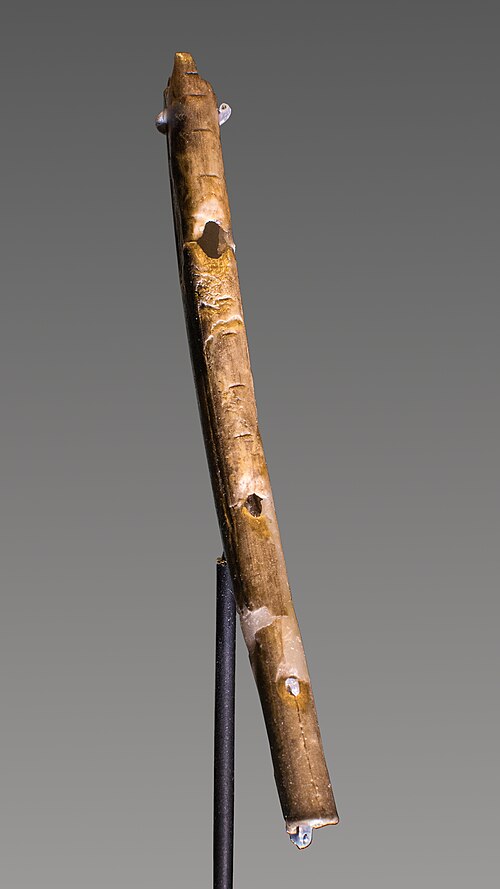
The oldest confirmed flute was found in the Geißenklösterle cave near Ulm, Germany. Its date of origin is estimated to be between 42,000 and 43,000 years ago. Various types of bone flutes have been found at archaeological sites dedicated to ancient and prehistoric civilizations on every inhabited continent. The bone flute below is a Jiahu Gudi from Central China and is around 8,000 years old (dated to 6,000 BCE).
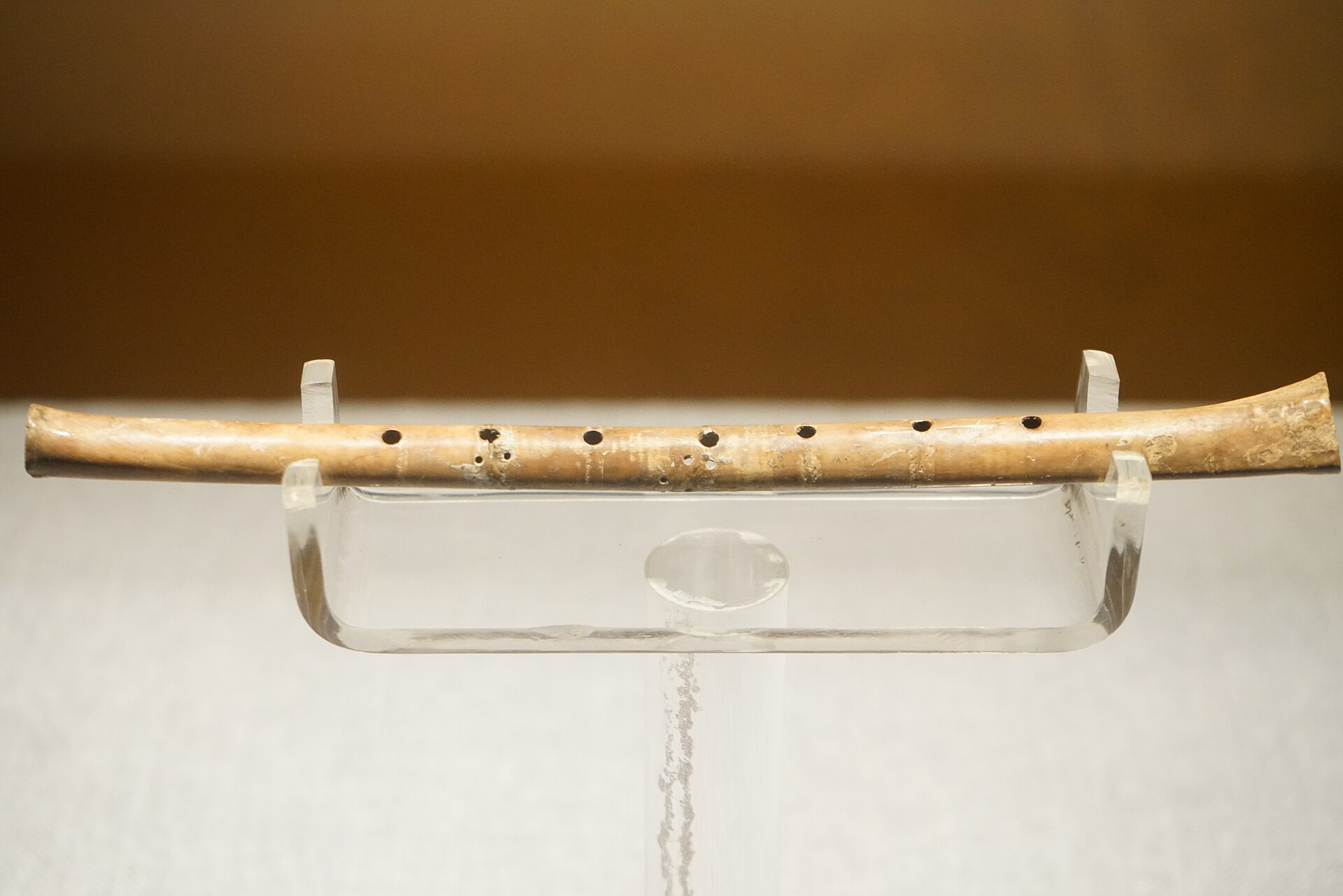
#/media/File:Bone_Flute.jpg)
Interestingly, the earliest flutes seem to be end-blown flutes rather than the transverse flute that became a staple of European art music.
Renaissance Flute
During the Renaissance period, flutes began to become popular in Europe, first as military signal instruments. Later, the flute gained popularity as part of an instrument group, or consort, of either all flutes of different sizes or of a mixture of flutes and recorders. The earliest music for solo flute also dates to the late Renaissance.
These instruments had at most two parts, depending on the register. Lower flutes would generally have two parts since they were larger, while flutes in higher registers would be a single piece of wood. Many of the earliest Renaissance flutes would have no keys, though a single key became a popular addition as the instrument developed towards the end of the Renaissance period.
Baroque Flutes
In the 17th century, instrument makers redesigned the flute, changing the inside from a cylindrical to a conical bore and splitting the instrument into three or four joints. These instruments are generally called traversos, and sound louder than their Renaissance predecessors. Traversos generally have a single key on the foot joint. They were made out of a variety of materials, from boxwood to ivory to various metals.
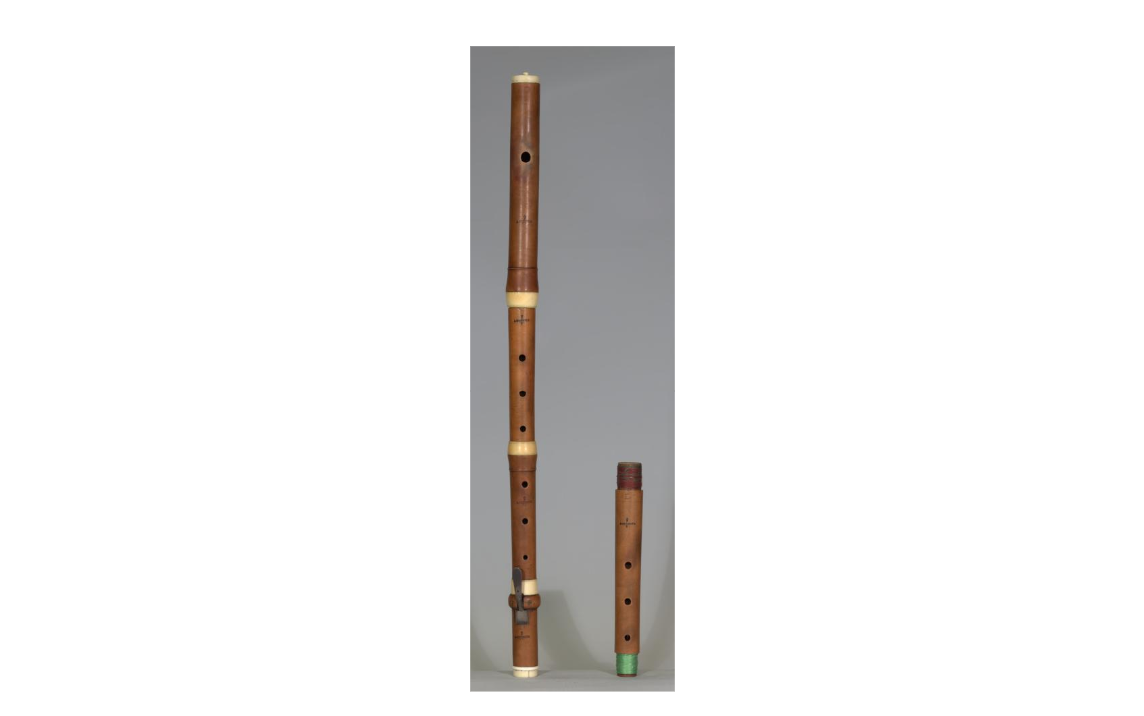
As the flute became louder and more standardized in construction, composers began to write more prominent parts for the instrument in large ensemble contexts such as opera and ballet. The instrument still appeared in chamber and solo music, and flute instructors started recording their technique and pedagogical approaches as treatises.
Theobald Boehm: Flutist and Inventor
Born in 1794, Theobald Boehm received training as a goldsmith as a child, since that was his father’s profession. His knowledge of metalworking allowed him to make his own flute, and at 21 he became first flutist of the Royal Bavarian Orchestra. While playing with the Royal Bavarian Orchestra, Boehm experimented with different ways to improve the flute. He tried constructing flutes from different materials: hardwoods like Grenadilla, silver, gold, copper and nickel. In addition, he experimented with changing the placement of the tone holes. To do this, he created a flute with moveable tone holes so he could figure out the best placement for consistent intonation.
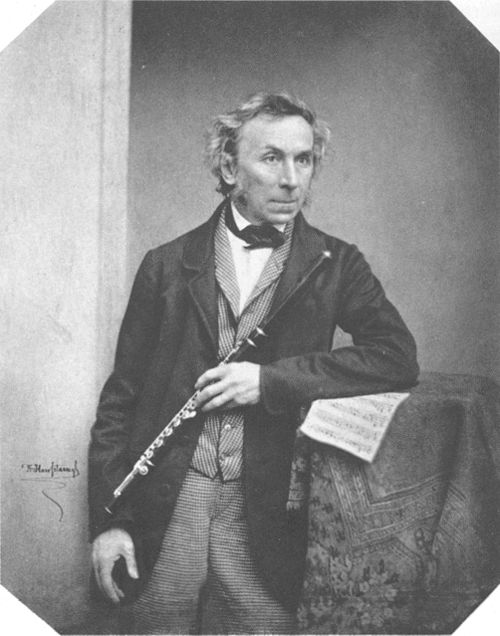
In 1847, Boehm patented his model for a new flute fingering system, featuring mechanisms to cover tone holes that would allow flutes to become larger without requiring larger hands to play. He displayed his new flute design at the 1851 at the London Exhibition, and later published a book on the merits of his system called The Flute and Flute-Playing.
Modern Flute
Aside from a few modifications to the embouchure hole (the hole near the top of the flute across which the player blows) and tuning, the modern flute is almost the same as the one Boehm designed in the mid 1800s. Most modern flutes are tuned to A = 440hz and are made of metal rather than wood, but the mechanisms are basically the same as Boehm’s 1847 design!
Sources
Library of Congress, Washington, D.C. 20540 USA. “Dayton C. Miller Collection | The Library of Congress.” Accessed April 2, 2026. https://www.loc.gov/collections/dayton-c-miller-collection/?st=list&c=150.
“Works – Flutes, Piccolos, and Fifes – Collections Search – Museum of Fine Arts, Boston.” Accessed April 2, 2026. https://collections.mfa.org/collections/315186/dmiflutes-piccolos-and-fifes/objects.
World Flute Society. “Museums and Flute Collections.” Accessed April 2, 2026. https://www.worldflutesociety.org/museums-and-flute-collections.
Further Reading
Bate, Philip. The Flute: A Study of Its History, Development and Construction. W. W. Norton, 1969.
Clark, Kate. The Renaissance Flute: A Contemporary Guide. Oxford University Press, 2020.
Pustlauk, Anne. The Classical and Early Romantic Flute: A Theoretical and Practical Guide. Oxford University Press, 2025.
Welch, Christopher. History of the Boehm Flute; with Illustrations Exemplifying Its Origin by Progressive Stages, and an Appendix Containing the Attack Originally Made on Boehm, and Other Papers Relating to the Boehm-Gordon Controversy. Second edition. McGinnis & Marx, 1961.