
Event Information:
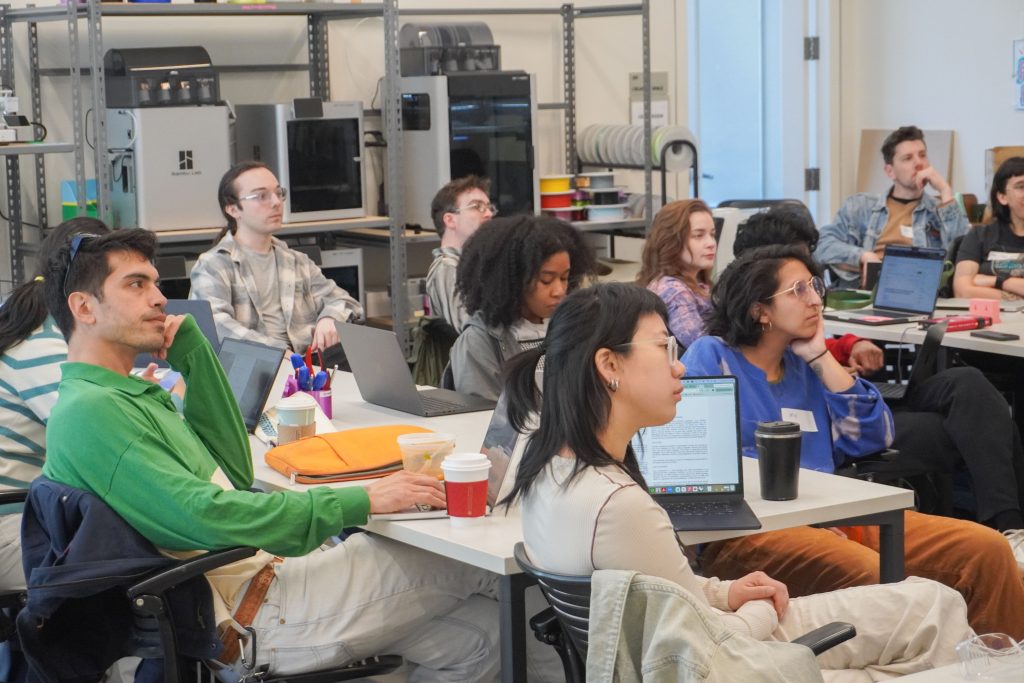
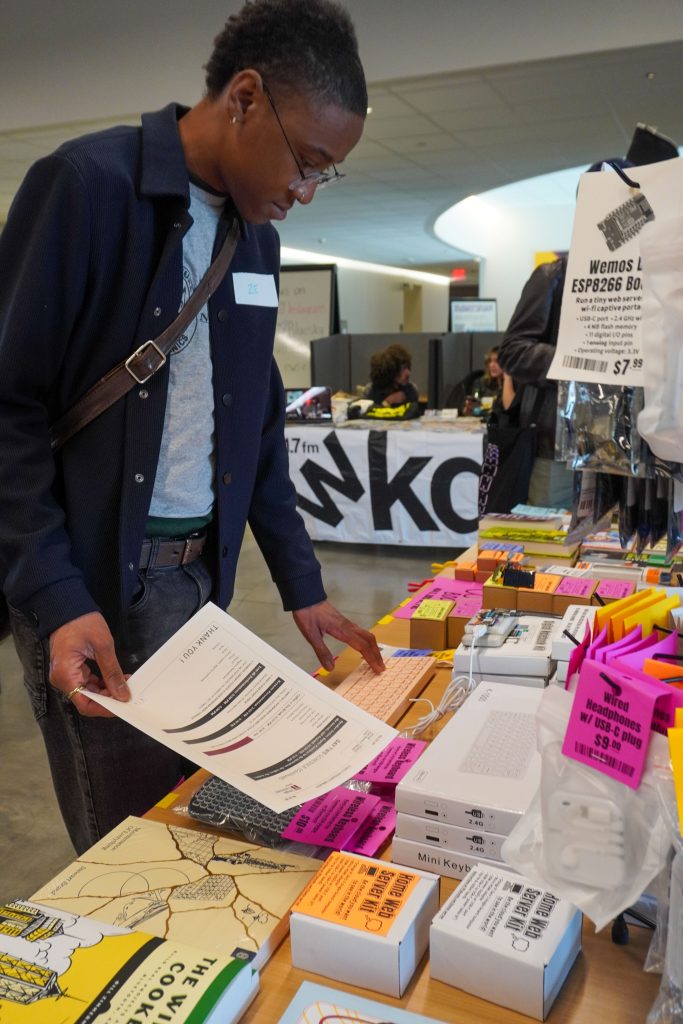
The 2026 Electronics Faire took place on April 9th and 10th at the Charles Library and Ulises Bookstore in Philadelphia, PA.
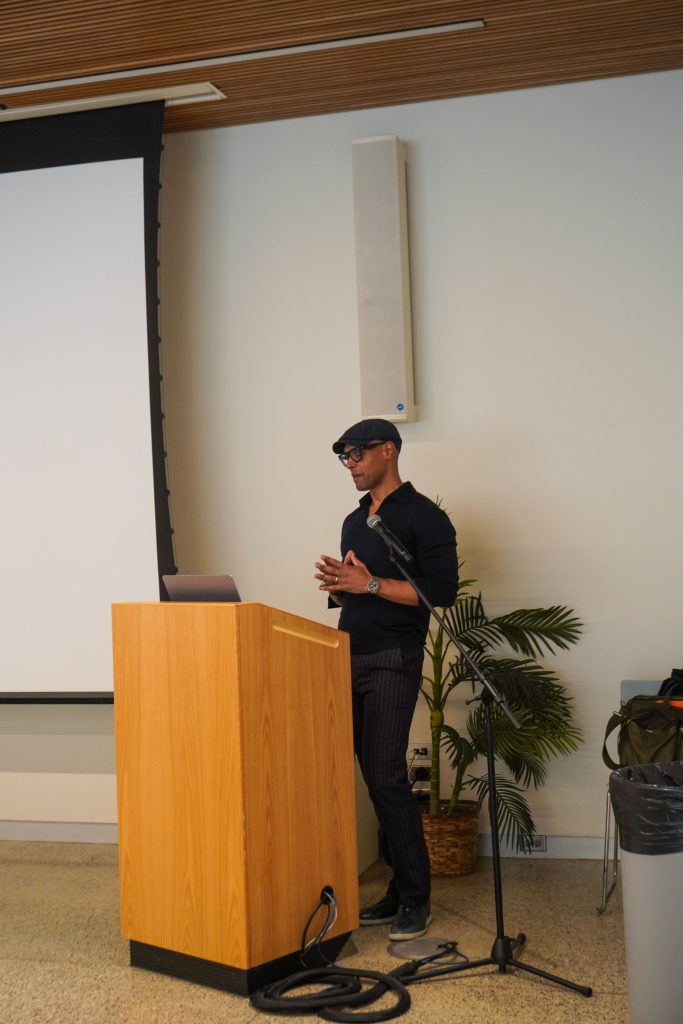
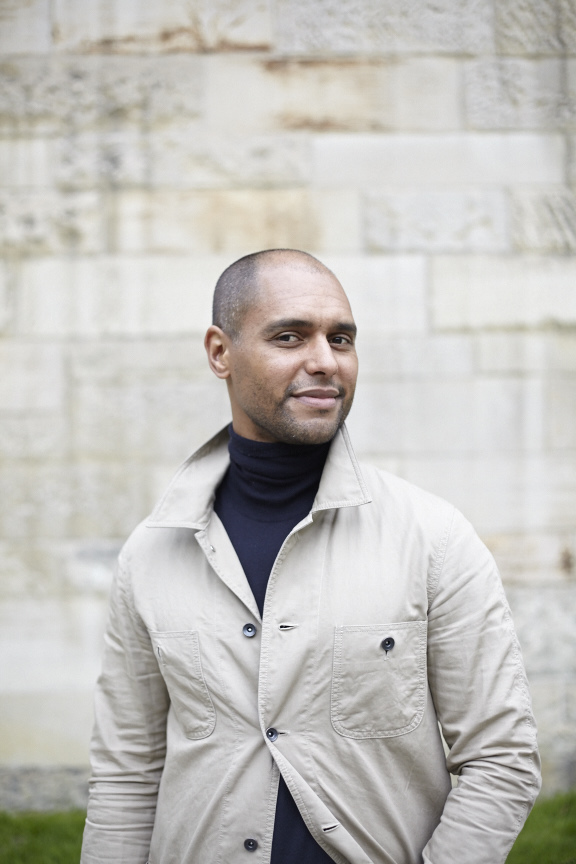
Keynote Speaker: Edward Jones-Imhotep, Director of the University of Toronto’s Institute for the History and Philosophy of Science and Technology
Electronics Faire Schedule:
Thursday April 9th
Coffee Hour 9:30 – 10:30 AM (coffee, tea, and pastries provided for all), LCDSS, Third Floor
Morning Workshops: 10:30 AM – 12:00 PM
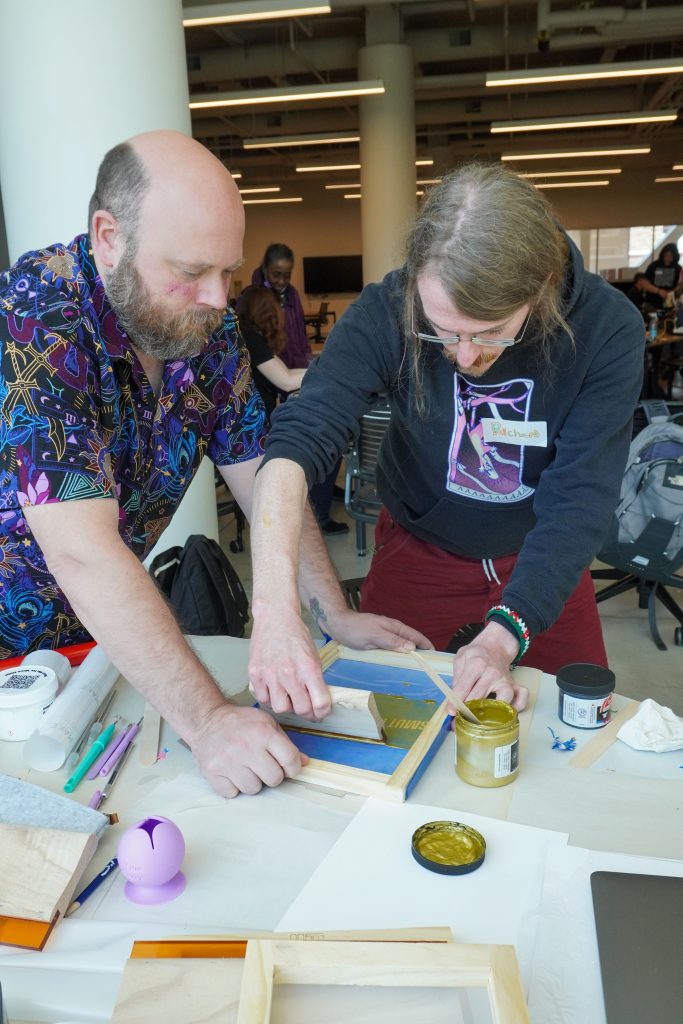
- Makerspace: Screen-printing with the Vinyl Cutter for Community Repair PART 1 with Emily Brooks
- Electronics Lab: Soft(ware) Custodians – Jailbreaking Old Apple Devices with Sam Heckle
Lunch 12:00 – 1:00 PM (lunch provided for workshop instructors and event staff)
Afternoon Workshops:
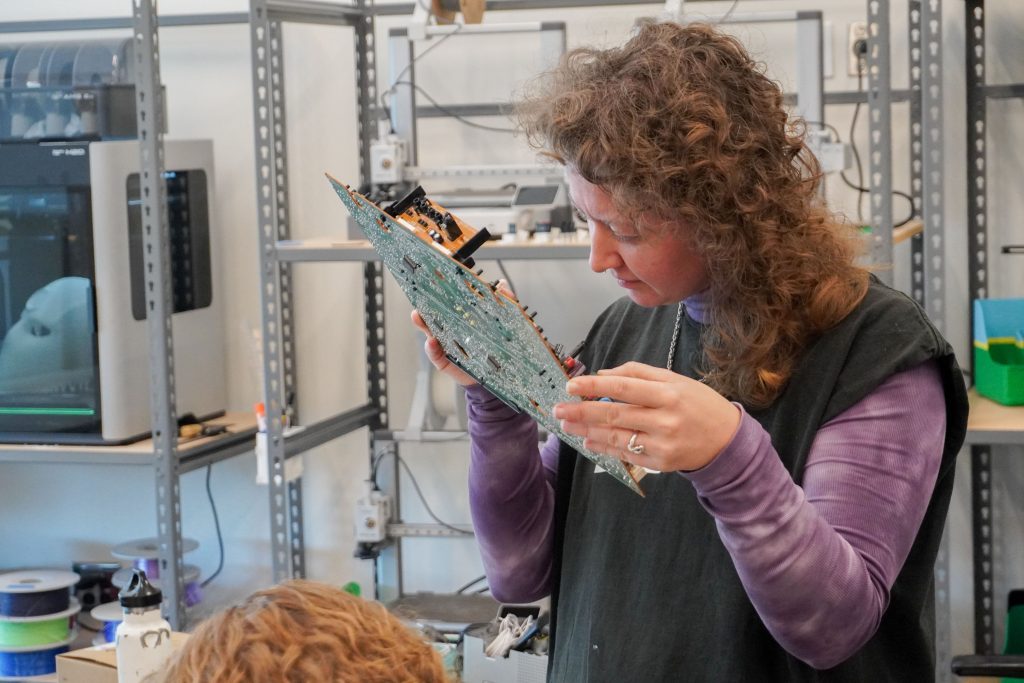
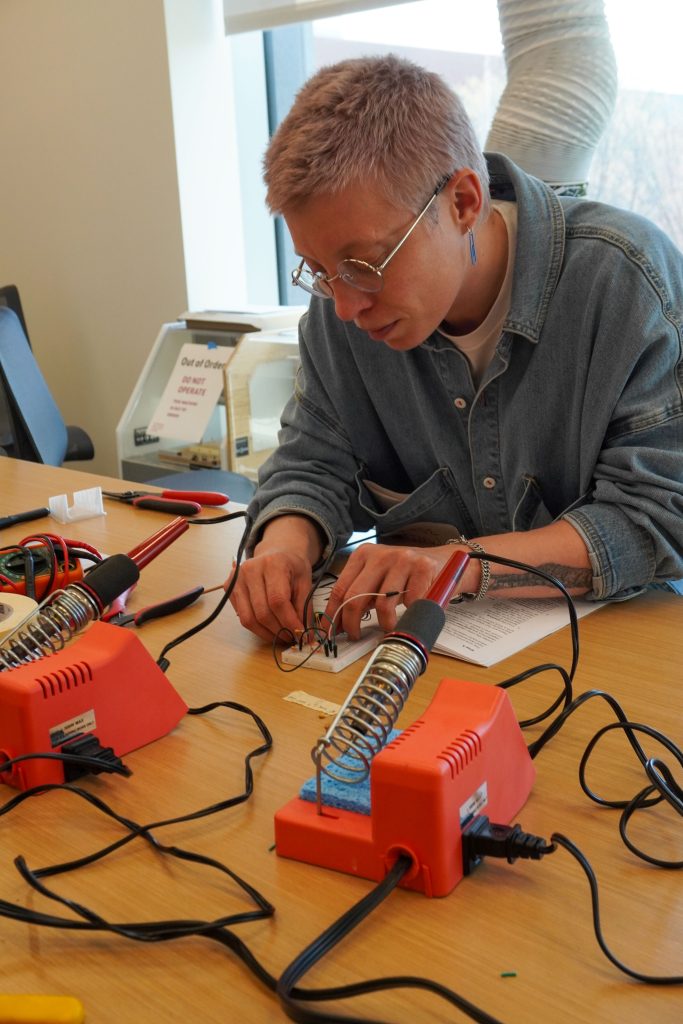
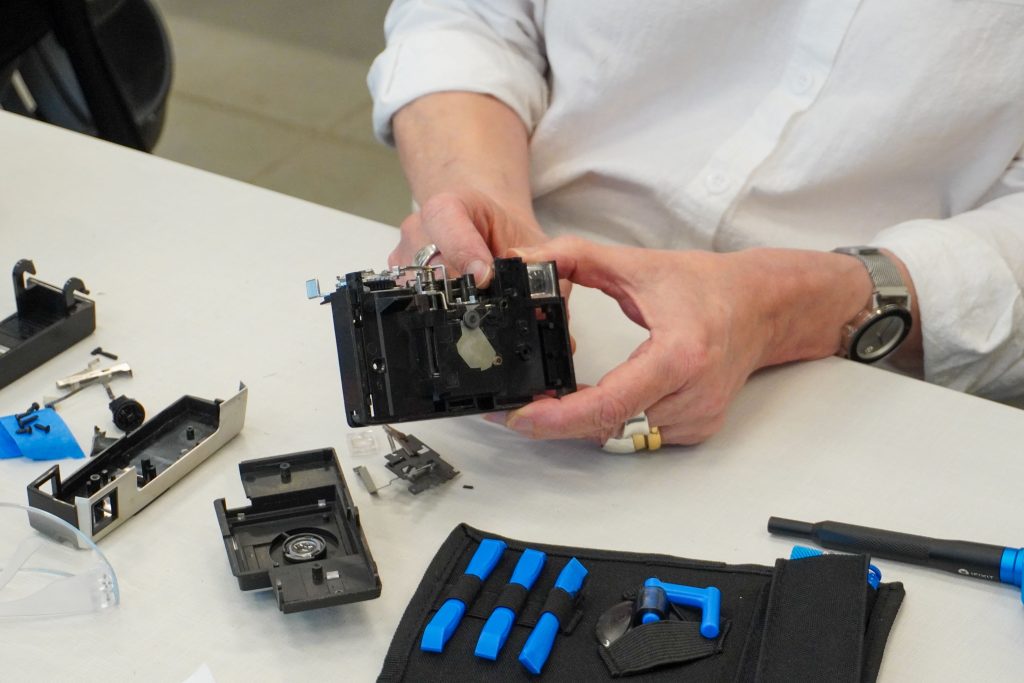
- Electronics Lab: Take It Apart(y) with libi rose striegl, 2:30 – 4:00
- Makerspace: The Walking Dead: Reanimating Found Motors with Maya Iskoz, 1:00 – 4:00 PM
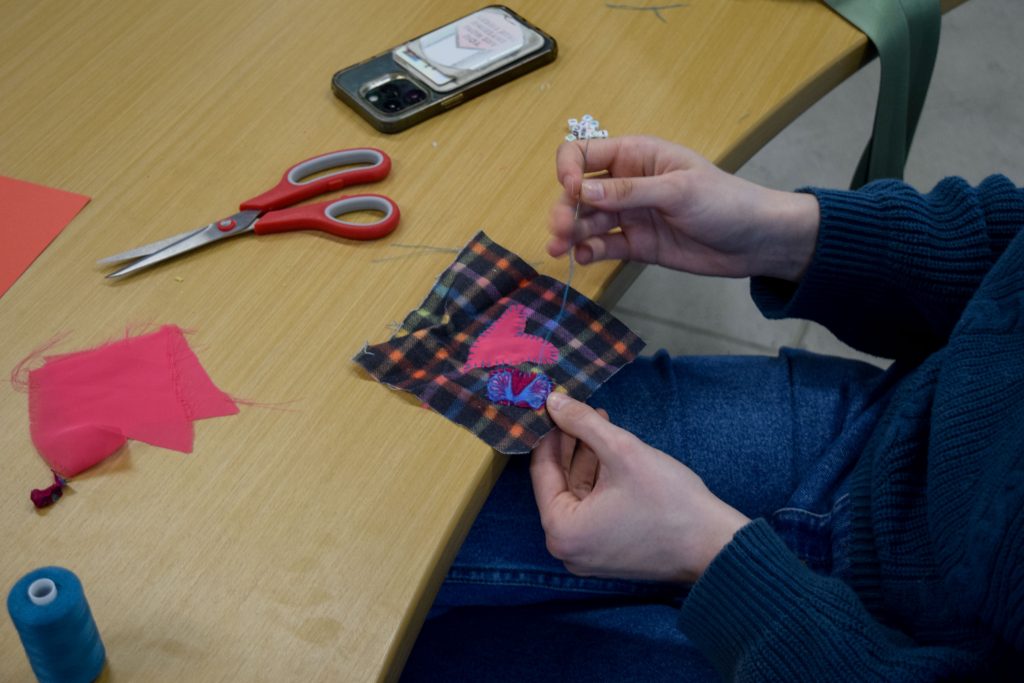
- Coffee Area: Collaborative Quilting with Lily Crandall, 1:00 – 4:00 PM
Happy Hour + Exhibition Opening:
- Happy Hour: Wissahickon Brewing Company: 4:30 – 7:00 PM
- Repair Exhibition Opening Reception: Ulises Bookstore 7-9 PM
- Featuring works by Cecilia McKinnon, Charlotte G Chin, Chris Combs, Emilia Ezeta, Hannah Tardie, Ian Byers-Gamber, Jazmyn Crosby, Jinha Song, Jocelyn Tsui, kathy wu, Riley Cox, Ryan Scails, Woody Poulard, and Yafira Martinez
Friday April 10th
Coffee Hour (coffee, tea, and pastries provided for all), Main Area of the LCDSS, Third Floor, 9:30 – 10:30
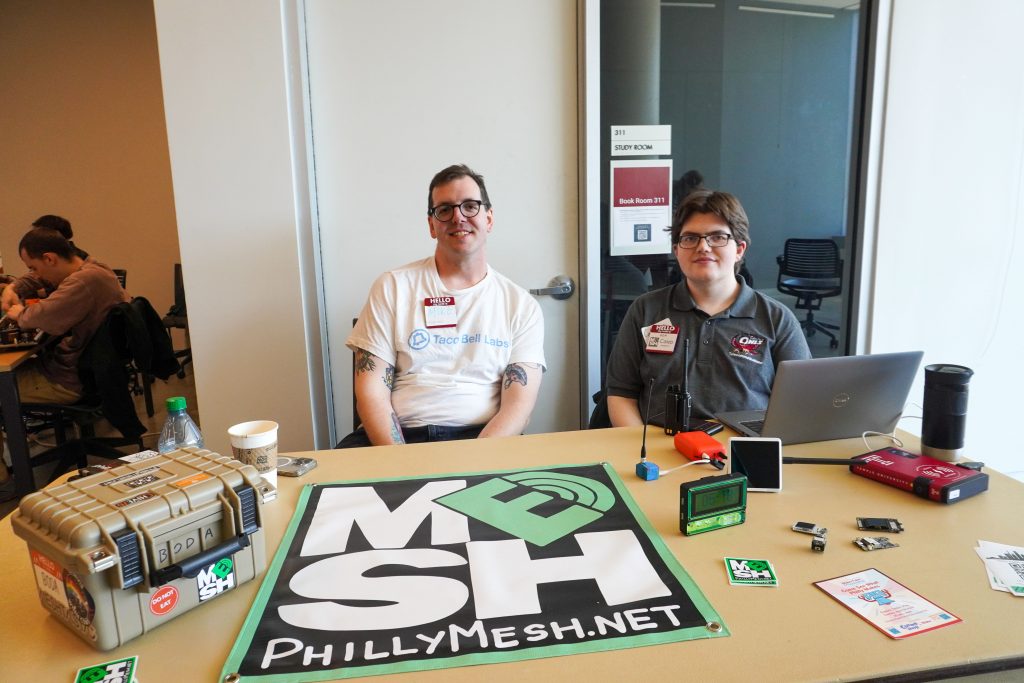
Sit and Tinker Faire, Main Area of the LCDSS, Third Floor. Participating Organizations: Bell Tone Synth Works, Iffy Books, PhillyCAM, WKDU Radio, GlubGlub Labs, Meshtastic, Red Calendar, Jungle Network Zine, Philly Community Wireless, 10:30 AM – 4:30 PM
Morning Workshops:
- Makerspace: Unmaking the Everyday Object with Ariel Ackerly, 9:30 – 11:00 AM
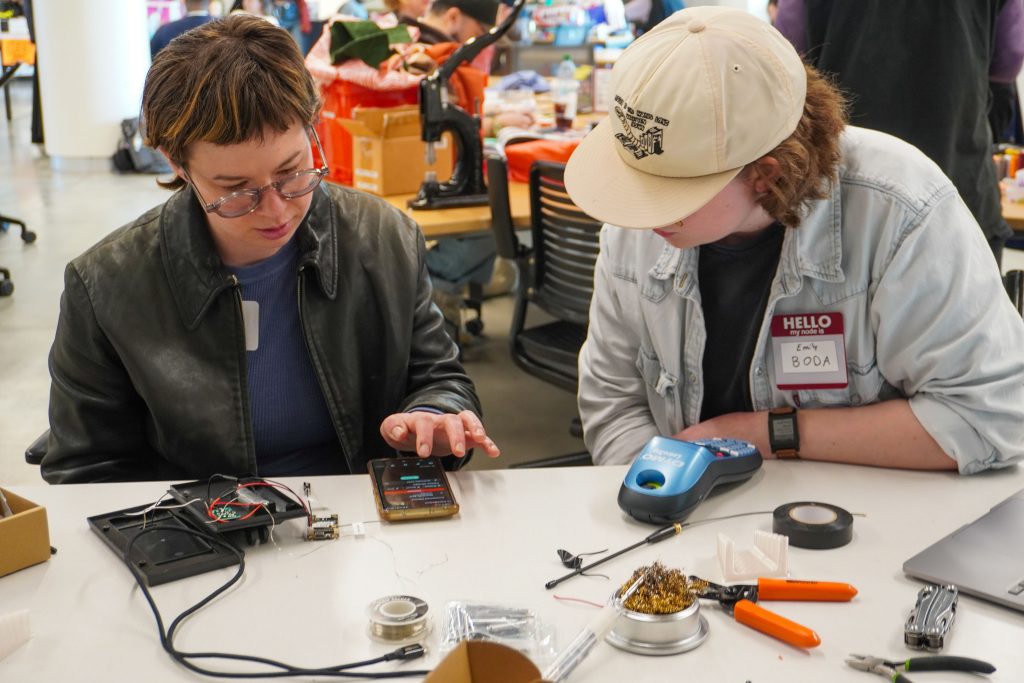
- Electronics Lab: Building a Solar Powered Meshtastic Node with Emily Boda, 9:30 – 11:00 AM
- Coffee Area: Screen-printing with the Vinyl Cutter for Community Repair PART 2, Emily Brooks 10:30 AM – 12:30 PM
- Coffee Area: Collaborative Quilting, Lily Crandall, 10:00 AM – 12:00 PM
- Makerspace: Creative Coding for the Permacomputing Age: A Code Jam and Introduction to Creative Coding with L5 with Lee Tusman, 11:00 AM – 12:30 PM
- Electronics Lab: Building Radical Communication Networks with a DIY FM Transmitter with Derek Schwartz, 11:00 AM – 12:30 PM
Lunch 12:00 – 1:00 PM (lunch provided for workshop instructors, vendors/tablers, faire speakers, and event staff), Main Area of the LCDSS, Third Floor
Afternoon Workshop:
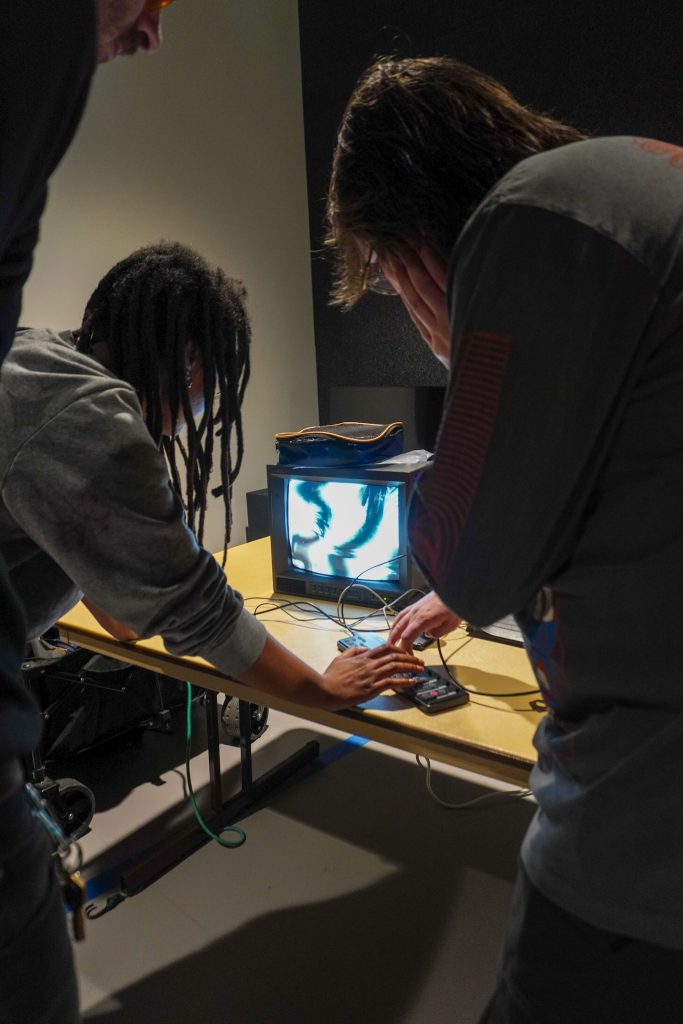
- VR Lab: Analog Glitch 101 with andrei jay, 1:00 PM – 2:30 PM
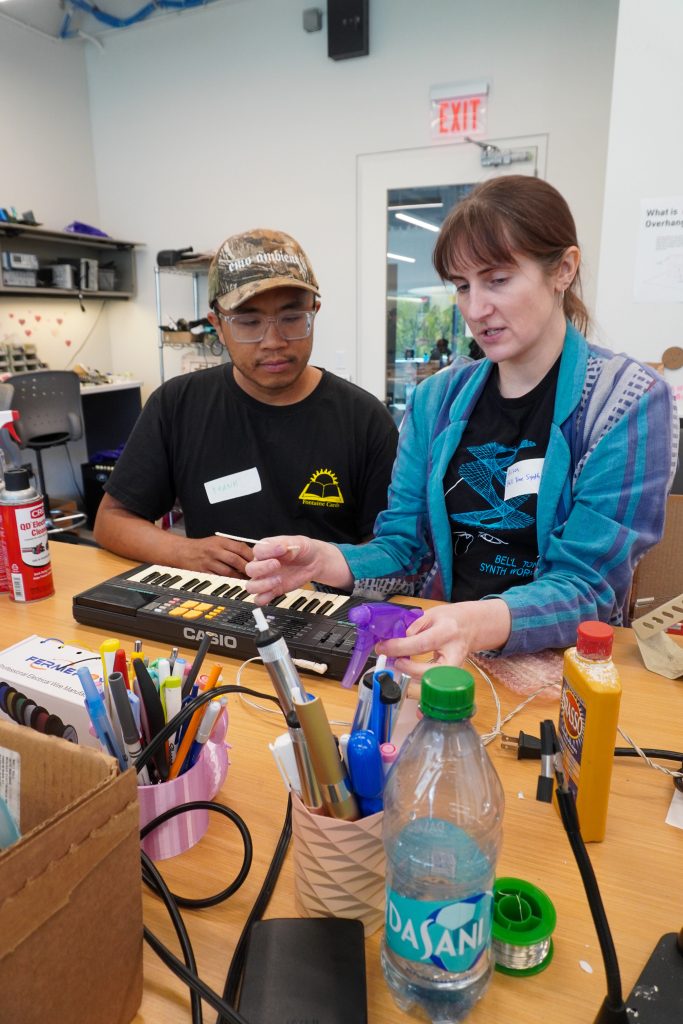
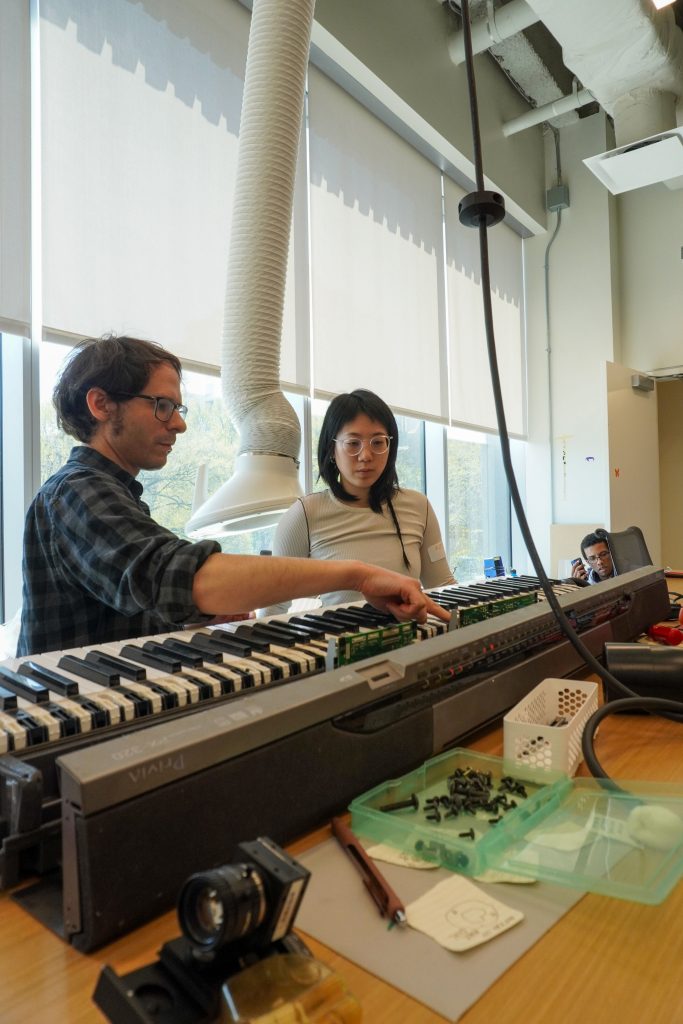
- Electronics Lab: DIY Music Gear Repair with Bell Tone Synth Works, 1:30 – 4:00 PM
Speaker Series: Repair Practices in the Institution, the Gallery, the Archive, the Streets, and beyond, Coffee Area, 12:45 – 2:15 PM
- Alison Stout
- Mike Dank
- libi rose striegl
- Dave Hannon
- Pedro de Oliveira
- Theo Ellin Ballew
Coffee + Tea Break, (coffee, tea, and snacks provided for all), 2:15 – 2:30 PM
Keynote Presentation, First Floor Event Space:
- Edward Jones-Imhotep, Broken Machines, 2:45 – 3:30 PM. Registration is highly encouraged for the Keynote event.
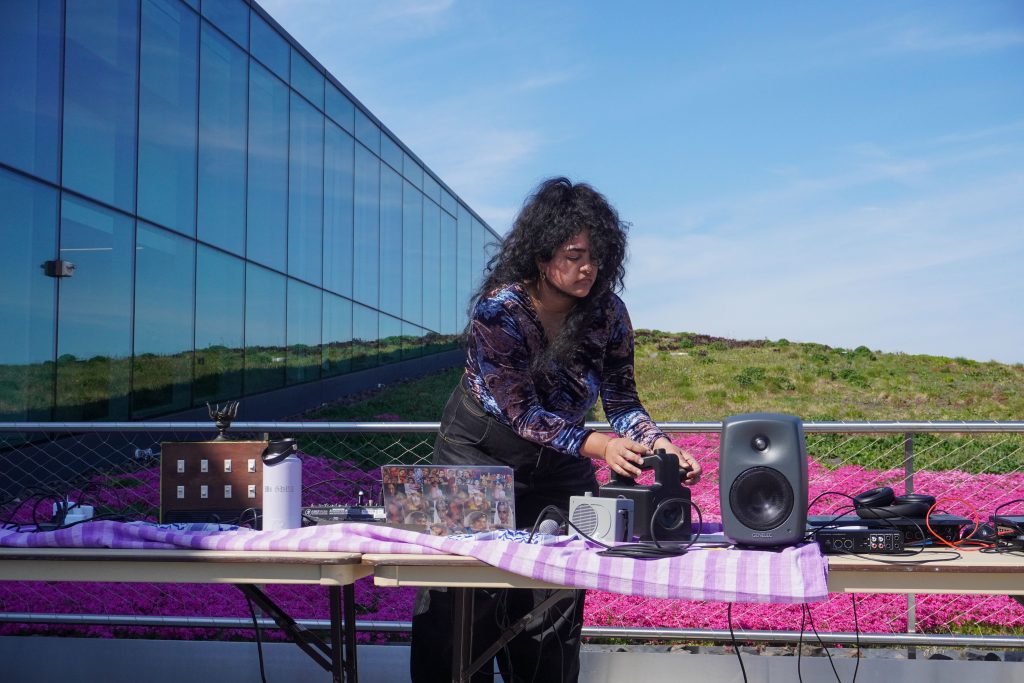
Low-db performances, 3:30 – 5:30 PM, Charles Library Fourth Floor Outdoor Roof Terrace (weather permitting),Low-db Performers (in order of set times):
- meghna mahadevan
- Shack!
- Ethan
- Glitter Vomit, @glitervomitabq
- Omar
- Nick
- Yuheng
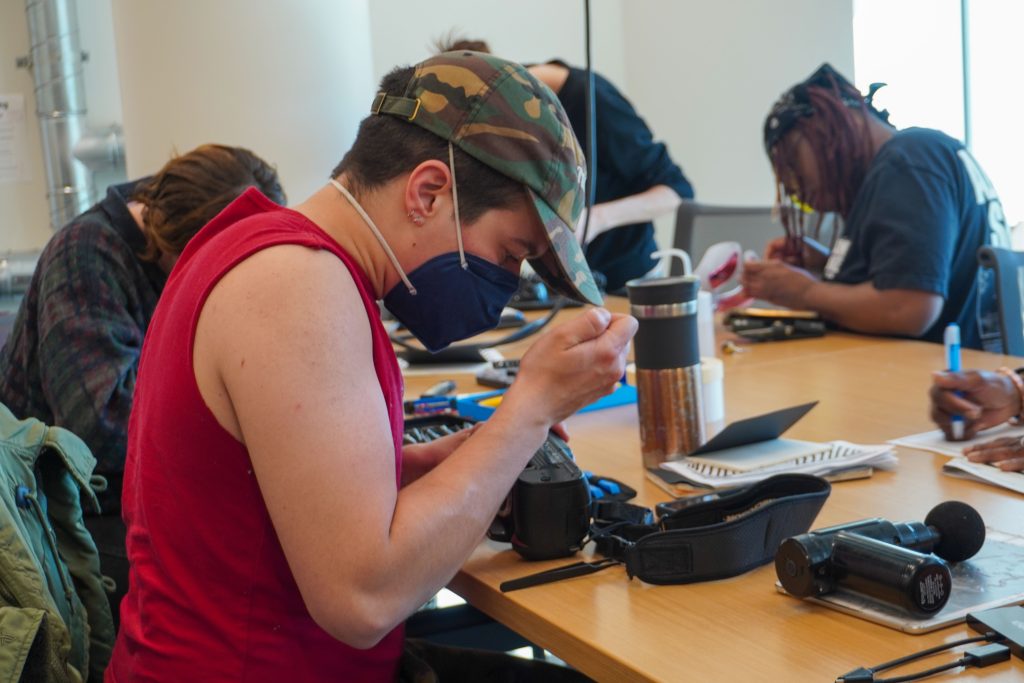
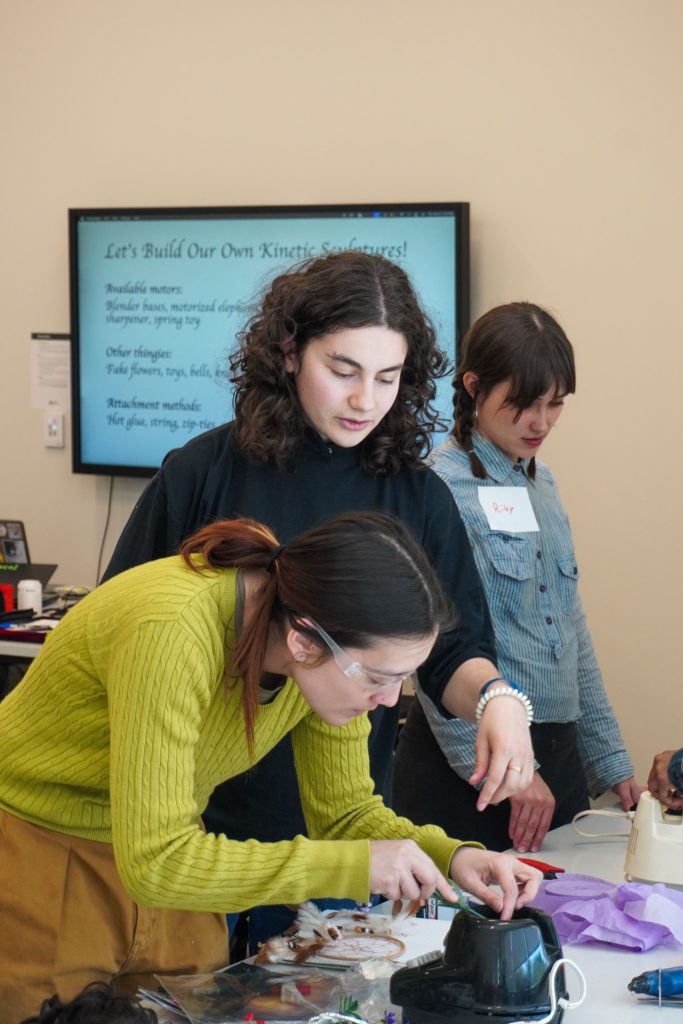
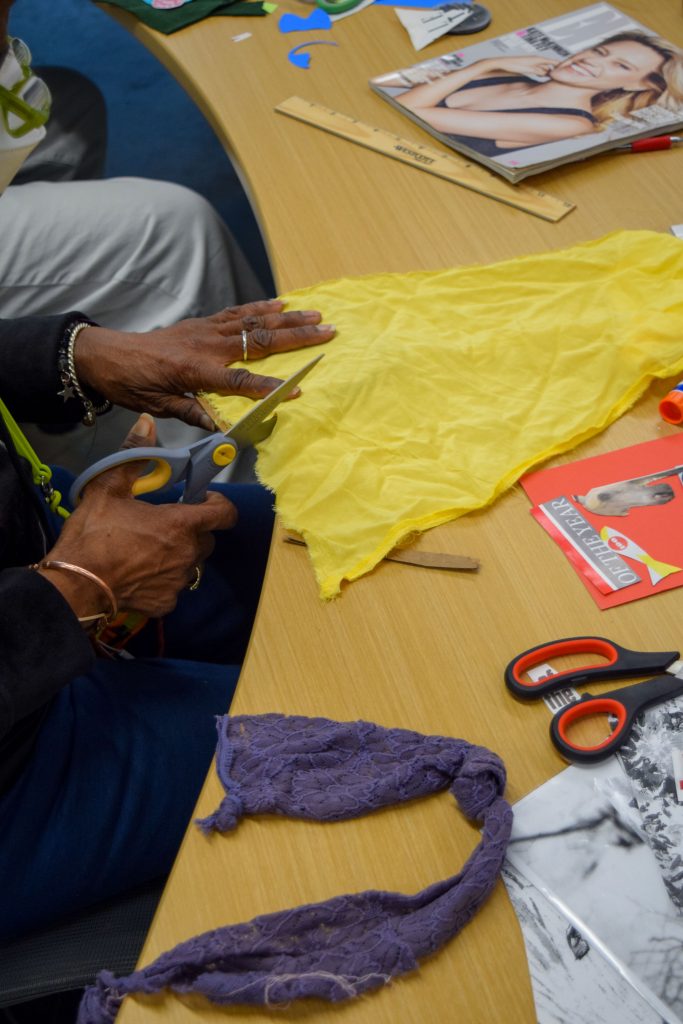
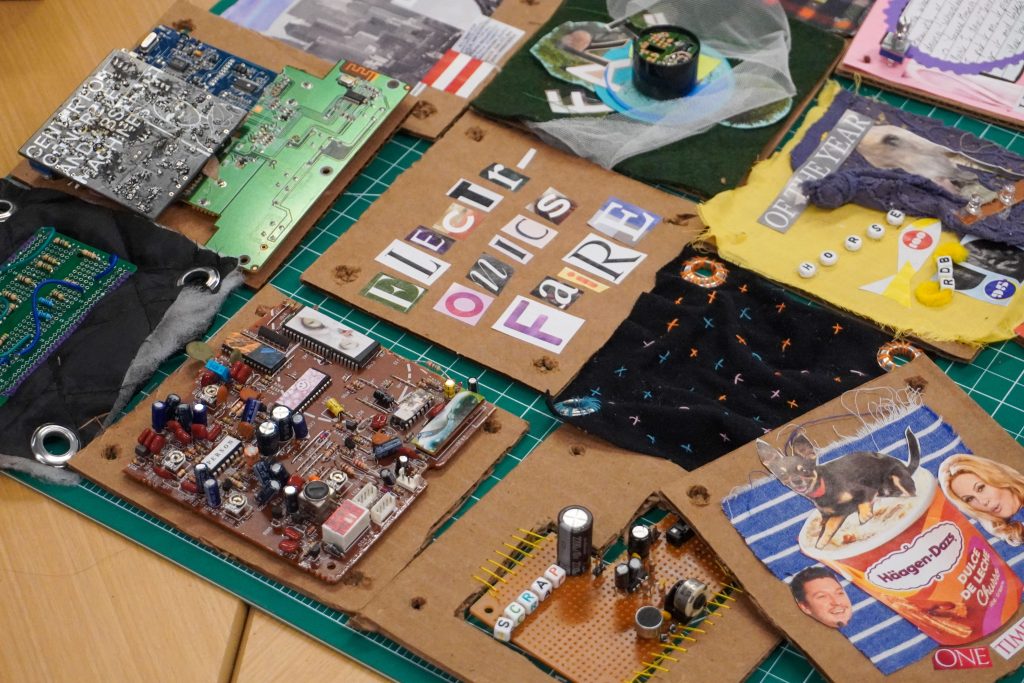
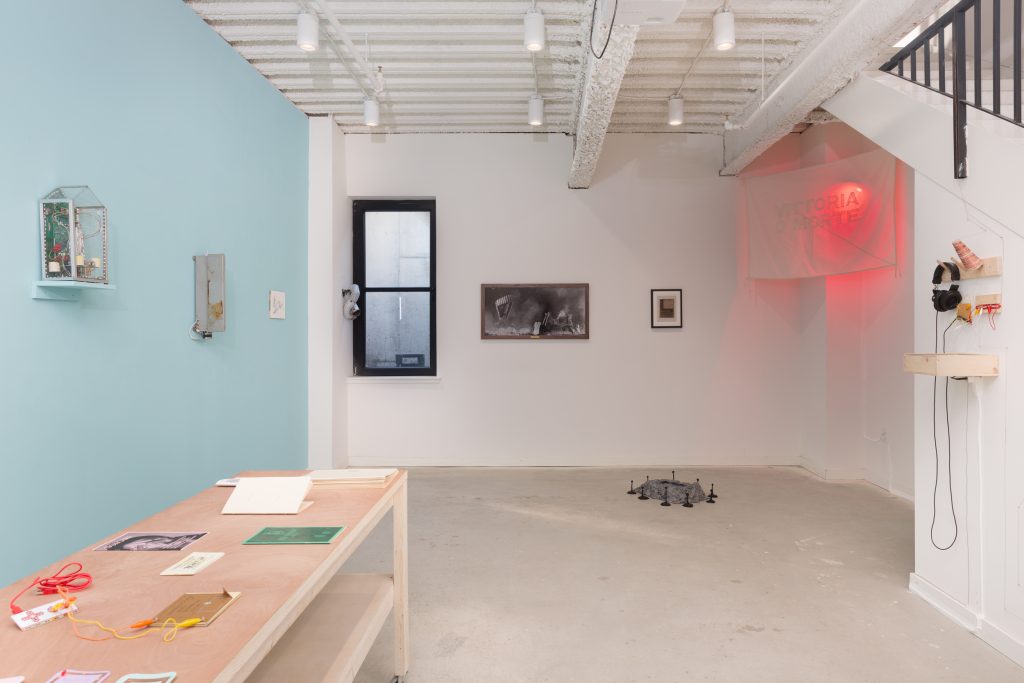
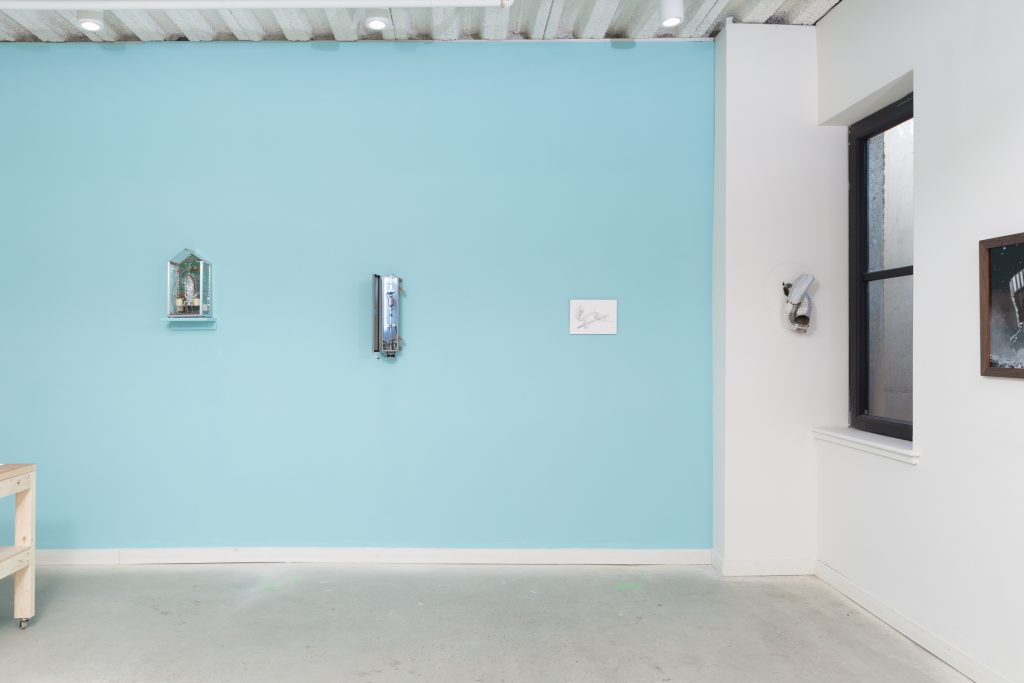
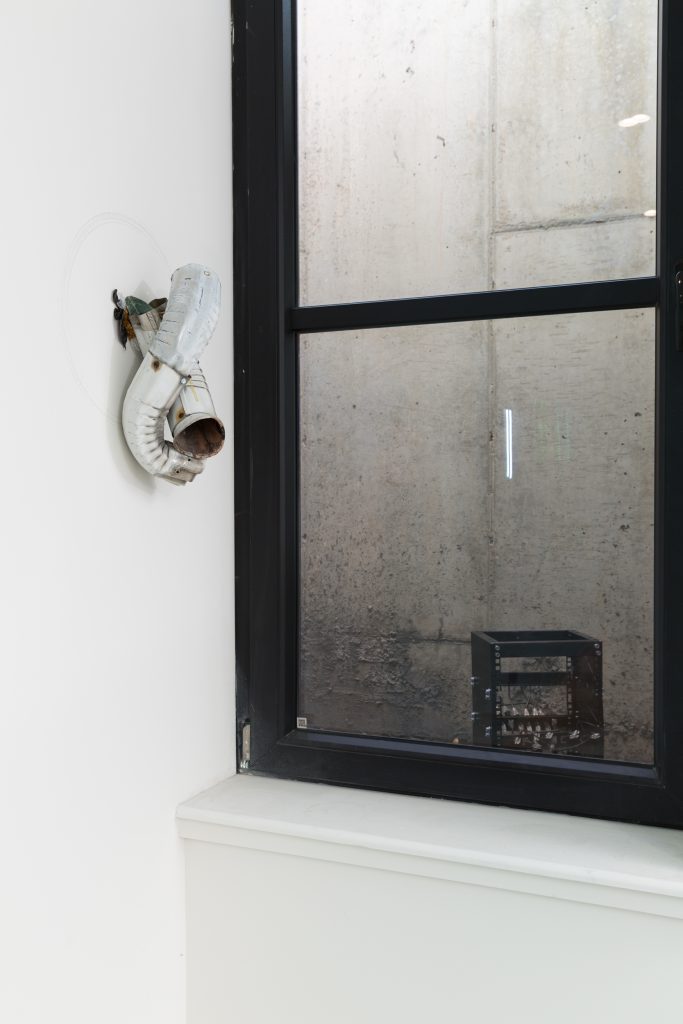
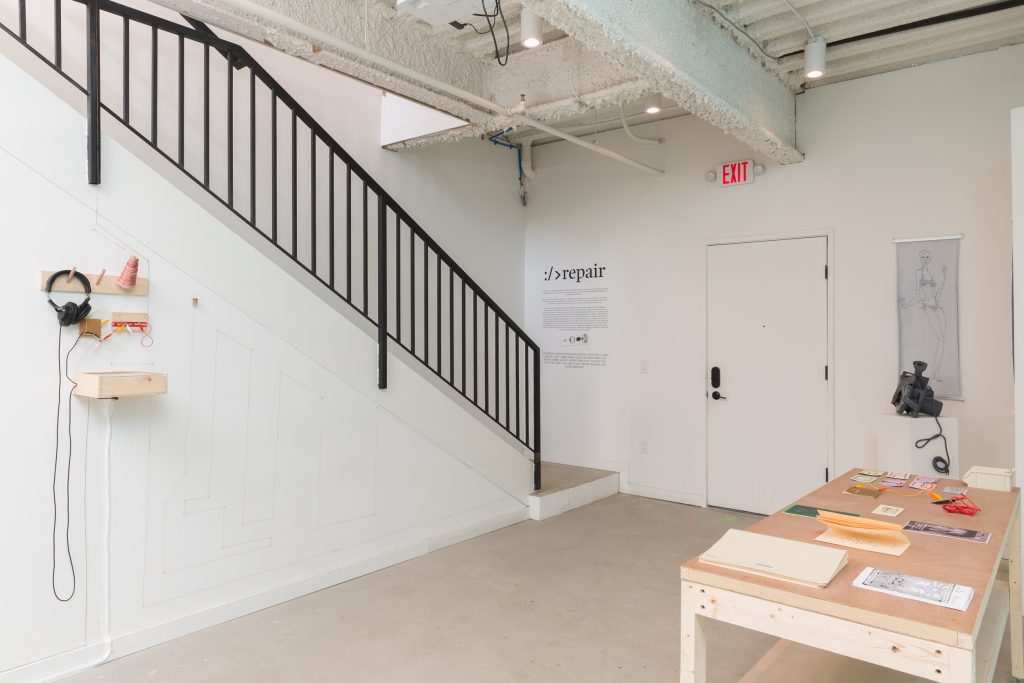
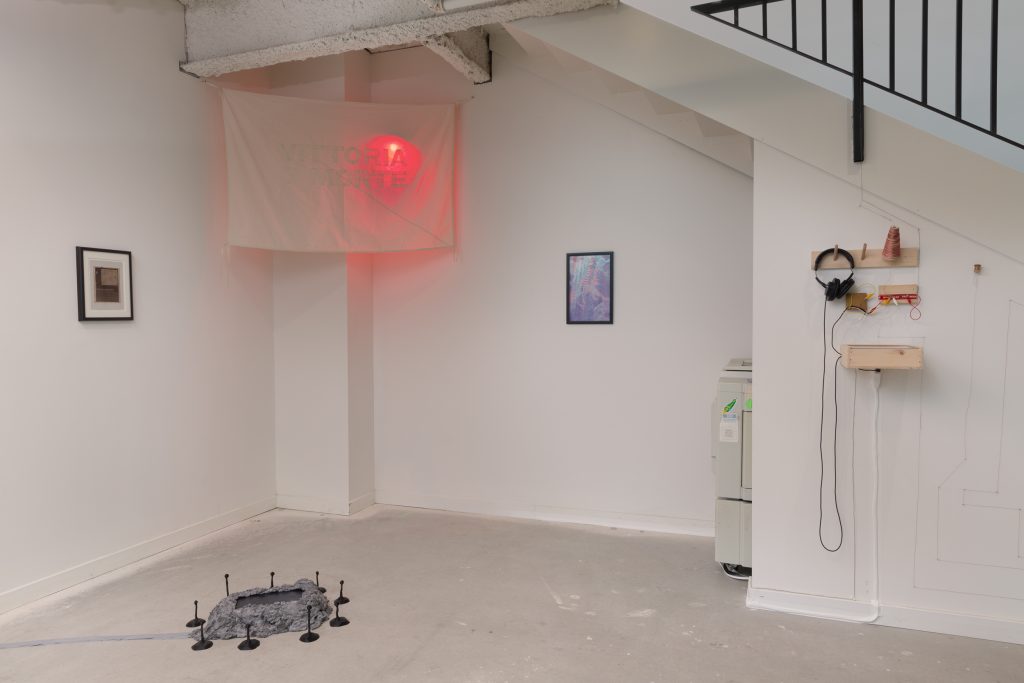
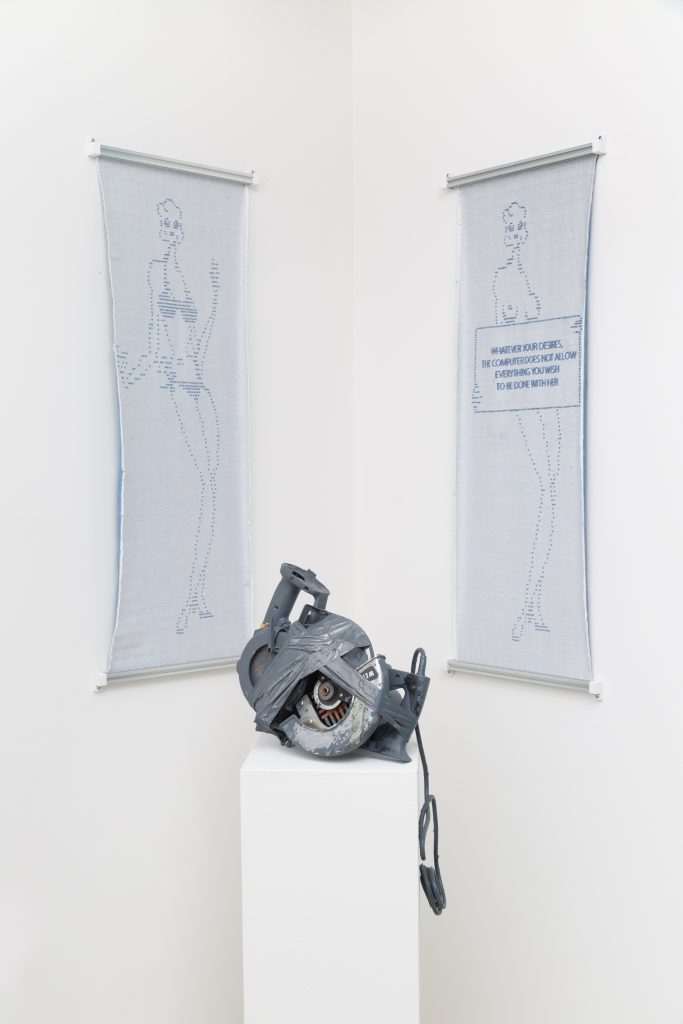
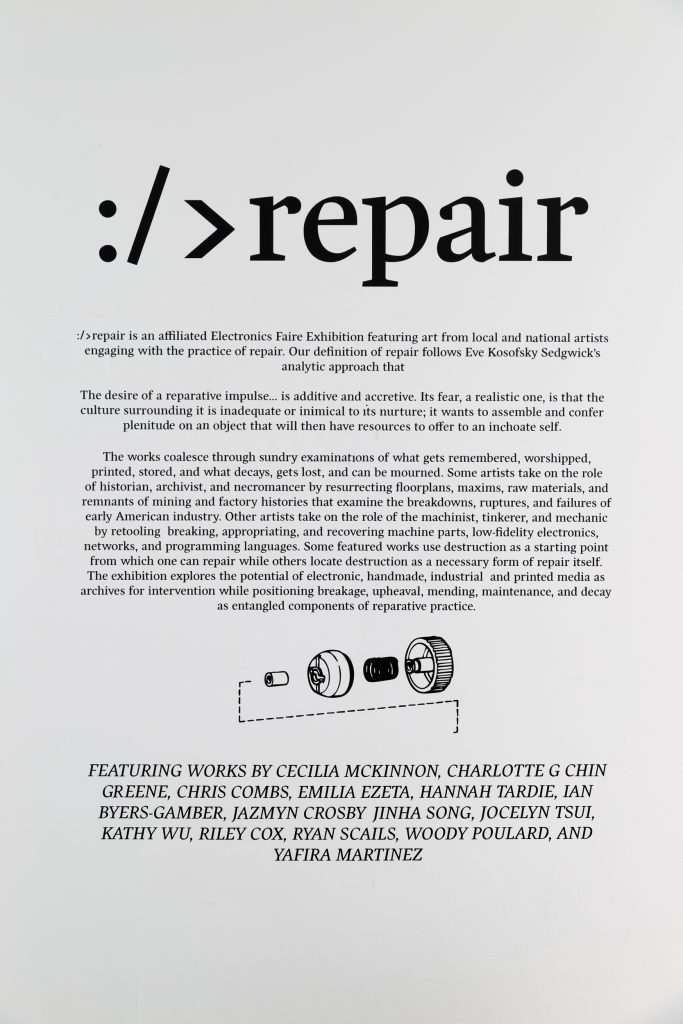
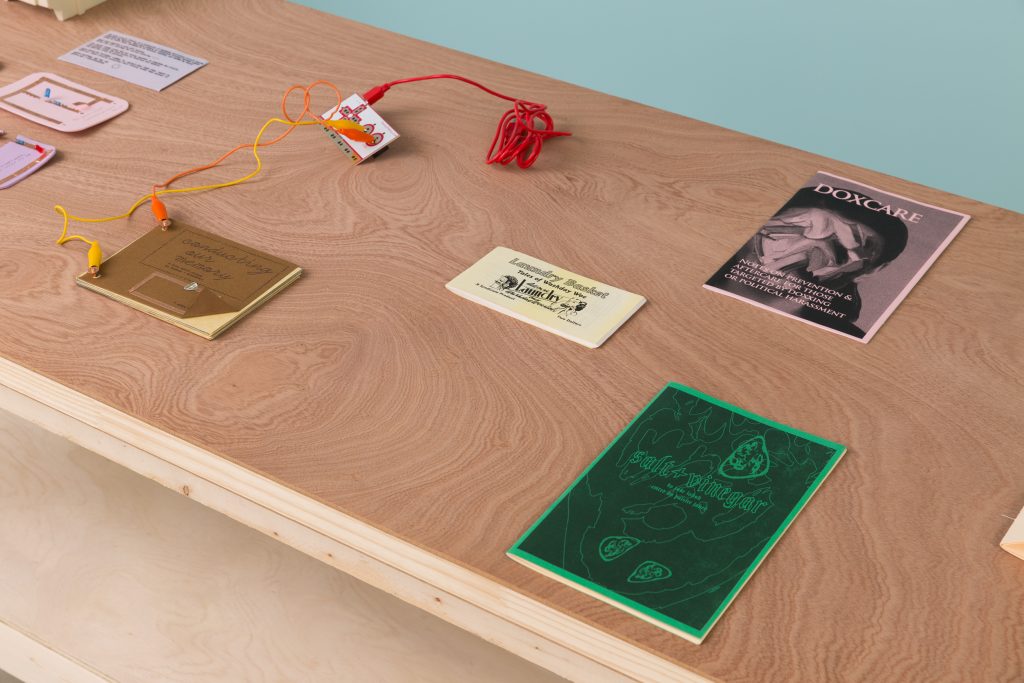
Repair Exhibition at Ulises Bookstore, Co-curated by Hannah Tardie and Ollie Goss.
:/>repair, an affiliated Electronics Faire Exhibition, features art from local and national artists engaging with the practice of repair. The exhibition theme follows the Electronics Faire founding principle that while the history of electronics is entangled with violence, manifold traditions of marginalized communities using electronics as a form of social relating, intimacy, and resistance continue to flourish. Following mending movements and care cultures, we called for works that engage with repair as a maintenance protocol, cultural practice, and queer and abolitionist methodology. Our definition of repair follows Eve Kosofsky Sedgwick’s analytic approach:
The desire of a reparative impulse… is additive and accretive. Its fear, a realistic one, is that the culture surrounding it is inadequate or inimical to its nurture; it wants to assemble and confer plenitude on an object that will then have resources to offer to an inchoate self.
Participating Artists: Cecilia McKinnon, Charlotte G Chin, Chris Combs, Emilia Ezeta, Hannah Tardie, Ian Byers-Gamber, Jazmyn Crosby, Jocelyn Tsui, kathy wu , Riley Cox, Ryan Scails, Woody Poulard, and Yafira Martinez
2026 Electronics Faire Organizers:
Hannah Tardie, Electronics Faire Chair, Makerspace Manager at the Loretta C Duckworth Scholars Studio at Temple University Libraries. Hannah Tardie is an artist, educator, and researcher whose work exists as sculpture, installation, essays, and performance. Tardie views electronics as rich transferential objects through which we can explore intimacy, attachment, and queer relationality. Their work has been shown at La Gaite Lyrique, SPACE Gallery, Westbeth Gallery, One Brooklyn Bridge Park, Arts, Letters, & Numbers, Vox Populi, Pig Iron Theatre Company, and online via websites like Artsy.net, maps-dna-and-spam, and p5.js. Tardie has given artist talks, guest crits, and academic presentations at the University of Pennsylvania, New York University, Arizona State University, Temple University, and Toronto Metropolitan University. Tardie was on the organizing committee of the 2021 experimental iteration of the Movement and Computing Conference, lovingly termed Slo Mo Co. They solely organized Temple University’s first Electronics Faire in 2024.
Ollie Goss, Co-Curator of the Repair Exhibition, Adjunct Faculty in Sculpture at the Tyler School of Art and Architecture. Ollie Goss is an artist, puppeteer, and performance-maker whose work blends sculptural installations, animated objects, re-tooled electronics and live performance. In 2016, they received the Thomas J. Watson Fellowship which took them to seven countries to research puppetry. Their work has been shown in places like Icebox Project Space, Temple Contemporary, the Wassaic Project, Philadelphia Fringe Festival, Dixon Place and La Mama. They regularly organize performance events around Philadelphia with the goal of people experiencing something different, together.
Sandy James, Co-Curator of the Low-db Performance Series, Senior Systems Administrator and Adjunct Faculty in Music Technology at the Boyer College of Music and Dance. Sandra James oversees computers and technology for labs, smart classrooms, faculty and staff at Boyer College of Music and Dance, and teaches Analog and Modular Sound Synthesis which is part of the required Music Technology curriculum. Sandra enjoys building stand-alone sound circuits and Eurorack modules. A regular performer at Modular On The Spot, she studied Electronic Music with Maurice Wright at Temple University and attended Ircam’s Summer Academy. She studied Latin Percussion at AMLA in Philadelphia, as well as in Cuba and Panama. Sandra earned a Master in Sonic Arts from University of Rome, Tor Vergatta, a B.S. in Computer Science from Temple University, and a Certificate in Painting with a minor in Printmaking from the Pennsylvania Academy of the Fine Arts.
Michelle Temple, Co-Curator of the Low-db Performance Series, Associate Professor of Music Technology at the Boyer College of Music and Dance. Michelle Temple received her PhD at Rensselaer Polytechnic Institute in December 2022, and holds a master’s degree from NYU’s Interactive Telecommunication Program wherein she taught an electronic fabrication course and helped facilitate a circuit production lab. She specializes in producing art and DIY hardware that explores political concepts of agency which question the measurement standards of sound that reinforce binaries in the sonic world. Her audio and visual work strives to bring forward sonically under-represented populations and overlooked forms of communication. Temple is an advocate for the Deaf community and inclusivity in the disciplines of Sound Studies, Experimental Music and Art. Her most recent work, Sonic Spells, takes a deeper look at the materials in electronics which have been wielded to fulfill the inventions of those who dominate our sonic experiences and hopes to inspire a reclaiming of these raw materials by other artists/musicians in order to widen the spectrum of representation in the sonic arts
With support from Temple University Libraries and Ulises.
Endless gratitude to all of the library and greater temple staff who help make this event possible, especially Nick Gallego, Joi Waller, Ella Lathan, Saragrace Stefan, John Pyle, Marianne Moll, Erin Rose Boyle, and all of the Makerspace Student Workers. <3
2026 THEME:
Repair
The 2026 Electronics Faire theme follows the Electronics Faire founding principle that while the history of electronics is entangled with violence, manifold traditions of marginalized communities using electronics as a form of social relating, intimacy, and resistance continue to flourish. Following mending movements and care cultures, we invite scholars, artists, practitioners, and organizations to propose works that engage with repair as a maintenance protocol, cultural practice, and queer and abolitionist methodology. Our definition of repair follows Eve Kosofsky Sedgwick’s analytic approach that
The desire of a reparative impulse, on the other hand, is additive and accretive. Its fear, a realistic one, is that the culture surrounding it is inadequate or inimical to its nurture; it wants to assemble and confer plenitude on an object that will then have resources to offer to an inchoate self.
We invite submissions that focus on the technical aspects of repairing electronic media and objects and/or radically imagine the myriad ways that electronic media can contribute to community, collective, and interpersonal repair. We welcome myriad interpretations and meditations on this theme. Proposals may engage with the following questions, or ask their own:
- What does a reparative impulse applied to electronic objects look like?
- How can we design, invent, mend, and imagine electronic objects within a reparative politic?
- In what ways can we use, misuse, and reuse electronic objects to keep ourselves and our communities safe?
- In what ways do electronics facilitate community care?
Keynote Speaker: Edward Jones-Imhotep
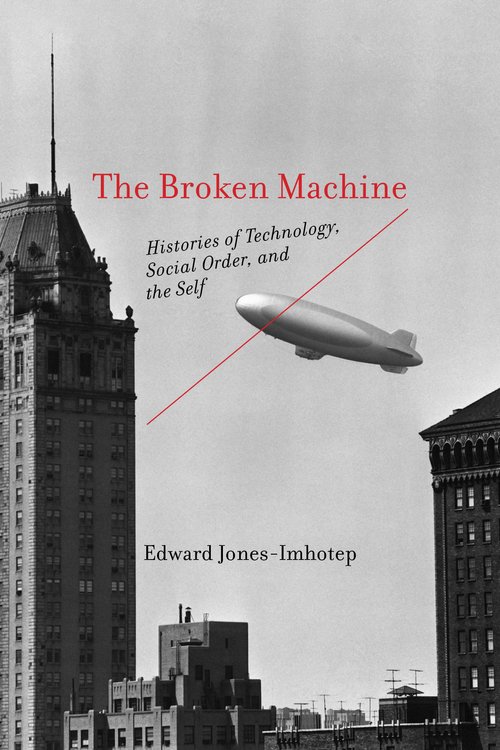
Edward Jones-Imhotep is a historian of the social and cultural life of machines. He received his PhD in History of Science from Harvard University and is Director of the University of Toronto’s Institute for the History and Philosophy of Science and Technology (IHPST). Together with Wiebe Bijker and Rebecca Slayton, he co-edits MIT Press’s Inside Technology series. Jones-Imhotep’s research deals with topics ranging from the history of music studios and artificial life to space technologies and the technological geographies of islands. His work is particularly interested in underrepresented histories of technology: histories of the technological underground; and histories of technological failure — breakdowns, malfunctions, accidents — and what they reveal about the place of machines and the stakes of machine failures in the culture, politics, and economics of modern societies. His first book, The Unreliable Nation: Hostile Nature and Technological Failure in the Cold War (MIT Press), won the Sidney Edelstein Prize for best book in history of technology. His new book, The Broken Machine, the intertwined histories of breaking machines, social order, and the self in the modern Atlantic World. Material from his new research project — The Black Androids — is currently being adapted into a graphic novel.
Repair Bibliography and Inspiration:
A View of a Landscape, Kevin Beasley
Alt-Text as Poetry Finnegan and Bojana
Āmantēcayōtl: And When it Disappears, it is Said, the Moon has Died, Fernando Palma Rodríguez
Astra Urbanocena, Kristof Kintera
Audible Silence, Ivana Dama
Code Switch: Distributing Blackness, Reprogramming Internet Art Organized by Legacy Russell
Dermasonic Grief by Chrissy Brimmage
Endogene Depression, David Vostell
Glue-making and re-connecting by Dri Chiu Tattersfield, Jeffrey Yoo Warren
Guerrilla Frequencies, Jordan Deal
Lubricate Coil Engine Tabita Rezaire
Homies Helping Homies, Philadelphia
If You Can Read This, Thank the Phoenicians, Clare Koury
I fix It Hardware Repair Resource
Love, guilt and reparation, and other works, 1921-1945 by Melanie Klein
Maintenance and Care by Shannon Mattern
My Machines, Carl Craig
Raving by McKenzie Wark
Reimagining and Revealing Our Relationship with Machines through Mystical Practice by Aarati Akkapeddi, Erica Kermani
Relational Dance Dance by Jackie Liu
Prototipo 1.0_A (Tecnologías de visión forestal), miguel cinta robles
Screaming Minerals, Ioana Vreme Moser
Sleep Close and Fast, Susan Philipsz
Sonic Liberation Devices, by DJ LITA and collaborators
Sound Suits, Nick Cave
Sorry for Suffering, Lee Bul
Street Artists’ Realtime Bus Tracker, Make It Weird and collaborator Bird
Temple OS by Terry Davis
The Future is Present, The Harbinger is Home, Prospect, by Zalika Azim,rafa Esparza, Dewey Tofoya, and curated by Miranda Lash and Ebony G
Transfer, William Anastasi
Two Person Operating System Type 2 Martha Friedman and Susan Marshall
Untitled (Casual Power), Julianna Huxtable
360 Virtual Exhibit of the Charles L. Blockson Collection by Jasmine Clark and collaborators