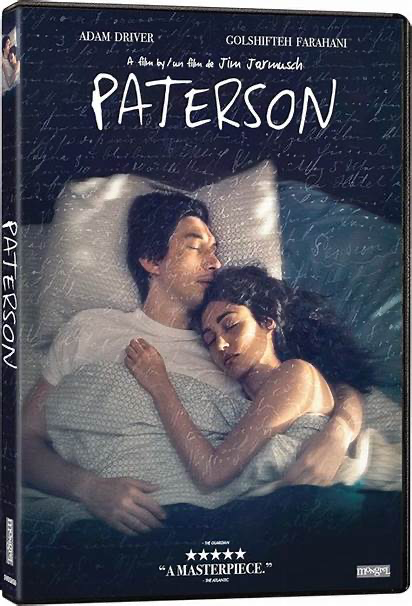
Jim Jarmusch’s Paterson is like a cup of water at just the right temperature—unassuming yet nourishing. Devoid of dramatic conflict, it quietly follows the week-long life of a bus driver-poet of the same name. Yet it is precisely this seemingly monotonous repetition that reveals another possibility for urban sensory storytelling.
Sound as Narrative Protagonist
The steady hum of the bus engine forms a stable low-frequency backdrop, like the city’s fundamental breath. Most striking are the laundromat scenes—the rhythmic churn of washing machine drums, the rush of water, and fragments of conversations intertwine, allowing me to almost feel the space’s humidity, temperature, and the subtle distance between people. This made me ponder: What is the sonic foundation of Philadelphia? Is it the roar of the subway pulling into the station, the early morning sounds of goods being moved in the Italian Market, or the music played by someone on a street corner?
Poetry in Ordinary Objects
The matchboxes, stair railings, and mailboxes that recur throughout the film are imbued with a certain sacredness through close-up shots. The way Paterson touches these objects makes me feel that a city’s memory resides not only in its landmarks but also in the surfaces touched daily by countless people. Even the smallest tactile details can convey a city’s history.
Structured around seven days, the film follows similar routes and rituals each day, yet subtle shifts unfold. This framework evokes the essence of urban sensory experience—we traverse the same streets daily, yet each passage feels distinct due to variations in weather, light, season, and mood. Perhaps I too could attempt visiting the same location at the same time for seven consecutive days, documenting the nuanced shifts in light, sound, and scent. (A sudden thought)
I increasingly believe my project needn’t pursue grand narratives. I simply need to express everything I feel…
Reference
Jarmusch, J. (2016). Paterson. Bleecker Street Media.