Published September 12, 2025 by Weinala Hailati
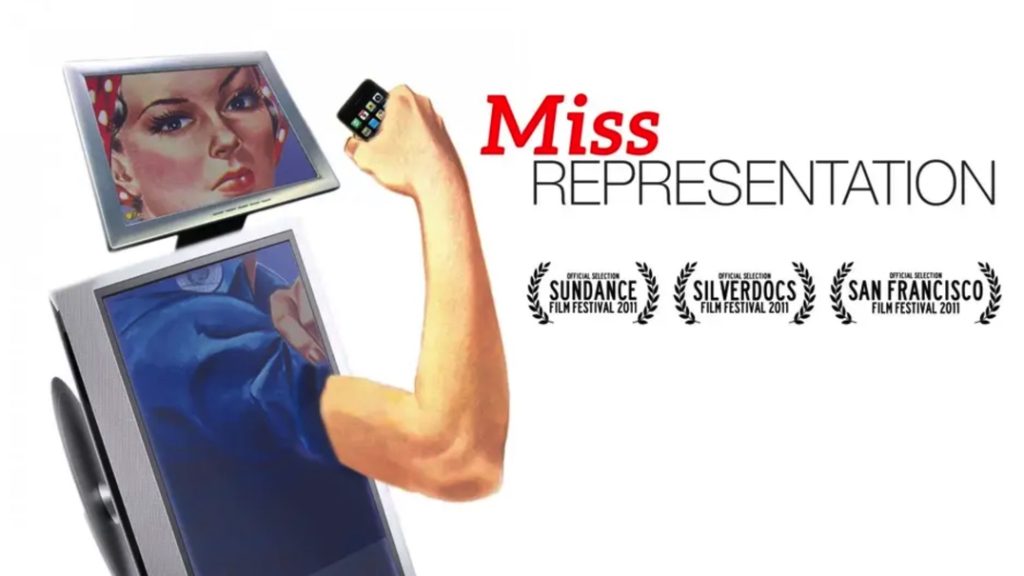
One media product that closely inspires my project is the documentary Miss Representation (Newsom, 2011). Although the film broadly examines how media shapes women’s self-perceptions and societal opportunities, what I found most compelling was its ability to balance individual stories with expert analysis. The film combines interviews with young women, activists, and academics, weaving these voices into a larger critique of how media constructs and perpetuates gendered norms. This combination of personal narrative and structural analysis mirrors what I hope to achieve in my own MA project, which will focus on how social media platforms such as TikTok and Instagram amplify body image anxiety and eating concerns among female college students. To make a similar project, I will need strong interviewing skills, careful planning of visual storytelling, and the ability to create a tone that balances empathy with critical insight.
In order to accomplish my project, I will also need to develop both technical and research-related background knowledge. From previous coursework, I already have significant experience making short documentaries, and I especially enjoy conducting interviews. I feel confident in my ability to guide conversations, ask meaningful questions, and create a comfortable space where people can share their personal stories. However, my production skills are not as strong. I am not very familiar with how to capture high-quality images, and I often struggle with recording clear audio—my sound tends to come out uneven or distracting. These are areas I know I need to improve through practice this semester. On the research side, Perloff (2014) points out that while there is extensive literature on mass media and body image, “there has been relatively little theoretically-driven research on processes and effects of social media on young women’s body image and self-perceptions” (p. 364). This gap highlights why my project is timely and necessary. Perloff further argues that the interactive and visual nature of social media—“working via negative social comparisons, transportation, and peer normative processes”—can significantly influence body dissatisfaction and disordered eating (p. 365). These insights provide a theoretical framework that will strengthen the foundation of my project. By combining my strength in interviewing with improved technical skills and these scholarly perspectives, I will be better prepared to produce a documentary that is both impactful and responsible.
References
Fardouly, J., Diedrichs, P. C., Vartanian, L. R., & Halliwell, E. (2015). Social comparisons on social media: The impact of Facebook on young women’s body image concerns and mood. Body Image, 13, 38–45. https://doi.org/10.1016/j.bodyim.2014.12.002
Perloff, R. M. (2014). Social media effects on young women’s body image concerns: Theoretical perspectives and an agenda for research. Sex Roles, 71(11–12), 363–377. https://doi.org/10.1007/s11199-014-0384-6
Newsom, J. S. (Director). (2011). Miss Representation [Film]. Girls’ Club Entertainment.

