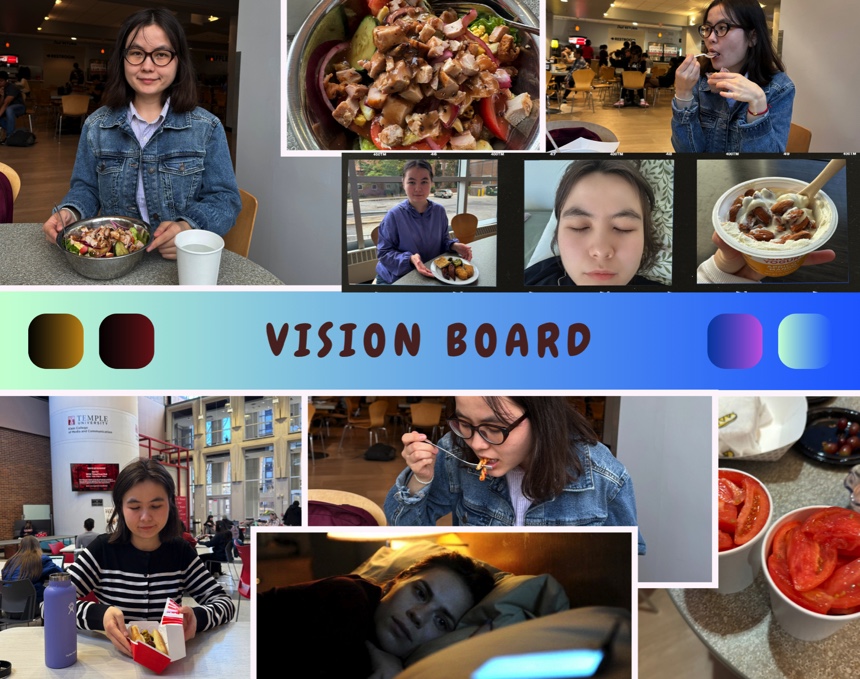
This week I read the article “Fitspiration and Young Women: The Influence of Idealized Fitness Images on Body Satisfaction and Exercise Motivation” by Robinson, Prichard, and Tiggemann (2017). The authors examine the impact of “fitspiration” content—images of toned bodies, strict diets, and intense workout routines commonly seen on Instagram and other visual platforms—on young women’s psychological well-being. Their experimental study found that brief exposure to fitspiration posts significantly decreased body satisfaction and increased negative mood, while also elevating feelings of guilt around food and appearance. The article argues that although fitspiration is often framed as “healthy motivation,” it still promotes narrow body ideals and reinforces appearance-based self-worth. This work highlights the complex duality of fitness culture online—simultaneously encouraging health while intensifying body monitoring and comparison.
This article contributes strongly to my MA project because much of the harmful content female college students encounter online comes from fitness-related trends disguised as “inspiration.” Platforms such as TikTok, Instagram, and Xiaohongshu are full of “What I eat in a day,” “clean eating,” and workout comparison videos that mirror the exact patterns described in this study. Robinson et al.’s findings help me frame these seemingly harmless trends as part of a larger ecosystem of appearance pressure and social comparison. Their distinction between health and aesthetic discipline is especially relevant to my documentary, as many of the participants (including myself) struggle with this blurred boundary. This research will support my theoretical grounding and help connect lived experiences with established psychological patterns.
This week was extremely productive for me. I completed my Introduction, Literature Review, and my documentary’s proof of concept, which felt like a major milestone. It was a truly rewarding process, and I can’t believe this is the last blog post of the semester—I did it! As an INFJ (and someone who often struggles with self-doubt), I feel deeply grateful that I chose this class. With the guidance of Dr. Shaw and Professor Laura, I stayed on track and never felt alone in the process. Their support helped me gain clarity, confidence, and a much stronger sense of direction for my project.
Looking ahead to next semester, I hope to continue improving my documentary and refine both my storytelling and production skills. I’m excited, motivated, and ready to keep working hard. Thank you for such a meaningful semester—I truly grew so much.
Reference (APA)
Robinson, L., Prichard, I., & Tiggemann, M. (2017). Shape and weight concern in young women: The impact of fitspiration images on social media. Body Image, 23, 132–138. https://doi.org/10.1016/j.bodyim.2017.08.003
