Sukiyabashi intersection

Little differences, part 2

I am going to have to be a lot more disciplined to make sure that I adequately document my time abroad, but as I need to get to bed after a good (but long) day of classes and other tasks, here are more little differences I’ve noticed, continued from last time

  • Keep to the left… most of the time. Actually, it’s better to look for directional arrows that will show you which side of the path or stairs to stay on. It’ll also keep you from accidentally colliding with someone coming from the opposite direction.

Isometric stacks of paperwork and files in the office

Bureaucracy distilled: Meet your local ward office

One of the many little things that you will be expected to do as a long-term resident (that is, someone on a visa that is valid for more than 90 days) is to register your residency. You may recall from an earlier post that I mentioned that upon arrival, you’re given a resident card (zairyū 在留) that is reminiscent of a driver’s license–this, along with your passport, must be taken to your local ward office (kuyakusho 区役所) to complete the registration process.

If you are accustomed to American bureaucracy, particularly the variety that thrives in places like the DMV or the Post Office, prepare yourself, because you’re going to experience something totally unexpected.

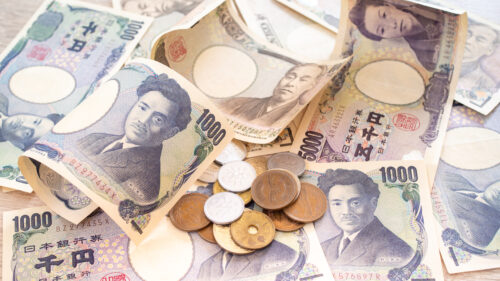
Japanese yen banknotes and coins

Money matters

Those who have traveled internationally are likely aware that in most countries around the world you can use your bank cards (typically branded with Visa, MasterCard, or American Express) with relative ease, and that’s also true in Tokyo–at least, kind of. There are a few things that you should be aware of that will seem unusual, especially to Americans, but there are some easy ways to prepare yourself. Here’s what I discovered.

Detail from local recycling guide

Little differences, part 1

I thought it might be interesting to compile a running list of the little differences I notice as an outsider visiting a brand new cultural landscape. Note that none of these observations are meant as criticisms or critiques, as I don’t believe that there is necessarily a “right” or “wrong” way to simply be. Rather, my intention is to try and cultivate more mindful awareness of my environment, regardless of where I am, and challenging my own pervasive, preexisting notions of “how things are supposed to be done” seems to be a good way to do that.

Plus, it’s just fun!

Image of Daiso flagship store

Stretching your dollars at Daiso

In the United States, so-called “dollar stores” are often derided for any of a number of reasons–they’re frequently poorly stocked and organized, usually in various states of disarray, often carry merchandise of subpar quality or of dubious origin, and, probably worst of all, are frequently criticized as predatory (or even perhaps dangerous) to rural or impoverished communities.1Conservatives like to call these criticisms “elitist,” arguing that dollar stores provide much-needed retail to people who need it, despite growing evidence that these monolithic companies’ buying power simply cannot be competed with at a micro/local level.

Footnotes

  • 1
    Conservatives like to call these criticisms “elitist,” arguing that dollar stores provide much-needed retail to people who need it, despite growing evidence that these monolithic companies’ buying power simply cannot be competed with at a micro/local level.
Image of Tokyo International Airport

Notes on arrival

Even if you’re a seasoned traveler like me, arriving at Haneda International Airport (especially after a very long and very exhausting flight) can be a little overwhelming. Fortunately, if you remember that (1) most airports must be navigated “sequentially,” and that (2) Japan is, generally speaking, a very orderly country, you can prepare for disembarkation and departure from the airport with relatively little difficulty. Here’s how my experience went, along with some suggestions.

American and Japanese flags together

Get ready, get set…

As I write this post, I’m just a few days away from embarking on what is sure to be an adventure for me–while I have some idea of what to expect and I’m excited about it, I’m also nervous, overwhelmed, and more than a little bit anxious. Why? Because on January 5, I’ll leave for Tokyo, which will become my home-away-from-home for the first half of 2024, thanks to a new initiative from the Office of the Provost, which seeks to improve the collegiality and connections between main campus in Philadelphia and TU Japan by sending American faculty to teach in Tokyo for a semester or two.