
Location:
Temple University
Philadelphia PA, 19122
Date:
April 16-17, 2026
Abstract decisions announced, please register if you plan to attend
Highlights
- Networking Events
- Awards
- Career Fair
- Scientific Sessions
- Senior Design Poster Competition
- High School Poster
Organizing Committees
Technical Committee
Anita Singh
Bojana Gligorijevic
Peter Lelkes
Andrew Spence
Ruth Ochia
Evangelia Bellas
Erkan Tuzel
Yah-el Har-el
Iyad Obeid
Organizing Committee
Anita Singh
Jonathan Gerstenhaber
Yah-el Har-el
James Furmato
Ruth Ochia
Helen Freitas
Scientific Sessions
Cancer Engineering
- Cancer cell adhesion, migration and invasion
- Cancer-host cell interactions
- Mechanobiology and cancer-ECM interactions
- Translational engineering: patient-derived organoids, iPSCs
- Cancer on a chip
- New biomaterials for studying cancer
- 3D cultures mimicking cancer
Biomaterials and Tissue Engineering
- Biomaterials
- Tissue Engineering
- In Vitro Disease Models
- Microphysiological Systems (MPS), Tissue/Organ on a chip, Functional Organoids (non-cancer models)
- Drug Delivery
- Endocrine Tissue Engineering
- Cell & tissue mechanics/mechanobiology (non-cancer)
- Engineering biomaterials and tissues for space biology
Imaging Across Scales
- Single molecule microscopies
- Super-resolution microscopy
- Novel tools for molecule and cellular imaging (DNA origami, new probes etc)
- Tissue and whole animal imaging
- Multimodal imaging
- Biomedical Imaging and Instrumentation
Biomechanics & Physiological Systems
- Biomechanics
- Kinematics and Kinetics of Human Motion
- Musculoskeletal Modeling and Simulation
- Injury Biomechanics and Prevention
- Rehabilitation and Assistive Device Design
- Tissue and Joint Mechanics
- Cardiovascular Engineering
- Hemodynamics and Blood Flow Modeling
- Cardiovascular Devices (stents, valves, grafts)
- Vascular Biology and Mechanics
- Computational and Imaging-Based Cardiovascular Analysis
- Cardiopulmonary Interaction
- Neural Engineering
- Injury, Repair, and Regeneration
- Neuroprosthetics
- Neural Signal Processing and Stimulation
- Spinal Cord and Peripheral Nerve Repair
- Neurorehabilitation Technologies
Emerging Technologies
- AI/ML in Healthcare and BME
- Predictive analytics and clinical decision support
- Wearable technologies and remote monitoring
- Personalized medicine
- Applications in medical imaging
- Brain Machine Interface
- Neural Simulations and Coding
- Organoid intelligence
Education & Workforce Development
- Biomedical Engineering Education
- Faculty development
- Pedagogy
- Assessment and evaluation
- Senior Capstone/Design
- Design thinking
- Capstone projects
Keynote Speaker
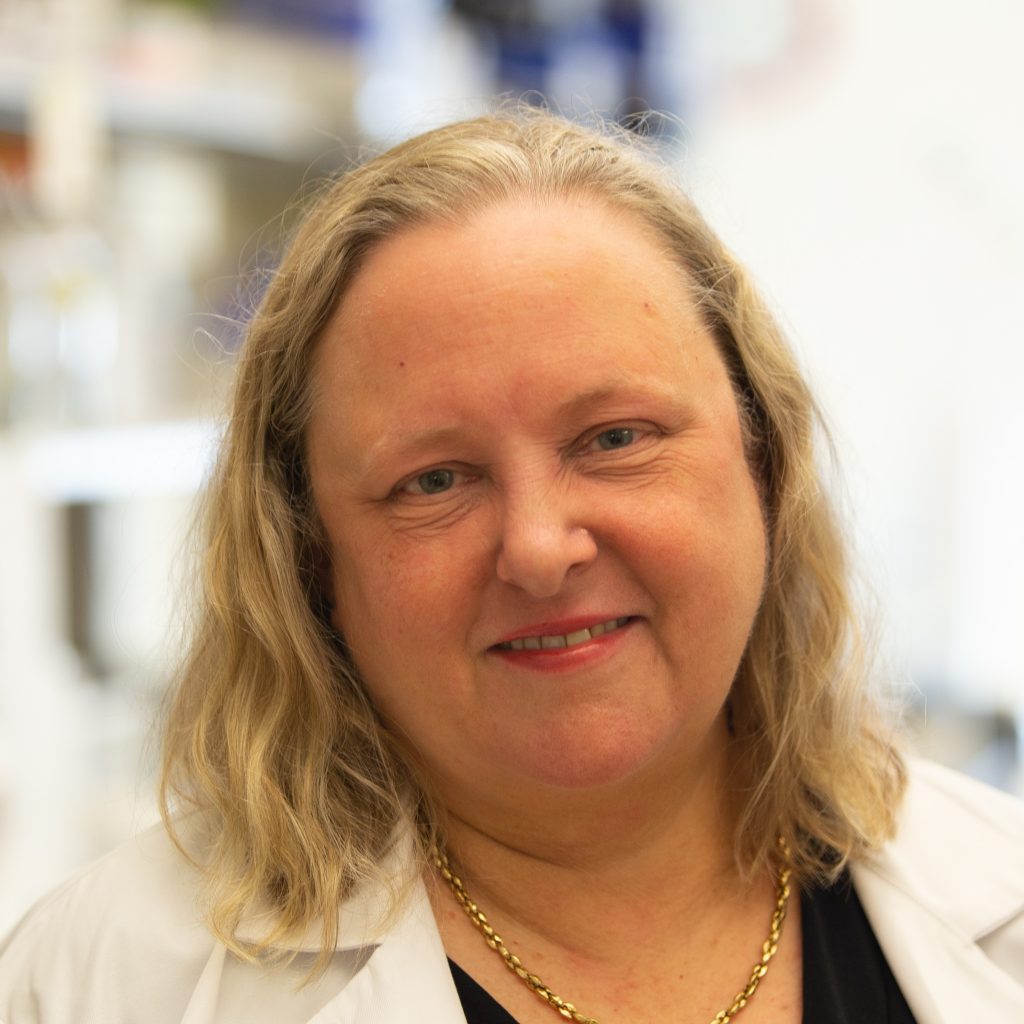
K. Jane Grande-Allen, Ph.D.
Isabel Cameron Professor of Bioengineering
Senior Associate Dean, Rice University
About our speaker
Jane Grande-Allen is the Isabel Cameron Professor of Bioengineering at Rice University. She also serves as Senior Associate Dean in the School of Engineering and Computing. Her research group investigates the structure-function-environment relationship of soft connective tissues through bioengineering analyses of the extracellular matrix and cell mechanobiology, with a focus on cardiovascular and intestinal diseases, as described in >190 peer-reviewed publications. Dr. Grande-Allen received a BA in Mathematics and Biology from Transylvania University in 1991 and a PhD in Bioengineering from the University of Washington in 1998. After postdoctoral research in Biomedical Engineering at the Cleveland Clinic, she joined Rice University in 2003 and was promoted to full professor in 2013. She served a term as Bioengineering department chair from 2017-2020. Dr. Grande-Allen is a Fellow of AIMBE, IAMBE, BMES, AAAS, AHA, and the Society for Experimental Mechanics. She served on the BMES Board of Directors and Executive Board from 2009-2022, was BMES Secretary from 2020-2022, and is currently the BMES President-Elect. She has served on multiple external advisory boards for academic biomedical engineering programs. Dr. Grande-Allen is also a longtime member of the Research Committee for the American Heart Association.
Keynote:
Biophysically Faithful Biomaterial Platforms for Cardiovascular and Intestinal Mechanobiology
Biophysically Faithful Biomaterial Platforms for Cardiovascular and Intestinal Mechanobiology
The material behavior of many biological tissues is due to their unique microstructural arrangements of fibrous extracellular matrix (ECM) proteins, i.e., collagen and elastin, within the more amorphous matrix. The orientation of these fibers, and their segregation into discrete regions within the tissues, often gives rise to anisotropy and unique biological stress-strain behavior that enables the essential function of the tissues. Layered or segregated structuring allow hierarchical tissue organization in a manner designed to withstand external forces efficiently while protecting more delicate tissues and cells from damage. These structure-function relationships within biological tissues have been studied for decades but have not been widely translated into the creation of biomimetic scaffolds for use in tissue engineering and in vitro analyses of cell and tissue biology. The Grande-Allen research group has focused on integrating these structural and material characteristics into hydrogel and fibrous biomaterials using a range of fabrication techniques including molding, photolithography, electrospinning, and 3D printing. The majority of our investigations have addressed heart valve disease, which is widely prevalent in our society, with valve replacement or repair in almost 100,000 people in the United States and 275,000 people worldwide each year. More recently, we have translated our fabrication strategies to generate biomaterial platforms for investigating intestinal epithelial cell biology and enteric diseases.
Keynote Speaker

Treena Livingston Arinzeh, Ph.D.
Professor of Biomedical Engineering
Director of the Tissue Engineering and Active bioMaterials (TEAM) Laboratory
Columbia University
About our speaker
Treena Livingston Arinzeh, PhD is a professor of biomedical engineering at Columbia University. She is also a co-leader of an Integrated Research Thrust (IRT) and co-director of the NSF Science and Technology Center for Engineering Mechanobiology (CEMB). Dr. Arinzeh received her B.S. from Rutgers University in Mechanical Engineering, her M.S.E. in Biomedical Engineering from Johns Hopkins University, and her Ph.D. in Bioengineering from the University of Pennsylvania. She was a project manager at the stem cell technology company, Osiris Therapeutics, Inc. and joined the faculty of the New Jersey Institute of Technology (NJIT) as one of the founding faculty members of the Department of Biomedical Engineering. She served as interim chairperson and graduate director, and was promoted to Distinguished Professor in 2020. She joined the faculty of Biomedical Engineering at Columbia University in 2022. Dr. Arinzeh has been recognized with numerous awards for her research, including the Presidential Early Career Award for Scientists and Engineers (PECASE). She is a fellow of the American Institute for Medical and Biological Engineering (AIMBE), the Biomedical Engineering Society (BMES) and the National Academy of Inventors (NAI). She has served as chairperson of the National Institutes of Health (NIH) Musculoskeletal Tissue Engineering (MTE) Study Section (2016-2018) and served as Secretary of the Biomedical Engineering Society (BMES) (2022-2024). She is currently a member of the NIH-National Institute of Biomedical Imaging and Bioengineering (NIBIB) Board of Scientific Counselors (2024-present). She has 16 issued patents and is a co-founder of a start-up medical device company, BioRegenics, Inc., that develops medical devices for bone repair.
Keynote: Functional Biomaterials for Tissue Regeneration
Advances in biomaterial design and its impact on biological function has shown promise in the field of regenerative medicine. This presentation will describe biomaterial properties and designs that impart cues to stem cells and other cell types to affect their behavior and tissue formation in vitro and in vivo. Our recent work utilizes protein-based biomaterials as a metabolic approach for bone tissue repair, where studies demonstrate an effect on stem cell migration and differentiation. In combination with a gene knockout model, we are learning about the role of glutamine, which becomes available upon biomaterial degradation, and its effect on bone repair. We have also developed novel glycosaminoglycan (GAG) mimetics, which are sulfated polysaccharides that vary in their degree of sulfation and can be combined to form polymer blends to create scaffolds. Studies demonstrate their sequestration of growth factors and their effect on cartilage repair. ECM proteins, such as collagen and elastin, exhibit electromechanical behavior. Our work using piezoelectric materials, which are materials that provide electrical activity in response to mechanical stimuli, have been explored in in vitro and in vivo models with recent work using degradable, piezoelectric materials having tunable properties. These biomaterials and their potential use in orthopedic and neural applications will be discussed