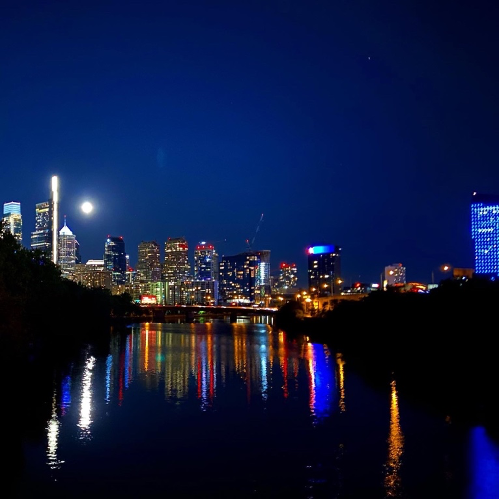
A Night in the City

I have always felt a connection to the city of Philadelphia. My father grew up there, and I would always visit as a child. I am also a huge fan of Philadelphia sports. I grew up roughly 40 minutes away from the city, in Delaware County, PA. I remember when I was younger, the city always felt way bigger than it was, almost like another world. I always knew I wanted to live in a city when I was older, as I was really intrigued by the lifestyle.

This is why Temple University was my first choice for college, because it was a good distance from home, and in my favorite city.  I’ve had numerous memorable experiences in the city throughout my life, however none can compare to the ones I’ve made since attending college these past few years. There is one specific night that took place during the winter of my sophomore year that really stood out amongst the others, and earned a special place in my heart. The night as a whole may look somewhat simplistic on the surface, however the significance is truly felt by those who experienced it.

Life in a Pandemic

For some context, this was during the winter of 2021, during the covid-19 pandemic. We were not going out very often because of this, but we decided we needed to go on some sort of adventure. This was my sophomore year of college, and it was all virtual, so we did not have any real need to leave the house often. My close knit group of twelve friends and I (that’s right, twelve) felt we needed to escape the confines of our cramped apartments and get some fresh air for once. Being that we were all neighbors in the same apartment building, we were used to traveling within only the space of our own.

Since it was snowing out, my friends and I decided it would be a good idea to go sledding down the steps of the museum. Not the smartest idea admittedly, but we had seen plenty of videos online of other people doing it so we assumed it was alright to do. We had taken trips out into the city before, but nothing as daring as during a snowstorm, let alone to subside down historic steps at great speed on cheap plastic bins.   

The Art Museum

We made the mistake of believing we would be the only ones there, but to our surprise upon arrival, there were plenty of other people with the same idea as us. In fact, they had thought it out even more than we did, as they were equipped with legitimate sleds, instead of trash can lids. Regardless, it was a beautiful snowy night, and the lights of the museum were illuminescent, creating a foggy yellowish and blue glow all around the building. With the lights of the city in the distance, the view was picture perfect, and provided a wonderful backdrop to the immediate space of the museum.

After sledding for a while, we digressed into a massive group snowball fight at the top of the steps. There was something about the peacefully chaotic nature of the snowball war that really captured the vibe of the night. Despite the pain of catching a freezing snowball to the face, the experience itself took over the momentary discomfort. After the snowball fight began to subside, a couple of my friends and I began to climb the accessible architecture placed throughout the art museum’s premises. Along the sides of the steps were large columns stacked above and below each other, with small bodies of water filled in at the ends of them.

 Since it was during a snowstorm and cold winter’s night, the body of water had frozen over. In a foolish attempt at crossing the frozen body of water, I stepped onto it. Only seconds later, the thin layer of ice collapsed, and I fell halfway into freezing cold ice water. I managed to squirm my way out and back onto the street level pavement. In only what I could describe as the coldest, most mind numbing feeling I had ever experienced, my body went into shock. My entire lower half of my body, up to my waist, was soaking wet. The leather boots that I was wearing were shriveled and filled with water, and I had no feeling in my legs.

The true significance of the night was present in the moment, but even more so in the coming days. While it is true my perception might have been altered through alcoholic means, I know that the events of that night were out of the ordinary, and something special. The painful chaos that came after the beautiful museum events were so comedic and eventful that I could not help but sit back and appreciate it in the moment.

It’s incredible how one seemingly simple night out with friends can make for an unforgettable memory that will last a lifetime.  When thinking about why it became such a memorable night, it becomes clear that the city of Philadelphia itself played a direct role, in numerous ways. Not only because it provided the physical landscape of the events, but because the people I was with would never have met each other if it were not for the city bringing us together through school.

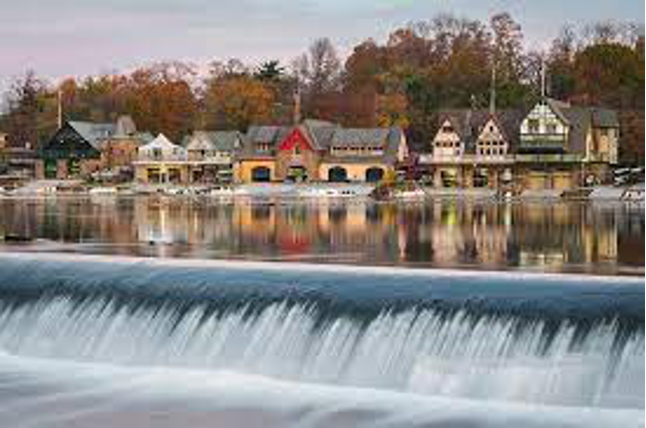
The Schuylkill: Philly’s Urban Sanctuary

Considering where the Schuylkill River flows through, most wouldn’t think to give it the title of a sanctuary. That thought will surely change though once you experience the beauty, freedom, and tranquility that it offers. With over 30 miles of trail starting in Philly and going north to Parker Ford, it feels like an endless amount to explore. To start, you can take a stroll down Kelly Drive, passing Boat House Row and continuing north bound for a few miles all the way to Manayunk. While on the drive, it would be a great idea to

pack a picnic on a calmer weekday and enjoy one of the huge lawns bordering the river and the drive on a warm, beautifully sunset-lit evening, or look out for the more populated regattas on the weekends where hundreds of students and parents come to cheer on their schools. During the warmer months it is most popular to take a stroll up the drive for some exercise or to just let your mind loose with the scenery surrounding the area in the sunny weather of summer. Although, this stroll is especially beautiful in the fall with the changing colors and the cooler breezes. The entire length of Kelly Drive is also great for fishing where the water is readily accessible with how it butts right up to the big lawns. Day or night, there are always people and often parents with children just enjoying the serenity of relaxing on the lawns with a rod or two next to them.

The next stop, or first depending if you choose to begin in Philly, on your Schuylkill River tour should be stopping at Fairmount Dam. This is my favorite location on the entire river because of the views of the river and boathouse row right above the dam, the city skyline when walking over the MLK bridge which sits right next to Fairmount, the marine life and nature surrounding this area, and the tours offered on the historical culture of the area. You can enter the Fairmount Waterworks Museum and take the tour on the pump house and learn how and why the dam generated power for the locals back in the day. You can even take a kayak tour and explore the tidal Schuylkill at a waters eye view. If you want to see the Philly skyline lit up, you can even take the midnight kayak tour and explore the rivers beauty under the moon and lights of the city. This is also regarded as one of the most popular fishing spots on the entire length of the river because how the abundance and variety of marine life below the falls of the dam. No matter the location on the river you decide to visit, it will definitely make you want to visit a second, and most likely a third time at the least.

https://www.schuylkillbanks.org/events/community-events/fairmount-water-works-inside-out

https://www.schuylkillbanks.org/events/kayak-tours/kayak-tour-54

HOW COLLEGEFEST HELPED ME ADJUST TO ADULT LIFE

“Franklin Institute” by Bobak Ha’Eri | CC BY NB 2.0

When I moved into my college dorm at Temple University, I knew I was going to have a hard time. I grew up in a suburban area that was pretty close to Philadelphia, but I was never given the chance to explore the city. Switching from a quiet, suburban town to a college that sat in the heart of a city was rough, and I felt like I was unprepared.

My first experiences in Philly were fun, but unhelpful. In elementary school, my class went on a trip to The Franklin Institute. My chaperone took my group to the Heart Exhibit, and we were only allowed to go inside the giant heart. I got scared by the constant heartbeat and ran to my chaperone’s side. I wasn’t allowed to play with anything else until we went home.

Years later, I returned to Philly to watch my cousin graduate from Temple. This seems like the perfect opportunity to explore the city, but that chance disappeared instantly. The ceremony took place at Temple’s multipurpose venue, the Liacouras Center. So I was only able to see a quarter of the campus. Everyone was tired from the ride there, so we went home right after the ceremony ended.

Liacouras Center (Temple) by Audrey | CC by Wikimedia Commons

At the time, I wasn’t fully committed to going to Temple. So I felt like I didn’t need to go into Philly just to explore and adjust. Plus, I didn’t want to go anywhere due to COVID-19. I thought that visiting Philadelphia twice would help me adjust to college life. But when I moved into my college dorm, reality hit me hard. 

I felt like I was not ready to become a college student, let alone an adult. My knowledge of Philly was so slim, I felt like I had no idea where I was, even when I was walking on campus. That was when I heard about Collegefest from a friend. I saw a chance to test my maturity. So I gathered some friends and revisited The Franklin Institute.

I was able to go to places in the museum that I was never able to go to before. It almost felt like I was at a completely different museum. But eventually, I ended up at the Heart Exhibit once more. I’ve decided to have a rematch with the giant heart. I was more scared of getting stuck than the constant sound of a heart beat. 

A live dissection was about to take place, but that caused a rift in the group. One of the girls was squeamish and didn’t want to see it, but she also didn’t want to go anywhere alone. So, I stepped in and split the group in half for the time. Everyone was able to enjoy themselves in the museum. Once we were done, we visited the Philadelphia Museum of Arts until Collegefest ended.

“Philadelphia City Urban” by BruceEmmerling | CC BY Pixabay

Before we went back to campus, we decided to go to the Reading Terminal Market for lunch. Someone in our group wanted to take the lead and guide us there. We walked for a couple of blocks before we suddenly stopped. It turned out that they had no idea where they were going. None of us did. It started to get dark outside and the market was going to close soon. I was beginning to worry if we were going to be able to make it.

That was when I remembered my father. My father would always know the layout of an area, especially in cities. He would make a note of any buildings or landmarks that he would find interesting. Once he returned to a landmark that he found previously, he would suddenly remember the either layout of the entire city. He always found a way to get us to our location safely.

I felt that my situation would only get worse if something did not change, so I decided to use my father’s tactics to help the group get back on track. I pulled out my map and lead the group back to the street we started on. I also remembered the way to the train station as we passed it, so we wouldn’t get lost later. After I took the lead, everyone was at ease. I started to feel like I can be a person that others can depend on. When we reached the market, one of my friends told me that most of the money made there was given back to Philly’s residents. It was hard to pick something for lunch because I wanted to support everyone there. After I chose to eat a sandwich, we took a train back to Temple.

When I stepped back into my dorm room. I felt a lot better about myself. I am proud that I am able to say that I am confident in myself and my ability to be an adult. I am looking forward to what college life has to offer me. And when I finally go home, my parents will smile at me, knowing that their daughter has become an independent adult.

GIRARD COLLEGE : THE ROAD TO DESEGREGATION


Girard College is a 1st-12th grade 5 day boarding school in Philadelphia, Pennsylvania founded by Stephen Girard. The school has undergone a lot of changes since it opened in 1848. Over the past century, Girard College fought hard to keep its prejudice roots, but was forced to change due to the resilient people who fought to desegregate the school. 

 In Stephen Girard’s will, was his outlined plan to create a boarding school for poor, white, male orphans ranging from age 6 to 18 (History of Girard College, n.d). After his death, the city  authorized the mayor and the citizens to carry out his will. The school opened its doors to students on January 1, 1848. 

white and brown concrete building near bare trees under white sky during daytime
Founder Hall on Girard College Campus. Photo by Dan Mall on Unsplash

FIRST BLACK STUDENT APPLIES AND IS DENIED 

 In 1891, Frank Wilson, a black orphan boy was the first non-white child to attempt to pursue admissions into Girard College. His application was denied; however this was the first attempt to challenge the poor, white, orphan male requirements in Stephen Girard’s will (History of Girard College, n.d). Years after this attempt the long struggle for racial desegregation began. In 1954, Brown vs Board of Education declared that racial segregation within public schools was illegal.
In response to this law, Girard College willfully refused to admit black students and instead transformed the school into a private school in order to continue to reject black students legally (Mikula, 2018).

FIRST BLACK STUDENTS ACCEPTED 

50 years ago, Girard College admitted its first black students. What does  that mean today?
NAACP Protesters march outside the walls of Girard College. Photo by Heather Khalifa from The Philadelphia Inquirer

  Girard College held onto it’s bigoted beliefs and did everything it could to keep black people from being admitted to the school. Girard College’s decision to adamantly refuse black students after the law passed making segregation in public schools illegal sparked civil unrest. A movement was led by Cecil B Moore, NAACP chapter leader, and Philadelphia lawyer.  Moore led protests for years and fought legal battles in order to get the school to admit black students (Mikula, 2018). The movement to desegregate Girard College amassed so much attention that Martin Luther King Jr. joined the protest outside the school in 1965 (Mikula, 2018). The fight to allow black students into the school took years and leaders fought hard to keep African Americans out. However, in 1968 The Third Circuit Court of Appeals determined that Girard College not allowing black students to attend was a violation of the 14th amendment and that they had to accept black students. In September 1968, the first black students were accepted into the school (Mikula, 2018).  

GIRARD BECOMES CO-ED 

The black student population rose quickly after, and by the late 1990s, 79% of the student population was African American (Mikula, 2018). Although Girard College reluctantly gave in to the acceptance of black students, it still was not a school that allowed females to attend. In 1982, the Women’s Law Project and the National Organization for Women came together to file a lawsuit against Girard College for rejecting a female applicant. The Orphan’s Court granted the request and on September 1, 1984 Girard College became co-ed,  accepting 30 female students (History of Girard College, n.d). In 1993, the first female students graduated from Girard College, and Kimberly Green became the first female valedictorian ( History of Girard College, n.d). 

GIRARD COLLEGE NOW

Elementary/Middle School - Girard College
Girard College elementary school students at Founders Hall. Photo from Girard College Website

   Today, Girard College still has a majority of African American students, and a closer ratio between male and female students, a long way from where it started in 1848. In the span of over a century Girard College has evolved from being an all-poor, orphaned, white boys school to becoming a school that accepts and provides quality education to all races and genders. 

Girard College has undergone a lot of major changes since its opening. The acceptance of black students symbolized a major change in an era, there was a time when black people were not allowed to have an education or learn how to read. Therefore, the desegregation of an all white boys school was not only a monumental moment for race but for equal education for black students. The history of Girard College stands as a symbol for both racial equality and women’s rights.

Work Cited

Mikula, Jo. “The Desegregation of Girard College” Historical Society of Pennsylvania. 11 Sept. 2018, The Desegregation of Girard College | Historical Society of Pennsylvania

History of Girard College.  History of Girard College.   

DiMeo, M. Stephen Girard. Independence Hall Association. (n.d) ushistory.org. https://www.ushistory.org/people/girard.htm

Boat Boy

One of my most listened-to artists of the past couple months is also an occasional visitor of my living room. Domino is an up-and-coming Philly rapper who loves making music. He’s been doing it since high school, when he, my roommate, Dylan, and another one of their classmates started a rap collective, Lobby 404. Since then, he’s gone independent, and released an album, a deluxe, and a handful of great singles.  He also performs at local venues sometimes, and one afternoon he was hanging out at our place before a show. I was fortunately able to use this opportunity to get to know Domino a little better – his musical history, why he started making music, and where he plans on going from here. This is an interview I conducted with Domino “Boat Boy” Gilley.

How long have you been making music?

Um, since I was 16. So, five years now.

How many projects have you put out?

Just three, I think. Like three albums. We got EP, with Dylan and my other friend, that’s called Lobby 404, then we got WIP and WIP deluxe, which I doubled the set list. So it went from nine to eighteen songs.

What was the first song you made?

My friend does this music festival, and I had written a rap, and he had forced me to perform it because he was like, “this is good”. And I was like, “no, it’s not”. That was the first song I recorded, back in summer 2017. Yeah, that was my first song. I don’t have a name for it, but there’s a video of it somewhere out there.

Why did you start making music?

The realistic answer is because my mom took my brother to get a new phone but didn’t take me to get a new phone and I was upset about it. So I was like, I’m gonna write some raps. And then I was like, wait, this is actually kind of fun.

That’s awesome.

Right. Where would I have been if I had gotten a new phone? 

Who would you credit as your biggest musical inspirations?

Okay. Childish Gambino. Every rapper I listened to, I was like, “I don’t sound like that. I don’t sound like I’m from the hood. I sound like I talk white”. And then Childish Gambino came around. I was like, “oh shit, wait. He’s tough”. So, Childish Gambino, Tyler, the Creator, Chance the Rapper, and Lil Yachty.

Where would you like to see yourself in five years? Do you think that’s a realistic achievement for you?

In five years, I wanna be promoting other artists. I wanna have a platform big enough that I could put on other artists and help them out. I wanna be going on tour in five years. If I can be on tour in 5 years, that would be happy for me. And I feel like that’s realistic. I think I can get it done. 

And then final question. Among the smaller artists you’ve met. Who would you list as your biggest inspirations?

Dylan and Ant are definitely my biggest influences. Anthony is a better rapper than me, or at least, better at wordplay than me.

Who’s Anthony?

Anthony. He’s a part of the rap group that I was in in high school. Lobby 404. Every time I would hear a verse that he had, I was like, “Shit, I gotta be like, ‘backspace, backspace, backspace’. I gotta rewrite my shit”. And then making beats. I would listen to Dylan’s beats as my reference track. But those two are definitely my biggest influences.

Thank you very much!

If you get the chance, check out some of Domino’s music, on any streaming platform. His latest single, “Boat Boy”, is an incredible display of Domino’s strengths: great rapping, awesome wordplay, and a killer beat Domino personally mixed, mastered and recorded. It’s the first single released for his upcoming album, and he’s got a lot more music on the way, so make sure to follow him to see what he does next. You’ll want to stay tuned – Domino only plans to go up from here.

JEFF GUARACINO, THE HEART, AND SOUL OF PHILADELPHIA.

Nasir Mack on April 12, 2022

What comes to mind when you think of “Philadelphia”? Let’s see, America’s Birthplace, Rocky, The Philly Cheesesteak, Dilly Philly? Embraced by the citizens as the City of Brotherly love, Philadelphia is truly a unique place that represents all of these things. While that famous scene of Rocky running up the stairs to victory (cue music, thun thun thun thun) put Philadelphia on the map, there is so much more below the surface. Gay friendly, the host of America’s first zoo, a vast art culture, and a hotspot of exciting restaurants and foods to enjoy, Philadelphia has so much more to offer. There is just one person to thank for showcasing the very best of Philadelphia and that is my former boss and mentor, Jeff Guaracino. As the former President and CEO of Visit Philly, a tourism and hospitality company, focused on promoting Philadelphia, Jeff spent his life committed to elevating the city. Everything from his work, the way he lived his life, maintained his relationships, at the core, Jeff Guaracino was the Heart, and Soul of Philadelphia. 

The Jeff Guaracino Origin Story 

So, where does Jeff’s “origin” story begin? How does he go from an average family to accomplishing his lifelong dream of becoming President and CEO of Visit Philly? Jeff’s story is no different from yours or mine—Jeff was just an ordinary guy. Although, a native to Philadelphia, Jeff attended high school in NJ and would later attend college at Rowan University. On a relatively small campus, with relatively small classes, Jeff maximized his opportunities before entering the workforce with Visit Philly in early 2001 in a communications role. It was in his early days at Visit Philly that his love for Philadelphia would grow. Fresh, determined, and straight out of college, Jeff had a lot to prove. This is where Jeff’s journey to elevating the culture of Philadelphia began. 

Facebook: Jeff Guaracino

Pivoting Philadelphia’s Gay Culture

While working at Visit Philly, Jeff pioneered the famous slogan and marketing campaign: “Get Your History Straight and Yout Nightlife Gay”. In the early 2000s, people were not as accepting of the LGBTQ community. In fact, it wasn’t until 2003, after the landmark case, Lawrence VS. Texas, that same-sex sexual activity became legal in every state. Philadelphia, known for being the first of many things–first zoo, first bank, first hospital–was already embracing the LGBTQ community. Though, this was not something spotlighted in the national eye, but rather local to Philadelphia. Being Gay himself, Jeff recognized the Philadelphia spirit towards gays, citing that “Philadelphia was already gay friendly” and “Welcoming of everybody” (Murrell, 2019). With that in mind, Jeff decided to take a more friendly approach to encourage the rest of the world to get on board by starting right here in his own city.

The “Get Your History Straight and Your Nightlife Gay” campaign led to significant changes in the city. Following the campaign, Philadelphia (previously unranked) shot up to number 10 on Community Marketing’s  “Top 10 U.S Destinations fro LGBTQ Travels” list (Middleton, 2013); Philadelphia’s Red light district (Chestnut to Pine street between 11th and Broad Street) was transformed into the “Gayborhood”(Blumgart, 2016); and Visit Philly earned a $153 return for every dollar invested into the campaign. The success of the campaign cemented Jeff as a serious contender in the Tourism and Hospitality industry, but also as an all-around-inclusive Philadelphian.

Sign o’ the times: since 2007, rainbow street signs in the Gayborhood | Photo: Bradley Maule

After spending nearly 11 years with Visit Philly, working his way up and navigating various leadership roles, Jeff would set his sights elsewhere: in New Jersey as the Executive Director of the Atlantic City Alliance in 2012. Although he would ultimately come back to Visit Philly as their Chief Executive Officer many years later, he understood he had to pivot. Most would consider this an awkward move, on Jeff’s part. Why leave the city and company you love behind, especially if you have aspirations of running the jawn? Well for Jeff, the only way to get there (CEO) was by building elsewhere. While in New Jersey, again, he attempted to expand New Jersey’s culture as well but faced pressing challenges. New Jersey, at the time, was less acceptable to the LGBTQ community. Standing in board rooms mostly comprised of Heterosexual, White Males, Jeff would often shrink himself to gain the respect of his adversaries–imposter syndrome at best. Though, once again, through his work, passion, and kindness he found himself slowly winning over the hearts and minds of natives in New Jersey. During his time in New Jersey, he met Kellianne Nicholas, his right-hand marketing daughter, and long-term friend. Shortly after the encounter, he was offered the opportunity to return to Philadelphia as the CEO of Welcome America by Mayor Jim Kenney. Jeff also extended the offer to Kellianne to join him back in Philly, and it was at Welcome America, where Jeff and I would work together.

A Heart shines through

Upon my first encounter with Jeff I assumed he was like most CEOs; nonchalant, forgetful of anything or anyone that isn’t larger than their ego, and always on the move. Fortunately, this was not the case. Jeff had a “spark” about him. Outwardly comedic and personable, he was widely authentic. I started interning at Welcome America as a junior in high school until I was a freshman in college. Navigating between school and two jobs to support myself, I always wanted to be a CEO and I was deeply inspired by Jeff because he was that, a CEO, a kind one at that.

Every Tuesday and Thursday during my senior year of high school I traveled to a large glass building, One Liberty Place located on Market Street. I followed the same path: up the elevator, make a right, walk straight, pass Jeff’s office, and then a left to a relatively small cubic space filled with three people and three desks. There sat: Me, Kellanne, and Amanda (in that order). Jeff would often pop out from time to time with vibrant energy to crack a joke or two. Other times, during my frequent, but very brief visits into his office, he always had some advice to give me. At the time, I really wanted to attend a school in New York that was very expensive but was fearful of the crippling debt that would haunt me after graduation. Recalling his Rowan days, he told me that it simply doesn’t matter what school you attend, what matters is what you do there and what you do after. This was pretty solid advice, to say the least.  

Left to Right: Amanda Kaster-Mcdowell, Me, Jeff Guaracino, Helena Bayer, Kellianne Nicholas at Jeff’s Private Book Party

Though, what was the most intriguing about Jeff, above all his attributes and accomplishments, was that he was extremely kind. He literally knew all of Philadelphia and for some reason, everyone he introduced me to seemed to genuinely love him—this is not the case for most successful white men. As the Welcome America Team of interns grew from just 1 little high-school senior into a full-fledged team of 10 people, Jeff took care of all of us. When he became CEO of Visit of Philly, he recruited two of the former interns to join his team, gave all of us tons of gifts, and made it known that we could always count on him if we needed to. Not only did he show his kindness with his staff, but with strangers and the city he loved, Philadelphia. Jeff, at heart, was truly a kind soul.  

Jeff and I along with Welcome America Staff in 2016

Jeff’s heartfelt Impact  

The Met Philly Tribute to Jeff (Image: Visit Philly’s LinkedIn)

Shockingly, at the tender age of 48, Jeff Guaracino passed on December 29th, 2021, just a few days shy of the new year. The news of his untimely passing moved the entire city of Philadelphia. Former friends, colleagues, and business leaders filled Jeff’s social networks–LinkedIn and Facebook–with heartfelt messages. Even the Mayor offered a personal sentiment about Jeff’s passing, citing: “Jeff had a deep love of his family and colleagues, and he left an indelible mark on the place he was most passionate about—his beloved Philadelphia. A fierce champion and promoter of his hometown, Jeff was also a proud advocate for the LGBTQ community. With his trademark energy, charismatic charm, and never-ending wit, he helped make Philadelphia the welcoming city and destination that it proudly is today” (Mayor). Digital tributes of Jeff took center place on jumbotrons and signs all over the city such as the Met Philly, The Fillmore, the Philadelphia Inquirer, all in harmony featuring the same statement: Jeff Guaracino, The Heart, and, Soul of Philadelphia.

The Haunted Landscape of Philadelphia, PA

By Kieran Cunningham

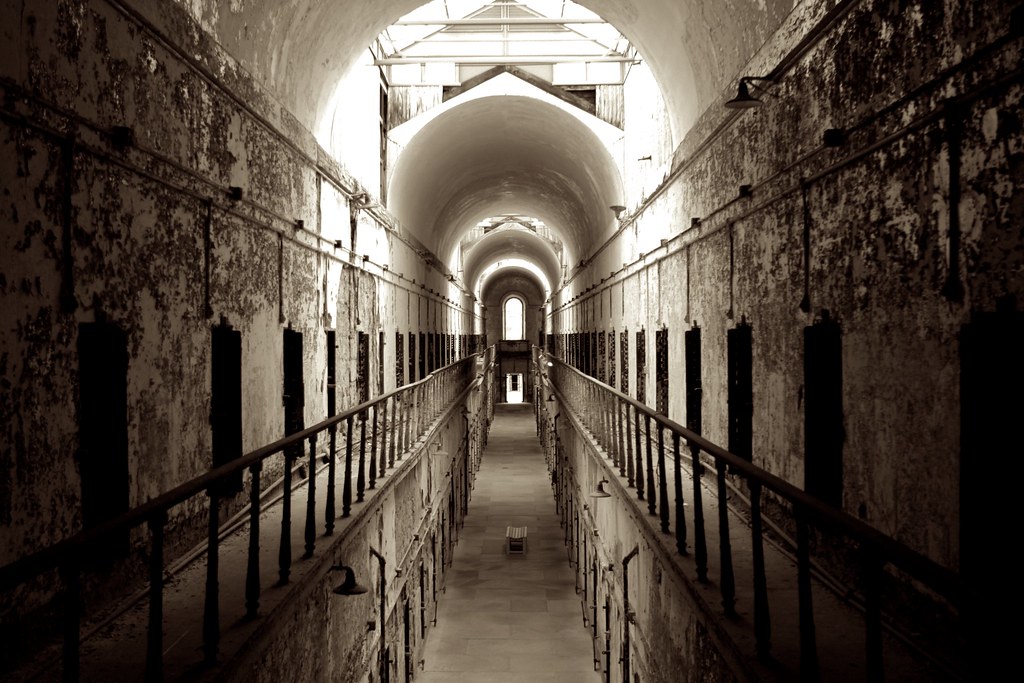
Eastern State Penitentiary” by sakeeb | CC BY 2.0.

The city of Philadelphia, PA contains an expansive, rich atmosphere that residents of the city cherish throughout their lives. Cultural powerhouses, such as “Rocky” and John Coltrane create a unique, identifying culture that resonates with the public. With its expansive history and iconic landmarks, it is no wonder that supernatural associations permeate into the perceptions of The City of Brotherly Love.

By effect, a major controversy comes to light. Avid believers find it essential to describe the city’s haunted landscape in tandem with its history. Skeptics miss the correlation between the two. One thing, however, is for certain: through social interactions and perceptions, Philadelphians foster haunted perceptions of the city, which strengthens their connection to their home.

Dark Events of the Past

Tragic events of the past are able to transform the way people perceive respective areas around the city. When dreadful affairs happen in a specific area, the public’s perception regarding the location’s image can shift towards ghostly assumptions. The Eastern State Penitentiary, for instance, encapsulates the haunted Philadelphian scene. Stories of the prisoners associated with the world’s first penitentiary are enough to cause a chill down anyone’s spine.

An NPR news article discusses the dismal past of the estate’s prisoners by discussing previous, harsh punishments. Individuals can learn stories of ice forming on the skin of prisoners and gruesome solitary confinement, which both prompt an empathetic connection. Through learning about Eastern State’s past, city residents actively seek out information which, in turn, broadens their scope of Philadelphian history. By effect, these people are able to strengthen their emotional bond to Philadelphian locations and witness the immense impact those landmarks have on the city.

Philadelphia’s Influential Characters

Another method Philadelphia, PA residents express their belief of paranormal activity revolves around notable figures that have shaped the city’s history. Through the passing down of folklore, individuals echo the great accomplishments of these people and their ability to affect the social landscape of today. By discussing apparitions of well-known people, the public pushes the otherworldly mindset of one of the nation’s oldest cities.

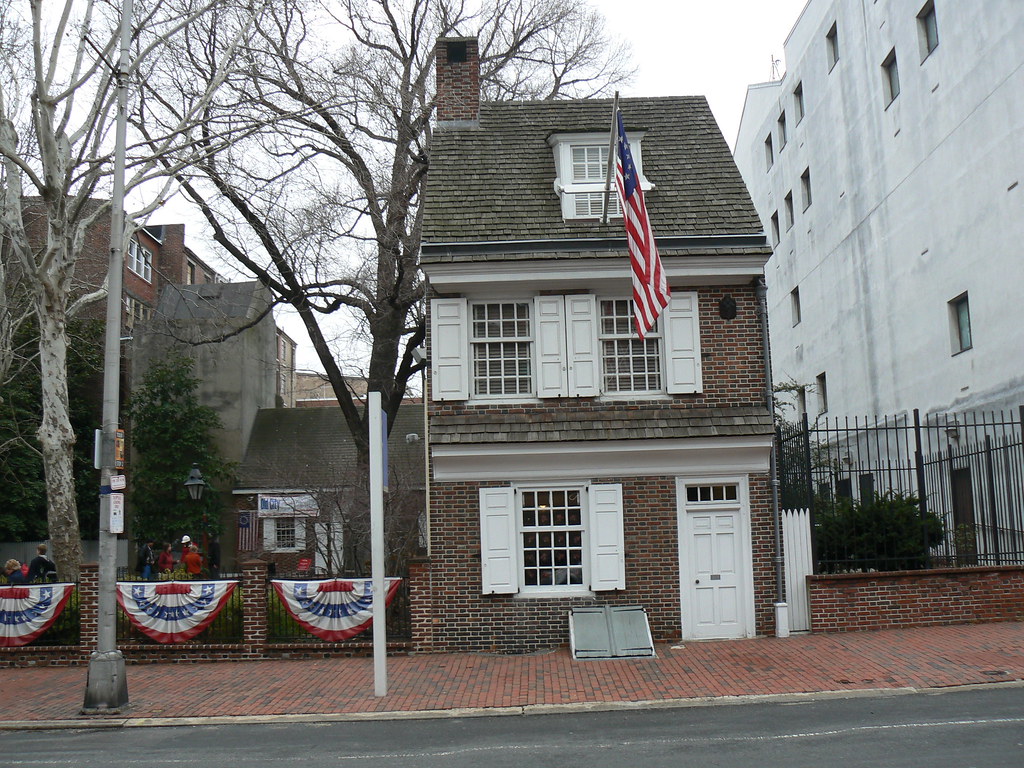
Philly Ghosts, one of Philadelphia’s best known ghost tour companies, discusses the ability of historical ghosts leaving an impact on individuals. An account of a frantic Ben Franklin ghost pushing someone to get to a bookshelf and Betsy Ross spotted at the foot of her bed intrigue believers everywhere. These supposed sightings allow witnesses to connect to notable places while appreciating the major contributions figures have had on their mutual living space. This, in essence, strengthens Philadelphia’s position as a “haunted” city, while simultaneously peeking the historical interest/connection of individuals.

Betsy Ross House” by minnemom | CC BY-ND 2.0.

Personal Paranormal Parables

One of the most effective avenues that allows Philadelphians to strengthen the occult narrative of the city involves the personal anecdotes of residents. To rationalize strange occurrences with no visible explanation, people can point toward the supernatural for their answer. Believers can connect to their unique experience, evoking strong emotions, which builds up the perception of the city.

A New York Times article demonstrates the strong feelings a young sociologist, Margee Kerr, feels while trekking through the halls of Eastern State Penitentiary. Macabre sensations and uncanny emotions allow the author to build the foundation of an eerie presence within the city. This encapsulates the image she associates with the building and the overall Philadelphian experience. Her personal encounter with a very active paranormal site creates an exclusive appreciation for The City of Brotherly Love that many people do not experience.

An Overview of Philadelphia’s Haunted Atmosphere

Philadelphia, Pennsylvania boasts a dynamic history and substantial culture that residents can perceive as a perfect mixture for a paranormal landscape. Speculations surrounding site locations, instances of notable apparitions, and personal accounts of ghostly images prompt a growing appreciation, among residents, to the city and its important history. The controversial opinion of ghosts prompts an internal connection to their home, which keeps the Philadelphian spirit alive.

Source Material:

Dalrymple, L. (2013, October 24). Is Eastern State Penitentiary really haunted? NPR. Retrieved February 25, 2022, from https://www.npr.org/2013/10/24/232234570/is-eastern-statepenitentiary-really-haunted

“Eastern State Penitentiary.” Eastern State Penitentiary Historic Site. Retrieved April 12, 2022, from https://www.easternstate.org/.

Kerr, M. (2015, October 31). My Philadelphia ghost story. The New York Times. Retrieved February 25, 2022, from https://www.nytimes.com/2015/10/31/opinion/my-philadelphiaghost-story.html

“The American Philosophical Library.” The American Philosophical Library – Philly Ghosts, 6 Nov. 2021, https://phillyghosts.com/the-american-philosophical-library/.

“The Betsy Ross House.” The Betsy Ross House – Philly Ghosts, 15 Dec. 2021, https:// phillyghosts.com/the-betsy-ross-house/.

GIRARD COLLEGE : THE ROAD TO DESEGREGATION

Girard College is a 1st-12th grade 5 day boarding school in Philadelphia, Pennsylvania founded by Stephen Girard. The school has undergone a lot of changes since it opened in 1848. Over the past century, Girard College fought hard to keep its prejudice roots, but was forced to change due to the resilient people who fought to desegregate the school. 

 In Stephen Girard’s will, was his outlined plan to create a boarding school for poor, white, male orphans ranging from age 6 to 18 (History of Girard College, n.d). History of Girard College. After his death, the city  authorized the mayor and the citizens to carry out his will. The school opened its doors to students on January 1, 1848. 

white and brown concrete building near bare trees under white sky during daytime
Photo by Dan Mall on Unsplash

FIRST BLACK STUDENT APPLIES AND IS DENIED 

 In 1891, Frank Wilson, a black orphan boy was the first non-white child to attempt to pursue admissions into Girard College. His application was denied; however this was the first attempt to challenge the poor, white, orphan male requirements in Stephen Girard’s will (History of Girard College, n.d). Years after this attempt the long struggle for racial desegregation began. In 1954, Brown vs Board of Education declared that racial segregation within public schools was illegal.
In response to this law, Girard College willfully refused to admit black students and instead transformed the school into a private school in order to continue to reject black students legally (Mikula, 2018).The Desegregation of Girard College | Historical Society of Pennsylvania  

FIRST BLACK STUDENTS ACCEPTED 

50 years ago, Girard College admitted its first black students. What does  that mean today?
Photo by Heather Khalifa from The Philadelphia Inquirer

  Girard College held onto it’s bigoted beliefs and did everything it could to keep black people from being admitted to the school. Girard College’s decision to adamantly refuse black students after the law passed making segregation in public schools illegal sparked civil unrest. A movement was led by Cecil B Moore, NAACP chapter leader, and Philadelphia lawyer.  Moore led protests for years and fought legal battles in order to get the school to admit black students (Mikula, 2018). The movement to desegregate Girard College amassed so much attention that Martin Luther King Jr. joined the protest outside the school in 1965 (Mikula, 2018). The fight to allow black students into the school took years and leaders fought hard to keep African Americans out. However, in 1968 The Third Circuit Court of Appeals determined that Girard College not allowing black students to attend was a violation of the 14th amendment and that they had to accept black students. In September 1968, the first black students were accepted into the school (Mikula, 2018).  

GIRARD BECOMES CO-ED 

The black student population rose quickly after, and by the late 1990s, 79% of the student population was African American (Mikula, 2018). Although Girard College reluctantly gave in to the acceptance of black students, it still was not a school that allowed females to attend. In 1982, the Women’s Law Project and the National Organization for Women came together to file a lawsuit against Girard College for rejecting a female applicant. The Orphan’s Court granted the request and on September 1, 1984 Girard College became co-ed,  accepting 30 female students (History of Girard College, n.d). In 1993, the first female students graduated from Girard College, and Kimberly Green became the first female valedictorian ( History of Girard College, n.d). 

GIRARD COLLEGE CURRENTLY 

Elementary/Middle School - Girard College
Photo from Girard College Website

   Today, Girard College still holds a majority of African American students, and a closer ratio between male and female students, a long way from where it started in 1848. In the span of over a century Girard College has evolved from being an all-poor, orphaned, white boys school to becoming a school that accepts and provides quality education to all races and genders. 

Girard College has undergone a lot of major changes since its opening. The acceptance of black students symbolized a major change in an era, there was a time when black people were not allowed to have an education or learn how to read. Therefore, the desegregation of an all white boys school was not only a monumental moment for race but for equal education for black students. The history of Girard College stands as a symbol for both racial equality and women’s rights.

Work Cited

Mikula, Jo. “The Desegregation of Girard College” Historical Society of Pennsylvania. 11 Sept. 2018, The Desegregation of Girard College | Historical Society of Pennsylvania

History of Girard College.  History of Girard College.   

DiMeo, M. Stephen Girard. Independence Hall Association. (n.d) ushistory.org. https://www.ushistory.org/people/girard.htm

The Schuylkill: Philly’s Urban Sanctuary

Considering where the Schuylkill River flows through, most wouldn’t think to give it the title of a sanctuary. That thought will surely change though once you experience the beauty, freedom, and tranquility that it offers. To start, you can take a stroll down Kelly Drive, passing Boat House Row and continuing north bound for a few miles.

Pack a picnic on a weekday and enjoy one of the huge lawns bordering the river and the drive on a warm, beautifully sunset-lit evening, or look out for the more populated regattas on the weekends where hundreds of students and parents come to cheer on their schools. During the warmer months it is most popular to take a stroll up the drive for some exercise or to just let your mind loose with the scenery surrounding the area in the sunny weather of summer. Although, this stroll is especially beautiful in the fall with the changing colors and the cooler breezes. The entire length of Kelly Drive is also great for fishing where the water is readily accessible with how it butts right up to the big lawns. Day or night, there are always people and often parents with children just enjoying the serenity of relaxing on the lawns with a rod or two next to them.

The next stop on your Schuylkill River tour should be stopping at Fairmount Dam. This is my favorite location on the entire river due to the views of the river and boathouse row right above the dam, the city skyline when walking over the MLK bridge which sits right next to Fairmount, the marine life and nature surrounding this area, and the tours offered on the historical culture of the area. You can enter the Fairmount Waterworks Museum and take the tour on the pump house and learn how and why the dam generated power for the locals back in the day. You can even take a kayak tour and explore the tidal Schuylkill at a waters eye view. If you want to see the Philly skyline lit up, you can even take the midnight kayak tour and explore the rivers beauty under the moon and lights of the city. This is also regarded as one of the most popular fishing spots on the entire length of the river because how the abundance and variety of marine life below the falls of the dam. No matter the location on the river you decide to visit, it will definitely make you want to visit a second, and most likely a third time at the least.

https://www.schuylkillbanks.org/events/community-events/fairmount-water-works-inside-out

https://www.schuylkillbanks.org/events/kayak-tours/kayak-tour-54

https://www.visitphilly.com/things-to-do/attractions/boathouse-row/

Jeff Guaracino, The Heart, and Soul of Philadelphia.

This image has an empty alt attribute; its file name is IMG_1864-683x1024.jpg
Image Provided by Dossage Magazine

What comes to mind when you think of “Philadelphia”? Let’s see, America’s Birthplace, Rocky, The Philly Cheesesteak, Dilly Philly? Embraced by the citizens as the City of Brotherly love, Philadelphia is truly a unique place that represents all of these things. While that famous scene of Rocky running up the stairs to victory (cue music, thun thun thun thun) put Philadelphia on the map, there is so much more below the surface. Gay friendly, the host of America’s first zoo, a vast art culture, and a hotspot of exciting restaurants and foods to enjoy, Philadelphia has so much more to offer. There is just one person to thank for showcasing the very best of Philadelphia and that is my former boss and mentor, Jeff Guaracino. As the former President and CEO of Visit Philly, a tourism and hospitality company, focused on promoting Philadelphia, Jeff spent his life committed to elevating the city. Everything from his work, the way he lived his life, maintained his relationships, at the core, Jeff Guaracino was the Heart, and Soul of Philadelphia. 

The Jeff Guaracino Origin Story 

So, where does Jeff’s “origin” story begin? How does he go from an average family to accomplishing his lifelong dream of becoming President and CEO of Visit Philly? Jeff’s story is no different from yours or mine—Jeff was just an ordinary guy. Although, a native to Philadelphia, Jeff attended high school in NJ and would later attend college at Rowan University. On a relatively small campus, with relatively small classes, Jeff maximized his opportunities before entering the workforce with Visit Philly in early 2001 in a communications role. It was in his early days at Visit Philly that his love for Philadelphia would grow. Fresh, determined, and straight out of college, Jeff had a lot to prove. This is where Jeff’s journey to elevating the culture of Philadelphia began. 

So, where does Jeff’s “origin” story begin? How does he go from an average family to accomplishing his lifelong dream of becoming President and CEO of Visit Philly? Jeff’s story is no different from yours or mine—Jeff was just an ordinary guy. Although, a native to Philadelphia, Jeff attended high school in NJ and would later attend college at Rowan University. On a relatively small campus, with relatively small classes, Jeff maximized his opportunities before entering the workforce with Visit Philly in early 2001 in a communications role. It was in his early days at Visit Philly that his love for Philadelphia would grow. Fresh, determined, and straight out of college, Jeff had a lot to prove. This is where Jeff’s journey to elevating the culture of Philadelphia began. 

Pivoting Philadelphia’s Gay culture

While working at Visit Philly, Jeff pioneered the famous slogan and marketing campaign: “Get Your History Straight and Yout Nightlife Gay”. In the early 2000s, people were not as accepting of the LGBTQ community. In fact, it wasn’t until 2003, after the landmark case, Lawrence VS. Texas, that same-sex sexual activity became legal in every state. Philadelphia, known for being the first of many things–first zoo, first bank, first hospital–was already embracing the LGBTQ community. Though, this was not something spotlighted in the national eye, but rather local to Philadelphia. Being Gay himself, Jeff recognized the Philadelphia spirit towards gays, citing that “Philadelphia was already gay friendly” and “Welcoming of everybody” (Murrell, 2019). With that in mind, Jeff decided to take a more friendly approach to encourage the rest of the world to get on board by starting right here in his own city.

The “Get Your History Straight and Your Nightlife Gay” campaign led to significant changes in the city. Following the campaign, Philadelphia (previously unranked) shot up to number 10 on Community Marketing’s  “Top 10 U.S Destinations fro LGBTQ Travels” list (Middleton, 2013); Philadelphia’s Red light district (Chestnut to Pine street between 11th and Broad Street) was transformed into the “Gayborhood”(Blumgart, 2016); and Visit Philly earned a $153 return for every dollar invested into the campaign. The success of the campaign cemented Jeff as a serious contender in the Tourism and Hospitality industry, but also as an all-around-inclusive Philadelphian.

Sign o’ the times: since 2007, rainbow street signs in the Gayborhood | Photo: Bradley Maule

After spending nearly 11 years with Visit Philly, working his way up and navigating various leadership roles, Jeff would set his sights elsewhere: in New Jersey as the Executive Director of the Atlantic City Alliance in 2012. Although he would ultimately come back to Visit Philly as their Chief Executive Officer many years later, he understood he had to pivot. Most would consider this an awkward move, on Jeff’s part. Why leave the city and company you love behind, especially if you have aspirations of running the jawn? Well for Jeff, the only way to get there (CEO) was by building elsewhere. While in New Jersey, again, he attempted to expand New Jersey’s culture as well but faced pressing challenges. New Jersey, at the time, was less acceptable to the LGBTQ community. Standing in board rooms mostly comprised of Heterosexual, White Males, Jeff would often shrink himself to gain the respect of his adversaries–imposter syndrome at best. Though, once again, through his work, passion, and kindness he found himself slowly winning over the hearts and minds of natives in New Jersey. During his time in New Jersey, he met Kellianne Nicholas, his right-hand marketing daughter, and long-term friend. Shortly after the encounter, he was offered the opportunity to return to Philadelphia as the CEO of Welcome America by Mayor Jim Kenney. Jeff also extended the offer to Kellianne to join him back in Philly, and it was at Welcome America, where Jeff and I would work together.

A Heart shines through

Upon my first encounter with Jeff I assumed he was like most CEOs; nonchalant, forgetful of anything or anyone that isn’t larger than their ego, and always on the move. Fortunately, this was not the case. Jeff had a “spark” about him. Outwardly comedic and personable, he was widely authentic. I started interning at Welcome America as a junior in high school until I was a freshman in college. Navigating between school and two jobs to support myself, I always wanted to be a CEO and I was deeply inspired by Jeff because he was that, a CEO, a kind one at that.

Every Tuesday and Thursday during my senior year of high school I traveled to a large glass building, One Liberty Place located on Market Street. I followed the same path: up the elevator, make a right, walk straight, pass Jeff’s office, and then a left to a relatively small cubic space filled with three people and three desks. There sat: Me, Kellanne, and Amanda (in that order). Jeff would often pop out from time to time with vibrant energy to crack a joke or two. Other times, during my frequent, but very brief visits into his office, he always had some advice to give me. At the time, I really wanted to attend a school in New York that was very expensive but was fearful of the crippling debt that would haunt me after graduation. Recalling his Rowan days, he told me that it simply doesn’t matter what school you attend, what matters is what you do there and what you do after. This was pretty solid advice, to say the least.  

Left to Right: Amanda Kaster-Mcdowell, Me, Jeff Guaracino, Helena Bayer, Kellianne Nicholas at Jeff’s Private Book Party

Though, what was the most intriguing about Jeff, above all his attributes and accomplishments, was that he was extremely kind. He literally knew all of Philadelphia and for some reason, everyone he introduced me to seemed to genuinely love him—this is not the case for most successful white men. As the Welcome America Team of interns grew from just 1 little high-school senior into a full-fledged team of 10 people, Jeff took care of all of us. When he became CEO of Visit of Philly, he recruited two of the former interns to join his team, gave all of us tons of gifts, and made it known that we could always count on him if we needed to. Not only did he show his kindness with his staff, but with strangers and the city he loved, Philadelphia. Jeff, at heart, was truly a kind soul.  

Jeff and I along with Welcome America Staff in 2016

Jeff’s heartfelt Impact  

Shockingly, at the tender age of 48, Jeff Guaracino passed on December 29th, 2021, just a few days shy of the new year. The news of his untimely passing moved the entire city of Philadelphia. Former friends, colleagues, and business leaders filled Jeff’s social networks–LinkedIn and Facebook–with heartfelt messages. Even the Mayor offered a personal sentiment about Jeff’s passing, citing: “Jeff had a deep love of his family and colleagues, and he left an indelible mark on the place he was most passionate about—his beloved Philadelphia. A fierce champion and promoter of his hometown, Jeff was also a proud advocate for the LGBTQ community. With his trademark energy, charismatic charm, and never-ending wit, he helped make Philadelphia the welcoming city and destination that it proudly is today” (Mayor). Digital tributes of Jeff took center place on jumbotrons and signs all over the city such as the Met Philly, The Fillmore, the Philadelphia Inquirer, all in harmony featuring the same statement: Jeff Guaracino, The Heart, and, Soul of Philadelphia.