By: Seth Carney
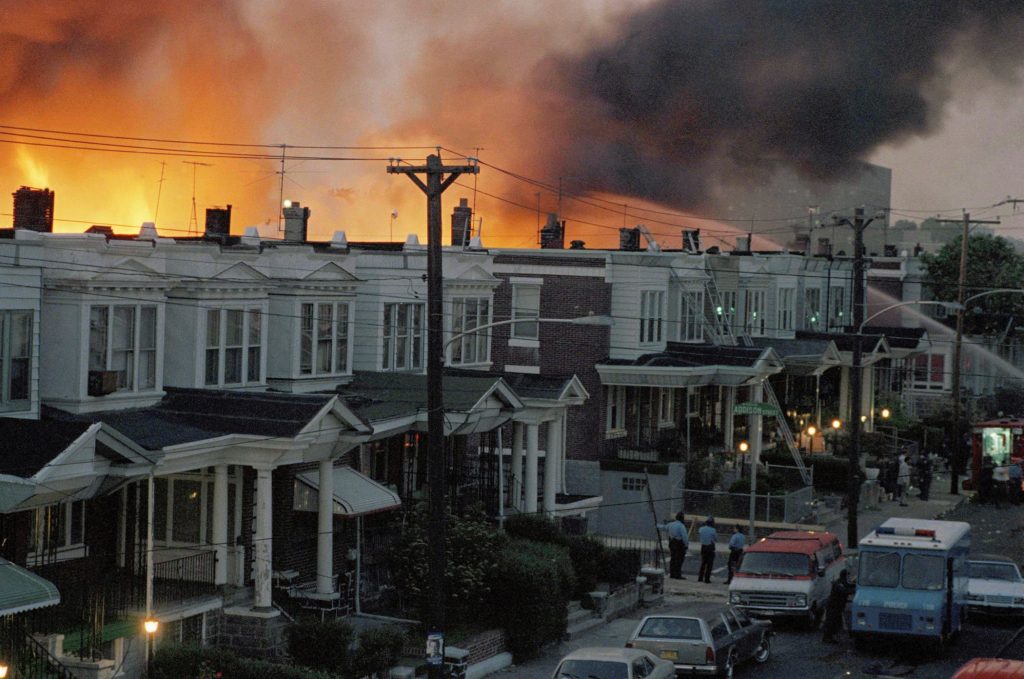
Copyright: 1985 AP
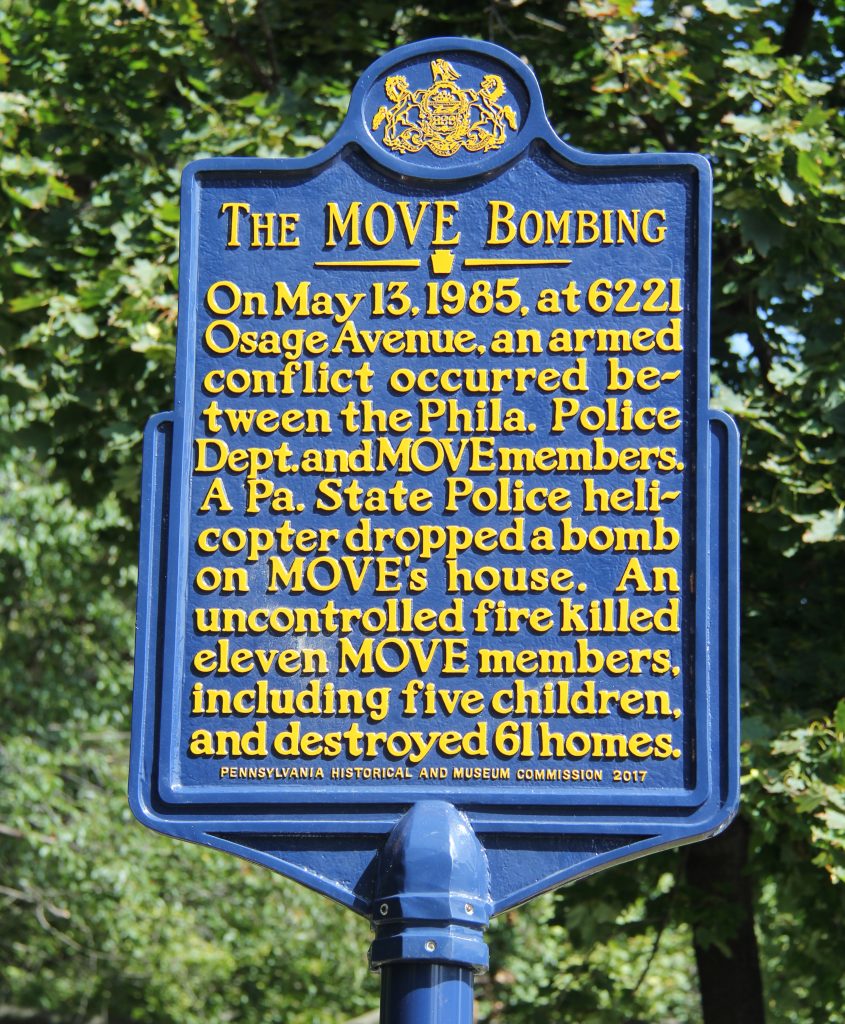
May 13, 1985, will forever be an infamous day for the city of Philadelphia. On that day, a police helicopter dropped a small explosive charge on the roof of the compound of a group calling themselves MOVE. The result was 11 dead and an entire city block burned to the ground. The police, of course, are to blame for the explosion and resulting fire. But MOVE bears much more responsibility than they generally get called out for. Their antagonism, violent opposition, and contempt for authority ultimately drove the police to do what they did. In the end, MOVE forced the hands of the police.
MOVE Before the Bombing
MOVE was founded in 1971 by a man named Vincent Leaphart, who later changed his name to John Africa. All members of MOVE were also obliged to change their surnames to Africa as well. In the beginning, they were known as the ‘Christian Movement for Life’ but they changed their name to MOVE not long after. The ideologies of the group were based on the teachings of John Africa, who had a devotee write them down in a text called “The Guidelines”. This text preached things such as strict vegetarianism, treating all living things equally, and self-defense. These beliefs are what motivated MOVE to do things such as protest at zoos and pet stores and antagonize people and institutions that went against their beliefs. This led to multiple arrests.
As arrests mounted, MOVE became increasingly militant, brandishing weapons at their fortified compound. The Philadelphia Police began to take notice and began to surveil the group. Not long after, MOVE began making demands on the city to release four members of their group who had been arrested. These demands became increasingly violent, which led the police to increase their surveillance and presence. Eventually, this came to a head on March 1st, 1978, when, at the direction of the Mayor, Frank Rizzo, police moved in to evict the group. What happened next is still a matter of contention to this day. The police have one story and MOVE has another. Whatever the truth may be, the result was the same. One police officer, James Ramp, was killed in the melee, with an additional two police and three firefighters wounded. MOVE eventually gave up, their compound was demolished, and the police arrested nine members.
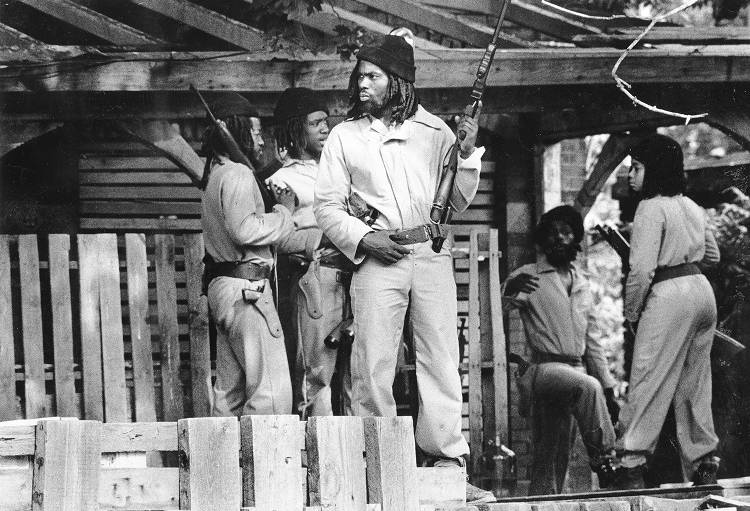
“MOVE headquarters barricade”, 1977-05-21, Camp, Don
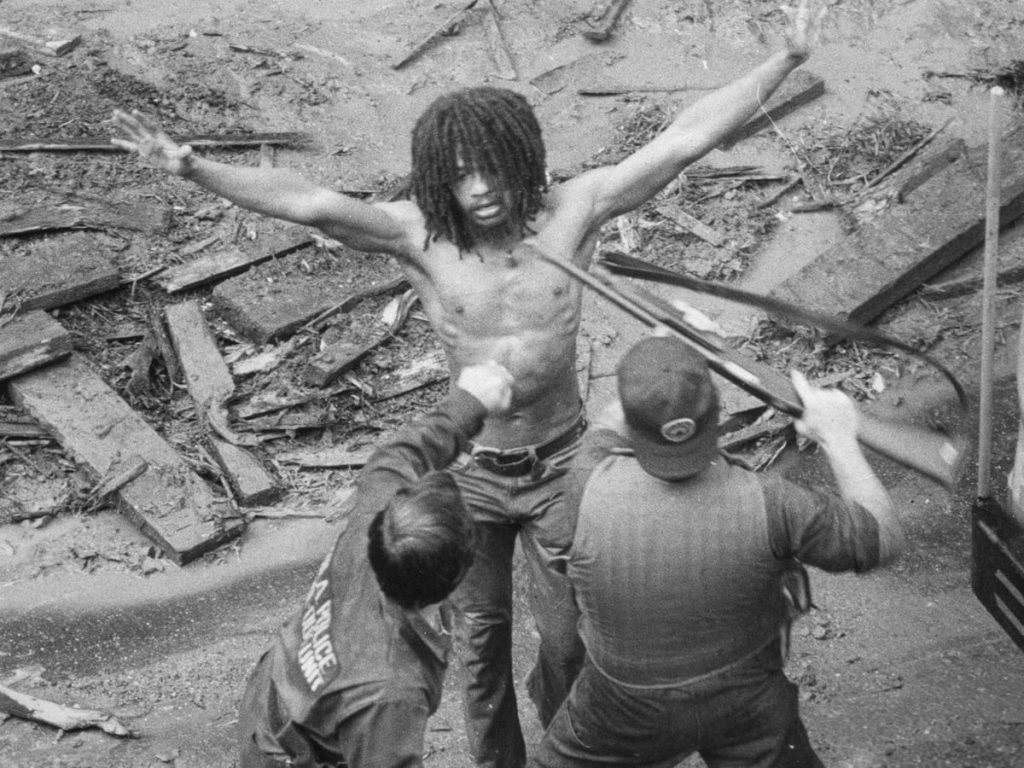
After the destruction of their compound and the arrest of nine of their members, MOVE did not have a place to call home until 1982, when they moved into 6221 Osage Avenue. This was a row house in the middle of a predominantly black middle-class neighborhood in West Philadelphia. Not long after moving in, MOVE began to fortify their new compound by boarding up windows and building a bunker on the roof. Residents also began to complain to the city about trash piling up outside their compound and the messages they would broadcast to the neighborhood through a bullhorn. This went on for nearly four years. It wasn’t until 1985 that Mayor Wilson Goode ordered the compound to be evicted, citing multiple violations. This order, of course, was ignored by MOVE. Ignoring the eviction order prompted the city of Philadelphia to take action by planning and conducting a raid on the compound.
The Bombing
On May 12, 1985, the police began evacuating residents in the surrounding buildings, clearly expecting a fight with MOVE. After a warning from the police, MOVE began opening fire. The police returned fire, shooting an estimated 10,000 rounds of ammunition at the compound. Around mid-day, with no progress being made, the police decided to take drastic measures. They dropped a small bomb on the roof of the compound in an attempt to destroy the bunker they believed MOVE members were shooting from. This led to a fire that consumed the building, nearly 60 surrounding structures, and 11 people, including the group’s leader, John Africa. The siege was over but at a great cost. The police, of course, are at fault here, but MOVE’s antagonism, violent opposition, and contempt for authority ultimately drove the police to do what they did. The fortifications that MOVE built into and on their compound left police with little choice but to take drastic measures.
The legacy of the bombing is still relevant today because of topics like race, inequality, and police brutality that encompassed the event. All of those topics are things the city and country still deal with today. 36 years on, the city of Philadelphia is still coming to grips with the tragedy. The stain that day left on the history of the city will likely never be forgotten.