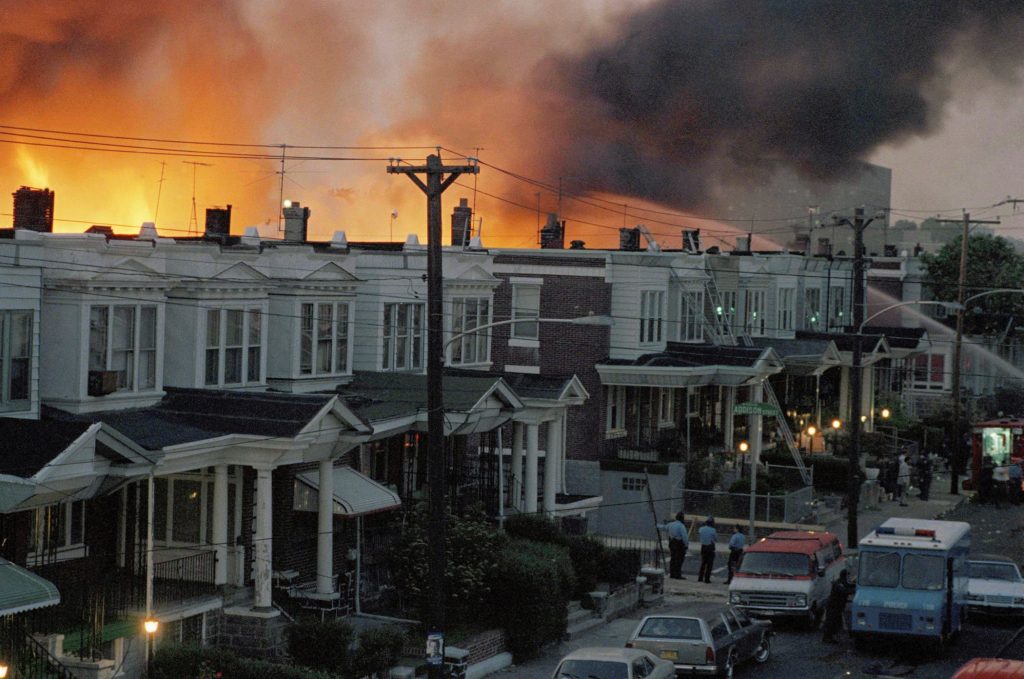
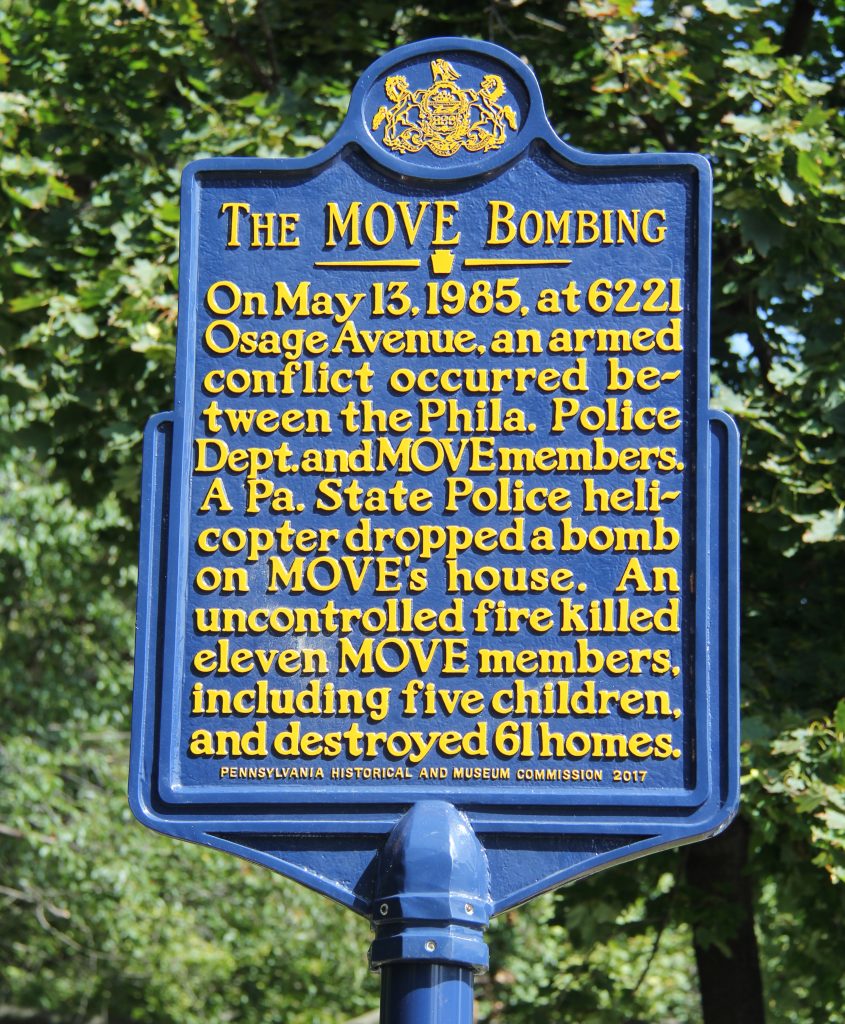
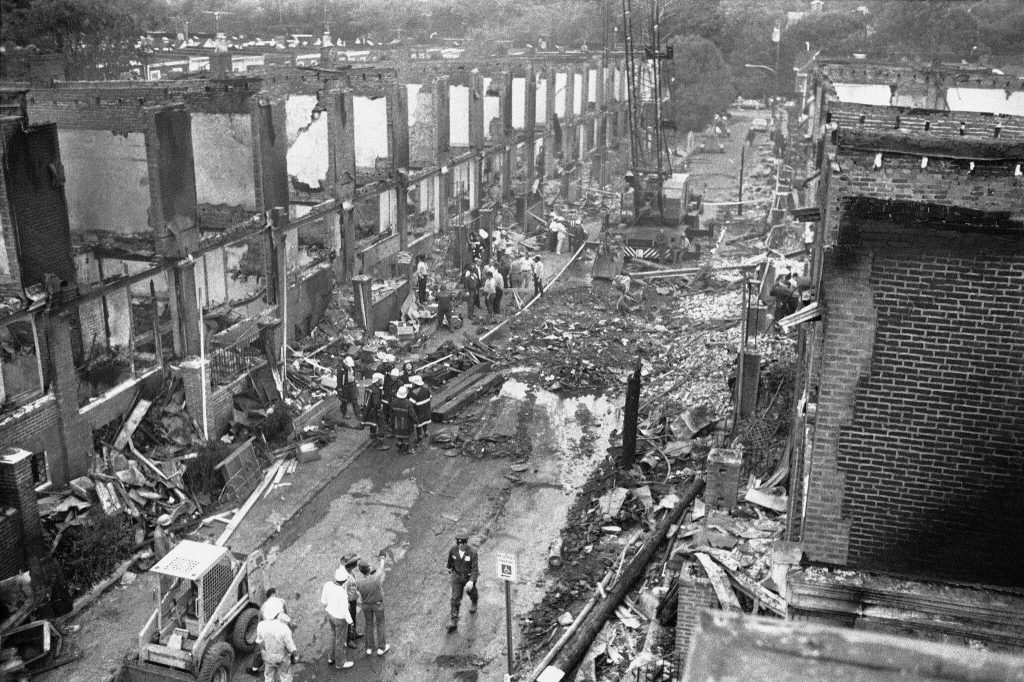
May 13, 1985, will forever be an infamous day for the city of Philadelphia. On that day, a police helicopter dropped a small explosive charge on the roof of the compound of a group calling themselves MOVE. The result was 11 dead and an entire city block burned to the ground. The police, of course, are to blame for the explosion and resulting fire. But MOVE bears much more responsibility than they generally get called out for. Their antagonism, violent opposition, and contempt for authority ultimately drove the police to do what they did. In the end, MOVE forced the hands of the police.
MOVE Before the Bombing
MOVE was founded in 1971 by a man named Vincent Leaphart, who later changed his name to John Africa. All members of MOVE were also obliged to change their surnames to Africa as well. In the beginning, they were known as the ‘Christian Movement for Life’ but they changed their name to MOVE not long after. The ideologies of the group were based on the teachings of John Africa, who had a devotee write them down in a text called “The Guidelines”. This text preached things such as strict vegetarianism, treating all living things equally, and self-defense. These beliefs are what motivated MOVE to do things such as protest at zoos and pet stores and antagonize people and institutions that went against their beliefs. This led to multiple arrests.
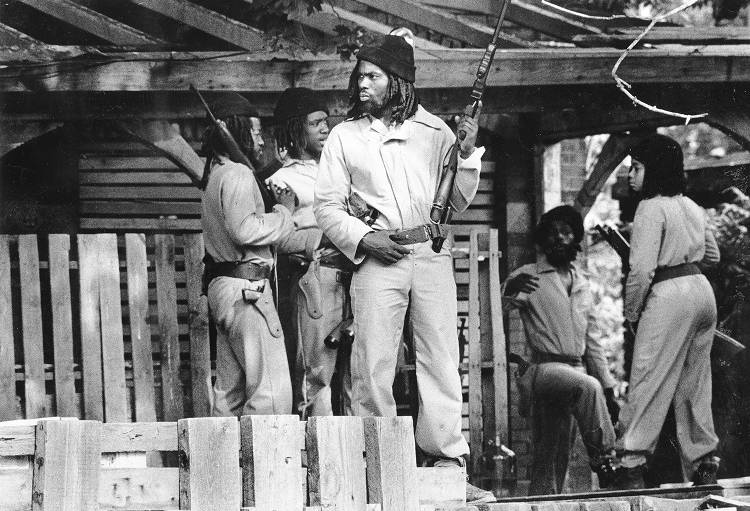
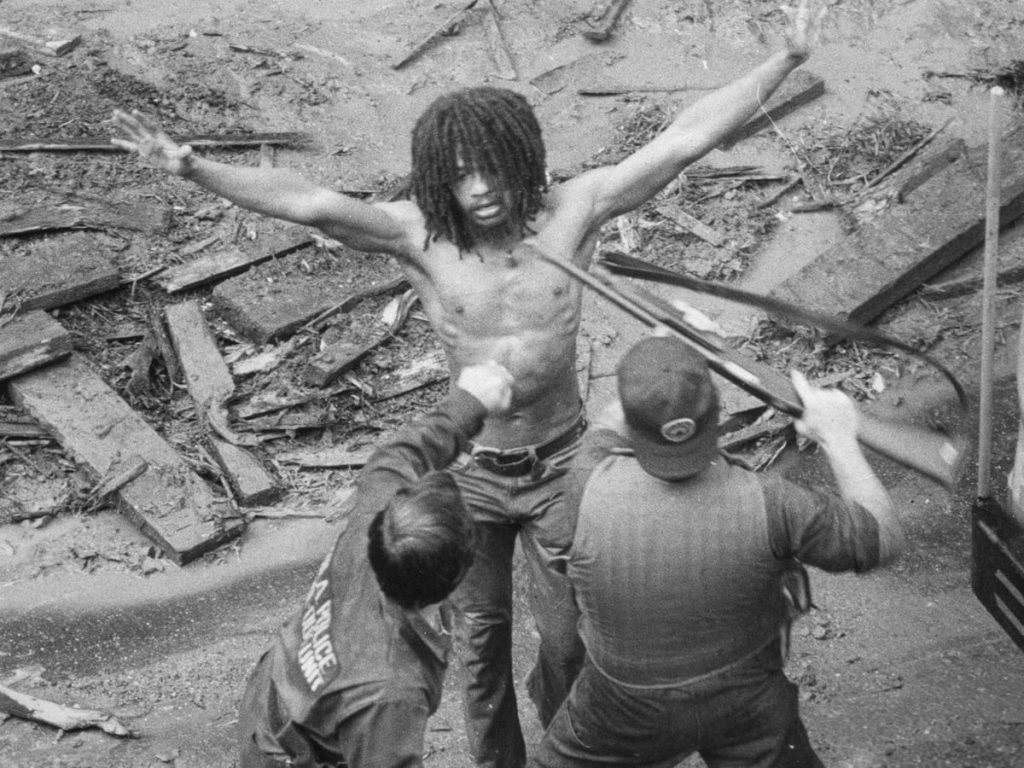
As arrests mounted, MOVE became increasingly militant, brandishing weapons at their fortified compound. The Philadelphia Police began to take notice and began to surveil the group. Not long after, MOVE began making demands on the city to release four members of their group who had been arrested. These demands became increasingly violent, which led the police to increase their surveillance and presence. Eventually, this came to a head on March 1st, 1978, when, at the direction of the Mayor, Frank Rizzo, police moved in to evict the group. What happened next is still a matter of contention to this day. The police have one story and MOVE has another. Whatever the truth may be, the result was the same. One police officer, James Ramp, was killed in the melee, with an additional two police and three firefighters wounded. MOVE eventually gave up, their compound was demolished, and the police arrested nine members.
“MOVE headquarters barricade”, 1977-05-21, Camp, DonThe arrest of Dilbert Africa of MOVE, 8 August 1978, Jim G. Domke, Philadelphia Inquirer
After the destruction of their compound and the arrest of nine of their members, MOVE did not have a place to call home until 1982, when they moved into 6221 Osage Avenue. This was a row house in the middle of a predominantly black middle-class neighborhood in West Philadelphia. Not long after moving in, MOVE began to fortify their new compound by boarding up windows and building a bunker on the roof. Residents also began to complain to the city about trash piling up outside their compound and the messages they would broadcast to the neighborhood through a bullhorn. This went on for nearly four years. It wasn’t until 1985 that Mayor Wilson Goode ordered the compound to be evicted, citing multiple violations. This order, of course, was ignored by MOVE. Ignoring the eviction order prompted the city of Philadelphia to take action by planning and conducting a raid on the compound.
The Bombing
On May 12, 1985, the police began evacuating residents in the surrounding buildings, clearly expecting a fight with MOVE. After a warning from the police, MOVE began opening fire. The police returned fire, shooting an estimated 10,000 rounds of ammunition at the compound. Around mid-day, with no progress being made, the police decided to take drastic measures. They dropped a small bomb on the roof of the compound in an attempt to destroy the bunker they believed MOVE members were shooting from. This led to a fire that consumed the building, nearly 60 surrounding structures, and 11 people, including the group’s leader, John Africa. The siege was over but at a great cost. The police, of course, are at fault here, but MOVE’s antagonism, violent opposition, and contempt for authority ultimately drove the police to do what they did. The fortifications that MOVE built into and on their compound left police with little choice but to take drastic measures.
The legacy of the bombing is still relevant today because of topics like race, inequality, and police brutality that encompassed the event. All of those topics are things the city and country still deal with today. 36 years on, the city of Philadelphia is still coming to grips with the tragedy. The stain that day left on the history of the city will likely never be forgotten.
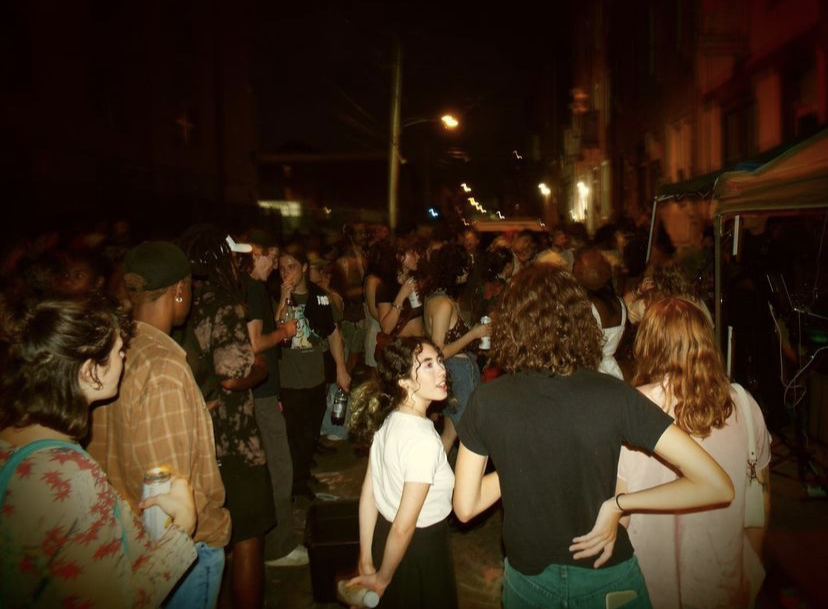
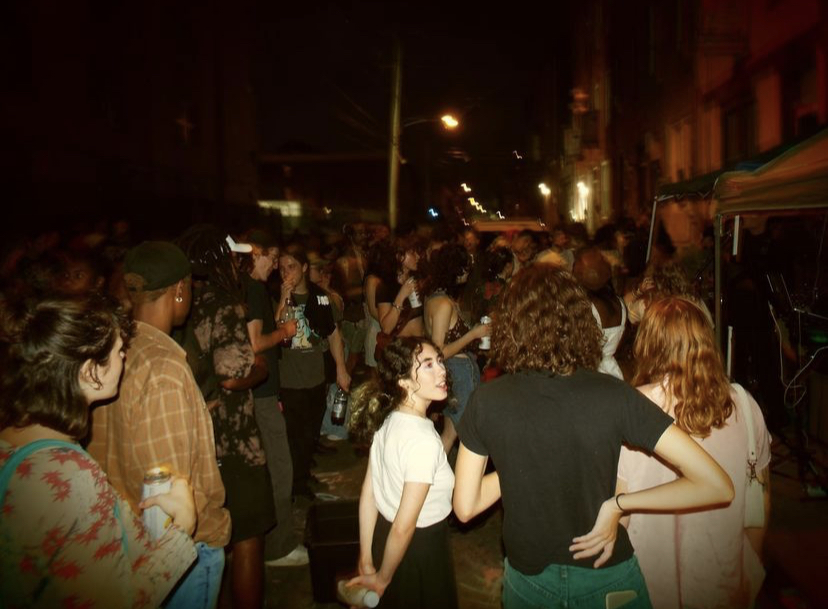
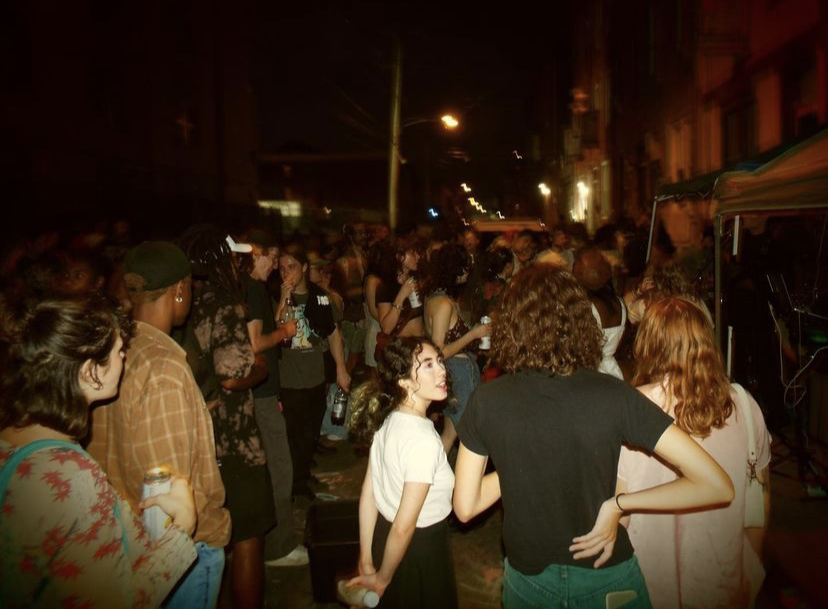
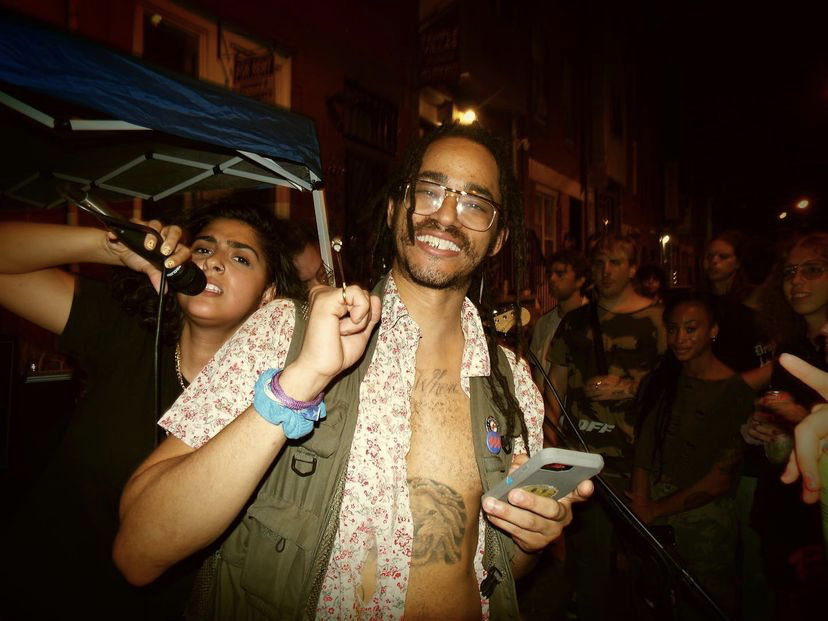
The street is decorated with various shapes and colors. Sidewalks are lined with people, mugs in hand. The yellow glow of the streetlights takes the place of the sun against the dusk sky. Colorful gobos travel across the crowd as they jump in sync with the drummer. The vibrations create an earthquake in your chest. You raise your arms to the night sky, eyes closed and ears ringing with the slaps, screeches and hums flying through the amps on the sidewalks. Welcome to the Barn.
The Barn at a Glance
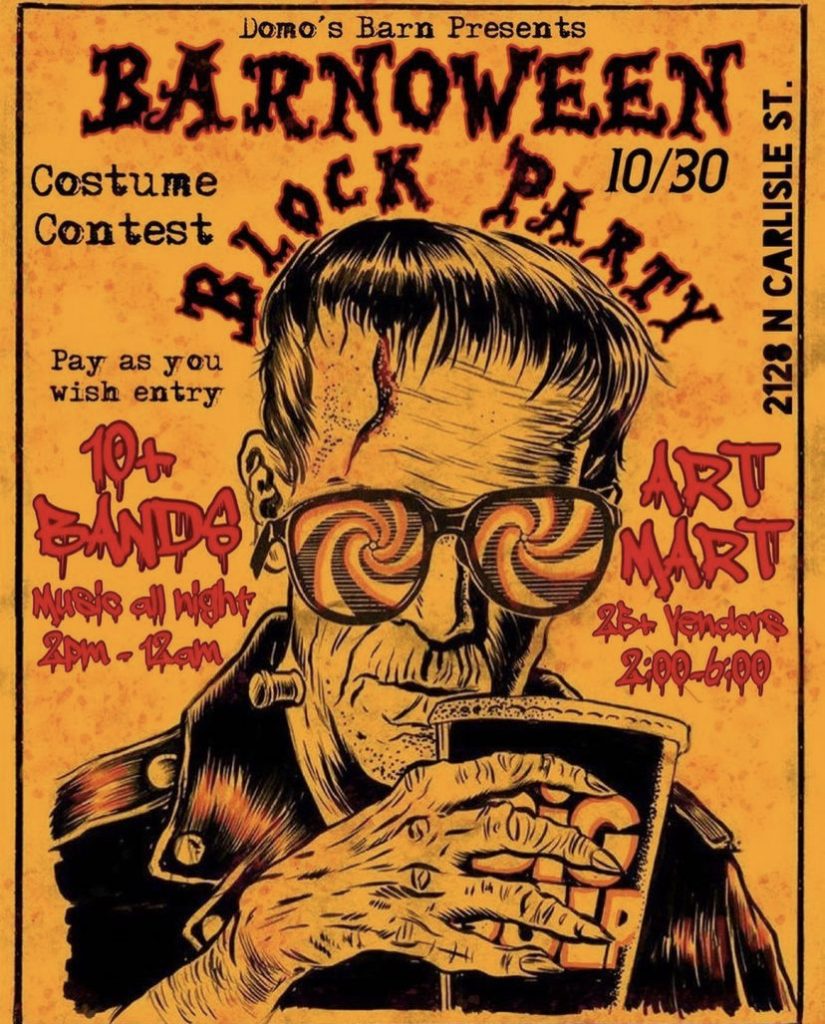
Local concert venue, Domo’s Barn, has become a local phenomenon, playing the streets of North Philadelphia for the past 2 years. Located at 1528 N. Carlisle St., Domo’s Barn hosts local bands and crowds every month. Through its epic celebration of life, music and artistry, Domo’s Barn contributes to Philadelphia’s existing culture by advocating for diversity, promoting local artistry and creating an energetic and inclusive community in North Philadelphia.
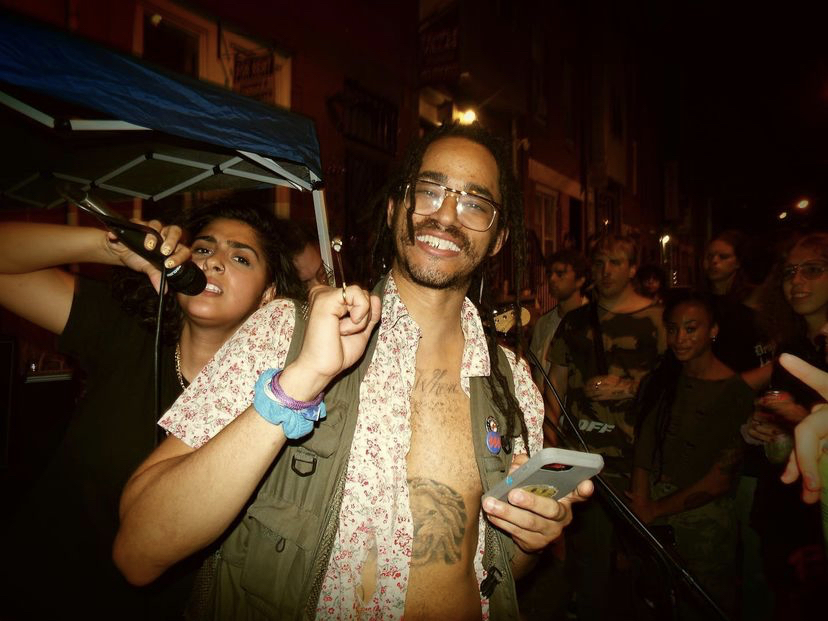
Domo, the founder of the venue, is the man behind the stoop that makes it all happen. Inspired by his upbringing, he started the Barn just for fun. “When I first moved to Philly from California, I loved the outdoors shows so we always did it in my backyard. [N]ow the barn has been born to funk up the block.” This deep-rooted passion for live music has carried him across the country and drawn groups of hundreds to his block to share it with him.
The Sound of the Stoop
Domo’s wide-range music taste helps promote a diverse selection of local bands. “[It’s] a fucking mashup. […] I love local music of all kinds. Rock, rap, funk jazz, if my ear likes what it hears then here it will be […] at the barn.” Digging into Philadelphia’s roots that gave birth to artists like Billie Holiday and Hall and Oates, the Barn honors the city’s diverse musical history.
Over 40 artists have performed in the venue’s 2 year existence. Local indie bands like Cat in the Wall, DJ’s Parunormal and Calo, and funk-based groups such as Knuckle Deep are just a sample. The alternating sound of Domo’s Barn keeps the bands and their audience coming back.
Andrew Montoya, lead singer of local band Graffiti Smile, has been a recurring artist at the Barn since April 2021. The band’s funk-based influence landed them a spot in the Barn’s May show and have since played their August set.
The shows are free, however, they give bands like Graffiti Smile the opportunity to expand their horizons. “The Barn has allowed us to reach a much broader audience. [It’s] not just for friends and friends of friends. It’s for everyone and anyone who enjoys live music,” Montoya says. “The crowd is what keeps us coming back.”
Domo’s Vision
Domo also acts as the Godfather of local music PR, working alongside his social media coordinator, Jules, to create the artistic vision of the Barn. Bringing the show to life visually as much as it exists dynamically, he encapsulates the vision of Philadelphia.
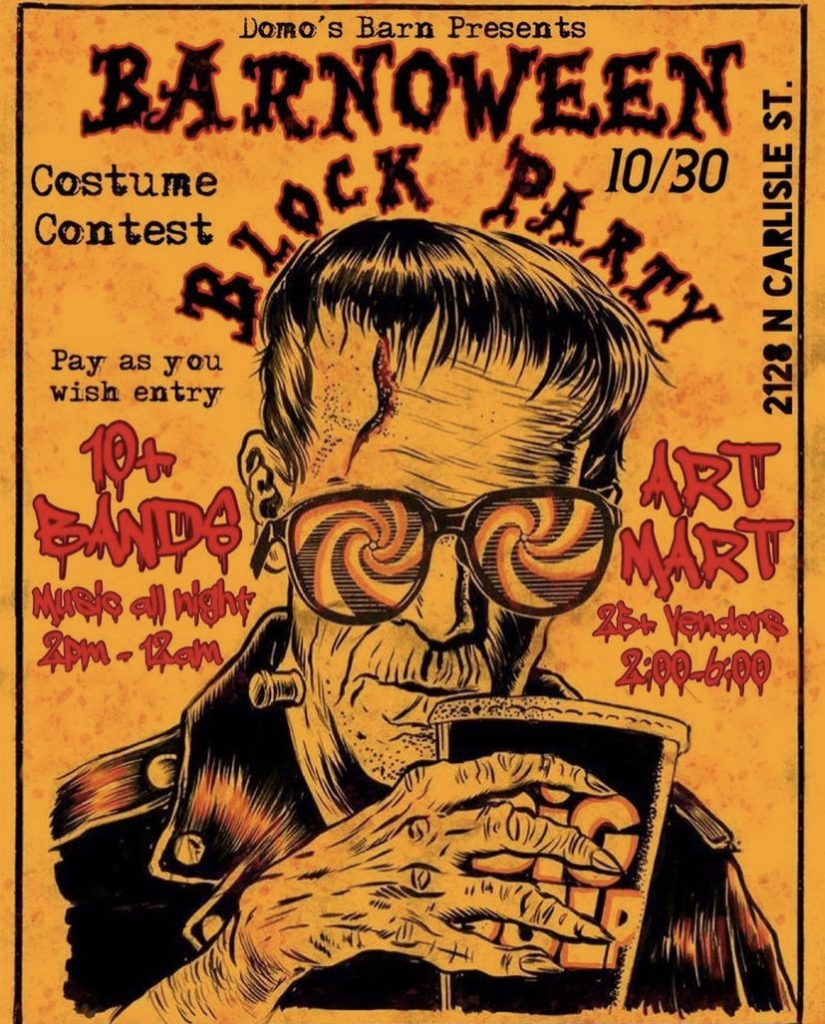
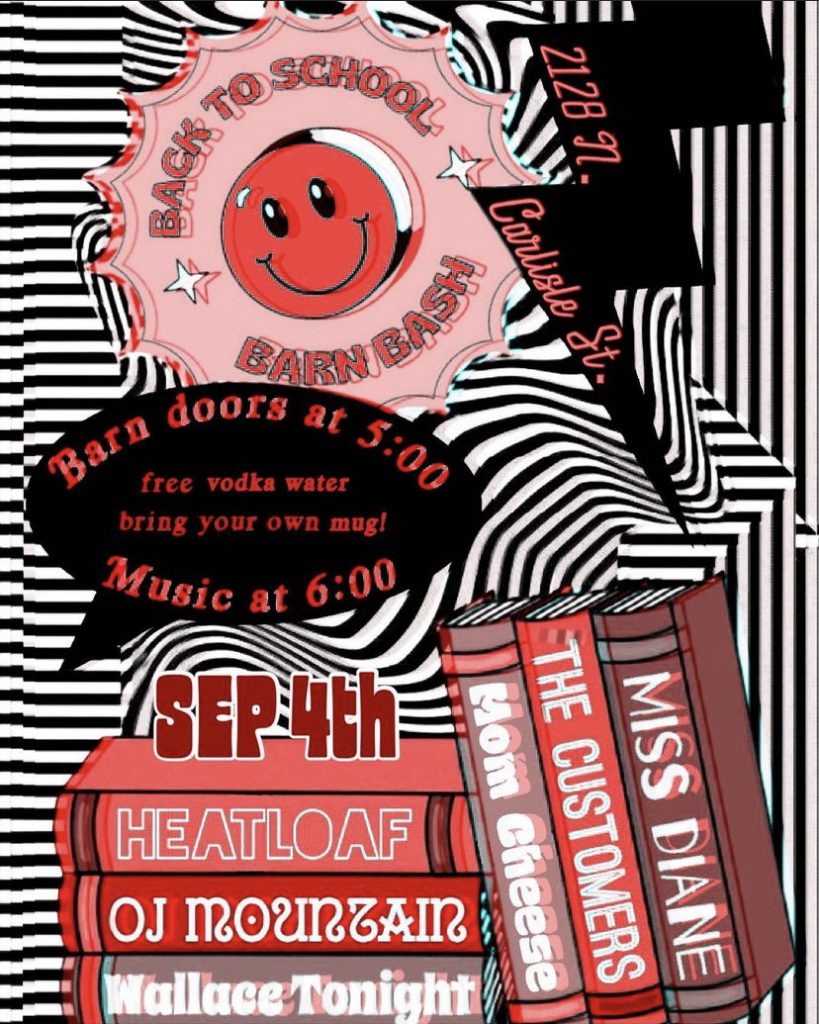
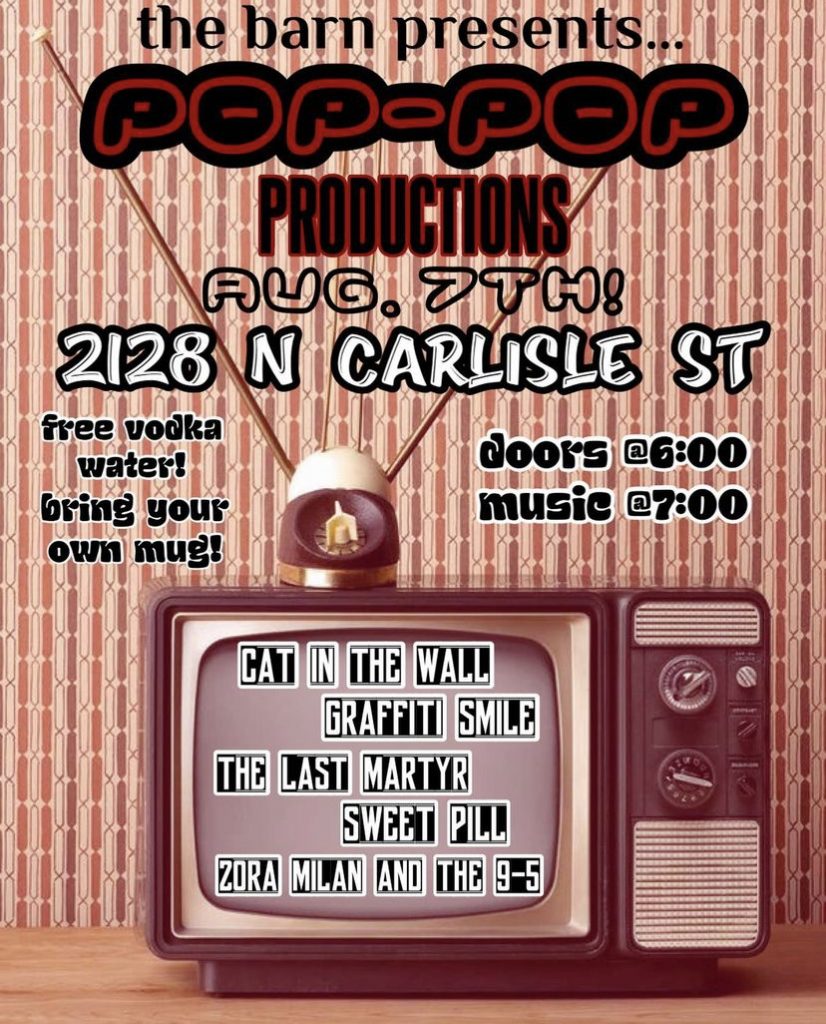
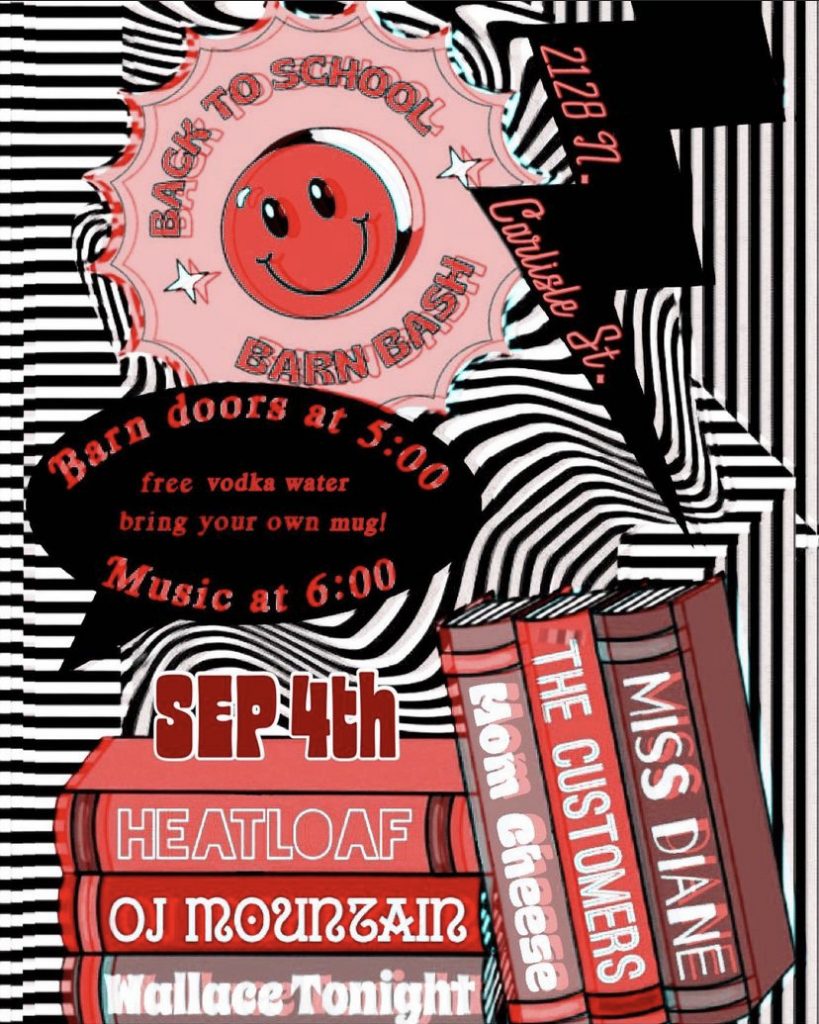
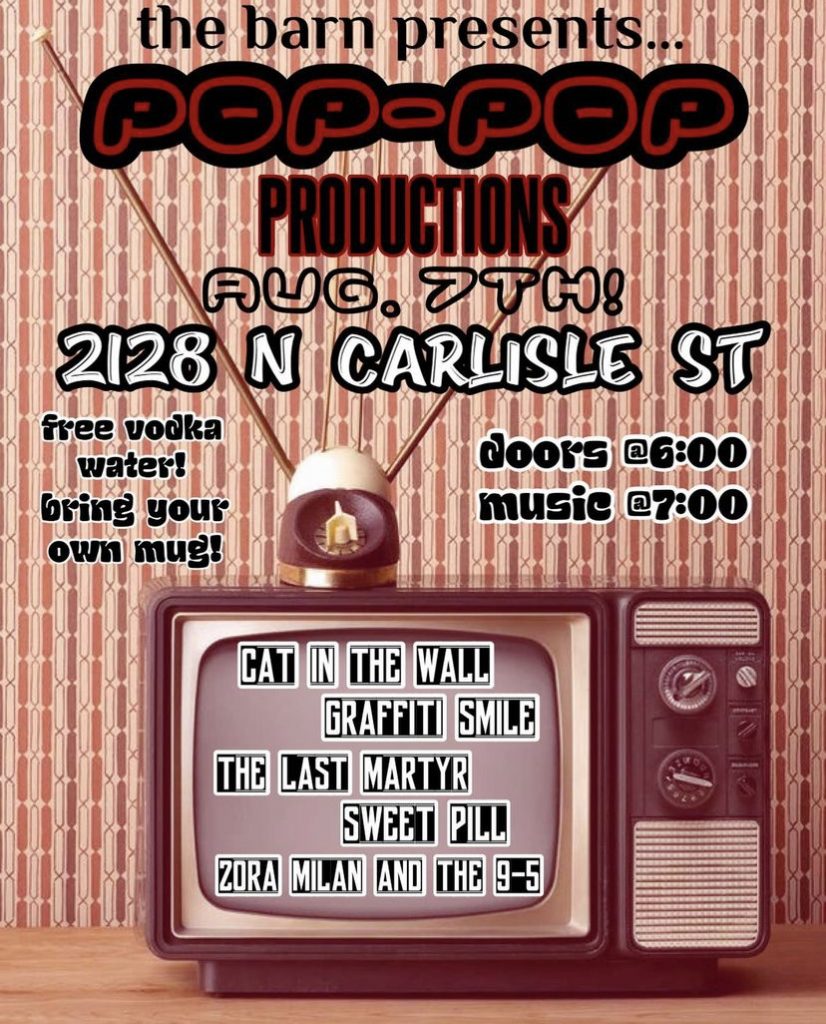
The visual artistry of the Barn is displayed primarily through their Instagram account, featuring flyers announcing the upcoming shows. The various themes, in combination with their selection of artists, cultivate a show that matches visually and musically. Using graffiti-style graphics and fonts, they emulate the murals popular to Philadelphia.
Photography and videos featured in feed and story posts depict the venue in action: crowds dancing in the street, drawing chalk art, drinking with friends, and artists performing. Domo and Jules’ combined artistry translates the Barn experience to reach beyond the stoop.
The Barn Family
Following its fearless leaders, the audience is at the heart of the Barn. Temple University students make up a significant portion of the crowd alongside neighbors of the stoop. Several of those who have already experienced it have returned to see more.
Temple University student Kieran Cunningham says, “I found that I could easily connect to every new person I talked to because of the shared love of music. […] I loved hearing different instruments, like trumpets or keyboards, that you wouldn’t expect to be at an indie band show.”
Crowds of people from diverse backgrounds, unified under their passion and love for live music perfectly emulate the city’s motto of “Brotherly Love.” Taking that energy into his work as the leader of the Barn, Domo also gives a voice and an audience to those he believes deserve it most.
“[W]hen I choose the bands I give special slots for Black [and] Brown people,” Domo says. “LGQTB+ and women base bands [have] higher priority.” While the sound itself is paramount to the Barn experience, Domo also carefully selects who provides it.
Fans and artists’ varying backgrounds give the Barn an inclusive sound, look and perspective. It openly speaks and listens for people of all races, sexualities and genders, emphasizing the importance of diversity in the local community.
Looking into the Future
The full vision of the future of Domo’s Barn has yet to be fully revealed. However, Domo has no hesitation in confirming it will continue and evolve as it commands more attention and wider audiences.
Domo’s plan to widen the stoop’s horizons will continue to create waves, representing the diverse culture of North Philly. The energy and passion of the Barn community is guaranteed to last into its future, carrying its artistic vision and musical influence with it.
The street is decorated with various shapes and colors. Sidewalks are lined with people, mugs in hand. The yellow glow of the streetlights takes the place of the sun against the dusk sky. Colorful gobos travel across the crowd as they jump in sync with the drummer. The vibrations create an earthquake in your chest. You raise your arms to the night sky, eyes closed and ears ringing with the slaps, screeches and hums flying through the amps on the sidewalks. Welcome to the Barn.
Local concert venue, Domo’s Barn, has become a local phenomenon, playing the streets of North Philadelphia for the past 2 years. Located at 1528 N. Carlisle St., Domo’s Barn hosts local bands and crowds every month. Through its epic celebration of life, music and artistry, Domo’s Barn contributes to Philadelphia’s existing culture by advocating for diversity, promoting local artistry and enhancing the sense of community in North Philadelphia.
Domo, the founder of the venue, is the man behind the stoop that makes it all happen. Inspired by his upbringing, he started the Barn just for fun. “When I first moved to Philly from California, I loved the outdoors shows so we always did it in my backyard. [N]ow the barn has been born to funk up the block.” This deep-rooted passion for live music has carried him across the country and drawn groups of hundreds to his block to share it with him.
His wide-range music taste helps promote a diverse selection of local bands. “[It’s] a fucking mashup. […] I love local music of all kinds. Rock, rap, funk jazz, if my ear likes what it hears then here it will be […] at the barn.” Digging into Philadelphia’s roots that gave birth to artists like Billie Holiday and Hall and Oates, the Barn honors the city’s diverse musical history. Over 40 artists have performed in the venue’s 2 year existence. Local indie bands like Cat in the Wall, DJ’s Parunormal and Calo, and funk-based groups such as Knuckle Deep are just a sample. The alternating sound of Domo’s Barn keeps the bands and their audience coming back.
Andrew Montoya, lead singer of local band Graffiti Smile, has been a recurring artist at the Barn since April 2021. The band’s funk-based influence landed them a spot in the Barn’s May show and have since played their August set. The shows are free, however, they give bands like Graffiti Smile the opportunity to expand their horizons. “The Barn has allowed us to reach a much broader audience. [It’s] not just for friends and friends of friends. It’s for everyone and anyone who enjoys live music,” Montoya says. “The crowd is what keeps us coming back.”
Domo also acts as the Godfather of local music PR, working alongside his social media coordinator, Jules, to create the artistic vision of the Barn. Bringing the show to life visually as much as it exists dynamically, he encapsulates the vision of Philadelphia.
The visual artistry of the Barn is displayed primarily through their Instagram account, featuring flyers announcing the upcoming shows. The various themes, in combination with their selection of artists, cultivate a show that matches visually and musically. Using graffiti-style graphics and fonts, they emulate the murals popular to Philadelphia.
Photography and videos featured in feed and story posts depict the venue in action: crowds dancing in the street, drawing chalk art, drinking with friends, and artists performing. Domo and Jules’ combined artistry translates the Barn experience to reach beyond the stoop.
Following its fearless leaders, the audience is at the heart of the Barn. Temple University students make up a significant portion of the crowd alongside neighbors of the stoop. Several of those who have already experienced it have returned to see more.
Temple University student Kieran Cunningham says, “I found that I could easily connect to every new person I talked to because of the shared love of music. […] I loved hearing different instruments, like trumpets or keyboards, that you wouldn’t expect to be at an indie band show.”
Crowds of people from diverse backgrounds, unified under their passion and love for live music perfectly emulate the city’s motto of “Brotherly Love.” Taking that energy into his work as the leader of the Barn, Domo also gives a voice and an audience to those he believes deserve it most.
“[W]hen I choose the bands I give special slots for Black [and] Brown people,” Domo says. “LGQTB+ and women base bands [have] higher priority.” While the sound itself is paramount to the Barn experience, Domo also carefully selects who provides it. Fans and artists’ varying backgrounds give the Barn an inclusive sound, look and perspective. It openly speaks and listens for people of all races, sexualities and genders, emphasizing the importance of diversity in the local community.
The full vision of the future of Domo’s Barn has yet to be fully revealed. However, Domo has no hesitation in confirming it will continue and evolve as it commands more attention and wider audiences. Domo’s plan to widen the stoop’s horizons will continue to create waves, representing the diverse culture of North Philly. The energy and passion of the Barn community is guaranteed to last into its future, carrying its artistic vision and musical influence with it.
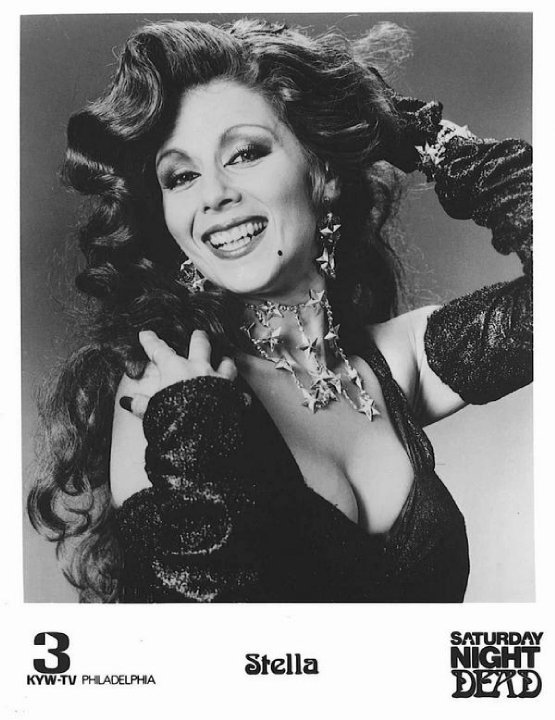
Floating down a misty hallway with her long black hair, skin tight black dress and long red fingernails, Vampira birthed the horror hosting genre with her signature blood-curdling scream. Her TV production,The Vampira Show,which aired on KABC-TV in Los Angeles, was the first of its kind, creating a timeless format where a ghoulish host introduces a classic horror movie that they watch with the audience, making comedic comments along the way. In the 1980s, Philadelphia’s own horror show, Saturday Night Dead, was hosted by Stella, “that maneater from Manayunk ” who represented a uniquely Philadelphian brand of horror hosting that is remembered to this day.
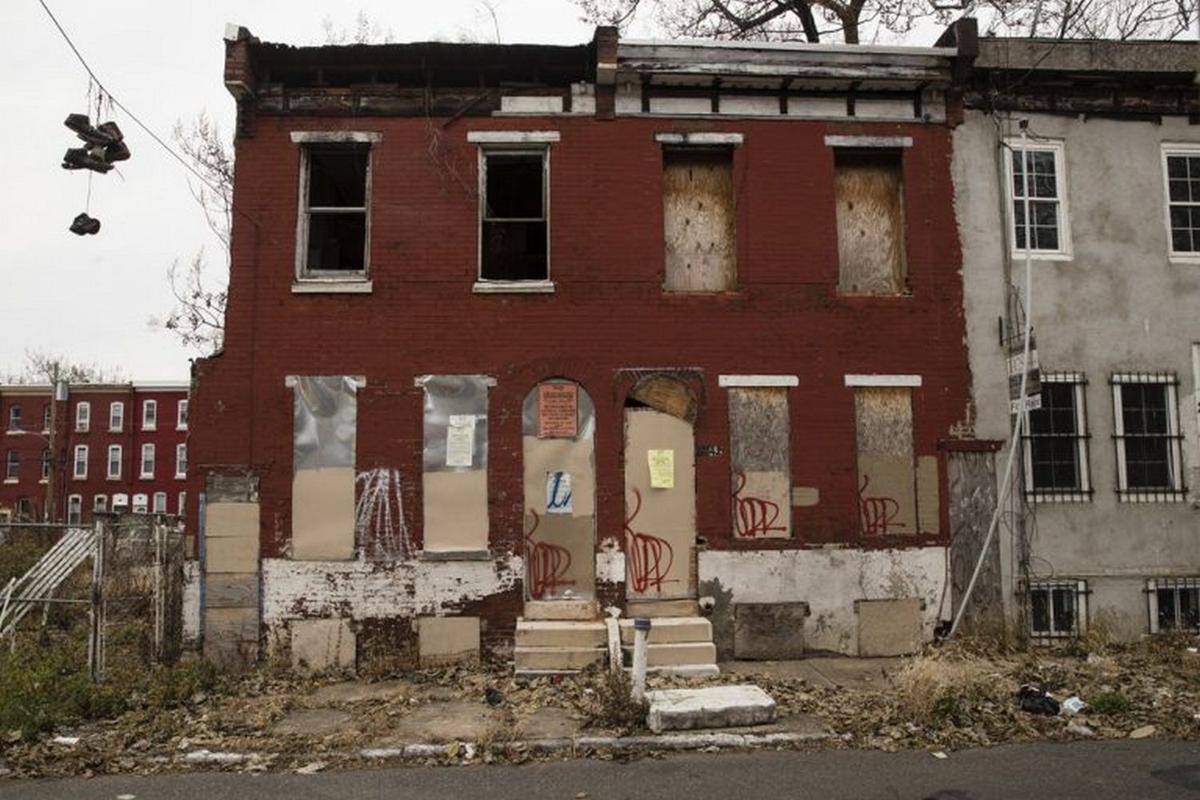
Philadelphia has been a home to some of the brightest minds, as well as a loving, diverse community that has held place for many generations of families for a long time, but over many years, the recurring crisis of vacant homes and lots continues to linger in the city. The wasteland of abandoned buildings that pervades most of the low-income areas not only imbues a fearful environment for its surrounding residents, but also prevents the homeless population of Philadelphia to the right of a roof over their head. My experience with these buildings come from adventuring through the surrounding Temple area, entering buildings that have been untouched or unchanged for many years. Wandering through these locations made me curious as to why these buildings are left in their conditions and what has prevented them from being turned into something beneficial for the community. With this topic, I want to explore the abandoned and vacant lot problem in the area, and more importantly, how the use of these abandoned buildings, in turn, can be revitalized into public housing and community spaces that would benefit the homeless and the longtime natives that reside in these areas.
The problem with vacant lots in Philadelphia is very long and complex and comes with a history behind it. To give some background, Philadelphia reached a height in population in the 1950s with over 2 million residents. As times changed and technology expanded, manufacturing jobs either moved to cheaper labor markets or became automated, resulting in a loss of jobs and the general population decreasing to 1.5 million by 2000. With the decline in population, came the growth of abandoned and vacant buildings in the Philadelphia area. Many of these buildings and factories over time have either become demolished, or still stand today through neglect and lack of change. (Esposito, 2020). By 2010, Philadelphia had a documented 40,000 or so vacant lots, with 30,000 of those lots privately owned, and the other 10,000 handled by public agencies. Out of all of the vacant properties, 3,000 have buildings and other various structures standing. (Kondo et al. 2015).
With the amount of vacant properties still existing in Philadelphia, there are more than enough vacant lots that could be turned into public/affordable housing for low-income families and the homeless, along with any other endeavors for these lots that would improve the welfare of these communities. This could be achieved by the city alone as well if you’re only accounting for the properties owned by public agencies. According to a 2020 tally of people experiencing homelessness carried out by the Philadelphia Office of Homeless services, more than 6,000 people in the city are considered destitute, with more than 950 of those people being unsheltered. On a larger scale, there are 17 million registered vacant homes and 552,830 people currently homeless in the U.S. overall, displaying a huge dissonance within our capitalist nation. (NAEH, 2018) (Census Bureau, 2019). Seeing these numbers together, it is clear that a reutilization of these vacant properties into public and affordable housing could end the homeless problem in Philadelphia for good, but why has the city not done this already?
Abandoned buildings and vacant lots illustrate a far-reaching problem with the current strategies of urban development, and under this comes the issue of urban sprawl, the preservation of development outside of a municipal area. Urban sprawl is a consequence of a city’s hesitancy to develop inner city areas due to socioeconomic trends and demographic changes. In recent years, many areas in the city of Philadelphia where these buildings reside have undergone renovation changes, but it was done through the process of gentrification. These areas include Fishtown (formerly known as Old Kensington), Northern Liberties, and university areas where majority-black populations used to reside like Cedar Park and Spruce Hill in West Philly, as well as many of the surrounding neighborhoods near Temple University (Brey, 2016.). While the renovation in these locations made the overall atmosphere more “lively”, gentrification is not a solution to the abandoned and vacant lot crisis, it has only created more problems when it comes to displacing pre-existing communities and giving low-income residents and the homeless fewer options for housing and shelter. In the areas that the Philadelphia government is financially uninterested in renewing on the other hand, it is unknown whether these buildings will be reutilized in any sort of way and would be counterproductive if we waited in hopes that they or Philadelphia Housing Authority would utilize these properties for housing. It has been made clear by protestors on the Philadelphia parkway and the activist-run housing encampments that the city needs to find a solution and take action in demands to invest into the city-owned vacant housing stock regardless of their conditions. But instead of waiting for the city to take action themselves, what can we do as a community to help our surrounding neighborhoods build a future that would help benefit everyone?
With many of these vacant properties being present within these neglected neighborhoods, the city should view these lots as less of liability and a financial burden and instead be seen as community assets. It is estimated that the city of Philadelphia spends almost $10 million a year cleaning up illegal dumping, which often happens in vacant lots. (Esposito, 2020). It also requires the city $20 million in annual upkeep of those vacant lots and deprives the city of $3.6 million in possible annual tax revenue (Kondo et. al, 2015). If our community, the most important element to this process, and the government can come to a conclusion of how to utilize these vacant lots, not only would it benefit the well-being of these neighborhoods, but would also benefit the government financially where they wouldn’t be spending so much money on vacant lots not being used. A step in the right direction that gives the communities any leverage is having the city alternatively entrusting vacant land to community members to build local assets and prosperity, becoming a path to community improvement rather than commercial development. Adjacent to this vision, there are examples of many community gardens and farms in Philadelphia that took up and reutilized the vacant lots. Philadelphia is also currently investing into an urban agricultural plan to allow a process of protecting the gardens and farms that exist in communities right now along with making more in the future. (Philadelphia Parks & Recreation, 2019). While this is only one example, we can also illustrate the other uses for these lots such as pop-up restaurants and markets, sculpture gardens, community centers, public housing, the possibilities are endless. Leaving these lots vacant in the shape they are in will only continue to create a negative impact if action is not taken accordingly. With many of the vacant and abandoned buildings left alone and neglected, a distressing atmosphere looms over the communities struggling due the broken environment. If put to use, the revitalized lots can change a neighborhood from a fearful environment into a welcoming place, relieving the psychological effects that it has on many residents with the presence of these torn and barren buildings.
If you have ever walked or drove around Philadelphia, mainly in the Northern and Eastern regions, it is most likely you have come across a span of fractured and empty buildings, surrounded with trash and grass grown as high as your knees. In the past few months, I have explored a few of these abandoned apartments and buildings that are local to the Temple area. Many of the similarities that I found between the apartments are what was left behind, the condition they’re left in, who lived there, and sometimes traces of who entered after abandonment. Upon discovery, traces of the person or family that last resided there are found, with many personal belongings and trash left behind. These personal belongings included such things as clothing, photos, sometimes even personalized cassette tapes and VHS’, along with traces of someone who may have squatted at the location. I also noticed that the latest dated documents to authenticate when the apartment was last utilized, all marked around the same time which was between 1995 and 2005, giving the idea that these apartments haven’t been used properly since then. As for the large abandoned buildings, they are seen filled with trash, rodents, and needles, along with debris from the building’s exteriors such as bricks and broken glass panels. Through the neglect of these lots, there becomes a psychological effect on the neighborhood due to their poor quality and welcomes an unconditional relationship with crime. There is a theory called the “Broken Window Theory” coined by researchers George Keeling and James Q Wilson, which predicates that “if a window in a building is broken and left unrepaired, all the rest of the windows will soon be broken.” (Wallace & Schalliol, 2015). The structures become breeding grounds for social disorder and other problems of the like, creating a stressful, fearful and anxious atmosphere for the communities where they permeate. Residents of the area would observe criminal activity developing nearby but remain distant to it for their own safety. This gives the person who plans to carry out a crime an indication that neighborhood inhabitants feel indifferent to what happens around the buildings, and as a result increases the likelihood of the crime being committed.
As these buildings stand as symbols of affliction in the areas they inhabit, it rids the surrounding inhabitants of any relieving view of more green areas, which is linked to a decrease in depression and a decrease in crime. Behavioral scientists at the University of Pennsylvania conducted a study on behavior around vacant lots and found that violent gun crime can drop by as much as 29% in areas where vacant lots are cleaned and greened. (Esposito, 2020). Researchers also measured the mental health of Philly residents before and after nearby vacant lots converted into green spaces, along with residents living nearby abandoned lots. It was found that people living within a quarter mile radius of these green spaces had a 41.5 percent decrease in feelings of depression compared to the residents that live near uncleaned abandoned lots. They also found that the people living near the green lots experienced close to a 63 percent decrease in self reported poor mental health. (Penn Medicine News, 2018).
It becomes more evident that the reutilization of these abandoned lots is undoubtedly necessary to improve the welfare and prosperity of the communities it occupies, along with the involvement of the community to be able to make these changes happen. Fortunately, there are programs to get involved in that help make this future for everyone possible. These programs include PHS (Pennsylvania Horticultural Society), which, as defined by their site uses “horticulture to advance the health and well-being of the greater Philadelphia region.” The City of Philadelphia’s Vacant Lot Program, promoting clean neighborhoods by enforcing the city’s property maintenance codes through inspections and cleanups, and Rebuilding Together Philadelphia which revitalizes communities by transforming vulnerable, owner-occupied houses into safe, healthy and energy efficient homes. As people living in these communities, it is important for us to take action and help each other out in creating an environment that we want to live in and be a part of. Together, we can go towards a direction where many of these abandoned and vacant lots can turn into affordable housing, green lots, and any other endeavours that will help our communities grow in strength and care.
May 13, 1985, will forever be an infamous day for the city of Philadelphia. On that day, a police helicopter dropped a small explosive charge on the roof of the compound of a group calling themselves MOVE. The result was 11 dead and an entire city block burned to the ground. The police of course are to blame for the explosion and resulting fire. But MOVE bears much more responsibility than they generally get called out for. Their antagonism, violent opposition, and contempt for authority ultimately drove the police to do what they did. In the end, MOVE forced the hands of the police.
MOVE was founded in 1971 by a man named Vincent Leaphart who later changed his name to John Africa. All members of MOVE were also obliged to change their surnames to Africa as well. In the beginning, they were known as the ‘Christian Movement for Life’ but changed their name to MOVE not long after. The ideologies of the group were based on the teachings of John Africa who had a devotee write them down in a text called “The Guidelines”. This text preached things such as strict vegetarianism, treating all living things equally, self-defense, and so on. These beliefs are what motivated MOVE to do things such as protest at zoos and pet stores and antagonize people and institutions that went against their beliefs, this led to multiple arrests.
As arrests mounted, MOVE became increasingly militant, brandishing weapons at their fortified compound. The Philadelphia Police began to take notice and surveilled the group. Not long after, MOVE began making demands to the city to release four members of their group who had been arrested. These demands became increasingly violent which led the police to increase their surveillance and presence. Eventually, this came to a head on March 1st, 1978, when, at the direction of the Mayor, Frank Rizzo, police moved in to evict the group. What happened next is still a matter of contention to this day. The police have one story and MOVE has another, whatever the truth may be, the result was the same. One police officer, James Ramp, was killed in the melee with an additional two police and three firefighters wounded. MOVE eventually gave up, their compound was demolished, and the police arrested nine members.
“MOVE headquarters barricade”, 1977-05-21, Camp, DonThe arrest of Dilbert Africa of MOVE, 8 August 1978, Jim G. Domke, Philadelphia Inquirer
After the destruction of their compound and the arrest of nine of their members, MOVE did not have a place to call home until 1982 when they moved into 6221 Osage avenue. This was a row house in the middle of a predominantly black middle-class neighborhood in West Philadelphia. Not long after moving in, MOVE began to fortify their new compound by boarding up windows and building a bunker on the roof. Residents also began to complain to the city about trash piling up outside their compound and the messages they would broadcast to the neighborhood via a bullhorn. This went on for nearly four years. It wasn’t until 1985 that Mayor Wilson Goode ordered the compound to be evicted citing multiple violations, this order of course was ignored by MOVE. Ignoring the eviction order prompted the city of Philadelphia to take action by planning and conducting a raid on the compound.
On May 12, 1985, the police began evacuating residents in the surrounding buildings clearly expecting a fight with MOVE. After a warning from the police, MOVE began opening fire. The police returned fire shooting an estimated 10,000 rounds at the compound. Around mid-day, with no progress being made, the police decided to take drastic measures. They dropped a small bomb on the roof of the compound in an attempt to destroy the bunker the believed MOVE members were shooting from. This led to a fire that consumed the building, nearly 60 surrounding structures, and 11 people including the group’s leader, John Africa. The police of course are at fault here but MOVE’s antagonism, violent opposition, and contempt for authority ultimately drove the police to do what they did.
In May of 2021, the half-acre of land on the corner of 15th and Parrish Streets in Francisville, North Philadelphia, was a sight to behold. Dogs of varying breeds played amongst newly constructed benches and fences, and residents congregated in a lot that was once filled with trash and overgrown weeds. This small dog park oasis represents the many vacant lots across Philadelphia revitalized by locals as gardens, playgrounds, parks and more.
However, many of the people repurposing these abandoned spaces do not own them. This is the case with the property in Francisville. The Philadelphia Redevelopment Authority, who owns the lot, issued a warning for residents to vacate and remove everything by May 12th, or be charged with trespassing. If developed, the city will be taking away more than just a dog park, but the only community green space Francisville residents can call their own.
Vacant lots across the city are owned by different organizations and resold to developers for various reasons; in the case of the Francisville property, the Philadelphia Redevelopment Authority has already pre-approved the space for affordable housing. After all the hard work put into the project, residents are not happy with the order. Neighbors created a petition that got over 1,300 signatures to keep the area undeveloped. Andrew Tsvikevich, one of the original creators of the dog park, said the community space has made it easier to make friends.
“Before, everyone was seeing each other’s faces but were too shy to start conversation, and now that we are in the park- it’s like way easier”, he said. This aspect is important, and there have been plenty of studies that highlight other reasons why open lots should be preserved for the community.
Many vacant lots that are waiting for development are often trashed-strewn, overgrown, and a hub for criminal activity. In a research journal conducting random trails on restored vacant lots in cities and their effect on violence, crime, and fear, they found that “…residents who lived near newly renovated spaces reported experiencing significantly less crime and vandalism, independently corroborating findings from police-reported data.” (PNAS, 2018, p.4). As is the case in Francisville, the study also found that shared spaces such as community gardens encourage people to go out and meet with neighbors, fostering more social interactions while beautifying the space.
After talking with the Housing Authority of Philadelphia, Tsvikevich found the biggest issue is the liability of owning the property. A dog park would be considered active use of the land, where if something bad were to happen (like a dog biting), any potential consequences like a lawsuit would fall upon the city.
On top of that, the city has said it will not sell the land for recreational use because it has already been pre-approved for affordable housing. However, this has yet to come to fruition, and Tsvikevich and his neighbors believe that many of the organizations who own vacant lots across Philly are just slowly waiting to sell out for the most profit.
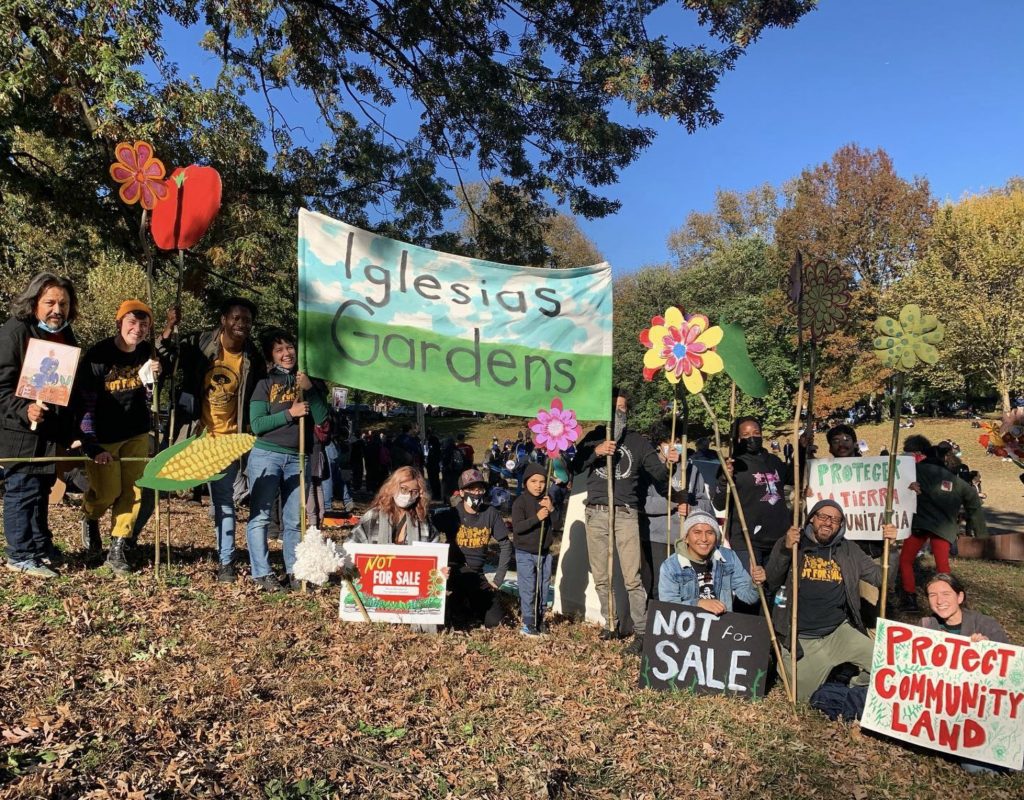
One such organization is The Philadelphia Land Bank. A report published in January 2021 by the Philadelphia Coalition for Affordable Communities criticized the agency due to the very low number of properties they gave to private community residents. However, as of this year, things are getting better. Former executive director of Land Bank Angel Rodriguez pointed out the efforts made to preserve the César Andreu Iglesias Community Garden, in West Kensington. The garden, which is a popular meeting spot for Hispanic residents, narrowly avoided plans to build a high rise on American street within their property.
Image from César Andreu Iglesias Community Garden Facebook page, posted November 6, 2021
With all the trouble involved in getting permission to legally use the space, the neighbors at Francisville have decided to keep using the property until they are forcibly stopped. This Halloween the lot will host a doggy costume contest, and Tsvikevich will be dressing up his Blue Heeler-Australian Shepherd pooch he originally created the park for.
His plan, he said, is to keep developing and get more people involved, until the city sees that this park is something worth keeping around. This community, among so many others, will continue to shape the landscape of Philadelphia, one pocket of preserved, open land at a time.







/cloudfront-us-east-1.images.arcpublishing.com/pmn/OVLGUBB5RRD7JPYZYEWH26KY5U.jpg)
/cloudfront-us-east-1.images.arcpublishing.com/pmn/AAQB76LCC5GP3NK55UQGKJEIII.jpg)