As I sat anxiously, twiddling the paper pinned to my chest that read the number 4, I rehearsed the words in my head, “Southern leaves bare strange fruit/ Blood on the leaves and blood at the root/ Black bodies swinging from the southern trees/ Strange fruit hanging from the Poplar tree”. I’d been practicing this piece for weeks, listening to modern renditions by the likes of Jill Scott and creating new stylings to compliment the song’s tragic tone. I knew the most poignant way to deliver this piece was to sing it a capella. I heard the contestants note from behind the auditorium doors and exhaled as I made my way to the queue. We exchanged smiles as she exited and I settled into the nook of the piano. Shakily, I played the beginning note of the piece on the piano and let the spirit of Billie Holiday take over. The ending left an eerie feeling in the atmosphere, so quiet you could hear a pin drop. At this moment, I fully understood the enormous weight of the piece I’d just performed.
“Strange Fruit” was written and composed by Abel Meerepol and recorded and sung by Billie Holiday in 1939. This song marked a paradigm shift in Holiday’s career and the racial climate in America before the civil rights movement. In order to understand the gravity of the performance of “Strange Fruit” by Billie Holiday it is imperative to grasp who Billie Holiday is and the historical context contributing to her upbringing and values.
My first introduction to Billie Holiday was in grade school. I grew up in a predominantly affluent black area, so educating students on Black history was not exclusive to Black History Month. I remember my 4th grade teacher showing us a film about Jim Crow and the effect it had on Black people living in the south. The song, “Strange Fruit”, played as drawn photos of lynchings came accross the screen, most were real depictions. Though I wasn’t aware of the songstress at the time, the lyrics and visuals stayed with me.
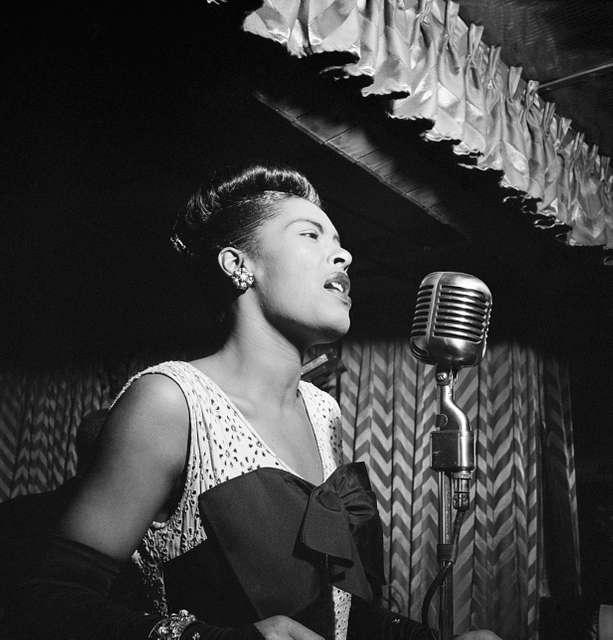
Creator: Library of Congress
Billie Holiday, formerly referred to as Eleanora Fagan, was born in Philadelphia in 1915. She grew up in a tumultuous environment stained by poverty, instability, and early exposure to violent racism. Raised in Baltimore by her teenage mother and often left to fend for herself, Holiday experienced the harsh realities of segregation and discrimination from a young age. As a light skinned black woman, Holiday struggled with finding her place in the world. Her loneliness was exacerbated by her mother’s neglect, which led her to truancy at school, and later as a teenager, into taking odd jobs as an errand runner for a brothel and even working as a prostitute . As an African American woman, she faced racial oppression throughout her life, including in her professional career as a jazz singer.
When I got to the 6th grade, I told my mom I want to be a classical singer. My mother, being a dreamer herself, set an appointment with a private vocal coach for the next week. I trained in classical voice for the next 6 years, performing in several competitions. Attending and competing in these competitions was intimidating as I was often the only Black girl, let alone Black person. I distinctly remember being awarded 2nd place, while my White counterpart was awarded 1st, although audience reactions reflected a different outcome. My vocal coach told me it was clear there was some bias in favor of the White competitor. Now whether there was bias on both sides is irrelevant, but this encounter reminded me that there are still spaces that exclude Black participants.
Creator: Library of Congress
In the early stages of her career, Holiday performed in racially segregated clubs where she was often treated as inferior. She suffered from blatant racism despite her talent. She was not allowed to use certain facilities while white patrons and musicians could. Touring the South in the 1930s and ’40s, she faced even more extreme forms of racial discrimination and violence due to Jim Crow laws that dictated every aspect of Black life.
The experiences in her career and upbringing, along with witnessing the lynching of African Americans, deeply influenced Holiday’s worldview and artistry. “Strange Fruit,” a song depicting the atrocity of lynching in America, was a defiant, yet poetic statement about racial violence that symbolized the unwavering struggle and pain of Black Americans. The lyrics, “Pastoral scene of the gallant south/ The bulging eyes and the twisted mouth/ Scent of magnolias, sweet and fresh/ Then the sudden smell of burning flesh,” poignantly describe the violence against Black people in the south; drawing a distinct line between the beauty and serenity of the south versus the atrocity of the vicious racial climate. Performing such a politically charged song, especially in an era when black voices were silenced out of white fear, was a risk with serious federal implications. Her coarse tonality and harsh delivery of “Strange Fruit” conveyed both her personal pain and her commitment to using her music as a platform to address racial injustice.
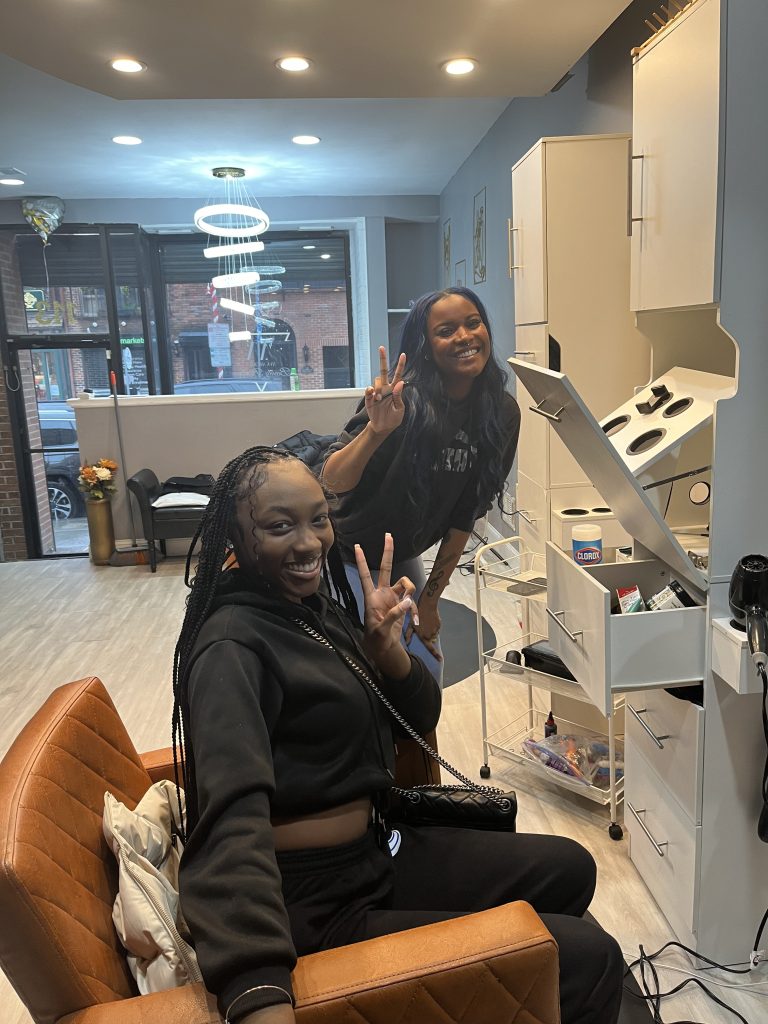
In high school I took a leap of faith and began a braiding business. I juggled this new responsibility along with the rigorous workload of my performing arts school. As a vocal performance major, my love for music was nourished with jazz classes and theory lessons. My passion for braiding allowed me a lot of time to binge watch my favorite shows and movies during clients. This meant a lot of my clients were watching music-related documentaries surrounding jazz and soul musicians, to their enjoyment or annoyance. One morning as I flipped the TV to Hulu, I saw “Billie Holiday Vs. The United States” and was instantly intrigued as I’d known who Billie Holiday was at this point in relation to “Strange Fruit”, but I didn’t know much about her background or experiences as a jazz singer. The film began with Holiday singing, “Here is a fruit for the crows to pluck/ For the rain to gather/ For the wind to suck,” and by the end, it clicked for me. This pivotal piece, sung by this fierce woman, must be the piece I sang for my last competition in my high school career.
Holiday’s experience with the FBI was not a one-off occurrence. Other prominent Black figures, such as Fred Hampton, Malcolm X, and Martin Luther King Jr., were also subjected to intense surveillance by federal authorities. These individuals, including Holiday, were seen as threats not just because of their personal actions, but because their art and activism inspired millions to challenge the racial and political order. They had substantial influence in their communities which posed a threat to the security of White Americans and political officials. Despite these efforts, Billie Holiday’s legacy as a cultural and political figure endures, and her music continues to be a powerful testament to the struggle for civil rights in America.
A week went by and the competition results were finally in. I got an email with “Congratulations!!” in the subject line. The judges applauded the courage it took to perform such a difficult piece, emotionally and vocally, a capella; but I could only think of Miss Holiday. The bravery she possessed to sing that song in front of crowds lined with ferocious police officers ready to swarm the stage before the last note of the first phrase, “Southern trees bear strange fruit/ Blood on the leaves and blood at the root,” was undeniably extraordinary. Her audaciousness is a prominent reason for the continued historical gravity and impact of “Strange Fruit”: the song that won me 1st place vocalist of the National ACT-SO NAACP Awards.
 on
on