Categories
History

The History of TV in Sweden

Radiotjanst
Sveriges Radio

Sweden officially began broadcasting television in October of 1954. Prior to Sweden opening their first station, Radiotjanst, in 1956, those from Sweden would watch shows that originated in other countries. Radiotjanst was in charge of Sweden’s two radio networks and was later renamed, Sveriges Radio.

Aktuellt

In 1958, Sweden launched their first TV News programme called, Aktuellt. Aktuellt is now on SVT2, which is one of the two main television channels broadcasted by Sveriges Television.


SVT 2
3
4

The nation’s second television channel, TV2, which is also owned by Sveriges Radio, was launched in 1969. The first Swedish satellite channel, TV3, came to fruition in 1987 and began broadcasting from the United Kingdom. Then, in 1992, the nation’s first terrestrial commercial channel, TV4, was permitted, while public service radio and television were split into two companies.

Provided by: Creative Commons Attribution Share-Alike 4.0 International

Sweden’s television ownership market is one of the most concentrated in Europe, due to the Bonnier Company, Modern Time Group and Discover Communications holding a significant portion of the market for commercial television in Sweden. While Sweden’s original debut of television was later than other countries, they were one of the first countries in the world to fully introduce digital terrestrial television in 2007.
Categories
Current Era

The Current Era of TV

Sweden TV

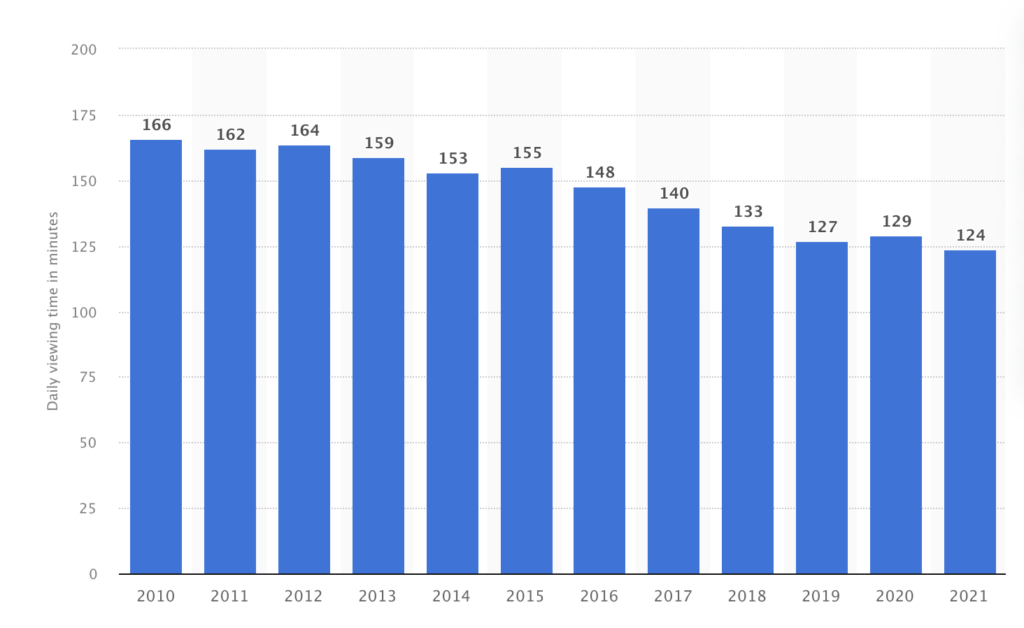
In Sweden, television viewership is much lower when compared to other European countries. According to Stoll from Statista, television viewership in Sweden has generally decreased from 2010 to 2021, with there being a two minute growth from 2019 to 2020, which was most likely due to the COVID-19 pandemic. In 2020, the average daily television viewing time in Sweden was 129 minutes, which then fell to 124 minutes in 2021.

Statista: Average Daily Television Viewing Time in Sweden from 2010 to 2021

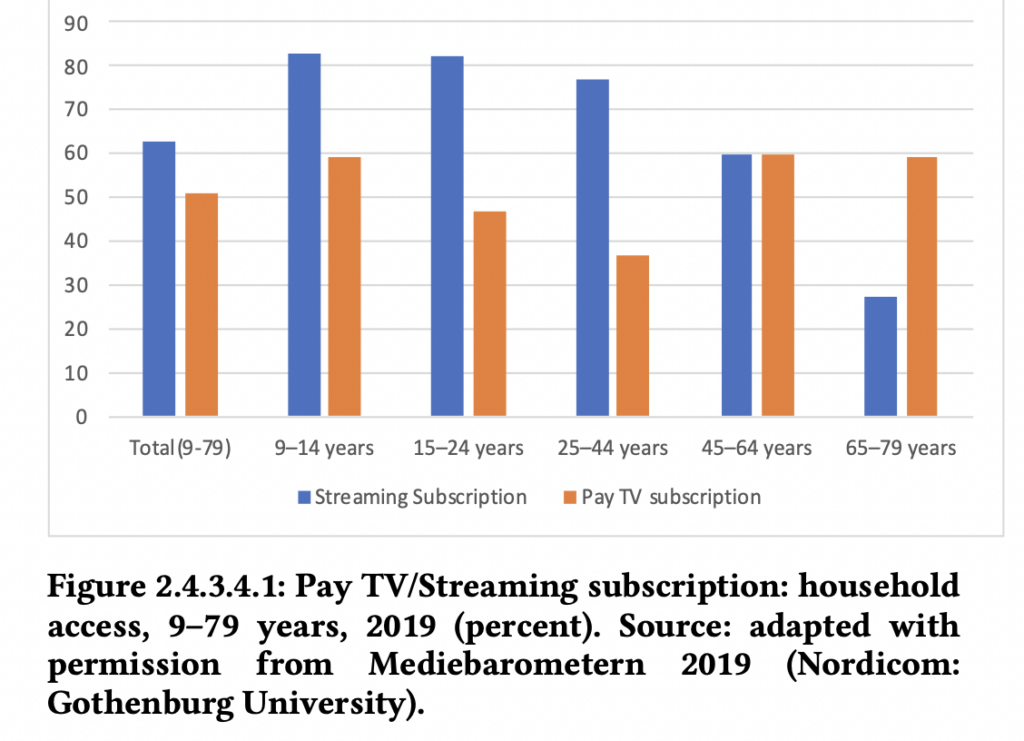
In Sweden, age is a prominent factor in regards to television viewing time. Swedes over the age of 60 years old watched 272 minutes per day in 2021, in comparison to those ages 15 to 24 years old viewing only 22 minutes per day. In 2021, 58 percent of the Swedish population watched video streaming services daily, which is a 37 percent increase compared to ten years prior.

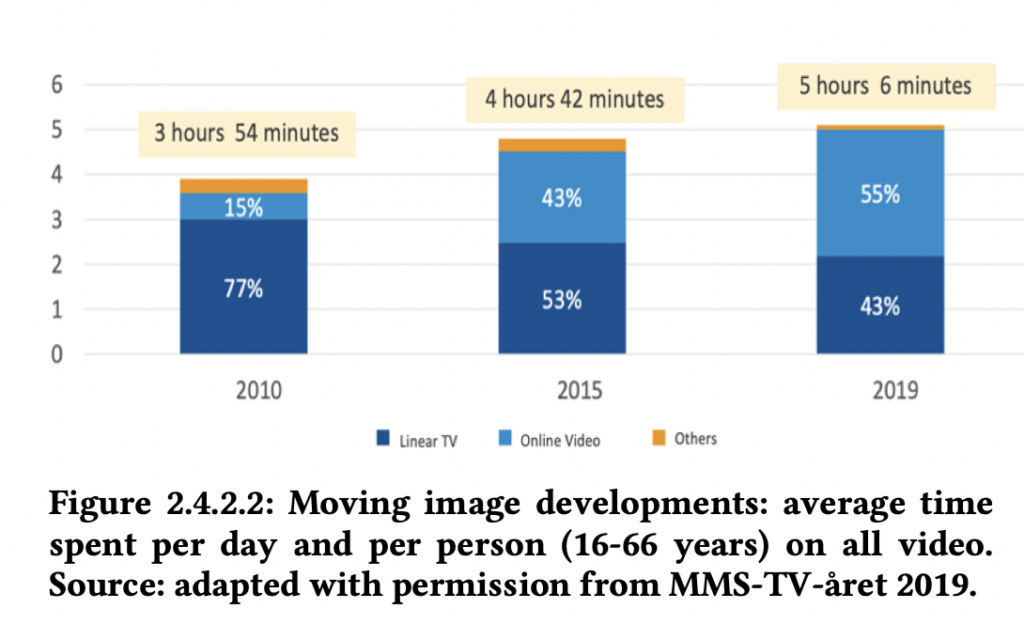
The average daily amount of time Swedish consumers spend watching video on the television is declining, with video-on-demand (VOD) viewing increasing. From 2019 to 2021, those in Sweden who watched TV/video by television has decreased by 15 percent, with the lost 15 percent switching to PCs, smartphones and tablets.

Overall, live television viewership has decreased in Sweden, while subscription-based VOD services have increased. These statistics may explain the decline of television viewing time in Sweden over the last decade.

Categories
Political/Economic Details

Political/Economic Details Affecting Media & TV

Sweden

The government, the national telecommunications administration and the national broadcasting corporation divided responsibility for the Swedish television system.

The national public broadcasting system was typically associated with a limited amount of TV and radio services, as well as having a ban on advertising in the programs, with a lack of privately owned TV and radio services.

In the 1980s, the market for private interests and commercial funding increased in broadcasting as the new structural and regulatory framework evolved in Sweden. This caused there to be more commercial interest as broadcasting became more of an ‘industry’ with the audience becoming ‘consumers’ and programmes becoming ‘products’, with increasing competition.

While Sweden holds value for freedom of the press and was the world’s first country to adopt a freedom of the press law, the press is subsidized by the government. Media conglomerate companies own a majority of the mass media in Sweden.

Bonnier

There are five media companies that own a majority of all the newspapers in Sweden, with four television and three radio groups dominating a majority of the audiovisual sector of Sweden. The most prominent owner is Bonnier AB, which is a privately owned Swedish media group that is controlled by the Bonnier family. Bonnier AB is a media conglomerate that operates 175 companies in 15 countries.

No Ads

Sweden still holds their ban on advertising on programs, which may be the reason that a large sum of their shows are produced outside of the country.

Alliansen

There is still a high government presence in the media as there has been controversy over political bias and cover ups in the media regarding political and social figures in Sweden.  In 2010, the Alliance, which is a center-right liberal-conservative political alliance in Sweden, was criticized for implementing a law that caused all new public service products to be needing approval from the government before they were able to be approved.

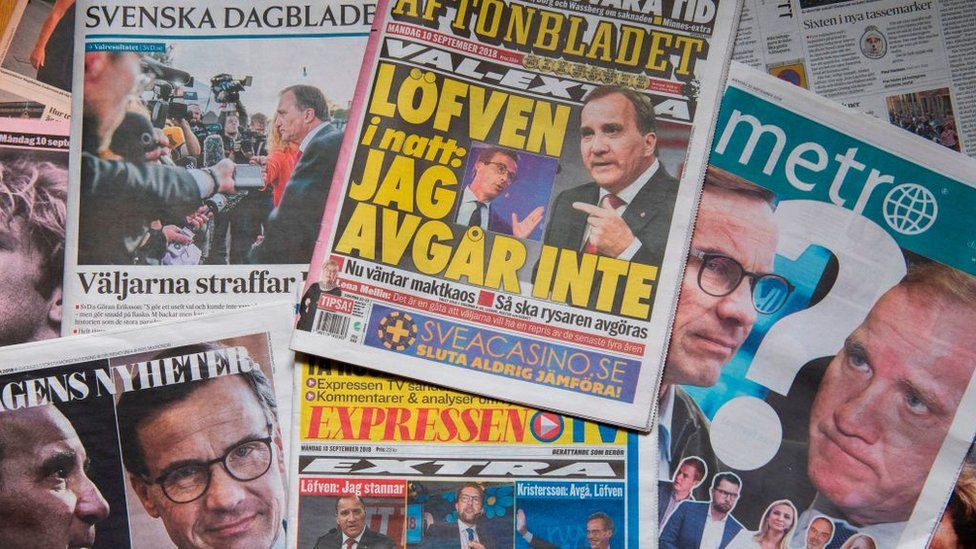
Swedish News

Overall, the party system in Sweden has been described as “one of the most stable in the world, with the same five political parties represented in the parliament between 1918 and 1988.” (Nord & Gruel 116).

Despite these controversies, Sweden portrays its media as being independent from political power and prides itself in holding political figures accountable.