Author: Sina Barzegar
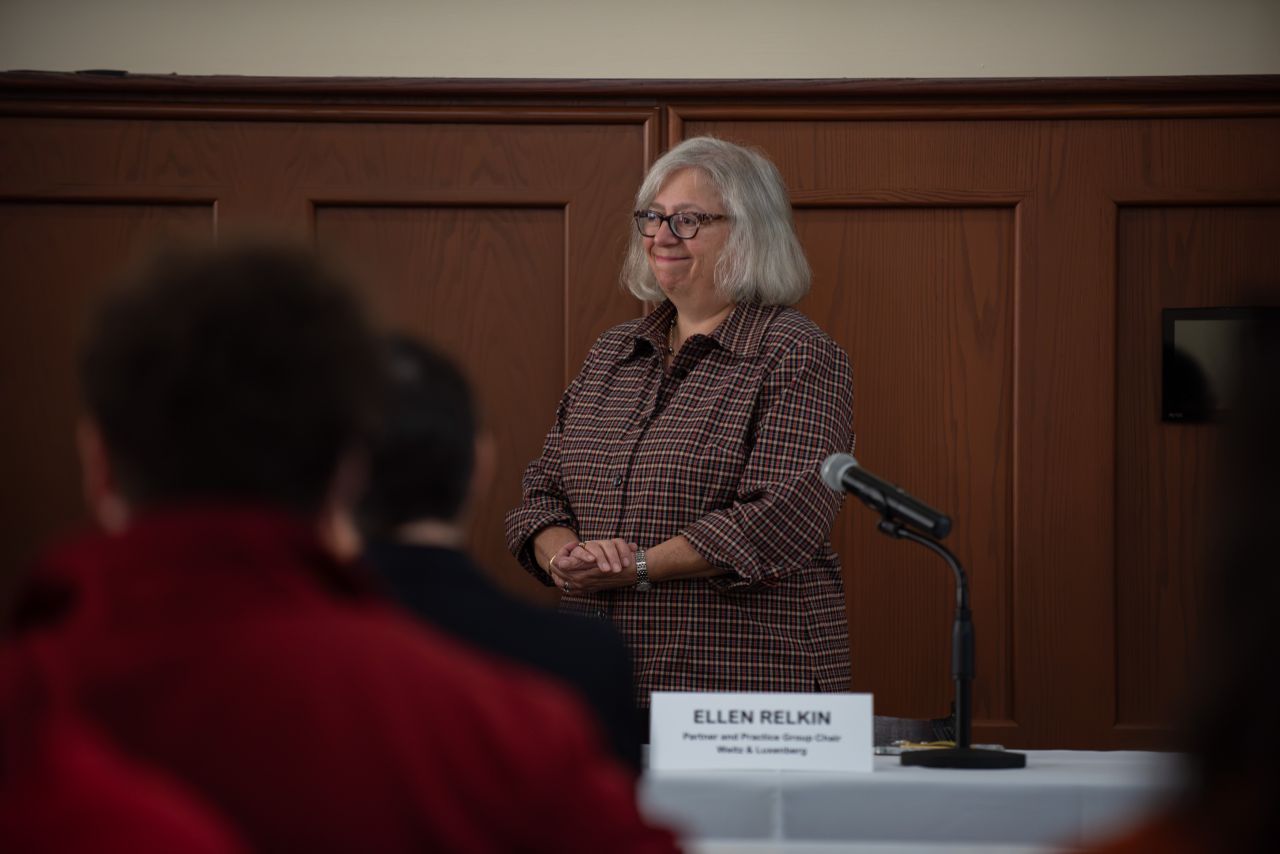
Temple University Beasley School of Law welcomed Ellen Relkin to the Dean’s Forum, a nationally recognized trial lawyer, Partner and Practice Group Chair at Weitz & Luxenberg, and member of the Trial Lawyer Hall of Fame. Drawing on her decades of experience representing people harmed by toxic chemicals, Relkin shared lessons from her early environmental litigation, illustrating the challenges of proving exposure, establishing causation, and advocating for those affected by environmental harm.
Relkin began her career working on toxic tort cases involving chromium-processing waste used as fill at sites throughout northern New Jersey. She explained that many sites had been built on chromium-contaminated soil, creating potential exposure risks for workers and surrounding communities.
In one case, Relkin represented a worker who unloaded materials at a contaminated site. After the New Jersey Department of Environmental Protection began testing, the signs of contamination were difficult to ignore: after it rained, the ground dried yellow, and the worker’s boots turned yellow as well. Relkin also recalled green crystals appearing in the basement room where workers ate lunch, indicating the presence of hexavalent chromium, a form of chromium recognized as carcinogenic.
Yet visible contamination alone could not prove that exposure had caused her clients’ illnesses. The workers had to receive baseline medical examinations at the University of Medicine and Dentistry of New Jersey. One of those workers from those exams was seriously ill, developing a hole in his nasal palate, an injury associated with certain occupational toxic exposures.
A chemist at DuPont recognized that the symptoms could indicate heavy-metal poisoning and suggested further testing. A bone specimen obtained during a shoulder biopsy was sent to a laboratory in West Virginia, where testing reportedly revealed elevated chromium levels. After the client died, Relkin’s team arranged for a state medical examiner to conduct an autopsy. She recalled that the report documented unusually yellow-discolored bones matching the yellow staining on the boots and the ground, providing another striking piece of evidence.
Relkin described taking approximately 60 depositions before the case went to trial, where the jury awarded $1.8 million. Although a separate punitive-damages phase was anticipated, the case ultimately settled.
The case demonstrated the persistence environmental litigation demands. Establishing causation required connecting environmental testing, medical examinations, laboratory analysis, and the client’s individual history. For Relkin, it was an early lesson in how seemingly technical details can become central to proving a case.
Another transferable lesson, which applies across all kinds of litigation, especially those involving many plaintiffs, was even simpler: she cautioned young lawyers against letting mass litigation turn people into spreadsheets. When a case involves hundreds of plaintiffs, it can be tempting to focus on databases, damages calculations, medical records, and settlement values. But a trial lawyer still needs to know the people behind the names on the complaint and the stories behind the case. Her message to TELS members and other Temple Law students interested in environmental, pharmaceutical, or products-liability litigation was to know the evidence, know the law, and above all, know your client.